Introduction
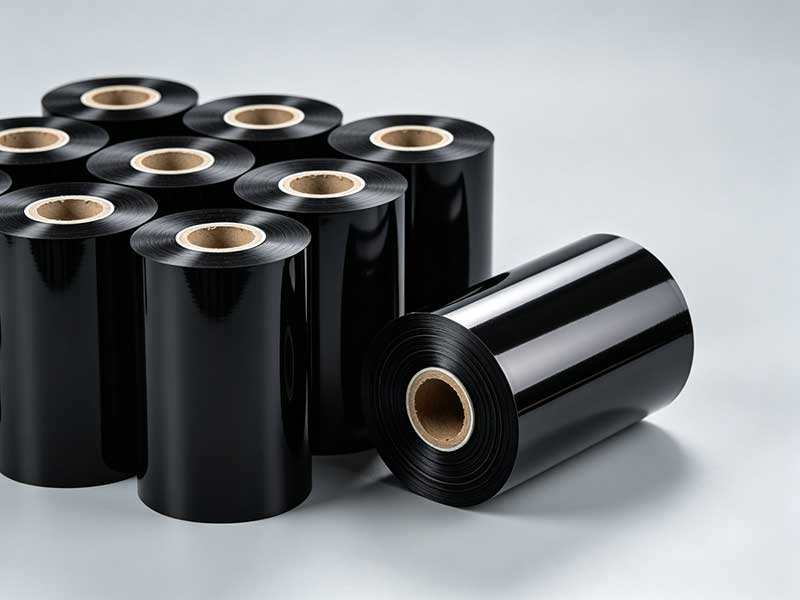
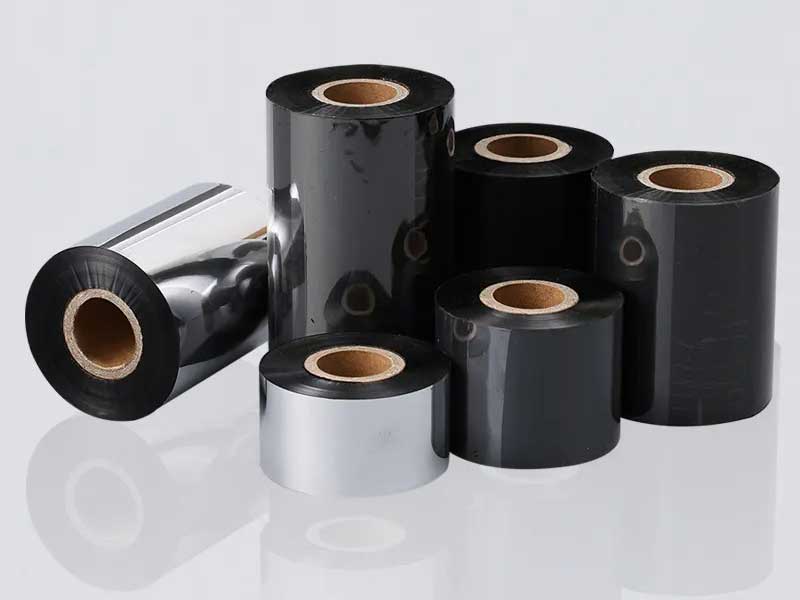
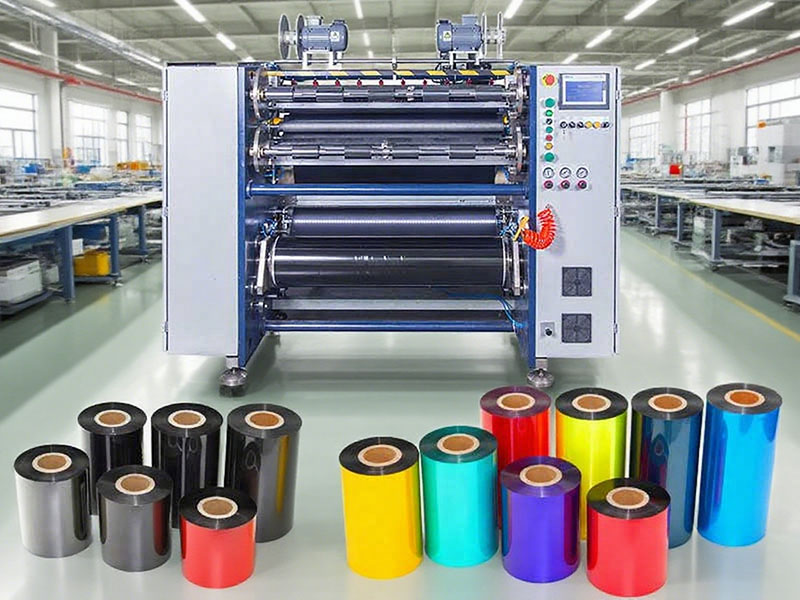
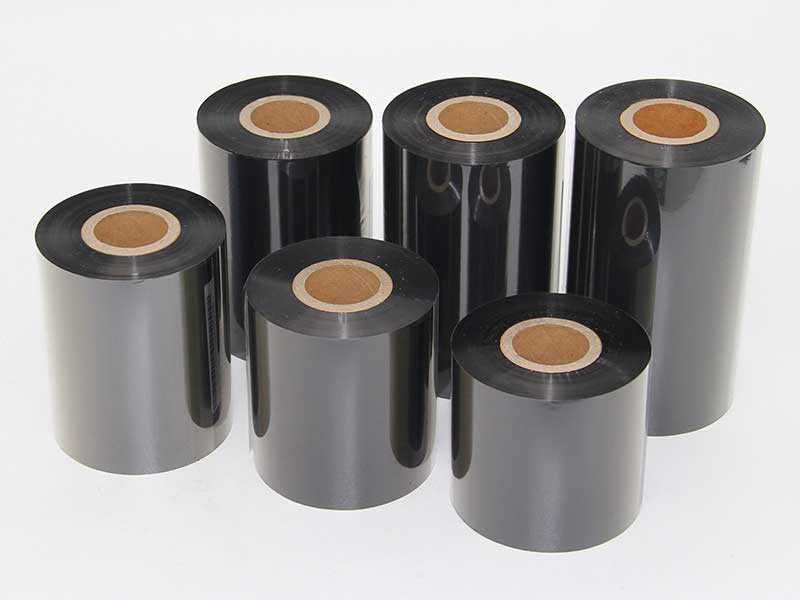
Thermal transfer ribbons are deceptively simple products. At their core lies an ultra-thin PET base film—typically just 4.5 to 20 microns thick—coated with a heat-resistant layer and a thermally sensitive ink . The slitting process transforms wide jumbo rolls into the finished narrow rolls that fit inside barcode printers, label applicators, and industrial coding systems.
This final converting step is unforgiving. A machine that runs “fast enough” on paper may produce edges with microscopic burrs that progressively damage print heads. A unit that holds width tolerance on a test sample may drift during a full production run, creating rolls that cause ribbon misalignment and wasted labels. The difference between a profitable converting operation and one that hemorrhages scrap often comes down to three parameters: slitting width, running speed, and tension control.
This guide explains what buyers need to know about each parameter—not just the numbers, but the practical implications for production quality, material compatibility, and total cost of ownership.
Slitting Width: More Than a Number
Width Tolerance Determines Application Fit
The specified slitting width of a machine—typically expressed as a range from minimum to maximum—is only half the story. The more consequential specification is width tolerance: how much deviation the machine can consistently hold across a full roll.
The industry generally recognizes three accuracy tiers :
| Accuracy Grade | Tolerance Range | Typical Applications |
| Standard | ±0.3 to 0.5 mm | Commercial labels, logistics, warehousing |
| High Precision | ±0.1 mm | Precision electronics, general industrial labeling |
| Ultra-High Precision | ±0.05 mm or tighter | Medical labels, ultra-narrow ribbons (<10 mm) |
Why does this matter? A ribbon that is nominally 50 mm wide but varies by ±0.5 mm may still load into a printer, but the print head contact pressure will be uneven. In high-resolution barcode or QR code printing, even a 0.2 mm deviation can cause print displacement or partial image transfer . For resin-based ribbons—often used in applications requiring chemical or heat resistance—width consistency is even more critical because the harder coating makes the ribbon less forgiving of misalignment.
Matching Width Range to Your Product Mix
A machine’s width range should cover not just current products but the likely direction of your order book. Basic models may offer a fixed or narrow range, while general-purpose machines typically adjust from 10 mm to 300 mm or more using movable tool holders .
For operations producing ultra-narrow ribbons (≤5 mm), the equipment requirements change. Lateral rigidity drops dramatically at these widths, making the ribbon sensitive to the slightest tension fluctuation or mechanical vibration. Ultra-narrow production demands micro-guide rollers, anti-flutter devices, and often servo-driven independent winding units rather than a single driven shaft .
The Width Parameter’s Hidden Dependencies
Two hardware features determine whether a machine can actually achieve its rated width tolerance in daily production:
Tooling quality and radial runout. The tool shaft’s radial runout should be controlled within 0.01 mm. The smaller the runout, the cleaner the slit edge. High-quality inserts from established suppliers not only last longer but produce fewer burrs—the microscopic edge defects that gradually wear down thermal print heads .
Correction system. Edge position detection via CCD vision or ultrasonic sensors allows the machine to automatically adjust the web path and prevent drift. CCD correction suits transparent or semi-transparent materials, while ultrasonic sensors work better with opaque ribbons . Without a functional correction system, width tolerance is a theoretical number, not a production reality.
Speed: The Efficiency Parameter That Requires Skepticism
Understanding Speed Ratings
Slitting speed is typically expressed in meters per minute (m/min). The market segments roughly as follows :
| Speed Class | Range | Best For |
| Low-speed economy | 50–100 m/min | Small batches, high-mix production |
| Medium-speed universal | 150–250 m/min | Most commercial orders |
| High-speed production | 300–500 m/min | Large-volume continuous production |
High-speed models—some rated up to 450 or 500 m/min—offer compelling throughput on paper . But the buyer’s guide warning is universal across sources: nominal maximum speed is not the same as usable production speed.
Material Dictates Real-World Speed
The ribbon’s coating chemistry has a direct impact on how fast it can be run reliably :
• Wax-based ribbons: Lower melting point, relatively soft texture. These can typically run at the machine’s higher speed ranges.
• Wax-resin (hybrid) ribbons: With a higher resin proportion, they generally require speeds 10–20% lower than wax-based ribbons.
• Resin-based ribbons: Hard coating, lower toughness. These usually need to run 20–30% slower than wax-based ribbons to avoid edge cracking, ink flaking, or tension-related defects.
A machine rated at 400 m/min may be perfectly capable of running your resin ribbon at 280 m/min. But if the same machine costs significantly more than a 250 m/min model—and you primarily convert resin ribbons—the premium may not translate to proportional productivity.
Stability Over Peak Speed
Experienced buyers evaluate speed through a different lens: how stable is the machine at the speeds you will actually run? A unit that claims 450 m/min but requires constant tension adjustments and correction interventions at 300 m/min is less productive than a 250 m/min machine that runs unattended.
The critical factors are start-stop control precision and tension stability during acceleration and deceleration. Rapid ramp-ups and ramp-downs introduce inertial forces that can cause instantaneous ribbon stretching or slackening. Machines with acceleration feedforward compensation actively adjust torque during speed changes to counteract these forces .
When evaluating a machine, require the manufacturer to run a trial with your actual ribbon material at 80% of the machine’s rated top speed. Observe the winding quality, edge condition, and whether any alarms or manual interventions occur during the run .
Tension: The Soul of Slitting Quality
Why Tension Control Is Non-Negotiable
If width tolerance defines what the finished roll measures, tension control determines whether the ribbon survives the journey to the printer. The PET base film is extremely sensitive to tension—too much and it stretches irreversibly, too little and the ribbon wrinkles or slips.
The consequences of poor tension control manifest in predictable ways :
• Excessive tension: Base film elongation, micro-cracks in the ink layer, print quality defects that may not appear until the end-user runs the ribbon. Stretched ribbon is essentially scrap.
• Insufficient tension: Wrinkling, edge deviation, uneven winding, and “telescoping” or “tower-shaped” rolls that cause feeding problems downstream.
• Fluctuating tension: Intermittent burrs, inconsistent roll hardness, and the dreaded “loose inside, tight outside” profile.
More than 50% of winding flatness problems trace back to tension control .
Open-Loop vs. Closed-Loop: A Critical Distinction
Open-loop tension control—such as a manually adjusted magnetic powder clutch—sets a nominal tension at the start of a run. But as the unwinding roll diameter decreases, tension naturally increases unless someone intervenes. A roll that runs perfectly at the start of a shift may be producing stretched ribbon by mid-afternoon .
Closed-loop tension control uses tension sensors to continuously measure actual web tension and adjusts motor torque in real time. Fluctuation can be held within ±2% of the set value . This is not a luxury feature—it is the baseline requirement for consistent quality.
For operations serious about yield rates, full servo closed-loop control with independent winding units is worth the investment. Each winding position can adjust torque based on its own roll diameter, eliminating the “core” problem where inner layers are loose while outer layers are tight .
Taper Tension: The Detail That Separates Good from Great
As the rewinding roll grows, the pressure on inner layers increases. Without compensation, the innermost ribbon can become compressed, causing ink transfer or blocking. Taper tension control gradually reduces winding tension as roll diameter increases—often starting at 12 N and dropping to 8 N for a 300 mm outer diameter roll .
The specific taper coefficient varies by material and roll size, but the principle is universal: winding tension should decrease as the roll grows. Machines without taper tension control leave this critical adjustment to operator experience or accept the resulting quality variation.
Slip Shafts and Independent Winding
For multi-specification production—slitting a jumbo roll into several different finished widths simultaneously—each winding station faces different load conditions. A pneumatic slip shaft allows each winding unit to maintain its own optimal torque via independent slip rings .
This is particularly valuable for high-end ribbon production and for operations that frequently switch specifications. The alternative—a single driven shaft with mechanical differentials—offers less precision and requires more maintenance.
Integrating Width, Speed, and Tension into a Buying Decision
These three parameters do not operate independently. Speed ambitions are constrained by tension control capability. Width precision depends on tension stability. The buyer who evaluates each in isolation risks purchasing a machine that excels on one dimension while failing on the others.
A Practical Evaluation Framework
Step 1: Define your material reality. What ribbon types dominate your production—wax, wax-resin, or resin? What widths and tolerances do your customers require? What jumbo roll dimensions will you receive?
Step 2: Match speed to material, not to marketing. If you primarily run resin ribbons, a 500 m/min machine offers little advantage over a well-built 250 m/min unit—you will operate at similar speeds. Invest the difference in tension control and automation instead.
Step 3: Prioritize tension control over peak specifications. A machine with closed-loop tension control, taper tension, and slip-shaft winding will consistently outproduce a faster machine that lacks these features.
Step 4: Insist on a trial with your material. Bring your own ribbon master roll. Test the actual width tolerance, edge condition, and winding quality at realistic speeds. Parameter tables are marketing; samples are evidence .
Step 5: Calculate total cost of ownership, not purchase price. A machine priced 20% lower but producing a scrap rate of 5–8% will cost more over two years than a higher-priced unit with a 1.5% scrap rate .
Conclusion
The thermal transfer ribbon slitting machine is a precision instrument for a demanding material. Width tolerance determines whether the finished ribbon will perform in the printer. Speed determines throughput—but only to the extent that tension control allows stable operation. Tension control is the foundational capability that makes width and speed meaningful.
For buyers, the practical takeaway is straightforward: evaluate machines on their ability to handle your specific materials at your realistic production speeds, not on their laboratory specifications. A machine that runs at 250 m/min with consistent ±0.1 mm width tolerance and closed-loop tension control will build a more profitable converting operation than a 500 m/min unit that requires constant intervention to produce saleable rolls.
About the Author
This guide is compiled from industry technical resources and equipment selection documentation for thermal transfer ribbon converting professionals. Specifications and recommendations should be validated against your specific production requirements and material characteristics.
 English
 Deutsch
 Français
 Español
 Português
 日本語
日本語 русский
 한국어
한국어 عربي
عربي ภาษาไทย
 Tiếng Việt
 Italiano
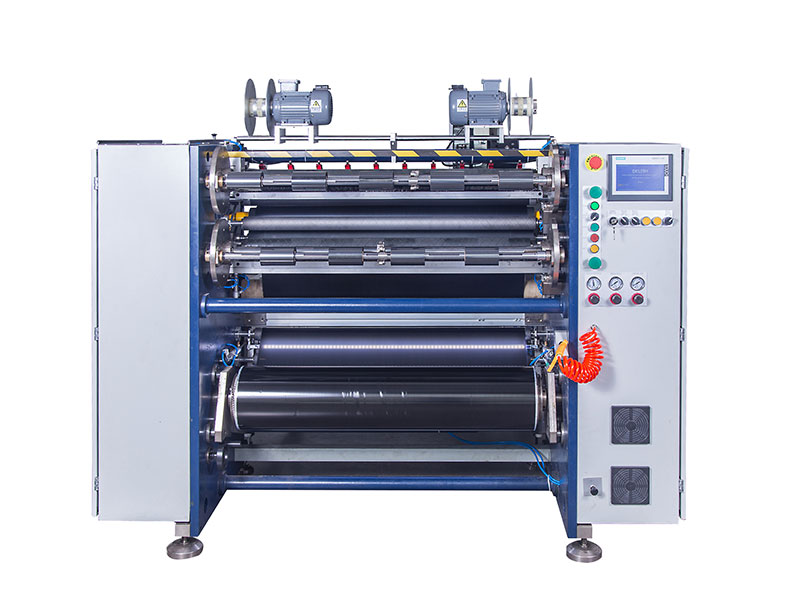

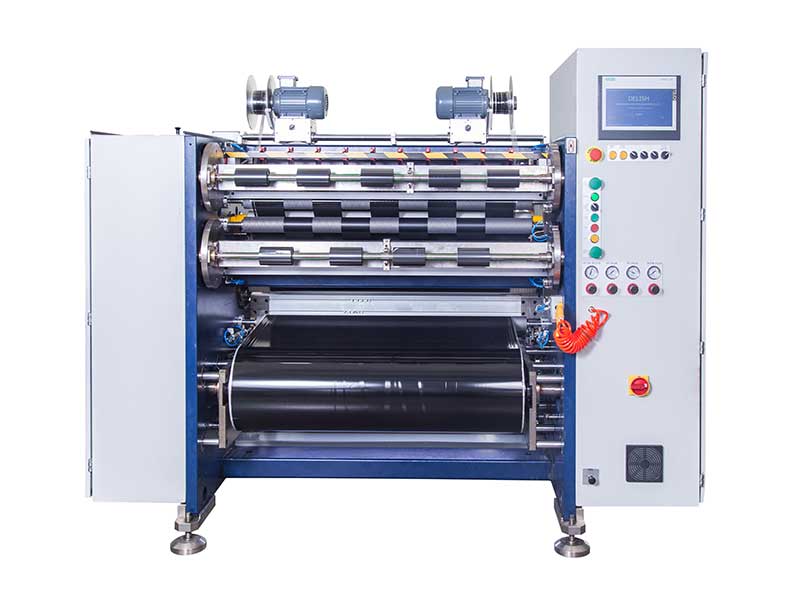 Barcode Ribbon Slitting Machine
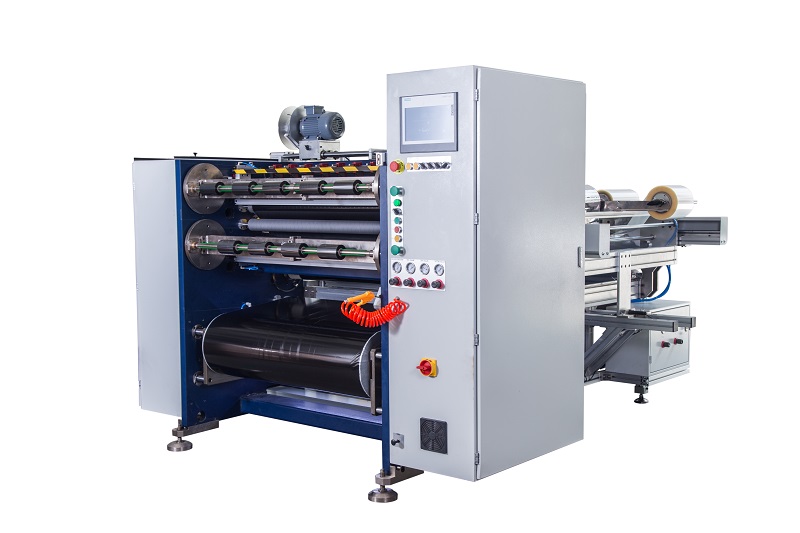 Semi Automatic Thermal Transfer Ribbon Slitter RSDS5 PLUS
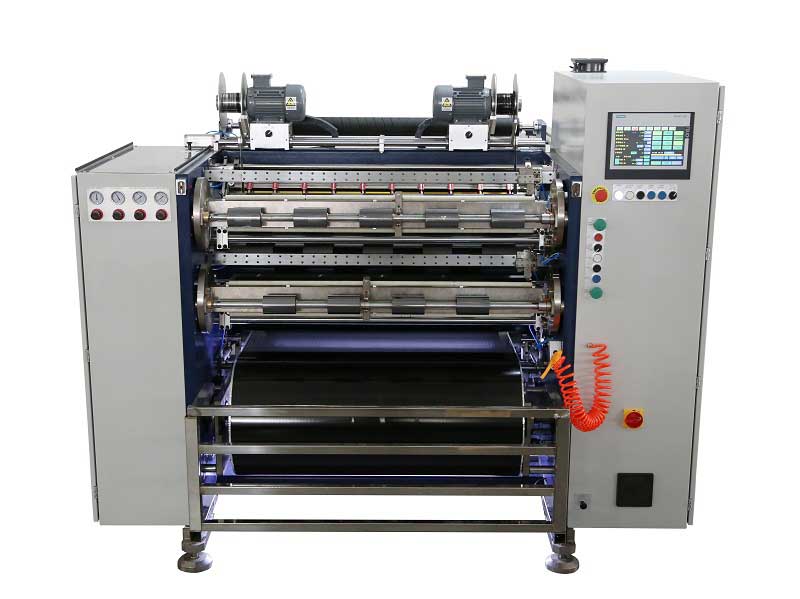 Automatic Thermal Transfer Ribbon Slitter RSDS8 H PLUS
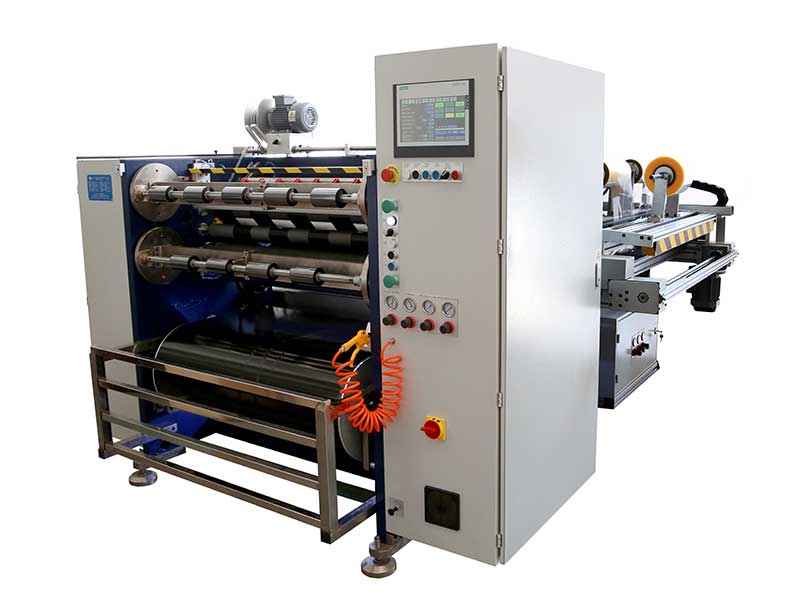 Automatic Thermal Transfer Ribbon Slitter RSDS6 PLUS
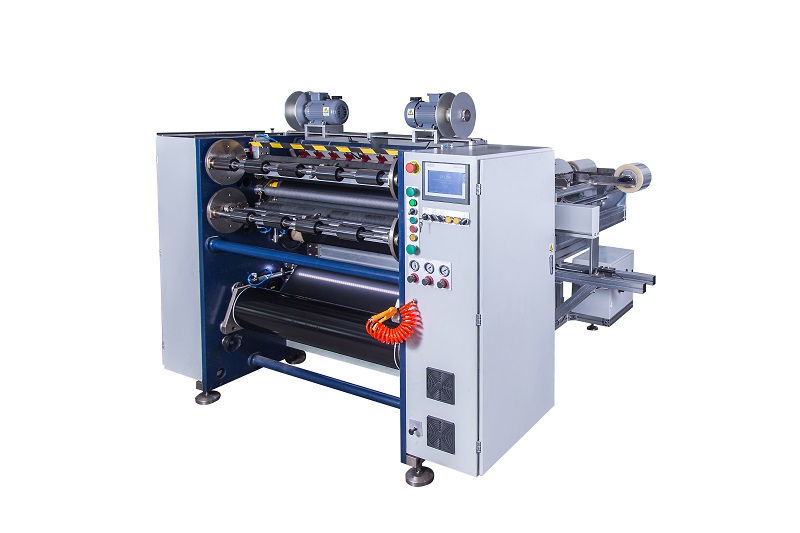 Semi Automatic Thermal Transfer Ribbon Slitter RSDS1 PLUS
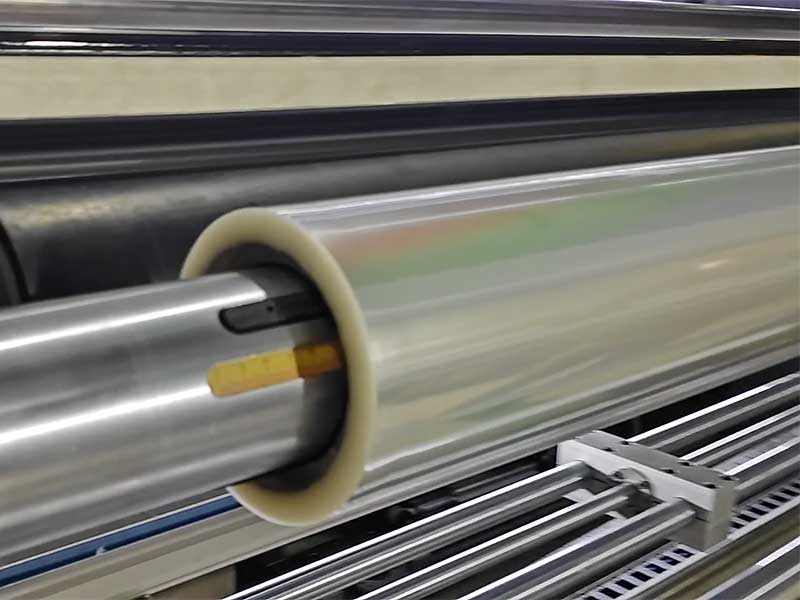 Solar Film Slitter
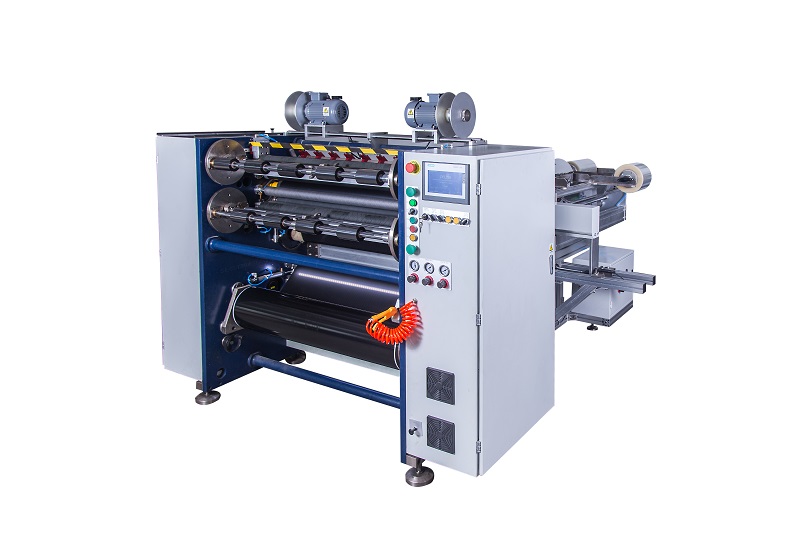 Semi Automatic Thermal Transfer Ribbon Slitter RSDS2 PLUS
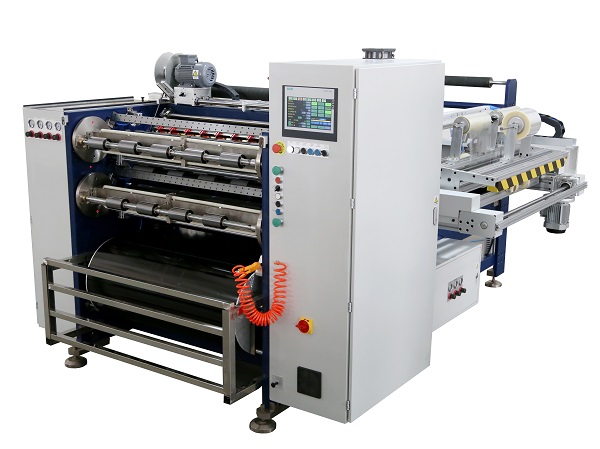 Automatic Thermal Transfer Ribbon Slitter RSDS8 PLUS