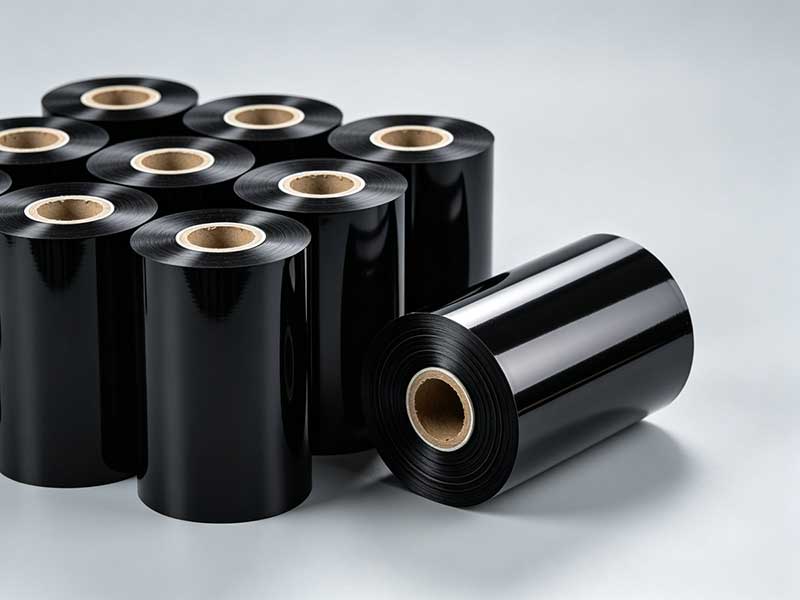
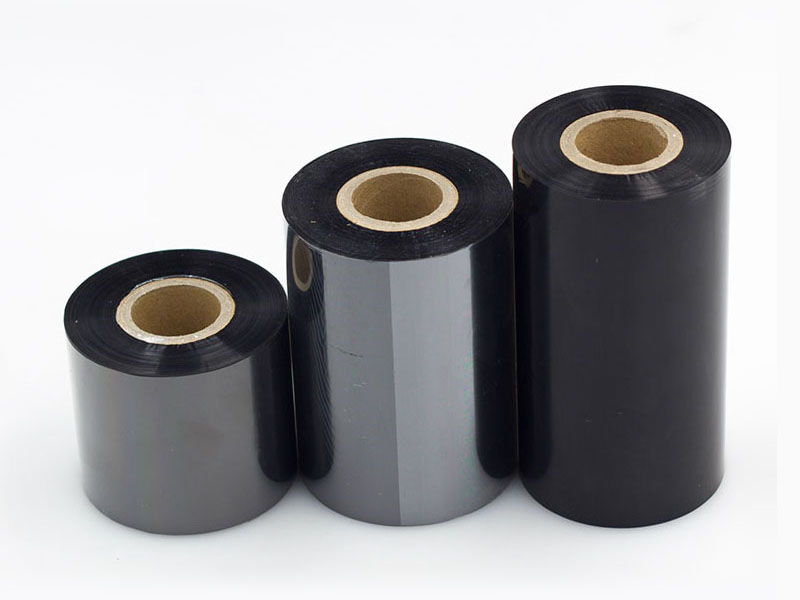
Thermal transfer ribbon slitting looks simple on paper: take a wide jumbo roll, cut it into narrow finished rolls, and ship them to printer manufacturers or converters. In practice, it is the final and most unforgiving step in ribbon production. A slitter that is mismatched to your material, your precision targets, or your order profile will produce rough edges that damage print heads, width deviations that cause print misalignment, and tension-related defects that only surface when the ribbon reaches the end user.
This guide is written for ribbon manufacturers, converters, and distributors evaluating a slitting machine purchase in 2026. It covers the specifications that actually matter, the hardware configurations that separate reliable machines from problematic ones, and the evaluation steps that protect your investment.
Start With Your Material, Not the Machine
The single most common buying mistake is comparing machines before defining the material profile. Thermal transfer ribbon substrates range from 4.5 to 20 microns in total thickness, but the coating chemistry changes everything about how a slitter should be configured.
Wax-based ribbons are relatively soft and tolerate higher slitting speeds and more forgiving tension settings. They dominate volume commercial applications and represent the most economical product tier.
Resin-based ribbons have harder coatings and lower toughness. They typically require speeds 20–30% lower than wax ribbons and demand tighter tension control. If resin ribbons are a significant part of your mix, a machine optimized solely for wax performance will disappoint you.
Wax-resin hybrids fall between these extremes and are widely used where additional abrasion or chemical resistance is needed beyond what pure wax provides.
Thickness matters as much as chemistry. Standard films run 4–20 microns, but substrates below 5 microns are especially sensitive to tension fluctuations. If your product portfolio includes ultra-thin specialty films alongside standard commercial ribbons, prioritize equipment with a wide, well-controlled tension range rather than a machine tuned for a single material type.
Before contacting any supplier, document your current and anticipated product mix. The answers will determine whether you need a general-purpose workhorse or a specialized precision platform.
Slitting Precision: The Quality Threshold You Cannot Compromise
Slitting accuracy determines width consistency and edge quality. Insufficient precision produces burred edges that can damage print heads, and width deviations that cause ribbon misalignment during high-speed printing.
Industry accuracy tiers break down roughly as follows:
| Accuracy Tier | Tolerance Range | Typical Applications |
| Economy | ±0.3–0.5 mm | Conventional commercial and logistics labels |
| High Precision | ±0.1 mm | Precision electronic tags, pharmaceutical traceability |
| Ultra-High Precision | ±0.05 mm or tighter | Medical labels, high-resolution barcodes, ultra-narrow ribbons |
For most commercial ribbon production, ±0.1 mm is a reasonable target. If you serve medical, electronics, or ultra-narrow segment customers, ±0.05 mm capability is not optional.
The critical evaluation step is trial cutting with your own material. Parameter tables reflect ideal conditions in a demonstration room. Your master roll reflects reality. Ask the manufacturer to run your ribbon at production speed, then measure width deviation across at least ten consecutive rolls with a caliper. Inspect cut edges under magnification for burrs, coating delamination, or heat damage.
Tension Control: The Specification That Determines Everything Else
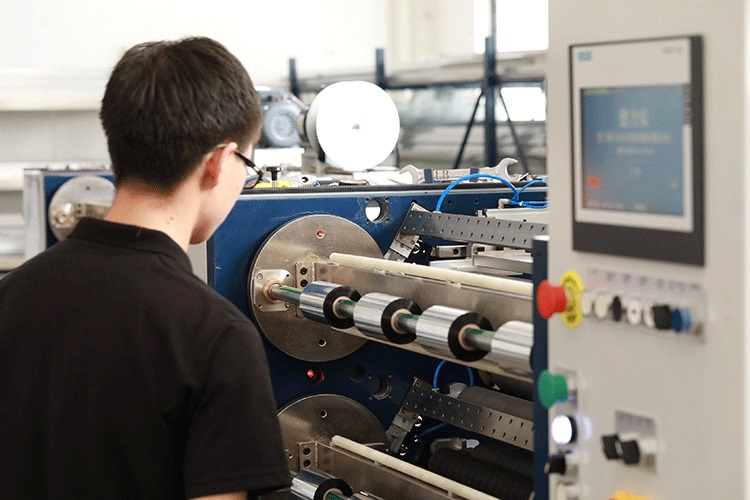
Industry sources consistently describe tension control as the “soul” of ribbon slitting, and for good reason. Tension control accounts for more than 50% of the influence on winding flatness and roll quality.
The PET base film in thermal transfer ribbon is extremely thin and behaves elastically under load. Excessive tension stretches and deforms the substrate, causing microcracks in the ink layer that shed powder and contaminate print heads. Insufficient tension produces loose, wrinkled rolls that generate white lines or indentations during printing. Uneven tension leads to telescoping, core misalignment, and the dreaded “daisy core” defect where inner layers are crushed by outer winding pressure.
What to look for: A fully automatic closed-loop tension control system combining a PLC with servo drives. This configuration monitors and adjusts tension in real time across unwinding, traction, and rewinding stages, holding fluctuations within ±2% of the set value or tighter. Traditional open-loop control—manual magnetic particle clutch adjustment—can drift by ±10% and cannot compensate for the tension changes that occur as roll diameter grows.
Taper tension is equally important. As the rewinding diameter increases, the system should automatically decrease tension to maintain a “tight inside, softer outside” structure. Without taper control, large-diameter finished rolls develop internal creep, ink transfer, or substrate deformation that only becomes apparent after storage and transport.
If your production includes thin substrates below 5 microns, verify that the machine’s tension range extends low enough and that the control system responds quickly enough to handle abrupt acceleration and deceleration. A machine that holds tension well at steady state but oscillates during speed changes will produce inconsistent rolls throughout the shift.
Winding Neatness and the Hardware That Produces It
Winding neatness is the most visible indicator of slitter quality, and the most frequently overlooked specification during purchasing. End-face deviation should be controlled within ±1 mm for standard production, with high-end equipment achieving ±0.5 mm.
What does poor winding neatness look like? A “bell-mouth” profile where one edge of the roll extends beyond the other. “Sawtooth” edges where individual wraps protrude irregularly. Internal wrinkles that appear as radial creases when the roll is unwound. Any of these defects will cause ribbon breakage or printer jams during end-user operation, generating complaints that trace back to your slitting department.
Slip shafts are essential for multi-specification production. Each winding station has an independent slip ring that adjusts torque as roll diameter changes, maintaining consistent hardness from core to surface. Pneumatic slip shafts offer better control precision than mechanical versions and are worth the additional investment if you frequently switch specifications or run multiple narrow rolls simultaneously.
Active web guiding using photoelectric or ultrasonic sensors is the other non-negotiable hardware item. The system monitors edge position in real time and adjusts rollers to prevent lateral drift. Without active correction, even a well-tensioned web will gradually wander, producing rolls that look acceptable to the eye but fail width inspection at the customer’s incoming quality check.
Slitting Speed: Match Output to Material Realities
Nominal maximum speed is the most heavily marketed specification and the least meaningful in isolation. A machine that claims 450 m/min but must be run at 200 m/min to maintain acceptable quality with your resin ribbons is effectively a 200 m/min machine.
A practical framework for speed evaluation:
| Speed Class | Range | Appropriate For |
| Entry-level | 50–100 m/min | Small batch, frequent order changes, market testing |
| Commercial workhorse | 150–250 m/min | Most standard wax and wax-resin orders |
| High-volume production | 300–500 m/min | Continuous large-batch production with automation |
Resin ribbons will run at the lower end of any machine’s range. Wax ribbons can run faster. When a supplier quotes a top speed, ask under what material and tension conditions that speed was achieved. Then test with your own ribbon at that speed and evaluate start-stop control, winding neatness during acceleration, and splice handling.
For converters with diverse order profiles, changeover speed matters more than peak velocity. A machine that takes 30 minutes to switch from one width to another loses more productive time than a slower machine that changes over in three minutes. Automatic knife positioning systems, programmable slitting recipes, and quick-release shafts directly affect your effective capacity.
Automation and Intelligence: What Is Worth Paying For in 2026
The 2026 slitting machine market offers a spectrum from semi-automatic mechanical units to fully automatic systems with digital twin capabilities. Not every feature justifies its cost, but several automation upgrades deliver measurable returns.
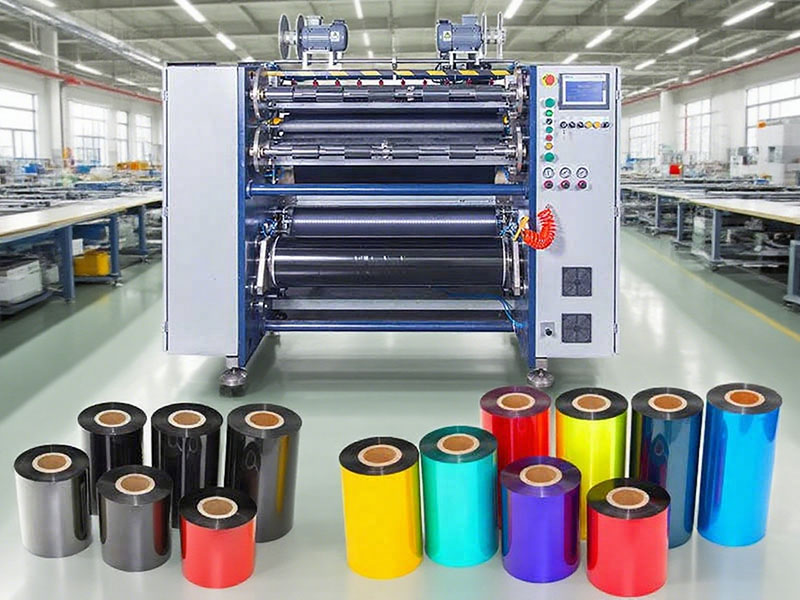
Automatic knife setting eliminates manual tool positioning errors and reduces changeover time from tens of minutes to under three minutes on well-equipped machines. For operations running multiple narrow widths per shift, this pays for itself quickly.
Turret rewinding and automatic cut-transfer allow continuous production without stopping to remove finished rolls. This is valuable for high-volume standard products but less critical for job-shop environments where order changes dominate.
Machine vision inspection is emerging as a quality assurance tool. Cameras monitor cut edges in real time, detecting burrs, coating damage, or width deviations as they occur rather than after a full roll has been produced. For medical and electronics customers with zero-defect expectations, this capability provides documented quality records and catches problems before they become returns.
Process recipe management allows operators to recall validated settings for recurring orders. Rather than relying on operator memory or trial-and-error adjustment, the machine retrieves tension profiles, speed ramps, and knife positions from a database. This reduces variability between shifts and shortens setup for repeat orders.
What is not worth paying for? Fully automated unmanned operation if your order profile is high-mix, low-volume. The automation premium is best justified when you have stable, repetitive production that can run for extended periods without intervention.
Cost: Calculate Total Ownership, Not Purchase Price
Thermal transfer ribbon slitting machines range from entry-level units to sophisticated production systems. The purchase price difference between a budget machine and a quality machine may be 20–30%, but the total cost difference over five years can be far larger.
The true cost equation is: Purchase price + operating costs + maintenance + downtime losses + scrap and rework from quality failures.
A machine that costs 20% less but requires frequent tension recalibration, produces higher scrap rates during changeover, and suffers from component failures that halt production will consume the savings within the first year or two. Core components—bearings, guide rails, servo motors, and the knife system—determine long-term reliability. Ask about component brands and expected service intervals.
After-sales support is a hidden cost line. When a slitter goes down, every hour of downtime is lost production. Evaluate the supplier’s technical support responsiveness, spare parts availability, and whether remote diagnostics are available. A slightly higher purchase price from a supplier who can ship a critical part overnight is often the better economic decision.
A Practical Evaluation Checklist
Before signing a purchase order, complete these steps:
1. Trial cut with your material. Bring master rolls representing your main product types—wax, wax-resin, and resin if applicable. Run at production speed. Measure width deviation and inspect edges.
2. Verify tension performance during acceleration. Watch the roll quality as the machine ramps from low to high speed and back down. Tension oscillations during speed changes reveal control system weaknesses that steady-state operation hides.
3. Check winding neatness across a full roll. Inspect end-face alignment from core to surface. Look for bell-mouth, sawtooth, or internal wrinkles. Measure end-face deviation at multiple points.
4. Test changeover time. Time the process of switching from one width to another. If you run multiple specifications daily, this number matters more than the speed specification.
5. Confirm slip shaft and web guide configuration. Verify that the machine has the hardware to handle your narrowest and widest specifications with acceptable quality.
6. Review the control system. Ask for a demonstration of taper tension setup and recipe management. A machine that requires an engineer to adjust parameters for each order is not truly programmable.
7. Speak with existing customers. Ask for references in your region or product segment. Inquire about reliability, support responsiveness, and whether the machine meets its specified accuracy in daily production rather than only in demonstrations.
The thermal transfer ribbon market continues to demand tighter tolerances, thinner substrates, and more consistent quality as printing resolutions increase and applications expand into medical, electronics, and specialty labeling. A slitting machine purchased in 2026 should have headroom to meet requirements that are not yet on your order book. The evaluation process described here takes time, but it is far less costly than discovering a machine’s limitations after it is installed on your production floor.
 English
 Deutsch
 Français
 Español
 Português
 日本語
 русский
 한국어
 عربي
 ภาษาไทย
 Tiếng Việt
 Italiano



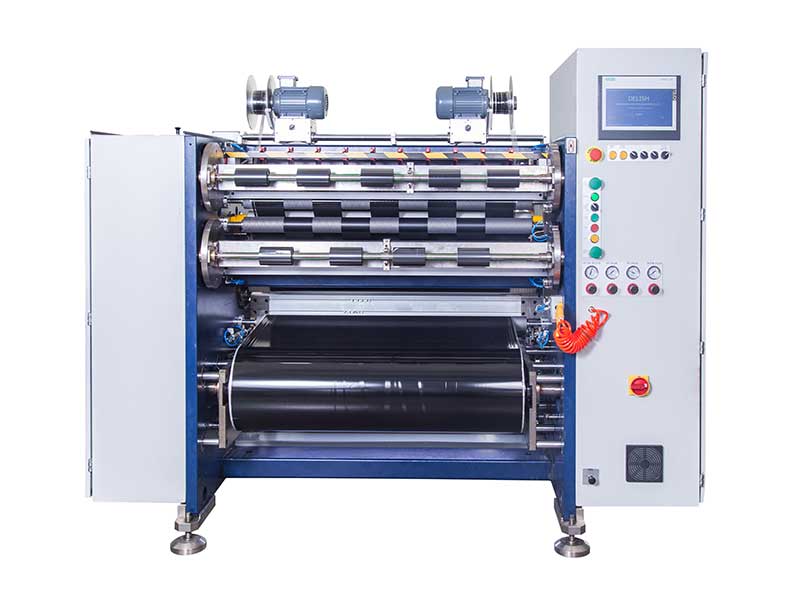 Barcode Ribbon Slitting Machine
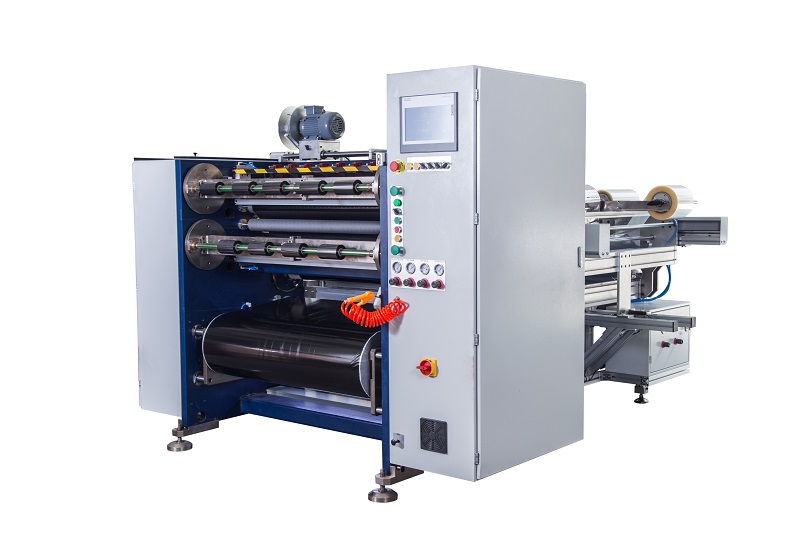 Semi Automatic Thermal Transfer Ribbon Slitter RSDS5 PLUS
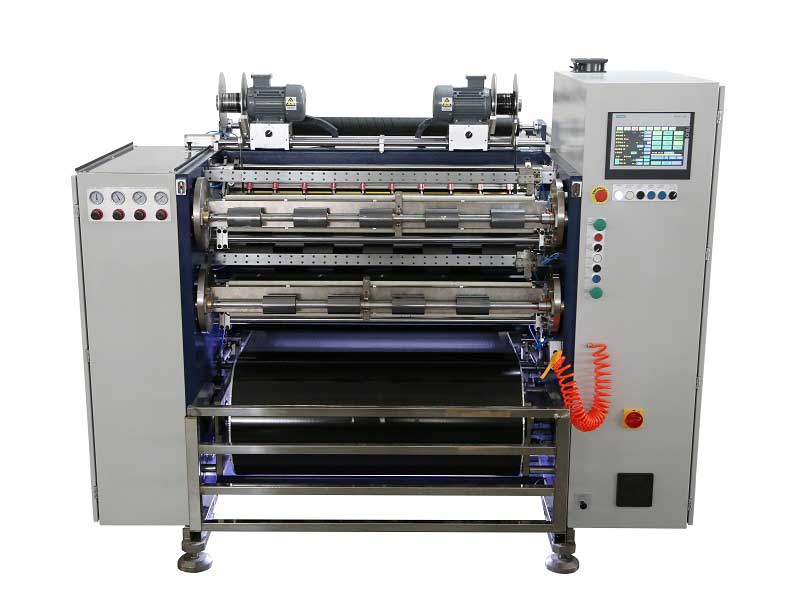 Automatic Thermal Transfer Ribbon Slitter RSDS8 H PLUS
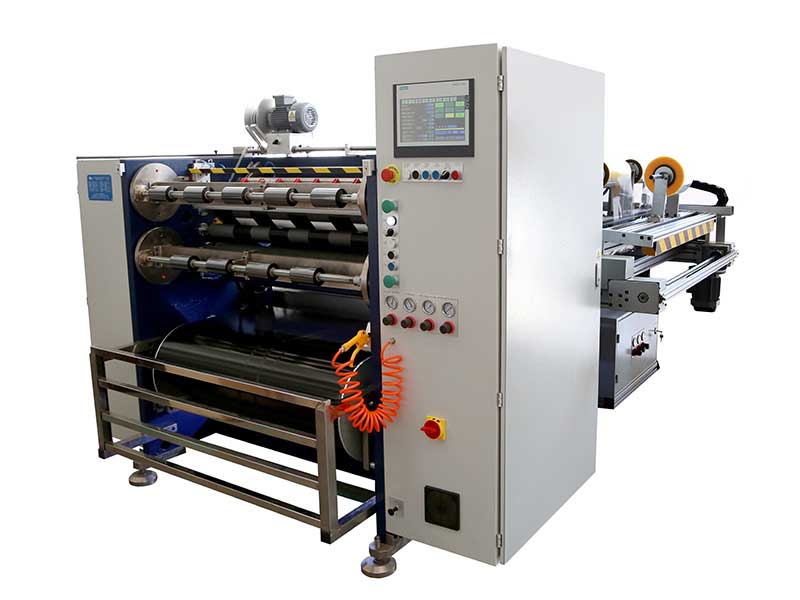 Automatic Thermal Transfer Ribbon Slitter RSDS6 PLUS
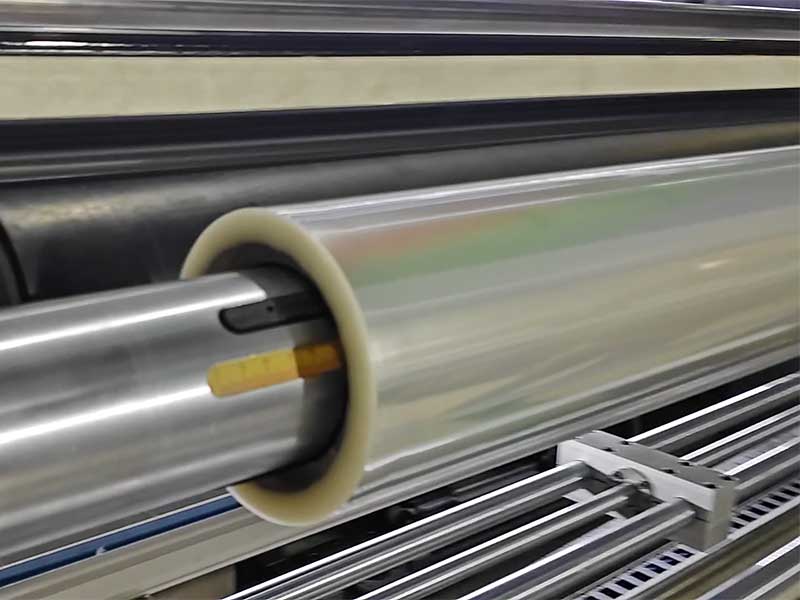 Solar Film Slitter
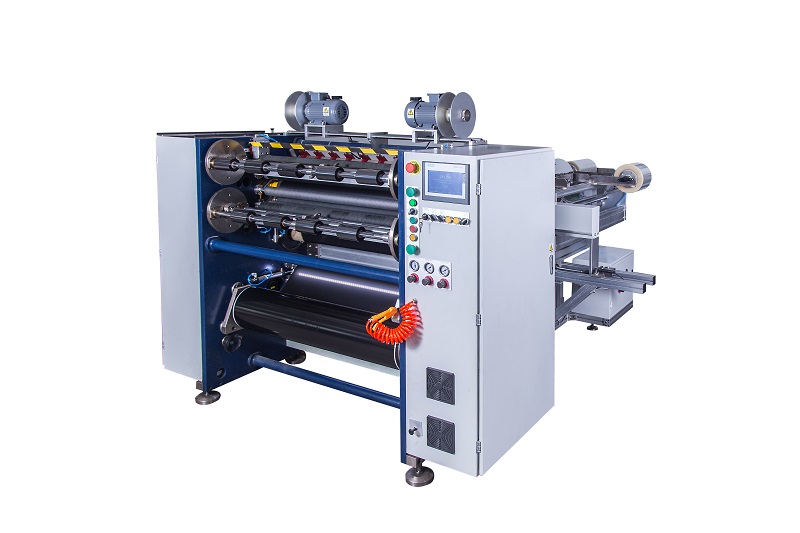 Semi Automatic Thermal Transfer Ribbon Slitter RSDS1 PLUS
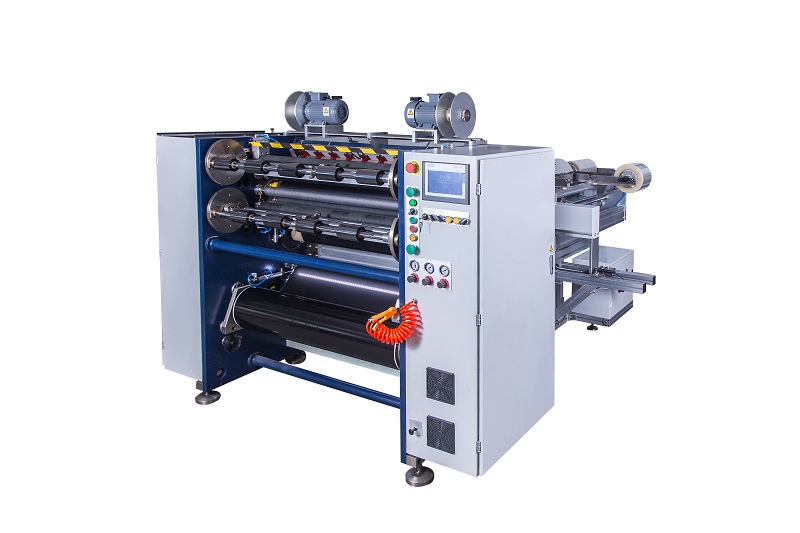 Semi Automatic Thermal Transfer Ribbon Slitter RSDS2 PLUS
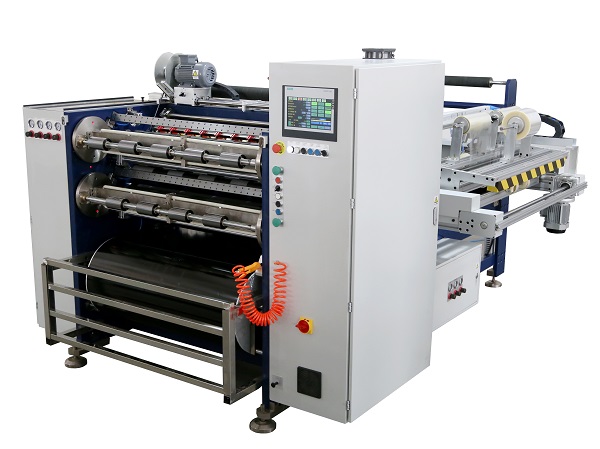 Automatic Thermal Transfer Ribbon Slitter RSDS8 PLUS