Thermal transfer ribbon slitting is a precision operation where seemingly minor issues can cascade into major quality failures. The PET base film used in ribbons is exceptionally thin—typically between 4.5 and 10 microns—making it highly sensitive to tension variations, blade condition, and mechanical alignment. For converters and ribbon manufacturers, understanding the root causes of common slitting defects is essential for maintaining yield, reducing downtime, and delivering consistent products to downstream customers.
This guide examines the most frequent problems encountered in thermal transfer ribbon slitting and provides actionable solutions based on industry best practices.
1. Ribbon Breakage and Frequent Downtime
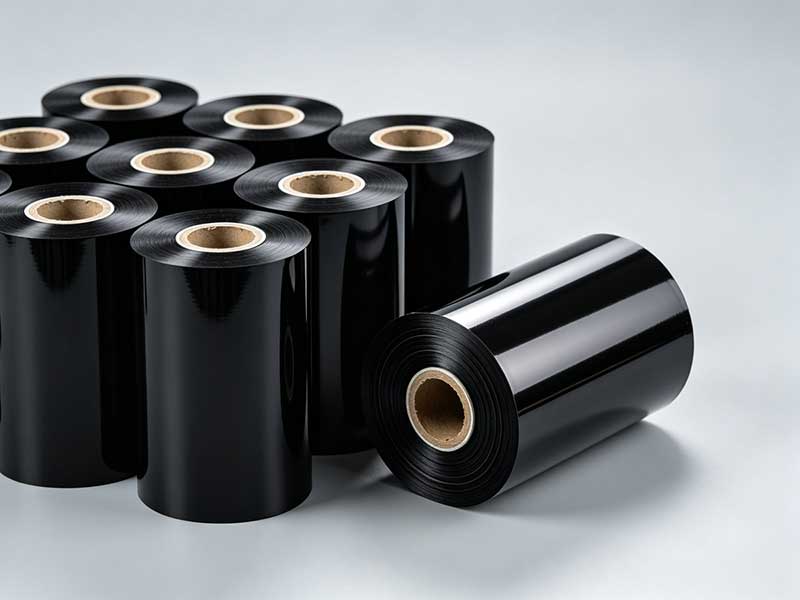
Ribbon breakage is the leading cause of unplanned downtime, accounting for approximately 60% of machine stoppages in typical operations. A broken web not only halts production but also generates material waste and requires time-consuming rethreading.
Root Causes:
The most common culprit is excessive or fluctuating tension. When tension exceeds the tensile limit of the PET substrate, the film stretches and eventually snaps. Tension spikes during acceleration or deceleration are particularly dangerous. Blade condition also plays a critical role: dull or chipped blades convert the cutting action into a squeezing action, creating edge burrs and micro-cracks that propagate into full breaks. Additionally, foreign objects on guide rollers—adhesive residue, carbon powder clumps, or burrs—can scratch the ribbon surface and initiate tears.
Solutions:
Upgrade to a closed-loop tension control system with PID feedback. Unlike open-loop torque motor control, closed-loop systems continuously adjust based on real-time tension sensor data, maintaining stability even during speed changes. Pre-store tension parameters for different ribbon widths and thicknesses to enable rapid changeovers. For narrow ribbons below 25mm, tension should typically be maintained at 3-5N, while 50mm widths require 6-10N. Inspect all roller surfaces before each shift and clean with alcohol if any contamination is detected. Replace worn blades immediately—carbide inserts should be replaced every 100-150 hours of operation.
2. Slitting Burrs and Rough Edges
Burrs manifest as jagged, whitish edges with visible powder shedding. Beyond aesthetics, burred edges can damage print heads and cause ribbon misalignment in the printer.
Root Causes:
Blade dullness or chipping is the primary cause. Even microscopic notches on the cutting edge transform the slitting process from clean shearing to tearing. Improper blade overlap and lateral clearance settings exacerbate the problem. For thin 4.5μm substrates, excessive overlap compresses the edge; insufficient overlap fails to cut through entirely. Electrostatic discharge also contributes by attracting dust particles to the cut edge, creating a rough, contaminated finish.
Solutions:
Establish a blade inspection protocol at the start of every shift using magnification. For shear slitting, control blade overlap at 0.01-0.03mm and lateral clearance at 0.02-0.05mm, verified with a feeler gauge. Install AC-type static elimination rods at the roller immediately after the slitting station, and verify that equipment grounding resistance is below 4Ω. For operations running thin substrates, consider blades with finer edge geometry and reduce slitting speed if burrs persist.
3. Uneven Winding and Telescoping Rolls
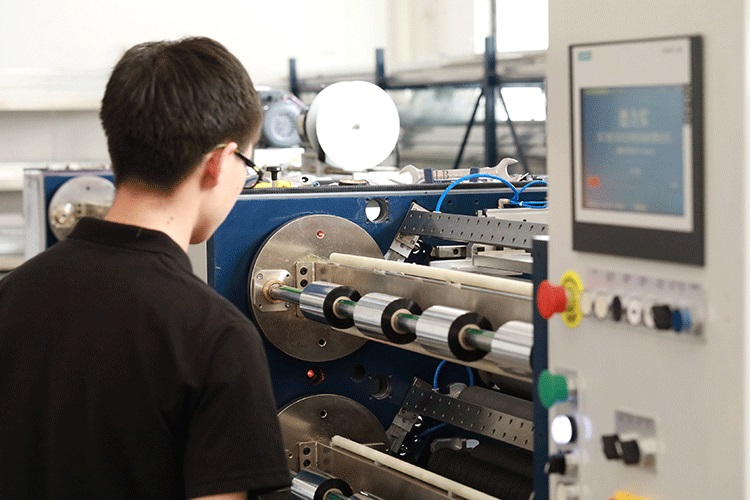
Uneven winding—manifesting as telescoping, bell-shaped, or tower-shaped rolls—creates downstream problems including printing misregistration and edge damage during transport. Telescoping occurs when inner layers protrude beyond outer layers, a defect that may not appear until hours after slitting.
Root Causes:
The winding tension taper profile is the most frequent offender. If tension does not decrease as the roll diameter grows, outer layers compress inner layers, forcing them to slide axially. Mechanical factors compound the issue: a winding shaft that is not parallel to the guide rollers, inconsistent chuck pressure at both ends, or worn pressure rollers all contribute to uneven builds. For smooth-backed ribbons, the inherently low friction coefficient between layers makes telescoping more likely without proper taper control.
Solutions:
Implement a programmable taper tension profile. A typical starting point is setting initial winding tension at 120% of the slitting zone tension, decreasing linearly to 80% as the roll reaches full diameter, with a taper coefficient between 0.3 and 0.5. Verify winding shaft parallelism with a level, maintaining error within 0.2mm/m. For ribbons with particularly smooth backcoats, consider a center-surface winding configuration where a rubber nip roller applies light pressure to expel air and provide initial layer-to-layer friction.
4. Ribbon Wrinkling and Creasing
Wrinkles appear as longitudinal folds or edge curling that render affected sections unusable. Even minor creasing creates print defects including white lines and pressure marks.
Root Causes:
Insufficient tension is a common trigger: without adequate web tension, the ribbon wanders laterally and folds over itself during winding. Conversely, excessive tension can cause the thin PET film to deform elastically, creating edge waves. Misaligned guide rollers create differential tension across the web width, causing one edge to slacken while the other tightens. Environmental factors also matter—low humidity increases static attraction to rollers, while temperature variations affect film stiffness.
Solutions:
Calibrate the unwind tension to the minimum viable level that maintains web stability without stretching the substrate. For wax-based ribbons, 2-5N is typically sufficient; resin-based formulations may require 8-12N depending on width. Check all guide rollers for parallel alignment using a laser or precision straightedge, targeting error below 0.05mm/m. Maintain the slitting environment at 20-25°C with relative humidity between 45-60% to minimize static and preserve consistent film properties.
5. Core Slippage and Winding Shaft Issues
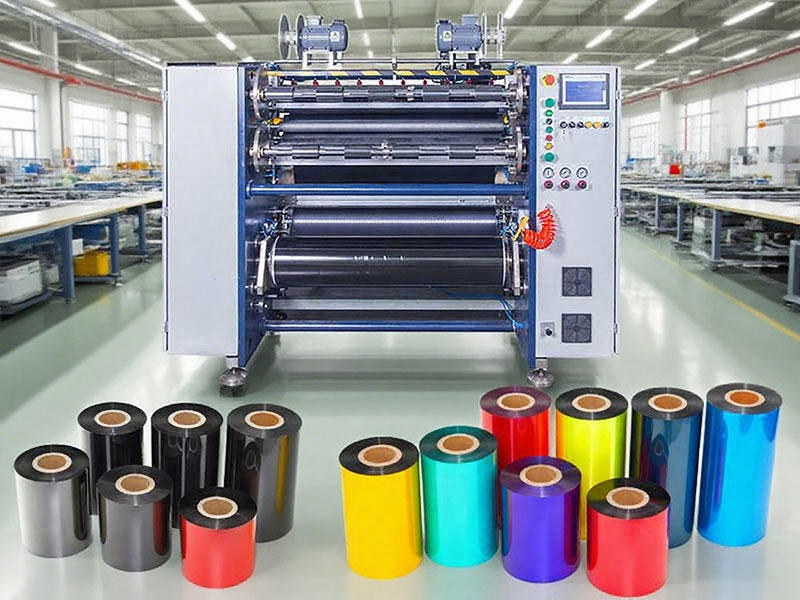
Core slippage—where the ribbon core rotates independently of the winding shaft—produces loose, uneven rolls and can damage the plastic core itself, creating debris that contaminates the ribbon.
Root Causes:
Mechanical slip originates from insufficient friction between the core and the shaft. Air-expanding shafts with worn friction elements, inadequate air pressure, or leaks fail to grip the core securely. Plastic cores with inner diameter tolerances on the high side compound the problem. Excessive acceleration rates can also overcome static friction instantaneously, causing the core to break free and slip.
Solutions:
Maintain air shaft pressure at 0.5-0.6MPa and inspect friction elements for wear every 200 operating hours. Replace urethane rubber rings on winding rollers at the same interval to restore grip. Program acceleration and deceleration S-curves to limit inertial forces during speed changes. For operations running cores with inconsistent inner diameters, consider a mechanical chuck with radial expansion segments that accommodate minor tolerance variations.
6. Inconsistent Slitting Widths
Width deviations exceeding the typical ±0.3mm tolerance create rolls that may not fit customer specifications or cause tracking problems in the printer.
Root Causes:
Loose blade mounting allows axial movement during high-speed rotation, causing the slitting position to drift. Spacers with insufficient dimensional accuracy or wear introduce cumulative errors across multiple slit positions. On the machine side, axial play in the blade shaft exceeding 0.02mm indicates bearing wear that affects all slitting positions simultaneously.
Solutions:
Verify blade shaft locking mechanisms are tightened to specified torque before each production run. Measure spacers periodically with a micrometer and replace any exceeding tolerance. Check blade shaft axial movement with a dial indicator; if play exceeds 0.02mm, schedule bearing replacement during the next planned maintenance window.
Preventive Maintenance as a Production Strategy
The most effective approach to slitting problems is preventing them from occurring. Establish a daily inspection checklist covering blade condition, tension roller cleanliness, static elimination rod function, and air pressure. Maintain a minimum inventory of critical spares including blades, friction rings, and tension sensor components. Track slitting yield and downtime by cause to identify recurring issues before they escalate into major production losses.
For converters seeking to optimize their thermal transfer ribbon operations, the investment in closed-loop tension control, precision blade management, and systematic maintenance delivers measurable returns: industry data shows that upgrading from open-loop to closed-loop tension control alone can reduce unplanned downtime by over 90% and improve slitting yield by 5 percentage points or more.
 English
 Deutsch
 Français
 Español
 Português
 日本語
 русский
 한국어
 عربي
 ภาษาไทย
 Tiếng Việt
 Italiano

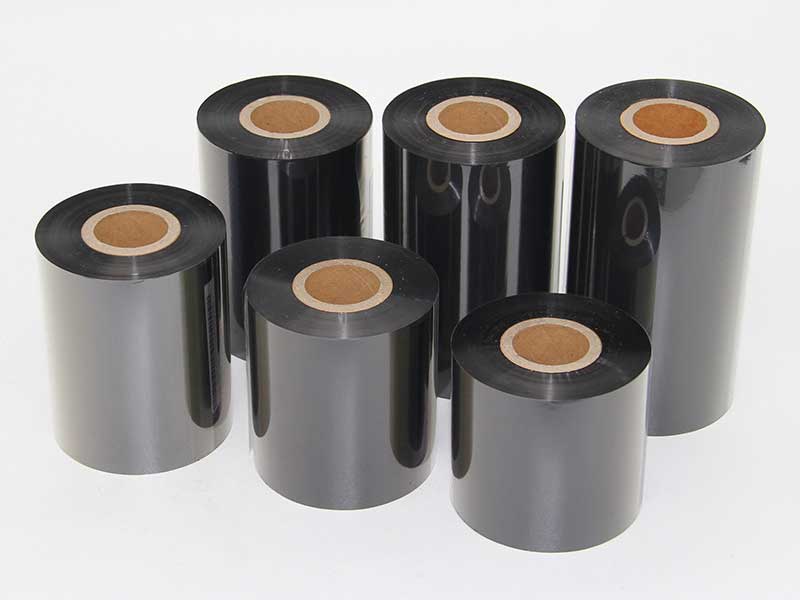
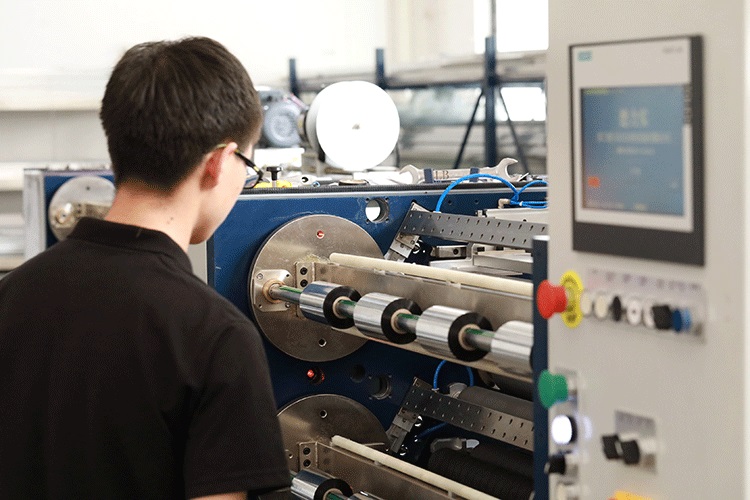
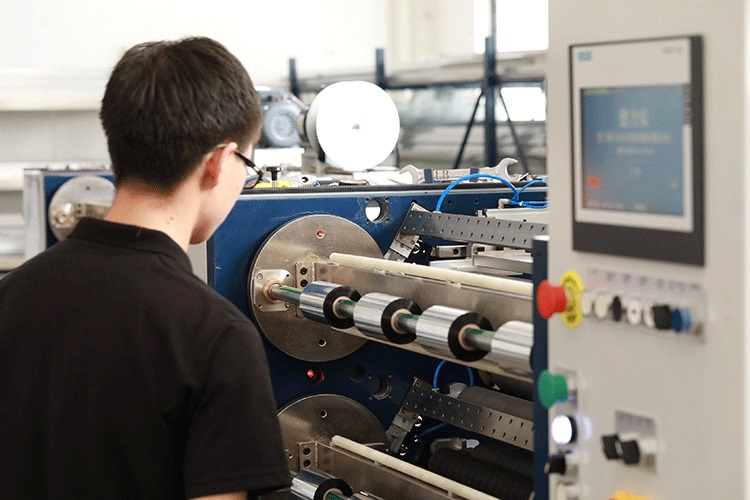
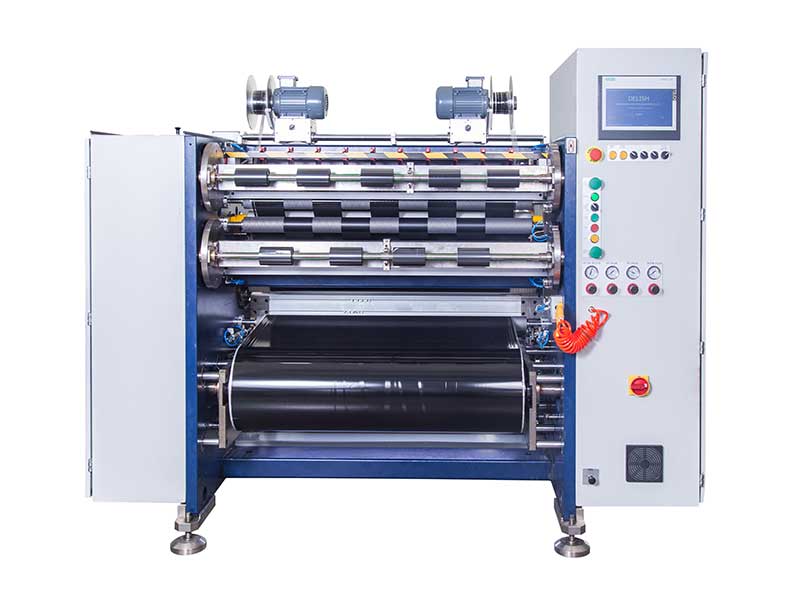 Barcode Ribbon Slitting Machine
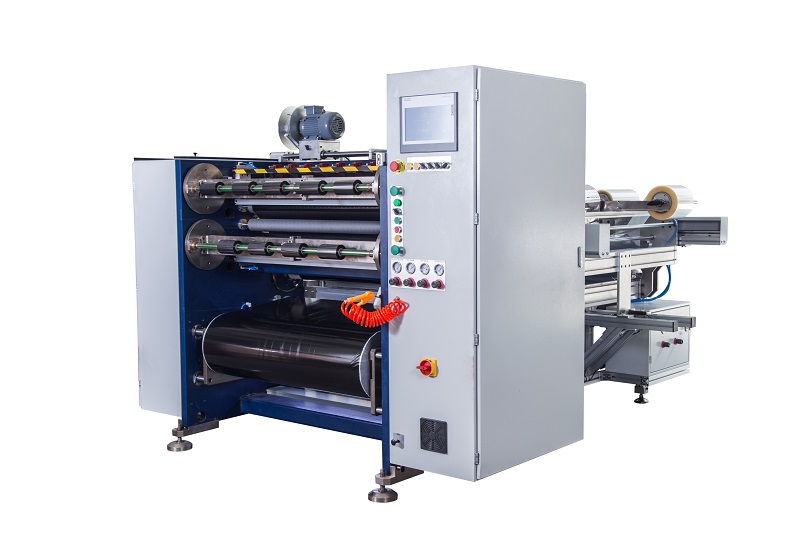 Semi Automatic Thermal Transfer Ribbon Slitter RSDS5 PLUS
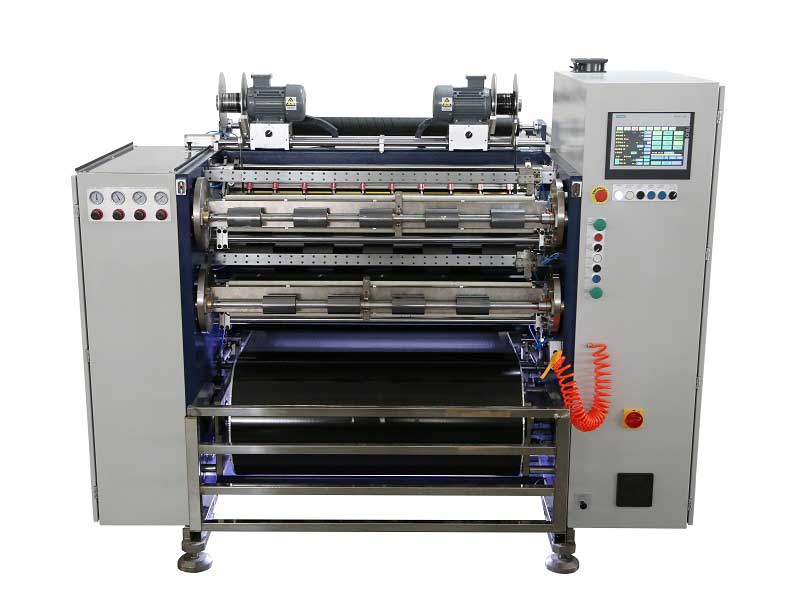 Automatic Thermal Transfer Ribbon Slitter RSDS8 H PLUS
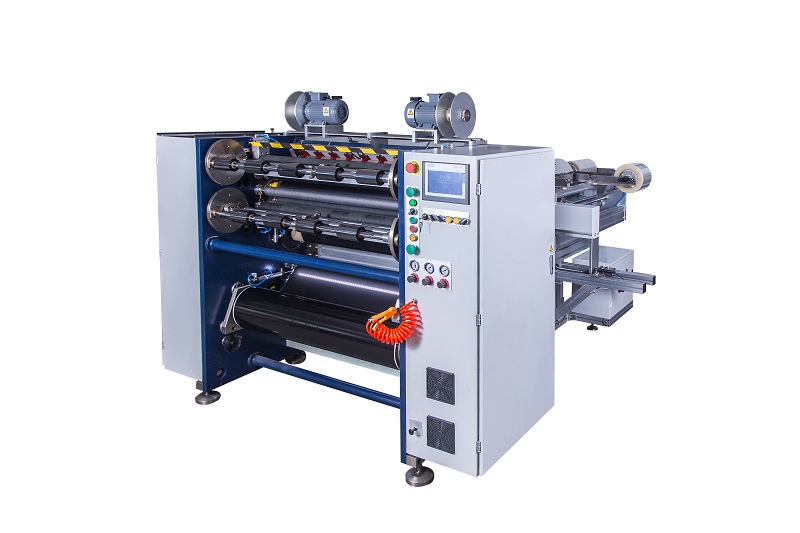 Semi Automatic Thermal Transfer Ribbon Slitter RSDS2 PLUS
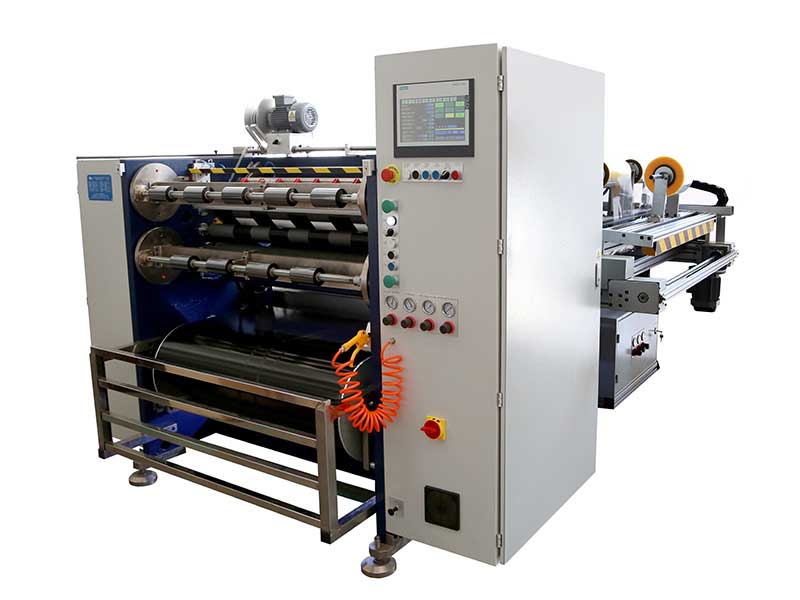 Automatic Thermal Transfer Ribbon Slitter RSDS6 PLUS
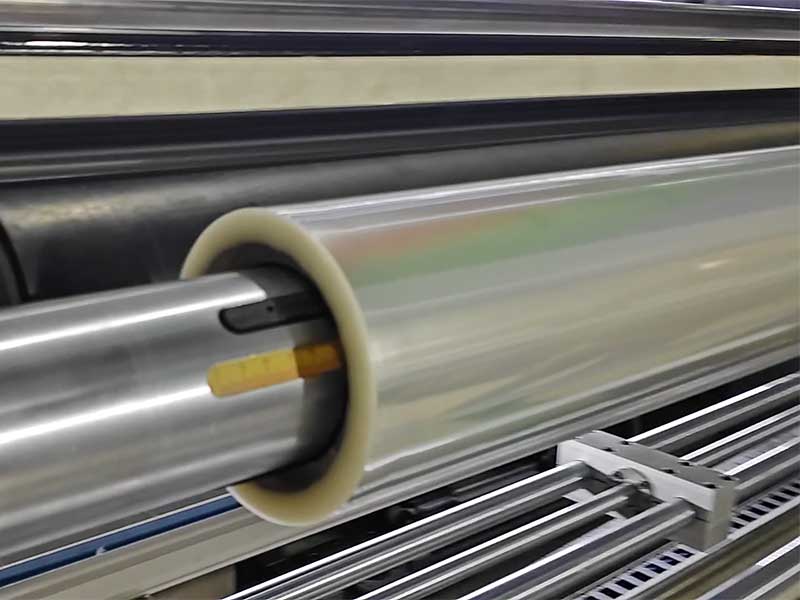 Solar Film Slitter
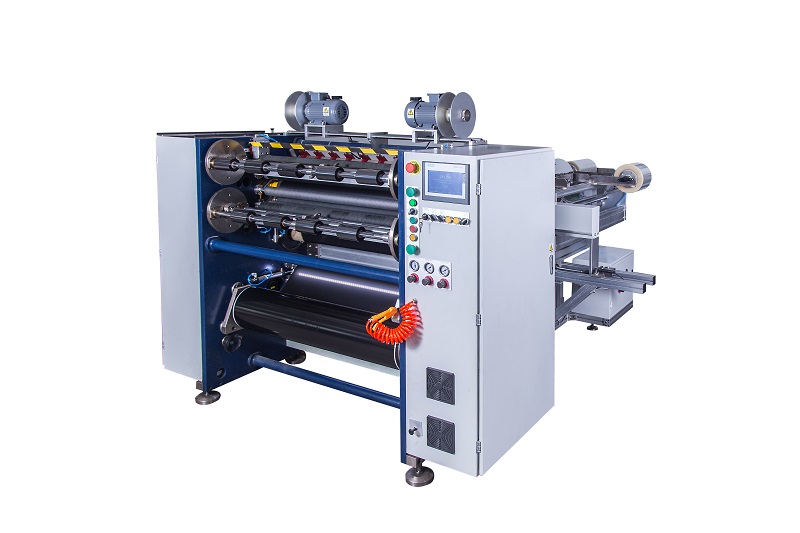 Semi Automatic Thermal Transfer Ribbon Slitter RSDS1 PLUS
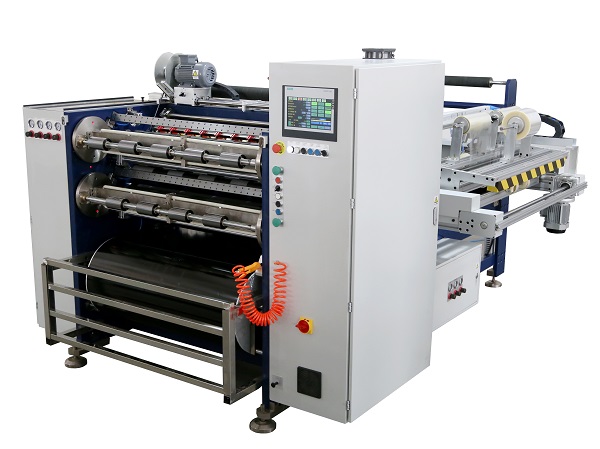 Automatic Thermal Transfer Ribbon Slitter RSDS8 PLUS