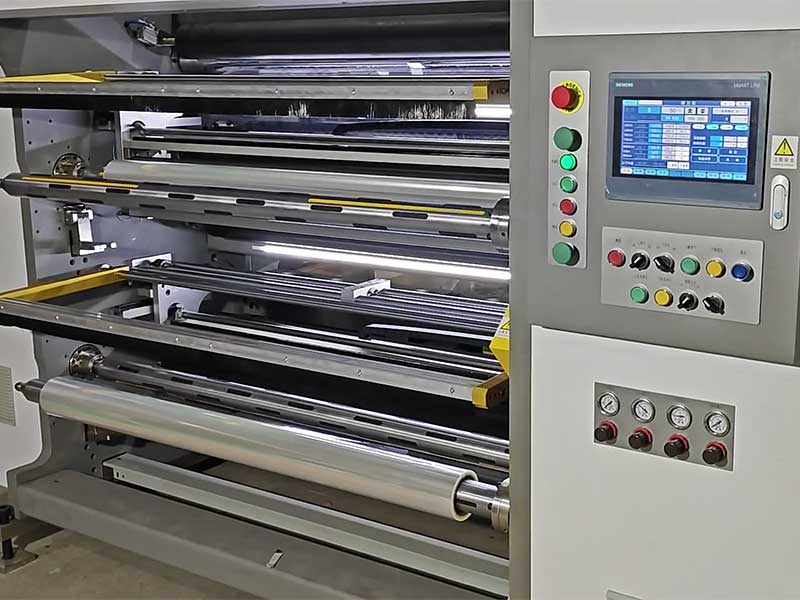
Paint protection film slitting is a critical link connecting master roll production and end-user installation. Slitting quality directly determines the installation experience and material utilization rate of the finished film. The current paint protection film market is undergoing a consumption upgrade from "having a film to apply" to "applying a good film." The unique characteristics of TPU substrate place far higher demands on slitting equipment than ordinary film processing. If equipment selection focuses only on speed and price, it is very easy to fall into pitfalls in tension control, cut quality, and web guiding accuracy, ultimately paying a higher price in the form of hidden losses and reduced yield rates.
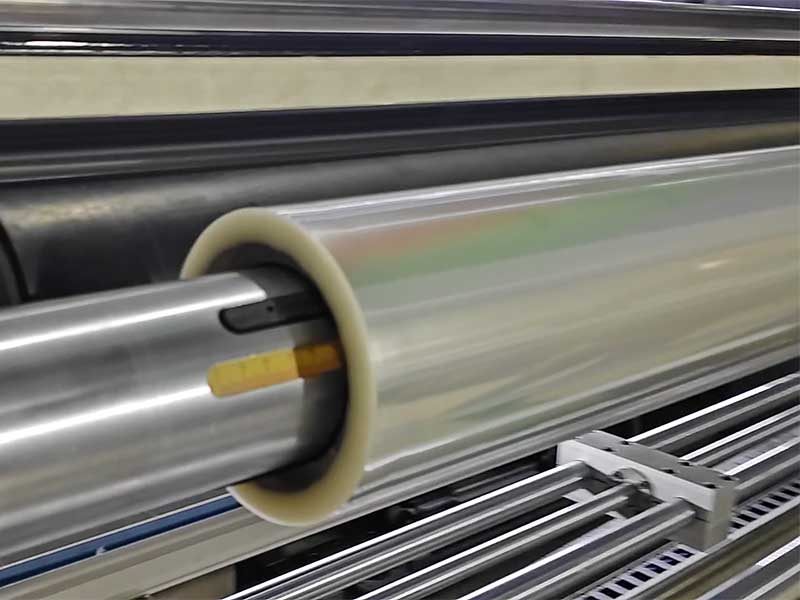
I. Market Trends: Driven by Both High-Endization and Specialization
The rising demand for paint protection film slitting machines stems from the structural growth of the downstream paint protection film market. In 2026, the domestic invisible paint protection film market revenue reached 16.65 billion yuan, with its market share rising to 28.8%, growing far faster than traditional thermal insulation film. Invisible paint protection film has a service life of 5 to 10 years, and the demand for replacement and upgrading of existing vehicles constitutes a sustained driving force for equipment procurement. At the same time, the mainstream position of TPU substrate in paint protection film has been further consolidated. Its material characteristics—high elasticity, easy stretching, and becoming tacky when heated—make general-purpose slitting machines unable to meet the precision requirements of paint protection film production lines.
From the equipment side, the technological iteration of slitting machines presents two clear paths. The first is high-speed automation, aimed at large processing centers with annual throughput exceeding 2 million square meters, with design line speeds of 150 to 300 m/min, equipped with automatic roll changing and dual-station rotary winding, enabling the effective working time ratio to rise above 85%. The second is precision low-speed operation, serving high-end custom cutting and small-batch, multi-specification production of matte and color-change paint protection film, with line speeds controlled at 30 to 80 m/min in exchange for static tension stability with a stretch rate below 0.2%. The two paths are not a matter of superiority or inferiority, but correspond to different capacity scales and quality positioning.
One trend that is easily overlooked is that full-line matching between slitting machines and coating processes is becoming a加分项 (bonus point) in selection. Suppliers with coating equipment manufacturing capabilities have already accumulated process data between tension parameters and substrate characteristics, significantly shortening customer commissioning cycles. For paint protection film manufacturers, equipment is no longer an isolated processing unit purchased separately, but an organic link in the production line process chain.
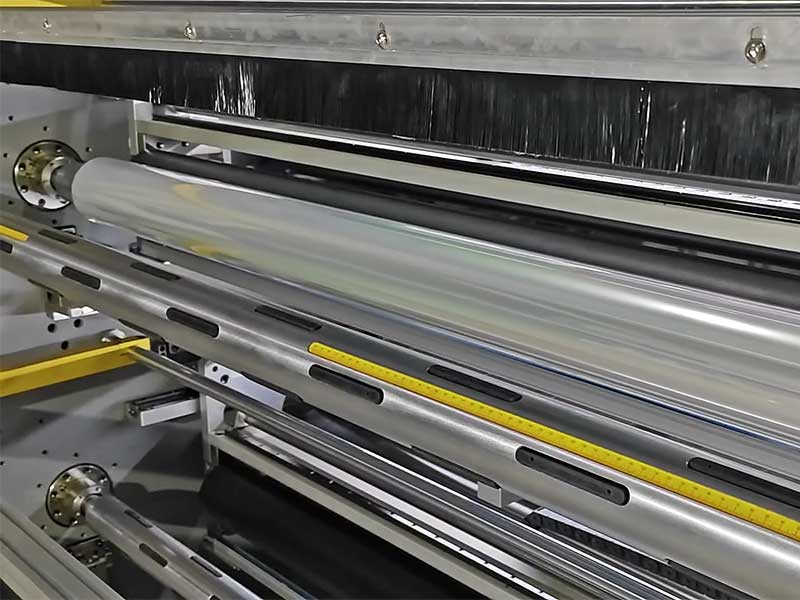
II. Selection Core: Three Hard Indicators Determine Success or Failure
Paint protection film slitting selection is essentially a contest with the "temperament" of TPU material. There are numerous equipment parameters on the market, but what truly determines slitting success is concentrated in three dimensions.
The "low" and "stable" of tension control: look at the lower limit, not the upper limit. Most manufacturers emphasize maximum tension and maximum speed in their promotion, but for paint protection film, what is fatal is that the lower tension limit is not low enough and the fluctuation is not small enough. TPU substrate undergoes irreversible stretching when tension is slightly too high, and "lotus leaf edges" appear on the finished product edges, making it impossible to fit and finish edges during installation. The industry consensus is that the stretch rate must be controlled below 0.2%, which requires separate independent servo drives for unwinding, traction, and winding, rather than one tension system for the whole machine. The taper tension decreasing curve in the winding section is particularly critical: as the roll diameter increases, tension must gradually decrease to avoid "loose inside and tight outside" and edge collapse of soft film. When selecting, ask suppliers: Is the taper decrease a fixed slope or a customizable multi-segment curve? The latter has significantly better adaptability to matte film and color-change film.
The "accurate" and "fast" of the web guiding system: anti-interference ability is more important than nominal precision. The slitting width tolerance of paint protection film is usually required to be within ±0.5mm, and high-end products are even stricter. Traditional edge photoelectric sensors are prone to misjudgment and repeated correction when facing transparent film or master rolls with uneven coating thickness, causing the cutter position to continuously oscillate slightly, resulting in serrated cuts. The advantage of CCD visual closed-loop web guiding lies not in the precision number, but in the recognition stability for transparent film, light-colored film, and film surfaces with uneven coating. A verifiable detail is the web guiding response delay: the industry's better level is within 50ms. Excessive delay means that web guiding commands at high-speed sections cannot keep up with the actual deviation of the film material, and no matter how good the nominal precision value looks, it is just empty talk on paper.
The "cold" and "clean" of the cutting mechanism: determines the lower limit of yield rate. Circular knives are the mainstream solution for paint protection film slitting, but the same circular knife differs in details. Fine micro-adjustment of knife pressure is a must—paint protection film thickness is usually between 0.15mm and 0.45mm. Too much knife pressure cuts into the substrate, while too little fails to cut through the adhesive layer. Whether the supplier can provide quantified knife pressure adjustment scales, rather than "tightening screws by feel," directly reflects the design maturity of the equipment. In addition, blade temperature can rise above 80°C during high-speed slitting, causing local melting of the adhesive layer. After winding, the film layers adhere to each other and are scrapped upon unwinding. Whether a micro-atomization cooling system is equipped is a key marker distinguishing professional models from general models.
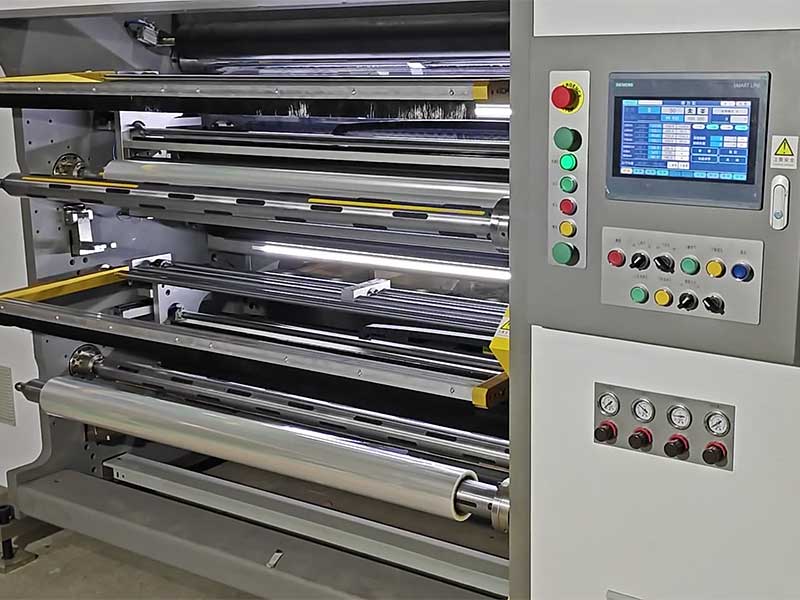
III. Matching on Demand: Capacity Scale Determines Equipment Form
Selection without considering capacity is meaningless. For small processing households or store-end pre-cutting scenarios with annual output below 500,000 square meters, precision low-speed slitting machines are a more pragmatic choice. Such equipment trades line speed of 30 to 80 m/min for tension stability, equipped with floating roller material storage and closed-loop tension sensors. Although knife changes and specification adjustments take longer, the advantage lies in no adhesive accumulation and no burrs on the cut end face, suitable for high-end products such as electroplated or matte paint protection film where surface defects are easily exposed.
For medium-sized enterprises with annual output of 500,000 to 1.5 million square meters, modular adjustable-speed slitting machines are a compromise preferred choice. The core criterion is whether the equipment supports tension mode switching: open-loop constant tension is used when producing conventional transparent paint protection film, and closed-loop taper tension is switched to when producing matte or color-change paint protection film. The quick-change knife holder system is equally critical. The same machine is compatible with pneumatic circular knives and razor-style slitting, avoiding repeated investment for different product lines.
For large processing centers or master roll traders with annual throughput exceeding 2 million square meters, the efficiency advantage of high-speed automatic slitting machines is irreplaceable. However, it is necessary to be alert to the dynamic precision risk at high speed: increased pressure roller vibration places higher demands on bed rigidity, and solid cast iron wall panels and precision roller bearing pressure roller structures are the baseline configuration. In this scenario, the blade cooling system changes from a "bonus item" to a "must-have." If micro-atomization cooling is absent, the adhesive layer melting problem in continuous high-speed operation will systematically lower the yield rate.
Conclusion
The selection of paint protection film slitting machines is, in the final analysis, a review of one's own product positioning and capacity planning. The high-end customization route requires sacrificing speed for tension stability, while the large-scale volume route requires offsetting the precision attenuation brought by high speed with rigid structures and cooling systems. Against the background of the paint protection film market continuing to evolve toward high-endization, the decision logic for equipment procurement should shift from "buying a slitting machine" to "introducing a reliable process capability"—those suppliers who can provide measured tension parameter data, web guiding response indicators, and quantified knife pressure adjustment are far more worthy of being included in the shortlist than manufacturers who only quote speed and price.
 English
 Deutsch
 Français
 Español
 Português
 日本語
 русский
 한국어
 عربي
 ภาษาไทย
 Tiếng Việt
 Italiano