Large burrs on the cutting edges of hot stamping foil are a persistent headache for many operators. Burrs not only affect the appearance of the finished product but can also shed aluminum powder during subsequent hot stamping stages, contaminating the hot stamping plate and causing "spots," and in severe cases, even causing foil breakage and shutdown. Many people immediately sharpen and change knives at the sight of a burr, but the problem often recurs. The root cause is that burrs are rarely caused by a single factor; they usually result from the combined action of multiple factors such as tool condition, clearance accuracy, tension fluctuations, and electrostatic adsorption.
Below, we present a practical approach for investigation and resolution from four key dimensions.
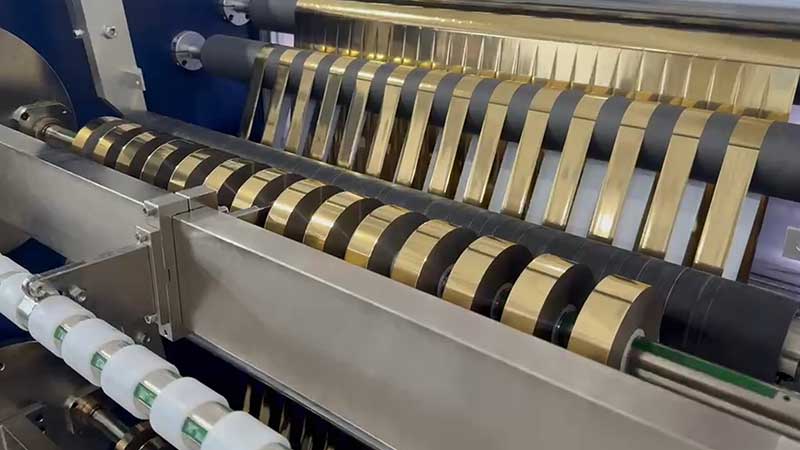
Step 1: First decide whether to "cut" or "tear"
Hot stamping foil is a typical multilayer composite thin material. The hardness and toughness of the PET base film, release layer, and aluminized layer vary greatly, but the total thickness is often only 12~25μm. When the tool is in good condition, the material is cleanly "sheard" and separated, with smooth cuts; Once the blade edge becomes passivated or the gap is out of balance, the material experiences compression and pulling forces. Under the tensile stress, the aluminized layer undergoes plastic deformation, and the tearing and separation edges naturally show serrated or filamentous burrs.
So the first judgment is simple: if burrs appear suddenly and over a large area, check the tool first in over 90% of cases. A blunt knife cannot cut the foil efficiently; it will only "squeeze through" it. It is recommended to keep a record of blade usage and force replacement based on the number of meters you cut in the cutting meter, rather than waiting until you can't cut until you can't cut before replacing it.
After changing tools, true precision lies in the clearance adjustment. The lateral clearance for hot stamping foil round knives is recommended to be controlled at 0.02~0.05mm, with overlap (cutter depth) within the range of 0.01~0.03mm. Excessive gaps cause materials to be torn apart; If the clearance is too small, the blades interfere with each other and accelerate wear, which also causes compressed burrs. A practical way to judge the feel is: place a thin copy paper between the upper and lower blades and pull it. If you feel resistance but can cut smoothly, it's basically in place.
Additionally, shaft runout is an overlooked precision killer. Use a dial gauge to detect the radial runout of the tool shaft; calibration is required if it exceeds 0.02mm. The axial movement of the base blade (anvil roller) is also critical; when the needle swings more than 0.03mm, the bearing cover must be tightened—a significant proportion of dynamic edge unevenness is actually caused by the base cutter rather than the upper cut.
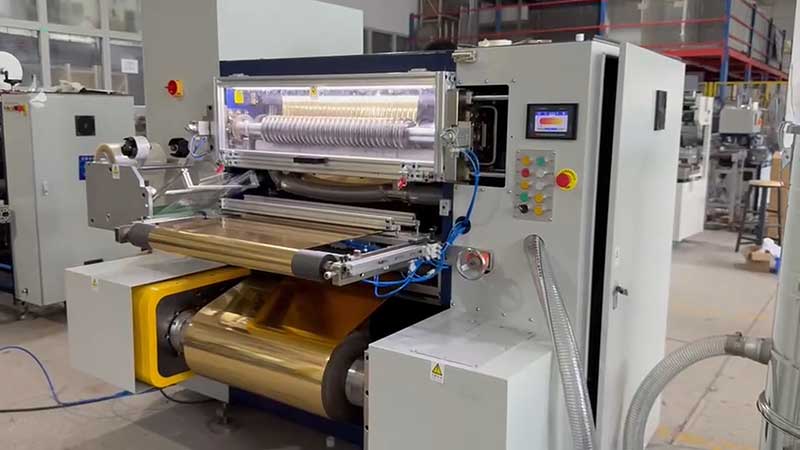
Step 2: If the tension can't be stabilized, no matter how precise the knife is adjusted, it will be wasted
Improper tension control does not immediately create obvious burrs like a blunt knife, but it can cause burrs to "flare up intermittently," increasing the difficulty of troubleshooting. If the tension is too low, the foil band shakes in the cutting area, and the blade repeatedly cuts like a saw, resulting in uneven edges; Excessive tension causes the PET base film to stretch and deform, generating internal stress at the incision and making edges prone to cracking.
The recommended tension range for hot stamping foil is approximately 1.5~3N/mm², but the taper tension strategy is more crucial: as the winding diameter increases, the tension should decrease according to a preset curve to avoid the outer layer pressing the inner layer, which could cause wrinkles or aluminum layer transfer. The typical taper is set between 15%~25%. In practice, using a tension meter to measure foil surface tension, if the fluctuation is controlled within ±0.5N, it is considered qualified. If the equipment is equipped with an automatic tension controller and the deviation between the set value and the actual feedback value exceeds 10%, check whether the air expansion shaft is leaking air or if the magnetic powder brake output is stable.
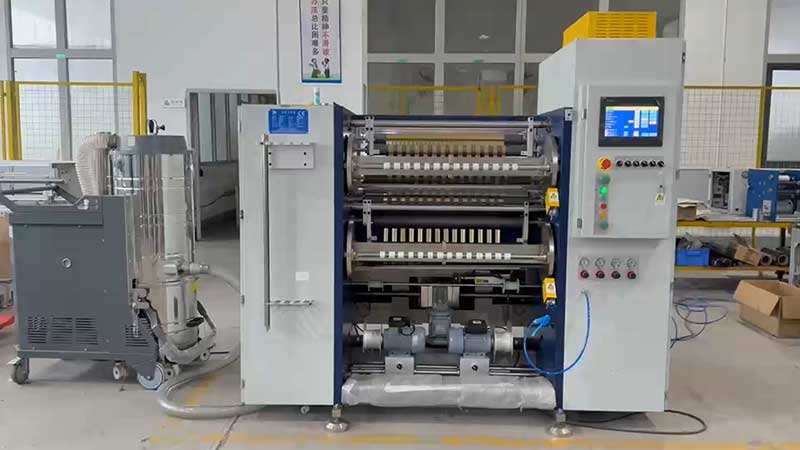
Step 3: The "secondary damage" of static electricity and debris is often underestimated
Hot stamping foil uses plastic film as the base material, which has good insulation. During high-speed slitting, the static electricity generated by friction can attract chips and aluminum powder. These particles repeatedly press into the newly cut edges, forming "secondary burrs," which are also the direct source of hot stamping spots. At operating speeds of 200~400 meters per minute, the effect of static electricity is greatly amplified.
The solution requires supporting implementation: installing static elimination rods or ion nozzles before and after the cutter, coordinating with edge blowing vacuum systems to instantly remove chips, while ensuring the equipment's grounding resistance is less than 4Ω. This step is not costly, but the effect on improving the burrs is often immediate.
Step 4: Establish the habit of "static first, then dynamic" inspection
When burr issues are difficult to locate directly, following a fixed sequence is more efficient than guessing based on experience: first stop the machine to check for chipping on the cutting edge, measure gaps and overlaps, and clean the surfaces of pressure rollers and guide rollers; Then run at low speed without load, using a dial indicator to measure the tool shaft and base blade runout; Finally, use waste foil to test cutting, and observe the cross-sectional morphology under a magnifying glass—if burrs on one side are common, it indicates the blade is not parallel to the base blade; if both sides have velvet-like burrs, it indicates the blade is passivated or the cutting angle is too small.
The roller condition is also worth checking casually. Foreign objects or damage to the roller surface can cause uneven local pressure, resulting in naturally uneven cut edges. The pressure rollers should use polyurethane rubber with a Shore A hardness of 60~75; being too hard or too soft can cause pressure distribution imbalance.
Summary
The fundamental treatment of slitting burrs in hot stamping foil essentially meets standards in four dimensions: tool geometric precision, tension stability, static elimination, and material alignment. Expecting a new knife to solve it once and for all often encounters the same problem again in the next volume's production. It is recommended to record the parameters for each inspection—blade meter usage, clearance value, tension setting, taper ratio—to form the equipment's own "slitting parameter table." When burrs reappear, they are eliminated item by item in the reference records, allowing the vast majority of faults to be located and resolved in a short time.
 English
 Deutsch
 Français
 Español
 Português
 日本語
 русский
 한국어
 عربي
 ภาษาไทย
 Tiếng Việt
 Italiano

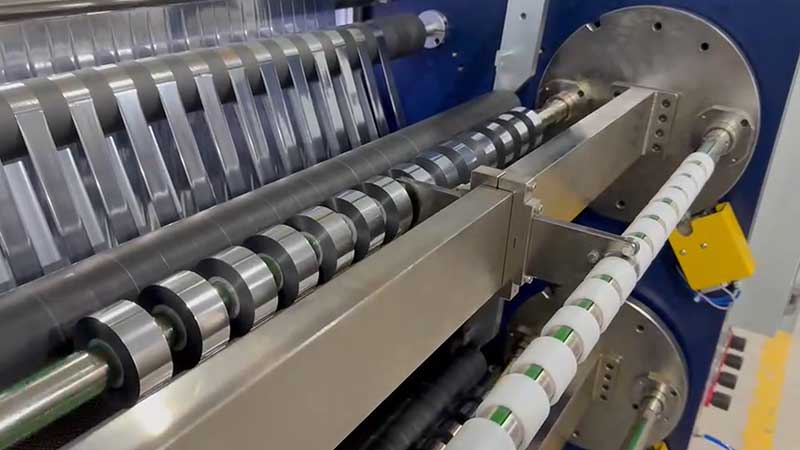
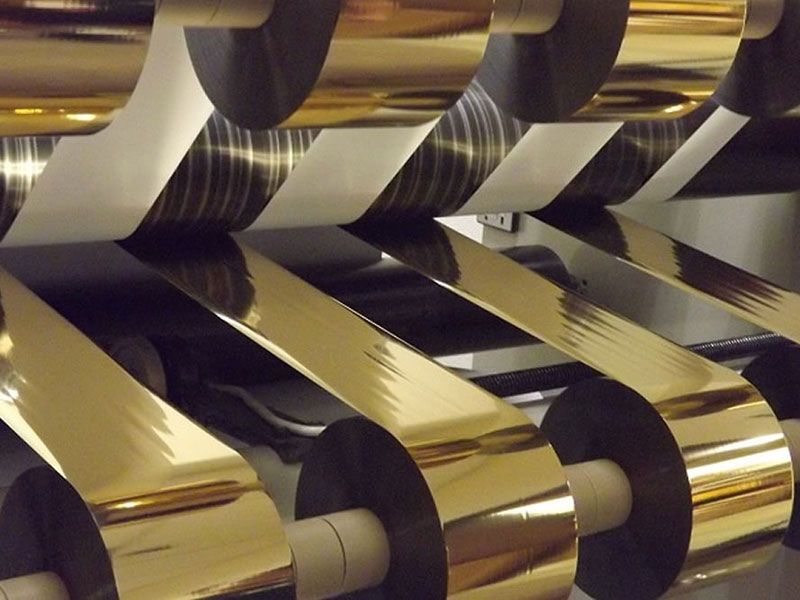 Cold Foil Slitter
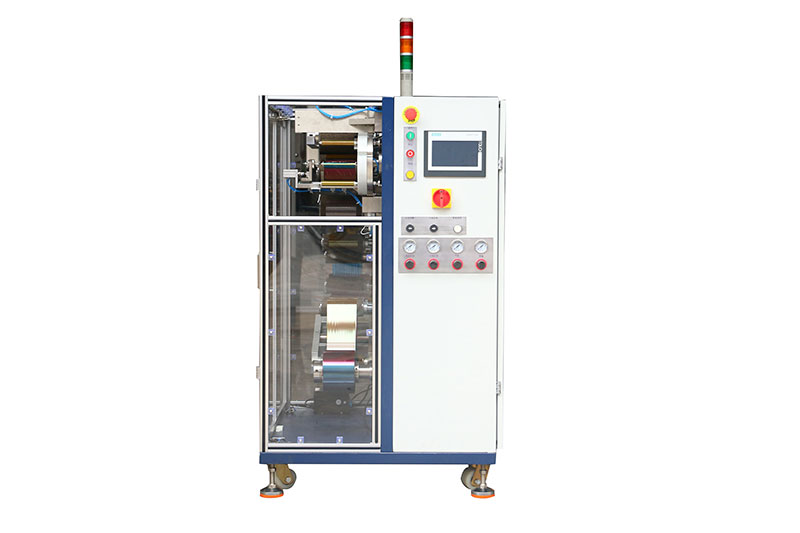 Card Print Ribbon Rewinder
 Card Print Ribbon Slitter
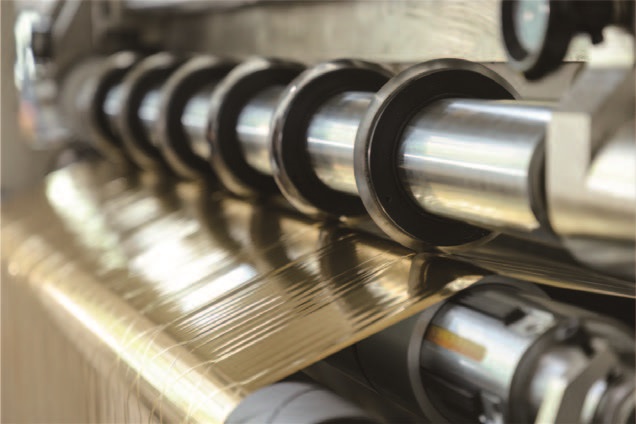 Hot Stamping Foil Slitting Machine
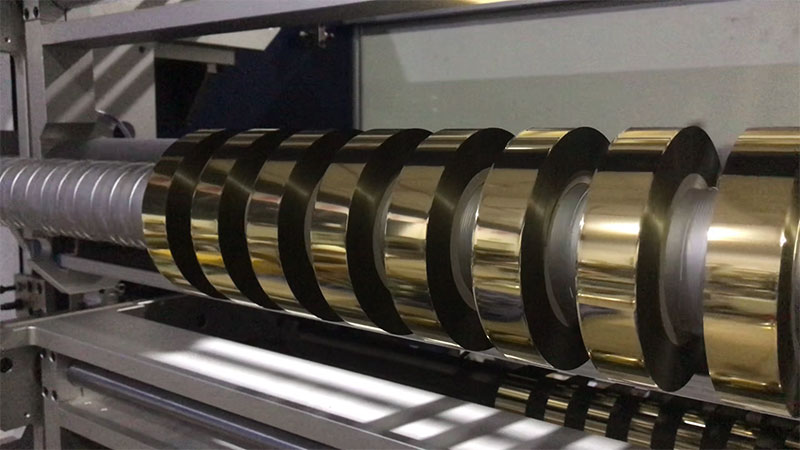 Holographic Foil Slitter
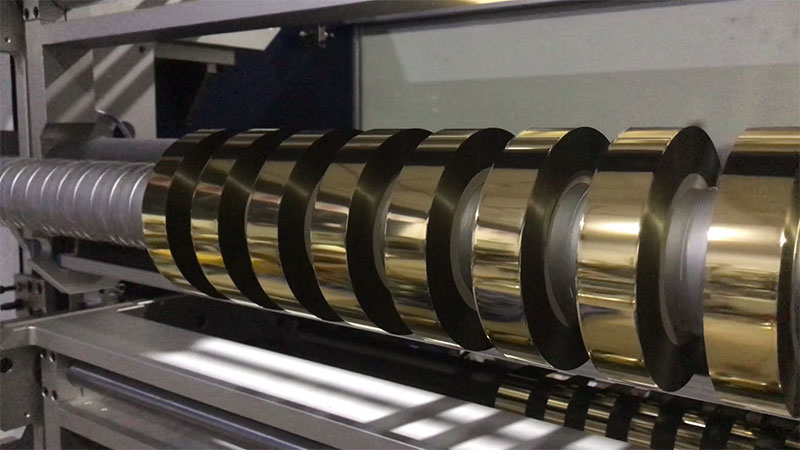 Digital Enhancement Foil Slitter
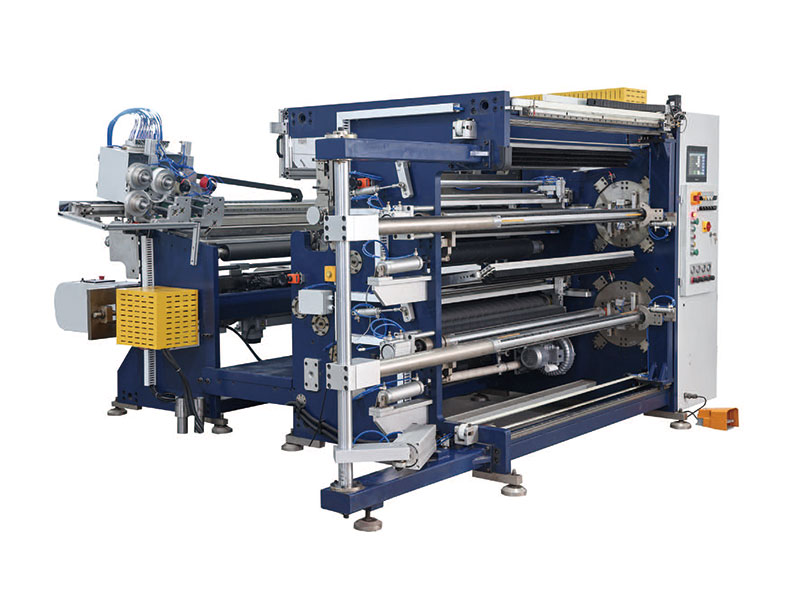 Hot Stamping Foil Slitter RSDS7H 1350 PLUS
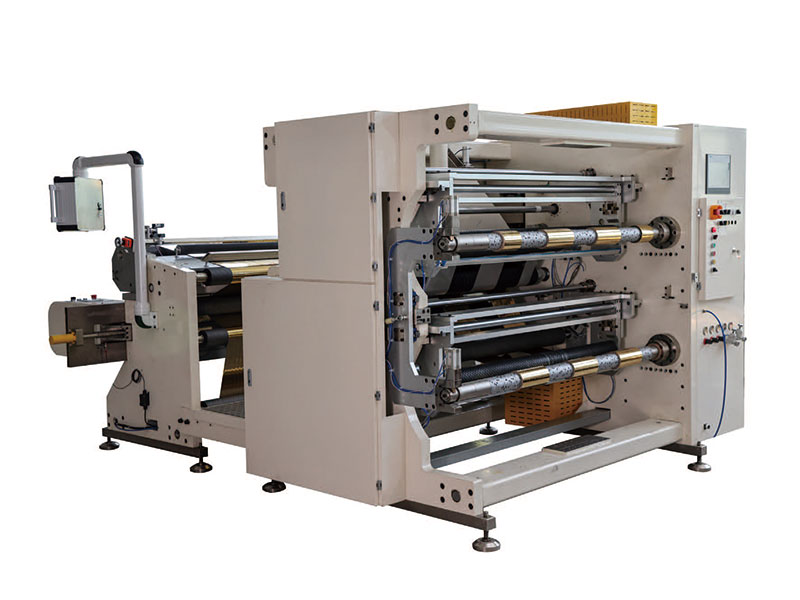 Hot Stamping Foil Slitter (RSDS7H) 1350