Hot stamping foil is a high-value decorative material, and the slitting process sits at the critical junction between master roll procurement and downstream stamping yield. A poorly slit roll—whether due to burrs, edge deviation, or inconsistent tension—can cause “flying gold,” foil breakage, and entire production line stoppages during high-speed stamping. For overseas converters, label printers, and packaging plants sourcing a hot stamping foil slitter, the decision hinges on far more than quoted speed or price. This article breaks down the technical criteria that actually determine slitting quality, the fault patterns that reveal equipment weaknesses, and the supplier evaluation points that protect your investment.
Why Slitting Quality Determines Stamping Yield
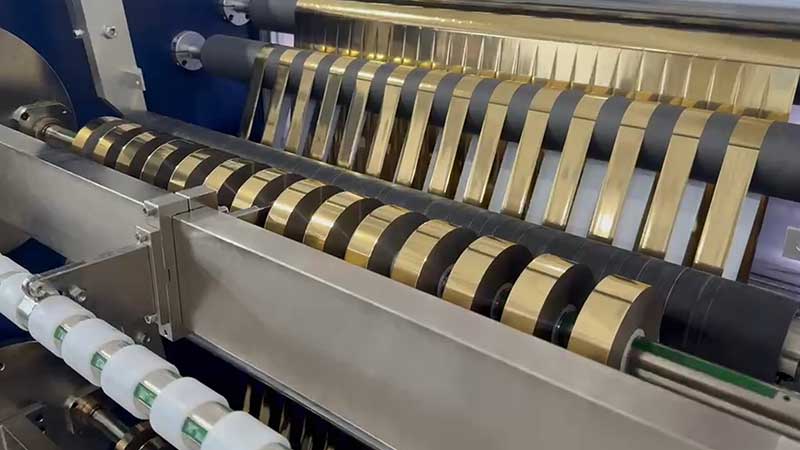
The industry saying “three parts stamping, seven parts slitting” captures a reality that many buyers learn only after installation. Hot stamping foil typically ranges from 4 to 30μm in thickness, composed of a PET base film, release layer, tinted layer, aluminized layer, and adhesive layer. At these gauges, the material is extremely sensitive to tension variation and blade contact.
When slitting produces burrs or metallic dust, those defects travel downstream. During high-speed hot stamping, burrs can cause incomplete transfer, while foil dust contaminates the stamping die and forces unplanned cleaning stops. Edge deviation—where the slit roll has a “tower” or “bell” profile—leads to misalignment in automatic feeding systems, wasting material and reducing registration accuracy. For plants running luxury packaging, tobacco labels, or security holograms, where width tolerances may need to hold within ±0.1mm, the slitter becomes a yield-critical asset rather than a secondary machine.
Core Parameters That Separate Capable Machines from Compromised Ones
Slitting Precision and Edge Quality
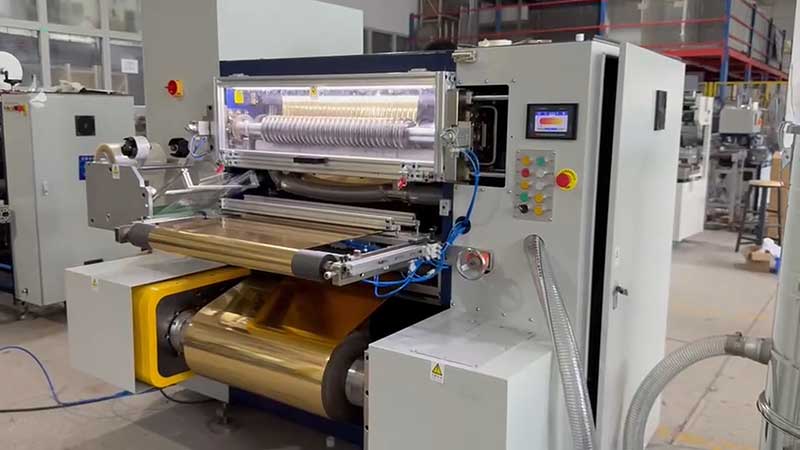
Static brochure accuracy figures mean little without dynamic verification. A slitter rated at ±0.1mm must hold that tolerance during acceleration, deceleration, and roll changes. Two mechanical foundations matter most: blade shaft radial runout, which should be controlled within 0.02mm, and web guide response, where ultrasonic sensors outperform photoelectric types on reflective or holographic foils.
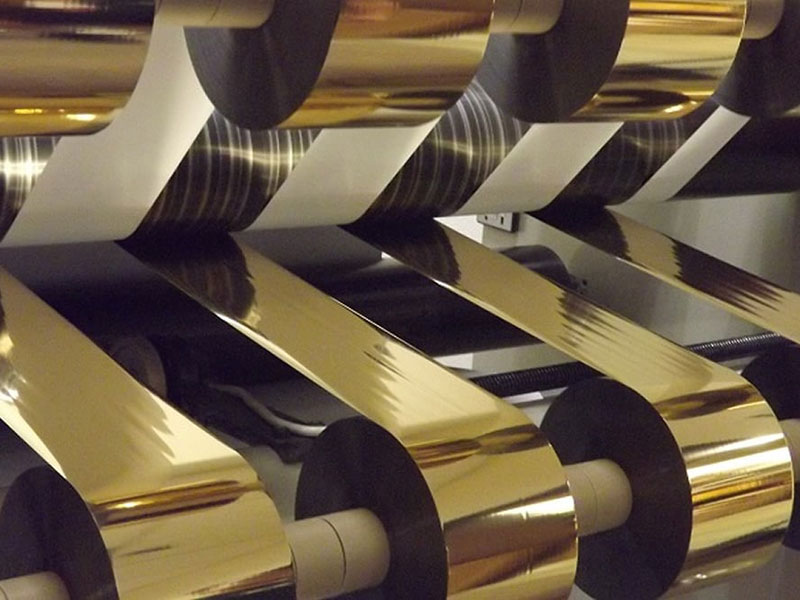
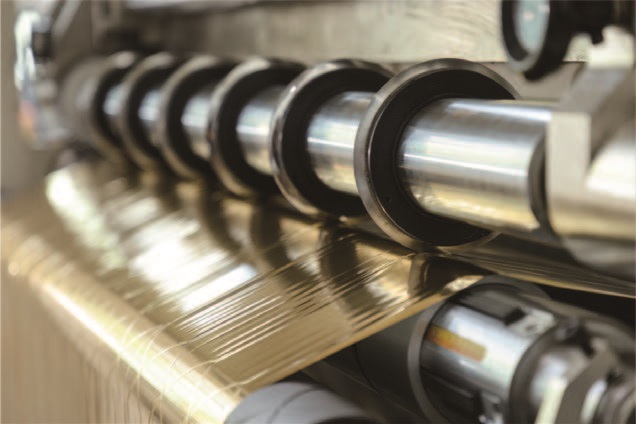
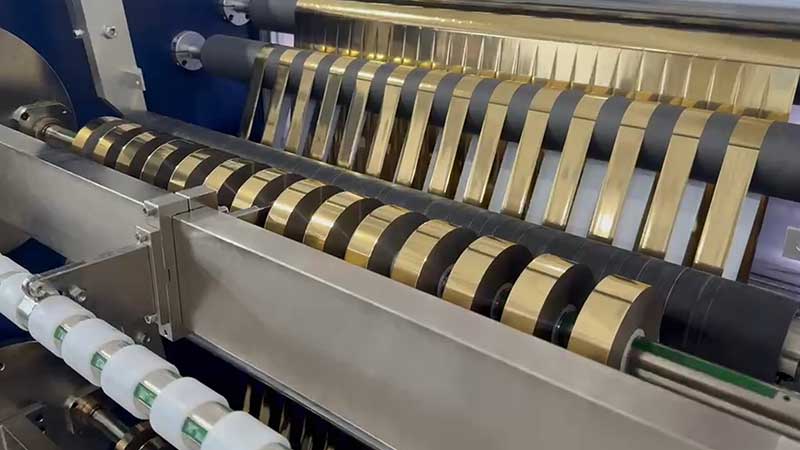
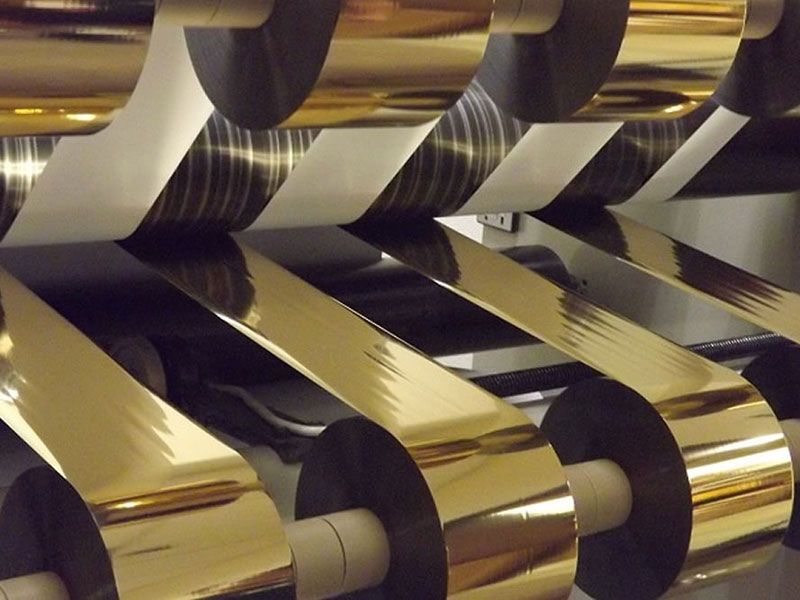
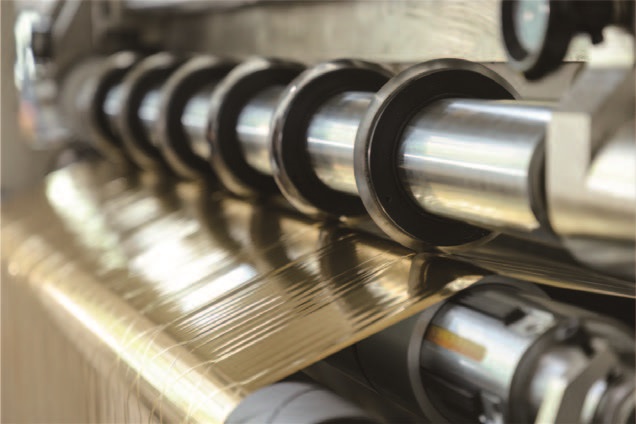
For edge quality, the cutting method itself is decisive. Rotary shear cutting—where upper and lower circular blades overlap and rotate like scissors—remains the standard for hot stamping foil. The alternative, flat-blade crush cutting, tends to leave compression marks and accelerates blade chipping when cutting through aluminum layers, making it suitable only for thicker foils or very small trial batches. When specifying a rotary shear system, confirm that lateral clearance between blades is set to roughly 5–10% of foil thickness, typically 0.02–0.05mm, and that blade material is carbide or diamond-coated rather than plain carbon steel.
Tension Control: The Non-Negotiable Specification
A 12μm PET base film is thinner than a human hair. Slightly excessive tension stretches it; insufficient tension allows wrinkling and lateral drift. Open-loop or magnetic particle brake systems respond too slowly during speed changes, producing rolls that are tight inside and loose outside. Closed-loop servo tension control, by contrast, adjusts in real time with millisecond response, holding tension fluctuation within ±0.5N in well-engineered systems.
Equally important is taper tension. As the rewinding diameter grows, constant tension compresses inner layers, risking adhesive transfer or blocking. A taper tension function reduces tension according to a preset curve—typically 15% to 25% decrement—so the finished roll remains uniformly wound from core to surface. Field data cited by equipment makers suggests this single feature can reduce edge-misalignment scrap by 40% to 60%. For multi-lane narrow slitting, a slip shaft with independent station adjustment prevents individual strips from winding at different tensions due to minor thickness variations.
Speed Ratings and the Small-Batch Reality
Nominal speeds of 300–500 m/min appear on many datasheets, but the stable operating speed under production conditions is what matters. High-speed operation demands exponentially greater rigidity, tension response, and web guide precision; a machine pushed beyond its stable envelope will incur frequent downtime and scrap. For converters facing the 2026 market reality—where order specifications have multiplied and batch sizes have dropped to hundreds or even dozens of meters—changeover speed deserves equal weight to maximum throughput. If a specification change requires more than half an hour of downtime, small-batch orders cannot generate profit regardless of how fast the machine runs when it is running.
Fault Patterns That Reveal Equipment Weaknesses
The three most common slitter faults—burrs, edge deviation, and foil breakage—are not random. They follow predictable chains that point directly to design or maintenance deficiencies.
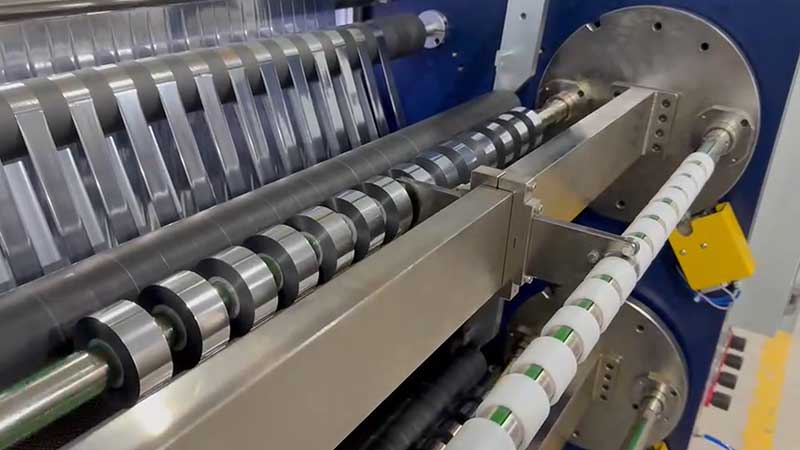
Burrs most often trace to blade condition first: worn or chipped edges tear rather than cut, creating filamentous defects. But tension instability, static electricity accumulation, and contaminated rollers also contribute. Hot stamping foil generates static readily during high-speed friction; without grounded static elimination bars or ionized air nozzles positioned before and after the cutter, foil powder adheres to edges and forms what operators see as burrs.
Edge deviation typically begins with the web guide sensor. Dust or foil fragments on an ultrasonic or photoelectric probe cause “blindness,” and the correction system loses its reference. Guide roller parallelism—tolerance should be ≤0.2mm/m—and axial clearance of the knife shaft (≤0.03mm) are secondary mechanical checks. A slitter that deviates only after hours of operation is telling you its sensing and correction architecture is not sealed against the working environment.
Foil breakage follows a different logic. A blade that has become dull no longer cuts but tears, creating micro-cracks at the edge that propagate under tension until the web parts. The overlap between upper and lower blades, usually 0.05–0.1mm, must be maintained; excessive or insufficient pressure both accelerate breakage. Guide roller bearings that drag or roller surfaces with adhesive buildup create local tension spikes that snap thin foil.
Supplier Evaluation Beyond the Specification Sheet
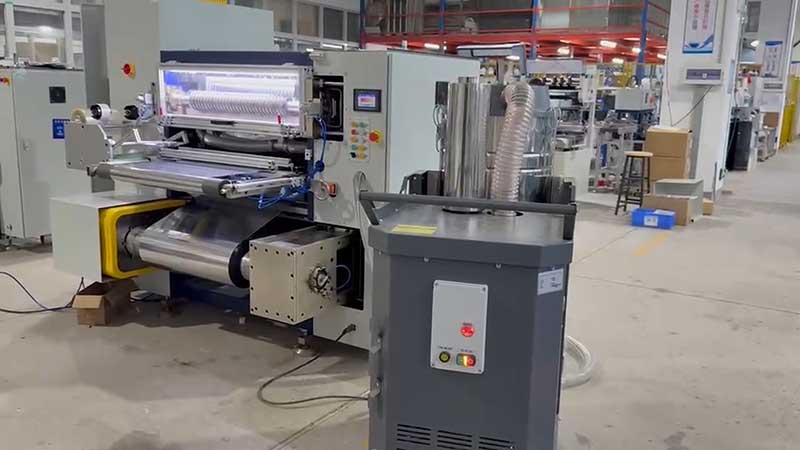
A hot stamping foil slitter is not a commodity purchase. The same nominal parameters can represent very different build quality, and the supplier’s application knowledge often matters as much as the machine itself.
Demand a material trial. Bring your thinnest, most sensitive foil—laser foil or holographic stock if you run it—to the supplier’s facility or request a video trial with your material. Measure width deviation with a caliper at multiple points across a continuous run of at least 500 meters, and inspect end faces with a magnifier for burrs and layer alignment. Static “accuracy” figures from a brochure do not survive contact with real material.
Verify the tension architecture. Ask specifically whether the system uses closed-loop servo control or an open-loop alternative. Request the taper tension adjustment range and confirm that individual rewind stations on the slip shaft are independently adjustable. A supplier who cannot explain these details in application terms is likely assembling rather than engineering.
Assess service and spare parts reality. Blades, guide rollers, and tension sensors are consumables or wear items. Confirm lead times for replacement blades, whether the supplier stocks them regionally, and whether technical documentation and remote support are available in your language. For buyers in Southeast Asia, the Middle East, or Latin America, local service presence or a responsive regional partner can mean the difference between a day of downtime and a month of waiting.
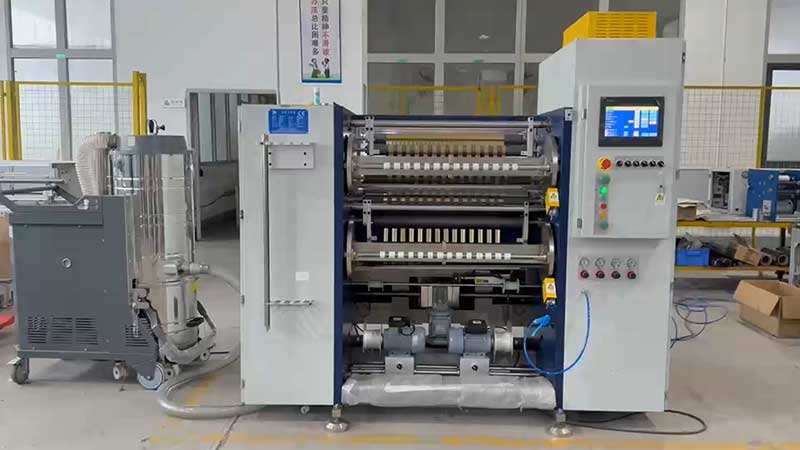
Matching the Machine to Your Production Reality
Before requesting quotations, clarify three internal variables that will narrow the field quickly.
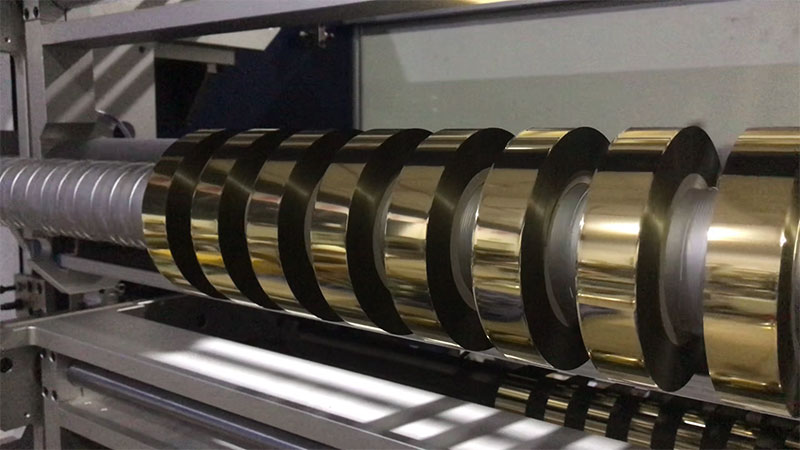
Material mix. Ordinary gold foil, laser foil, and pigment foil behave differently at the cutting zone. Laser and holographic foils have metallized or grating structures that micro-vibrations can scratch; their functional layers demand harder blades and surface-treated guide rollers. If your product portfolio includes these sensitive materials, prioritize machines with demonstrated experience in that segment.
Width and batch profile. Master roll widths commonly range from 400 to 1400mm, and finished slit widths may go down to 20mm for cigarette or liquor label applications. If your orders are trending toward narrower widths and smaller batches, changeover ergonomics and low-speed stability matter more than a 400 m/min top speed you will rarely reach.
Downstream automation. Will slit rolls feed manual stamping presses or high-speed automatic lines with tight registration windows? The latter demands tighter width tolerance, cleaner edges, and more consistent winding density. Communicate this to the supplier; a machine configured for general-purpose slitting may need specification upgrades in the tension and guiding sections to meet automatic feeding requirements.
Conclusion
Selecting a hot stamping foil slitter is an exercise in matching mechanical precision to material sensitivity. The parameters that matter—closed-loop tension, rotary shear geometry, dynamic width tolerance, and changeover speed—are not the ones that dominate low-cost quotations. For overseas buyers, the most reliable path is to test with your own material, interrogate the tension and guiding architecture rather than accepting headline speeds, and evaluate the supplier’s regional support capability with the same rigor as the machine’s specifications. A slitter that holds ±0.1mm and ±0.5N tension stability across a full shift will pay for its premium many times over in reduced foil waste and uninterrupted stamping output.
 English
 Deutsch
 Français
 Español
 Português
 日本語
 русский
 한국어
 عربي
 ภาษาไทย
 Tiếng Việt
 Italiano

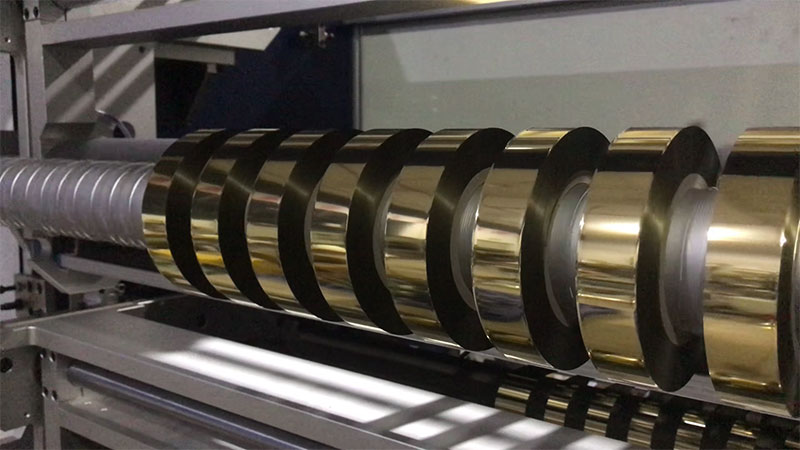
 Cold Foil Slitter
 Card Print Ribbon Rewinder
 Card Print Ribbon Slitter
 Hot Stamping Foil Slitting Machine
 Holographic Foil Slitter
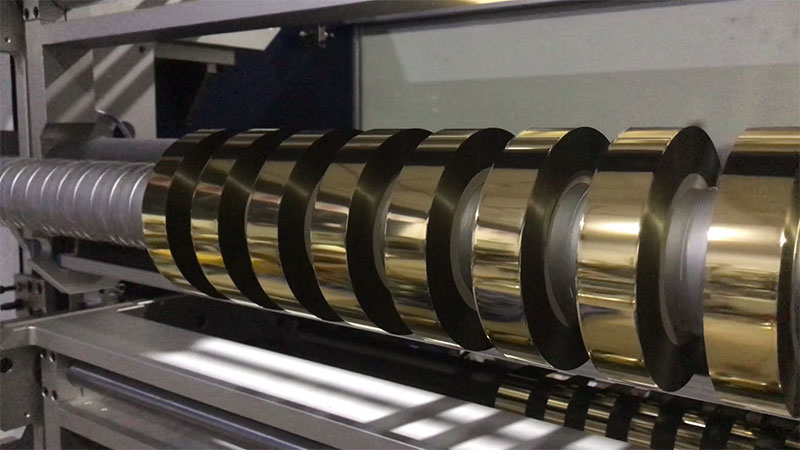 Digital Enhancement Foil Slitter
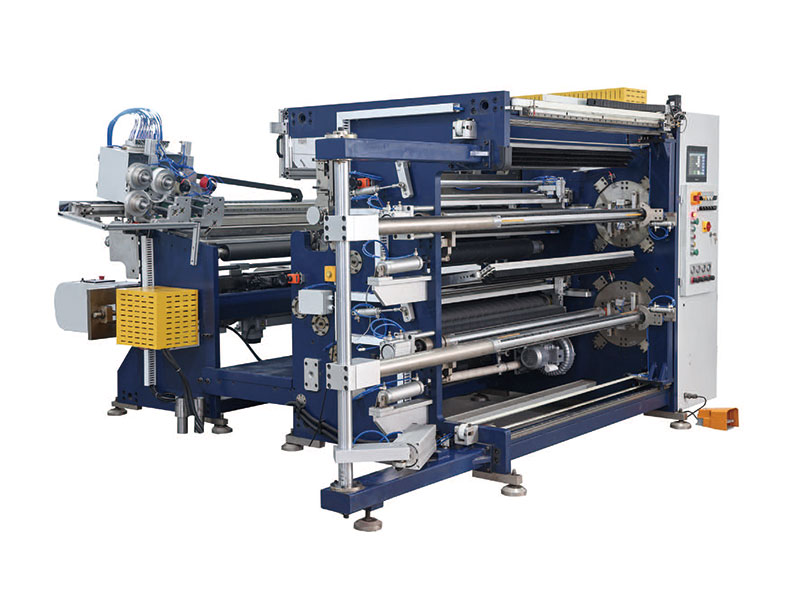 Hot Stamping Foil Slitter RSDS7H 1350 PLUS
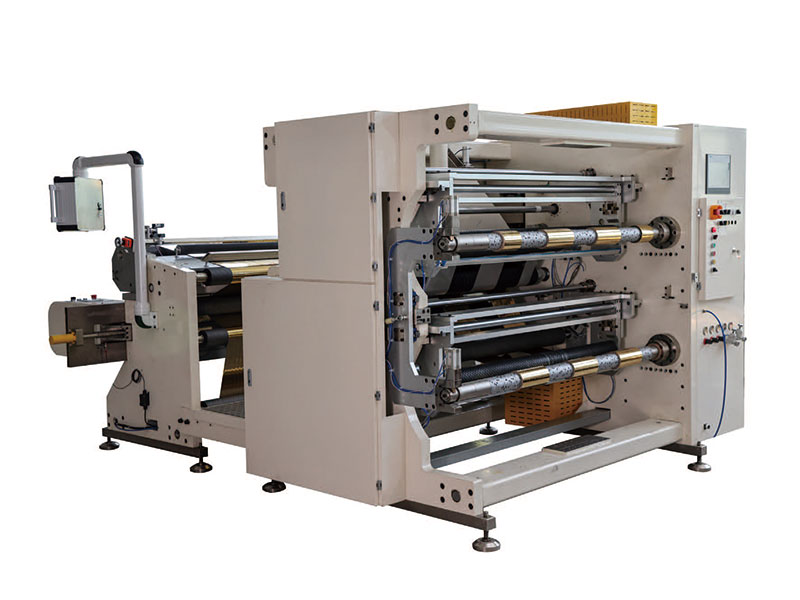 Hot Stamping Foil Slitter (RSDS7H) 1350