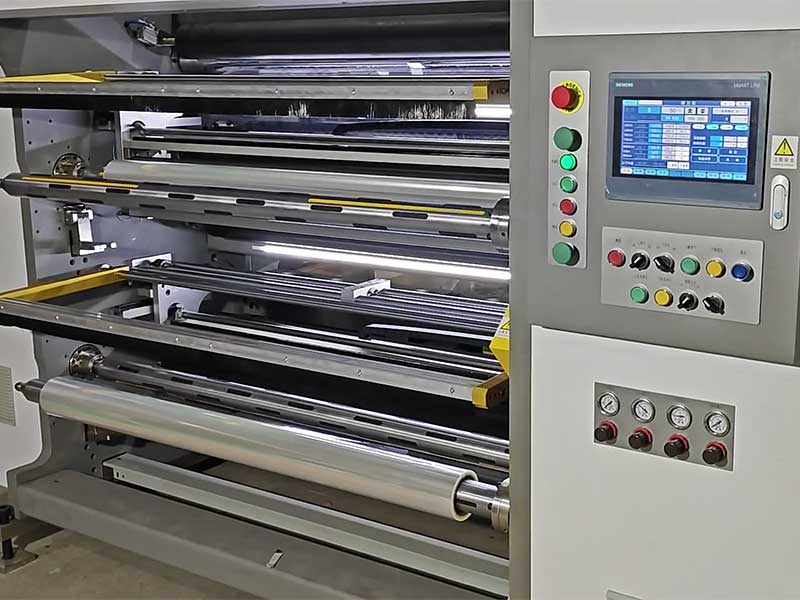
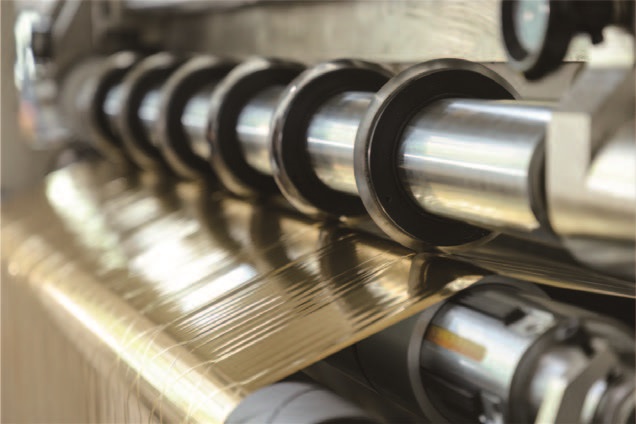
Slitting TPU paint protection film is essentially a battle against the material's "elastic memory." This highly elastic substrate undergoes irreversible plastic stretching at even slightly elevated tension, causing wavy edges on the finished roll that prevent proper adhesion during installation. The industry consensus is that the stretch rate in paint protection film slitting must be kept below 0.2%, which means the slitting machine must be capable of stable output within an extremely narrow tension range—rather than relying on an operator to "feel out the critical point" by hand.
However, achieving and consistently maintaining this micro-tension range is far more complex than setting a number. The challenges concentrate in three areas: decoupled control of segmented tension, dynamic tracking of winding taper, and coordinated response between mechanical structure and control algorithms.
1. Why Segmented Tension Is Hard to "One-Size-Fits-All"
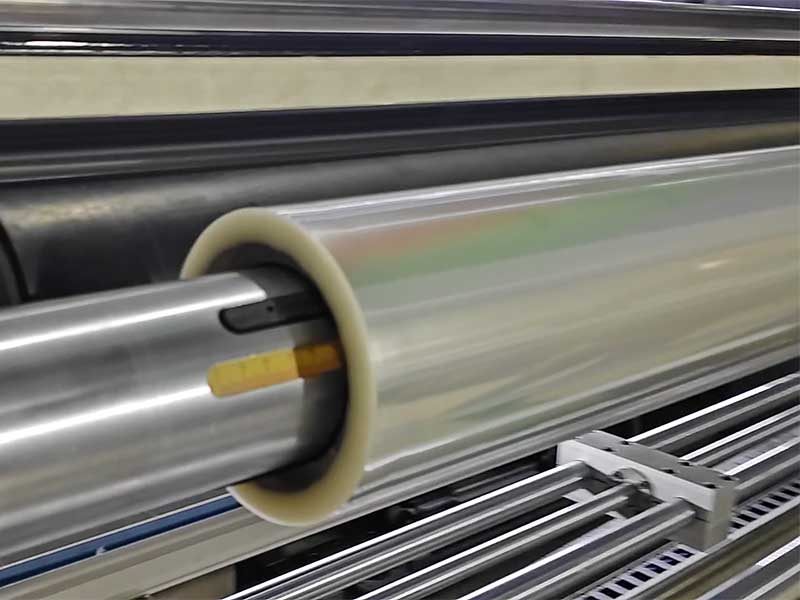
TPU film has different tension requirements across three zones: unwinding, traction, and winding. As the master roll transitions from full to empty, its diameter changes continuously, and the torque requirement shifts dynamically. The traction zone must maintain a constant, extremely low tension to ensure flat film conveyance. The winding zone starts from a thin core and builds up layer by layer—if constant tension is maintained, inner layers become increasingly compressed, ultimately forming a collapsed roll that is loose inside and tight outside.
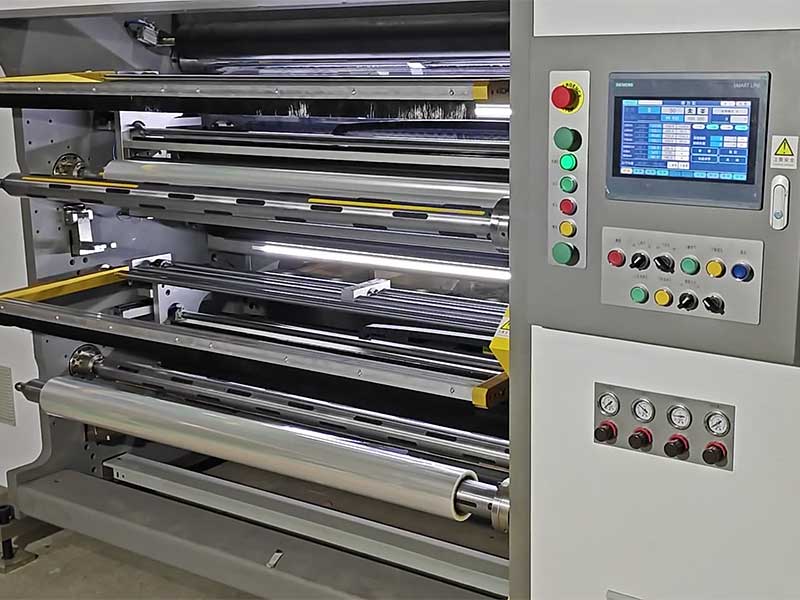
Open-loop control relying on a preset fixed tension value simply cannot handle the dynamic conditions of three zones each changing independently. The truly effective solution is independent servo drives for unwinding, traction, and winding, with each zone equipped with high-sensitivity tension sensors that monitor actual film tension at millisecond frequency, and servo motors adjusting torque in real time. Some high-end models even support 0.1–5N micro-tension range settings, suppressing tension fluctuations to a level where stretch risk becomes negligible. This means the equipment maintains response speed and precision within an extremely narrow tension window, rather than operating roughly within a "good enough" tension range.
2. Winding Taper: The Most Hidden Trap in Micro-Tension Control
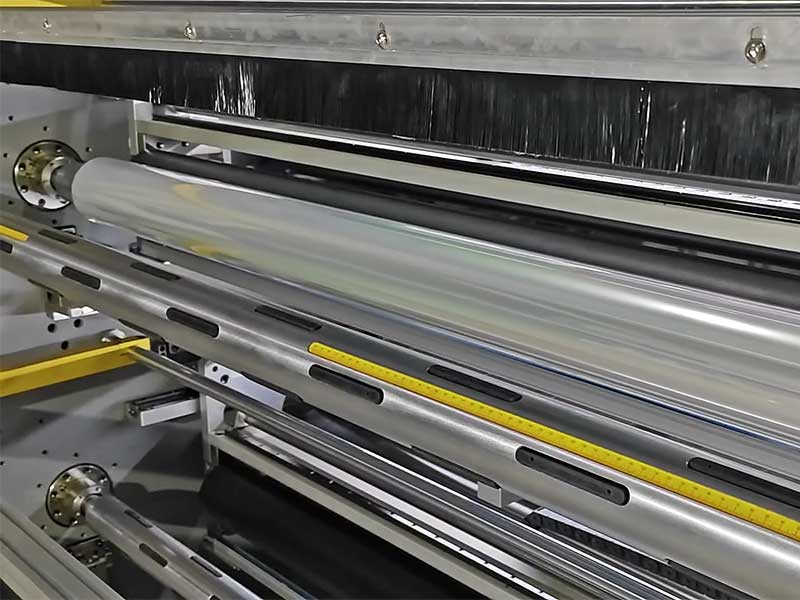
Even if the unwinding and traction zones achieve precise micro-tension, errors in the winding stage can still ruin the entire finished roll. As roll diameter increases, if tension does not decrease along a preset curve, the cumulative pressure on inner layers continues to build—causing anything from "bulging" (localized hard bands) to "telescoping" (end-face layer misalignment).
The difficulty of taper decrement logic lies in curve accuracy and real-time execution. TPU films of different thicknesses and batches have varying compression characteristics, and a fixed taper curve may not suit all incoming materials. Ideally, the system should calculate and adjust tension setpoints in real time based on roll diameter growth, rather than relying on operators to manually configure segments. Low-inertia dancer rollers play a supporting role here, absorbing tension disturbances during acceleration and deceleration to prevent relative sliding between the film and guide rollers caused by speed differentials. Without this buffering mechanism, no matter how fast the servo response, inertial impacts will still leave hidden defects on the film surface.
3. The Overlooked Detail: Initial Tension Establishment at Unwinding
A high-frequency issue in actual production that is often obscured by equipment specification sheets: the rate at which tension ramps up when the master roll is loaded is equally critical. If initial tension is established too aggressively, the outermost few wraps are already stretched and ruined before formal slitting even begins—and the operator has no time to intervene. Micro-tension control requires not only "stability during operation" but also "gentleness at startup." This requires the servo system to establish target tension gradually along a controlled slope during the startup phase, rather than through step-change setpoints.
4. How to Judge Whether a Machine's Micro-Tension Control Is Reliable
For paint protection film processors, the "tension range" and "control precision" on a spec sheet are merely paper references. The most direct verification method is to run a live sample with your own TPU master roll and measure the residual elongation of film samples before and after slitting. A stretch rate below 0.2% is the passing grade—but only equipment that consistently stays below this value without fluctuation across different roll diameter stages qualifies for handling high-end paint protection film orders.
The essence of micro-tension control is finding that narrow gap at the edge of the material's elastic limit—tight enough to convey the film, yet leaving no permanent deformation. The width of this gap determines whether the finished film adheres smoothly at the edges or curls and fails. In the chain from master roll to end-user installation, the tension precision of the slitting stage is far more valuable than many realize.
 English
 Deutsch
 Français
 Español
 Português
 日本語
 русский
 한국어
 عربي
 ภาษาไทย
 Tiếng Việt
 Italiano