Selecting the right thermal transfer ribbon (TTR) slitting machine is a critical investment decision for any label converter or ribbon manufacturer. The machine you choose directly impacts your production efficiency, ribbon quality, and ultimately your customers‘ printing outcomes. With varying specifications across models, knowing which parameters matter most can save you from costly mistakes.
This guide breaks down the essential specifications you should compare before making a purchase decision.
Slitting Accuracy: The Foundation of Quality
Slitting accuracy is arguably the most important specification to evaluate. This parameter determines the width consistency of your finished ribbons, which directly affects how smoothly they run through printers and the clarity of printed output.
Industry standards generally fall into three tiers. Economy-grade machines offer accuracy within ±0.2mm, suitable for general logistics labels and warehouse management applications. Industrial-grade models achieve ±0.1mm, appropriate for electronic product labels and pharmaceutical traceability codes. Precision-grade machines can reach ±0.05mm, necessary for high-resolution barcode printing and QR code applications.
The accuracy you need depends on your target market. If you serve customers requiring high-resolution printing, investing in a precision-grade machine is essential. For standard label applications, industrial-grade accuracy may suffice.
Slitting Width Range and Flexibility
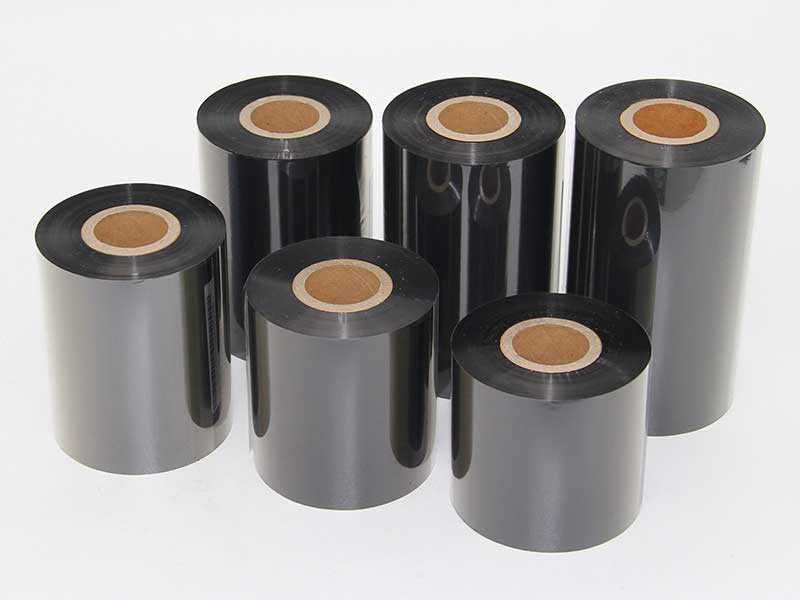
The slitting width range determines the variety of ribbon sizes you can produce. Common finished ribbon widths include 25mm, 50mm, 80mm, and 110mm, corresponding to popular label printer models from Zebra, TSC, and others.
Basic machines often have fixed slitting widths, limiting you to single-product production lines. More versatile models offer adjustable ranges, commonly from 10mm to 300mm or wider. This flexibility is achieved through movable tool holders and servo-driven CNC tool adjustment systems that provide repeat positioning accuracy of ±0.05mm.
If you plan to serve diverse customer needs or produce multiple ribbon specifications, prioritize a machine with broad adjustable width capabilities. For specialized ultra-narrow slitting (5mm or less), look for models equipped with micro guide rollers and anti-flashing devices to prevent ribbon breakage.
Maximum Running Speed and Efficiency
Speed specifications directly impact your production capacity. Thermal transfer ribbon slitting machines typically operate across three speed tiers.
Low-speed economy models run at 50-100 m/min, suitable for small-batch, multi-variety production. Medium-speed universal machines achieve 150-250 m/min, handling most commercial orders efficiently. High-speed production models reach 300-500 m/min for mass continuous production.
However, nominal top speeds often represent laboratory conditions rather than real-world performance. Resin-based ribbons, with their harder coatings and lower toughness, typically require operating speeds 20-30% lower than wax-based ribbons. When evaluating speed specifications, always request on-site trial cutting using your actual ribbon materials to observe start-stop control, winding neatness, and joint handling at high speeds.
Tension Control System
Tension control is a critical yet often overlooked specification that significantly affects ribbon quality. The ribbon substrate is PET film merely 4.5-10μm thick, making it extremely sensitive to tension variations. Excessive tension causes the base film to stretch and deform, while insufficient tension leads to loosening and wrinkling.
The slitting tension for thermal transfer ribbons typically ranges from 2-10N. Recommended configuration includes magnetic particle brakes paired with tension sensors, maintaining fluctuation within ±0.5N. More advanced systems feature closed-loop tension control with servo motors, providing superior consistency across the entire roll.
When comparing machines, ask specifically about the tension control system type and whether it includes real-time feedback mechanisms. This specification separates machines that produce consistently flat, printable ribbons from those that generate frequent defects.

Roll Neatness and Winding Quality
End-face uniformity of finished ribbon rolls is a quality indicator that affects downstream packaging and printer performance. Poor winding quality manifests as “bell-mouthed” ends, serrated edges, or internal wrinkles—all of which can cause ribbon breakage or printer jams during printing.
Control standards typically require end-face deviation within ±1mm, with high-end equipment achieving ±0.5mm. Meeting these standards requires two key features: closed-loop tension control and an active deviation correction system. The latter uses photoelectric or ultrasonic sensors to monitor edge position in real-time, automatically adjusting rollers to prevent deviation.
Machines with well-designed winding arms and minimal mandrel runout consistently produce neater rolls. When inspecting equipment, examine sample rolls produced by the machine and look for uniformity across the entire roll face.
Cutting Tool System
The cutting mechanism affects edge quality and the types of materials you can process. Round knife cutting is suitable for resin-based ribbons, producing smooth cutting surfaces without burrs. Laser slitting, while more expensive, handles ultra-thin ribbons (such as 3μm PET substrates) without contact damage.
Many modern machines feature razor blade systems with magnetic blade holders. The Havesino N1, for example, includes 30 pieces of magnetic clip blade holders that make slitting width changes quick and easy. This design offers practical flexibility for operations that frequently change specifications.
Consider your primary materials and quality requirements when evaluating cutting systems. For standard wax and mixed-base ribbons, conventional razor or round knife systems perform adequately. For specialized high-value materials, more advanced cutting technology may justify the investment.
Automation Level and Control System
Automation features significantly impact labor costs and operational consistency. Entry-level machines require manual adjustments for blade positioning, leader/trailer handling, and roll changes. Higher-end models offer automatic blade setting, turret rewinding, and automatic material feeding.
Control systems range from basic PLC interfaces to sophisticated touchscreen systems with programmable presets. Industry-standard configurations include Siemens PLC and touch screens, paired with servo motors from Taiwan Delta or Sanyo. These systems provide reliable performance and user-friendly operation.
The Havesino N3M-AS FA represents the current high end, offering fully automatic TTR slitting with automatic blade setting, leader/trailer handling, turret rewinding, and cross cutting. It achieves speeds up to 450 m/min with a minimum slit width of 25mm.
Material Compatibility and Thickness Range
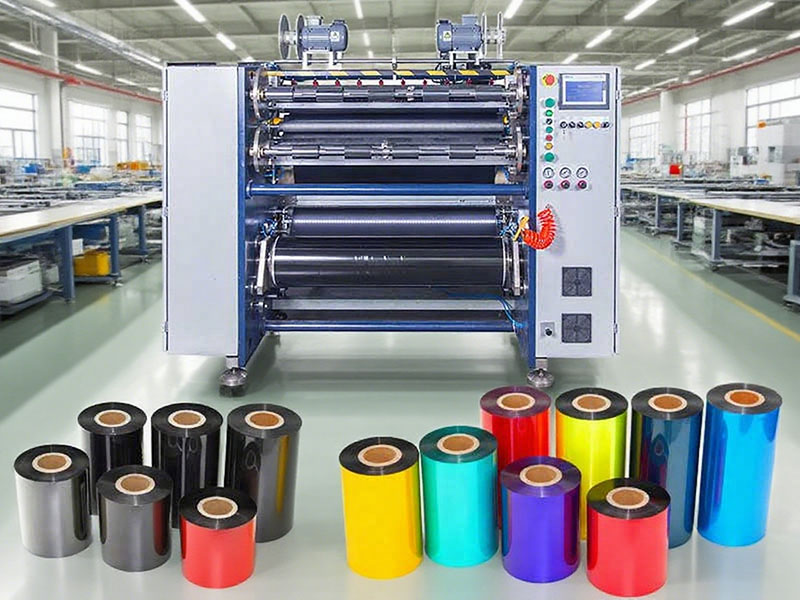
Your machine must handle the specific materials you process. Thermal transfer ribbons typically range from 4-20 microns in thickness. Some machines also accommodate hot stamping foils, coding foils, and other film materials within similar thickness ranges.
Key specifications include:
• Slitting thickness range: Typically 4-20 microns for TTR applications
• Suitable substrates: Wax-based, resin-based, and mixed-base ribbons
• Unwind diameter capacity: Common maximums range from 540mm to 650mm
• Rewind diameter: Usually maximum 100-140mm
• Core compatibility: Support for both 1-inch and 0.5-inch paper cores
If you anticipate processing diverse materials or expanding your product line, choose a machine with broader material compatibility and adjustment capabilities.
Additional Considerations
Environmental adaptability: Thermal transfer ribbons easily attract dust, requiring anti-static design with ionic air rods. Recommended operating conditions are 25±5°C and 50±10% relative humidity.
Waste edge handling: Look for machines with motorized or suction-based waste edge collection systems. Some models offer automatic waste edge monitoring with computer reminders.
Certifications and safety: Ensure the machine meets relevant safety standards, such as CE certification for European markets or OSHA compliance for US operations. Safety features should include emergency stops, protective guards, and interlocks.
After-sales support: Evaluate the manufacturer‘s service capabilities. Key offerings include installation and commissioning support, worker training, whole-life technical support, and availability of spare parts. Some manufacturers provide free machine installation and worker training services.
Making Your Decision
The optimal machine specification balance depends on your business model, target market, and production volume. Small operations serving local label converters may find mid-range machines with ±0.1mm accuracy and 150-250 m/min speeds entirely adequate. Large-scale manufacturers supplying high-resolution applications should prioritize precision-grade accuracy, closed-loop tension control, and higher automation levels.
Most importantly, always request trial cutting with your actual ribbon materials before purchasing. Theoretical specifications matter less than demonstrated performance on the materials you’ll actually process. A machine that meets your quality standards while matching your production economics—rather than simply having the highest numbers on a specification sheet—is the right investment for your business.
 English
 Deutsch
 Français
 Español
 Português
 日本語
日本語 русский
 한국어
한국어 عربي
عربي ภาษาไทย
 Tiếng Việt
 Italiano
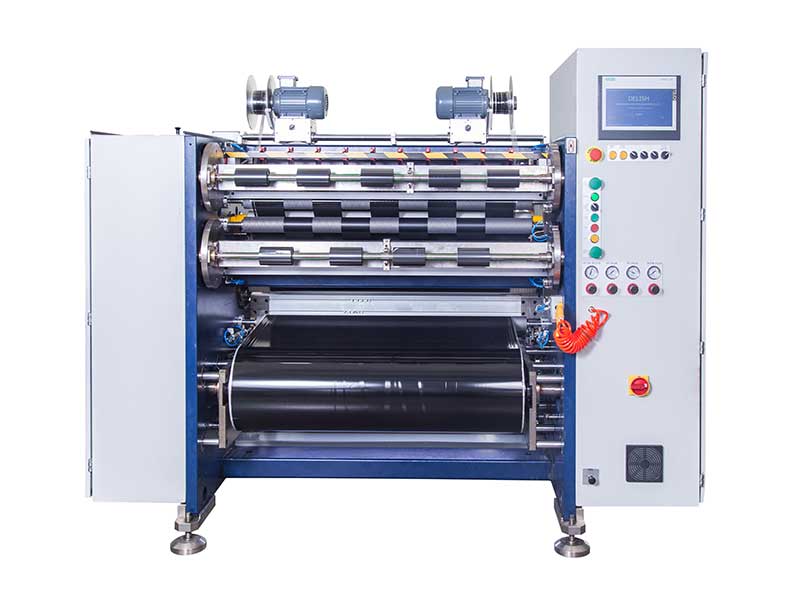 Barcode Ribbon Slitting Machine
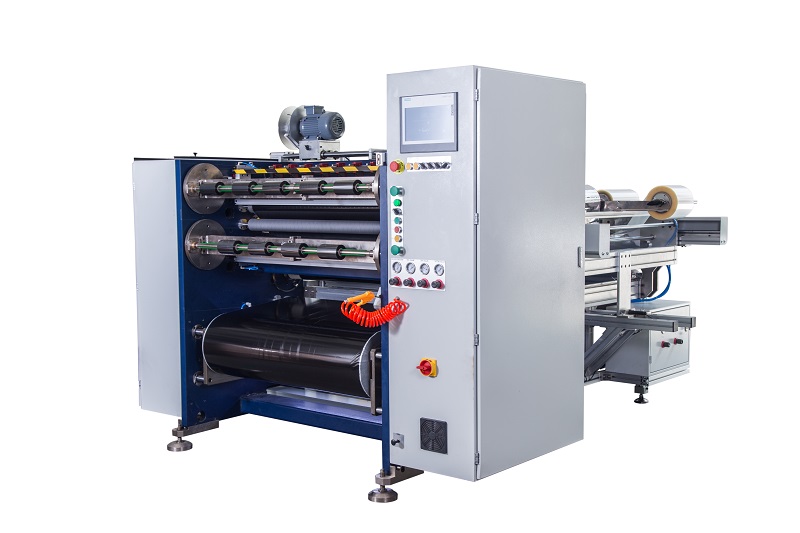 Semi Automatic Thermal Transfer Ribbon Slitter RSDS5 PLUS
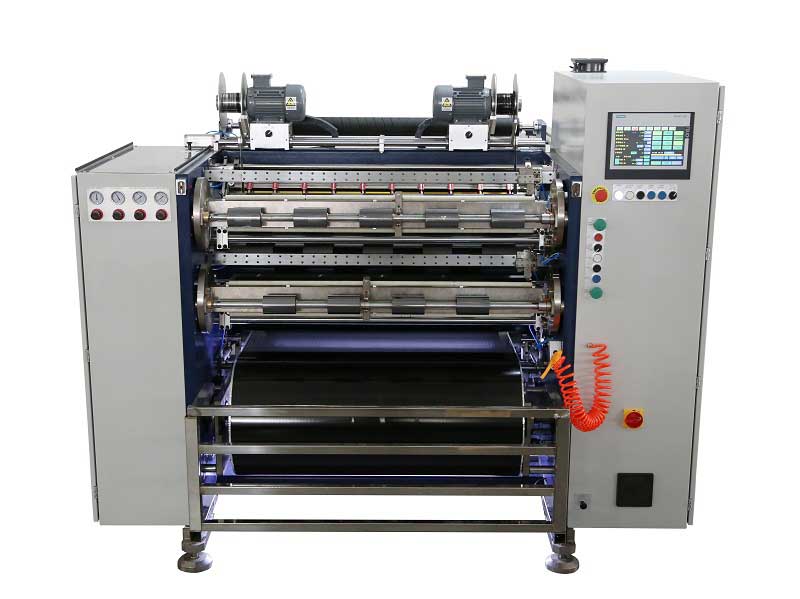 Automatic Thermal Transfer Ribbon Slitter RSDS8 H PLUS
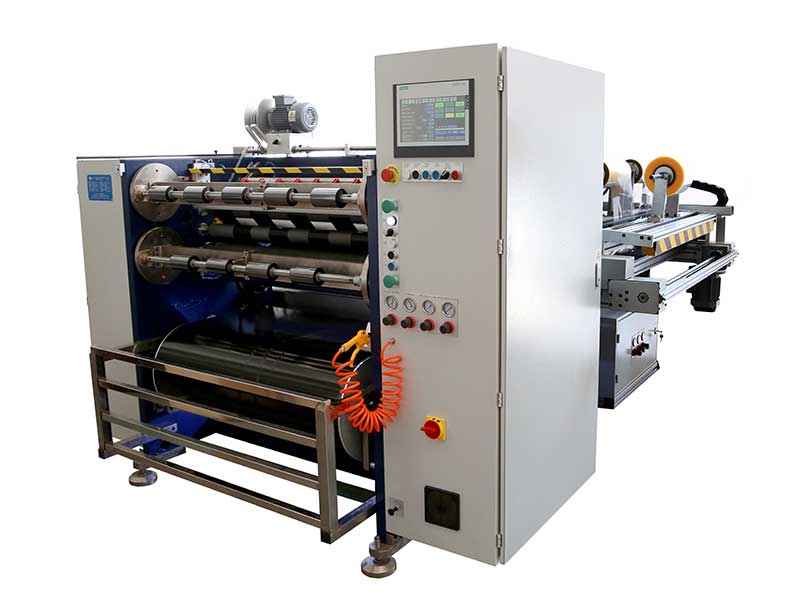 Automatic Thermal Transfer Ribbon Slitter RSDS6 PLUS
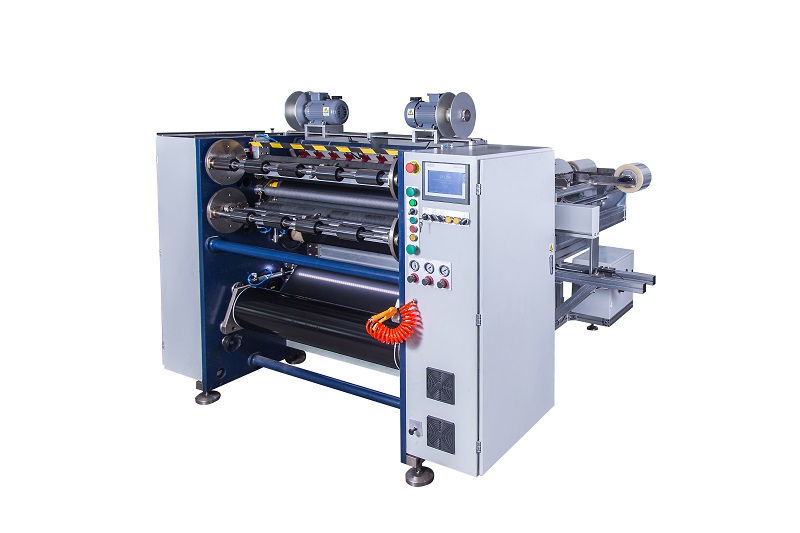 Semi Automatic Thermal Transfer Ribbon Slitter RSDS1 PLUS
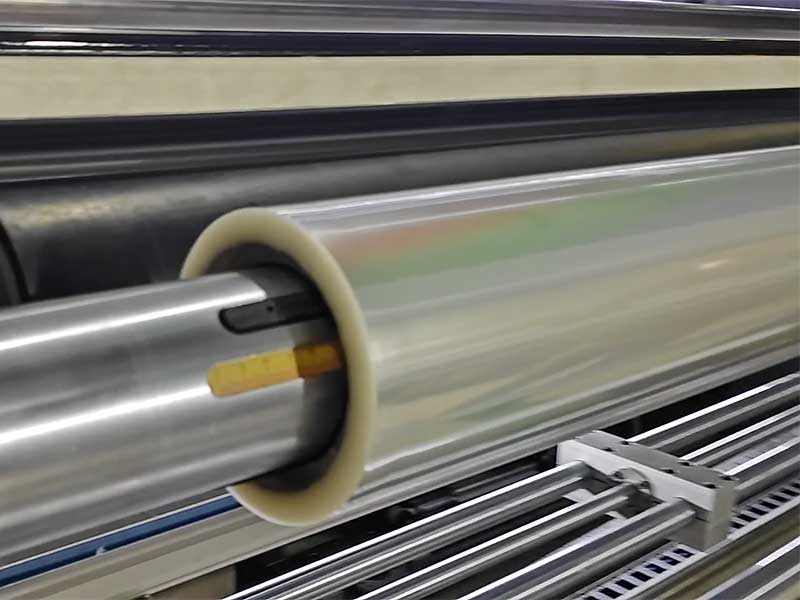 Solar Film Slitter
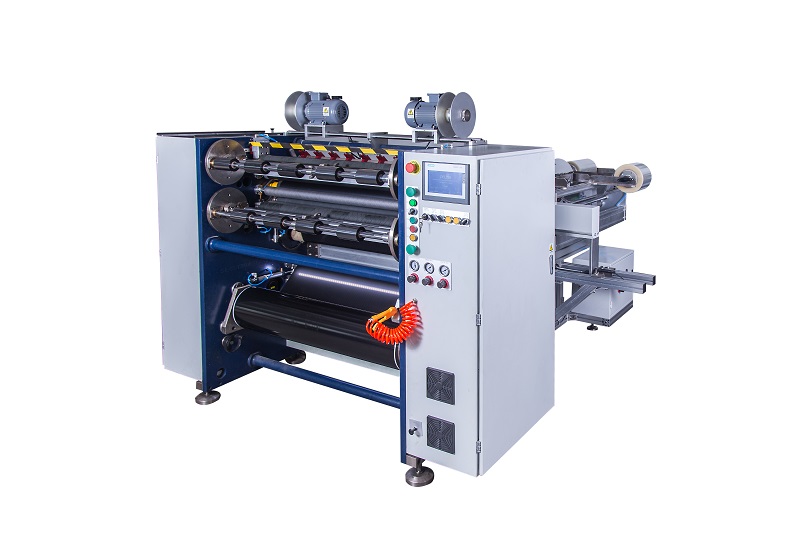 Semi Automatic Thermal Transfer Ribbon Slitter RSDS2 PLUS
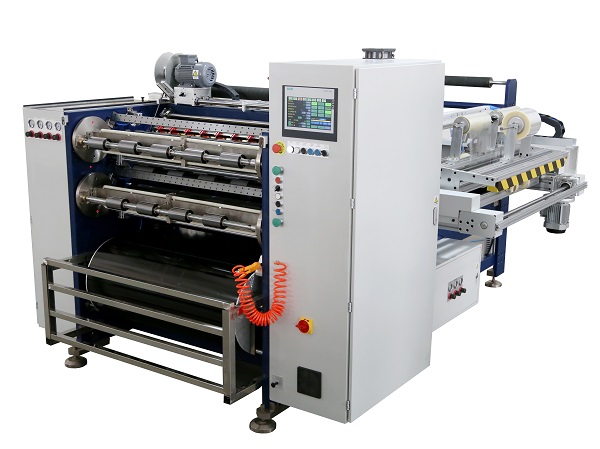 Automatic Thermal Transfer Ribbon Slitter RSDS8 PLUS