Thermal transfer ribbon slitting is the final—and most critical—step in ribbon converting. A wide jumbo roll must be sliced into narrow finished rolls that fit specific printer models, and any mismatch between the slitting machine and your production requirements shows up downstream as print defects, ribbon breakage, or wasted material. With ribbon substrates now as thin as 4.5 microns, choosing the right slitter rewinder is not simply a matter of comparing price tags.
This guide walks through the core parameters, hardware configurations, and practical evaluation steps that converters and ribbon manufacturers should consider before investing in a thermal transfer ribbon slitting machine.

Start With Your Material, Not the Machine
The ribbon type you process most often should drive the specification. Wax-based ribbons are relatively soft and tolerate higher slitting speeds and more forgiving tension settings. Resin-based ribbons, with their harder coatings and lower toughness, typically require speeds 20–30% lower than wax ribbons and demand tighter tension control. Wax-resin hybrid ribbons fall between these extremes.
Thickness matters as well. Standard thermal transfer ribbon films range from 4 to 20 microns, but thin substrates below 5 microns are especially sensitive to tension fluctuations and require machines equipped with taper tension control and low-inertia roller systems. If your product mix includes both standard commercial ribbons and ultra-thin specialty films, prioritize equipment with a wide, well-controlled tension range rather than one optimized for a single material type.
Slitting Precision: The Quality Threshold
Slitting accuracy determines width consistency and edge quality, which directly affects how the ribbon performs in the printer. Burrs or rough edges can damage print heads, while width deviations cause print displacement or ribbon misalignment during high-speed printing.
Industry accuracy tiers break down roughly as follows:
• Economy grade (±0.2–0.5mm): Suitable for conventional commercial labels, logistics, and warehouse management applications.
• High precision (±0.1mm): The standard for precision electronic tags, pharmaceutical traceability, and general industrial applications.
• Ultra-high precision (±0.05mm): Required for medical labels, high-resolution barcodes, and ultra-narrow ribbons under 10mm.
When evaluating accuracy claims, ask the manufacturer to run a trial cut using your own ribbon master roll. Measure the width deviation with a caliper across at least 10 consecutive rolls, and inspect the cut edges for burrs or coating delamination. Parameter tables reflect ideal conditions; your material reflects reality.
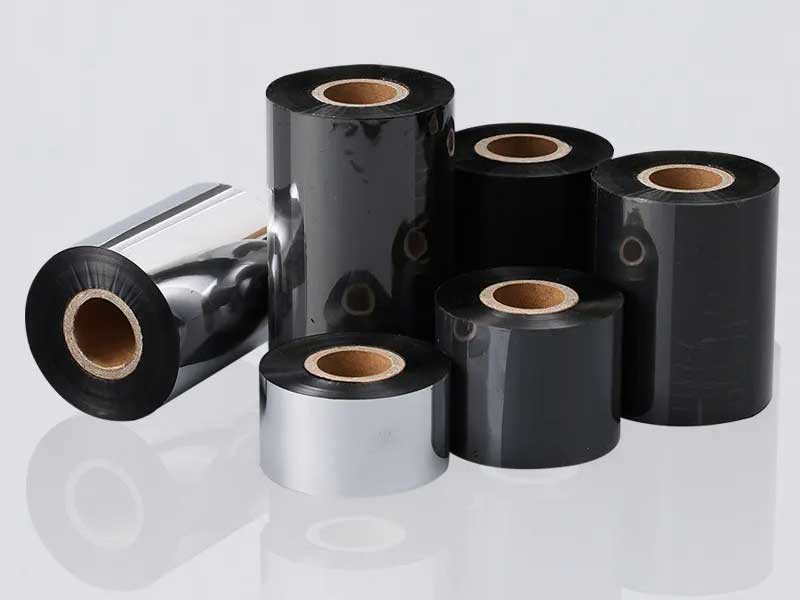
Tension Control: The Soul of Slitting Quality
Tension control is widely considered the single most important factor in ribbon slitting. The PET base film is extremely thin and behaves elastically under load. Excessive tension stretches and deforms the substrate, causing ink layer cracking and powder shedding that contaminates print heads. Insufficient tension produces loose, wrinkled rolls that generate white lines or indentations during printing. Uneven tension leads to telescoping or core misalignment.
For quality-focused production, prioritize a fully automatic closed-loop tension control system, typically combining a PLC with servo drives. This configuration monitors and adjusts tension in real time across unwinding, traction, and rewinding stages, holding fluctuations within ±2% of the set value. For thin substrates, look for systems that incorporate taper tension—tension that decreases dynamically as the rewinding diameter grows—to prevent internal creep and the “tight inside, loose outside” defect.
On the rewinding side, slip shafts are essential for multi-specification production. Each winding station has an independent slip ring that adjusts torque as roll diameter changes, maintaining consistent hardness from core to surface. Pneumatic slip shafts offer better control precision than mechanical versions and are worth the additional investment if you frequently switch specifications.
Slitting Speed: Match Output to Material Realities
Nominal maximum speed is the most heavily marketed specification and the least meaningful in isolation. What matters is the stable, repeatable speed your machine can sustain with your actual materials.
As a reference framework:
• 50–100 m/min: Entry-level and small-batch production, suitable for converters testing the market or handling frequent order changes.
• 150–250 m/min: The workhorse range for most commercial thermal transfer ribbon orders.
• 300–500 m/min: High-volume continuous production, typically paired with automated roll handling and turret rewinding.
Resin ribbons will likely run at the lower end of any machine‘s range, while wax ribbons can run faster. When a manufacturer quotes a top speed, ask under what material and tension conditions that speed was achieved. Then test with your own ribbon at that speed and evaluate start-stop control, winding neatness, and edge quality.
Automation Level: From Manual to Fully Automatic
Automation configuration directly affects labor cost, changeover efficiency, and scrap rate. The right level depends on your order profile and growth plans.
Entry-level machines require more manual adjustment and handling. They suit new converters, small workshops, or operations with moderate order volume and frequent specification changes. The trade-off is lower upfront cost versus higher operator workload and potentially less consistent roll quality.
High-speed automatic machines add features such as automatic blade setting, automatic leader/trailer handling, turret rewinding, and cross cutting. These reduce repetitive manual operations and improve roll-to-roll consistency, which matters when serving distributors or OEM customers with strict delivery and quality requirements. A fully automatic thermal transfer ribbon slitter can achieve full-process operations including automatic feeding, flip winding, and film application, but the investment only makes sense when production volume justifies it.
A middle path: semi-automatic machines with servo-driven tool positioning and programmable presets reduce changeover time without the full cost of automation. This configuration works well for converters who run multiple specifications but lack the volume for a fully automatic line.
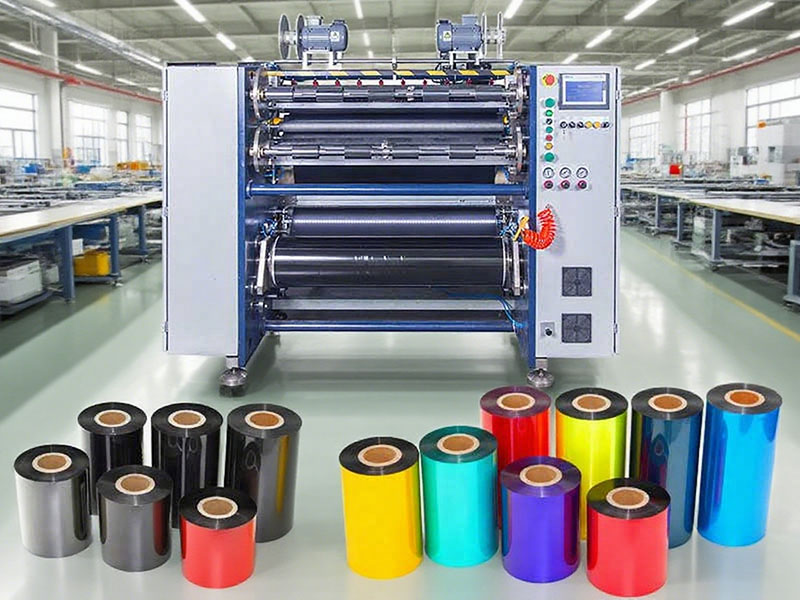
Tool System and Winding Quality
The cutting method affects edge quality, dust generation, and tool life. Razor slitting (square knife) is generally preferred for thin ribbons below 70 microns, offering higher precision and smoother edges. Circular knife systems work well for thicker materials and some resin-based ribbons.
Winding neatness is an often-overlooked specification that affects packaging efficiency and printer loading. End face deviation should be controlled within ±1mm, with high-end equipment achieving ±0.5mm. Defects like bell-mouthed ends, serrated edges, or internal wrinkles indicate inadequate tension control or correction systems. An active deviation correction system using photoelectric or ultrasonic sensors keeps the web aligned during unwinding and slitting, preventing edge wandering that compounds into winding defects.
Practical Evaluation Checklist
Before committing to a purchase, run through these steps:
1. Trial cut with your material. Provide samples of your most challenging ribbon—typically the thinnest or most resin-heavy specification—and evaluate width consistency, edge quality, and winding hardness.
2. Verify tension control architecture. Ask whether the system uses closed-loop servo control or open-loop magnetic particle brakes. For quality production, closed-loop is the baseline.
3. Check core compatibility. Confirm the machine handles both 1-inch and 1/2-inch cores, which are the two standard specifications for thermal transfer ribbon finished rolls.
4. Assess changeover efficiency. If you run multiple widths, evaluate how quickly and repeatably the tool holders can be repositioned. Servo-driven CNC adjustment with ±0.05mm repeat positioning is a significant advantage.
5. Consider future growth. A machine that barely meets current capacity may become a bottleneck within a year. The cost of upgrading later typically exceeds the premium for a slightly more capable machine now.
The right thermal transfer ribbon slitting machine balances precision, speed, and automation against your actual production profile. By prioritizing tension control and winding quality over headline speed figures, and by insisting on trial cuts with real materials, you can select equipment that delivers consistent finished rolls and protects your customers’ printing operations.
 English
 Deutsch
 Français
 Español
 Português
 日本語
日本語 русский
 한국어
한국어 عربي
عربي ภาษาไทย
 Tiếng Việt
 Italiano
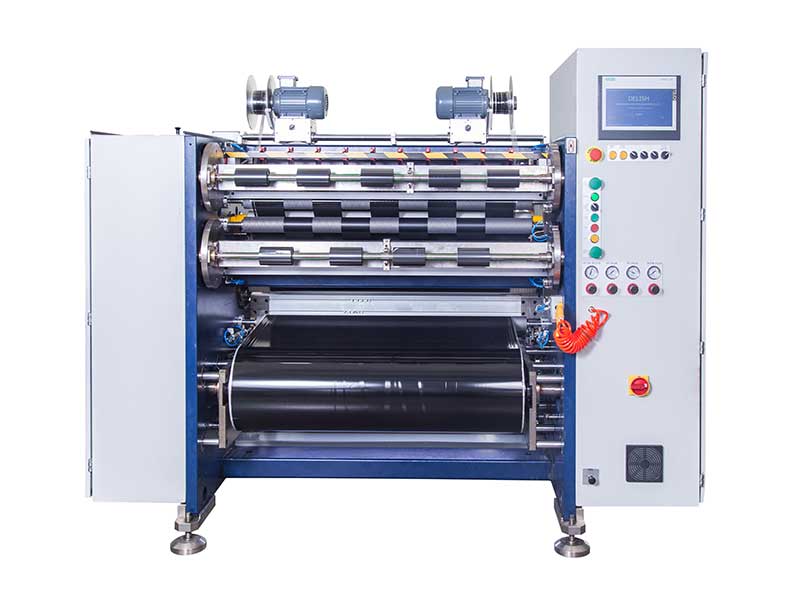 Barcode Ribbon Slitting Machine
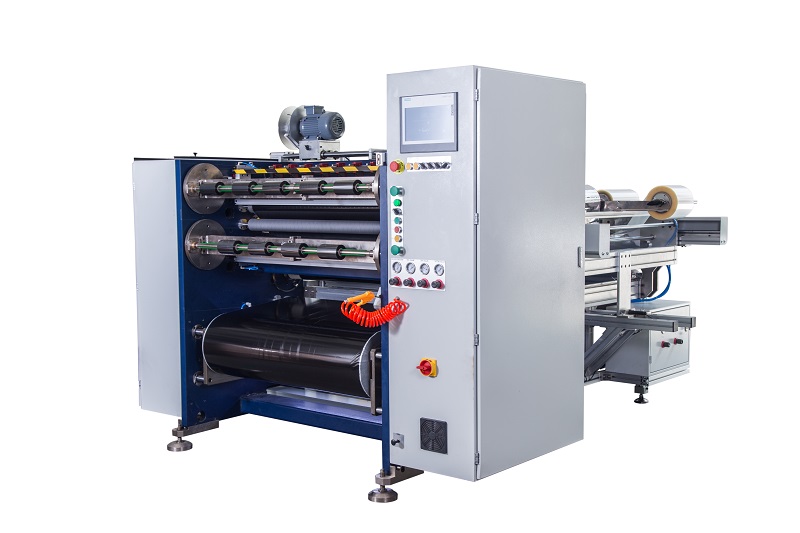 Semi Automatic Thermal Transfer Ribbon Slitter RSDS5 PLUS
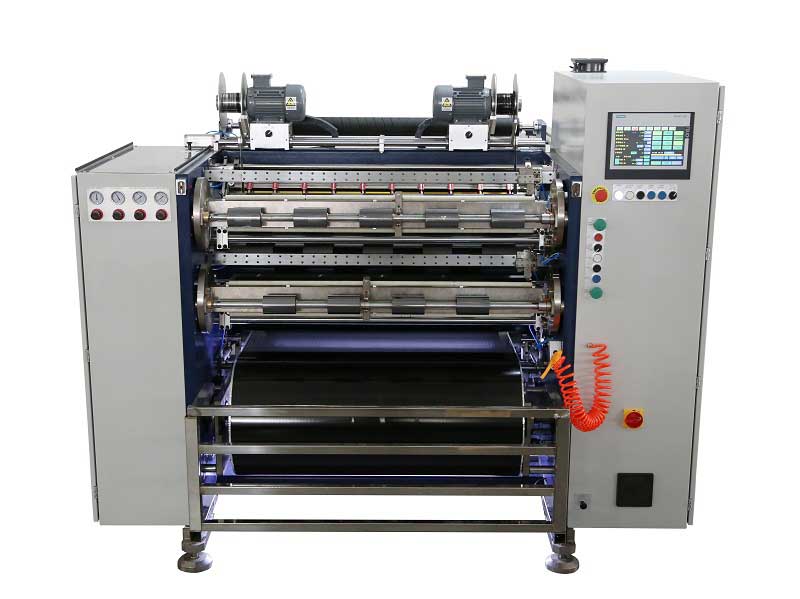 Automatic Thermal Transfer Ribbon Slitter RSDS8 H PLUS
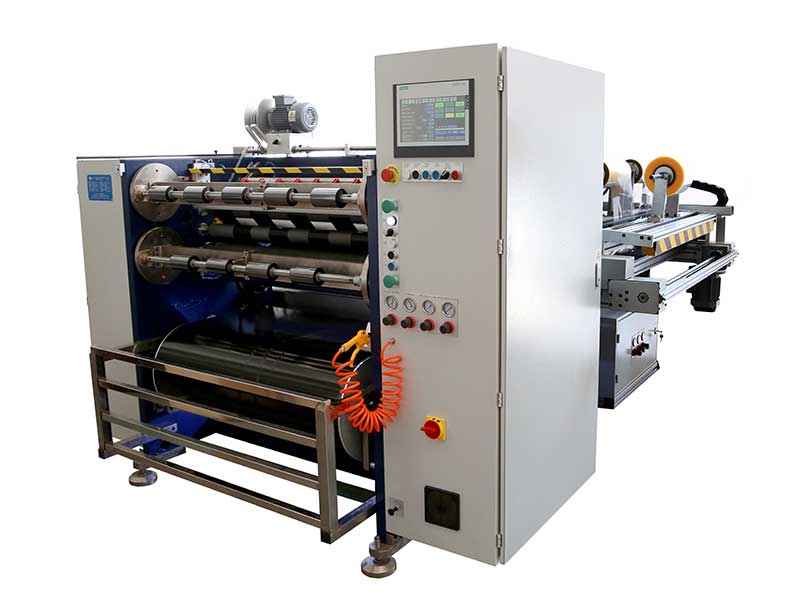 Automatic Thermal Transfer Ribbon Slitter RSDS6 PLUS
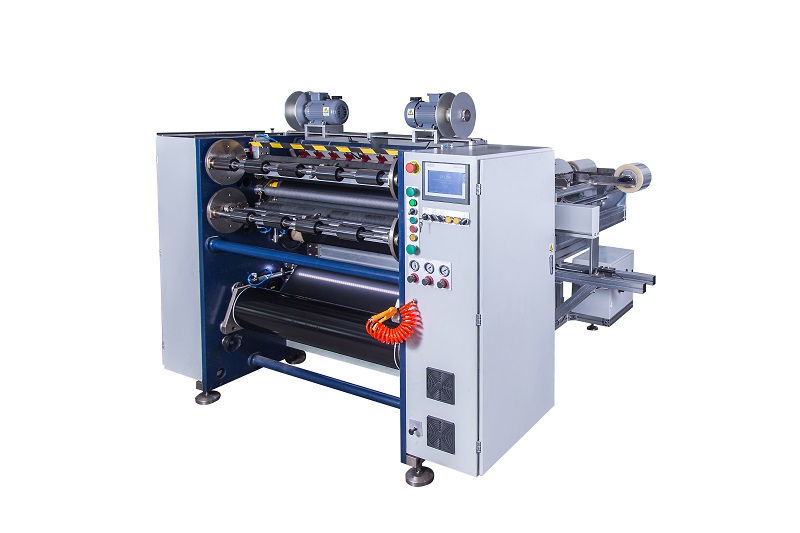 Semi Automatic Thermal Transfer Ribbon Slitter RSDS1 PLUS
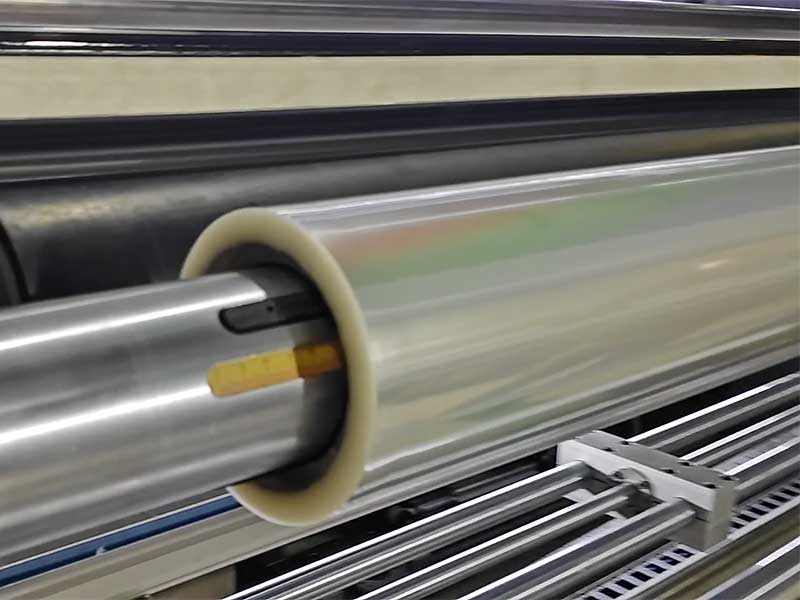 Solar Film Slitter
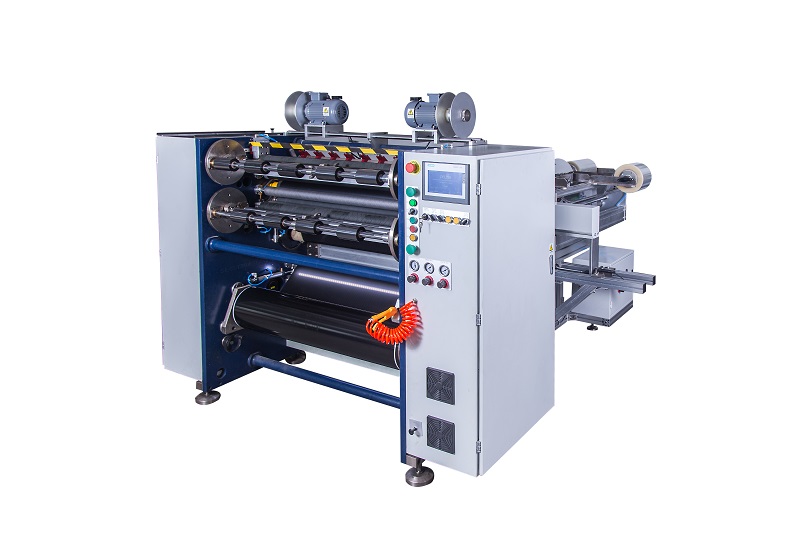 Semi Automatic Thermal Transfer Ribbon Slitter RSDS2 PLUS
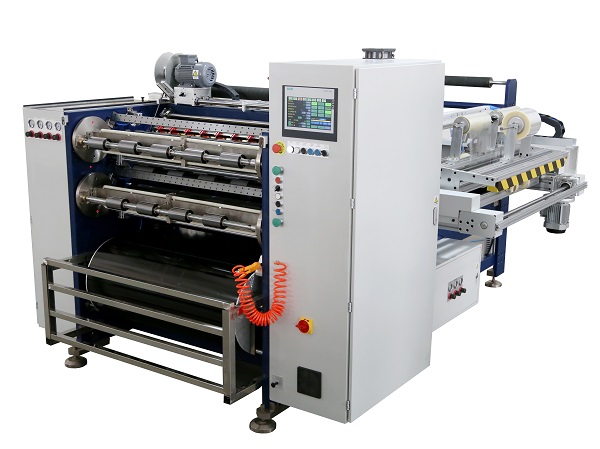 Automatic Thermal Transfer Ribbon Slitter RSDS8 PLUS