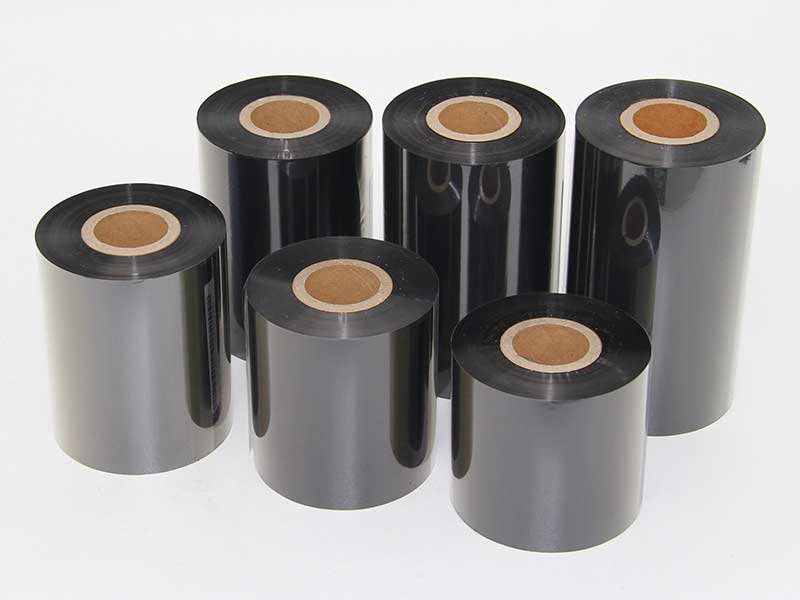
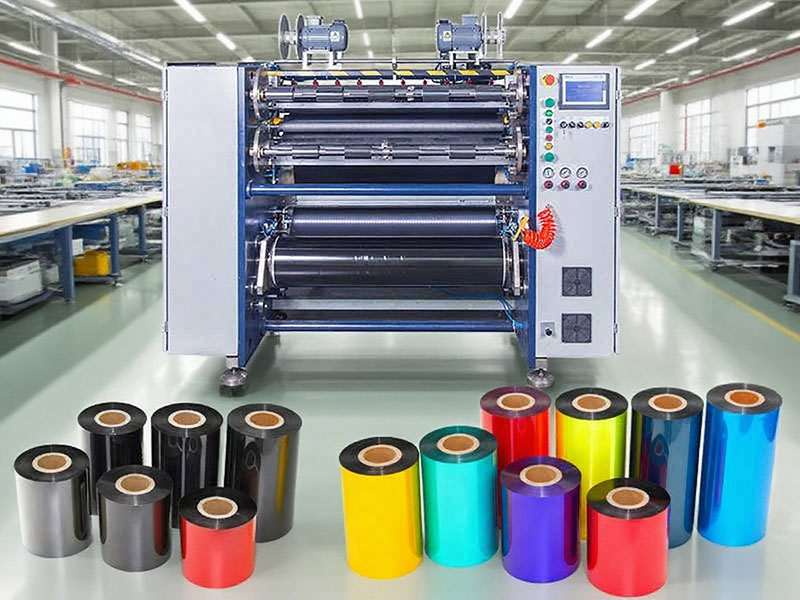
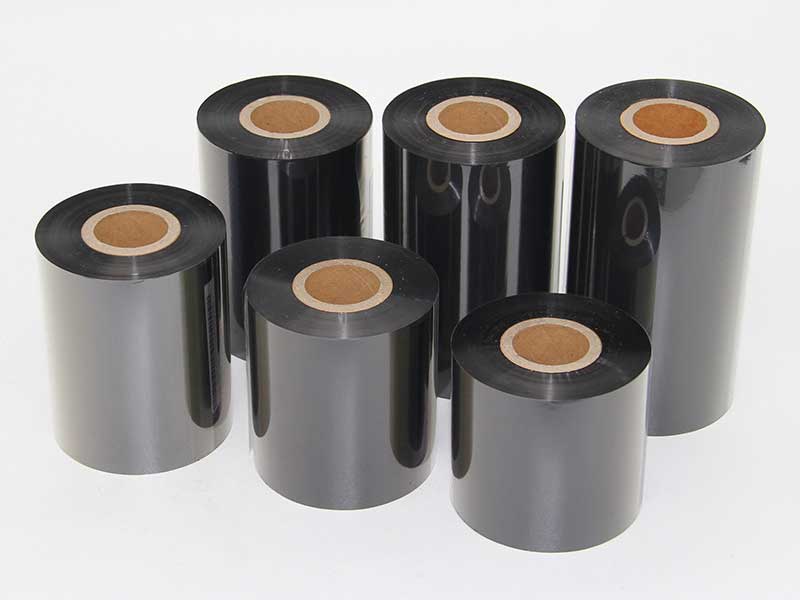
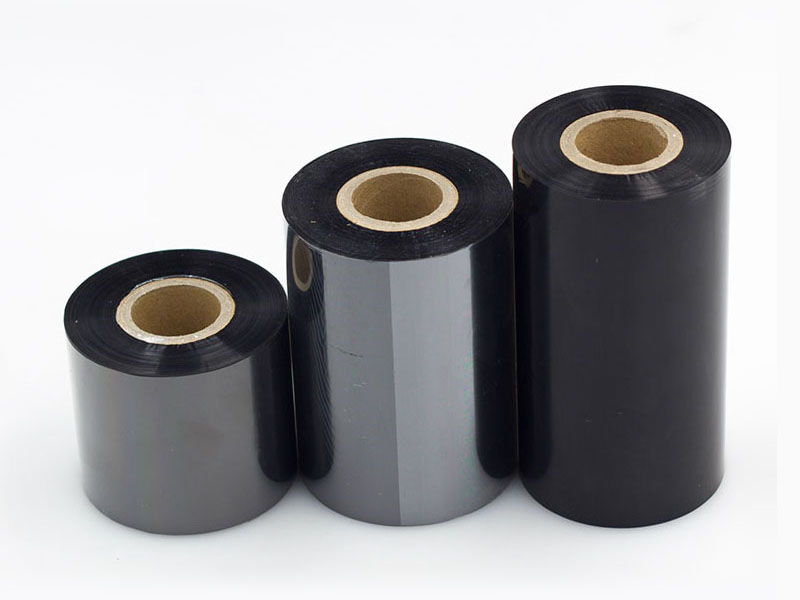
Thermal transfer ribbon slitting is not a simple cutting operation. The material—typically a PET film coated with thermal ink and a backcoating—is only 4 to 20 microns thick. At this scale, every micron of tension variation, every degree of blade misalignment, and every vibration in the feed system translates directly into width deviation, edge burrs, or telescoped rolls. For ribbon manufacturers serving barcode, label, and packaging markets, slitting accuracy determines whether the finished roll performs reliably in high-speed printers or becomes a source of customer complaints and printhead damage.
Improving slitting accuracy requires a systematic approach that addresses tension control, tooling precision, web guiding, and real-time inspection. The following sections break down the critical areas where adjustments yield measurable gains.
Master Tension Control Across Three Zones
Tension is the single most influential variable in ribbon slitting. The PET substrate is highly elastic at micron thickness; excessive tension stretches the film irreversibly, causing width shrinkage and coating micro-cracks that appear as white lines during printing. Insufficient tension allows the web to wander, wrinkle, and wind unevenly.
The most effective strategy is three-zone independent closed-loop control. In the unwinding zone, tension should decrease as the roll diameter shrinks to prevent inner-layer stretching. The slitting zone requires stable, slightly elevated tension to maintain clean shear action at the blade. The rewinding zone must employ taper tension—starting at roughly 120% of the slitting zone tension and linearly decreasing to about 80% as the roll builds. This prevents the outer layers from crushing the inner core and eliminates the “chrysanthemum core” defect common in narrow-width rewinding.
For narrow slitting below 10 mm, reduce unwinding tension to 60–70% of the values used for wider webs. The lateral rigidity of narrow strips is minimal, and even minor tension fluctuations cause edge misalignment. Servo-driven independent rewinding units, where each strip has its own tension regulation, are strongly preferred over shaft-driven systems for these applications.
Optimize Blade Setup and Clearance
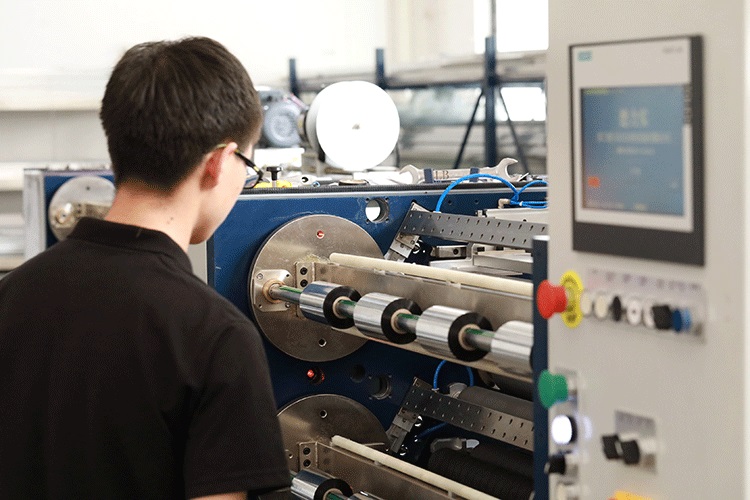
Blade condition and clearance settings determine whether the ribbon is sheared cleanly or torn with burrs. Tungsten carbide or ceramic circular knives with hardness above HRC90 are the baseline for production reliability. Blade angles should be selected according to ribbon chemistry: 15–20° for wax-based and mixed-base ribbons, with adjustments for resin-based formulations that exhibit different shear behavior.
Lateral clearance between upper and lower knives is critical. For ribbon thickness in the 4–8 μm range, clearance should be set between 0.02 and 0.05 mm. Too tight accelerates blade wear and generates friction burrs; too loose produces rollover and irregular edges. Micron-level verification using a laser tool setter or precision spacer stacks eliminates the guesswork that leads to startup scrap after blade changes.
Blade wear management deserves more attention than it typically receives. Establish a replacement schedule based on linear meters cut rather than calendar time, and inspect edges under magnification during routine maintenance. A dull blade does not cut cleanly—it compresses and tears, generating fibrous burrs that wear printheads and cause ribbon breakage in the field.
Eliminate Web Wandering with Precision Guiding
Web wandering is the leading cause of end-face defects in narrow ribbon slitting. The feed system must maintain absolute parallelism and rigidity. Guide rollers should be dynamically balanced and aligned to within 0.05 mm/m. Any radial runout or axial misalignment introduces lateral forces that amplify as line speed increases.
An automatic web guiding system using laser or ultrasonic sensors provides real-time correction. For ribbon substrates that may be transparent or highly reflective, ultrasonic sensors are often more reliable than optical types. The guiding frame should respond within 100 ms and achieve correction accuracy of ±0.1 mm or better. Position the primary correction sensor immediately after the slitting station to catch deviations at the source, with a secondary check before rewinding if the web path is long.
Static electricity is an often-overlooked contributor to wandering. At slitting speeds of 300–500 m/min, the friction between ribbon and guide rollers generates significant charge that attracts dust and causes the web to cling to metal surfaces. Active static elimination bars positioned before and after the cutting zone reduce this interference and help maintain stable tracking.
Implement Online Inspection and Data Feedback
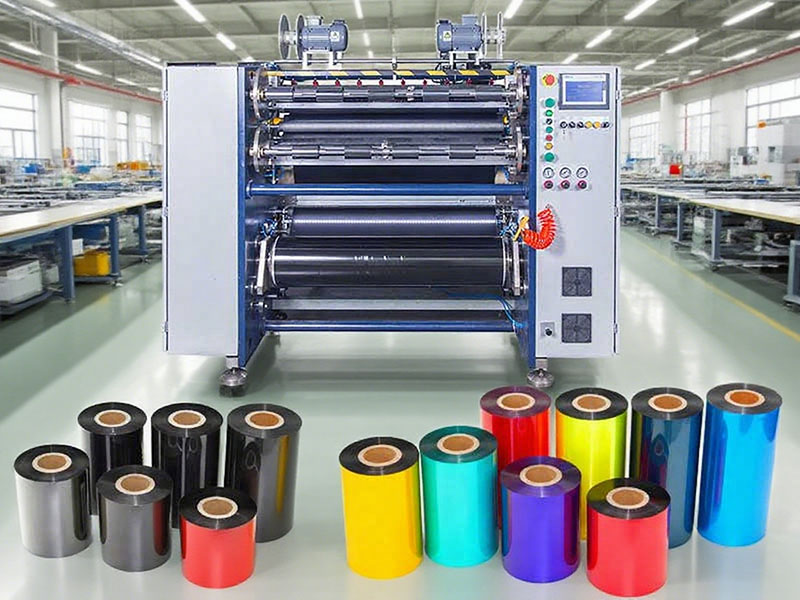
Even a well-tuned slitting line drifts over the course of a production run. Blade wear, thermal expansion, and tension component fatigue introduce gradual changes that manual inspection at startup cannot catch. An online inspection system using a high-magnification camera or laser micrometer can monitor slit width and edge quality in real time, triggering alarms or automatic adjustments when tolerances are exceeded.
For operations pursuing micron-level consistency, servo-driven tool holders with closed-loop position feedback eliminate the backlash and positioning errors inherent in mechanical lead screw systems. When combined with recipe management that stores verified parameters by ribbon type and width, changeover time drops and the trial-and-error waste associated with new orders is substantially reduced.
Maintain Environmental and Mechanical Discipline
Ribbon slitting accuracy is ultimately a reflection of machine condition and operating discipline. Workshop temperature should be held at 23 ± 2°C with humidity below 50% to prevent thermal expansion and moisture absorption that alter the substrate’s dimensional stability. Worn bearings, contaminated rollers, and degraded tension sensors all manifest as slitting defects before they cause outright failure.
A practical maintenance checklist includes: weekly verification of guide roller parallelism, monthly inspection of blade holders for axial play, and quarterly calibration of tension sensors and web guide controllers. Documenting burr complaints and tracing them back to specific blade lots or tension settings builds the institutional knowledge that separates consistent producers from those who are always chasing the next quality crisis.
 English
 Deutsch
 Français
 Español
 Português
 日本語
 русский
 한국어
 عربي
 ภาษาไทย
 Tiếng Việt
 Italiano

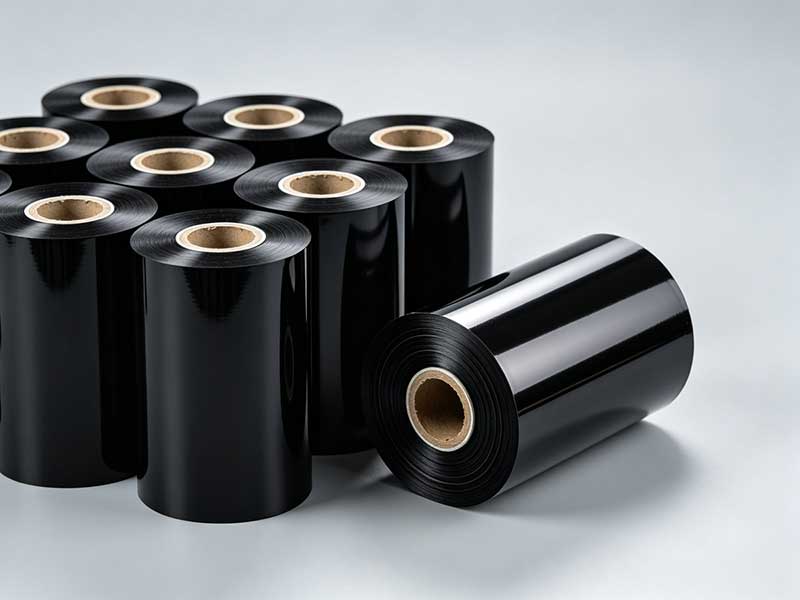
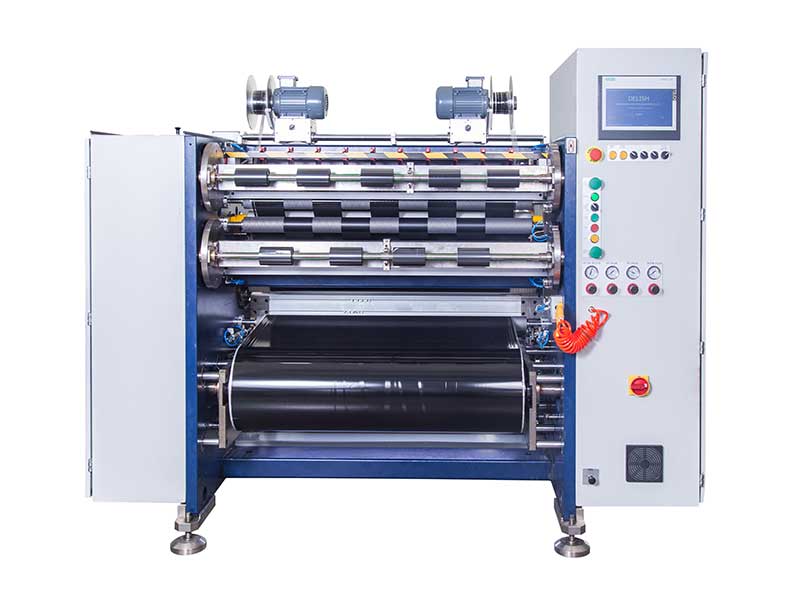 Barcode Ribbon Slitting Machine
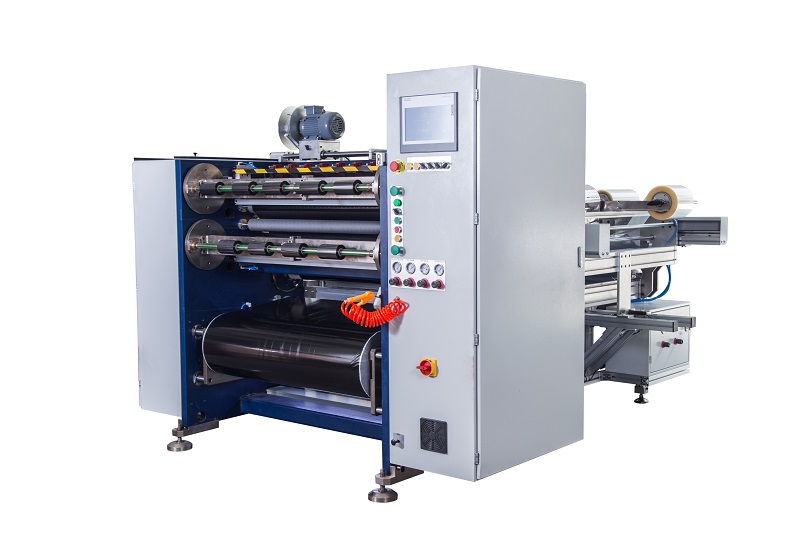 Semi Automatic Thermal Transfer Ribbon Slitter RSDS5 PLUS
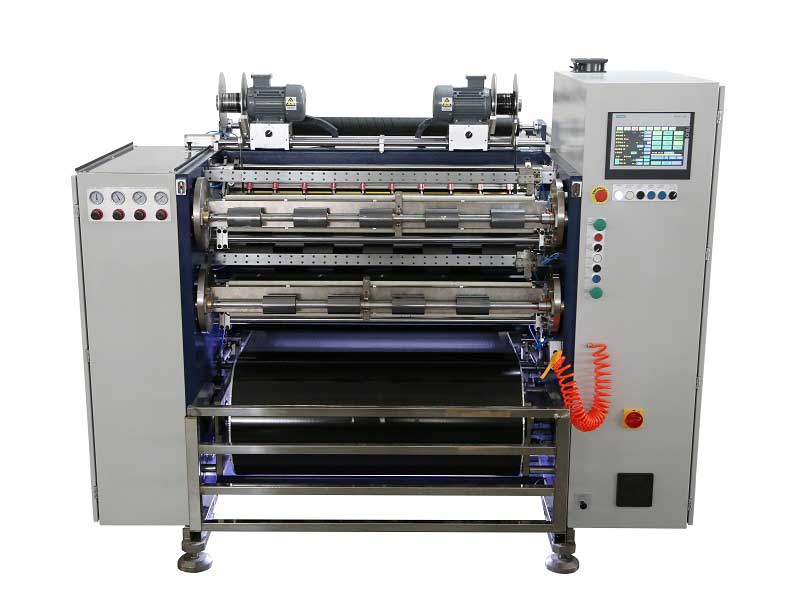 Automatic Thermal Transfer Ribbon Slitter RSDS8 H PLUS
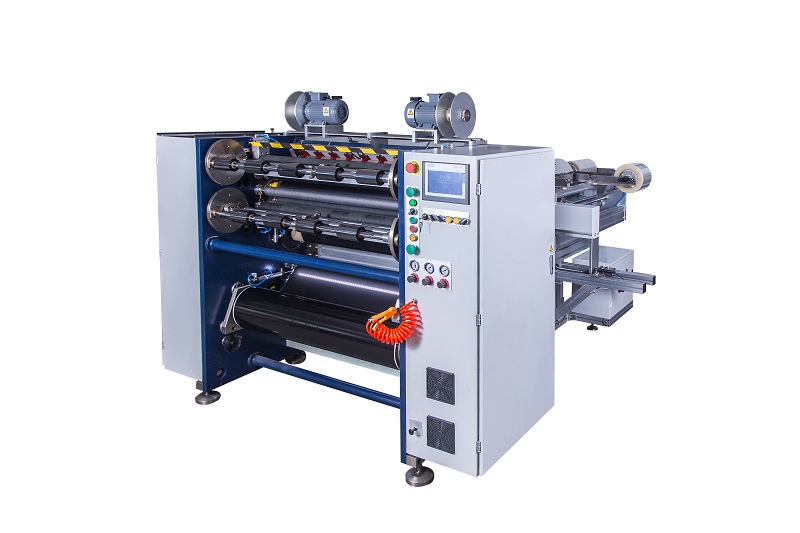 Semi Automatic Thermal Transfer Ribbon Slitter RSDS2 PLUS
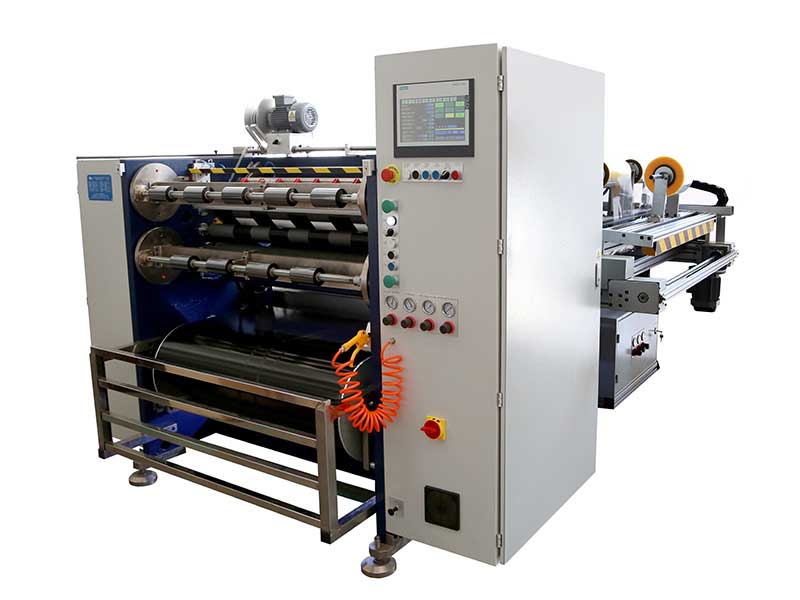 Automatic Thermal Transfer Ribbon Slitter RSDS6 PLUS
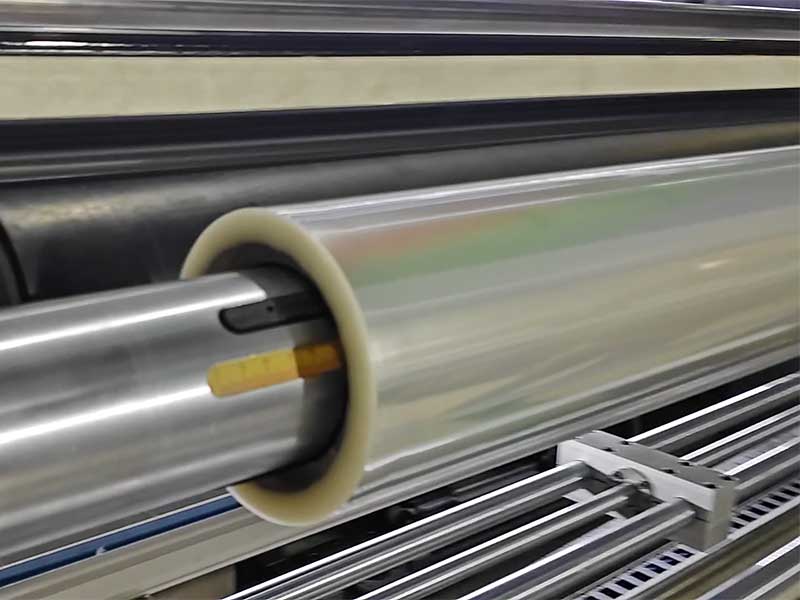 Solar Film Slitter
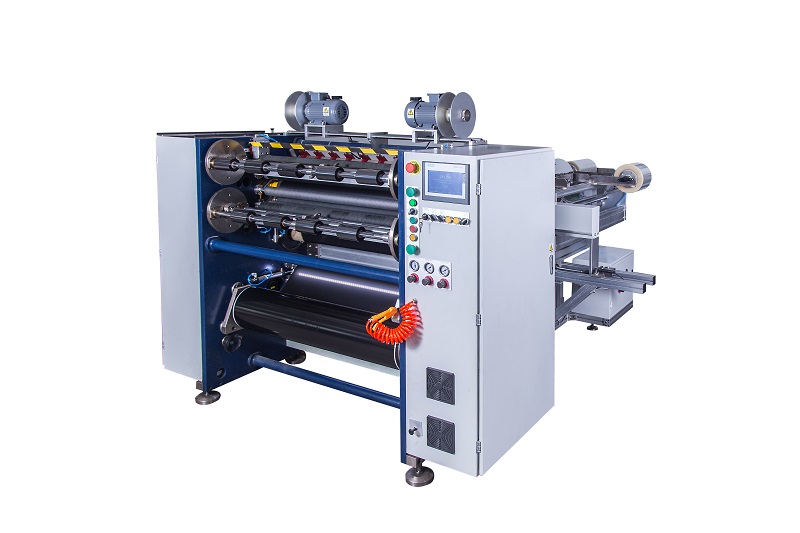 Semi Automatic Thermal Transfer Ribbon Slitter RSDS1 PLUS
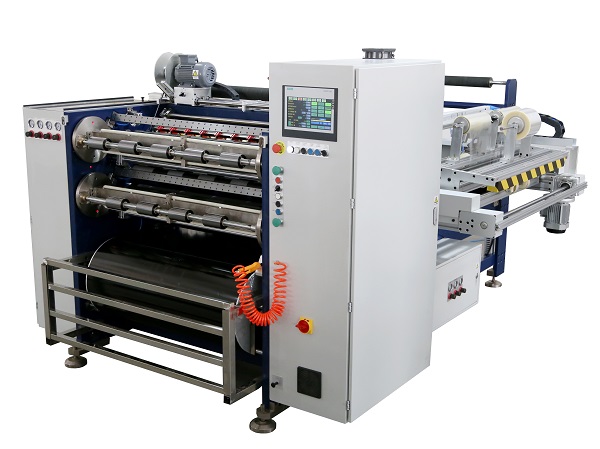 Automatic Thermal Transfer Ribbon Slitter RSDS8 PLUS