Ribbon slitting is a business of "saving money on the knife's edge." Master rolls account for 60–70% of total production costs, while the scrap rate of traditional slitting methods has long hovered between 5% and 8%. Out of every hundred rolls cut, five to eight become waste due to uneven end faces, burrs, tensile deformation, or runaway tail material. For PET composite films only 4 to 20 microns thick, this is almost a structural loss.
The reason AI adaptive slitting machines can push the scrap rate below 0.7% is not a single-point breakthrough of some "black technology," but three interlocking control logics that systematically seal off the three major sources of waste in traditional slitting: deviation, burrs, and tail material.
First Gate: Teaching Tension to "Watch the Road"
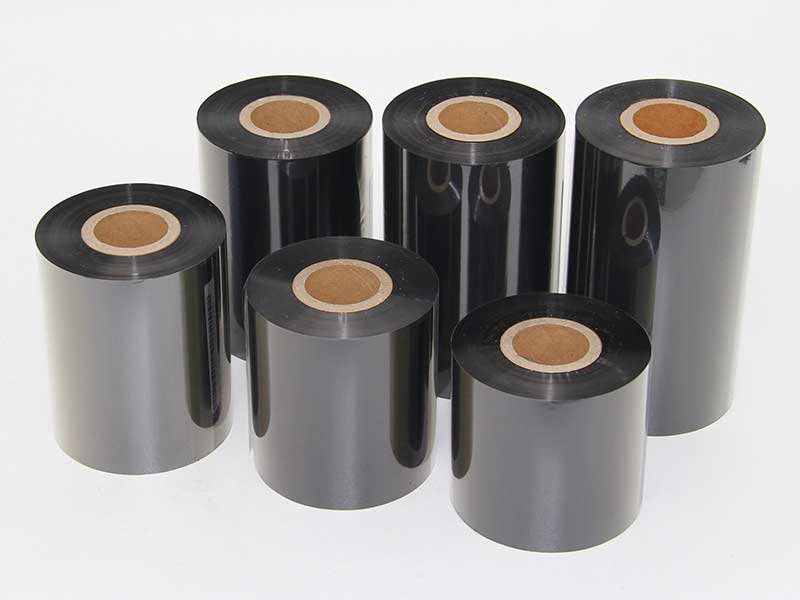
Ribbon is far more sensitive to tension than ordinary film. If tension is too high, the PET base film stretches, the width shrinks after slitting, and dimensions go directly out of tolerance; if tension is too low, the material wrinkles and deviates, and the cut edge wriggles in a serpentine pattern. Traditional slitting machines rely on magnetic powder clutches to control tension, with fluctuations of up to ±10%, which almost inevitably produces end-face defects when slitting narrow strips.
The AI adaptive system's solution is "three-stage independent closed loops + material sensing." The unwinding zone decreases tension as roll diameter shrinks, preventing material stretch; the slitting zone maintains constant tension to ensure clean cuts; the winding zone adopts a taper-decreasing strategy, automatically lowering tension as roll diameter grows to prevent the outer layer from crushing the inner layer. Tension sensors provide real-time feedback, and the PLC dynamically adjusts via PID algorithms, compressing fluctuations to within ±0.5N. More critically, machine learning models automatically match parameters to ribbon material—wax-based ribbons use low tension (3–5N), while resin-based ribbons need 8–12N—no longer relying on veteran operators' trial and error. When roll diameter falls below a set threshold, the system proactively switches to "small roll diameter mode," reducing tension from 100N at full roll to around 30N, shortening tail material from an average of 15 meters to under 5 meters. This alone improves material utilization by nearly one percentage point.
Second Gate: Intercepting Defects Before They Become Scrap
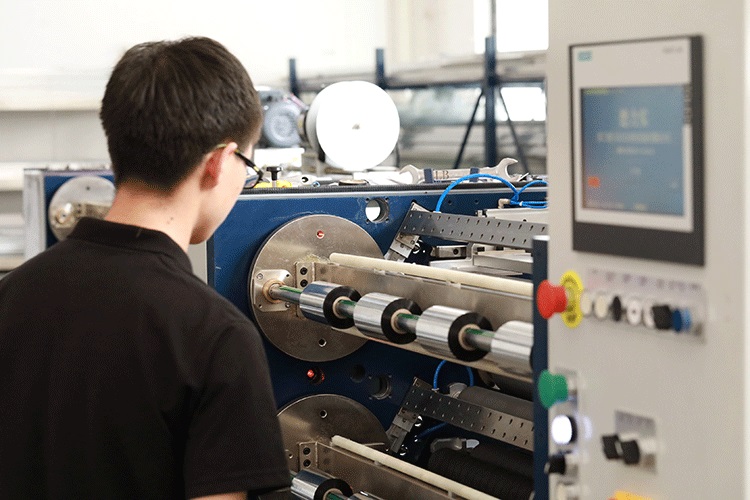
A considerable portion of slitting scrap comes from the lag of "only knowing it's bad after cutting." Under traditional sampling inspection, defect detection rates do not exceed 70%; by the time burr-jammed ribbons or coating peeling are found during downstream printing, the entire batch of narrow strips can no longer be delivered.
AI adaptive slitting machines move quality inspection forward to a millimeter-level position behind the blade. High-resolution industrial cameras scan freshly cut edges at over 200 frames per second, and deep learning models judge defect types such as burrs, coating peeling, and wavy edges in real time, with detection rates reaching over 99.9%. Once a segment of material is identified as having an irreparable defect, the system marks it within milliseconds, and after slitting, an air-jet device automatically ejects that segment, preventing defects from flowing into finished rolls. Meanwhile, vibration sensors on the knife shaft continuously monitor tool health. A model based on one-dimensional convolutional neural networks can capture early features of micro-cracks in the tool from vibration spectra, issuing a speed-reduction command and fine-tuning the tool holder's lateral position 20 milliseconds before chipping occurs, avoiding the blade region about to fail. This "predict—avoid—repair" closed loop minimizes the risk of scrapping thousands of meters of master roll due to sudden ribbon breakage.
Third Gate: Deviation Correction No Longer "Chasing from Behind"
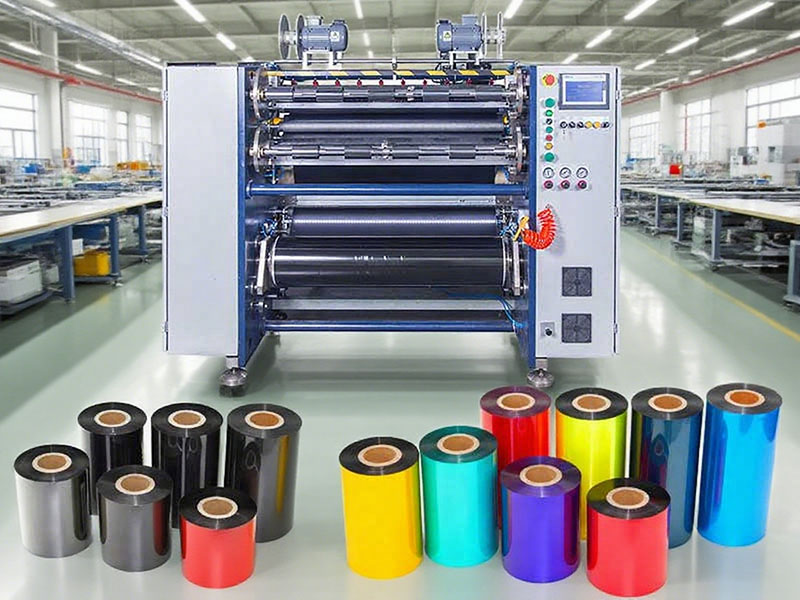
The most troublesome working condition in narrow-strip slitting occurs in orders with widths below 10mm. Ribbon has extremely weak transverse rigidity; if the master roll's end face has even a slight bell mouth or out-of-roundness, the material wanders left and right during feeding, and the cut strips vary in width. Traditional deviation correction systems have limited response frequency; often by the time the sensor detects deviation, the blade has already cut half a meter off course.
The AI adaptive model's deviation correction logic upgrades from "feedback correction" to "predictive compensation." A dual-CCD vision system tracks ribbon edges and print marks in real time, and PID algorithms drive the correction mechanism at no less than 100Hz, controlling alignment error within 0.05mm. Furthermore, built-in environmental sensors monitor workshop temperature and humidity. Nylon-based ribbon absorbs moisture and swells at 60% humidity, requiring slitting speed to be reduced by 5% to compensate for dimensional changes; wax-based ribbon generates frictional heat at high slitting speeds, softening the coating and causing it to stick to the blade, so the model automatically limits speed to the 3–5 m/min range. These fine adjustments seem inconspicuous individually, but cumulatively they exactly bridge the gap from 2% to 0.7%.
What 0.7% Means
Industry data shows that modern slitting machines equipped with basic closed-loop tension and servo deviation correction can already push scrap rates from 5–8% down to below 2%. Going from 2% to 0.7%—the extra 1.3 percentage points—relies on AI turning "post-remediation" into "pre-prediction": tension is adjusted before deviation occurs, the tool is avoided before chipping, and defects are removed before winding.
For a production line with an annual output of one million ribbon rolls, this 1.3 percentage points corresponds to 13,000 fewer finished rolls scrapped each year. In the ribbon industry, where gross margins are not generous, this account can be settled clearly without complex financial models. The value of AI adaptive slitting machines, ultimately, is not in how many layers of neural networks they use, but in making every meter of master roll cut exactly where it should be cut.
 English
 Deutsch
 Français
 Español
 Português
 日本語
 русский
 한국어
 عربي
 ภาษาไทย
 Tiếng Việt
 Italiano

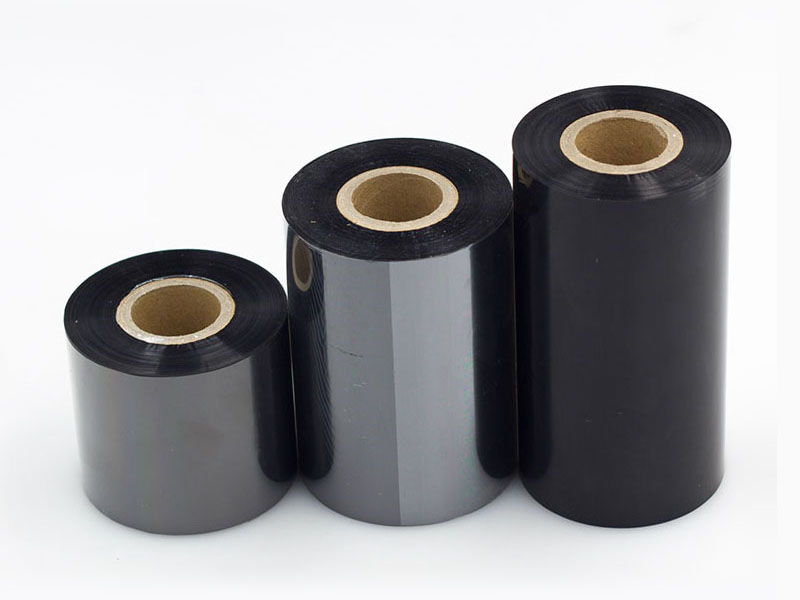
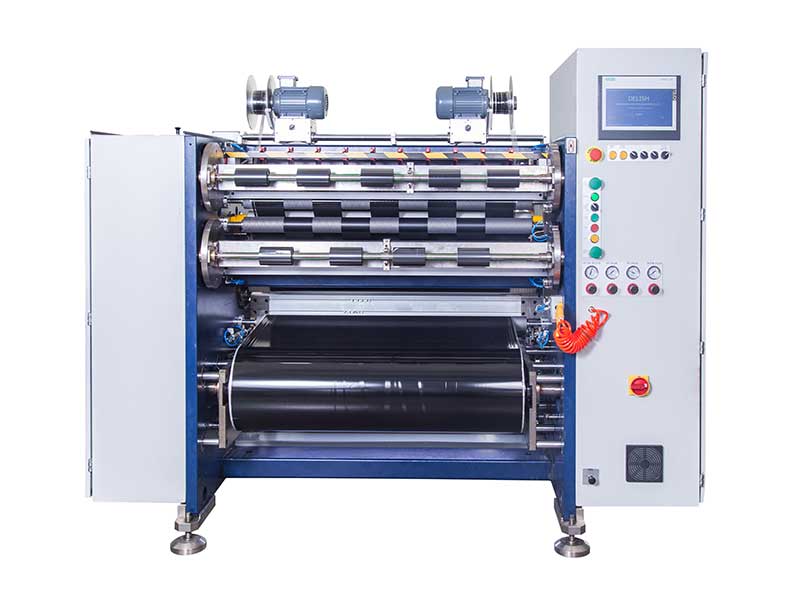 Barcode Ribbon Slitting Machine
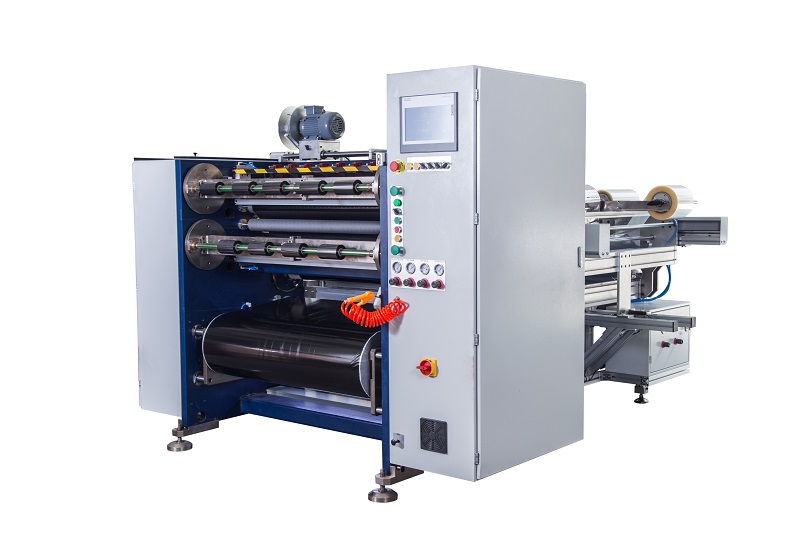 Semi Automatic Thermal Transfer Ribbon Slitter RSDS5 PLUS
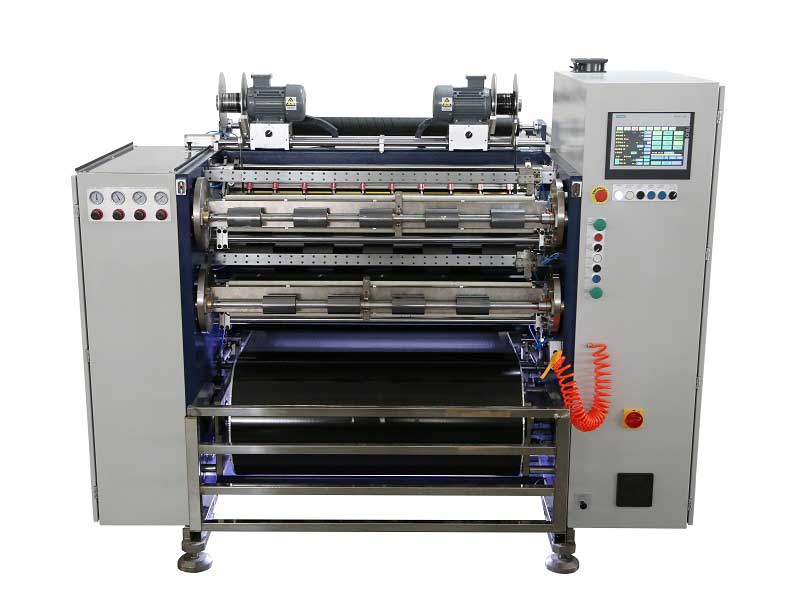 Automatic Thermal Transfer Ribbon Slitter RSDS8 H PLUS
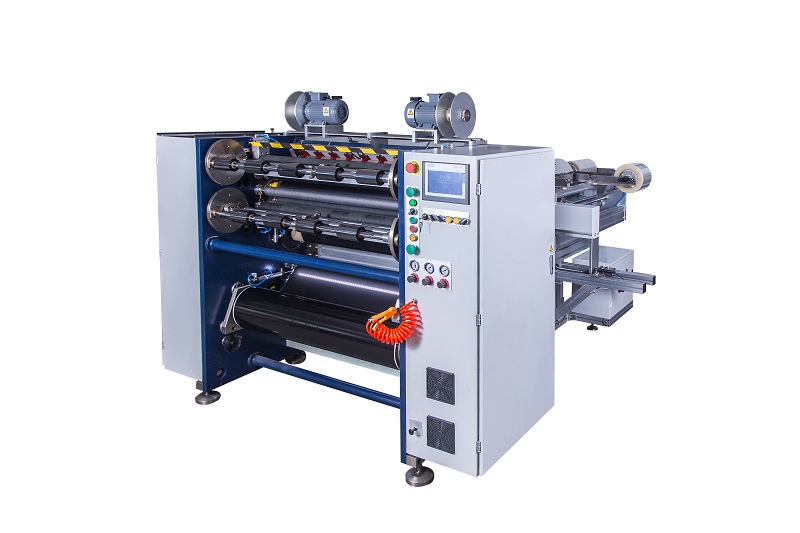 Semi Automatic Thermal Transfer Ribbon Slitter RSDS2 PLUS
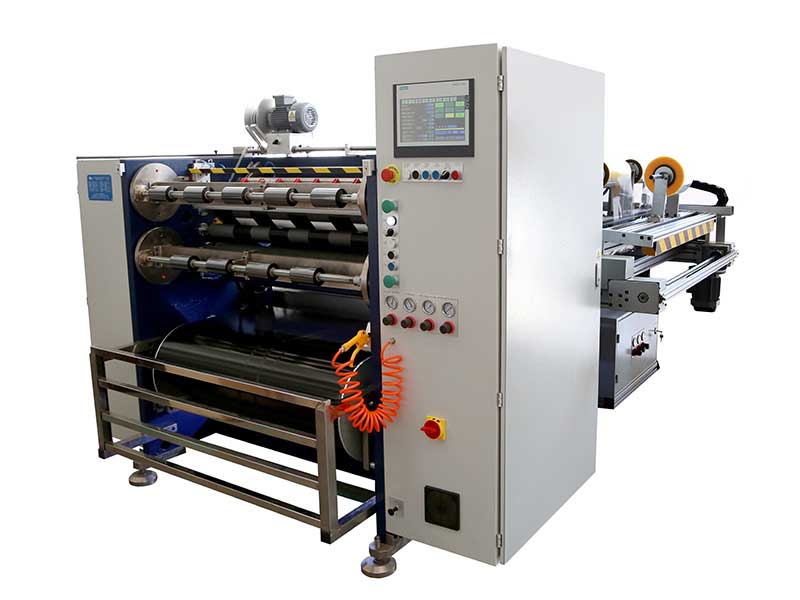 Automatic Thermal Transfer Ribbon Slitter RSDS6 PLUS
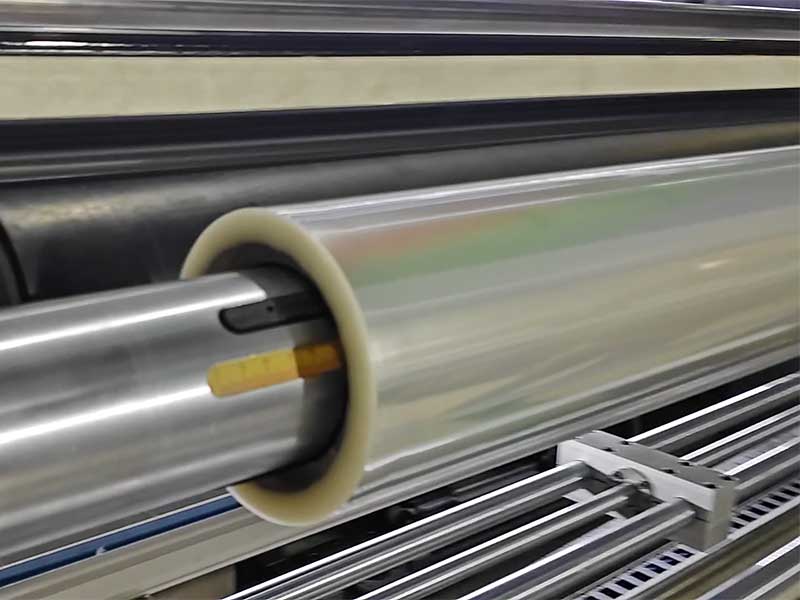 Solar Film Slitter
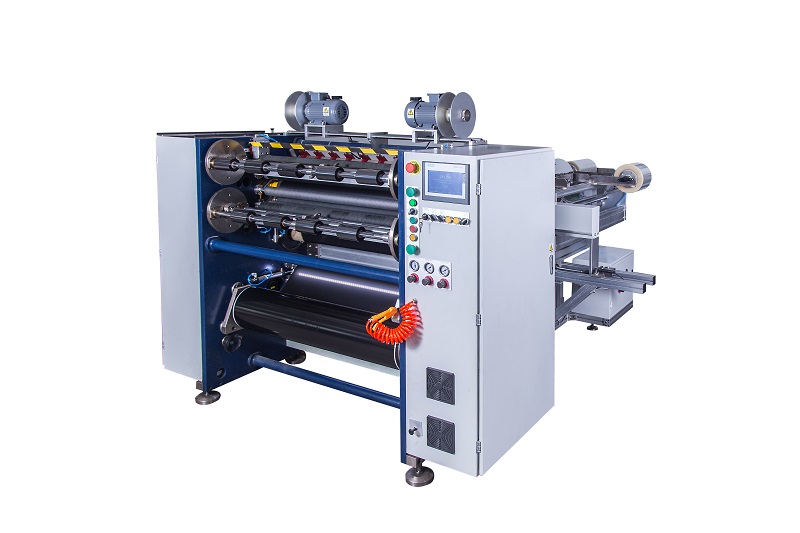 Semi Automatic Thermal Transfer Ribbon Slitter RSDS1 PLUS
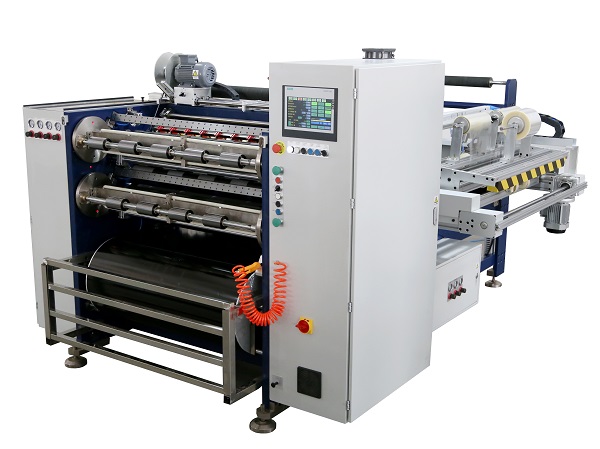 Automatic Thermal Transfer Ribbon Slitter RSDS8 PLUS