Selecting the right thermal transfer ribbon (TTR) slitting machine is a critical capital investment decision for converters and ribbon manufacturers. The choice between manual, semi-automatic, and fully automatic models directly impacts labor costs, production throughput, material yield, and finished roll quality. Understanding the operational realities of each tier is essential for matching equipment to your specific order profile and growth trajectory.
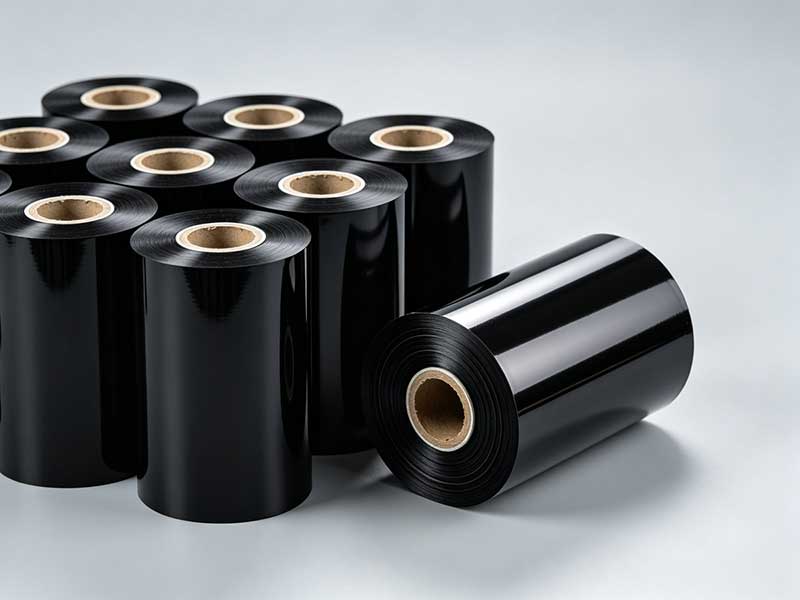
Manual Slitting Machines: Entry-Level Flexibility with High Labor Dependency
Manual TTR slitters represent the most basic configuration. In these machines, the operator is responsible for virtually every stage of the conversion process: loading the master roll, threading the web, setting blade positions, managing tension via manual controls or simple brakes, and initiating the rewind. The “leader and trailer” process—attaching the ribbon to the core and cutting the finished roll—is performed entirely by hand.
The primary advantage of manual machines is their low initial capital cost and simplicity. They are suitable for very small batch production, prototyping, or workshops where labor is inexpensive and order volumes are unpredictable. However, the drawbacks become significant as volume increases. Manual tension adjustment inevitably leads to inconsistent roll density. The operator’s skill dictates quality; a slight variation in tension can cause wrinkles, telescoping, or width inaccuracies. Furthermore, the physical demand on the operator limits production speed and introduces variability between shifts. For a business scaling up, a manual machine quickly becomes a bottleneck, capping output and tying up a skilled worker for the entire shift.
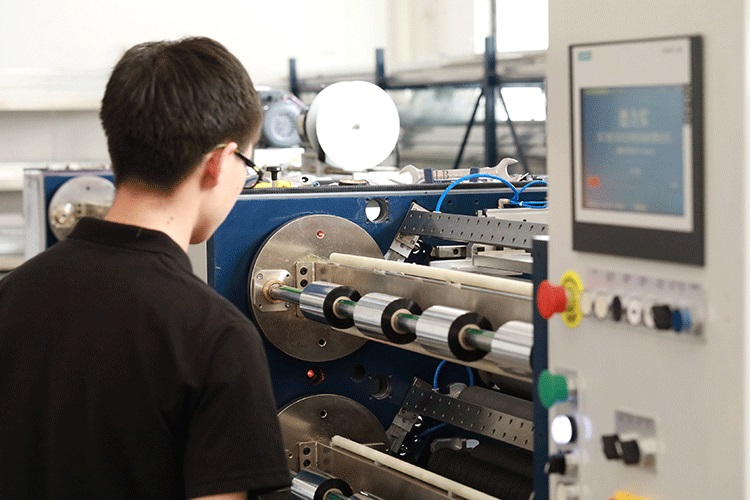
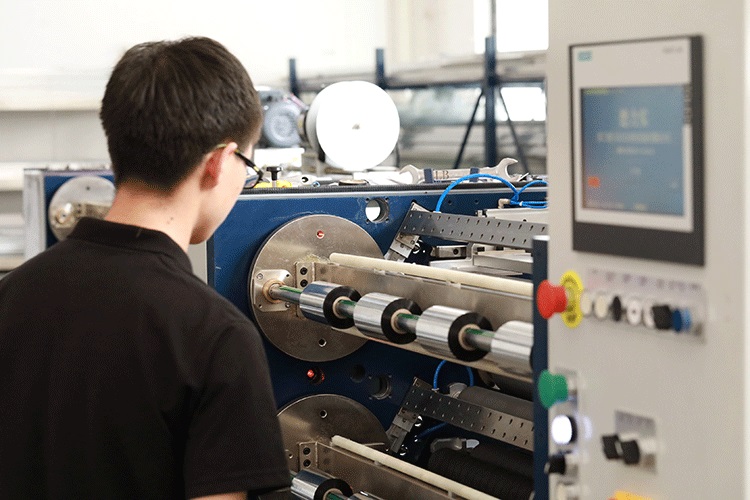
Semi-Automatic Slitting Machines: The Industry Workhorse
Semi-automatic machines bridge the gap between manual flexibility and automated precision. They introduce motorized unwinding and rewinding, often with servo-assisted tension control and pneumatic shaft engagement. The “semi-automatic” designation typically refers to the leader and trailer function: the machine may assist with the initial attachment or the final cut, but the operator still handles the core loading and the physical transfer of the ribbon tail to the finished roll.
These machines offer a significant step up in consistency and speed. With features like automatic edge guiding (web guide) and closed-loop tension controllers, the semi-automatic slitter produces far more uniform rolls than a manual unit. The operator transitions from being a manual power source to a machine supervisor. According to industry production data, a skilled worker can typically manage one to two semi-automatic machines simultaneously. While this is an improvement, the labor cost remains a major operational expense. For a shop running two shifts, a single semi-automatic machine effectively occupies two full-time operators. Additionally, the manual handling of the leader/trailer process introduces a slight risk of contamination or damage to the delicate coating near the core, and the scrap rate in semi-automatic operations often hovers around 2% to 3%.
Fully Automatic Slitting Machines: Maximizing Throughput and Consistency
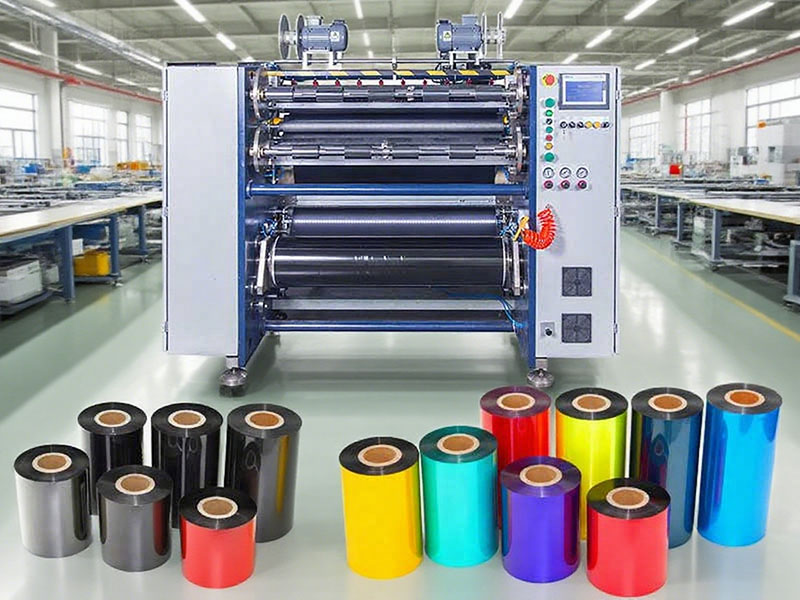
Fully automatic TTR slitting machines are engineered for high-volume, continuous production where labor efficiency and yield are paramount. These systems integrate automatic feeding, closed-loop tension and web guide control, automatic blade positioning, and—most critically—fully automated leader and trailer stations. The machine handles the complete cycle: it positions the core, attaches the ribbon, slits to the precise width, cuts the tail, and discharges the finished roll without manual intervention for each cycle.
The economic case for automation is compelling. Because the machine manages the intricate threading and cutting processes, one operator can oversee a production cell of three to five machines, or even more with centralized monitoring systems. Beyond direct labor savings, the consistency of automatic tension and guide control virtually eliminates operator-induced waste. The scrap rate on a well-tuned automatic machine can be controlled to under 0.5%, a significant material saving when processing expensive resin or near-edge ribbons. Furthermore, automated handling prevents the microscopic damage that manual handling can inflict on the ribbon edges, protecting print head life for the end-user. The higher mechanical speed and reduced downtime for adjustments translate to overall equipment effectiveness (OEE) rates that can exceed 85%, compared to the 60-70% typical of semi-automatic setups.
Key Decision Factors
When comparing these three tiers, the decision hinges on several quantifiable factors:
• Labor Arithmetic: Calculate the fully burdened cost of an operator per shift. If a semi-automatic machine requires one operator per shift and an automatic machine allows one operator to manage four machines, the labor savings alone can often justify the upgrade within 6 to 12 months, particularly in regions with rising wages.
• Order Profile: If your business is built on high-mix, low-volume custom widths, the setup speed of a semi-automatic machine may be advantageous. If you are running large volumes of standard widths, the automatic machine’s rapid changeover and continuous running capability win out.
• Material Cost: For expensive specialty ribbons (e.g., resin-based or high-resolution near-edge), the reduced scrap rate of an automatic machine directly protects your profit margin. A 2% difference in yield on a million rolls is substantial.
• Quality Requirements: For critical applications like medical labeling or high-density barcode printing, the precision of an automatic machine’s tension control is often non-negotiable to prevent print defects and head wear.
Conclusion
Manual slitters remain relevant only for niche, low-volume applications. Semi-automatic machines are the capable middle ground for growing businesses with moderate labor costs. However, for manufacturers serious about scaling, controlling operational costs, and delivering zero-defect ribbon rolls, the fully automatic thermal transfer ribbon slitting machine is the definitive choice. It transforms slitting from a labor-intensive craft into a predictable, high-yield manufacturing process.
 English
 Deutsch
 Français
 Español
 Português
 日本語
 русский
 한국어
 عربي
 ภาษาไทย
 Tiếng Việt
 Italiano

 Barcode Ribbon Slitting Machine
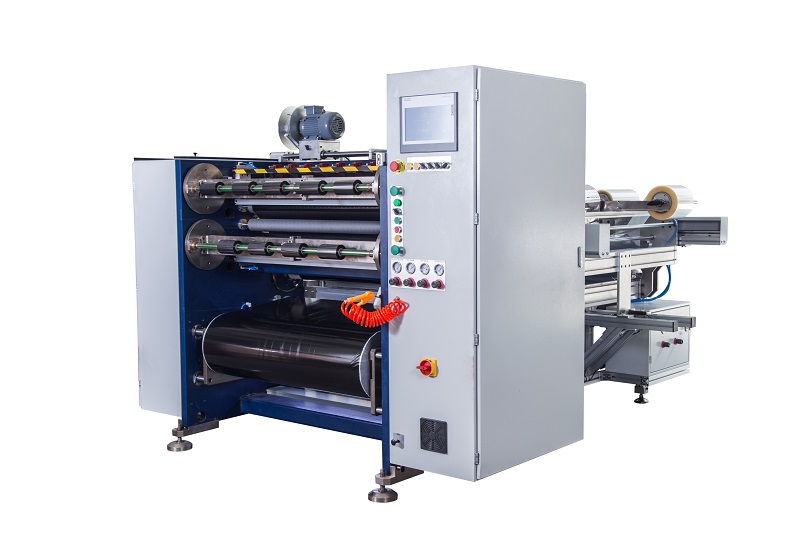 Semi Automatic Thermal Transfer Ribbon Slitter RSDS5 PLUS
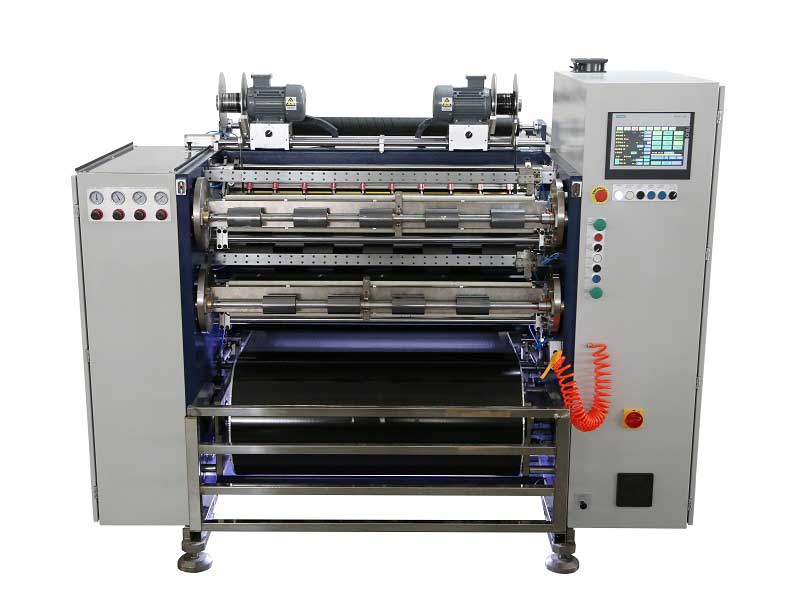 Automatic Thermal Transfer Ribbon Slitter RSDS8 H PLUS
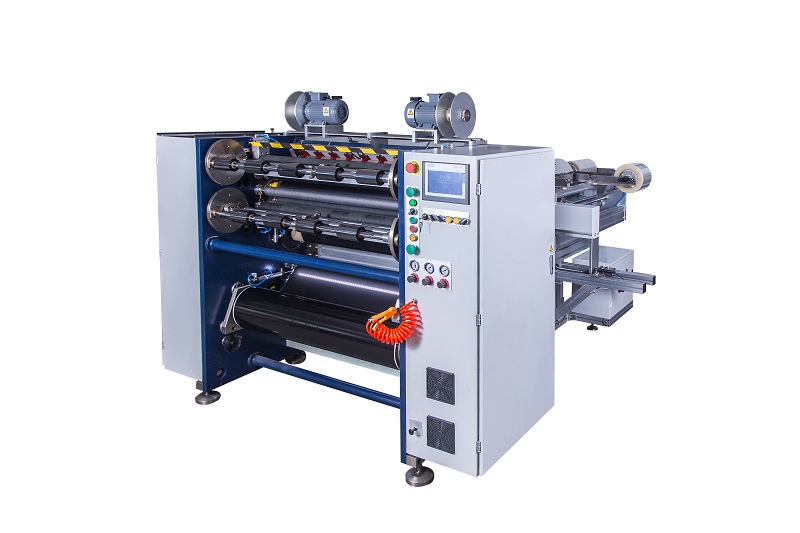 Semi Automatic Thermal Transfer Ribbon Slitter RSDS2 PLUS
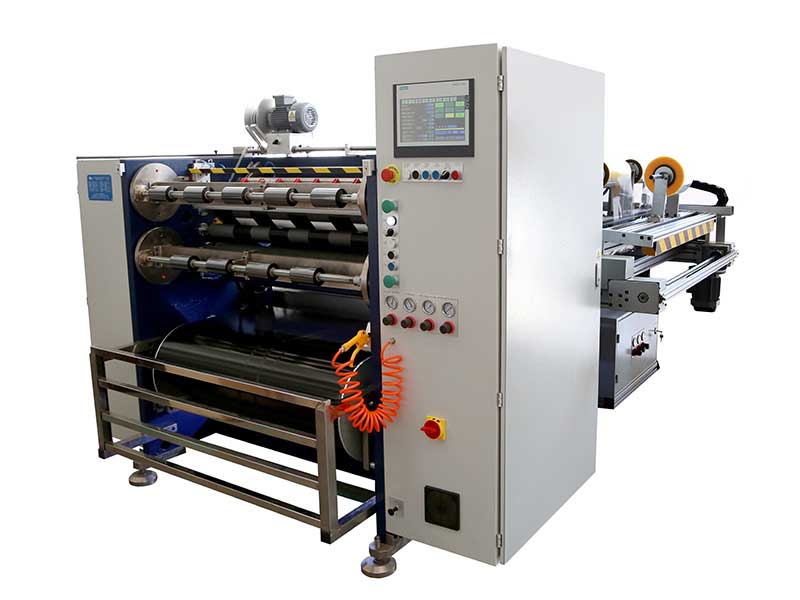 Automatic Thermal Transfer Ribbon Slitter RSDS6 PLUS
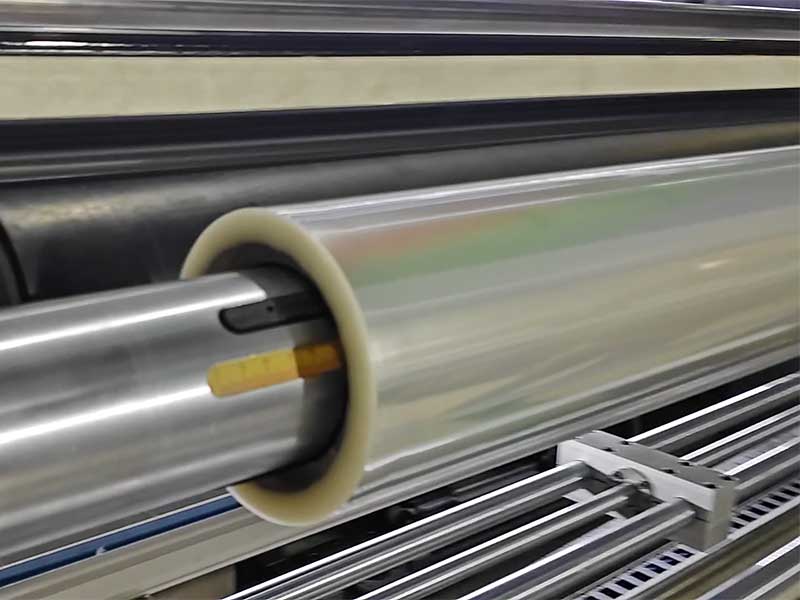 Solar Film Slitter
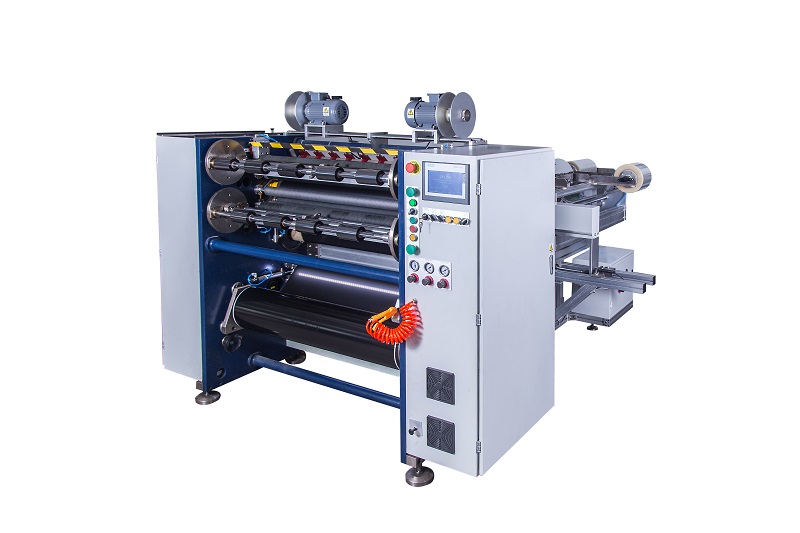 Semi Automatic Thermal Transfer Ribbon Slitter RSDS1 PLUS
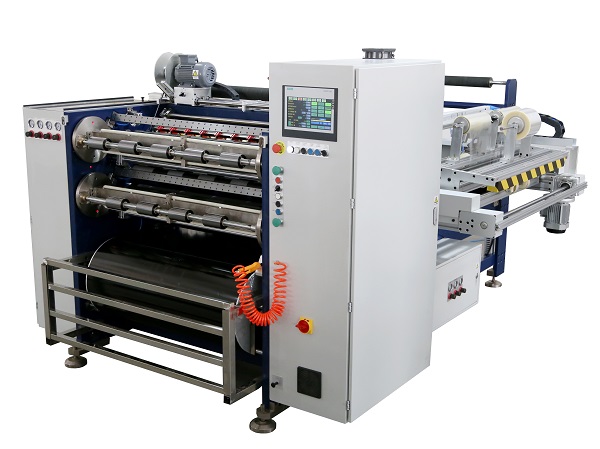 Automatic Thermal Transfer Ribbon Slitter RSDS8 PLUS