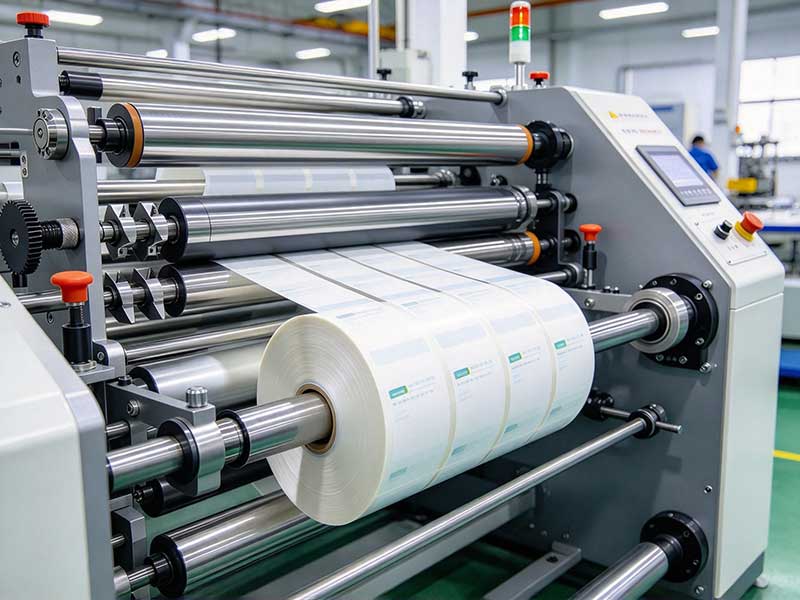
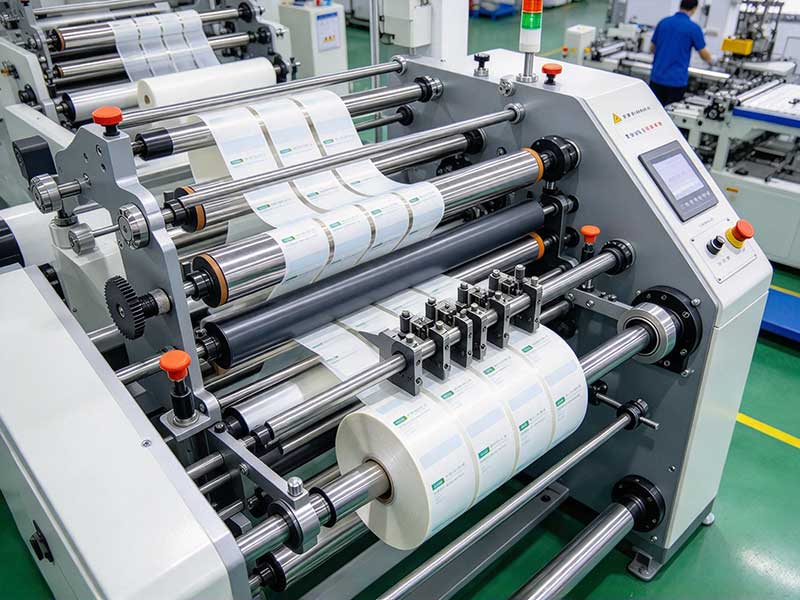
Uneven winding ends are the most common type of scrap in slitting workshops. It manifests as a "telescope" protruding side or a "star wheel" wave pattern, which in severe cases directly causes downstream printing machines to misalign paper and inaccurate registration. Many operators' first reaction is to suspect that the main shaft of the equipment is misaligned, but after actual inspection, 80% of the issues lie in the pressure rollers, tension, and core rolling. Ensuring neat winding doesn't require mysticism; what matters is precise control over several key physical quantities.
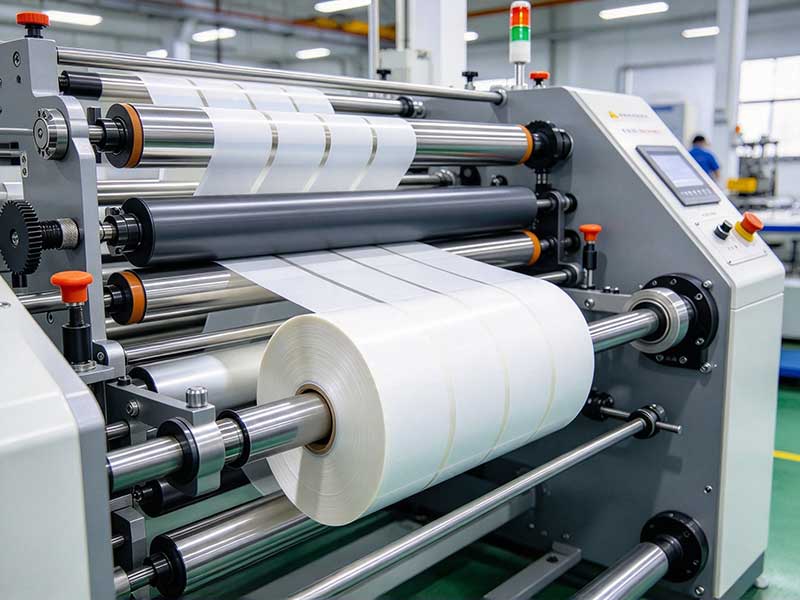
Rollers: The overlooked first line of defense
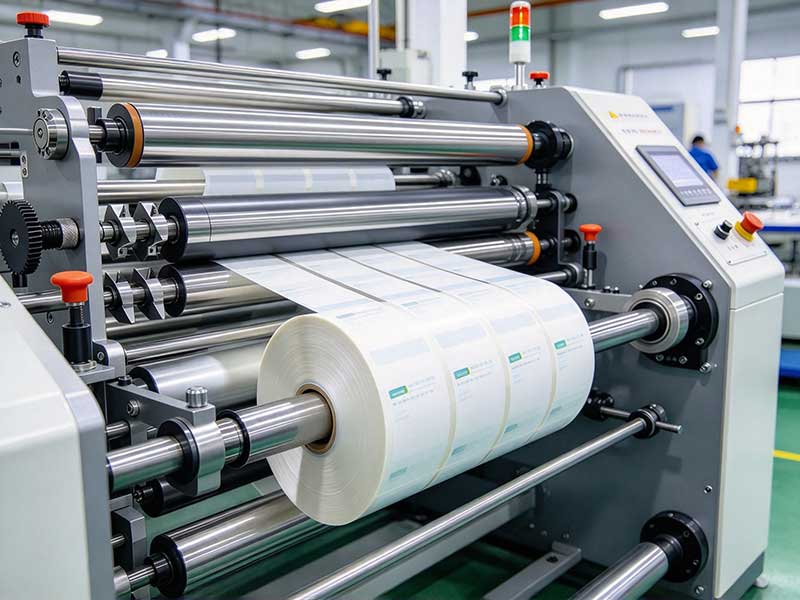
The pressure roller is the last roller that directly contacts the material before winding, and its state directly determines the posture in which the material enters the core. The most common fault is adhesive adhesion or wear pits on the roller surface, causing one end of the coil to be tight and the other to be loose. The loose side gradually overflows outward during subsequent layering, forming a mislayer. Cleaning the pressure roller should be a fixed action during shift changes, wiping the surface with alcohol and checking for hardened gel particles. A more hidden issue is uneven pressure at both ends of the pressure roller. For cylinder- or spring-driven pressure rollers, if there is a pressure difference on both sides, the roller and winding shaft will no longer be parallel, and the material will experience a gradient in lateral force. A simple way to judge is to manually pull both ends of the pressure roller after shutdown to feel if the resistance is consistent; The precise approach is to use feeler gauges to check the parallelism between the pressure roller and the winding shaft, keeping the error within 0.1 millimeter per meter. This precision sounds demanding, but the self-adhesive material itself is often only a few dozen microns thick, and the slight tilt of the rollers is enough to magnify the end face deviation visible to the naked eye over a winding length of several hundred meters.
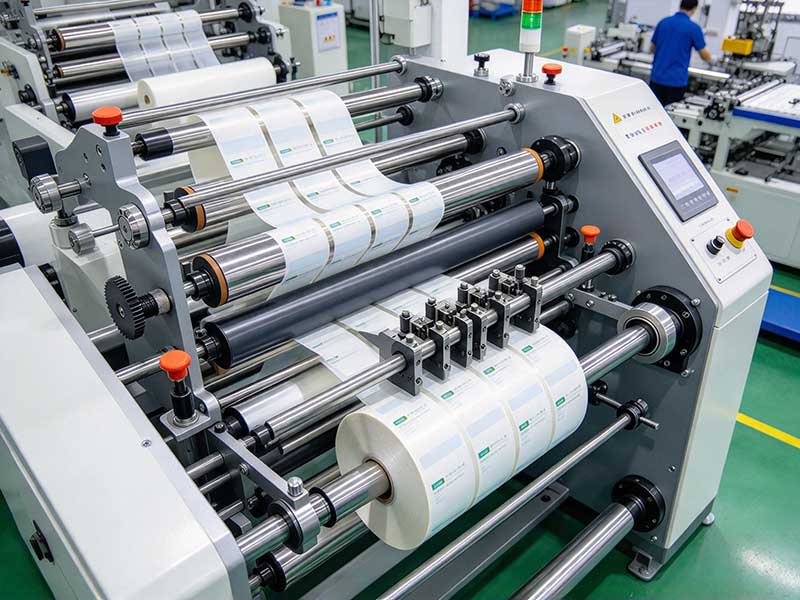
Tension: Dual correction of taper and slip
Tension control is the core technical challenge of slitting machines, with the winding process being especially complex. As the coil diameter continues to increase, if the winding torque remains constant, the material tension will decrease inversely with the radius, resulting in a tight core, loose outer layers, and a chrysanthemum-shaped collapse on the end face. The standard approach to solving this problem is taper tension control: the winding tension is no longer set to a constant value, but gradually decreases along a preset curve as the roll diameter increases. When the initial roll diameter is small, a higher tension is used to ensure the core is tight; as the coil diameter increases, the tension gradually decreases, preventing displacement of the outer layer material due to excessive accumulated interlayer pressure. The shape of the taper curve depends on the material thickness and the hardness of the adhesive layer; there is no universal parameter and must be determined through a test paper during equipment commissioning.
Taper control solves the problem of tension attenuation as the entire material changes with the roll diameter, but it cannot address another unique problem of self-adhesive slitting: multiple narrow rolls on the same winding reel require different tensions. When the master roll coating is uneven or there are slight width differences among the slitting strips, using a single solid shaft rigidly driving the roll will inevitably cause some coils to tighten while others become loose. The slip shaft technology is designed precisely for this purpose. Each drum is independently fitted onto the slip ring. When the tension requirement of a particular material changes, the slip amount of the slip ring adjusts accordingly, allowing each roll to maintain the same speed reference while obtaining the required torque compensation. This is the key hardware foundation to eliminate the blind spot of "independent control for each volume" and to resolve inconsistent end-face issues.
Core and auxiliary materials: the decisive role of the starting few meters
With more precise tension control, if the core itself is not round or the end face is not vertical, everything will reset to zero. Inferior paper cores have excessive roundness, and each rotation causes periodic disturbances in the tension system, causing the winding end face to be crooked from the start. In operation, before winding, check whether the paper core end face is perpendicular to the axis. Batches with obvious oval texture should be replaced immediately. In addition, the air pressure of the reeling reel also needs to be confirmed. Insufficient air pressure on the expansion shaft can cause intermittent slippage of the coil core on the shaft. The tension sensor misinterprets it as insufficient tension and continuously increases torque, tightening the tension more and more, which may eventually tear the material or cause face mislayering. Typically, the pressure on the expansion shaft should be maintained between 0.4 and 0.6 MPa.
Synergy between materials and the environment
The "sandwich" structure of self-adhesive means it is much more sensitive to tension than ordinary paper. When slitting the composite of the face material, adhesive layer, and backing paper, if the ambient temperature is too low, the adhesive hardens, making it difficult for air to escape between layers during winding, and the roll surface is prone to wrinkling; If the temperature is too high, the adhesive layer becomes too soft; if the winding is too tight, it may overflow, adhering to the end face and forming hard spots. When the next layer is rolled up, it will be offset. Workshop temperature is controlled between 20 and 25 degrees Celsius, with moderate humidity, which is an implicit prerequisite for neat winding. The quality of the incoming material itself should not be overlooked. If the master roll has obvious thickness inconsistency or coating deviation, no matter how precise the slitting machine's tension system is, it cannot be fully compensated. Serious deviations in the master roll should be removed before machine use.
The neatness of winding is not the result of a single parameter, but rather the result of the coordinated action of rollers, tension, core roll, and material condition along the entire paper path. If the end face is uneven, trace the paper path forward from the winding end: first check whether the pressure roller is clean and parallel, then check if the tension taper matches the current material, and finally confirm whether the core and air pressure meet the standards. In most cases, the problem stops within these three steps.
 English
 Deutsch
 Français
 Español
 Português
 日本語
 русский
 한국어
 عربي
 ภาษาไทย
 Tiếng Việt
 Italiano