The core task of the solar film slitting machine is to cut the wide main roll into narrow coils that meet the specifications of end-use construction or retail. However, "sun film" itself is a broad term involving a wide variety of film materials, ranging from ordinary stained window films to highly elastic TPU car film films, with significant differences in physical properties. Whether a slitting machine can "cover all" depends on whether its tension control, tool configuration, and scratch-resistant design match the temperament of the specific film material. Based on technical data from equipment manufacturers and industry applications, the following film materials are the main suitable targets for solar film slitting machines, with clear boundaries.
Core compatibility: automotive and architectural window films
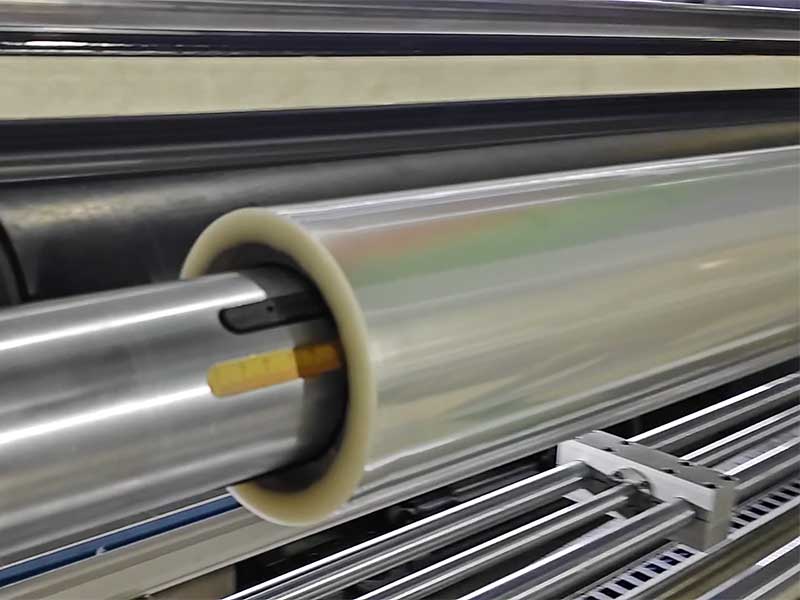
Window film is the most basic and widely used object for solar film slitting machines. These films are usually made of PET as the base material, with thicknesses usually between 0.025mm and 0.5mm, and may have a dyed layer, magnetron sputtering metal layer, or ceramic insulation layer. What the equipment needs to do is to cut the approximately 1.5-meter busbar into commonly used market specifications such as 1.52m, 1.27m, and 0.76m, without damaging the functional layer.
For this type of film material, constant tension control of the slitting machine is key. Unstable tension can cause the PET substrate to stretch, causing uneven end faces at mild rolls and irreversible deformation marks on the film surface. Modern models typically use PLCs combined with tension sensors to achieve closed-loop control of unwinding and rewinding, ensuring that the film material remains stable and controlled throughout the slitting process. In addition, window films are extremely sensitive to dust; static eliminators and dust rollers are almost standard; otherwise, fine dust adsorbed inside the roll after slitting will cause obvious defects after film application.
It is worth noting that some slitting machine models have a much broader scope of application, covering OCA optical materials, BOPP, CPP, PE, aluminized films, and even paper. This indicates that, from a mechanical perspective, the general slitting capability of thin coil does exist, but in actual selection, window film still needs to be used as the core calibration reference.
Special adaptation: TPU invisible car film
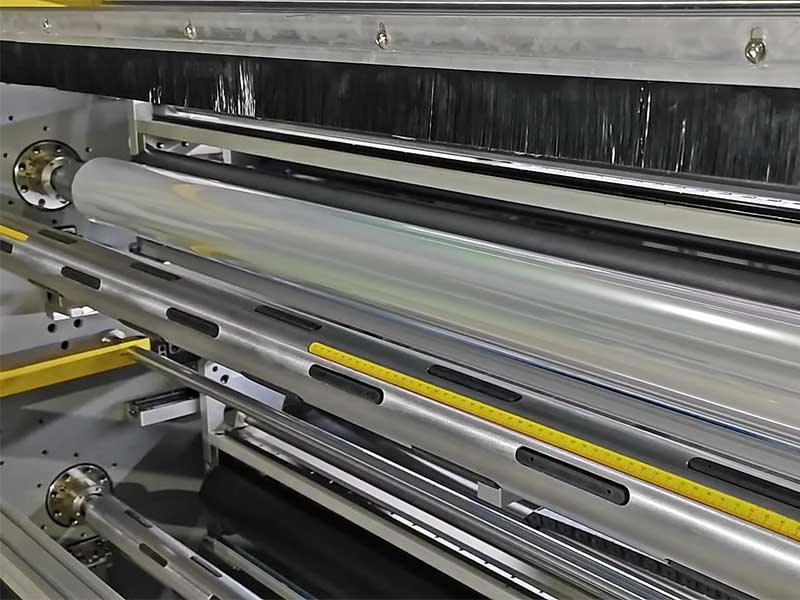
If window film is a "routine test" for slitting machines, then TPU film is an "additional question." TPU (thermoplastic polyurethane) materials are highly elastic, soft, and have surfaces that are highly scratchable, and they tend to stick easily when heated. Using equipment that cuts ordinary window films to cut TPU can cause minor issues such as wire drawing and film surface scratches, or severe cases of losing tension control causing the entire roll material to be scrapped.
Therefore, the slitting machine specially designed for TPU film has undergone targeted modifications in several dimensions. In terms of tools, ordinary circular cutters struggle to clean through highly elastic materials, so specially made tungsten steel circular cutters combined with automatic fine-tuning of knife pressure are needed to achieve smooth cuts without burrs. Surface treatment of guide rollers is also crucial; full-path hard chrome or ceramic coatings can reduce friction coefficients and prevent TPUs from being scratched during high-speed operation. Tension control requirements are also more stringent—TPU's elasticity means any tension fluctuations are amplified. Closed-loop servo systems need to keep slitting width tolerances within ±0.1mm while preventing "tunneling" effects (air trapping between membranes causing wrinkles).
This type of equipment is typically used by car film manufacturers to cut wide master rolls of 1.52m or 1.83m into retail sizes such as 152mm, 305mm, and 610mm. If a processing plant processes both window film and TPU car film simultaneously, it needs to confirm whether the equipment supports "multi-function" configuration switching or simply set up separate production lines to avoid compromising yield in any product category.
Compatibility and boundaries: color-changing films and other functional films
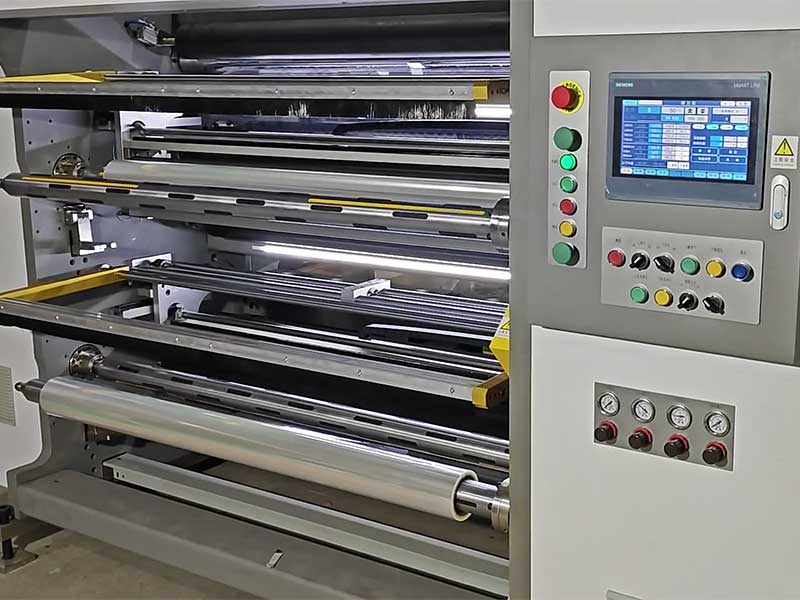
Automotive color-changing films are commonly made from PVC as the substrate, and their cutting difficulty is between that of window film and TPU car film film. PVC films are relatively stiff and less sensitive to tension than TPU, but their surfaces often have colored coatings or metallic texture layers, so the sharpness and cleanliness of the tools still need to be ensured. Some slitting machine materials list color-changing films as compatible with TPU models, indicating that with reasonable parameter adjustments, the same equipment can cover both types of automotive film materials.
As for broader industrial film materials, such as composite films and aluminized films, although they appear in the "scope of application" list for some slitting machines, this mainly reflects the mechanical versatility of the equipment for slitting thin coils, rather than the optimized design for the solar film industry. If the main business is solar film slitting, priority should be given to evaluating the actual performance of the equipment on PET window films and TPU car film during selection, rather than being distracted by a broad list of applicable areas.
The real questions to ask when choosing a model
Instead of asking, "What films can this machine cut?", it's better to ask differently: What kind of films do you mainly cut, what are the thickness and surface properties, and do you have any special requirements for the cuts? The type of substrate (PET/PVC/TPU), thickness range, presence of adhesive layer, and surface vulnerability directly determine the choice of tool material, tension strategy, and guide roller treatment method. A slitting machine labeled "general" may perform decent on window films, but when facing TPU film films, it may frequently downgrade due to insufficient tension accuracy. Conversely, models designed specifically for TPU usually handle ordinary window films with ease, but the cost must match the product structure.
The adaptability of the film material for solar film slitting machines essentially depends on the matching between equipment precision and material properties. Window film tests tension stability and cleanliness control, TPU film tests scratch resistance and micron-level precision, and color-changing film falls somewhere in between. Clearly identifying your main film materials and comparing the specific equipment configurations in these dimensions is much more reliable than reading a "suitability list."
 English
 Deutsch
 Français
 Español
 Português
 日本語
 русский
 한국어
 عربي
 ภาษาไทย
 Tiếng Việt
 Italiano

 Solar Film Slitter