What appears to be a simple solar film is actually a precision composite with up to 7 to 15 nano-layer structures, including wear-resistant layers, metal or ceramic insulation layers, base layers, and mounting adhesive layers. Slitting, as the "final step" to cut wide mother rolls to match window specifications, directly determines the film's optical performance, insulation effect, and service life. High-precision slitting machines protect film performance within seconds through precise control of blade, tension, and positioning in an integrated manner.
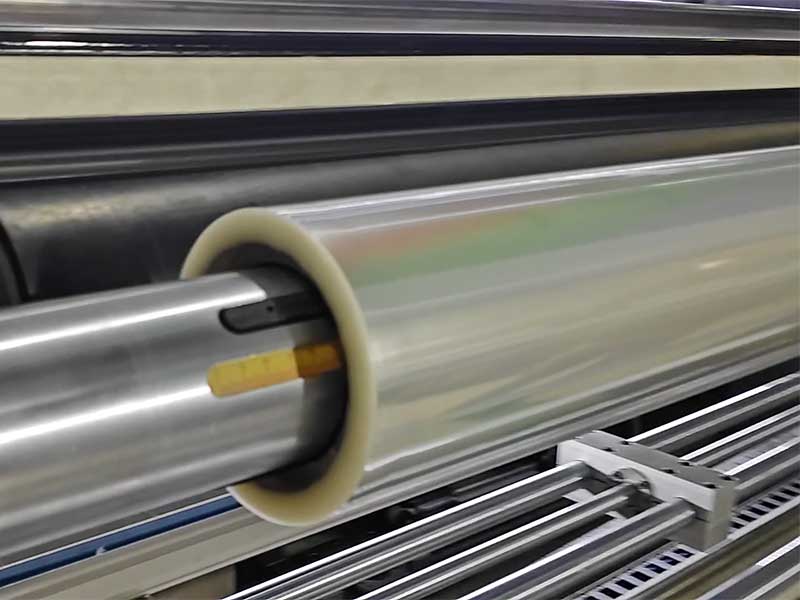
Dance of the Blade: From "Cutting" to "Non-Lossless Separation"
Traditional slitting easily causes coating chipping, burrs, and even interlayer delamination, whereas modern technology achieves a "gentle cut" through two major approaches:
• Innovative tools and methods: Compared to razor blade cutting that easily causes crush damage, the upper and lower disc scissors (shear slitting) cut materials like scissors, reducing the impact on the coating. For hard functional layers containing ceramic or metal particles, diamond coatings or ultra-fine tungsten steel inserts are used, greatly improving hardness and lifespan, combined with an automatic sharpening system to keep the cutting edge sharp, eliminating burrs at the source. For TPU-based invisible car wraps, ultrasonic-assisted slitting uses high-frequency micro-vibrations to reduce cutting resistance to nearly zero, maximizing the prevention of adhesive overflow and coating cracking.
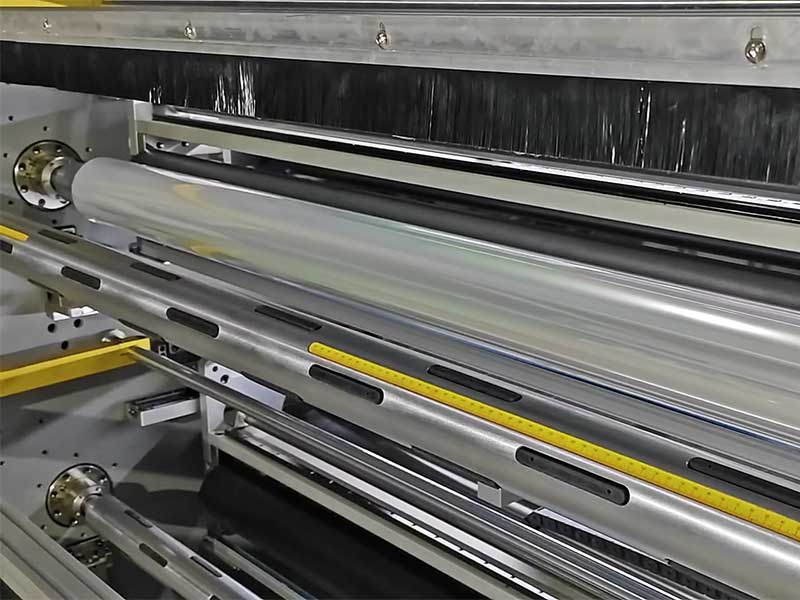
• Micron-level clearance control: The clearance between the tool groove roller and the upper circular blade must reach the micron level. Excessive gaps can cause the film to shake or dent at the cutting point, scratching the underlying film; Modern equipment uses a highly rigid structure and electric micron-level adjustment to precisely measure the bite amount to ±2μm, ensuring vertical incisions with no white edges.
Balance of tension: taming "sensitive" films in milliseconds
Each layer of the solar film has a different elastic modulus and is extremely sensitive to tension. Uncontrolled tension is the culprit behind dimensional deviations, wrinkles, and internal damage.
• Closed-loop tension control: High-end slitting machines use a fully closed-loop intelligent tension system, using sensors to monitor tension in each section of winding, traction, and winding at millisecond-level frequencies. Combined with PID+ fuzzy algorithms, real-time torque adjustment keeps tension fluctuations within ±0.5N.
• Taper tension technology: During winding, as the diameter increases, maintaining constant tension can cause the inner film to be compressed. The taper tension curve algorithm automatically decreases tension gradually as the roll diameter increases, ensuring consistent tightness inside and outside the core, eliminating the "telescope" and "rebar exaction" phenomena.
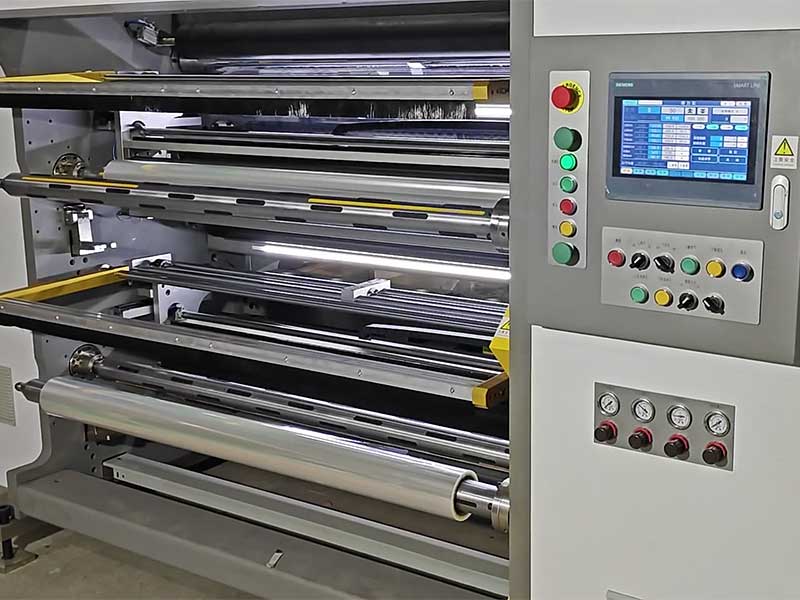
Precision of Positioning: Setting the "Golden Route" for Every Cut
Dimensional deviations and edge serpentine edges stem from inaccurate positioning and deviation.
• Intelligent Correction System (EPC): Photoelectric or CCD vision sensors scan the film edge hundreds of times per second. Once a deviation is detected, it immediately drives the correction mechanism for micron-level correction. Mainstream equipment stabilizes correction accuracy at ±0.1mm. Some high-end lines even introduce AI vision systems that automatically plan the cutting path to avoid the slightest performance fluctuations on the main roll.
• Servo tool holder positioning: Operators only need to input width on the touchscreen, and the tool holder driven by the servo motor will automatically move to the designated position, with positioning accuracy ±0.1mm, completely eliminating errors caused by manual tool setting.
Conclusion
The protection of membrane performance by high-precision solar film slitting machines is a precise battle at the micron and millisecond dimensions. It provides a stable platform through a highly rigid mechanical structure, uses intelligent algorithms for flexible control, and then uses precision tools to achieve clean cutting, ultimately reducing the defect rate from over 3% in traditional equipment to below 0.3%. This is not only a triumph of craftsmanship but also the cornerstone for high-end brands to build technical barriers and define product value—ensuring that every meter of solar film fully supports its original design performance from factory to window.
 English
 Deutsch
 Français
 Español
 Português
 日本語
日本語 русский
 한국어
한국어 عربي
عربي ภาษาไทย
 Tiếng Việt
 Italiano
 Solar Film Slitter