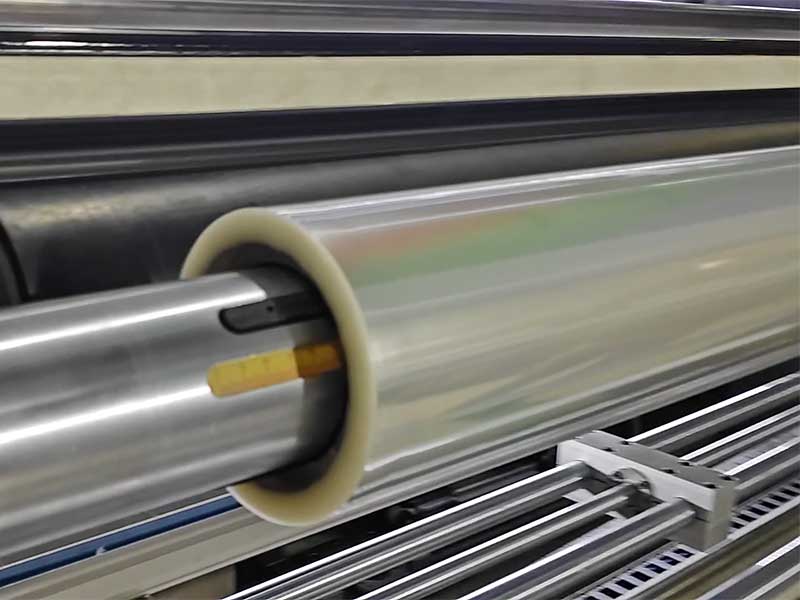
In the solar film industry, the slitting machine is a key factor in determining product quality and production costs. A poorly performing slitting machine causes comprehensive, all-encompassing waste—poor precision leads to increased trimming allowance, unstable tension leads to film rolling, wrinkling and scrapping, and repeated trial cutting losses during order changeover and debugging—each aspect erodes the company's profits.
Industry data shows that the waste rate of composite materials in traditional slitting processes used to be as high as 15%-25%, but today the industry's average loss rate still hovers between 5% and 8%. This means choosing the right equipment and reducing the loss rate to below 3%, potentially saving the company several percentage points in net profit each year. So, faced with the dazzling array of models on the market, how should one make a wise choice?
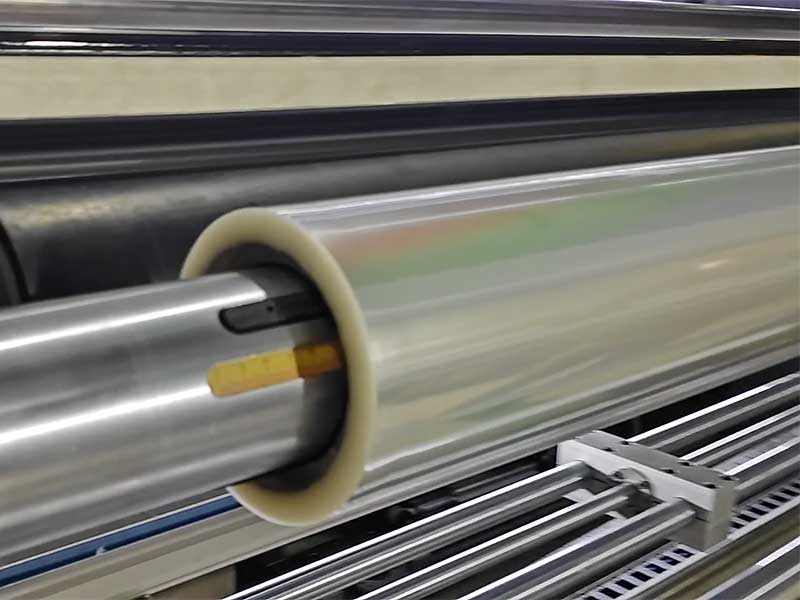
Step 1: Clarify the requirements—what kind of membrane are you cutting?
Before choosing a model, ask yourself three questions: What is the production scale? What types of membranes are mainly treated? How high is the precision requirement?
Different film materials have vastly different requirements for slitting machines:
• Standard automotive film: Width is usually around 1.5m, can be cut with a circular blade, offering high cost performance
• Magnetron sputtering film: Contains metal coating; ordinary tools wear out very quickly and need to be upgraded to carbide or diamond-coated tools
• Construction film: width can reach over 1.8-2m, with a thicker film layer, requiring higher rigidity and tension stability of the body
• PPF paint protective film: highly elastic, with a glue layer, easily stretched and deformed or to form glue during slitting, requiring specialized anti-stick treatment
High-end solar films are mostly nano-composite structures with 5-15 layers, and slitting precision directly affects optical performance and insulation rate. For example, top-grade insulation films require a coating error of less than 0.05mm after slitting.
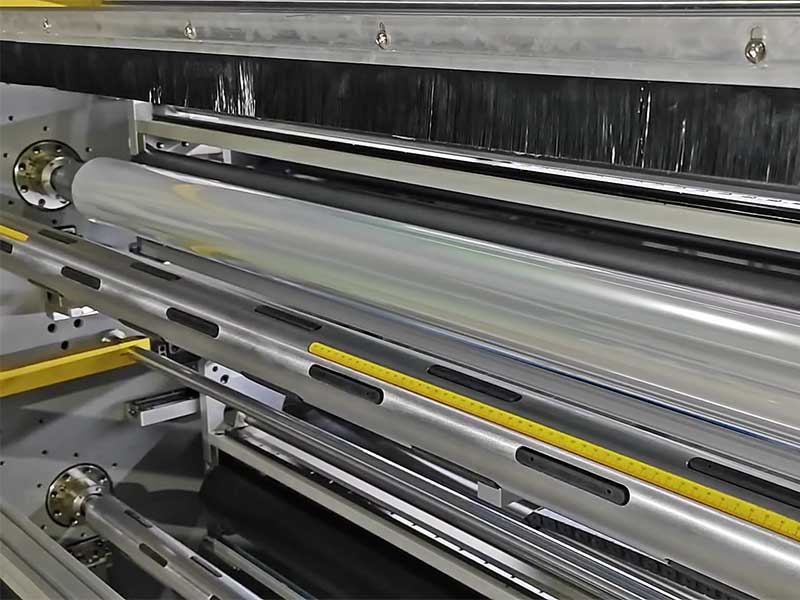
Step 2: Master the core parameters
1. Tension Control—The 'Soul' of the Slitting Machine
Tension control is the core technical indicator of the slitting machine, directly determining whether the film material deforms, wrinkles, or stretches during the slitting process.
The key difference lies in whether the loop is closed or open:
• Open-loop control: relies on operator experience to preset tension values, cannot automatically adjust based on material running conditions, making it difficult for beginners to learn
• Closed-loop tension control: Real-time monitoring of film tension through sensors automatically adjusts unwinding and winding torques, keeping tension fluctuations within a minimal range
For PPF or high-end magnetron sputtering films, it is recommended to use imported brand tension sensors, as their precision directly determines the safety factor of expensive materials. High-end slitting machines use magnetic powder clutches combined with PID closed-loop control, achieving tension accuracy up to 0.1N level.
2. Slitting accuracy—micron differences, profit margins
The width tolerance of ordinary equipment is around ±0.2mm, while high-precision models can compress this value to within ±0.05mm.
What does this 0.15mm difference mean? While ensuring the finished product dimensions are qualified, high-precision equipment can significantly reduce trimming allowances. For a production line that consumes millions of yuan in raw materials per month, every 1 percentage point increase in output rate can add over 100,000 yuan in net profit annually.
Selection tip: Precision parameters should not be based solely on the manufacturer's rated value; be sure to use your own film materials for on-site sample testing to measure the consistency of the slit width and the flatness of the cut. At the same time, attention should be paid to the configuration of the polarization device (EPC), as photoelectric sensors typically achieve correction accuracy within ±0.1mm.
3. Selection of slitting method
| Method | Principle | Applicable scenarios | Features |
| Cut with a round knife | Rotary disc blade cutting | Ordinary PET solar film, thinner architectural film | Fast and efficient, but prone to indentations on thick or dural films |
| Cut it evenly | Upper and lower dies punch and cut | Multilayer composite films, adhesive films, PPF | The cut is smooth and indentation-free, and the tool cost is slightly higher |
| The air knife is cut apart | High-pressure airflow assistance | Ultra-thin, easy-stretch film | No physical contact, does not damage the film surface, but requires a higher level of equipment |
If you mainly use ordinary automotive films, the round-blade type offers high cost performance; If PPF or high-end magnetron sputtering films are involved, priority should be given to flat blade or air blade models.
4. Method of Collection
The neatness of the roll directly affects the subsequent unwinding experience during film application:
• Center winding: driven by a roll core, suitable for small rolls and narrow-width products, commonly used for automotive film cutting
• Surface winding: driven by contact rollers, suitable for large rolls and wide products, commonly used in architectural films
• Center + surface combination winding: Used in high-end models, combining the advantages of both, resulting in a smoother finished product
If the finished rolls are mostly used for direct film application in stores, it is recommended to choose combination rolls or high-quality center rolls to avoid "telescope" rolls (protruding edges) or loose cores.
5. Other key indicators
• Blade shaft dynamic balance rating: It is recommended to choose grades G2.5 or above, as they cause less vibration at high speed and offer smoother cuts
• Level of automation: The fully automatic model is equipped with automatic positioning, automatic tool adjustment, and automatic uncoiling, suitable for large-scale standardized production
• Static Elimination and Dust Removal: Static electricity generated by film slitting attracts dust; high-end equipment should be equipped with multi-stage static elimination systems such as ion bars and static brushes
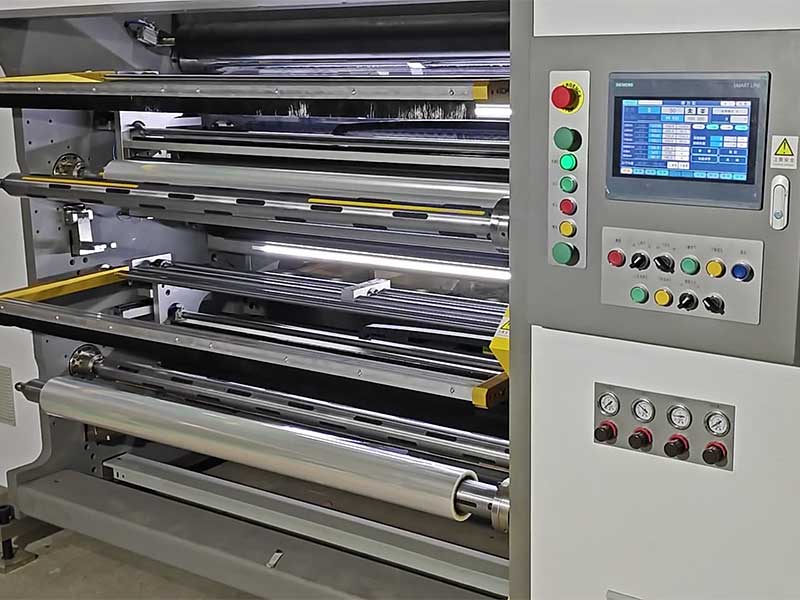
Step 3: Calculate the comprehensive cost account
When purchasing equipment, you should consider not only the purchase price but also the total lifecycle cost (TCO): purchase cost + operating cost + maintenance cost + opportunity cost.
• Energy Efficiency: Efficient motors and intelligent control systems can reduce long-term electricity costs
• Ease of maintenance: Whether key components can be easily replaced and whether there is a local spare parts warehouse
• Training and support: Whether operational training is comprehensive and software upgrade services are comprehensive
• Future compatibility: Whether the device adopts a modular design to facilitate future functional expansion
Summary: Three-step method for model selection decisions
1. First, look at the materials: Sort out the main film types, widths, and thickness ranges you process, and clarify your priority requirements
2. Next, look at the parameters: focus on four core indicators: tension control, slitting accuracy, slitting method, and winding method, and make trade-offs based on your budget
3. Final Testing: Require the manufacturer to conduct on-site samples using their own membrane materials to verify accuracy and stability, while also evaluating feedback from existing users
A well-equipped slitting machine is not only a production tool but also a "guardian" of profit. From an industry average loss rate of 5%-8% to refined control below 3%, the savings brought by choosing the right equipment are often more practical than taking multiple orders.
 English
 Deutsch
 Français
 Español
 Português
 日本語
日本語 русский
 한국어
한국어 عربي
عربي ภาษาไทย
 Tiếng Việt
 Italiano