Ribbon slitting and rewinding machines play a key role as a "specification converter" in the thermal transfer consumables supply chain. Its core function is to split the wide, large-roll ribbon into small rolls of specific widths, then rewind them into finished products with a flat core and uniform tension, to meet the width requirements of different barcode printer models. With the penetration of barcode technology into logistics, manufacturing, retail, and other fields, the applicable scenarios of ribbon slitting rewinders are no longer limited to simple incoming material processing, but have penetrated multiple stages of production, distribution, and even self-management by enterprises.
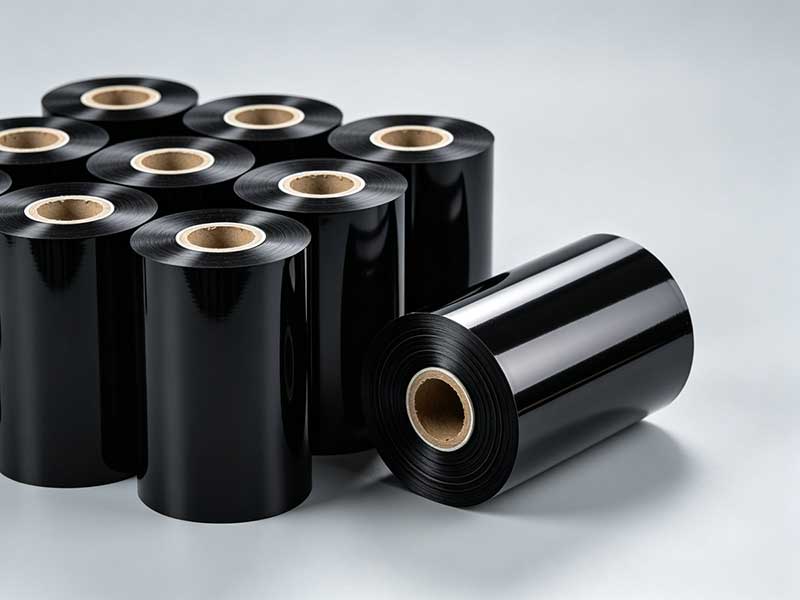
Mass manufacturing scenarios for label printing and ribbon production enterprises
For label printing factories and ribbon coating manufacturers, the slitting rewinder is the core equipment for the downstream production process. The coated large-shaft ribbon (which can be up to 300mm or even wider) must undergo high-precision slitting to become a finished product suitable for direct use by printers. In this scenario, the slitting accuracy and rewinding neatness of the equipment directly determine the yield of finished products. Modern slitting machines are usually equipped with PLC touchscreen control systems, allowing operators to quickly adjust blade spacing according to order requirements and cut large rolls into different specifications such as 10mm, 30mm, 50mm, and 110mm. At the same time, for ribbons with different coating formulations such as wax-based, blended, and resin-based, tension control strategies during slitting must be adjusted accordingly—wax-based ribbons are relatively soft, and excessive tension can cause tensile deformation; Resin-based ribbons have strong rigidity, so sufficient winding tightness must be ensured to prevent loosening during transportation. Models supporting multiple rolls of simultaneous winding are especially practical in this scenario, capable of producing multiple narrow rolls simultaneously in a single process, significantly improving the delivery efficiency of bulk orders.
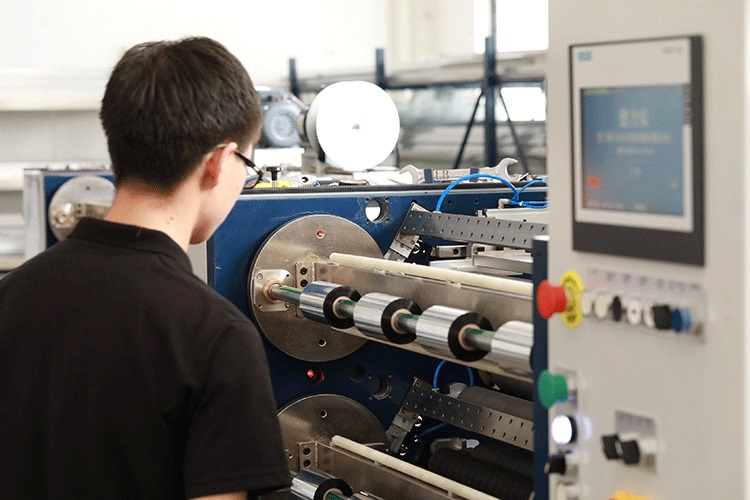
Stocking adaptation scenarios between barcode ribbon distributors and regional distributors
A typical dilemma faced by ribbon distributors is that upstream suppliers offer limited large roll sizes, while downstream retail customers require a wide variety of printer models, with ribbon widths ranging from half an inch to over four inches. If you rely entirely on manufacturer-customized slitting, the ordering cycle is long and the minimum order threshold is high. With a slitting rewinder equipped, dealers can flexibly cut and produce suitable width specifications based on the specifications of large coils in inventory and recent order structures. For example, a large 300mm wide ribbon roll is cut into multiple rolls of 110mm and 50mm sizes, supplied to end customers using different brands of printers. This "on-demand cutting" capability not only reduces the risk of inventory backlog but also enables distributors to respond quickly when facing urgent orders. Additionally, for special industry customers requiring mixed-base or resin-based ribbons (such as electronics manufacturing and chemical labels), distributors can also provide small-batch, multi-specification customized packaging services through slitting equipment to enhance customer loyalty.
Internal consumables management scenarios for large enterprise users
In logistics warehousing, manufacturing factories, chain retail, and other enterprises with high carbon ribbon consumption, ribbon procurement often faces a contradiction: the cost of purchasing a whole roll is relatively low, but some printers require narrow widths, so directly purchasing narrow-width finished ribbons tends to have higher unit prices; If you purchase all wide-format large rolls, you cannot use them directly on the machine. Self-purchased slitting rewinders offer a compromise path for these users. Companies can centrally purchase wide ribbons to gain price advantages, then cut them themselves according to the actual printer specifications of each department or production line. For example, a storage center equipped with both desktop barcode printers and industrial-grade wide-format printers can split large rolls of ribbons into two widths for use by two types of equipment. In this scenario, the slitting machine not only reduces the overall cost of consumable procurement but also decreases ribbon waste caused by specification mismatches and the frequency of shutdowns and material changes. For enterprises with stable print volumes and relatively concentrated specifications, slitting and rewinding machines can usually recover equipment investment in a relatively short time through consumable price differences.
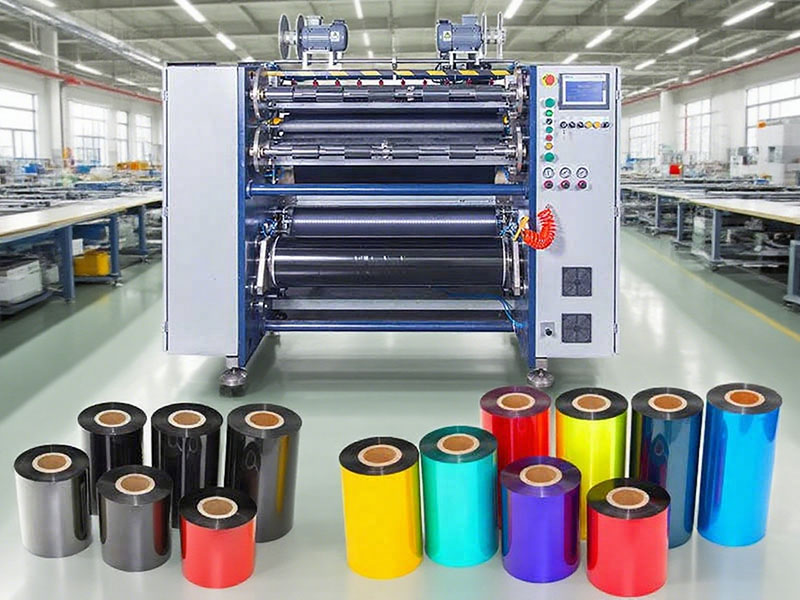
Special specifications and emergency processing scenarios
In addition to conventional slitting, ribbon slitting rewinders also handle some marginal scenarios that are often overlooked but are quite valuable. First, non-standard width customization: Some older printers or special-purpose printing equipment (such as certain receipt printers and coders) require carbon ribbon widths that are not standard market specifications, making it difficult for users to directly purchase finished products. The slitting machine can adjust standard-width ribbons to non-standard sizes, solving the problem of "no rice to cook" in equipment. Second, restorative rewinding of damp or slightly damaged ribbons: If the ribbon edges are slightly dented or loose during storage or transportation, the rewinder can rearrange and cut off the damaged segment, allowing most of the usable length to be recovered. Third, sample sampling and small-batch trial production: When accepting new customer orders, label printing factories often need to first test printing a small amount of ribbon on the machine to verify printing effect and adhesion. The slitting machine can quickly cut out a small amount of narrow test rolls from large rolls, avoiding waste from purchasing whole rolls for sampling.
Considerations for Adaptation to Scenarios in Selection and Use
The performance focus of slitting rewinders varies across different scenarios. Printing factories and distributors place greater emphasis on efficiency and precision, so it is recommended to choose models with higher slitting speeds (such as 50–200 meters/minute), automatic tension control, and multi-roll synchronous winding capabilities; For enterprise personal use, the focus is more on ease of operation and flexible specifications, with a practical design featuring a scale gauge for assisted positioning and quick adjustment of blade spacing; For processing scenarios involving resin-based ribbons or ultra-thin base films, the sharpness retention of the slitting blade and the control of radial runout of the winding spindle are key indicators to consider. No matter the scenario, the quality of the rewound after slitting—the roll surface is smooth and wrinkle-free, the end face is neat and burr-free, and the tension is uniform without loosening—is always the basic standard for evaluating equipment suitability.
From the perspective of the industry chain, the applicable scenarios for ribbon slitting and rewinding machines reflect a fundamental characteristic of the thermal transfer consumables market: ribbon width specifications far exceed the standard width on the production side, so the slitting stage must be used to match supply and demand. Whether for professional processors or self-use enterprises, as long as there is a demand for "large coil feed, small coil use," the slitting rewinder has its place. As barcode printing extends into more specialized industries, the demand for non-standard specifications and customized packaging will continue to grow, and the functions of slitting and rewinding equipment will evolve from simple "cutting" to more refined "specification management."
 English
 Deutsch
 Français
 Español
 Português
 日本語
 русский
 한국어
 عربي
 ภาษาไทย
 Tiếng Việt
 Italiano


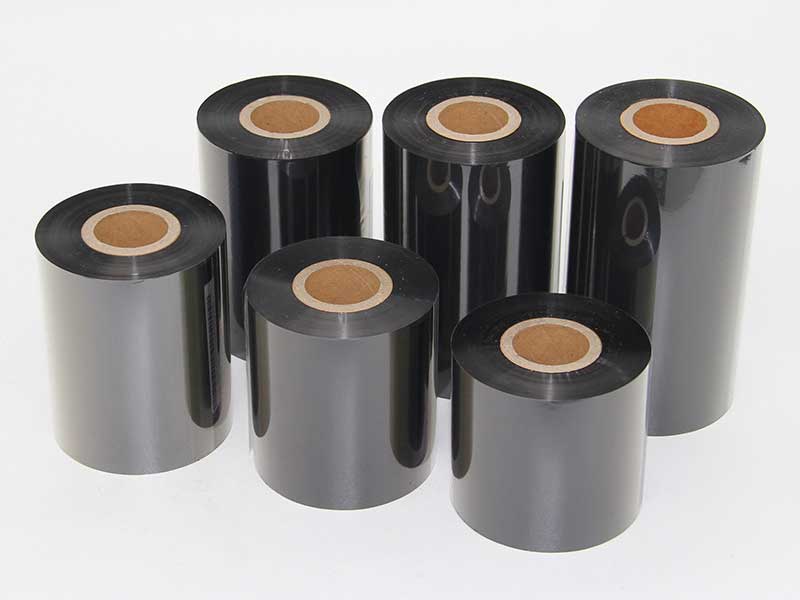
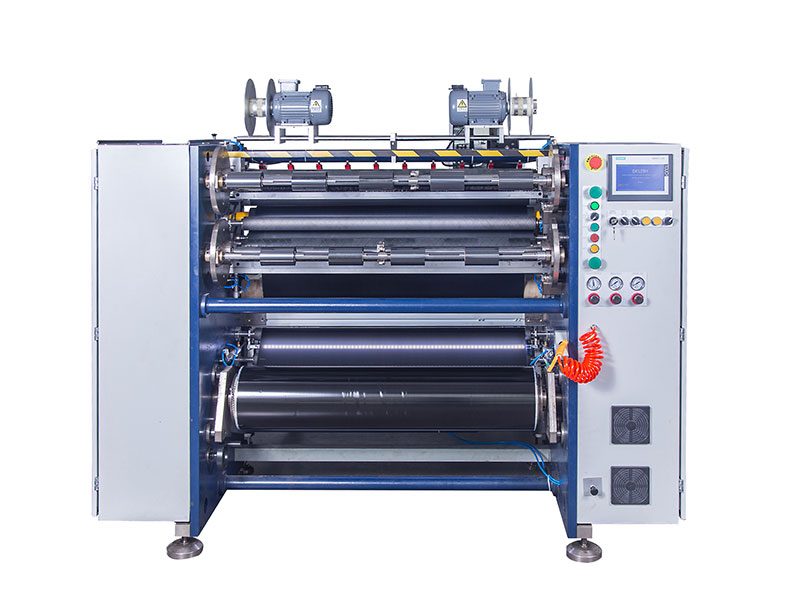 Ribbon Slitting Machine
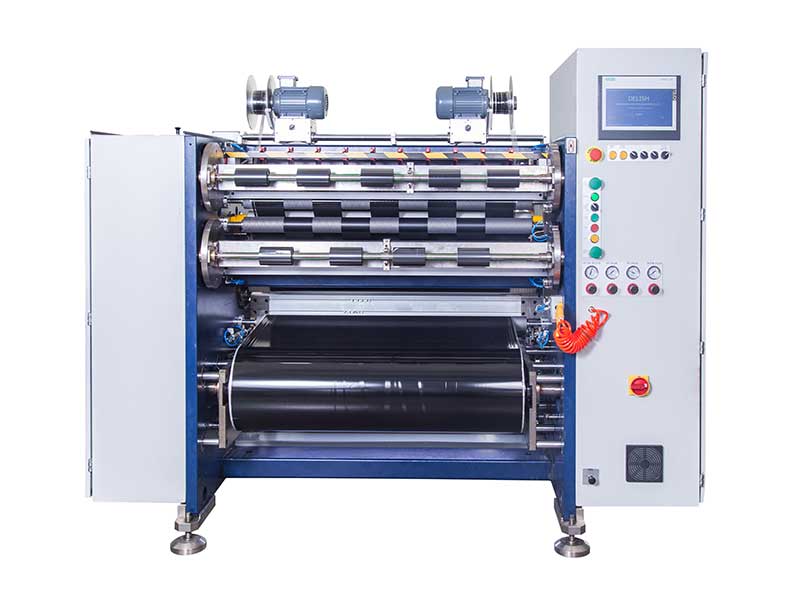 Barcode Ribbon Slitting Machine
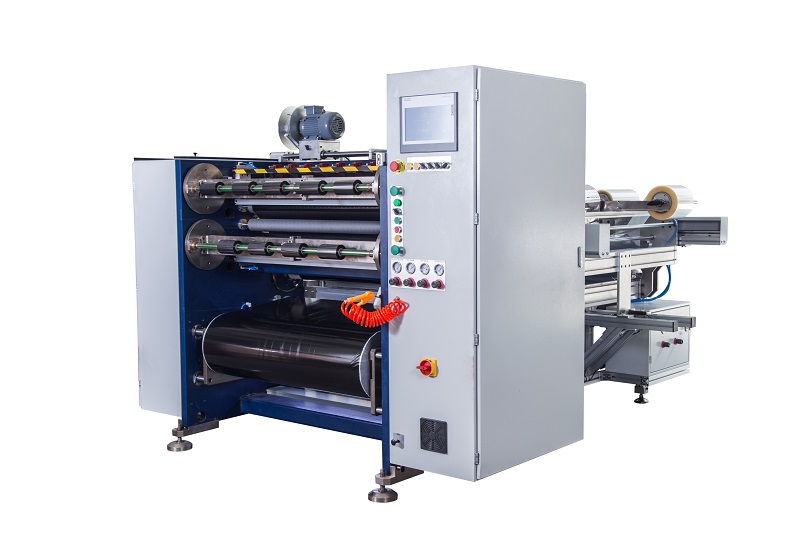 Semi Automatic Thermal Transfer Ribbon Slitter RSDS5 PLUS
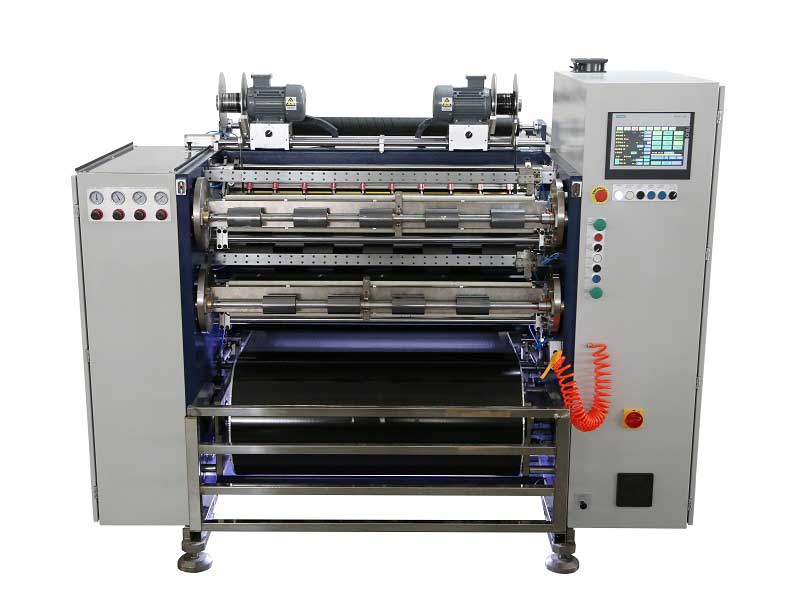 Automatic Thermal Transfer Ribbon Slitter RSDS8 H PLUS
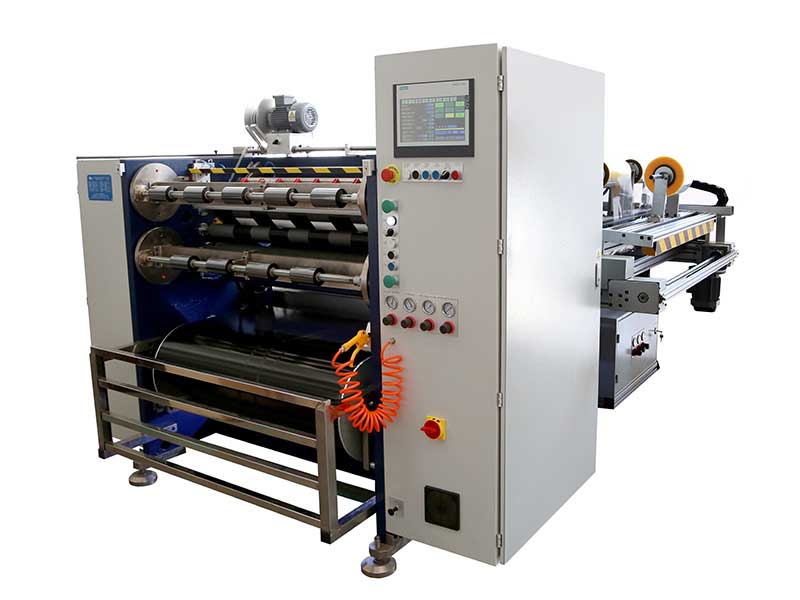 Automatic Thermal Transfer Ribbon Slitter RSDS6 PLUS
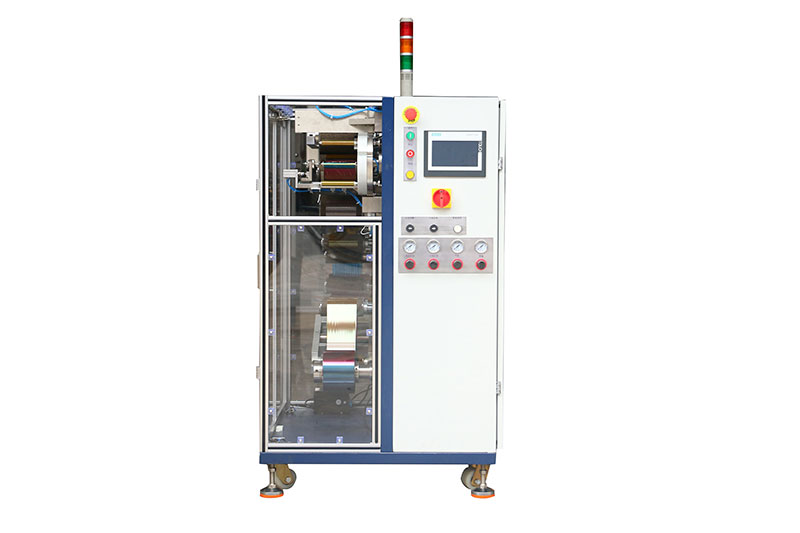 Card Print Ribbon Rewinder
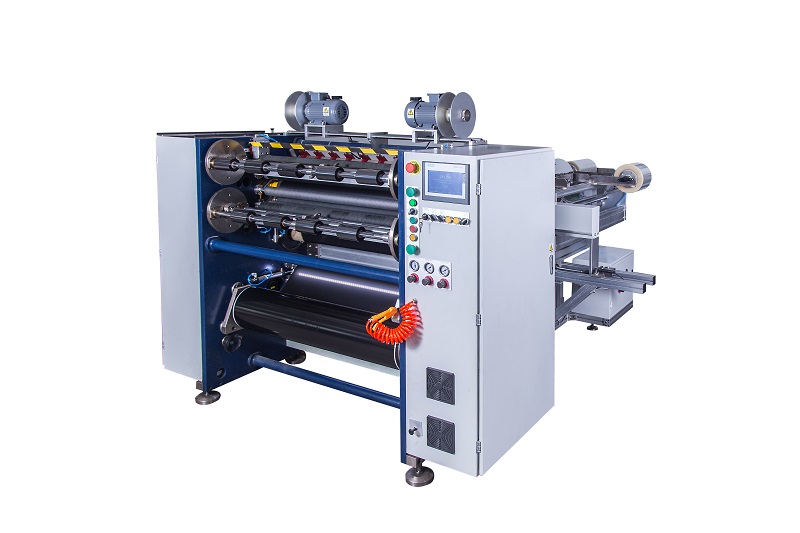 Semi Automatic Thermal Transfer Ribbon Slitter RSDS1 PLUS
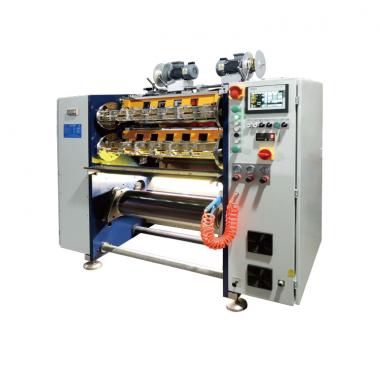 Card Print Ribbon Slitter