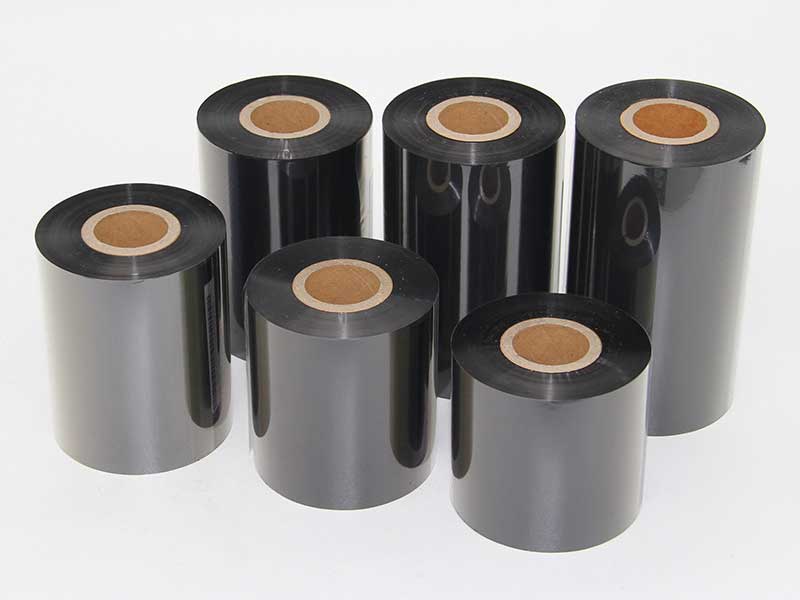
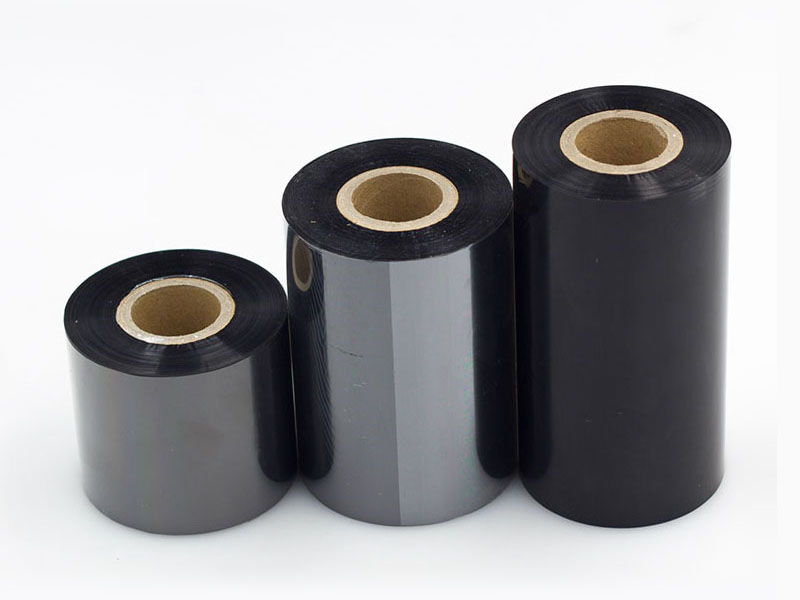
Thermal transfer ribbons consist of a PET base film only a few microns thick, an ink layer, and a backing coating. Their slitting and rewinding are far from simple "cutting and rewinding." Slitting accuracy directly determines the smoothness of the ribbon in the printer, whether edges scratch the print head, and the consistency of barcode image clarity. In industry practice, the standard for high-precision slitting is usually anchored to a width tolerance ±0.1mm and a serpentine deviation of the end face within 0.5mm ±. However, achieving this metric is not achieved by upgrading a single component, but is the result of precise coupling between tension, mechanics, tools, and the centering system.
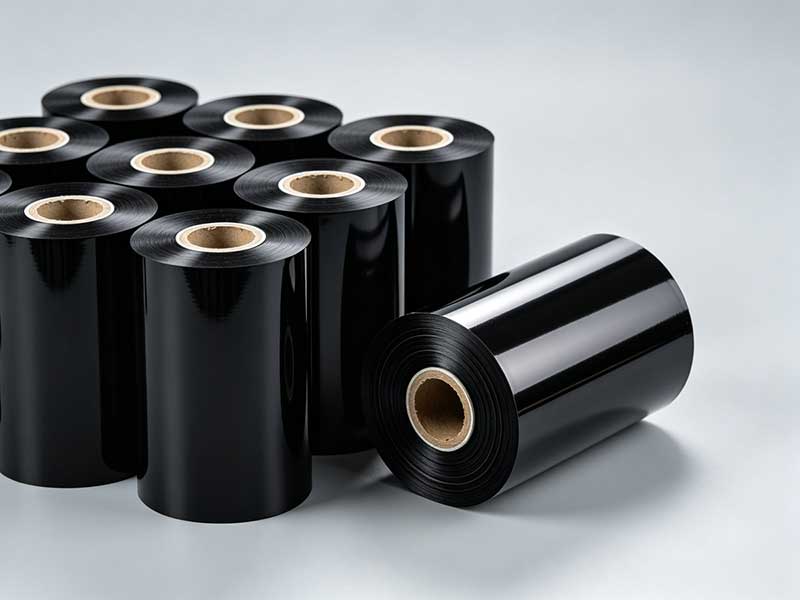
Tension control is the first principle of slitting accuracy. The ribbon substrate is extremely thin and sensitive to stretching; when tension is too high, the PET base film undergoes plastic elongation, causing microcracks in the ink layer. During use, the finished product shows powder shedding and contamination of the print head; If the tension is too low, the winding becomes loose, interlayer air cannot be expelled, and the end face naturally becomes unstable. A more hidden challenge lies in taper control: as the winding diameter increases, if the tension does not decrease according to the preset curve, the outer layer will be compressed inward, forming a "daisy core" staggered layer. Acceptance standards usually require that tension fluctuations during acceleration and deceleration be controlled within ±1.5%, and the taper function should ensure that the finished product coil exhibits a reasonable gradient from the axis to the outer circle, with a "hard inside, soft outside" gradient. In practice, the reference range for winding tension of 10mm wide carbon ribbon test strips is about 3 to 5N, but specific values need to be calibrated machine-by-machine based on substrate thickness and ink characteristics.
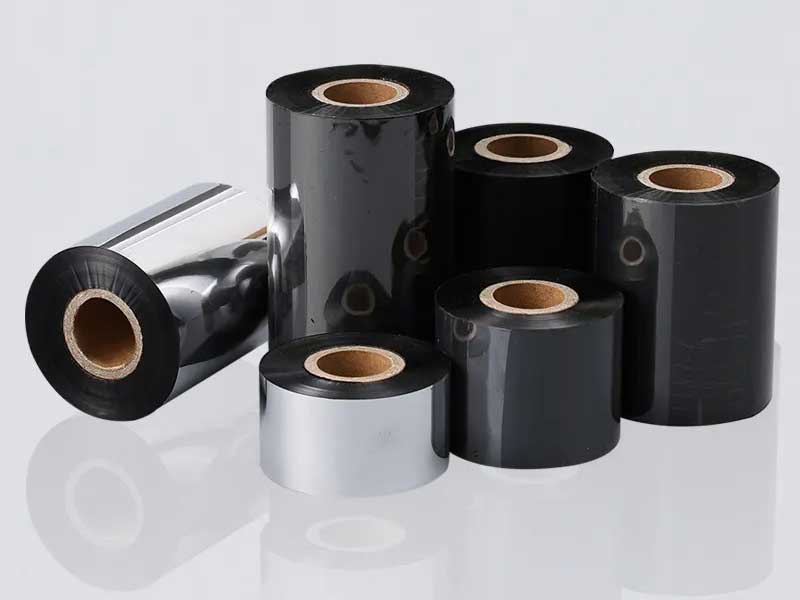
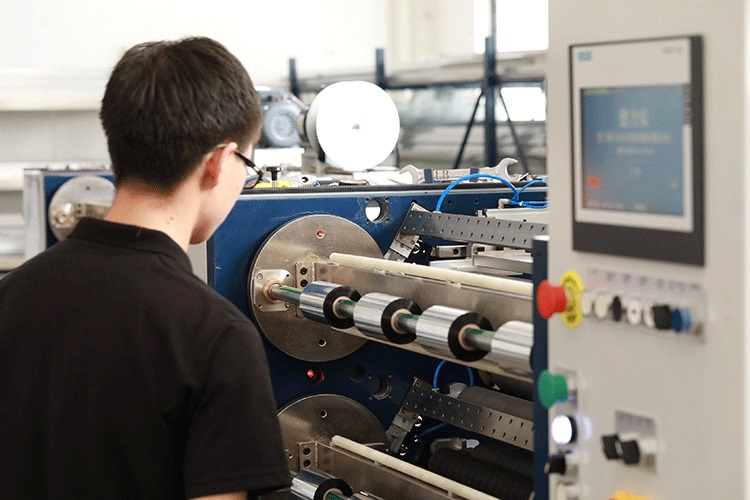
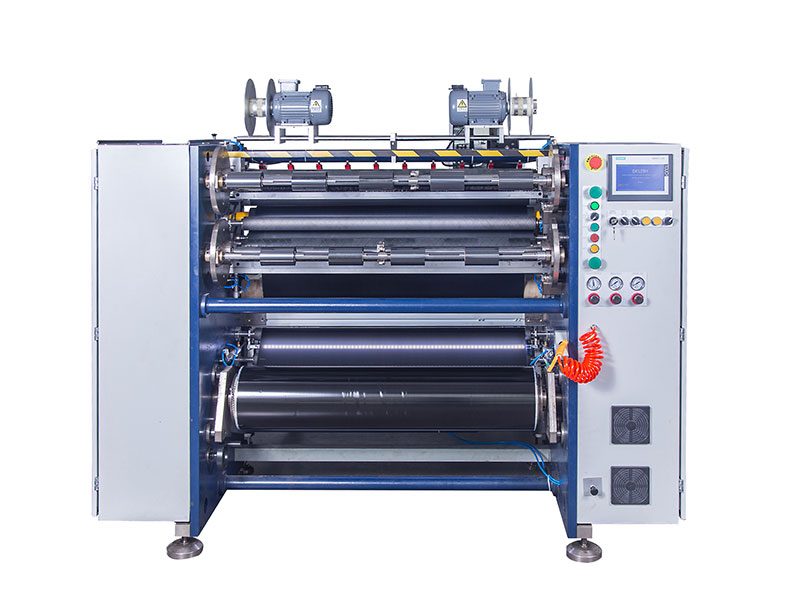
Mechanical geometric accuracy constitutes the physical upper limit of accuracy. During static acceptance, the frame levelness must be ≤0.1mm/m, and the parallelism error between the guide roller and the spindle should be controlled within ±0.05mm—this metric is not demanding, because any slight non-parallelism will cause the ribbon to bear lateral component forces during operation. The alignment system can only correct "misalignment" but cannot eliminate the root cause. The clearance between the rewinding shaft and the core is equally critical: when the gap exceeds 0.5mm, the core exhibits periodic eccentricity during rotation, causing the end face to swing regularly. Even if the tension curve is perfect, uniformity is out of the question. The pressure roller is often underestimated; when the pressure at both ends is uneven or the axis is not parallel to the winding shaft, axial thrust is applied with each rotation, causing the ribbon to move back and forth along the width direction. Use feeler gauges to check the gap between the two ends of the pressure roller and the winding shaft; the error should be controlled within 0.05mm/m, and the rubber hardness should be Shore A 60 to 70 degrees.
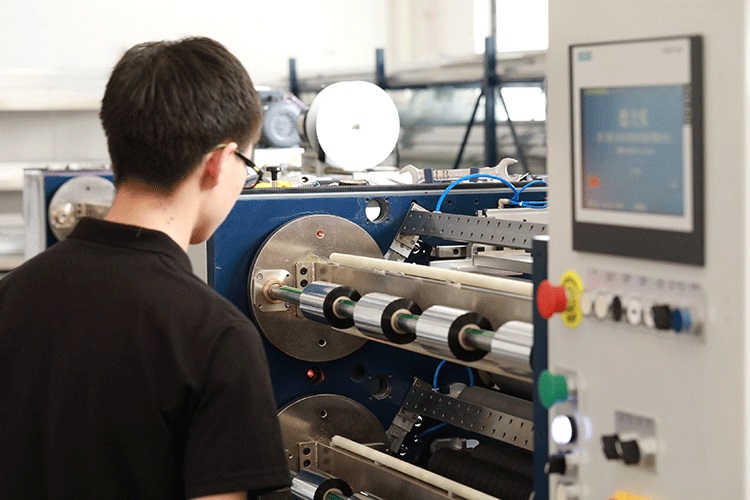
Tool status and correction response determine the dynamic stability of accuracy. The overlap between the upper and lower blades for round blade slitting must be precisely set. The recommended ribbon material gap is 0.01 to 0.03mm: too large causes indentations and burrs, too small causes indentations and burrs; too small causes the cut to fail and forms wavy edges. This "twisted" belt will inevitably deviate during rewinding. The danger of blunt knives is that they turn "cutting" into "squeezing," with the cut visible as tears and burrs scraping the print head like miniature saw blades during printing. The correction system undertakes real-time correction responsibilities. After the photoelectric or CCD sensor detects the edge position, it drives the actuator to act, with a response time of ≤0.3 seconds and accuracy controlled within ±1mm. It is important to note that the correction sensor lens is easily contaminated by toner and fails; maintaining cleanliness is a daily task to maintain accuracy.
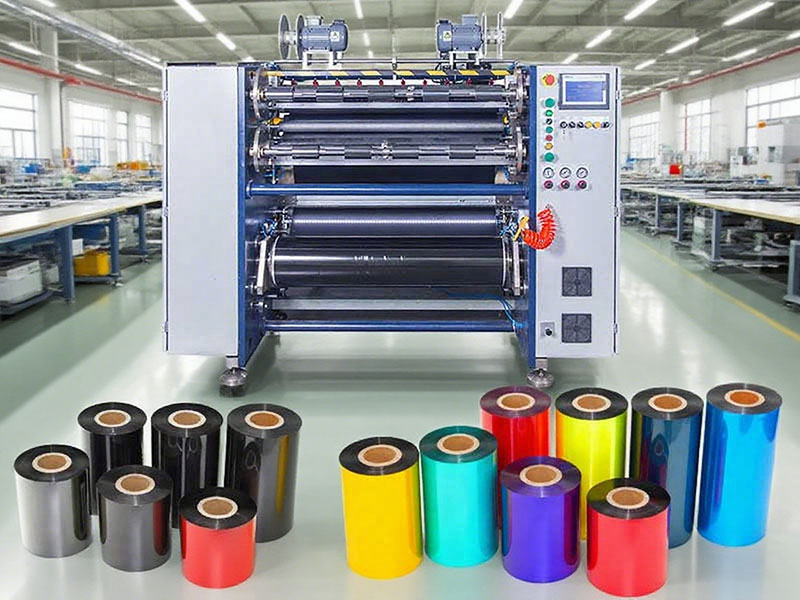
Balancing speed and precision is an art of trade-off. Higher slitting speed is not always better. Measured data show that at a speed gradient of 150m/min to 550m/min, the finished product rate can drop from 97.2% to 88.0%, while in the mid-speed range of 250 to 350m/min, It is often the "golden zone" with the highest yield rate. At low speeds, the tension system response may appear nonlinear, and end face uniformity may actually decrease; At high speeds, mechanical vibrations intensify, causing frequent collisions between the blade and the substrate to produce serrated edges. Frictional heat may even melt low-melting-point wax-based inks and contaminate the cutting edge. This means that when pursuing maximum capacity, slitting precision inevitably requires compromises; a reasonable process window is more valuable than the highest speed on paper.
In summary, the analysis of ribbon slitting accuracy cannot be simplified into a single parameter table. Behind ± 0.1mm width tolerance lies the gentle taming of micron-scale thin films by a tension closed loop, the difficult maintenance of guide roller parallelism under thermal deformation and mechanical vibration, the materials science that keeps blades sharp even after hundreds of thousands of cuts, and the reliability of correction sensors in continuously distinguishing edge positions in dusty environments. For ribbon processors, establishing a "parameter medical record card" for each piece of equipment, recording the tension range, tool wear cycle, and environmental temperature and humidity conditions for different batches of mother rolls is far more meaningful than blindly relying on a single "high precision" claim. Slitting precision is never something you buy; it is adjusted and maintained.
 English
 Deutsch
 Français
 Español
 Português
 日本語
 русский
 한국어
 عربي
 ภาษาไทย
 Tiếng Việt
 Italiano


 Ribbon Slitting Machine
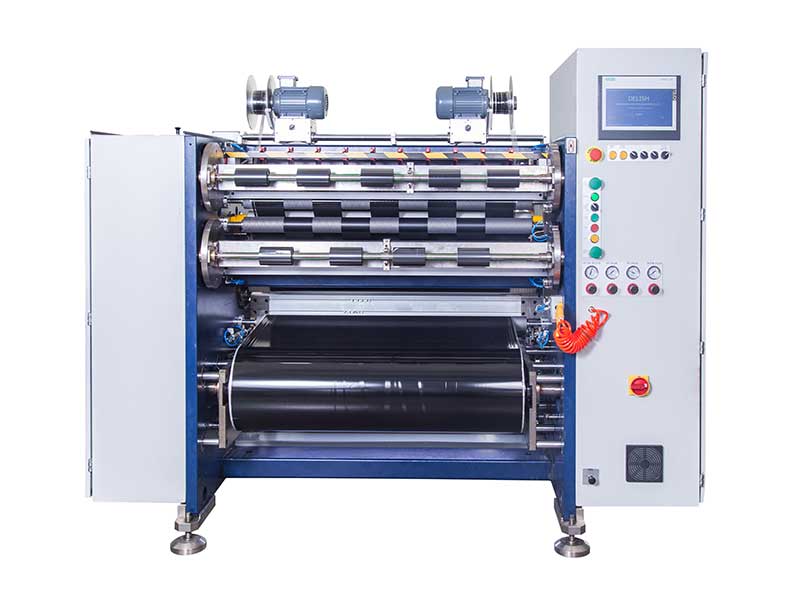 Barcode Ribbon Slitting Machine
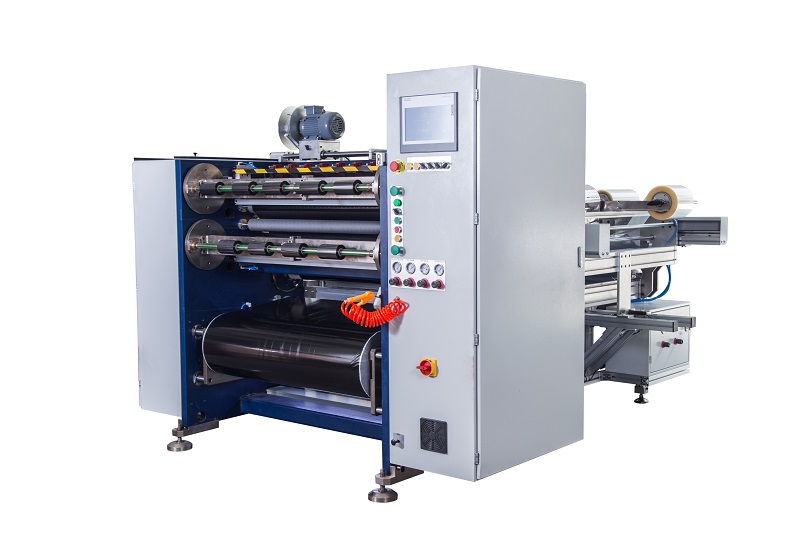 Semi Automatic Thermal Transfer Ribbon Slitter RSDS5 PLUS
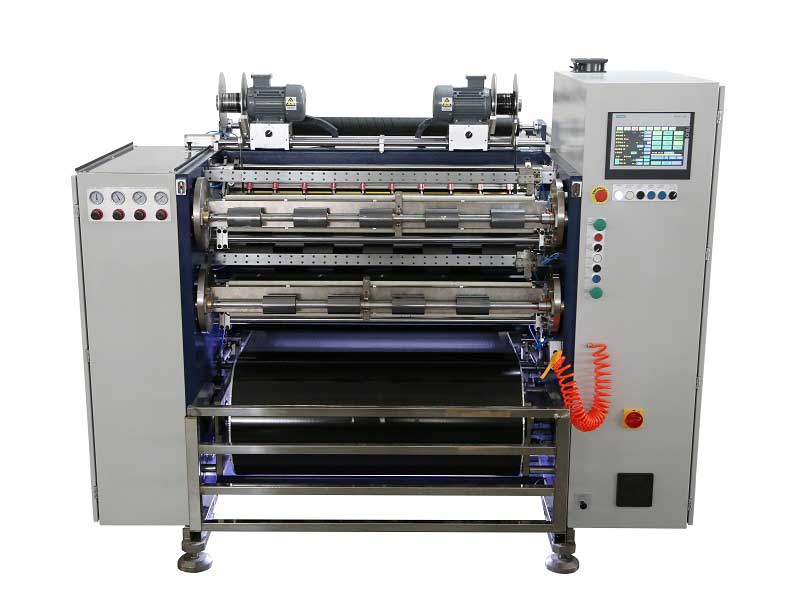 Automatic Thermal Transfer Ribbon Slitter RSDS8 H PLUS
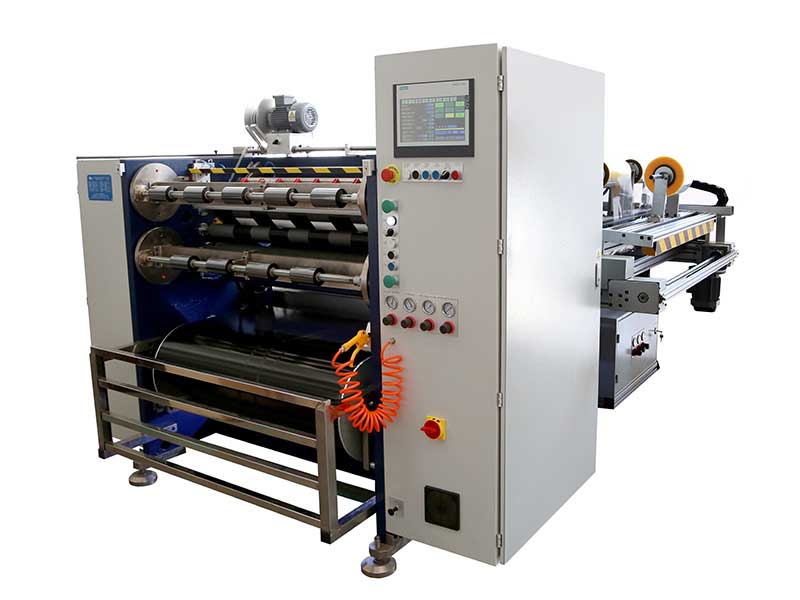 Automatic Thermal Transfer Ribbon Slitter RSDS6 PLUS
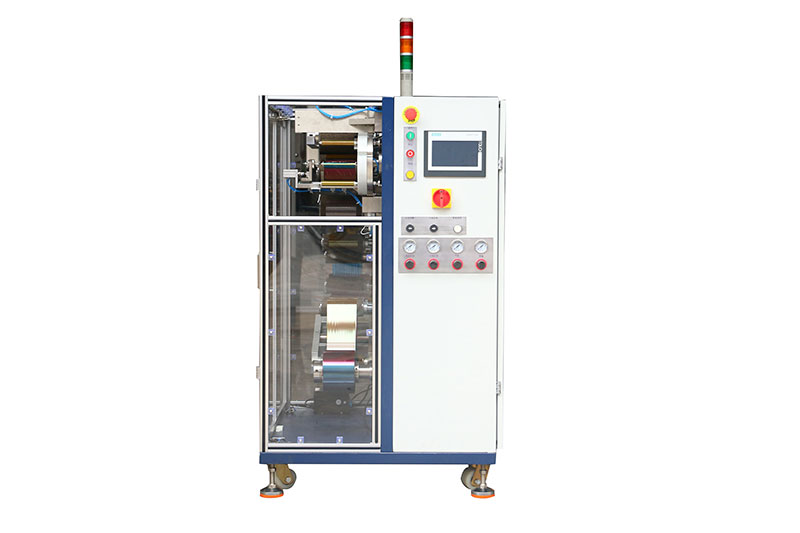 Card Print Ribbon Rewinder
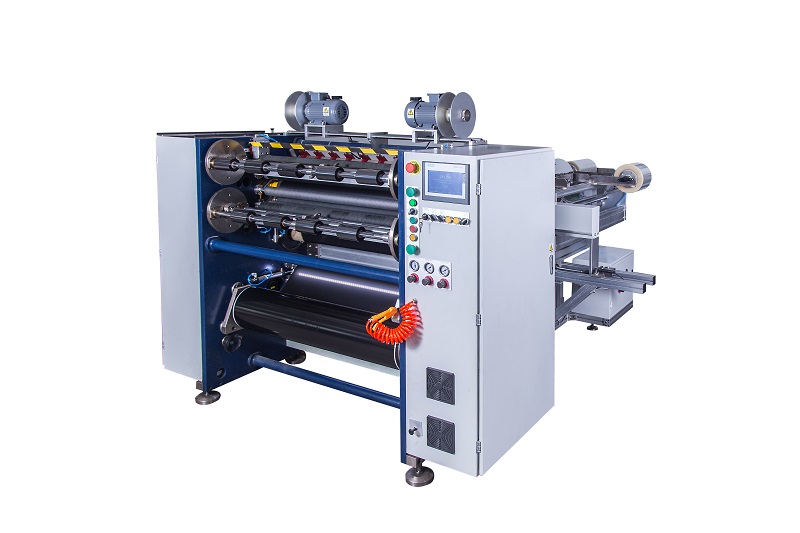 Semi Automatic Thermal Transfer Ribbon Slitter RSDS1 PLUS
 Card Print Ribbon Slitter