Hot stamping foil slitting is the critical first step that determines whether your downstream stamping process runs smoothly or becomes a constant battle against foil breaks, misalignment, and wasted material. With foil substrates as thin as 12μm, every parameter—from blade geometry to tension response—carries consequences that ripple through production. This guide covers what actually matters when selecting a machine and running it profitably.
Understanding the Hot Stamping Foil Challenge
Hot stamping foil is not ordinary film. Its PET base layer carries a release coating, a color layer, and a metallized aluminum layer that is brittle by nature. When slitting goes wrong, the failure modes are predictable: burrs along the cut edge, aluminum dust contaminating the surface, uneven strip widths that jam stamping machines, and tension-related stretching that destroys registration accuracy.
The consequences are expensive. Unstable tension during slitting causes stretching and wrinkling that result in burrs, uneven edges, or telescoping rolls. For converters running narrow strips for security threads or decorative bands, a machine that cannot hold ±0.10mm lateral tolerance wastes more material than it processes.
The core insight: hot stamping foil slitting is a tension management problem disguised as a cutting problem. Solve tension first, then worry about blade selection.
Width, Speed, and Tension: The Three-Parameter Matching Problem
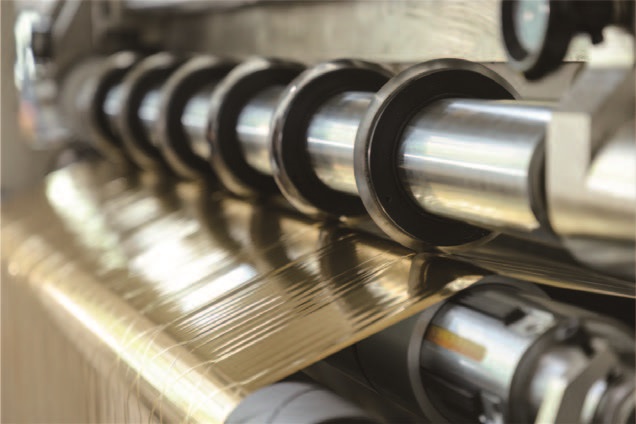
These three specifications do not exist independently. A machine rated for 500 m/min cannot achieve that speed on 5mm strips without exceptional tension control. A wide-format machine with a flexible cutter shaft will produce inconsistent results across the web regardless of speed.
Width Determines Structural Rigidity
Maximum slitting width dictates the machine's physical architecture. For hot stamping foil, typical maximum widths range from 300mm to 800mm for standard models, with larger machines handling up to 1,600mm.
The physics matter here. A wider cutter shaft experiences proportionally greater deflection under cutting pressure. If the shaft flexes, middle positions cut differently than edge positions. This is why wide-format machines need thickened alloy steel wall panels and large-diameter blade shafts as baseline configuration—not upgrades.
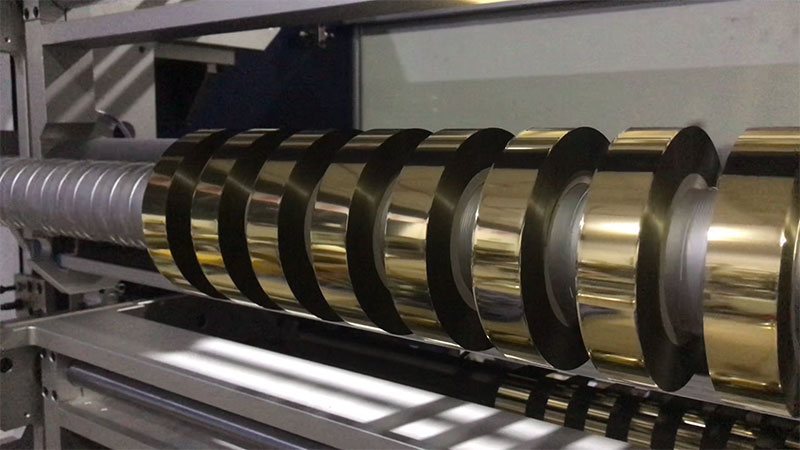
For narrow slitting below 50mm, the priority shifts entirely. End-face flatness and roll tightness become the dominant quality metrics. Manual locking systems introduce dimensional deviations from uneven locking force; hydraulic or pneumatic locking systems with high-precision slip shafts are the reliable choice. If your order mix changes frequently, an automatic tool positioning system reduces changeover from hours to minutes.
Speed Amplifies Every Error
Mechanical speeds on hot stamping foil slitters typically range from 200 to 500 m/min, with specialized high-performance models reaching 700 m/min on suitable materials. But maximum speed is a misleading specification.
As speed increases, dynamic errors amplify. Lateral deviation degrades from approximately ±0.10mm below 100 m/min to ±0.35mm above 300 m/min. Tension fluctuation increases proportionally, and the risk of edge deformation or winding defects grows.
The practical question is not "how fast can it run?" but "at what speed can it maintain edge quality on my thinnest material?" For 12μm foil, conservative speeds of 30–50 m/min may be necessary to prevent heat accumulation burrs. A machine with automated tool positioning and quick clamping can deliver higher real throughput at moderate speed than a faster machine with 15-minute changeovers.
Tension Control Separates Functional Machines from Profitable Ones
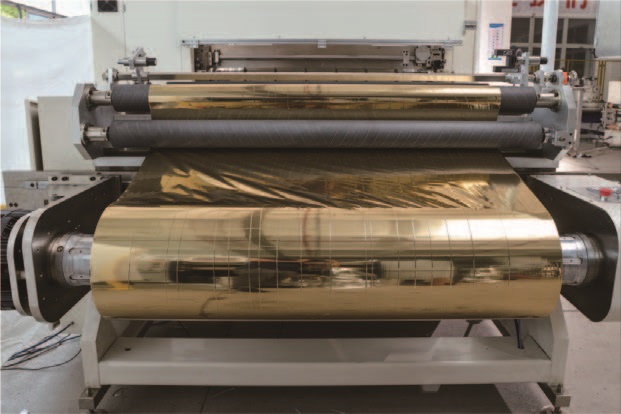
This is the parameter that most directly determines output quality. Hot stamping foil substrates—typically PET—are highly sensitive to tension variations. Unstable tension causes stretching, wrinkling, and lateral movement that produce burrs, uneven edges, or telescoping rolls.
Why tension matters more for foil than for thicker films: when a wide web is divided into multiple narrow strips, each strip no longer behaves as part of a continuous web. Differences in strip width, knife penetration, and winding diameter create unequal tension between individual strands. Without proper compensation, some strips run tight while others run loose.
A production-grade machine provides closed-loop tension control with real-time feedback, continuously adjusting torque as coil diameters change. For large winding diameters (400mm or more), taper tension—where tension gradually decreases as the roll builds—prevents inner-layer compression damage in thin foils.
The tension system must be evaluated alongside edge position control. Correction accuracy within ±0.5mm prevents the foil from wandering, which would otherwise cause one edge to develop burrs while the opposite edge remains undercut.
Blade Selection: Round Knife vs. Flat Knife
The blade system is where machine capability meets material reality. The wrong choice produces burrs regardless of how well the machine is calibrated.
Round Knife (Shear Cutting)
Principle: Upper and lower circular blades offset and rotate to shear the material, functioning like precision scissors.
Best for: Ultra-thin hot stamping foil ≤12μm; applications requiring burr-free and dust-free edges (optical components, electronic labels); high-speed large-batch production; materials with coatings prone to peeling (laser foil).
Characteristics: Smooth cut with minimal extrusion deformation. Acceptable for foils as thin as 6μm. High speed capability (≥150 m/min). Long tool life with multiple regrinding cycles. Almost no dust generation.
Critical settings: Side clearance controlled at 5–8% of foil thickness. Tungsten steel or ceramic-coated cutting edges recommended.
Flat Knife (Press Cutting)
Principle: Knife die presses vertically down against a hard cutting board.
Best for: Thicker hot stamping foil or composite cardboard foil ≥30μm; sample production and very small batches; older equipment where round knife gap cannot be stably controlled.
Characteristics: Risk of crushing edges and burrs on thin foils. Lower speed (typically ≤60 m/min). Shorter tool life, especially with aluminum-containing powder layers. Produces aluminum powder and debris that can contaminate the foil surface.
Critical settings: Must use soft anvil pad (polyurethane) and jump cut method to reduce continuous indentation. Pressure requires fine control via real-time sensor feedback.
A Common Misconception
Assuming a round knife guarantees burr-free edges is wrong. If the circular cutter moves axially more than 0.02mm, or if there is a microscopic notch at the cutting edge, periodic burrs will still occur. Blade condition and alignment matter as much as blade type.
Operational Parameters That Determine Edge Quality
Tension Settings for Micron-Level Precision
For 12μm foil, tension fluctuation must stay below 0.5N. Pretension should be set at 5–10% of the material's tensile strength (PET foil typically 2–5 N/mm²). Multi-stage closed-loop control across unwinding, traction, and winding zones with PID adjustment maintains this precision.
Speed-Thickness Relationship
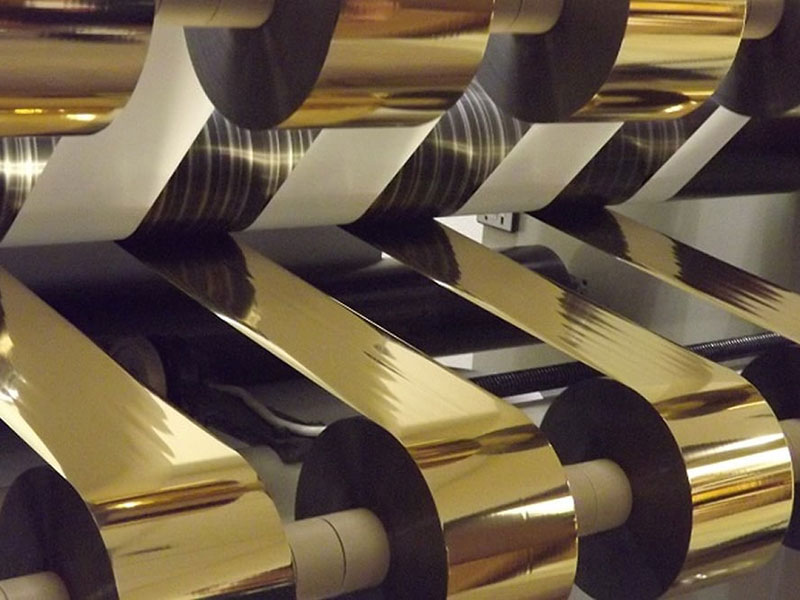
The 12μm gold foil that produces excellent results at 30–50 m/min may develop heat accumulation burrs at higher speeds. Slitting speed must be matched to material thickness, not chosen for maximum throughput.
Tool Pressure and Temperature
Pressure range of 0.2–0.8 MPa, adjusted by real-time pressure sensor feedback. Cutter head cooling systems maintained at 20±1°C prevent thermal deformation. Ambient humidity controlled at 45–55% RH minimizes static and material stress.
Web Guiding Precision
Photoelectric sensor with EPC correction at ±0.1mm accuracy prevents the material from misaligning and causing uneven trimming. This is not optional for narrow-strip production.
In-Line Quality Monitoring
Laser profilers monitoring edge burr height in real time with a threshold of ≤5μm allow immediate corrective action rather than post-production sorting. Machine vision inspection at 2μm resolution identifies microscopic defects that visual inspection misses.
Machine Configurations Worth the Investment
Automatic Knife Positioning
For operations running multiple strip widths, automatic knife positioning reduces setup from hours to minutes. The operator enters target widths on the touch screen, and the system positions upper and lower knives automatically. This capability pays for itself in reduced downtime and eliminated setup errors.
Taper Tension Control
As winding diameter increases, taper tension gradually reduces winding tension to prevent inner-layer compression in thin foils. This is essential for large-diameter finished rolls (400mm+).
Integrated Quality Feedback
Machines with in-line burr detection and automatic tension adjustment reduce reliance on operator vigilance. The system identifies problems, advises on solutions, and maintains job records for repeat orders.
Operational Best Practices
Pre-run material conditioning: Balance material stress in a constant temperature and humidity environment (23±1°C) for 24 hours before slitting. This reduces dimensional instability during cutting.
Blade maintenance schedule: Sharpen every 8 hours (Ra ≤ 0.05μm) and force tool change every 500 km of slitting length. Waiting for visible quality degradation is too late.
Calibration frequency: Weekly laser interferometer calibration of equipment straightness (error <1μm/m). This catches alignment drift before it produces off-spec product.
Trial cutting protocol: Request a trial run using your specific material grades before purchase. Inspect cut edges with a magnifying glass—the ideal result is a smooth cross-section with no white fluff or aluminum debris.
Environmental control: Humidity at 45–55% RH and temperature at 23±1°C during slitting. Static and thermal expansion both degrade edge quality on micron-scale materials.
Summary: The Selection Checklist
| arameter | What to Verify |
| Maximum width | Matches your widest input roll plus margin |
| Minimum slit width | Test your narrowest product—not the spec sheet claim |
| Speed range | Effective output at your quality threshold, not peak speed |
| Tension system | Closed-loop, taper capable, ±0.5N stability for 12μm foil |
| Web guide | EPC/LPC with ±0.5mm or better correction accuracy |
| Blade system | Round knife for ≤12μm; verify side clearance control |
| Tool changeover | Automatic positioning if running multiple widths |
| In-line inspection | Burr detection with real-time feedback preferred |
The machine that produces the most saleable foil per shift is not the fastest or the widest. It is the one whose tension control, blade precision, and web handling are matched to the specific materials you run. Specification sheets matter less than a trial run with your material and your quality standard.
 English
 Deutsch
 Français
 Español
 Português
 日本語
日本語 русский
 한국어
한국어 عربي
عربي ภาษาไทย
 Tiếng Việt
 Italiano
 Cold Foil Slitter
 Card Print Ribbon Rewinder
 Card Print Ribbon Slitter
 Hot Stamping Foil Slitting Machine
 Holographic Foil Slitter
 Digital Enhancement Foil Slitter
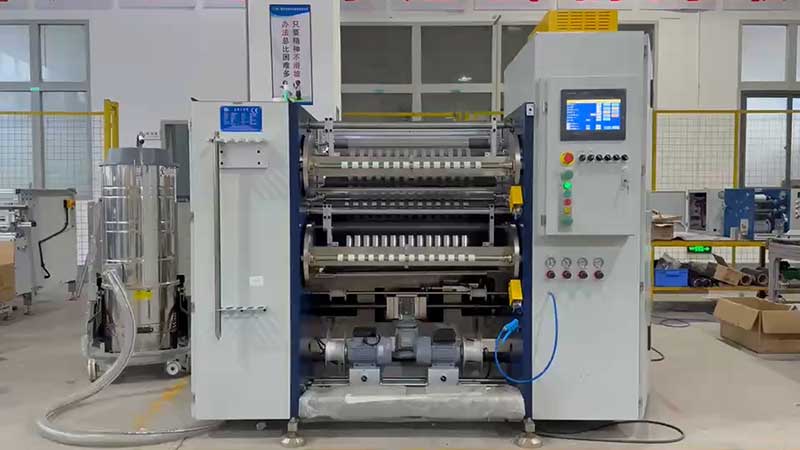
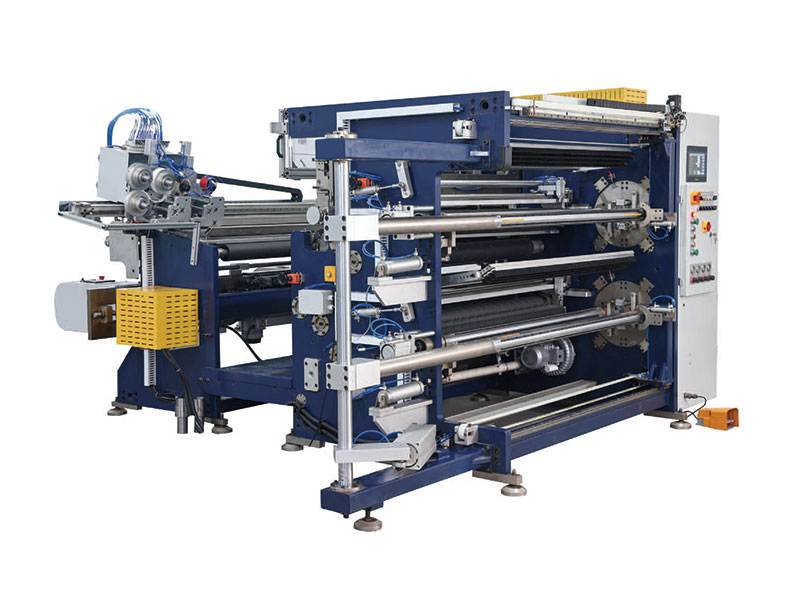 Hot Stamping Foil Slitter RSDS7H 1350 PLUS
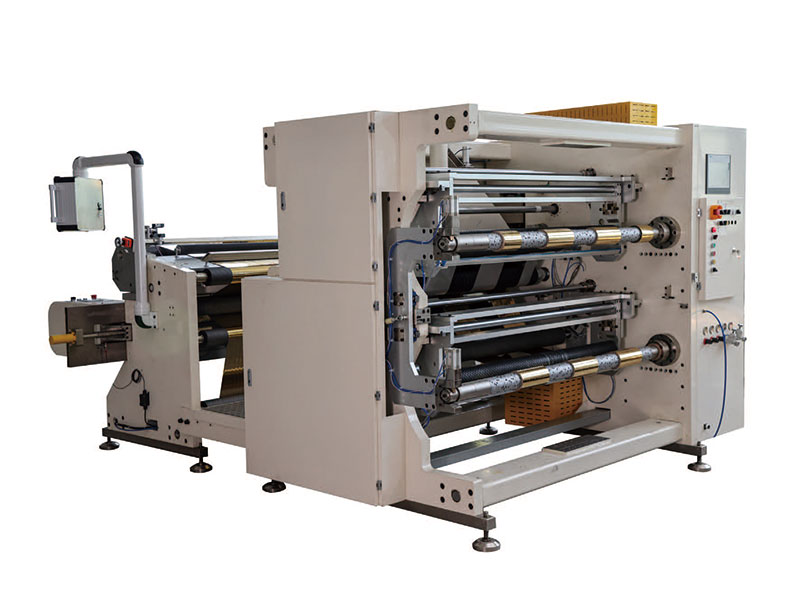 Hot Stamping Foil Slitter (RSDS7H) 1350