As hot stamping continues to dominate premium packaging, labeling, and decorative finishing, the quality of your slitted foil directly determines the yield of your downstream stamping process. In 2026, the market for hot stamping foil slitting machines has matured significantly—but with that maturity comes a wider array of technical configurations, automation levels, and price points that can make specification decisions difficult.
This guide provides a structured framework for evaluating hot stamping foil slitting machines, covering the material realities that dictate machine design, the core parameters that separate competent machines from problematic ones, and the automation features that determine whether your operation can profitably handle modern order patterns.
Understanding the Material: Why Hot Stamping Foil Demands Specialized Slitting
Before evaluating machine specifications, it is critical to understand what makes hot stamping foil fundamentally different from standard films and papers. Hot stamping foil is a multi-layer laminate consisting of a PET base film (typically 12–25μm), a release layer, a pigment or aluminized layer, and an adhesive layer.
This construction creates specific vulnerabilities during slitting:
• Tension sensitivity: The thin PET base stretches under excessive tension, causing registration errors and coating cracks. Insufficient tension produces loose, telescoping rolls.
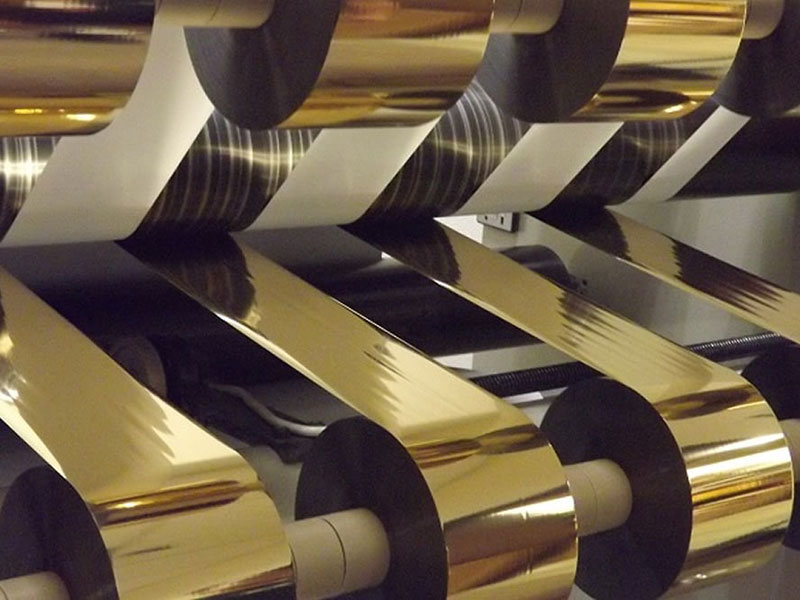
• Coating fragility: The pigment and metallized layers are easily scratched by contact with rollers or blades. Laser and holographic foils with diffraction patterns are especially vulnerable.
• Dust generation: Slitting friction produces microscopic aluminum powder and PET dust. If not extracted, this contamination creates “pinholes” and “gold spots” during stamping.
These material characteristics explain why a general-purpose film slitter rarely delivers acceptable results on hot stamping foil. The machine must be configured specifically for gentle, precise handling.
Core Parameter 1: Slitting Accuracy and Edge Quality
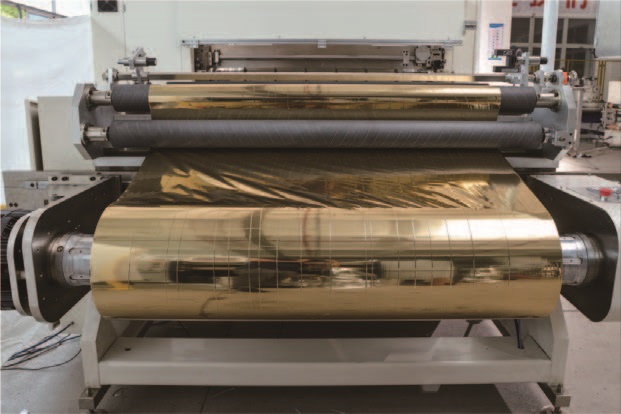
Slitting accuracy directly determines foil flow stability during the hot stamping process. Width errors that seem negligible at the slitting stage often manifest as misregistration, foil breakage, or incomplete patterns downstream.
What to verify:
• Width tolerance: Entry-level configurations in 2026 should hold within ±0.05mm. Quality-focused operations should target ±0.02mm, while high-end anti-counterfeit applications may require even tighter control.
• End face neatness: After rewinding, the finished roll’s end face misalignment should stay within ±0.2mm. Poor end face quality causes the roll to deviate or track poorly on the stamping machine.
• Edge quality: The cut should be flat and smooth—no burrs, white edges, stretch deformation, or micro-cracks.
Practical verification tip: During a trial cutting session, bring your most difficult material—the thinnest, most sensitive coating you process—and inspect the cut edge with a magnifying glass. Ideal results show a smooth cross-section without fuzziness. Fine serrations or burrs indicate insufficient mechanical precision.
Core Parameter 2: Tension Control System
Tension control is widely regarded as the single most important factor separating a mediocre slitter from a high-performance one. Hot stamping foil demands what industry practitioners describe as “kid glove” handling.
The problem with inadequate tension control:
Excessive tension stretches the PET substrate, damages laser gratings, and causes registration errors. Too little tension produces loose rolls that telescope or deviate during unwinding. The challenge is compounded by the fact that optimal tension changes as the rewinding roll diameter grows.
What a proper system looks like:
• Closed-loop control: The machine should use high-precision tension sensors (floating rollers or load cells) with independent closed-loop control for unwinding, traction, and rewinding. Simple open-loop systems are insufficient for thin foil.
• Tension accuracy: Look for control precision within ±0.5N or ±5%, with millisecond-level response speed.
• Taper tension: As the rewinding diameter increases, tension should automatically decrease according to a set curve. This prevents the “tight inside, loose outside” phenomenon that causes interlayer slippage in narrow slitting.
• Slip shaft for wide materials: When slitting wide rolls with thickness tolerances, independent slip units on the rewind shaft help eliminate bubbling and uneven winding.
Traditional magnetic particle brake solutions remain viable for medium and low-speed scenarios, but closed-loop servo tension control is effectively mandatory for high-speed operation or ultra-thin materials.
Core Parameter 3: Cutting System Configuration
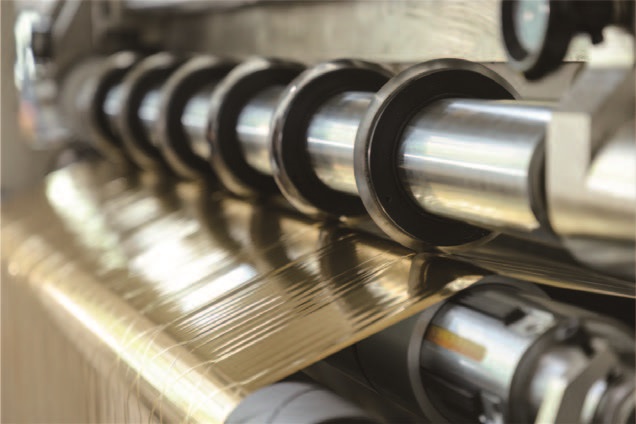
The cutting mechanism determines both edge quality and maintenance requirements. Three primary configurations exist, each suited to different material demands.
Shear cutting (circular blades)
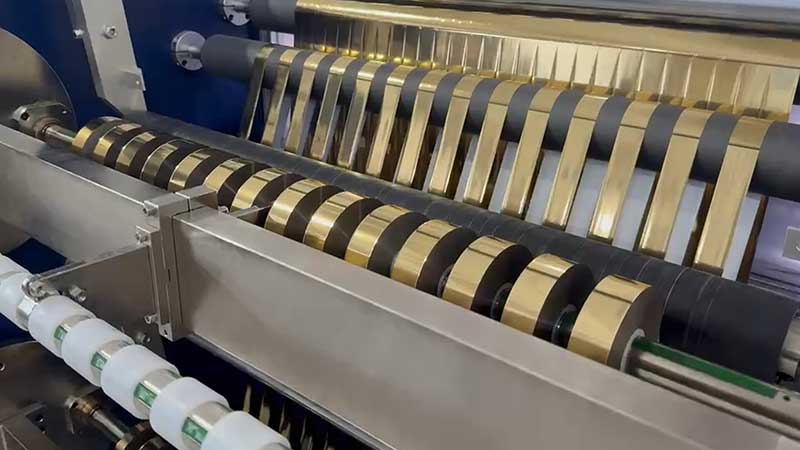
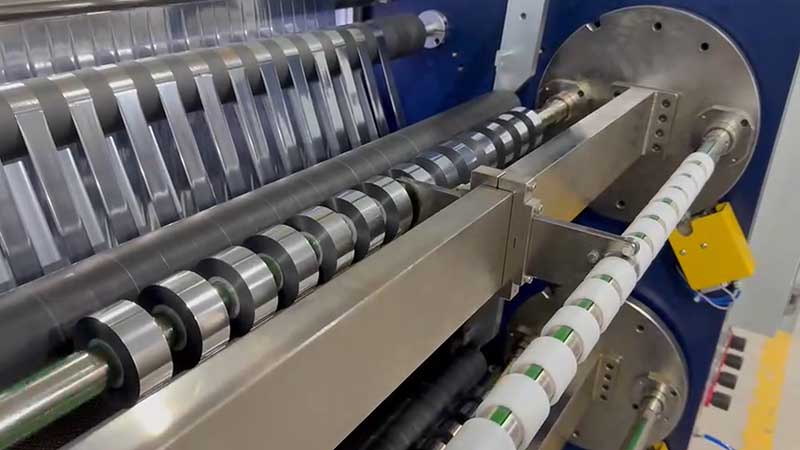
Shear-type circular blade slitting is generally the recommended choice for hot stamping foil. This method uses upper and lower disc blades that act like scissors, producing a cleaner cut with less dust and longer blade life than razor blades. The scissor action creates a true shear rather than a “squeeze” that deforms the material.
For thin foils (12–30μm), an upper knife angle of 15°–20° is often recommended. Blade material should be cemented carbide or ceramic-coated for wear resistance; ordinary carbon steel dulls quickly and produces burrs after just a few kilometers of slitting.
Razor blade slitting
Razor blades are cheaper and suitable for narrow widths, but they produce more dust and burrs on thicker foils. They are best reserved for economical configurations or specific narrow-width applications such as security threads.
Air knife (non-contact) slitting
For laser foil and holographic foil with delicate surface microstructures, even the slightest contact from a blade or roller can cause scratches. Air knife slitting uses high-pressure air to slit the material without physical contact, completely eliminating blade-induced scratches. This is a high-end, expensive configuration reserved for the most sensitive materials.
Core Parameter 4: Guide Rollers and Mechanical Rigidity
Every roller that contacts the foil surface is a potential source of scratches or micro-vibrations that damage the coating. The mechanical “fundamentals” determine whether high-precision slitting can be sustained over years of production.
Roller specifications to demand:
• Surface finish: All guide rollers should have a super-mirror finish with surface roughness Ra ≤ 0.05μm. This prevents scratching the delicate coating.
• Dynamic balance: Rollers must undergo dynamic balancing (typically G2.5 grade) to avoid high-frequency micro-vibrations that damage the hot stamping layer at high speeds.
• Cutter shaft rigidity: The runout of the cutter shaft should be controlled within 0.01mm. Insufficient shaft rigidity causes the middle of the shaft to bow on wide machines, resulting in incomplete cuts.
Core Parameter 5: Dust Removal and Static Elimination
During slitting, friction at the cut edge generates microscopic aluminum powder and PET dust. If this dust adheres to the foil surface, it creates “pit spots” or “gold spots” during the hot stamping process, leading to product rejection.
An integrated dust extraction system with dedicated vacuum ports near the cutting zone is essential. Some advanced machines feature nearly zero dust during operation through a combination of special angled circular knives and dust extraction.
Static elimination is equally important. Static buildup attracts dust and causes the slit strips to cling to rollers or each other, disrupting winding. Anti-static brushes or ionizing bars should be positioned at critical points in the material path.
Automation and Changeover Efficiency: The 2026 Imperative
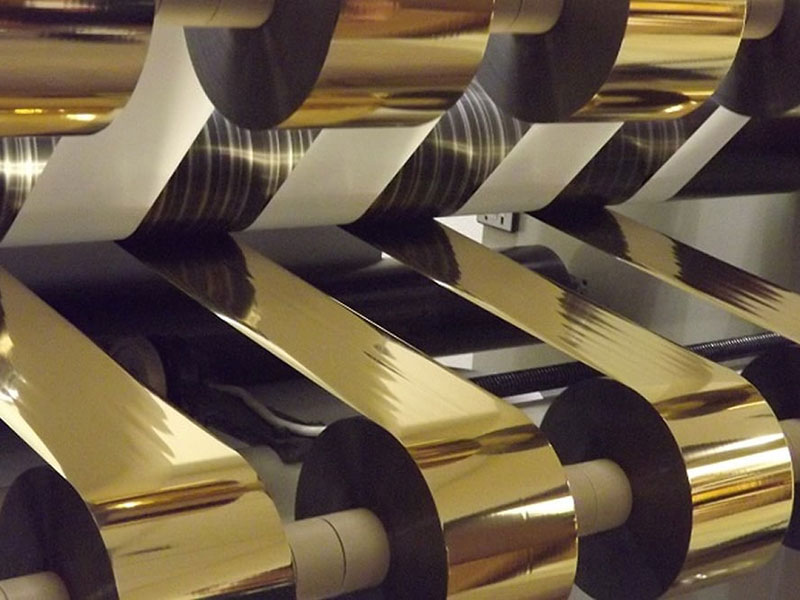
The reality of hot stamping foil orders in 2026 is that specifications have proliferated from a handful of traditional types to dozens, while single batch sizes have plummeted from tens of thousands of meters to hundreds or even dozens of meters. If a single equipment changeover requires more than half an hour of downtime, small-batch orders simply cannot generate profit.
Automatic tool positioning
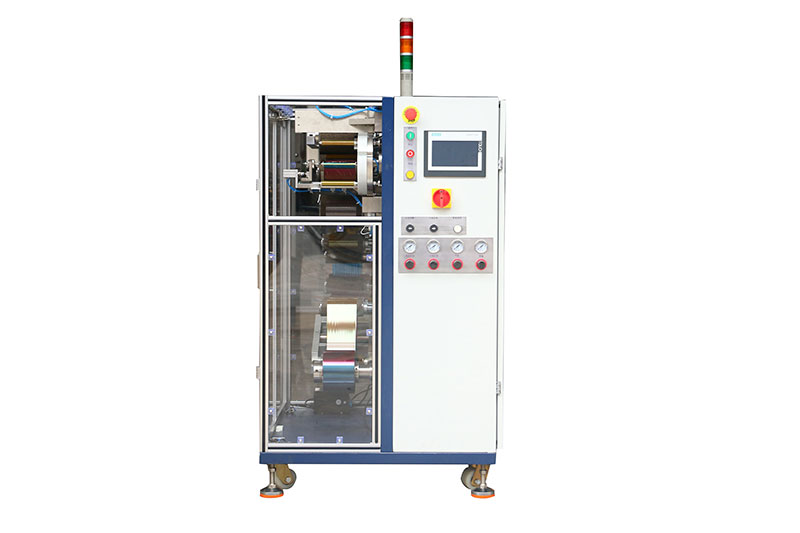
Manual tool positioning is slow and prone to human error. Servo-driven automatic tool positioning allows the operator to input the desired slitting width into the HMI, after which the tool holders automatically move to the correct positions. This can reduce order change times from 15 minutes to under 3 minutes.
Hydraulic or pneumatic tool locking
These systems ensure uniform pressure across all blade groups and prevent axial shifting during high-speed operation, guaranteeing consistent slit widths.
Quick-change features to evaluate:
• Shaftless unwinding with hydraulic lifting for fast jumbo roll loading
• Laser core positioning guides for rapid setup of paper/plastic cores
• Automatic tension parameter recall for different materials and widths
Matching Specifications to Your Production Reality
If your primary products are narrow-width finished goods (cigarette packs, liquor labels, security threads), minimum slit width is the hard requirement. The industry standard minimum is around 20–30mm, but some machines offer optional modules for 8mm narrow-width cutting. Width tolerance must be controlled at a stricter level for micro-text hot stamping on luxury packaging.
If you process laser or holographic foil, air knife slitting or a machine with extremely gentle material handling is non-negotiable. Standard shear cutting may scratch the diffraction pattern, causing invisible yield loss.
If your order mix is high-variety, low-volume, automatic tool positioning and fast changeover features should be weighted as heavily as slitting accuracy. The profit equation for small batches depends on minimizing downtime between orders.
If you run continuous high-volume production, closed-loop servo tension control, reliable dust extraction, and consistent blade life become the priority. Consider machines with predictive maintenance capabilities that monitor vibration, current, and temperature to forecast tool wear or bearing failure.
Cost Considerations and Market Landscape
The hot stamping foil slitting machine market spans a wide range of price points in 2026. Entry-level configurations with manual tool positioning and open-loop tension control may be available for basic applications, but they will struggle with the precision and changeover demands of modern foil production. Mid-range machines with closed-loop tension control and reasonable automation typically represent the best balance of performance and investment. High-end configurations with full servo drive, automatic tool positioning, and vision inspection systems command premium prices but deliver the precision and efficiency required for demanding applications.
For buyers in North America and Europe, the supplier landscape includes established manufacturers of slitter modules and complete systems, alongside import options from Asian manufacturers with varying levels of technical capability and support infrastructure.
A final recommendation: Before committing to any machine, insist on a trial cutting session with your own material. Measure width deviations with a caliper and inspect the end face with a magnifying glass. Review continuous running data over at least 500 meters, paying particular attention to precision stability during acceleration, deceleration, and roll changes. The machine that performs well in these practical tests will deliver reliable service long after the brochure specifications have faded from memory.
 English
 Deutsch
 Français
 Español
 Português
 日本語
日本語 русский
 한국어
한국어 عربي
عربي ภาษาไทย
 Tiếng Việt
 Italiano
 Cold Foil Slitter
 Card Print Ribbon Rewinder
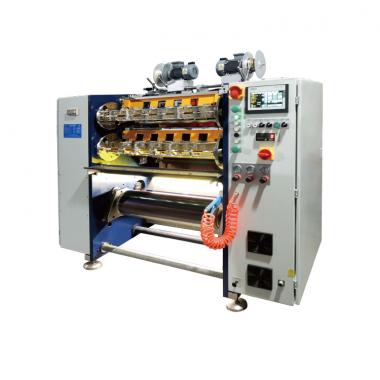 Card Print Ribbon Slitter
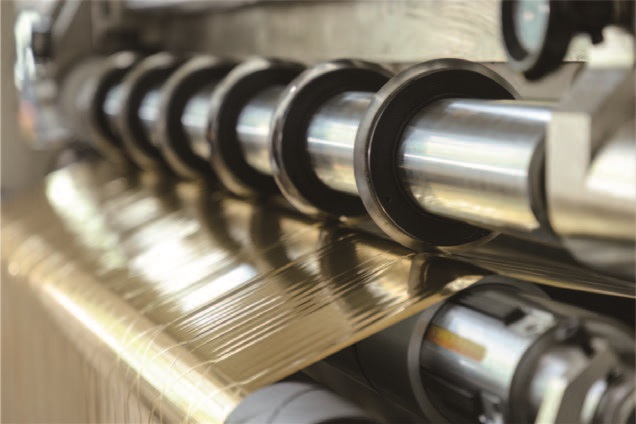 Hot Stamping Foil Slitting Machine
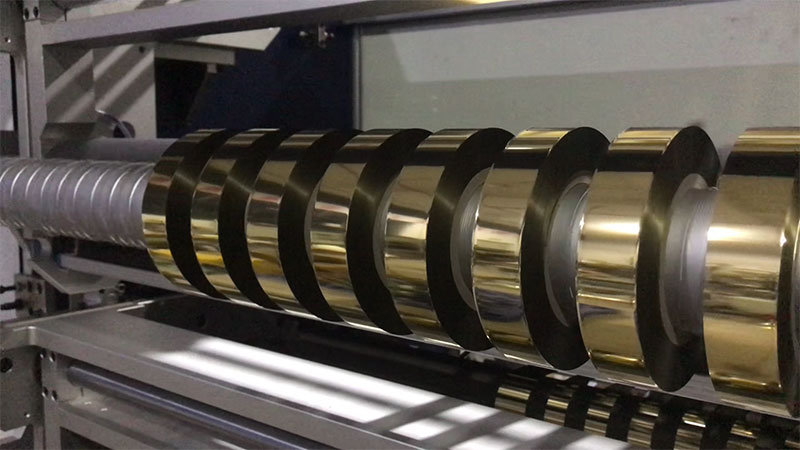 Holographic Foil Slitter
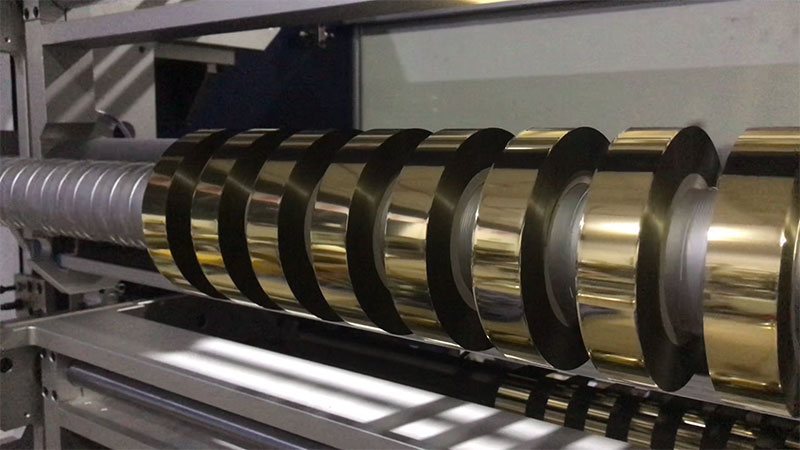 Digital Enhancement Foil Slitter
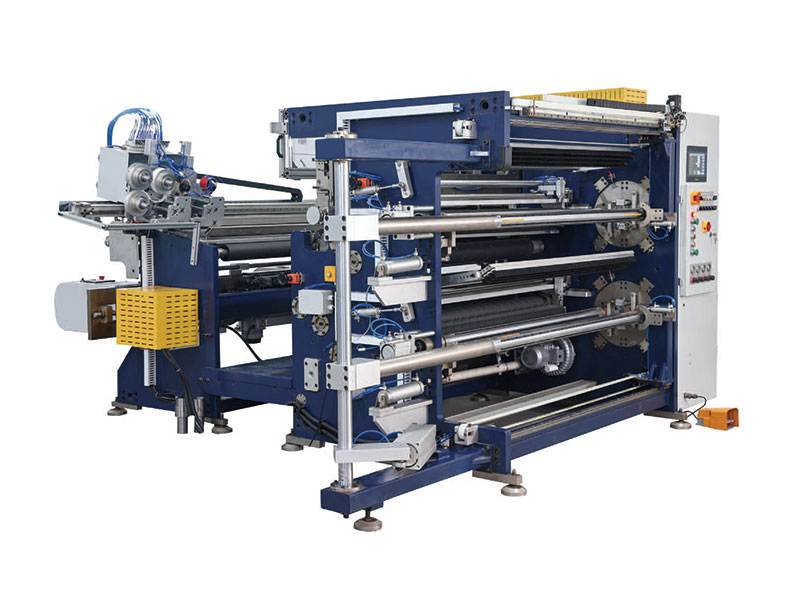 Hot Stamping Foil Slitter RSDS7H 1350 PLUS
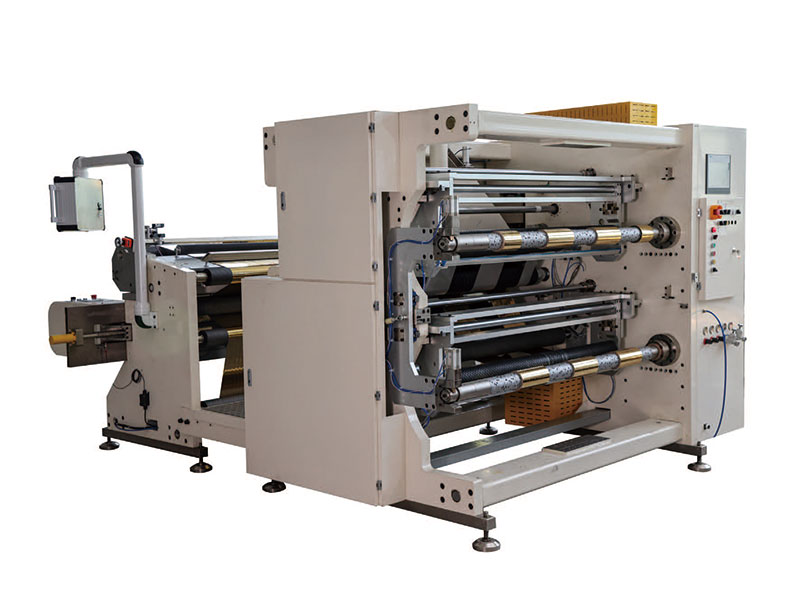 Hot Stamping Foil Slitter (RSDS7H) 1350