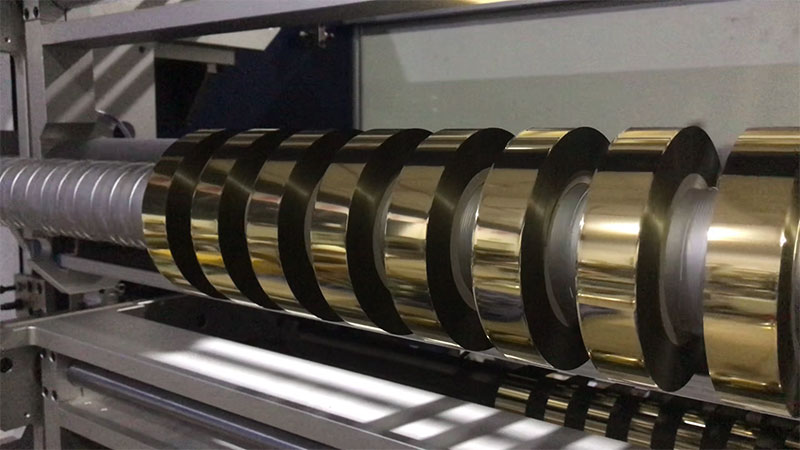
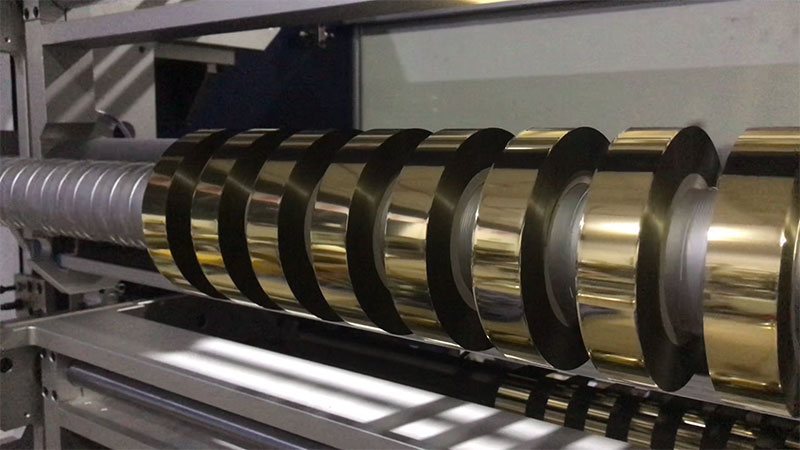
Hot stamping foil is a delicate multi-layer composite—typically a PET base film, release layer, aluminum coating, and adhesive. The slitting process directly determines whether that material survives the journey from jumbo roll to finished narrow roll without scratches, burrs, or tension deformation. A machine that merely “cuts” is not enough; it must handle foil with precision and control at every stage.
This guide walks through the specifications that matter most when evaluating a hot stamping foil slitting machine, from slitting accuracy to tension systems and automation capabilities.
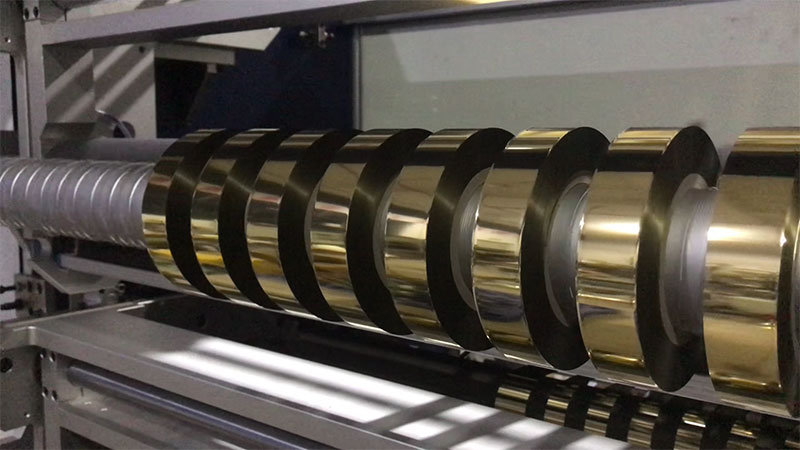
1. Slitting Accuracy and End Face Quality
Slitting accuracy is the first specification to verify because it directly affects foil flow stability during the hot stamping process . Width errors that seem minor at the slitting stage often become visible defects—misregistration, foil breakage, or uneven stamping—downstream.
What to look for:
• Width tolerance: Qualified equipment should hold width error within ±0.1mm; high-end machines for special materials like laser foil achieve tighter tolerances . Industry guides now reference ±0.05mm as a baseline for entry-level configurations in 2026, with ±0.02mm recommended for quality-focused operations .
• End face neatness: After winding, the finished roll’s end face misalignment should stay within ±0.2mm; otherwise, the roll may deviate or track poorly on the hot stamping machine .
• Edge quality: The cut should be flat and smooth—no burrs, white edges, stretch deformation, or micro-cracks. These defects can cause “sand holes” or foil breakage during stamping .
Practical tip: When testing a machine, use a magnifying glass to inspect the cut edge. Ideal results are a smooth cross-section with no fuzziness. Fine serrations or burrs indicate insufficient mechanical precision .
2. Tension Control System
Hot stamping foil is extremely sensitive to tension because it is thin—often 12μm to 30μm—and multi-layered . Tension control is frequently described as the core technical threshold separating competent slitting machines from problematic ones .
Excessive tension stretches the substrate, damages laser gratings, and causes registration errors. Insufficient tension produces loose, uneven rolls that can telescope or deviate during unwinding .
Key specifications:
• Closed-loop control: The machine should use high-precision tension sensors (floating rollers or load cells) with independent closed-loop control for unwinding, traction, and rewinding—not simple open-loop systems .
• Tension accuracy: Look for control accuracy within ±0.5N or ±5%, with millisecond-level response speed to handle thickness variations . High-end systems achieve ±0.5N using servo motors and low-inertia guide rollers .
• Taper tension: As the rewinding diameter grows, tension should automatically decrease according to a set curve. This prevents the “tight inside, loose outside” phenomenon common with thick materials .
• Slip shaft for wide materials: When slitting wide rolls with thickness tolerances, independent slip units help eliminate bubbling and uneven winding .
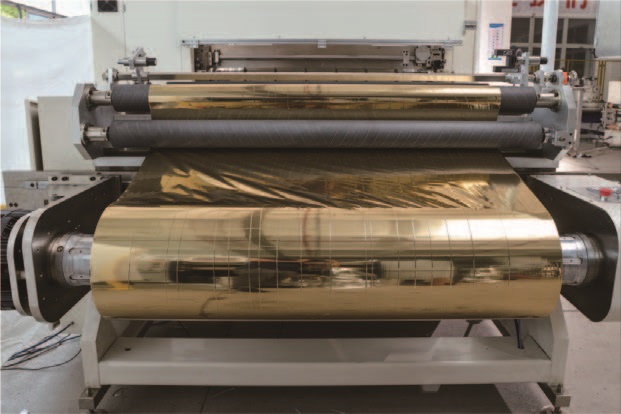
3. Cutting System: Blade Type, Material, and Adjustment
The cutting system is where burrs are either prevented or created. Hot stamping foil’s thinness demands a true “shear” cut rather than a “squeeze” that deforms the material .
Blade types:
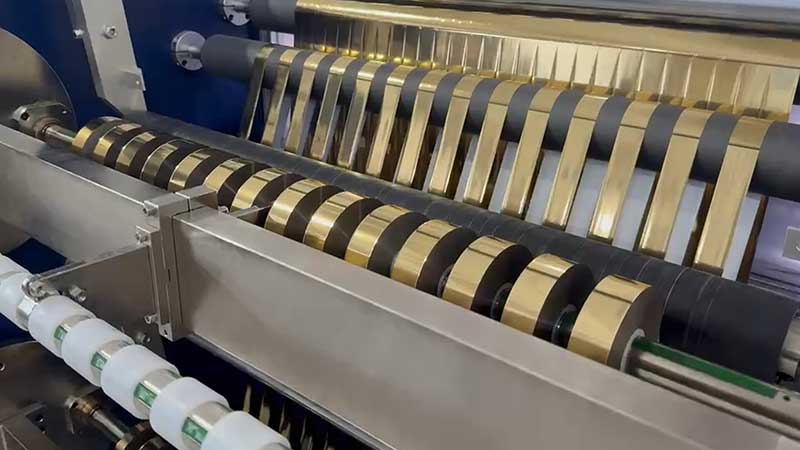
• Shear-type circular blades (upper and lower disc knives): The preferred configuration for hot stamping foil. This scissor-like action produces a smoother cut surface and longer blade life compared to razor blades, and it handles frequent specification changes well .
• Razor blade slitting: Used in some configurations, particularly for specific materials, but generally less precise for thin foils .
• Air knife slitting: A non-contact option for extremely sensitive materials like laser foil, where any roller contact risks scratching the diffraction pattern. This is a high-end, expensive configuration .
Blade material: Cemented carbide or ceramic-coated inserts are recommended for wear resistance and edge consistency. Ordinary carbon steel dulls quickly, leading to burrs after just a few kilometers of slitting .
Adjustment features: The tool holder should offer fine axial adjustment, and the shear angle and overlap should be steplessly adjustable. For thin foils (12μm–30μm), an upper knife angle of 15°–20° is often recommended to achieve shear rather than squeeze . Automatic tool setting or hydraulic locking systems reduce setup time and ensure uniform pressure across all tool groups .
4. Guide Rollers and Mechanical Rigidity
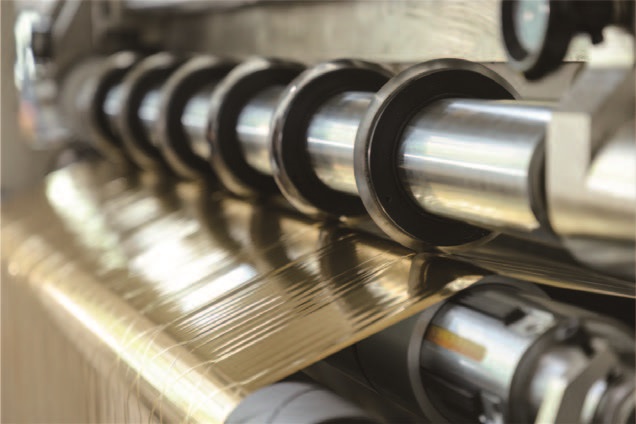
Every roller that contacts the foil surface is a potential source of scratches or micro-vibrations that damage the coating. The mechanical “fundamentals” of the machine determine whether high-precision slitting can be sustained over years of production .
Roller specifications:
• Surface finish: All guide rollers should have a super-mirror finish (surface roughness Ra ≤ 0.05μm) to prevent scratching the coating .
• Dynamic balance: Rollers must undergo dynamic balancing (e.g., G2.5 grade) to avoid high-frequency micro-vibrations that damage the hot stamping layer at high speeds .
• Cutter shaft rigidity: The runout of the cutter shaft should be controlled within 0.01mm. Wider slitting widths (over 1.6 meters) require especially rigid shafts to prevent bending under pressure, which causes incomplete cuts in the middle and overcutting on the sides .
5. Web Guiding and Correction System
Without accurate web guiding, the blade’s cutting position shifts as the foil drifts, producing one burred edge and one clean edge . Hot stamping foil is prone to lateral movement during high-speed slitting, especially as roll diameter changes.
Specifications to check:
• Detection method: High-precision ultrasonic or infrared digital correction. Ultrasonic is preferred for shiny materials like metallized foil because it avoids false readings from light reflection .
• Response and accuracy: Response speed of 50ms or faster, with correction accuracy of ±0.1mm or better . Entry-level specifications may accept ±0.5mm, but this is marginal for thin foil .
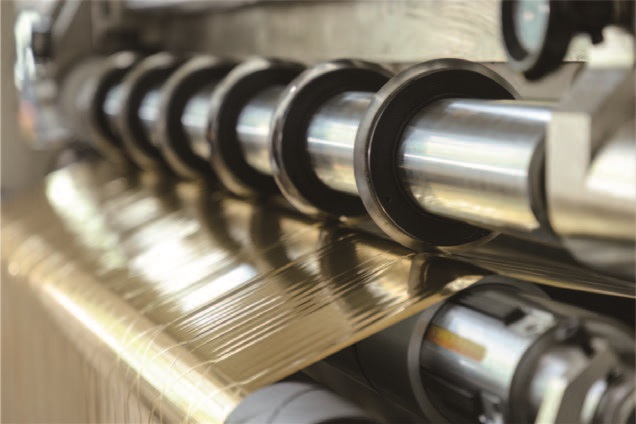
6. Static Elimination and Dust Removal
PET substrates generate extremely high static electricity during high-speed slitting and peeling. This attracts dust, causes uneven winding, and in extreme cases can even ignite and damage the aluminum coating . Dust from the cut edge—tiny aluminum particles and coating debris—becomes embedded in the roll and appears as “pit spots” or “sand holes” during hot stamping .
Static control specifications:
• Placement: Active static elimination rods at three key locations: unwinding, slitting, and rewinding .
• Residual voltage: Qualification standard is control to ±300V or below; for sensitive materials, ±100V or below is preferred .
Dust removal:
- An integrated dust extraction and anti-static solution should suppress and collect dust at the source. Contact dust rollers combined with ion air knives or suction outlets are common configurations .
7. Material Adaptability and Thickness Range
Hot stamping foil is not a single material. Plain paper foil, plastic foil (ABS, PVC, PE), fabric foil, laser foil, metallic foil, and transparent foil each present different challenges . The machine’s specifications should match the materials you actually run.
Key compatibility questions:
• Thickness range: Can the machine handle the full range of foils you use? Common ranges are 12μm–50μm for hot stamping foil, though some machines handle up to 180μm or thicker for other film types .
• Laser and holographic foil: These have fine microstructures that scratch easily. They require mirror rollers, full servo tension control, and potentially air knife slitting .
• Plastic foil with sticky adhesive: May require anti-stick blades (Teflon-coated), mirror or silicone rollers, and precise micro-tension to prevent stretching and adhesion .
• Fabric foil: Very soft and prone to wrinkles. Requires ultra-low tension control, large flattening rollers, and full-contact surface rewinding .
8. Automation, Control, and Intelligence
Automation specifications affect both labor requirements and consistency. As order profiles shift toward more variety and smaller batches, quick changeover and reliable parameter storage become competitive advantages .
Core automation features to evaluate:
• Automatic tool positioning: Servo-driven tool holders that move to programmed positions eliminate manual tool movement and reduce setup time to under 5 minutes for specification changes .
• Recipe management: Ability to store and recall process parameters (tension, speed, tool pressure) for different materials, widths, and thicknesses .
• Non-stop rewinding: Automatic turret and cutting for finished rolls significantly enhances continuous production capacity for large-volume orders .
• Remote monitoring and data interface: Support for OPC UA or MQTT protocols for connection to MES/ERP systems. If your factory has a digital platform, verify API documentation or integration cases to avoid data silos .
• Predictive maintenance: Sensors monitoring vibration, current, and temperature to predict tool wear or bearing failure .
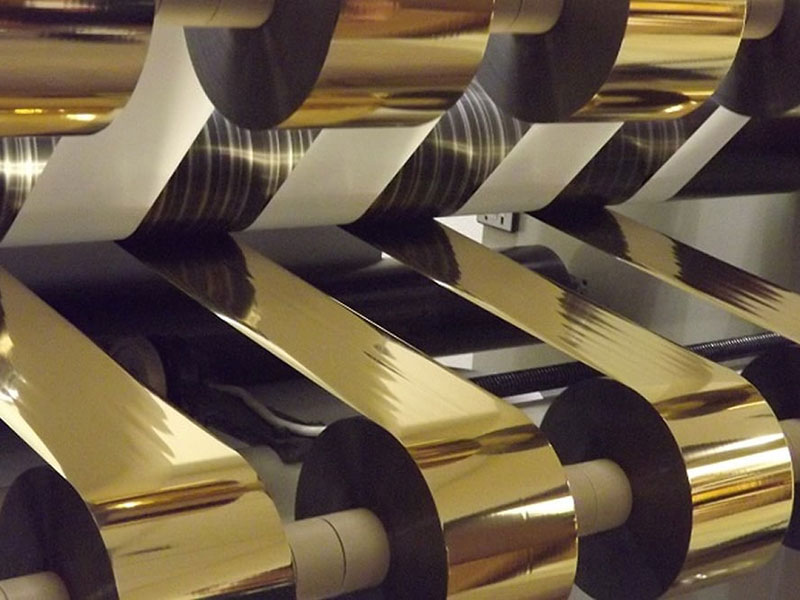
9. Speed and Efficiency Specifications
Maximum speed is a headline number, but effective output is what matters. A machine rated at 500 m/min may deliver far less if changeover, film threading, and waste removal consume hours per shift .
Realistic efficiency metrics:
• Maximum mechanical speed: Common ranges are 200–500 m/min depending on material thickness and machine class. Entry-level machines may run 50–120 m/min .
• Working speed: The sustainable production speed with your specific material and width—not just the peak.
• Order change time: ≤5 minutes with automatic tool layout is the 2026 benchmark for efficiency-focused operations .
• Scrap rate: ≤1.5% including joint losses, edge trim, and start-stop sections is a reasonable target for a well-configured machine .
10. Safety and Environmental Protection
Safety and environmental features are often overlooked in purchasing decisions but matter for long-term operations and compliance.
Specifications to verify:
• Emergency stops and interlocks: Safety gravity carpets, guarded cutting areas, and safety door interlocks .
• Waste edge disposal: Automatic suction and discharge for edge trim to prevent tangling and blockages that cause shutdowns .
• Electrical configuration: Match your facility’s power supply. Common configurations include 380V three-phase or 220V single-phase depending on machine size .
Summary
Selecting a hot stamping foil slitting machine is ultimately about matching specifications to your production reality. A machine with ±0.1mm width tolerance may suffice for standard paper foil, but laser or holographic foil demands ±0.02mm and non-contact handling. Similarly, a workshop running large-volume standard widths has different priorities than a facility handling frequent narrow-width orders.
The specifications that deserve the most scrutiny are slitting accuracy, tension control, and the cutting system—these three directly determine whether your output is usable or scrap. Automation and intelligence features are secondary but increasingly important for competitive operations.
Before committing, bring your most challenging foil material to the manufacturer’s facility for a trial run. Observe the cut edge under magnification, check the wound roll for telescoping or wrinkles, and measure the end face alignment. The machine’s behavior under your specific material conditions is the most reliable specification of all.
 English
 Deutsch
 Français
 Español
 Português
 日本語
日本語 русский
 한국어
한국어 عربي
عربي ภาษาไทย
 Tiếng Việt
 Italiano
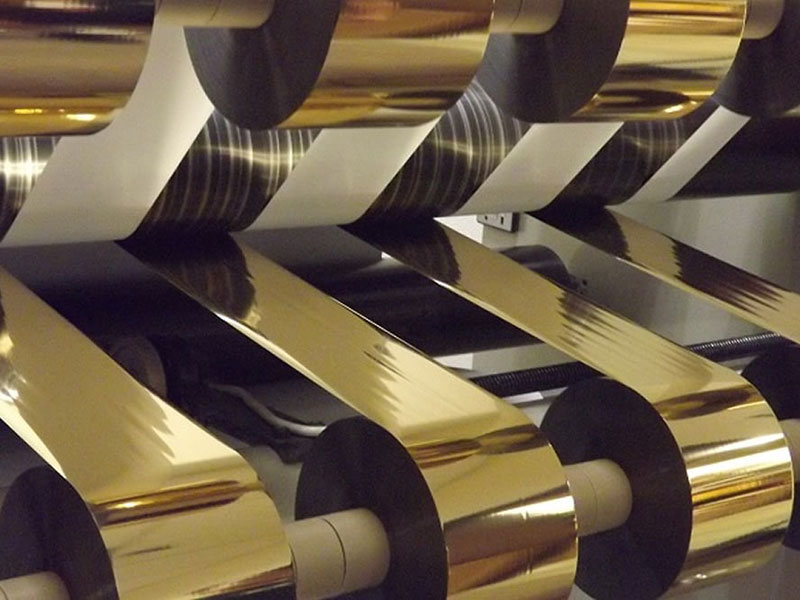 Cold Foil Slitter
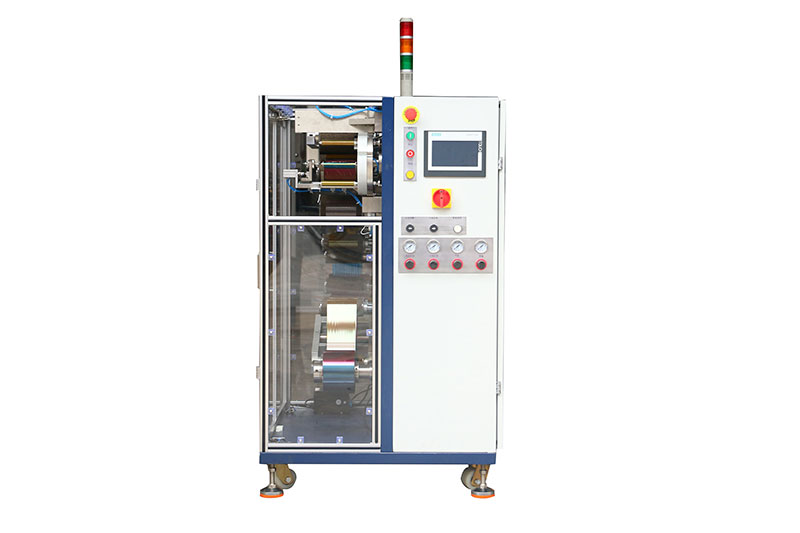 Card Print Ribbon Rewinder
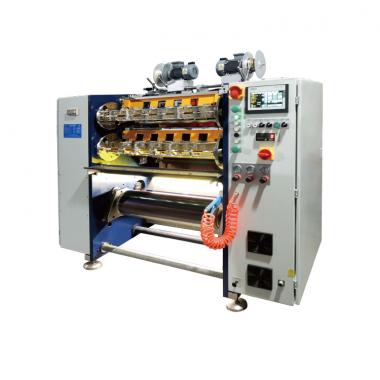 Card Print Ribbon Slitter
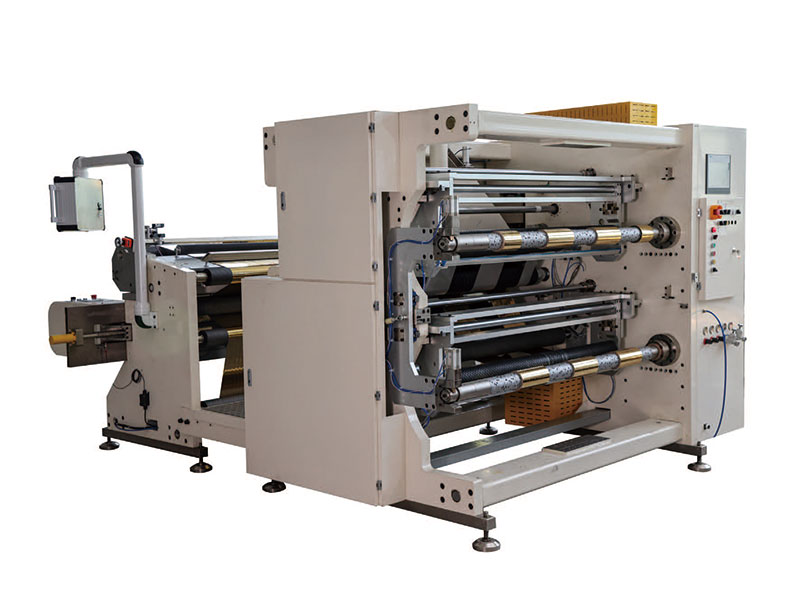 Hot Stamping Foil Slitter (RSDS7H) 1350
 Digital Enhancement Foil Slitter
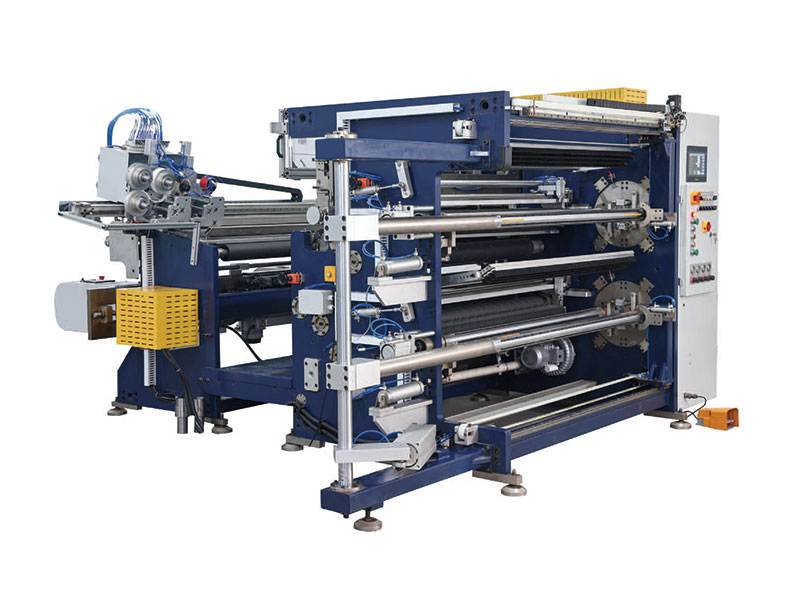 Hot Stamping Foil Slitter RSDS7H 1350 PLUS