The dazzling golden logo on cosmetic packaging boxes, or the delicate metallic stripes on tobacco and alcohol labels, all these elevated hot stamping effects originate from a precision material only 12 to 20 microns hot stamping foil, commonly known as hot stamping foil. The wide hot stamping foil master roll is precisely processed into the narrow finished roll needed downstream, with the slitting stage serving as the "throat" connecting the upper and lower lines. The precision and stability of this step directly determine the success or failure of the hot stamping process: even a slight burr at the slitting edge or slight deformation caused by tension fluctuations can trigger a chain reaction of foil breakage and incomplete hot stamping on the high-speed hot stamping machine. For this reason, the hot stamping foil slitting machine has evolved from a simple slitting tool into a systematic device integrating precision machinery, intelligent control, and materials science.
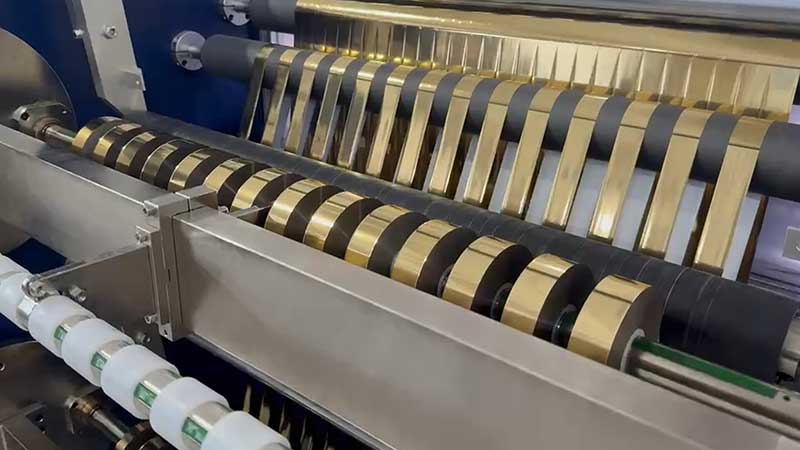
1. Technical Architecture: The core support for precision slitting
The technical challenge of the hot stamping foil slitting machine lies in maintaining the integrity of the multi-layer coatings of the hot stamping foil while achieving efficient and precise slitting. Hot stamping foil is not a single-layer film, but a precision structure composed of PET base film, release layer, tinting layer, aluminized layer, and adhesive layer. This requires slitting equipment to achieve non-destructive separation of multilayer structures beyond physical slitting.
• Tension control is the "lifeline" of thin material slitting. Hot stamping foil substrates are extremely thin and easily stretched; excessive tension resembles pulling on spider silk, causing irreversible deformation of the substrate; If the tension is too low, the roll becomes loose and misaligned. Modern high-end slitting machines generally use multi-stage closed-loop tension systems, combining front and rear tension rollers with magnetic powder brakes, and applying PID algorithms for real-time regulation to keep tension fluctuations within 0.5N. Taper tension technology in the winding stage is especially critical—as the coil diameter increases, the system automatically reduces tension according to a set curve to prevent aluminum layer adhesion caused by excessive pressure on the inner foil.
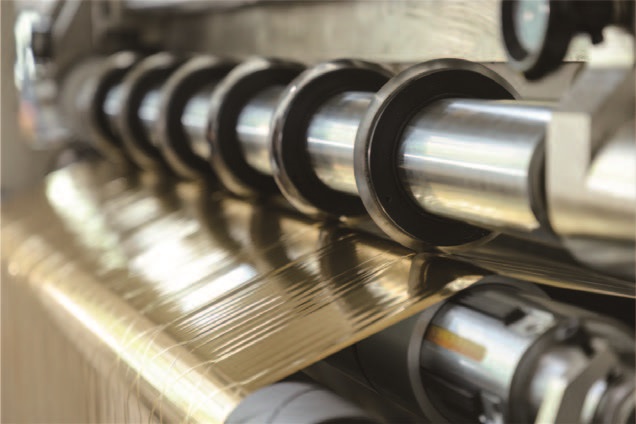
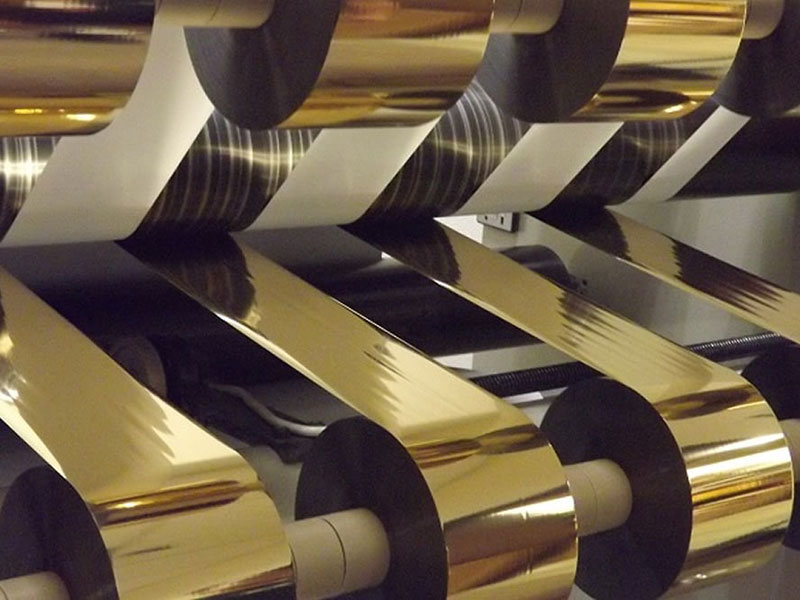
• The tool system determines the "last mile" mass of slitting. The mainstream industry solution uses upper and lower disc blades for shearing, similar to slitting fabric with scissors, providing a smoother cut surface. In precision adjustment, the overlap and lateral clearance between the upper and lower blades must be strictly controlled: for ultra-thin hot stamping foil below 12μm, the blade edge clearance should be controlled at 0.03~0.08mm, and the blade shaft radial runout should not exceed 0.003mm, otherwise wavy edges or burrs may form. More advanced laser slitting solutions are used for high-end PET hot stamping foil, with a carbide layer at the cut edge controlled within 10μm, but the requirements for supporting protection systems are extremely high.
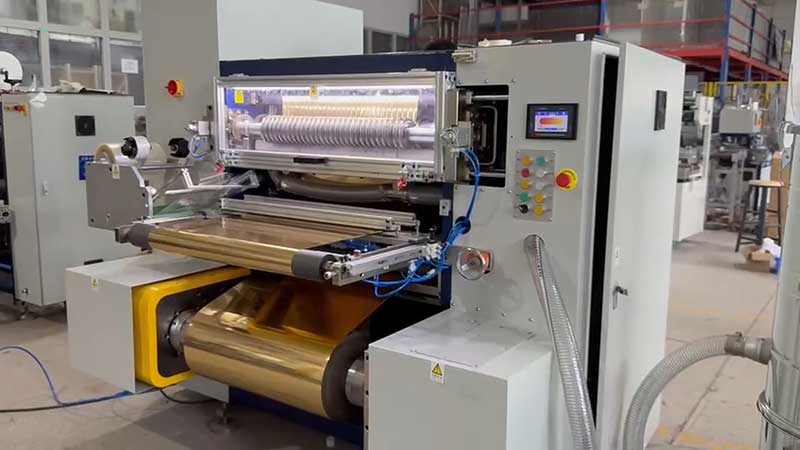
2. Application Landscape: From Packaging to Electronic Diversified Coverage
The application scope of hot stamping foil slitting machines has far surpassed traditional printing and packaging, forming a global footprint spanning multiple industries.
• The printing and packaging industry is its core stronghold. The demand for gold stamping effects in high-end cigarette packs, liquor boxes, brochures, mooncake boxes, and other products is driving slitting equipment to continuously evolve toward higher precision. These application scenarios require the slitted hot stamping foil to be uniform in width and smooth edges without burrs, ensuring smooth operation on high-speed hot stamping machines.
• The electronics and electrical industries have introduced differentiated demands. The hot stamping foil slitting machine is not only used to produce raw materials for electronic components such as capacitors and inductors, but also serves the decorative hot stamping of electronic product casings, giving products a metallic texture and a sense of luxury. The brushed hot stamping effect on home appliance panels is achieved by using specialized brushed hot stamping foil slitting machines that process the material into specific specifications and then stamp it.
In addition, in the fields of garment fabric hot stamping, soft plastic accessories, glass and metal decorations, stationery and office supplies, and even personalized DIY, hot stamping foil slitting machines play an indispensable role. This broad cross-industry applicability makes it a key universal piece of equipment in the hot stamping material processing industry chain.
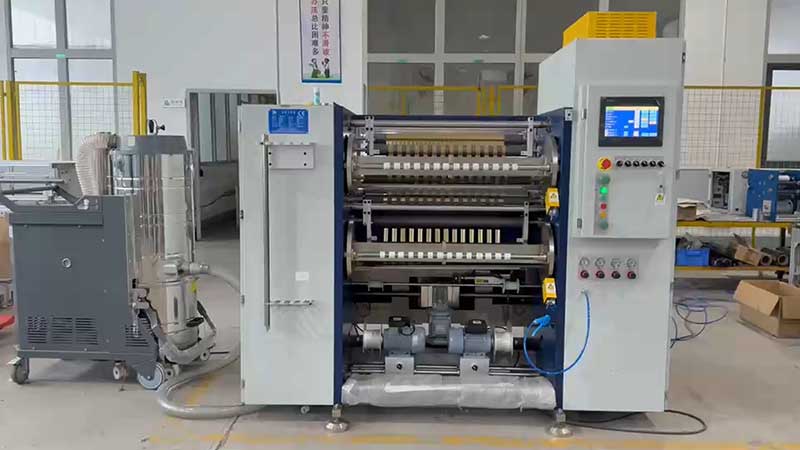
3. Efficiency Revolution: The Technological Leap of Intelligence
As the automation level of hot stamping machines continues to increase, intelligent hot stamping foil slitting machines are gradually replacing traditional manual slitting machines, becoming a mainstream trend. This leap is reflected in breakthroughs across multiple technical dimensions.
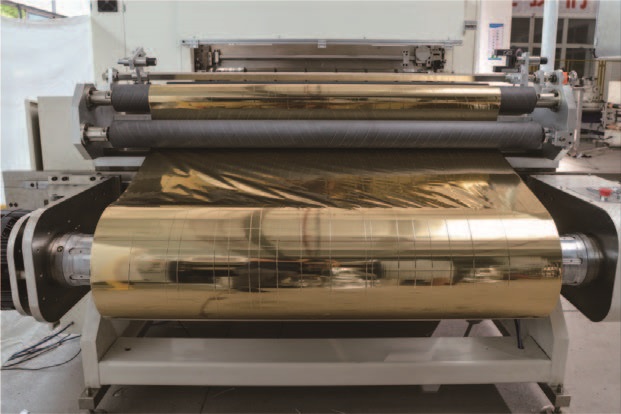
• High-speed slitting capability greatly improves production efficiency. Slitting machines driven by linear motors can reach slitting speeds of 800m/min, far exceeding the traditional model's 300m/min. The introduction of an automatic tool change system reduces tool change time from 5 minutes of manual operation to within 30 seconds, supporting continuous production of different widths and specifications. The electrostatic adsorption waste edge recycling technology compresses the waste edge width to 1.5mm, increasing material utilization to 98.5%.
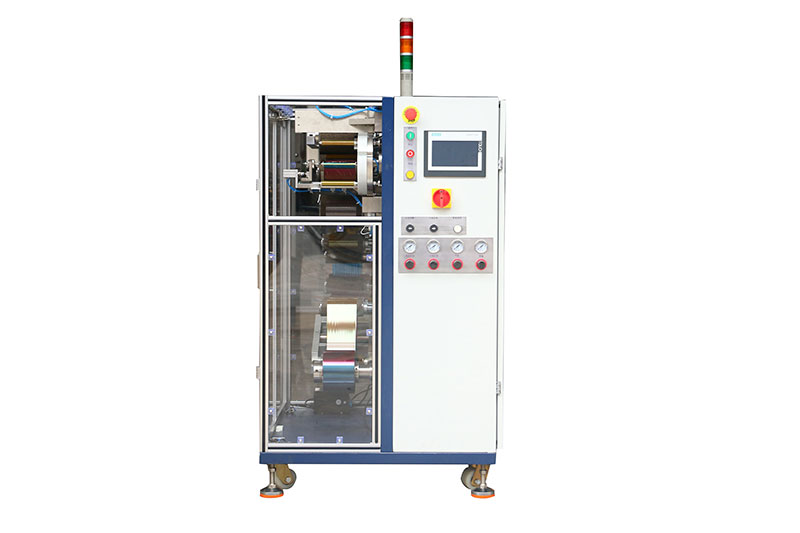
• Intelligent systems empower devices to "think." The CCD visual correction system scans the edge patterns of hot stamping foil in real time, with a correction accuracy of up to ±0.1mm; The deep learning-based AI defect classification system can automatically identify defect types such as coating bubbles and scratches, with a classification accuracy exceeding 99%. The formula management system stores slitting parameters for different materials and automatically retrieves them when switching products, greatly reducing setup time. Digital twin technology can also pre-debug the slitting process in a virtual environment, predicting in advance how tool wear affects cut quality.
4. Industry Challenges and Outlook
Despite continuous technological advancements, the hot stamping foil slitting field still faces challenges. Issues such as pattern misalignment during ultra-thin laser film slitting and stable slitting of narrow anti-counterfeit fine thread hot stamping (minimum width only 0.3mm) still require further technological innovation. The introduction of new solutions such as low-temperature slitting technology and non-contact guide rollers also reflects increasingly stringent market demands for coating protection and finished product yield.
As a key device connecting the production and end applications of hot stamping materials, the technical level of the hot stamping foil slitting machine directly affects the quality and efficiency of downstream hot stamping processes. From fine tension control tuning to micron-level positioning of tool systems, from traditional mechanical structures to AI-driven intelligent slitting, technological evolution in this field continues, providing solid equipment support for high-quality development in industries such as packaging, electronics, and decoration.
 English
 Deutsch
 Français
 Español
 Português
 日本語
日本語 русский
 한국어
한국어 عربي
عربي ภาษาไทย
 Tiếng Việt
 Italiano
 Cold Foil Slitter
 Card Print Ribbon Rewinder
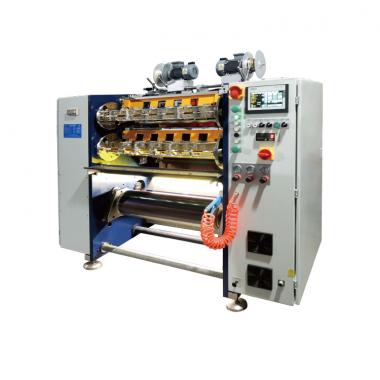 Card Print Ribbon Slitter
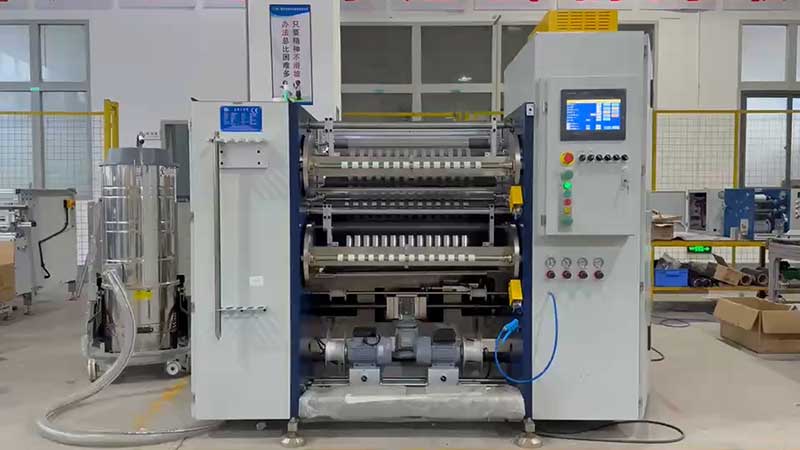
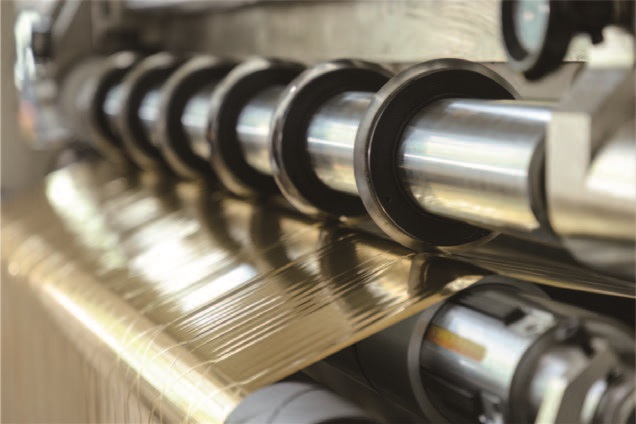 Hot Stamping Foil Slitting Machine
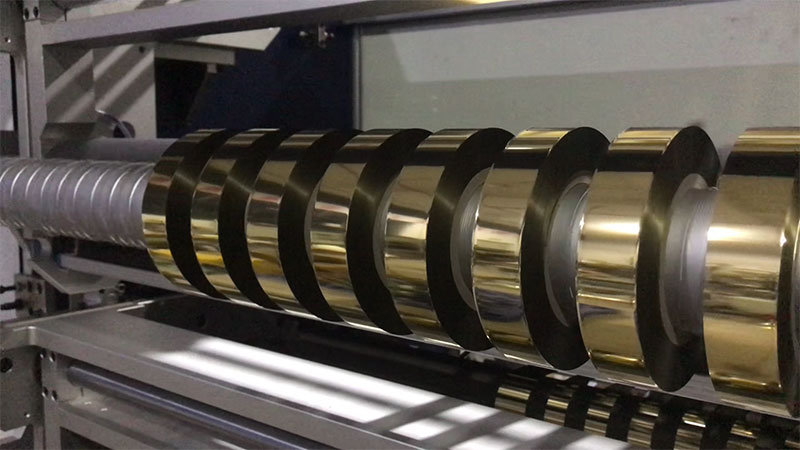 Holographic Foil Slitter
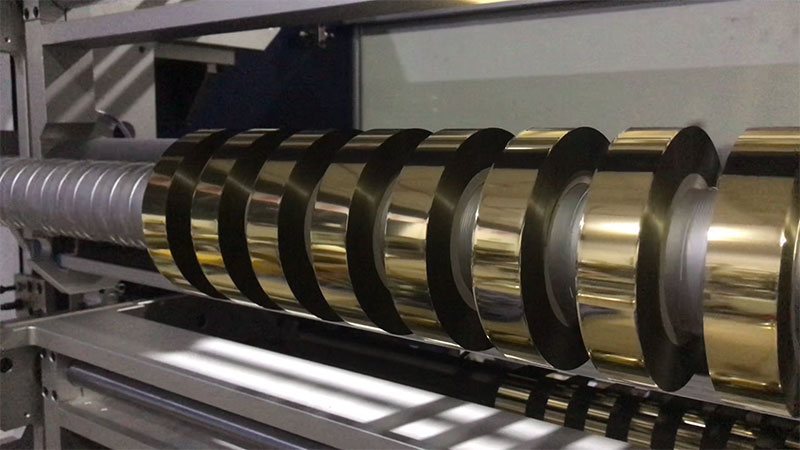 Digital Enhancement Foil Slitter
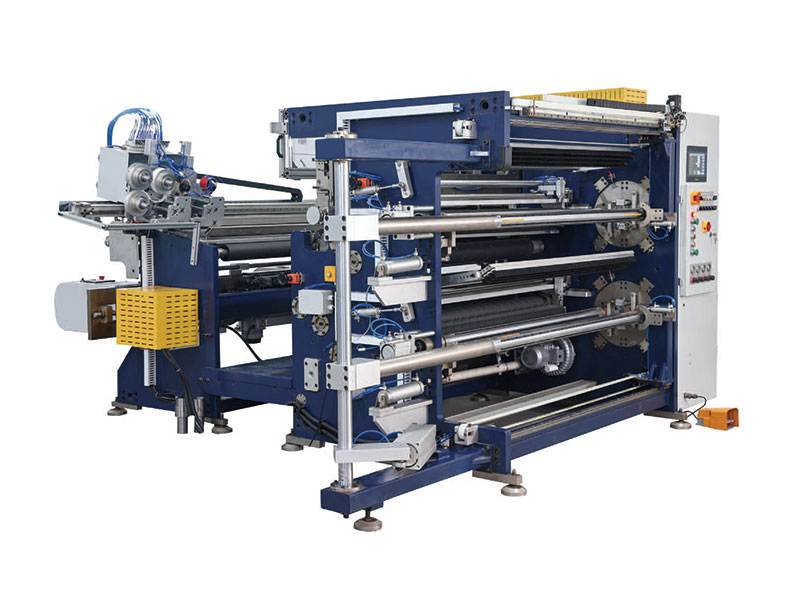 Hot Stamping Foil Slitter RSDS7H 1350 PLUS
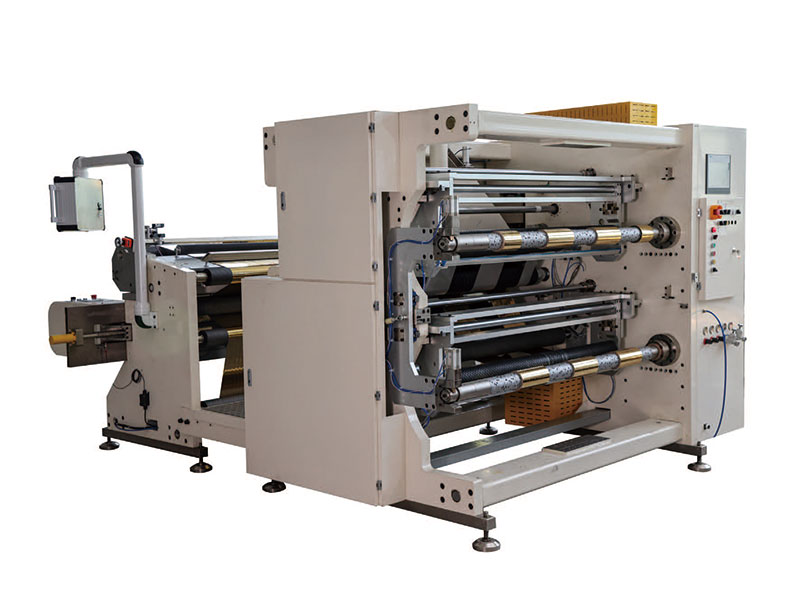 Hot Stamping Foil Slitter (RSDS7H) 1350