Cutting hot stamping paper is the "last mile" of the hot stamping process—if the cutting quality is poor, even the best hot stamping machine cannot perform effectively. Burrs, misalignment, uneven rolling, and precision drift...... These common issues can at best increase scrap rates, or at worst, lead to the complete scrapping of entire materials. Choosing the wrong slitting machine saves you small money but loses a lot of money. This article reviews the core selection points and pitfalls from a practical perspective.
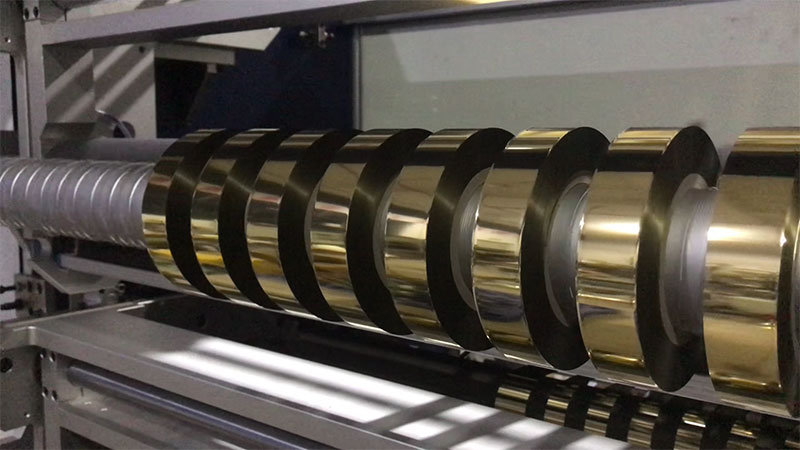
1. Why is slitting the key bottleneck?
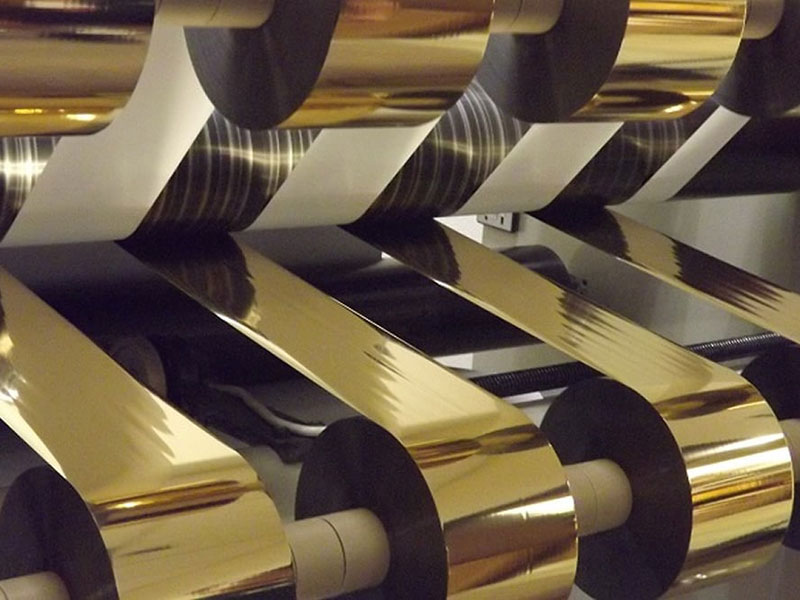
Hot stamping paper (electrochemical aluminum) is a material that transfers foil film onto the substrate surface by heating and pressurizing. The substrate is usually PET film, with a thickness of only 4-30μm, a coating on the surface, thin and brittle, and extremely sensitive to tension—these are its distinctive features.
Common pain points in traditional slitting machines focus on five areas: poor precision causing wavy edges and burrs; Low efficiency is due to long tool change and machine adjustment times; Significant losses come from material scrapping caused by insufficient precision; Poor flexibility makes it difficult to handle a wide variety of materials; Low safety and potential mechanical protection hazards.
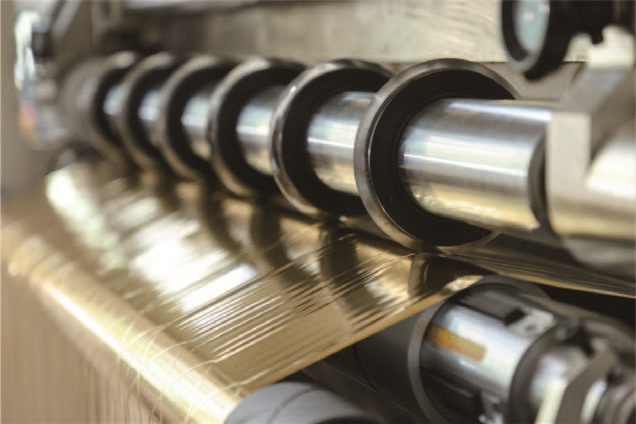
2. Five Core Selection Elements
1. Slitting accuracy—a hard specification with no compromise
Slitting precision directly determines the hot stamping effect. Ordinary hot stamping products allow ± 0.3mm error, but in high-end packaging, tobacco, and luxury label sectors, ± require 0.1mm or even higher. If the precision is not up to standard, misalignment and white exposure may occur during hot stamping.
Key Points for Selection: Prioritize servo motor drive systems (higher precision and faster response than traditional variable frequency control); the tool holder must have micron-level adjustment capability. High-rigidity cast iron or alloy steel bodies can effectively absorb vibrations, ensuring stability at high speeds.
2. Tension control—the lifeline of thin materials
The base material of hot stamping paper is thin and brittle; it breaks under even a slight tension, and wrinkles when loose. High-end models must have a closed-loop tension control system to independently adjust unwinding, slitting, and rewinding sections, keeping tension fluctuations within ±3% of the set value.
Taper tension technology is key: as the winding diameter increases, the tension gradually decreases to prevent the inner foil from being crushed by the outer layer. If equipment only emphasizes "maximum speed" and ignores "tension control accuracy," it is very likely to have a pitfall.
3. Tool system—determines the quality of trimming
The surface of hot stamping paper has a glue layer; ordinary blades tend to stick and dull over time, leading to rough edges and strings.
Tool types:
• Rotary blade shearing: suitable for high-speed slitting (≥300m/min), with smooth edges and no burrs
• Pneumatic knife: used for low-speed precision slitting, adjustable pressure to prevent material damage
Material requirements: carbide or diamond-coated tools, long lifespan, and resistant to adhesive adhesion. The pneumatic floating tool holder is a high-end standard feature, automatically adjusting pressure based on material thickness to ensure clear cutting and protect the blade edge.
4. Winding quality—affects subsequent machine use
The off-layer layer on the winding end face should be ≤0.1mm; otherwise, subsequent processes cannot be smoothly put on the machine.
Focus on configuration:
• EPC automatic correction: prevents roll deviation; ultrasonic sensors outperform photoelectric sensors (unaffected by foil color or metal reflection)
• Taper tension control: prevents deformation caused by tight inside and loose outside during large rolls
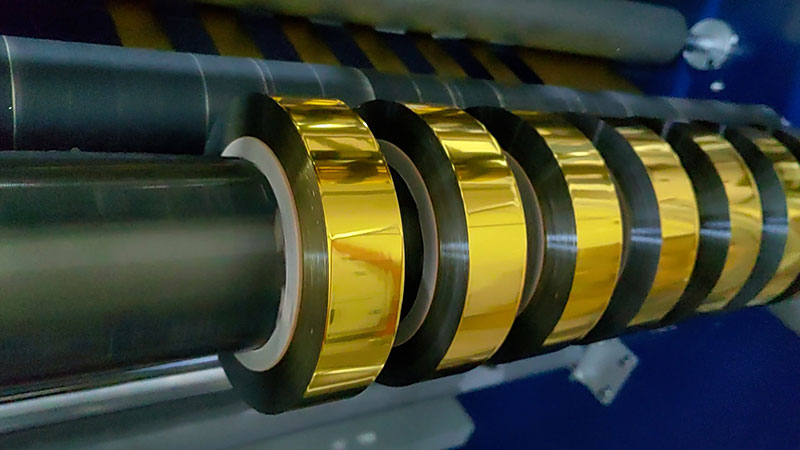
• Air expansion shaft or slip shaft: ensures each core slips independently and adjusts to solve the problem of inconsistent tightness between inside and outside
5. Automation and total cost of ownership
Automation functions directly affect labor efficiency: CNC systems can reduce machine change and adjustment time from 30 minutes to 1-2 minutes; The preset order storage function enables one-click switching.
Calculate the total rather than the purchase price: A cheap but frequently malfunctioning device, combined with downtime losses, scrap damage, and repair costs, can exceed the extra cost spent on expensive equipment in half a year. Pay attention to energy consumption levels, spare parts prices, and the brand and lifespan of core components (PLCs, servo motors).
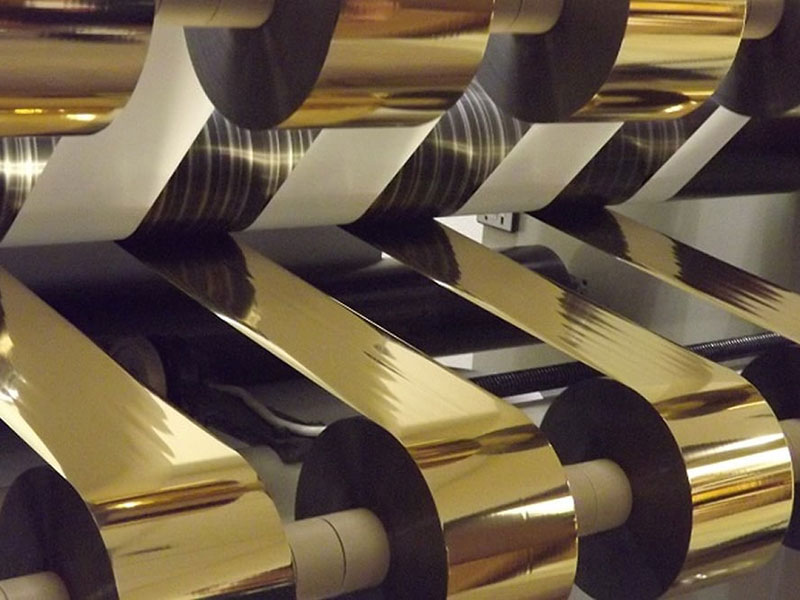
3. Three tips to avoid pitfalls when choosing a model
Tip 1: Focus on "precision + tension"—don't be fooled by the spec table
Many buyers immediately compete on "maximum speed" and "maximum width," which is the first pitfall. The correct approach is: take your hardest-to-cut hot stamping paper sample to test the machine, focusing on the stability of accuracy after running continuously for one hour, rather than just looking at the impressive data at startup.
Tip 2: See clearly the "knife + rewinding"—details determine success or failure
During the test run, focus on checking whether the winding end face is neat and whether there are burrs on the cut edges. Ask the manufacturer about blade replacement intervals and the time required for each tool change—these directly affect long-term operating costs.
Tip 3: Calculate the "total bill" rather than the "purchase price"; after-sales service is more valuable than quotation
The contract terms clearly specify performance guarantee indicators (accuracy, speed, acceptance standards), with the balance retained until payment is made after acceptance. Don't trust "verbal promises" written in black and white into contracts. Suppliers should provide on-site prototyping, technical training, and timely spare parts supply services—downtime is the biggest cost.
4. Selection Decision Process
1. Internal Evaluation: Clarify material types (hot stamping paper thickness, width range), daily capacity, and budget
2. Market research: Collect information on brands and models that fit your budget, and understand the differences between international and domestic brands
3. On-site sampling: Bring your own hot stamping samples (especially the most complex and difficult parts) to the supplier's factory for actual testing; this is the most critical step
4. Comprehensive comparison: Multi-dimensional evaluation of accuracy, speed, efficiency, service, and total cost of ownership (TCO).
5. Contract locking: Write performance indicators and acceptance standards into the contract, and keep the final payment
Summary
When choosing a hot stamping paper slitting machine, the core boils down to three key points: precision and tension are hard metrics, and you'll see the real results after testing; Cutting tools and winding are details, and routine faults often come from these details; Total cost and after-sales service are big accounts; buying a cheap phone may cost you more money.
The best equipment isn't the most expensive, but the one that consistently delivers the quality you want and can be quickly fixed if problems arise.
 English
 Deutsch
 Français
 Español
 Português
 日本語
日本語 русский
 한국어
한국어 عربي
عربي ภาษาไทย
 Tiếng Việt
 Italiano
 Cold Foil Slitter
 Card Print Ribbon Rewinder
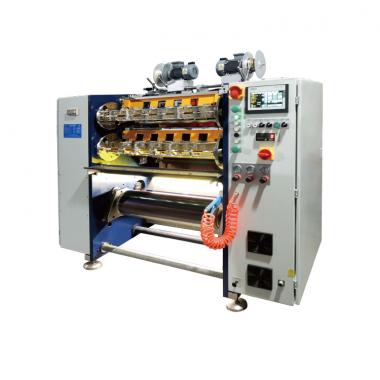 Card Print Ribbon Slitter
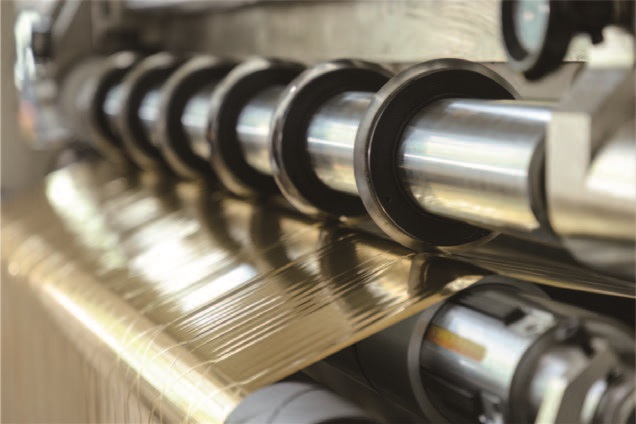 Hot Stamping Foil Slitting Machine
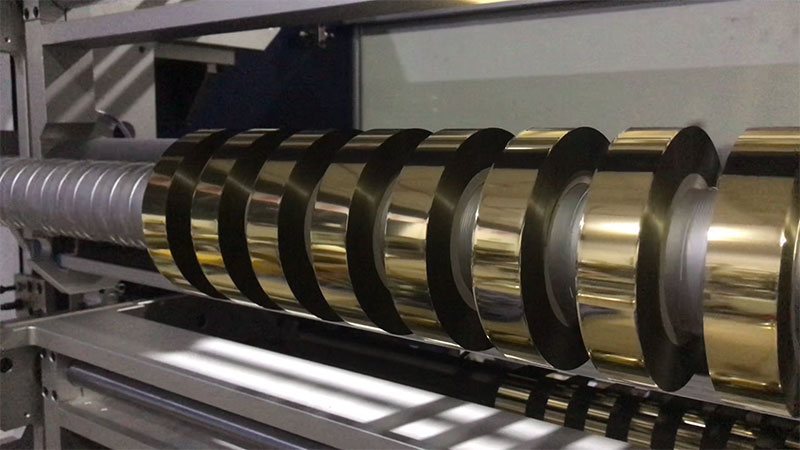 Digital Enhancement Foil Slitter
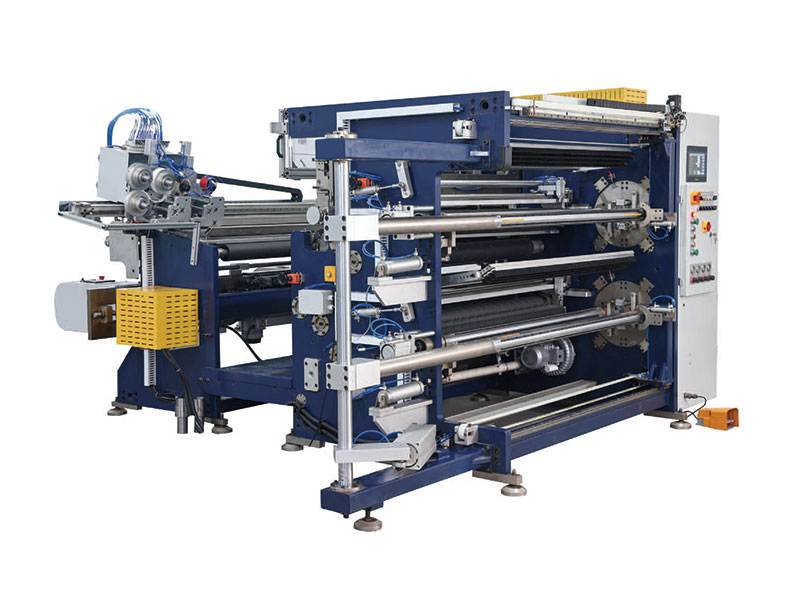 Hot Stamping Foil Slitter RSDS7H 1350 PLUS
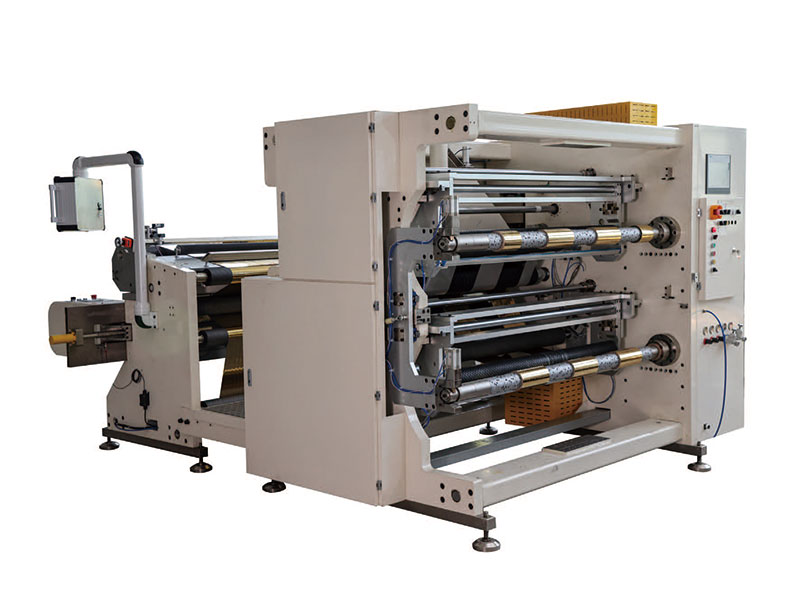 Hot Stamping Foil Slitter (RSDS7H) 1350