Selecting the right hot stamping foil slitting machine is one of the most consequential equipment decisions your factory will make. A slitter that matches your material profile and production rhythm transforms wide master rolls into flawless finished strips. The wrong one generates burrs, scratches, and constant downtime—wasting expensive foil and eroding your margins.
This guide breaks down the decision into four practical dimensions: material compatibility, cutting method, tension control, and automation level.
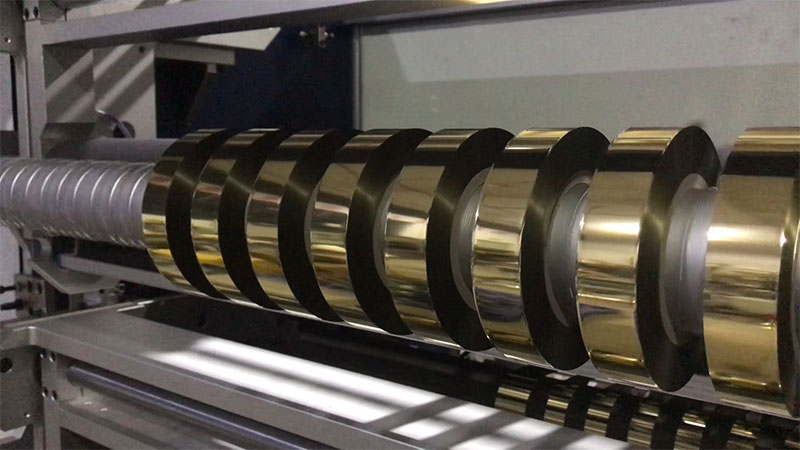
Start With Your Material, Not the Machine Spec Sheet
Hot stamping foil is not a single product. Its structure—typically a PET base film carrying release, color, and adhesive layers—makes it far more sensitive to handling than paper or standard films. The specific foil type you process most often should dictate your equipment priorities.
Standard colored foil is the most forgiving. It has moderate resistance to tension variation and works well with standard-precision equipment using circular blade slitting and basic static elimination.
Laser and holographic foils present the greatest challenge. Their surface carries a fine diffraction microstructure that is easily scratched by any contact. For these materials, air knife (non-contact) slitting becomes almost essential, and every guide roller in the material path should be mirror-polished to prevent microscopic abrasion.
Thin gauge foil (12–19μm) demands superior tension control. The base film stretches permanently if tension runs even slightly high, causing registration errors downstream. If tension runs low, air gets trapped between wound layers, leading to telescoping and interlayer slippage.
Adhesive-heavy or plastic foils tend to gum up cutting edges. Teflon-coated blades and mirror-finish rollers help prevent sticking, while a carefully tuned micro-tension system avoids the stretching that activates the adhesive prematurely.
Before comparing machine models, document your actual material profile: typical thickness range, base film type, surface sensitivity, and the narrowest width you need to produce. Bring this to every supplier demonstration.
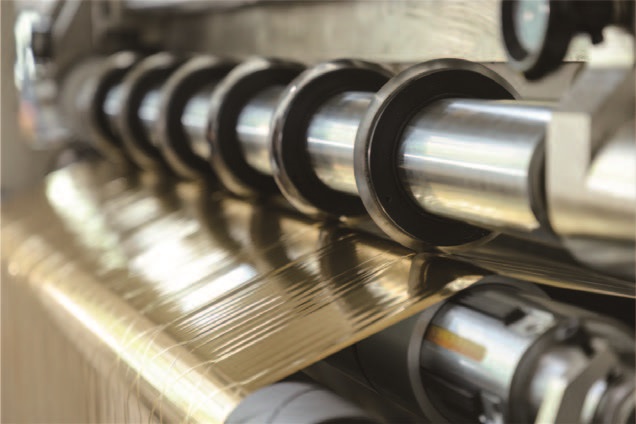
Cutting Method: The Choice That Determines Edge Quality
The cutting mechanism directly controls burr formation, dust generation, and blade longevity. Three main approaches exist, each suited to different production profiles.
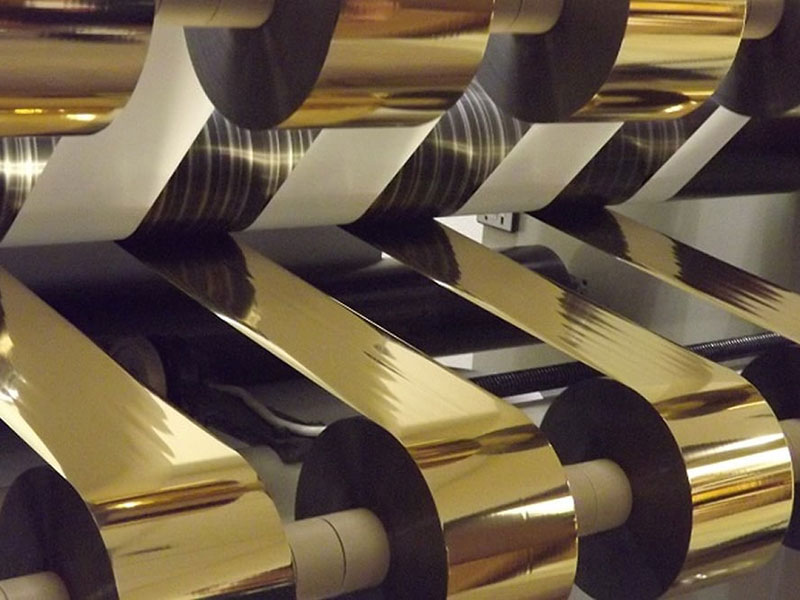
Shear cutting (circular blades) remains the mainstream choice for hot stamping foil. Upper and lower disc blades act like scissors, producing clean edges with minimal dust. Blade life is relatively long, and the method handles a wide range of thicknesses. The trade-off is higher mechanical complexity—cutter shaft rigidity becomes critical, especially for widths above 800mm where mid-shaft deflection can cause incomplete cuts.
Razor blade slitting is the economical option. It suits narrow-width applications and lower-volume production. However, razor blades generate more dust and burrs on thicker foils, and blade replacement is frequent. For factories producing standard packaging foil in modest volumes, it remains a viable cost-conscious choice.
Air knife (non-contact) slitting uses high-pressure air to separate the material. It eliminates blade-induced scratches entirely, making it the only safe option for laser and holographic foils with delicate surface structures. The drawbacks are higher initial cost and suitability primarily for thinner gauges.
For factories running a mix of standard and specialty foils, a shear-cut machine with quick-change blade assemblies offers the best balance of versatility and edge quality.
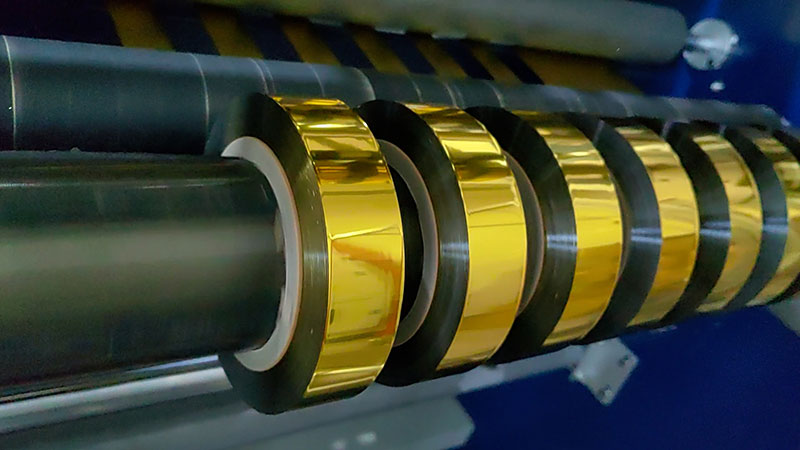
Tension Control: The Invisible Factor That Makes or Breaks Quality
If one technical specification separates adequate slitters from excellent ones, it is tension control. Hot stamping foil is unforgiving—slight tension errors cause stretching, wrinkling, or telescoping that only become apparent downstream at the hot stamping press.
Magnetic powder systems remain common on entry-level and medium-speed machines (below 100 m/min). They are simple and cost-effective but respond slowly to diameter changes. Once production speed exceeds roughly 200 m/min, open-loop tension control cannot keep pace with the rapidly changing unwind and rewind diameters.
Closed-loop servo tension control is the standard for high-speed and thin-material applications. High-precision sensors and floating dancer rollers provide real-time feedback, maintaining tension within ±1% even during acceleration and deceleration. For 12μm ultra-thin PET, this level of control is not a luxury—it is the difference between sellable foil and scrap.
Taper tension control is equally important on the winding end. As the finished roll grows in diameter, winding tension must decrease according to a set curve. Without taper tension, the inner layers get crushed, causing “chrysanthemum core” defects or interlayer slippage during narrow slitting.
When evaluating machines, ask for tension control accuracy specifications and request a demonstration using your thinnest, most tension-sensitive material.
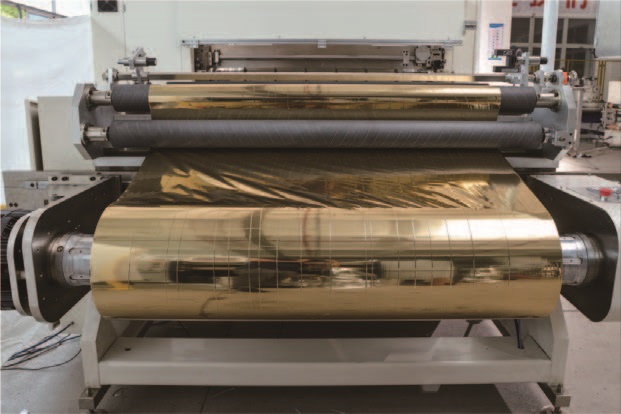
Automation: Matching Machine Intelligence to Your Order Profile
The economics of hot stamping foil production have shifted. Order specifications have proliferated from a few standard widths to dozens of variations, while batch sizes have dropped from tens of thousands of meters to hundreds. Changeover speed now rivals slitting precision as a profitability driver.
Automatic tool positioning addresses this directly. Instead of manually repositioning each blade holder—a process that takes 15 minutes or more and invites human error—the operator inputs the target width on the HMI, and servo-driven holders move to their programmed positions. Changeover times drop to under three minutes, and dimensional consistency improves.
Production recipe management allows storage and instant recall of parameters for recurring jobs: tension profiles, speed settings, blade pressure. This reduces setup errors and makes shift changes seamless.
Dust and static elimination deserves equal attention. Slitting friction generates microscopic aluminum powder and PET dust. If this dust adheres to the foil surface, it creates pit marks or gold spots during hot stamping. An effective dust extraction system near the cutting zone and anti-static brushes along the material path protect surface quality.
For factories with digital manufacturing systems, look for machines supporting OPC UA or MQTT protocols. This enables production data to flow into MES or ERP platforms for real-time monitoring and predictive maintenance.
A Practical Evaluation Framework
When you request quotations, structure your comparison around these questions:
Material trial: Can the supplier demonstrate cutting your exact foil type—same thickness, same surface treatment, same narrowest width? Use a magnifying glass on the slit edge and measure width deviation with a caliper at multiple points across the roll.
Tension verification: Ask for tension accuracy specifications and evidence of closed-loop control. For high-speed or thin-material applications, confirm taper tension capability.
Changeover time: Time how long a width change takes on the demonstration machine. If your order mix is high-variety, automatic tool positioning should be a baseline requirement, not an upgrade.
Dust management: Inspect the dust extraction design. Is the extraction point positioned at the cutting zone? Does the machine include static elimination on both unwind and rewind sides?
Service and spares: Blade availability, regrinding services, and technical support response time affect total cost of ownership as much as purchase price. Ask for the recommended blade regrinding interval and whether the supplier offers replacement programs.
The right hot stamping foil slitting machine is the one that matches your material reality, order profile, and quality standards—not the one with the highest advertised speed or the lowest price. A machine that cuts your thinnest foil cleanly at 200 m/min with three-minute changeovers will outperform a 500 m/min machine that generates scrap on every specialty order.
 English
 Deutsch
 Français
 Español
 Português
 日本語
日本語 русский
 한국어
한국어 عربي
عربي ภาษาไทย
 Tiếng Việt
 Italiano
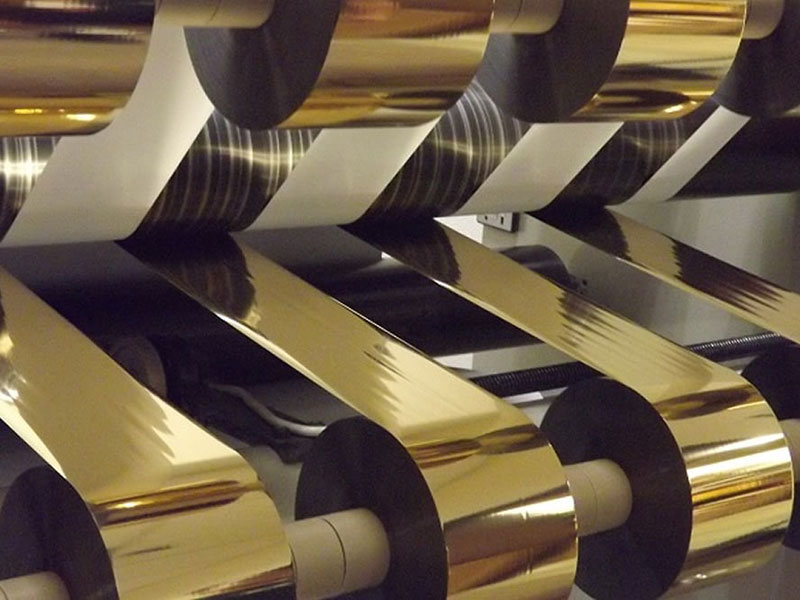 Cold Foil Slitter
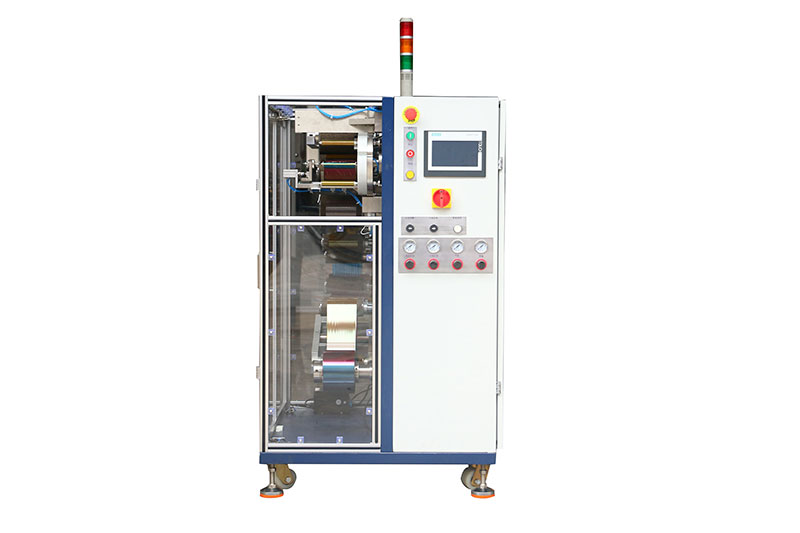 Card Print Ribbon Rewinder
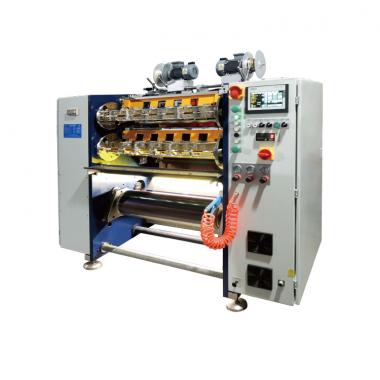 Card Print Ribbon Slitter
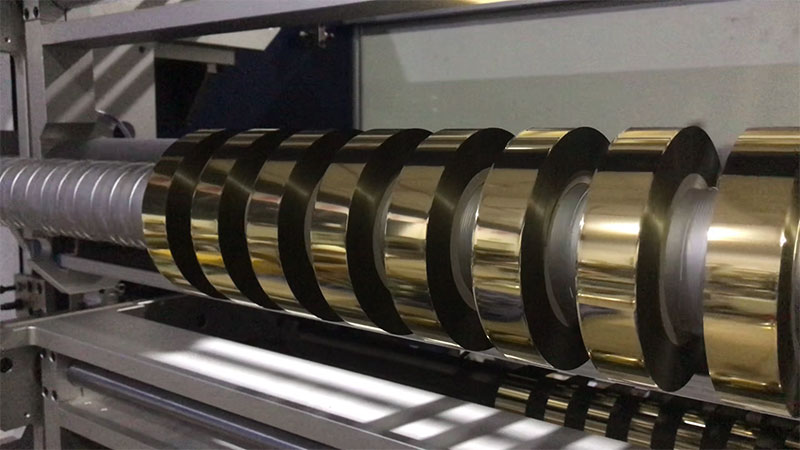
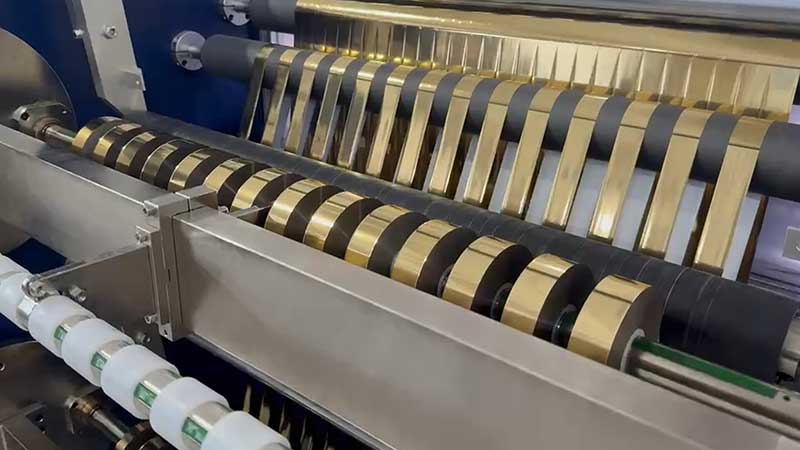
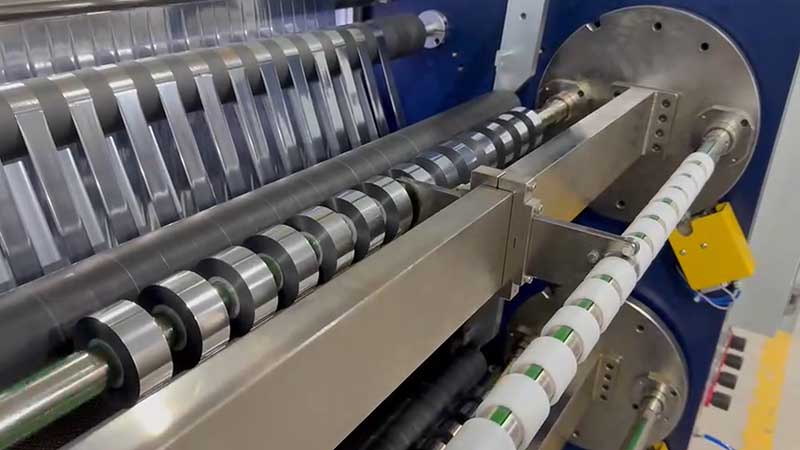
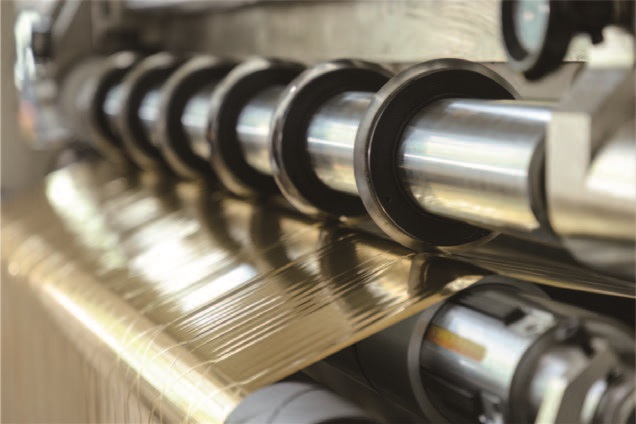 Hot Stamping Foil Slitting Machine
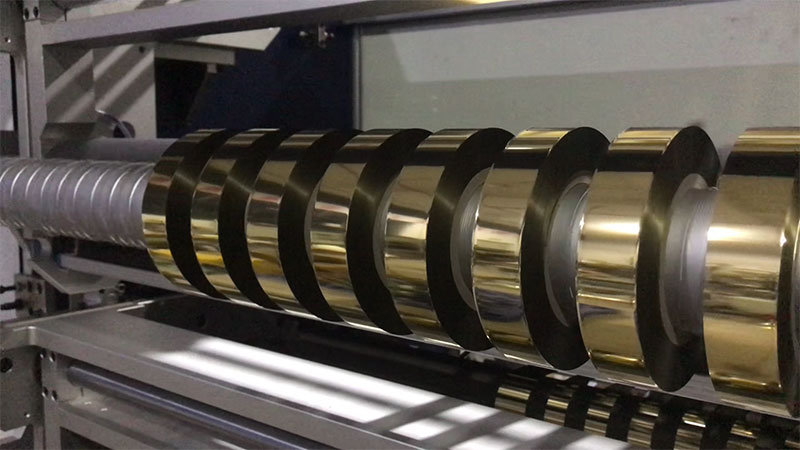 Holographic Foil Slitter
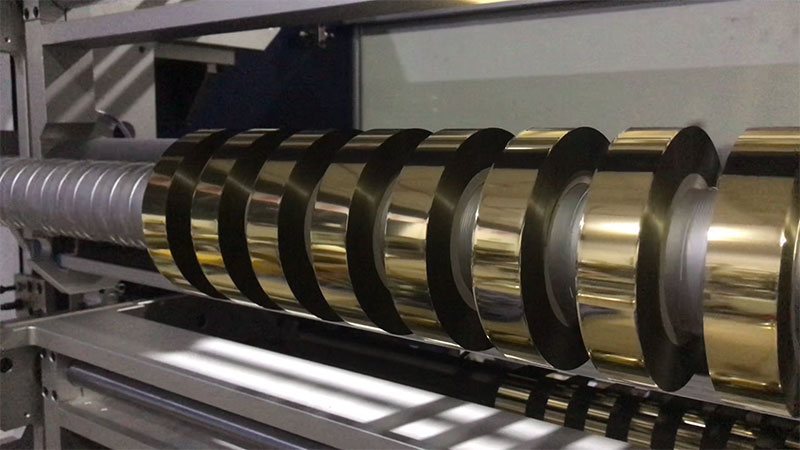 Digital Enhancement Foil Slitter
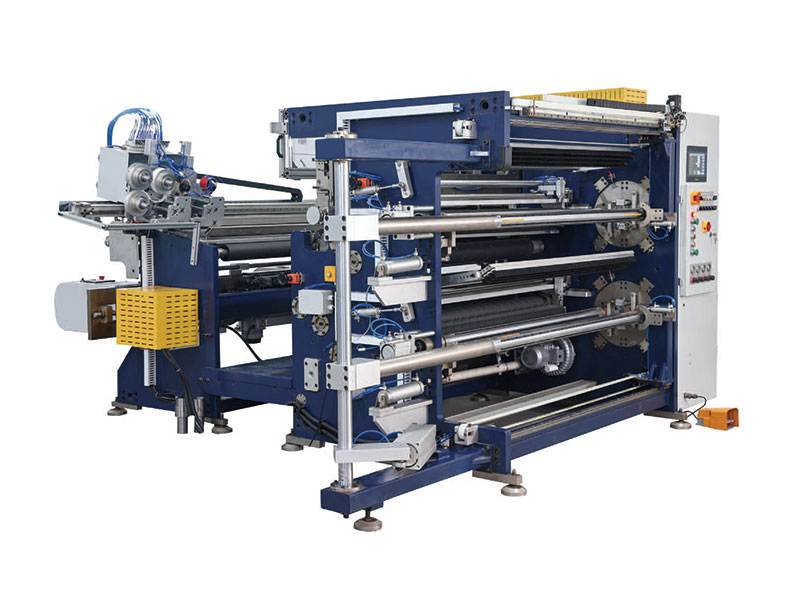 Hot Stamping Foil Slitter RSDS7H 1350 PLUS
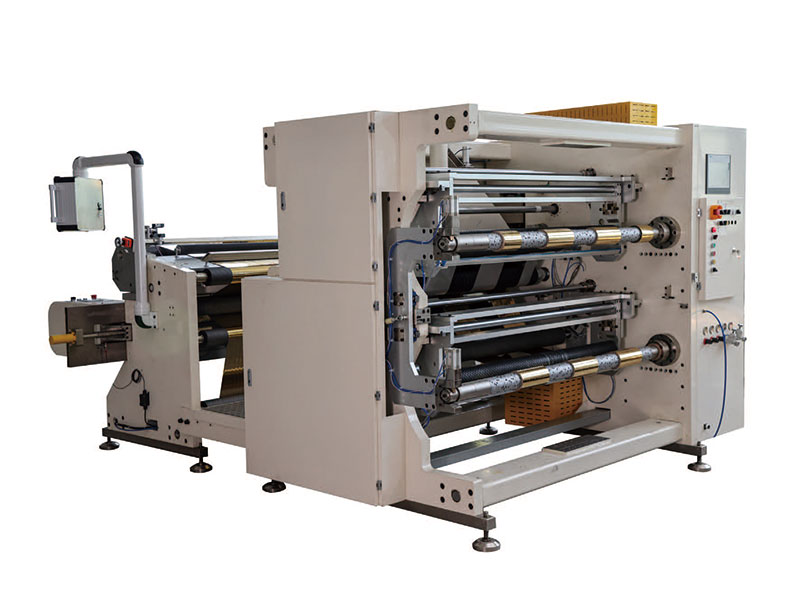 Hot Stamping Foil Slitter (RSDS7H) 1350