1. Introduction: Slitting—The "Final Step" in Ribbon Production
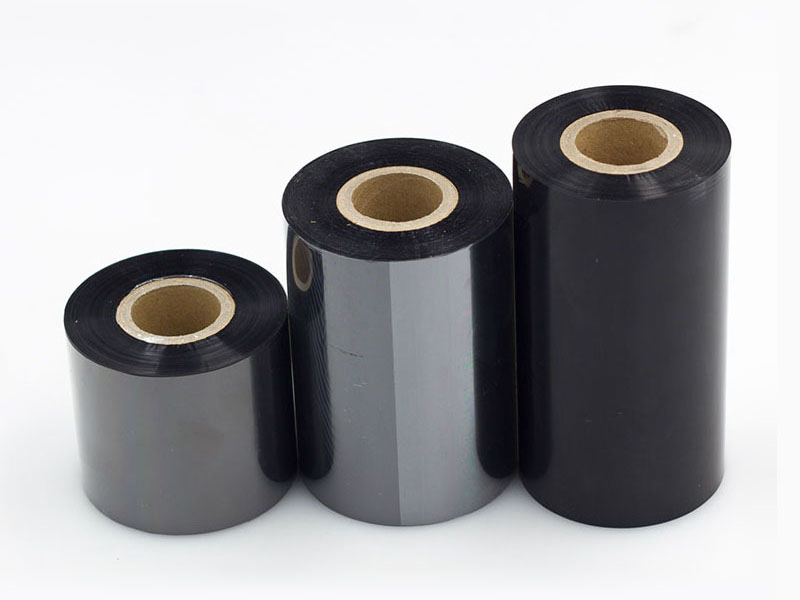
Thermal transfer ribbons, as indispensable consumables in fields such as barcode printing, label identification, and invoice output, have quality that directly affects print clarity, print head lifespan, and the reliability of the entire automatic identification system. What is less known is that a roll of ribbon master roll, nearly a kilometer wide, must undergo a process that combines precision and ingenuity to become a small roll suitable for different printer specifications—slitting.
Slitting is not simply "cutting." It is the process of cutting the coated large roll (main roll) into specific widths and lengths according to customer order requirements. Although this step is considered auxiliary production, its technical content and quality control often determine whether the finished ribbon can run smoothly in the printer. As industry experts say, slitting quality "determines the proper function of ribbon rolls inside Thermal transfer printers."
2. Before Segmentation: The Birth of the Main Paper and the Segmentation Logic
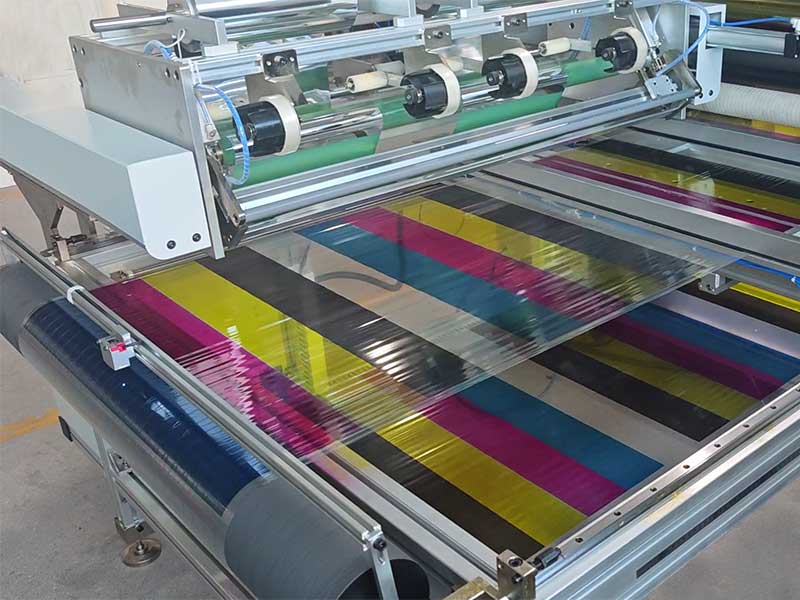
To understand slicing, one must first trace back to its predecessor—the main scroll. The master roll is a large roll formed by uniformly coating Thermal transfer ink onto a polyester film (PET) substrate on a precision coating production line, commonly with a width of 910mm or even wider. The quality of the main roll (coating uniformity, thickness consistency) is the foundation of slitting yield.
The logic behind slitting production is quite special: it is essentially customized production done to order. Since different printers have different ribbon specifications (ranging from 5mm to 100mm in width and length), slitting factories need to "slit" the master roll according to order requirements, planning the cutting scheme based on the roll width to maximize material utilization. For example, a 910mm wide master roll can theoretically be cut into multiple rolls of 110mm finished products at the same time, which is the origin of "multiple orders."
3. Equipment and Principle: Precision Coordination of the Slitting Machine
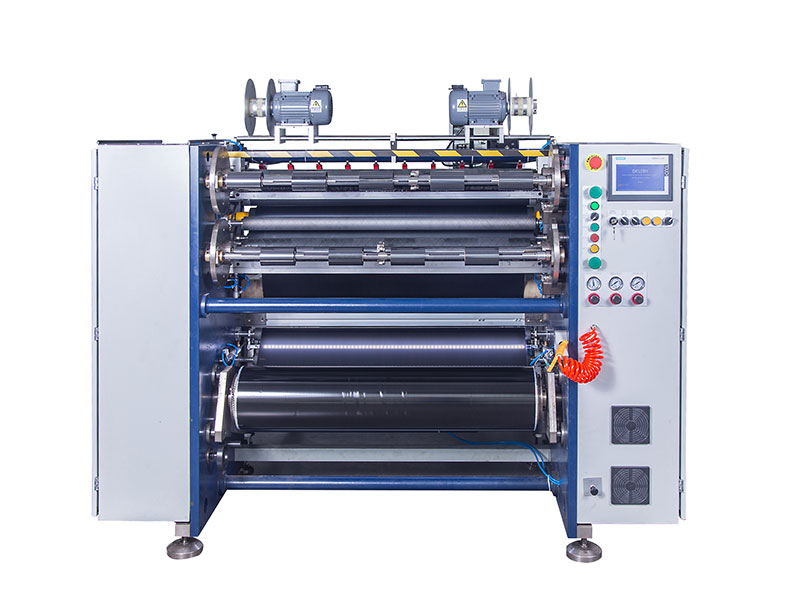
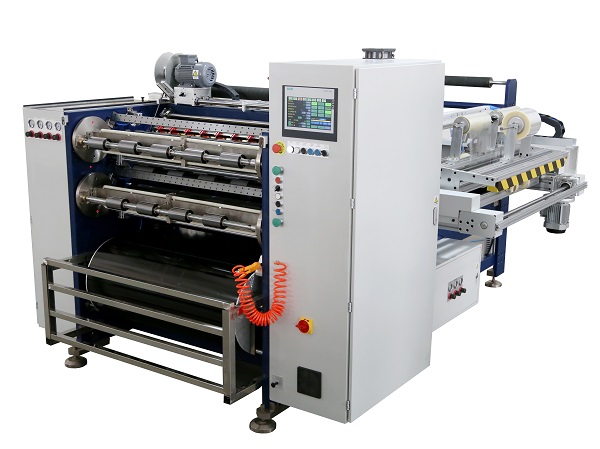
The ribbon slitting machine is a precision device that integrates winding, slitting, winding, and control. Its core structure includes:
• Unwinding and correction system: Smooth unwinding of the master roll, with photoelectric or CCD sensors monitoring the ribbon edge position in real time, dynamically adjusting guide rollers to ensure a straight slitting path, with deviation controlled within ±0.1mm.
• Slitting unit: Circular blade slitting is currently mainstream, using high-speed rotary cutting with cemented carbide or ceramic blades, suitable for most ribbons. For hard and brittle materials such as resin-based materials, flat blade slitting (razor blade-type suspended cutting) may be used to achieve instant cutting and avoid "edge chipping." Adjustments to blade angle, sharpness, and clearance directly determine whether the cut is smooth and free of burrs.
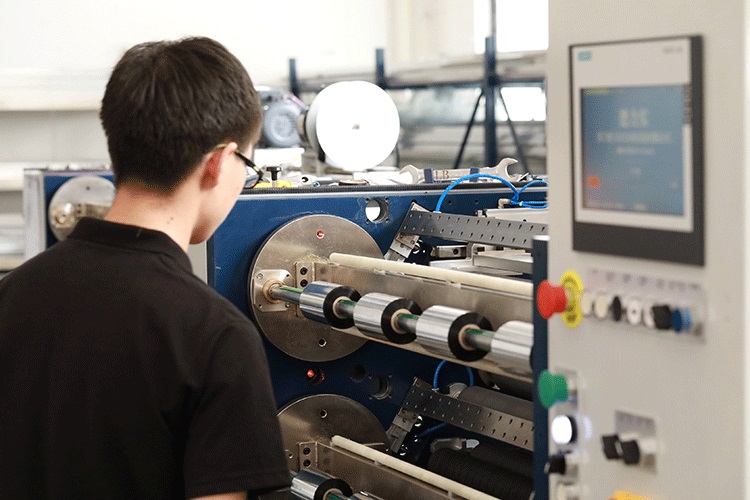
• Winding and tension system: Multiple narrow strips after slitting are each wound onto the small roll core. Tension control is the soul of the entire slit. The carbon ribbon substrate is extremely thin (4.5-10 microns), and excessive tension leads to stretching deformation and excessive tightening to form a "tower shape"; If the tension is too low, the roll becomes loose and wrinkled. High-end equipment uses multi-stage closed-loop tension control, compressing the fluctuation range to within ±0.5N through servo motors and sensors in coordination.
4. Challenges of material differentiation in slitting
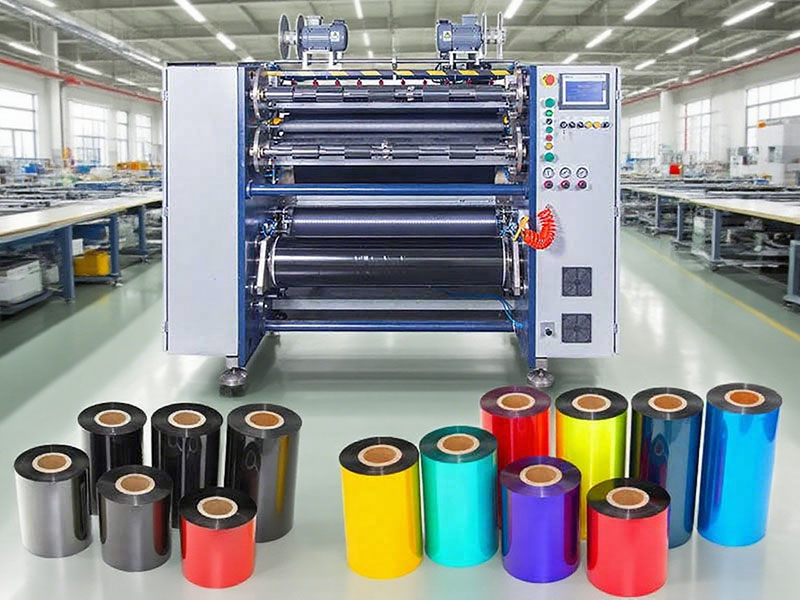
Ribbon ribbons are mainly divided by coating material into wax-based, mixed-based, and resin-based, with significant differences in physical properties and varying slitting challenges:
• Wax-based ribbon: The softest coating with the lowest melting point. Friction and heat generated during slitting can easily cause edge "wax overflow" or interlayer adhesion. The countermeasure is to use extremely sharp blades combined with effective cooling and dust removal systems.
• Hybrid-based ribbons: Balancing adhesion and wear resistance, most widely used. Slitting mainly faces issues of "burrs" and "powder shedding," requiring extremely high tension stability.
• Resin-based ribbon: The hardest coating and the strongest weather resistance. The texture is hard and brittle; improper cutting can easily cause microcracks or "chipping," requiring instant cutting and strict control of impact force.
5. The three major "lifelines" of slitting quality: tension, uniformity, and cleanliness
The quality of the finished cut product is ultimately reflected in three dimensions:
1. The art of tension control
Whether the winding end face is neat or not is almost the "face" of the slitting quality. Inconsistent recoil is a common and persistent problem in the industry, often due to the disruption of the balance among tension, mechanics, and correction. For example, improper tension settings or unreasonable taper curves can form "daisy core" displacement layers; The winding shaft is not parallel to the guide roller, and the ribbon protrudes on one side due to lateral force. To solve such problems, a system inspection is often required: cleaning the sensor, adjusting tension parameters (decreasing by 5%-10% each time), and checking mechanical parallelism and core fit clearance.
2. Strict requirements for cleanliness
Fine toner produced during the slitting process can contaminate the blade edge and material surface, affecting print quality. Modern slitting machines are commonly equipped with ion air rods + vacuum adsorption combined dust removal, and even require operation in cleanroom environments.
3. Hard indicator of roll neatness
The neatness of the finished winding end face is usually required to be controlled within 0.2mm, relying on constant linear speed combined with variable torque winding algorithms and high-precision clamping of the air expansion shaft against the roll core.
6. Intelligence and Future Trends
Ribbon slitting technology is evolving from pure mechanical processing to collaborative innovation involving "materials-equipment-algorithms." Current development trends include:
• Integration and automation: Integrating slitting, online inspection, and packaging to reduce handling losses; some cases show production efficiency can increase by 35% and material loss by 22%.
• Visual quality inspection and digital twin: The online CCD vision system detects edge defects at 150 frames per second and automatically sorts defective products; Digital twin technology debugged slitting parameters in a virtual environment to reduce losses during physical trial runs.
• Ultra-narrow and special slitting: Developing ultra-narrow (<1mm) and quantum dot coating special slitting technologies to meet emerging demands such as flexible electronics and high-resolution color Thermal transfer.
Conclusion
Thermal transfer ribbon slitting is a craft that masters tension, precision, and cleanliness on a microscopic scale. It relies not only on high-precision hardware but also tests the operator's understanding of material properties and the intelligence of system parameter tuning. With the penetration of intelligent technology, this "auxiliary process" is becoming a key link in improving ribbon quality and building technical barriers for enterprises.
 English
 Deutsch
 Français
 Español
 Português
 日本語
日本語 русский
 한국어
한국어 عربي
عربي ภาษาไทย
 Tiếng Việt
 Italiano


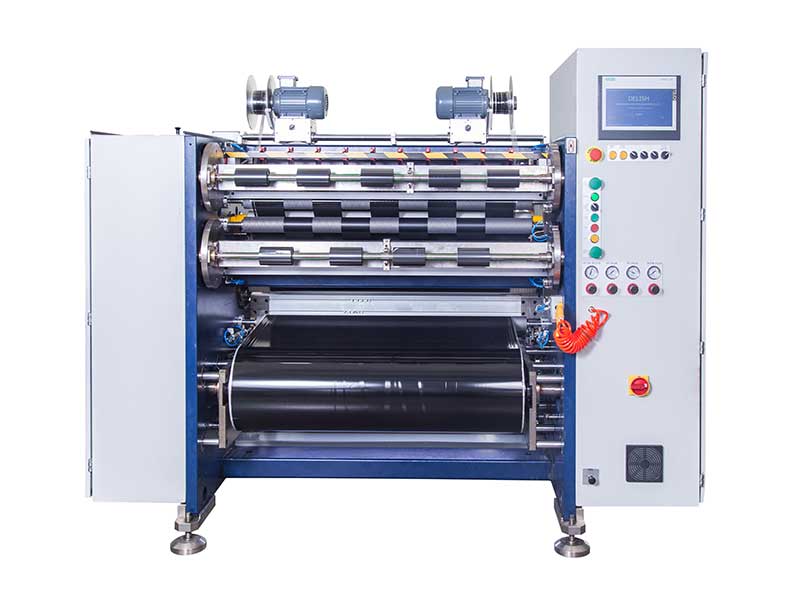 Barcode Ribbon Slitting Machine
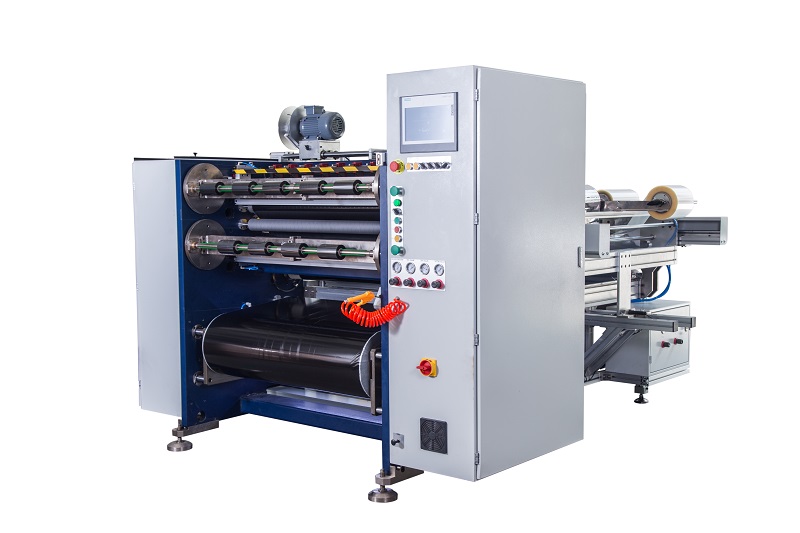 Semi Automatic Thermal Transfer Ribbon Slitter RSDS5 PLUS
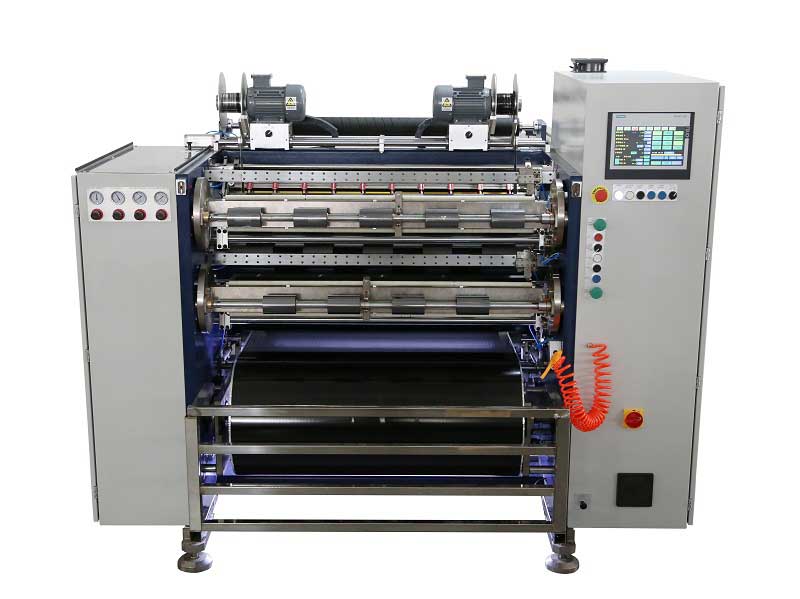 Automatic Thermal Transfer Ribbon Slitter RSDS8 H PLUS
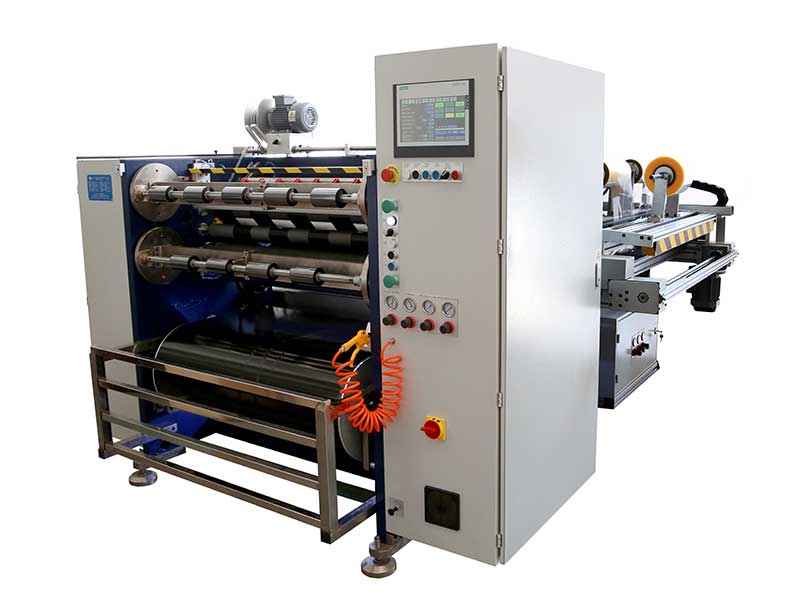 Automatic Thermal Transfer Ribbon Slitter RSDS6 PLUS
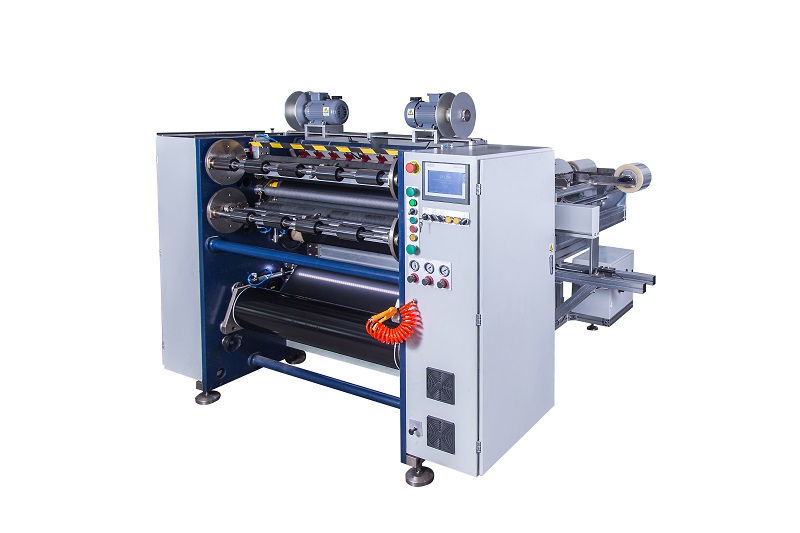 Semi Automatic Thermal Transfer Ribbon Slitter RSDS1 PLUS
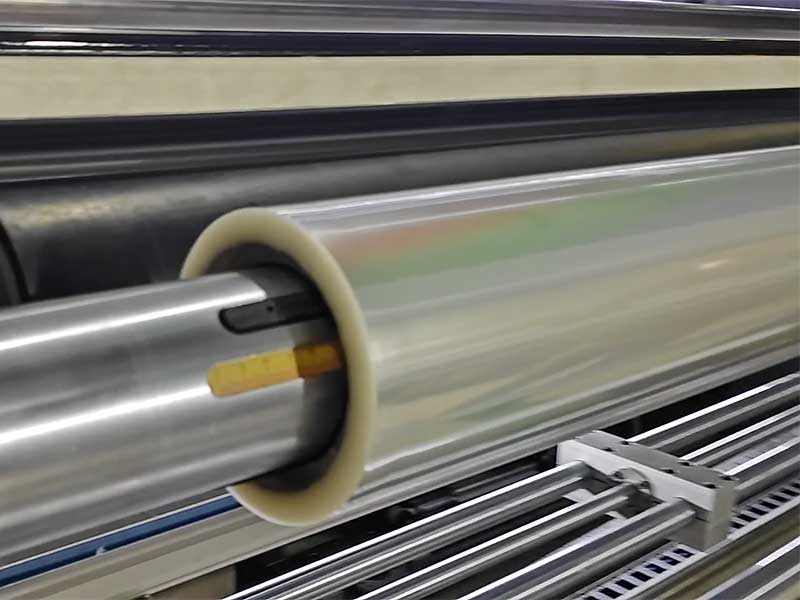 Solar Film Slitter
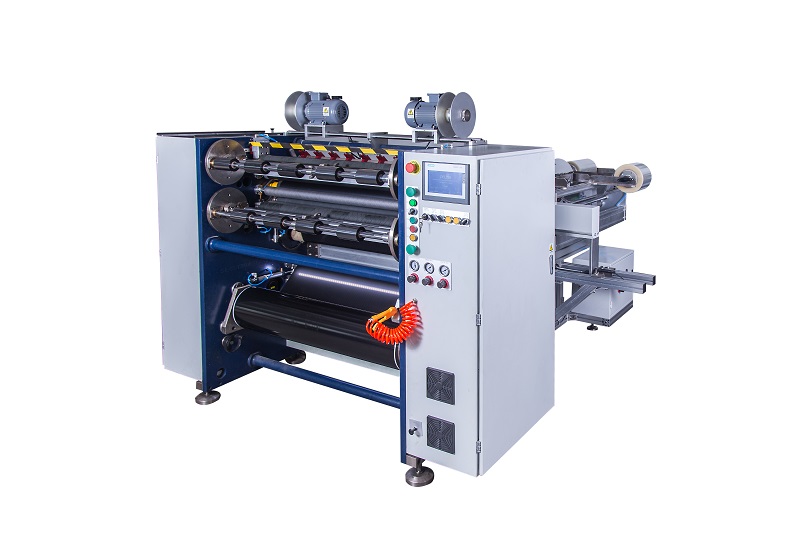 Semi Automatic Thermal Transfer Ribbon Slitter RSDS2 PLUS
 Automatic Thermal Transfer Ribbon Slitter RSDS8 PLUS