In the ribbon slitting process, improper handling of material joints is one of the main causes of belt breakage and shutdown. According to statistics, about 60% of unplanned shutdowns of ribbon slitting machines account for ribbon breakage, and "loose joints" are clearly listed as one of the three main possible causes of belt breakage. For ribbon substrates only 4.5-6 microns thick, even tiny defects at joints can be magnified by high-speed running tension, becoming the starting point for tape breakage.
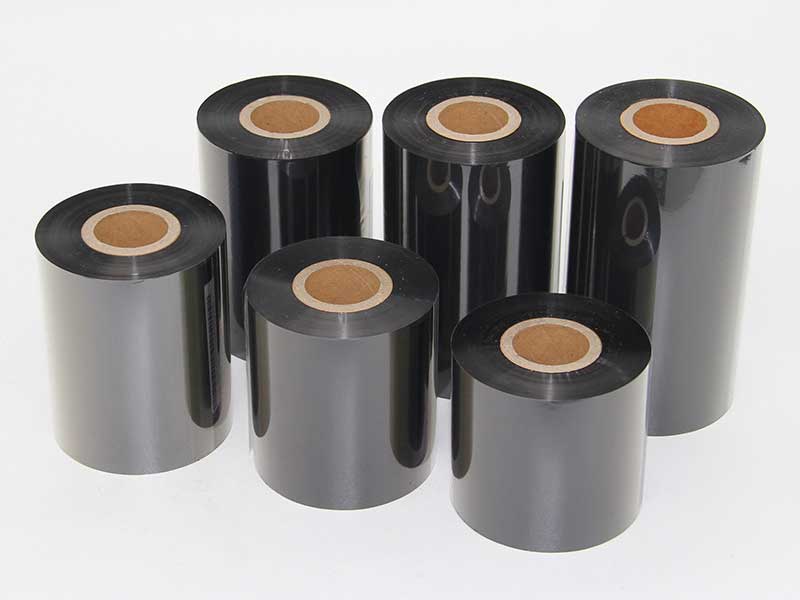
1. Why joints become the "weak link" in broken tape
During ribbon slitting, splicing between the main roll or between the core and the feed head is unavoidable. However, joints disrupt the continuity of the material, creating abrupt points of mechanical properties. The root causes of the problem are concentrated in three aspects:
• Insufficient splicing strength: Improper selection of joint tape or non-standard bonding processes result in tensile strength at joints being far lower than the substrate itself. When the slitting tension fluctuates, the joint is the first to break under the brunt.
• Joint geometric defects: Overlap methods cause sudden thickness increases at joints, or creases caused by incomplete alignment at both ends during butting. These defects create friction resistance concentration points at the roller pass and tool slots, inducing tearing.
• Unreasonable tape passage path: When joints pass through sharp angles or narrow guide grooves, excessive friction in the tape path makes the joint more likely to be "snapped."
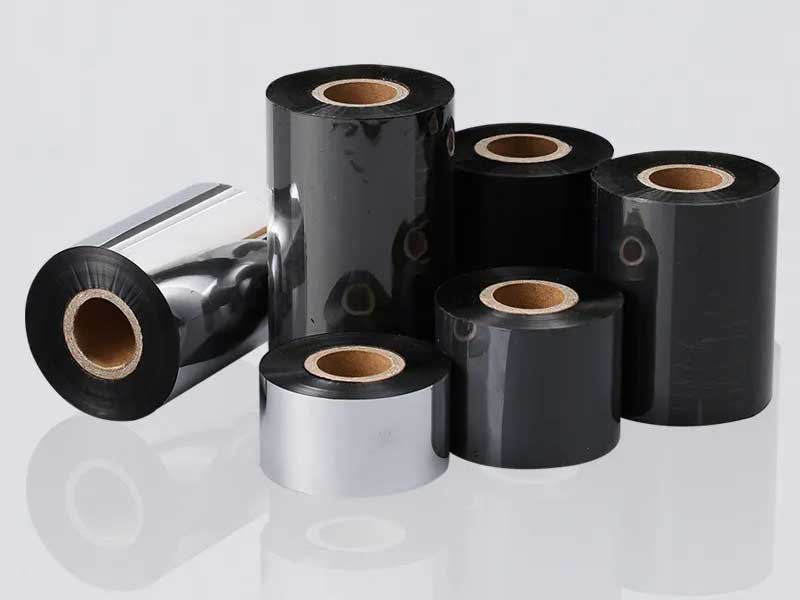
2. Standardized Joint Handling Operations
To avoid belt breakage at joints, it is first necessary to establish standardized joint handling procedures.
1. Selection of splicing method: docking is preferable to lap joint
For thin composites like carbon ribbons, it is recommended to use butt joints rather than overlap joints. Lap joints cause the joint thickness to double, which can easily cause extra scrapes with the roller pass and tool grooves during operation. For butt joint, the ribbons at both ends must be precisely aligned without wrinkles, then fixed to the back with special tape. The splicing tape width should be as narrow as possible, recommended not exceeding 5mm to reduce interference with slitting tension.
2. Tape selection and adhesion process
Special low-substrate tape tape must be used, not ordinary packing tape. The peel strength and temperature resistance of ordinary tape do not meet the requirements for slitting conditions, and are prone to delamination or displacement under tension. When applying, ensure the tape fits fully against the back of the ribbon, with no bubbles or skewing.
3. Joint marking and transition section management
Prominent color label stickers should be affixed to the joints as markings, making it easy for operators to identify and skip inspections in subsequent processes. At the same time, a reasonable "order change transition length" must be set on the slitting machine control system—usually 5 to 15 meters, which is an unstable area before and after the joint that cannot be used for finished products. It is recommended to determine the minimum stable transition length for the machine through actual testing to avoid unnecessary material waste caused by using default large values.
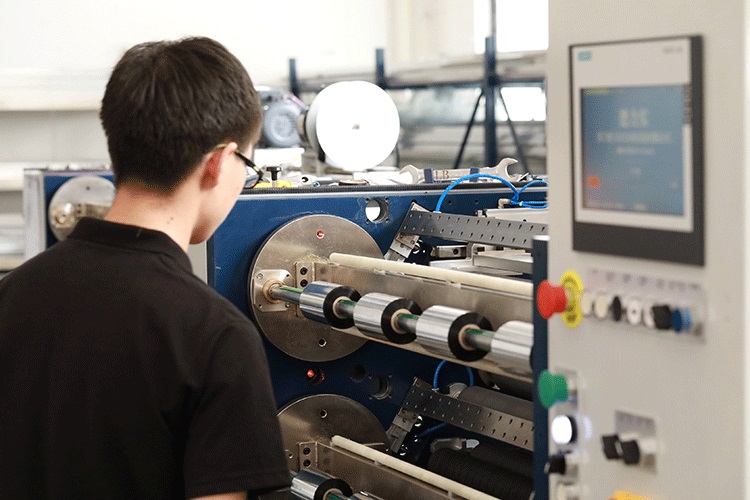
3. Collaborative Tension Control
No matter how high the joint strength is, if the tension is not set properly, the belt may still break at the joint. Tension is the decisive factor for whether the joint can safely pass through the slitting zone.
1. Segmental tension transitions during order changes
After switching sheets, the diameter of the mother roll changes abruptly from the small diameter of the previous roll to the large diameter of the new sheet, requiring rematching of tension. It is recommended to use a "low starting tension + gradual rise curve" for the first 50 meters after the order change, and then raise the tension to normal once the membrane surface stabilizes. This prevents the new joint from suffering excessive initial impact as soon as it enters the operating area.
2. Tension reference for ribbons of different specifications
Ribbons of different widths have varying sensitivity to tension. The general reference range is: ribbon tension for widths below 25mm is set at 3-5N, and for widths of 50mm, 6-10N. When slitting ultra-narrow strips (below 10mm), tension fluctuations are especially sensitive and require three-zone independent tension closed-loop control to keep tension fluctuations within ±0.5N.
3. Tension adjustment during the small diameter tailstock stage
When the slitting coil approaches the core and the diameter is below the set value (e.g., 50mm), the tension setpoint should be actively lowered (for example, from 100N at full coil to 30N), and a taper tension curve should be activated so that tension decreases linearly as the coil diameter decreases. If full tension is maintained during this stage, the inner ring ribbon is easily crushed or pulled off, and if the joint is located at this point, the risk increases.
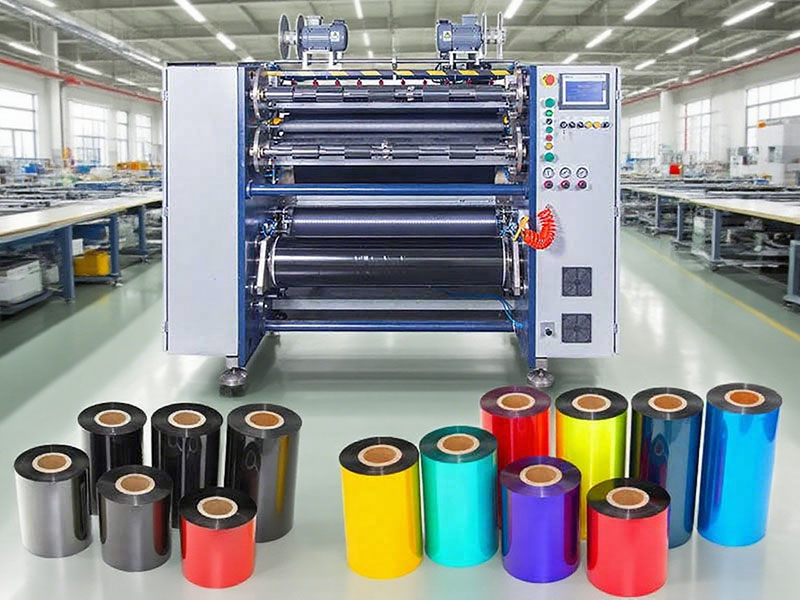
4. Ensuring the passage of equipment status to the joints
The joint must pass through the entire slitting machine's path, and the physical condition of the roller and slot is critical.
• Roller surface inspection: All roller surfaces must remain smooth, free of burrs and adhesive foreign matter. Operators can touch the roller surface by hand; if burrs are found, they should be sanded with fine sandpaper, and adhesive residues should be wiped with alcohol.
• Strap Path Optimization: Reconfirm the strap path against the equipment strap diagram, avoid sharp angle paths, and reduce excessive friction at joints.
• Tool precision: When slitting extremely narrow strips, the blade's radial runout must be controlled within 0.005mm, and the parallelism between the tool holder and the bottom roller should be adjusted at the micron level to avoid tearing edges due to excessive local force when the joint passes through.
Conclusion
The issue of joint strip breakage in ribbon slitting essentially involves a contest among four key elements: material defects, operating standards, tension matching, and equipment condition. By standardizing splicing processes, refining tension control, and strengthening equipment maintenance, companies can fully reduce joint breakage rates to controllable ranges, reducing efficiency losses and material waste caused by unplanned downtime. Every reliable handling of the joint is a step toward continuous production.
 English
 Deutsch
 Français
 Español
 Português
 日本語
日本語 русский
 한국어
한국어 عربي
عربي ภาษาไทย
 Tiếng Việt
 Italiano

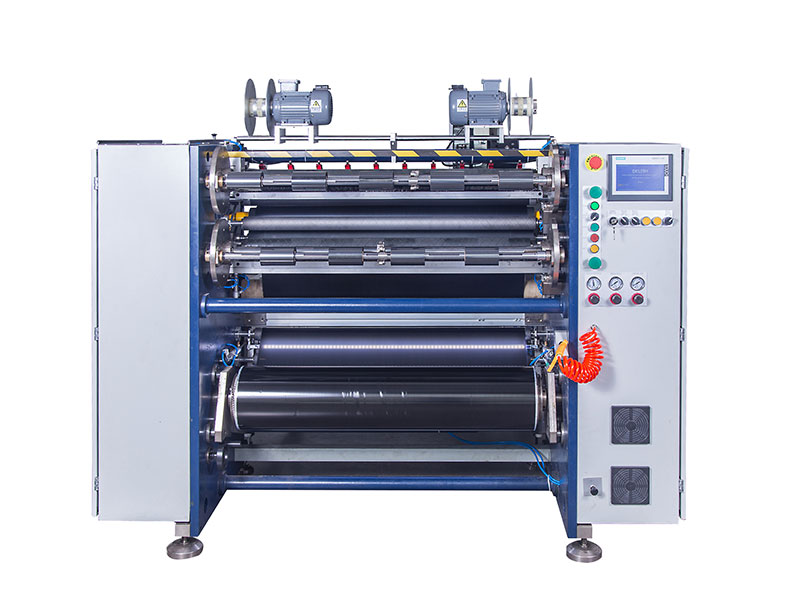
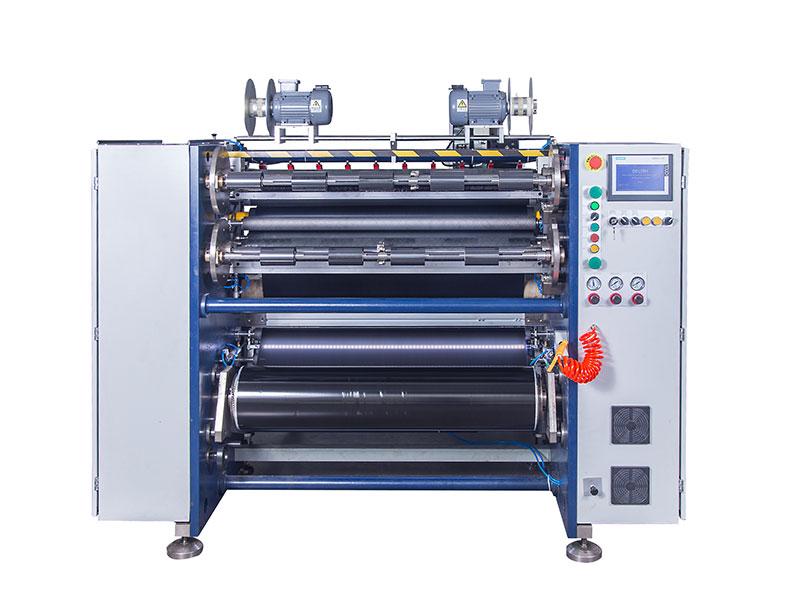 Ribbon Slitting Machine
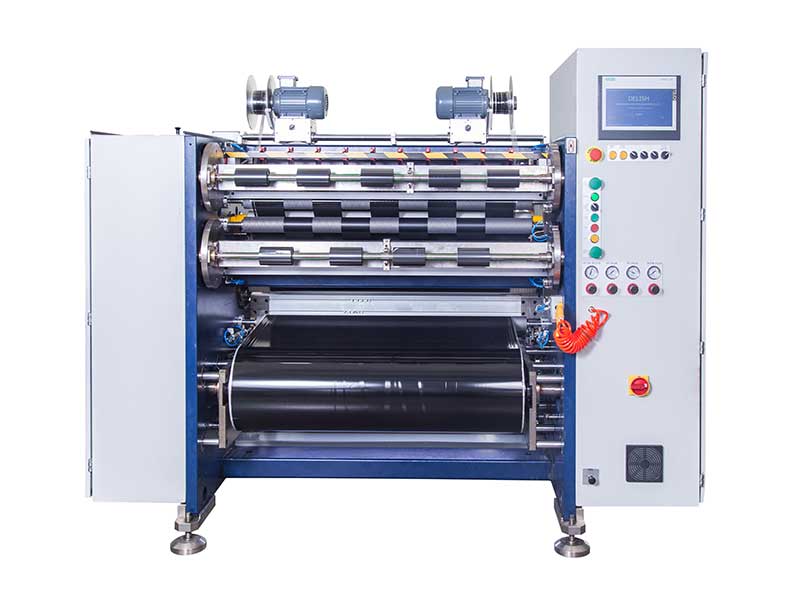 Barcode Ribbon Slitting Machine
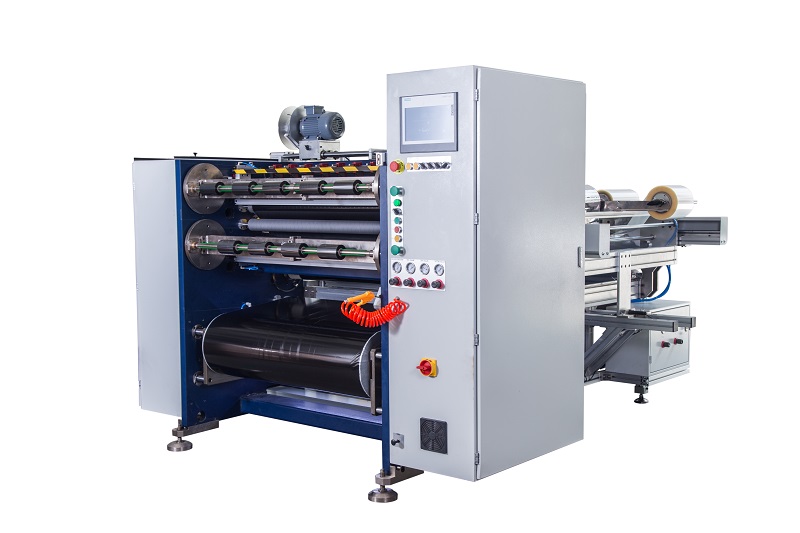 Semi Automatic Thermal Transfer Ribbon Slitter RSDS5 PLUS
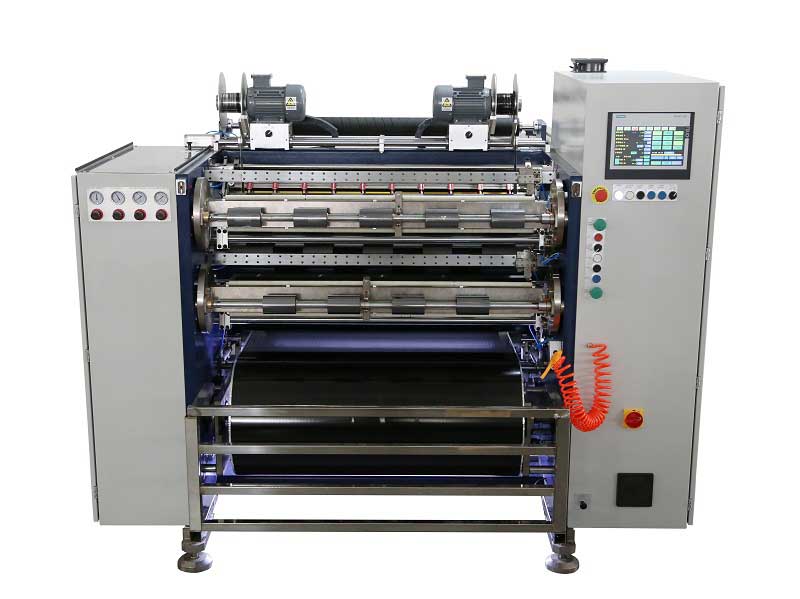 Automatic Thermal Transfer Ribbon Slitter RSDS8 H PLUS
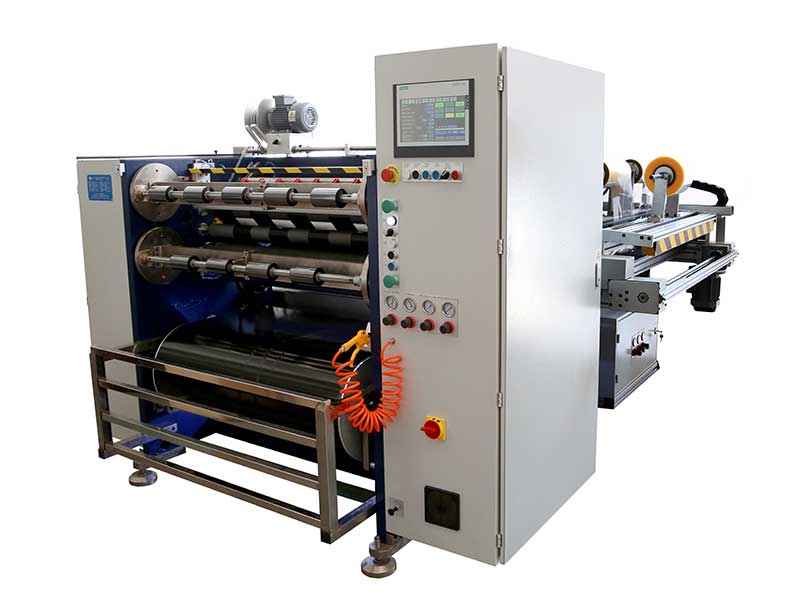 Automatic Thermal Transfer Ribbon Slitter RSDS6 PLUS
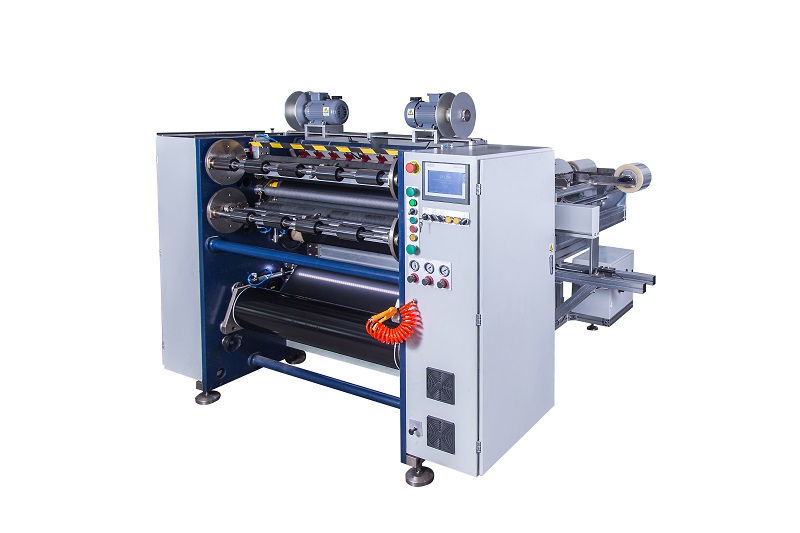 Semi Automatic Thermal Transfer Ribbon Slitter RSDS1 PLUS
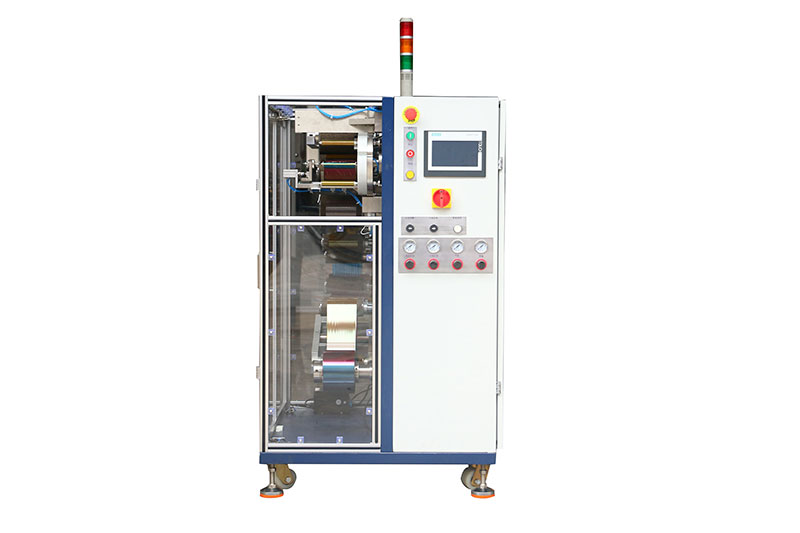 Card Print Ribbon Rewinder
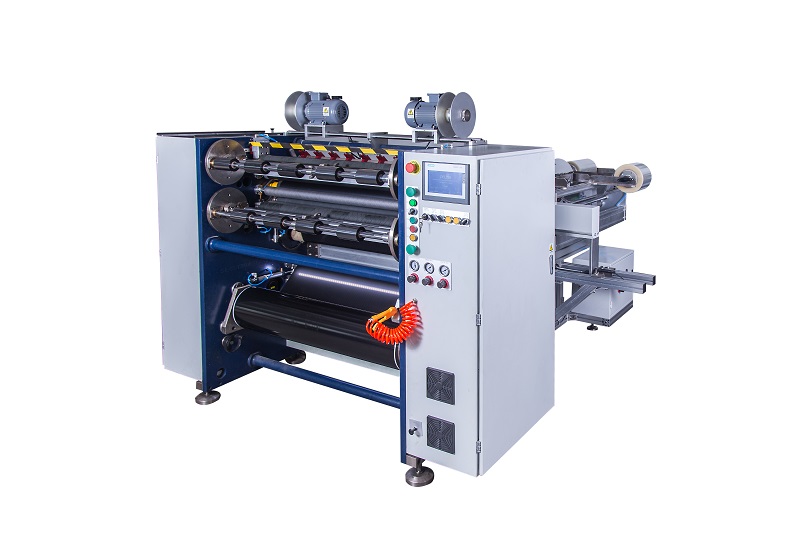 Semi Automatic Thermal Transfer Ribbon Slitter RSDS2 PLUS