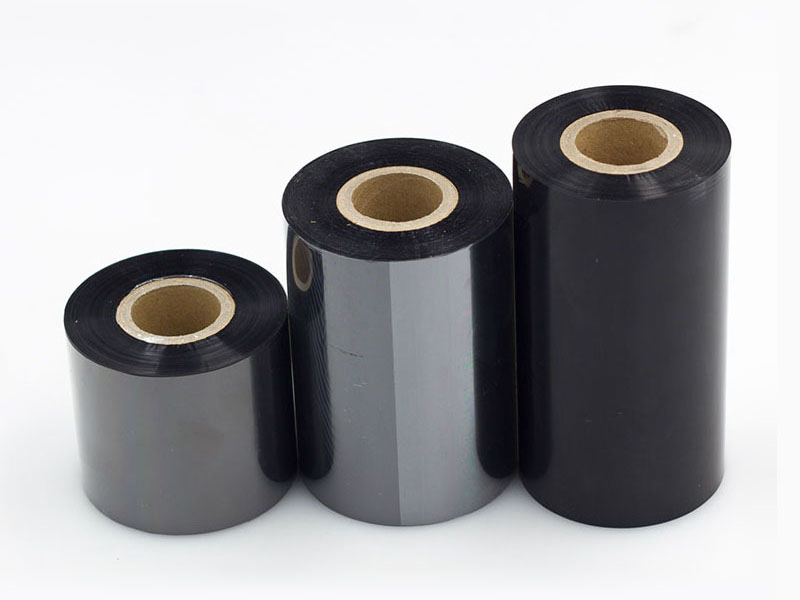
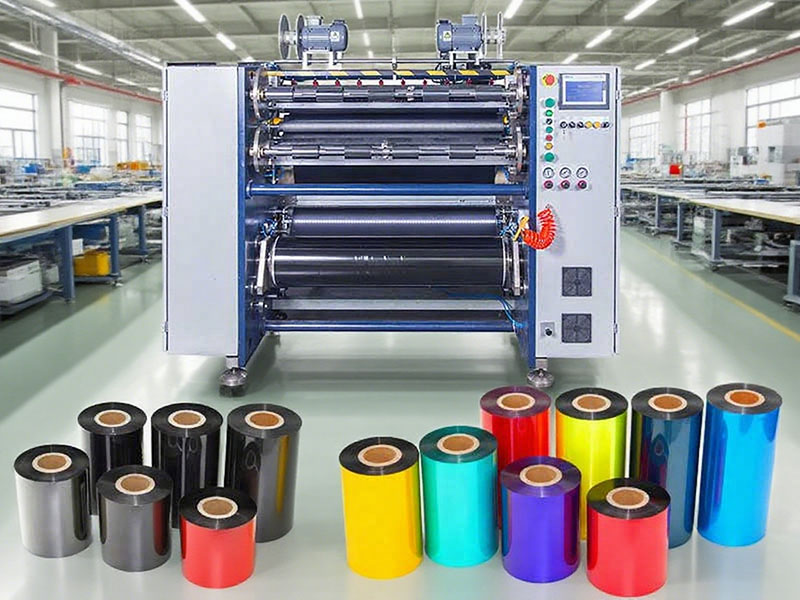
Thermal transfer ribbons consist of PET base films only 4.5 to 20 microns thick and an ink coating. Slitting is the final and most critical process that determines the quality of the finished product. A mismatched slitting machine may cause edge burrs to damage the printhead, excessive width tolerances leading to print displacement, or even uneven winding tension leading to ribbon breakage. Below is an actionable full-process selection checklist, from requirements definition to acceptance and implementation, gradually narrowing down equipment suitable for actual production.
Step 1: Clarify your own needs list
The first step in choosing a model is not to look at the equipment, but to look at yourself. Before contacting any supplier, answer the following questions:
Ribbon type: Are your main products wax-based, blended, or resin-based? Different materials have significantly different requirements for tool and tension control. Wax-based ribbons have a soft texture and can stably slitting at higher speeds; Resin-based ribbon coatings are hard and have low toughness, and typically need to operate at speeds 20%–30% lower than wax-based ones.
Precision requirements: What scenario is the finished product used for? Standard commercial label tolerances ± 0.3~0.5mm are sufficient; Precision electronic labels or pharmaceutical traceability require ±0.1mm; For ultra-narrow ribbons (<10mm), the ± must be within 0.05mm. Precision requirements directly determine the grade of the equipment and the scale of investment.
Width range: For all slitting specifications that may be involved now and in the future, what are the narrowest and widest sizes? This determines the slitting width range and tool holder configuration of the equipment.
Daily Capacity: Small batches with multiple varieties, or large-scale continuous production? This directly affects the choice of speed level and level of automation.
Raw material specifications: What is the maximum width and diameter of upstream main rolls? A winding diameter of ≥600mm is the basic requirement for medium or higher production capacity. At the same time, confirm the inner diameter of the main roll (3 inches or 6 inches) to ensure it matches the equipment's unwinding reel.
Step 2: Core parameter benchmarking
Once the requirements are clear, quickly filter devices using the following three core parameters.
Slitting precision: the lifeline of quality
Slitting accuracy is the primary indicator for measuring equipment performance, directly determining the width consistency and edge quality of the finished ribbon. When selecting, note that the theoretical values listed in the parameter table are for reference only. Be sure to require the manufacturer to conduct on-site trial cutting of your own ribbon roller coil, based on the actual sample test data.
Slitting speed: The balance between efficiency and quality
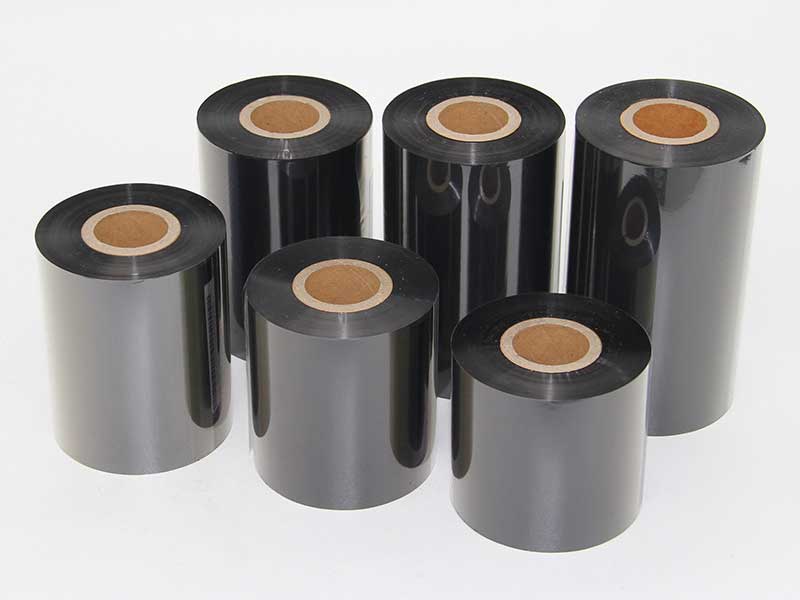
Speed rating reference: low-speed economical model 50–100 m/min, suitable for small batches and multiple varieties; Medium-speed general-purpose models range from 150–250 m/min, meeting most commercial orders; High-speed production model 300–500 m/min, suitable for large-scale continuous production.
A catchphrase to watch out for is: the nominal maximum speed does not equal the actual usable speed. Resin-based ribbons need to operate at reduced speeds, and the stability of the equipment at conventional speeds is more important than peak speed. When selecting models, observe the winding state during high-speed starts and emergency stops, rather than just looking at the maximum speed when unloaded.
Roll neatness: a key metric that has been overlooked
The winding end face deviation should be controlled within ±1mm, and high-end equipment can reach up to ±0.5mm. The root cause of the end face is an "bell-mouth," "jagged," or internal folds, all stemming from inadequate tension control systems and correction devices. These issues can easily cause tape or broken tape during subsequent unwinding and printing, so winding quality must be included in the trial cutting assessment when selecting the model.
Step 3: Core configuration review
Beyond the specifications, the configuration of the following core components determines the device's long-term stability and user experience.
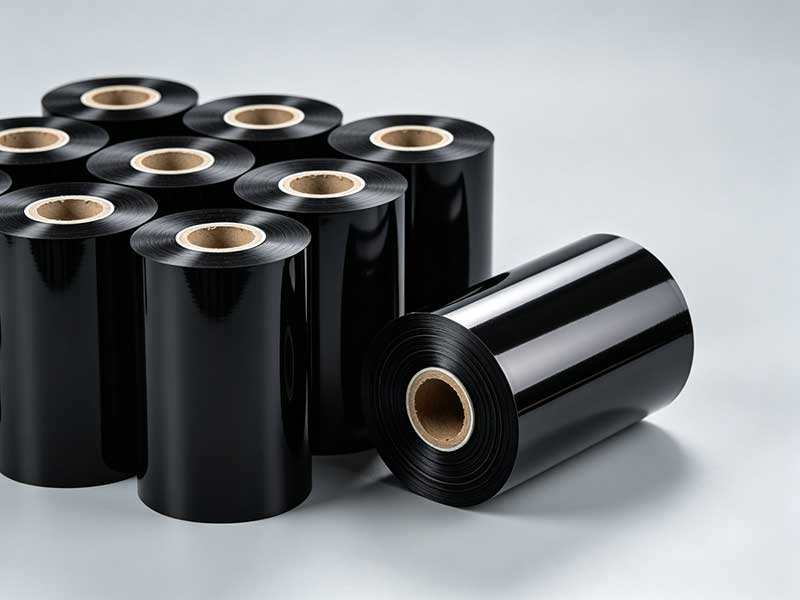
The tension control system is the "soul" of the equipment. The ribbon substrate is extremely thin and highly sensitive to tension, with tension control affecting winding flatness by more than 50%. Prioritize fully automatic closed-loop tension control systems, with tension fluctuations during acceleration and deceleration controlled within ±1.5%. Taper control is equally important—the finished roll should gradually soften in hardness from the axis to the outer circle to prevent inner cramping marks or outer ring collapse.
The reel configuration determines adaptability to multiple specifications. For high-end ribbons and production scenarios with frequent specification changes, slip shafts are a must-have. Each winding unit independently controls torque, effectively solving the issues of "loose inside, tight outside" or "core inside." Pneumatic slip shafts have higher control accuracy than mechanical ones, making them suitable for multi-product production.
Tool system and correction. The radial runout of the tool shaft should be controlled within 0.01mm; the smaller the runout, the neater the edges. Square blades (razor type) are suitable for thin ribbons under 70μm, while round blades (scissor type) are more suitable for thick materials above 100μm and ribbons with paper backing. A correction system must be equipped: CCD photoelectric correction is suitable for transparent or semi-transparent materials, while ultrasonic correction is suitable for opaque materials.
Frame and transmission components. Heavy, high-strength cast iron or steel frames can effectively absorb vibrations, ensuring long-term accuracy retention. The brands of core transmission components such as bearings, guide rails, and servo motors (THK, NSK, Mitsubishi, Panasonic, etc.) reflect the manufacturer's commitment to quality. During machine inspection, it is necessary to verify whether the actual product matches the contract.
Step 4: Factory Inspection — Let the data speak for itself
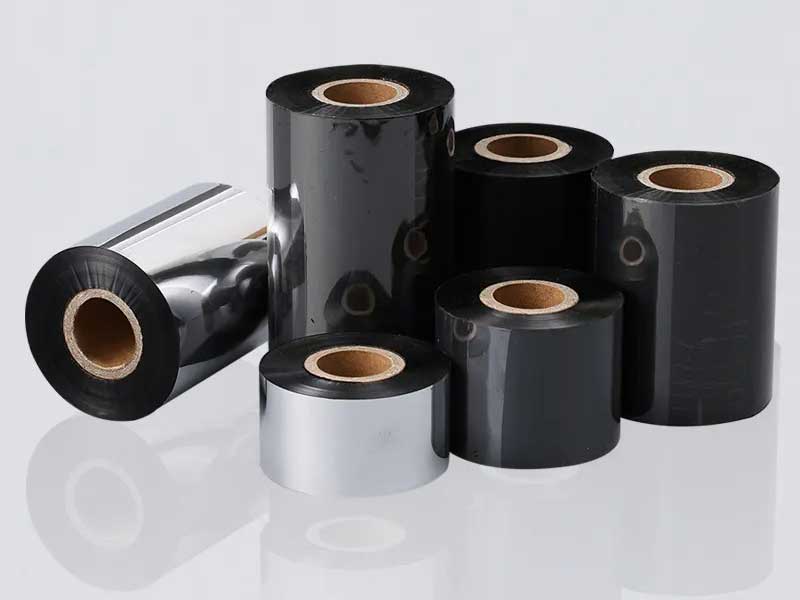
The final stage of selection, and also a key point in risk control, is Factory Acceptance Testing (FAT). The core logic is: do not conduct tests in your own workshop that should be done in the supplier's workshop. Carry no less than 2000 meters of representative reels, and complete the following key measurement indicators before shipment.
Static geometric accuracy is the fundamental term. The frame levelness ≤ 0.1mm/m, and the guide roller parallelism error ≤±0.05mm, which is the physical root cause preventing ribbon deviation.
Dynamic slitting accuracy is a core performance. The slitting width tolerance must meet your set standards (high precision is ±0.1mm), serpentine deviation ≤±0.5mm, and edges free of burrs, white edges, or carbon contamination.
Tension system testing. During acceleration and deceleration, tension fluctuations should be controlled within ±1.5%. During emergency stop testing, the ribbon should not be loose or broken; high-quality equipment should be able to brake instantly in sync to keep the membrane surface taut without stretching.
Continuous operation testing is the gold standard for verifying reliability. Continuous operation for 8–24 hours, recording unplanned downtime, spindle bearing and motor temperature rise not exceeding ambient temperature +15°C, operating noise ≤75dB(A) with no abnormal noises.
Step 5: Comprehensive cost and after-sales evaluation
Equipment price is only part of the total cost of ownership. High-precision equipment typically reduces scrap rates by 3–8%, and the long-term impact of material waste, labor costs, and maintenance expenses often outweighs the purchase price difference.
After-sales evaluation should clarify: warranty period, installation and commissioning support, after-sales response time (e.g., 4-hour response, 24-hour on-site visit), and availability of consumable parts. The choice of automation level should also be based on long-term labor cost considerations—equipment with formula management, automatic specification changeover, and fault diagnosis functions can significantly reduce changeover time and human error.
Conclusion
The core logic for selecting a ribbon slitting machine is: first define your own requirements, then filter the equipment using parameters, and finally verify the effect with trial cutting. No matter how beautiful the parameter table is, using your own main roll for on-site trial cutting is always the most reliable basis for judgment. A rigorous selection process essentially aims to find the most suitable balance between precision, speed, automation, and cost to match your actual production needs.
 English
 Deutsch
 Français
 Español
 Português
 日本語
日本語 русский
 한국어
한국어 عربي
عربي ภาษาไทย
 Tiếng Việt
 Italiano

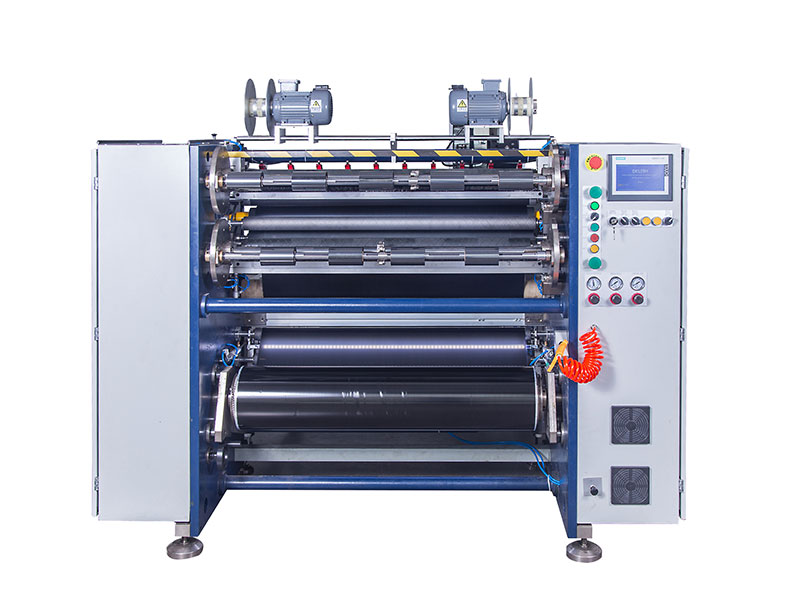
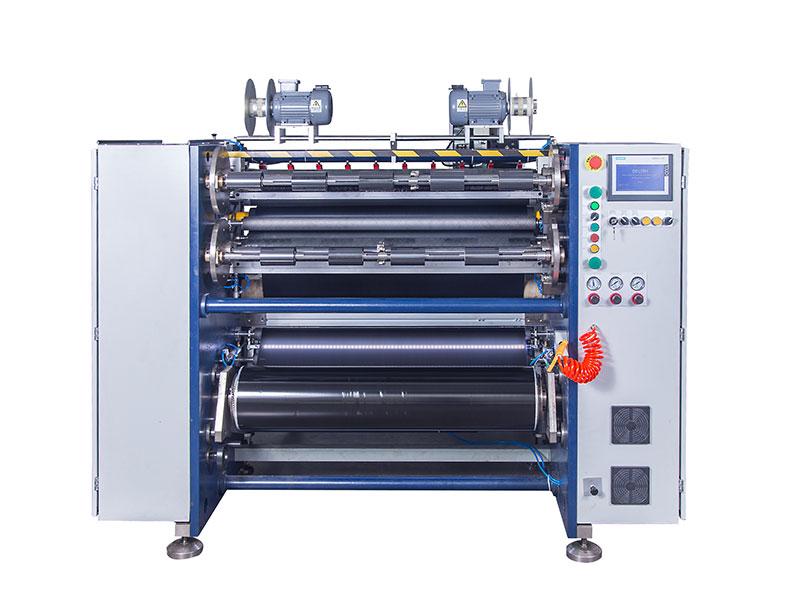 Ribbon Slitting Machine
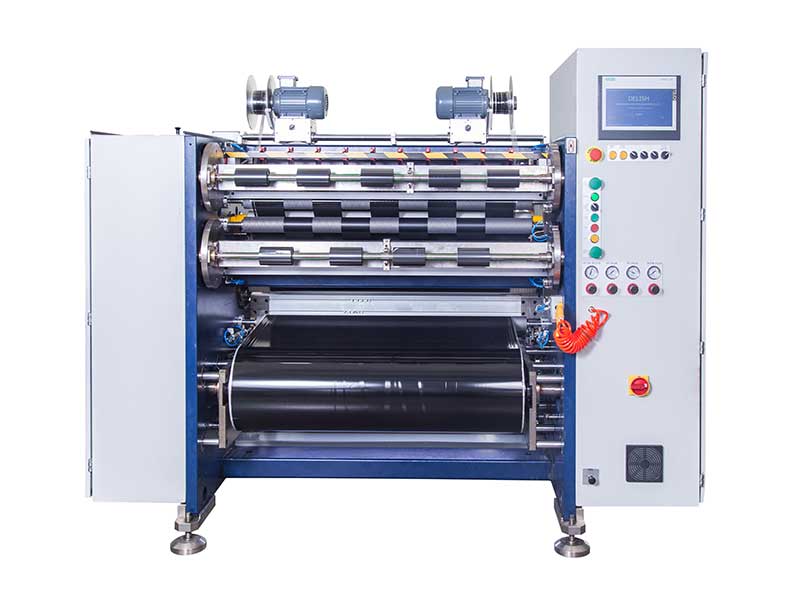 Barcode Ribbon Slitting Machine
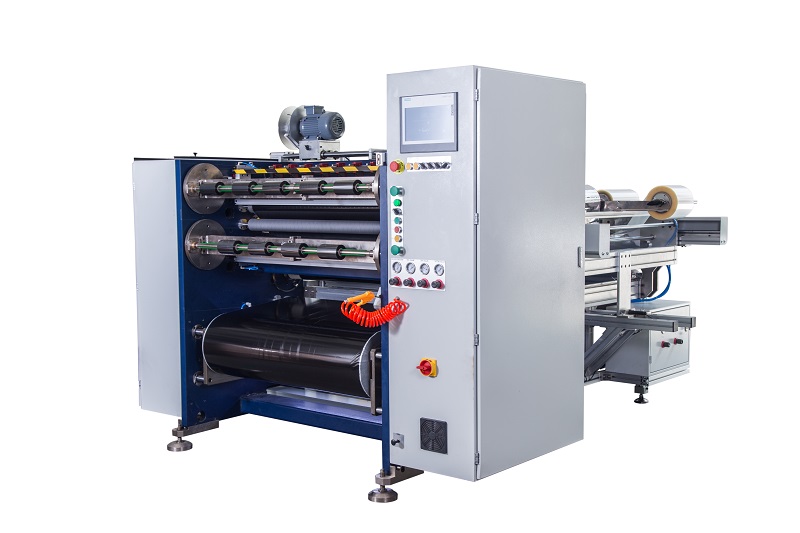 Semi Automatic Thermal Transfer Ribbon Slitter RSDS5 PLUS
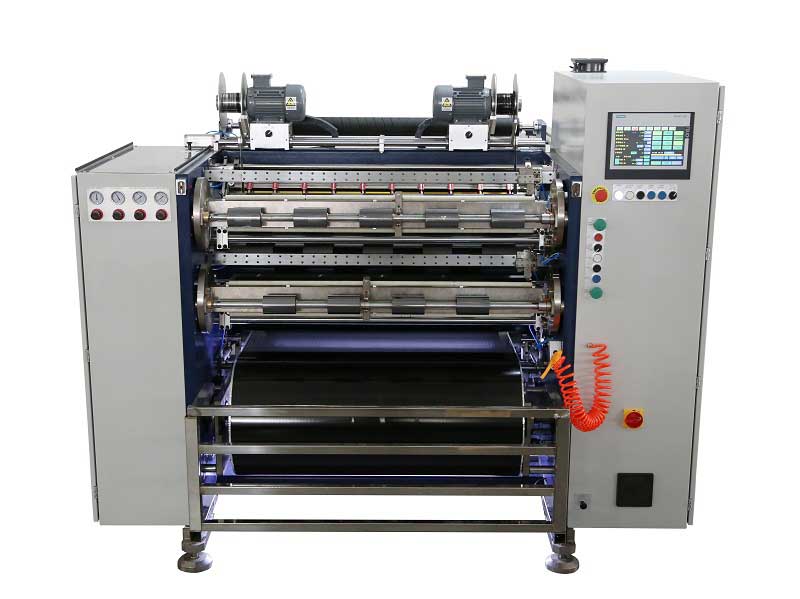 Automatic Thermal Transfer Ribbon Slitter RSDS8 H PLUS
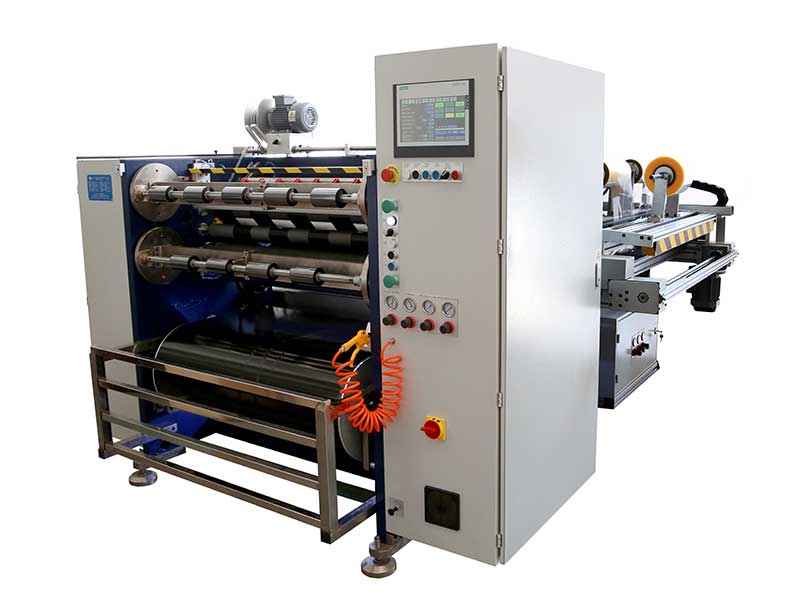 Automatic Thermal Transfer Ribbon Slitter RSDS6 PLUS
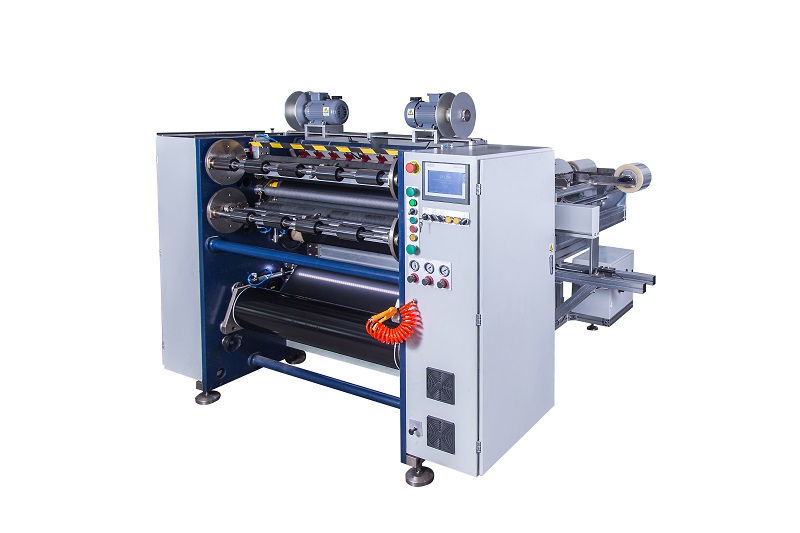 Semi Automatic Thermal Transfer Ribbon Slitter RSDS1 PLUS
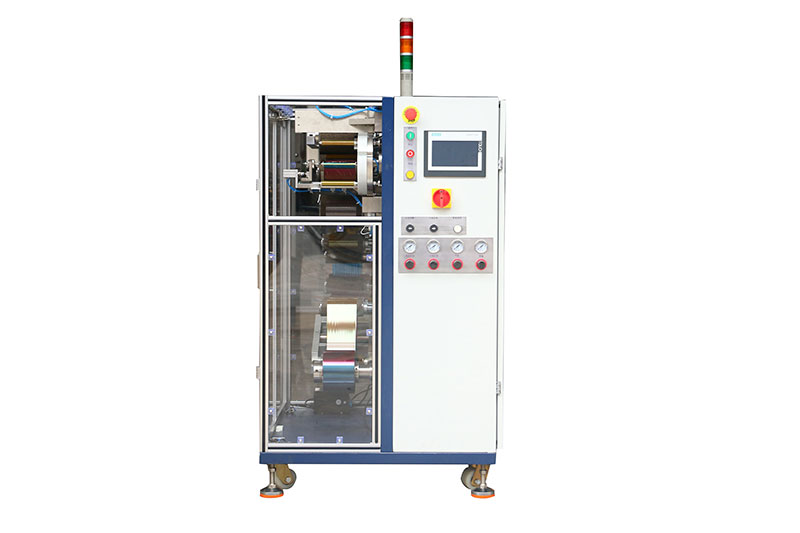 Card Print Ribbon Rewinder
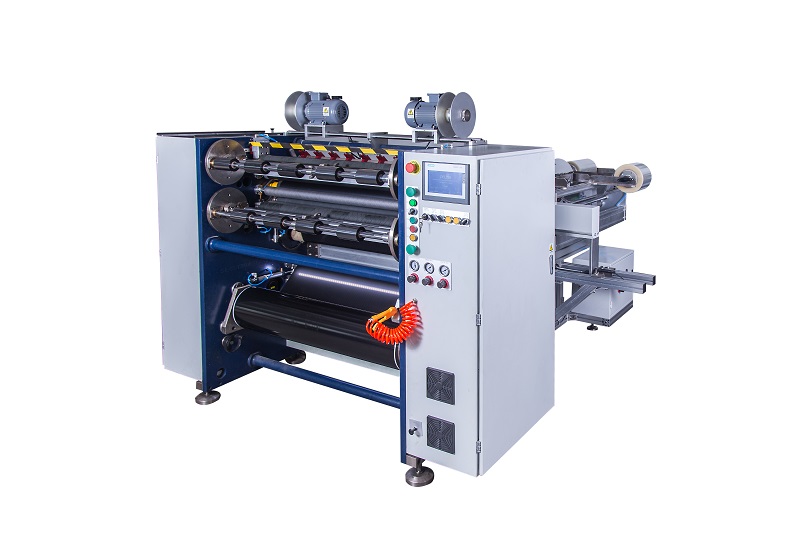 Semi Automatic Thermal Transfer Ribbon Slitter RSDS2 PLUS