For packaging and label manufacturers, the hot stamping process is often synonymous with premium quality and visual impact. However, the brilliance of the final stamped product is entirely dependent on a critical upstream process: the precision slitting of the foil itself. A hot stamping foil slitting machine is not merely a peripheral tool; it is a strategic investment that dictates material utilization, production uptime, and ultimately, your profit margin.
With the global slitting equipment market offering models ranging from basic entry-level units to sophisticated, fully automated systems, selecting the right machine for your specific production profile can be daunting. This guide outlines the critical technical and operational factors that packaging and label manufacturers must evaluate to ensure their investment delivers long-term returns.
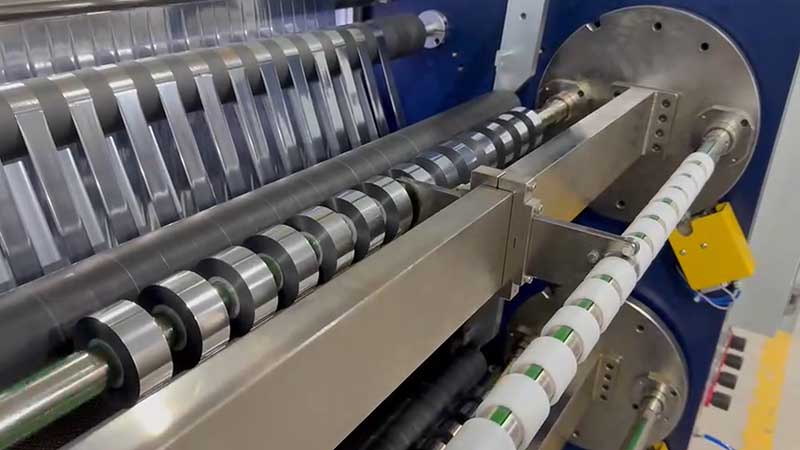
Why Precision Defines Profitability
Unlike standard paper or film, hot stamping foil typically consists of a delicate PET base film (often 12μm to 25μm) layered with release agents, colorants, and adhesives . This composition makes the material highly sensitive to mechanical stress.
If your slitting machine produces burrs, microscopic cracks, or uneven edges, the consequences ripple through your entire production line. Burrs and "ruffled" edges inevitably lead to "flying gold" (stray foil flakes), incomplete transfer, and registration errors during the actual stamping process . These defects directly translate to higher scrap rates and costly downtime for cleaning. For label manufacturers running high-speed rotary presses, the dimensional accuracy of the foil roll is non-negotiable. A variance of just a fraction of a millimeter can cause web breaks or misregistration that halts an entire print run.
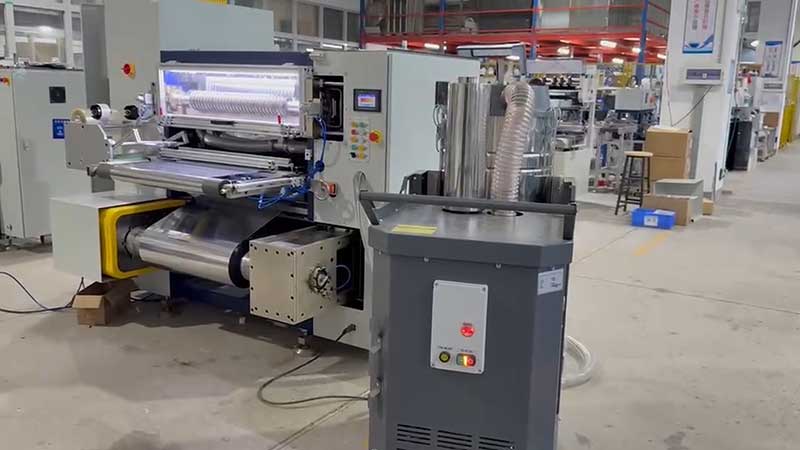
Core Technical Indicators for Modern Slitting Machines
When evaluating equipment for 2026 and beyond, the industry standard has shifted from basic cutting capability to micron-level dynamic control. Here are the parameters that matter most for packaging converters.
1. Tension Control and Web Guiding
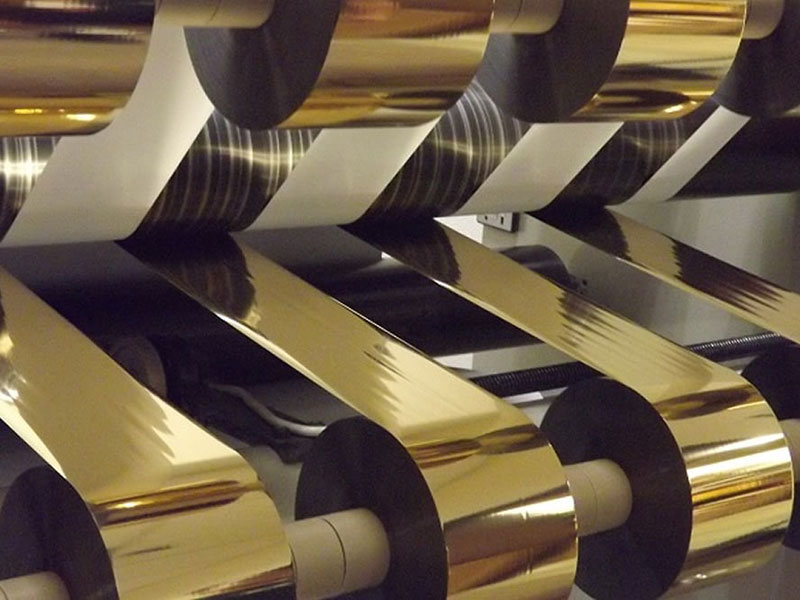
Tension control is the "lifeblood" of thin-material slitting. Because hot stamping foil is prone to stretching, unstable tension will result in a wound roll that is either too loose (telescoping) or stretched beyond recovery .
You should prioritize machines equipped with a full closed-loop servo tension control system. This system uses sensors to provide real-time feedback, dynamically adjusting the torque of the unwind and rewind shafts to maintain constant tension from the full roll down to the core. For ultra-thin materials (below 12μm), ensure the machine features taper tension technology to prevent the inner layers of the roll from being crushed or damaged .
Equally critical is the web guiding system. High-speed running foils tend to wander. An ultrasonic or CCD edge-position control system is essential to ensure the slit width remains consistent. This keeps the edges of your finished rolls perfectly aligned for the stamping machine .
2. Slitting Method and Tooling
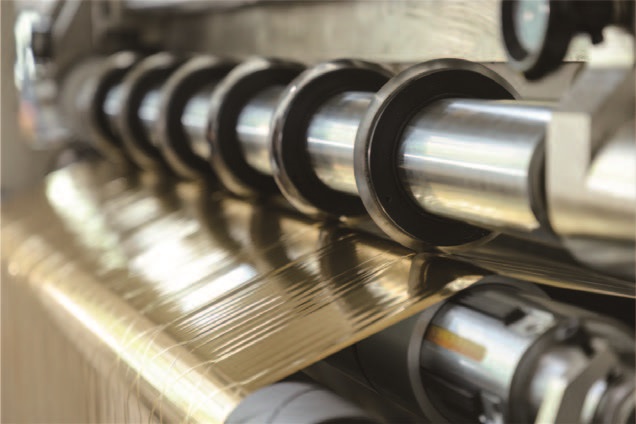
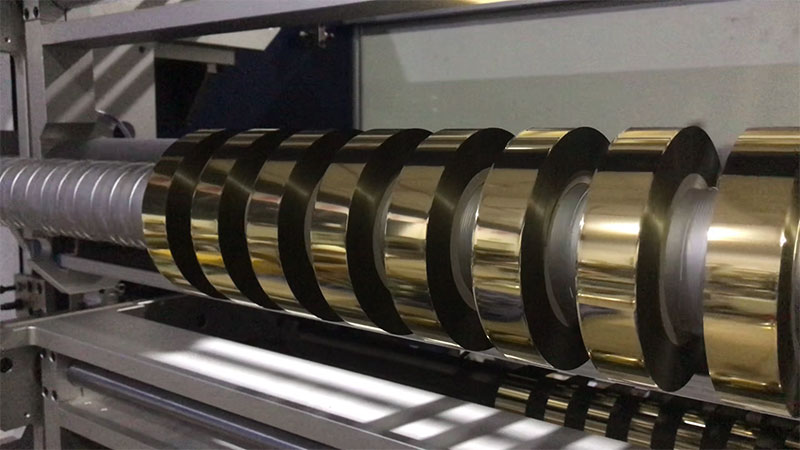
The method of cutting determines the edge quality. The industry consensus for hot stamping foil is moving away from traditional razor blade slitting toward shear-type circular blade slitting .
Shear cutting acts like a pair of scissors, producing a smooth, sealed edge with minimal dust generation. Razor slitting, by contrast, can create micro-fractures and electrostatic dust that adheres to the foil surface, causing "pitting" or spotty transfer during stamping .
• Tool Material: Look for tools made from cemented carbide or ceramic-coated inserts. These maintain a sharp edge far longer than standard steel, ensuring consistent quality over thousands of meters .
• Automation: For converters running many short-run label jobs, an automatic tool positioning system is a significant efficiency booster. Manual tool setup can take 15 minutes or more per order change; automated systems can cut this to under 5 minutes, dramatically increasing your effective capacity .
3. Speed vs. Stability
While mechanical speeds of 500 m/min are achievable on high-end machines, effective output is a more honest metric . A machine that runs at 500 m/min but takes 20 minutes to thread and set up is less profitable than one that runs at 300 m/min with a 3-minute changeover.
When assessing speed, focus on:
• Acceleration/Deceleration Ramps: How smoothly does the machine reach top speed without breaking tension or telescoping the rolls?
• Changeover Automation: Does the machine feature automatic unloading or preparation turrets to minimize manual handling? .
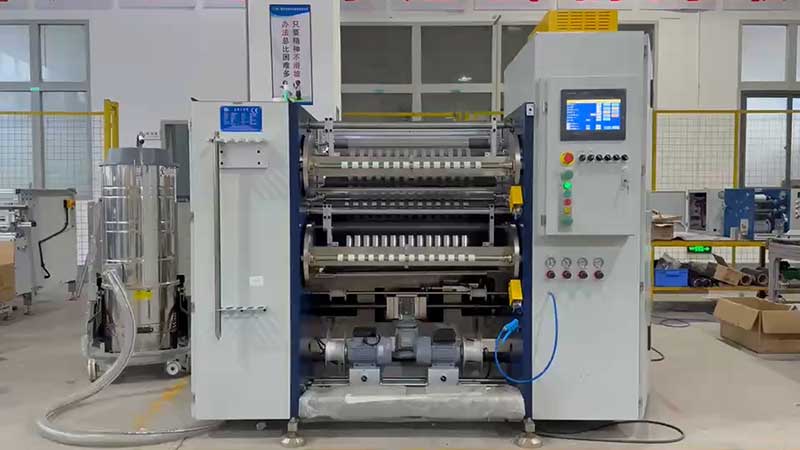
The "Smart" Factor: Integration and Diagnostics
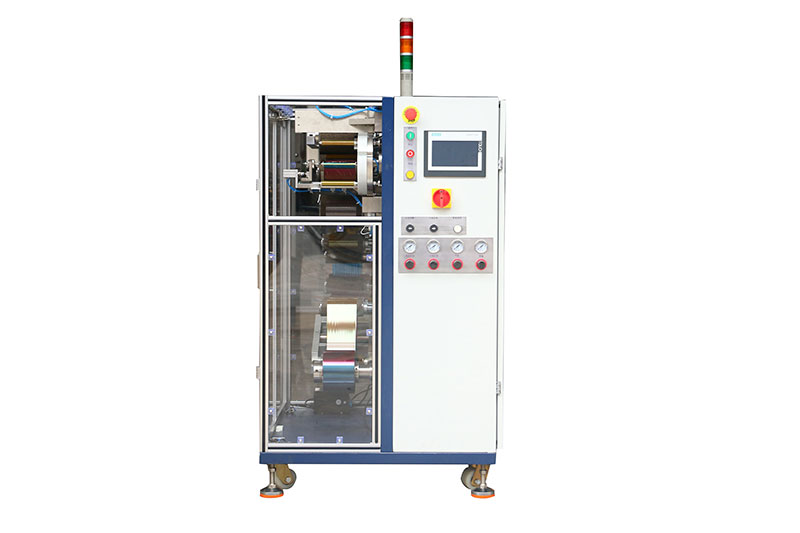
Modern packaging facilities are increasingly digital. A slitting machine should not be a data silo. Machines equipped with PLC and HMI interfaces should offer:
• Recipe Management: Store parameters for different foil types (laser, holographic, pigment) so operators can recall settings with one touch, reducing human error .
• Production Monitoring: Real-time data on meters run, OEE, and scrap rates allows you to pinpoint inefficiencies. Some advanced models offer AI-driven visual inspection to detect defects inline .
• Predictive Maintenance: Sensors that monitor vibration and tool wear can alert you before a blade fails, preventing unexpected downtime and material waste .
On-Site Validation: The Only Way to Buy
Specifications on a brochure are a starting point, but the true test of a slitting machine is how it handles your specific material. Suppliers often demonstrate machines with thicker, more forgiving materials.
When sourcing a machine, always insist on a trial cut using your own production rolls. Provide the supplier with the most challenging material you run—whether it's the thinnest 12μm holographic foil or a wide web. Examine the finished roll with a magnifying glass or microscope. The ideal cut should be clean with no white edge, no burrs, and the roll should be firm with perfectly flat end faces .
Cost Considerations and ROI
Hot stamping foil slitting machines represent a substantial capital investment. Entry-level models may start around $30,000, while high-end, automated machines designed for precision slitting of premium foils can range from $45,000 to over $100,000 depending on the level of automation and imported components .
The ROI calculation should not focus solely on the purchase price. A higher-precision machine that reduces your material waste from 5% to under 1% can pay for itself within a year in material savings alone . Furthermore, the reduction in downtime and improved stamping yield will lower your overall cost per thousand impressions.
Final Checklist for Procurement
Before finalizing a purchase, ensure you have clear answers to the following:
• Tension System: Is it closed-loop servo? Can it handle taper tension for large-diameter rolls?
• Guiding: Does it have an ultrasonic or CCD system?
• Tooling: What material are the blades? Is automatic tool positioning available?
• Trial Results: Have you seen a clean cut on your material at production speeds?
• Support: Does the supplier offer installation, training, and readily available spare parts (especially blades)?
For packaging and label manufacturers, the hot stamping foil slitting machine is the unsung hero of quality control. By prioritizing precision tension control, shear cutting technology, and automation, you can secure a competitive edge in the premium packaging market.
 English
 Deutsch
 Français
 Español
 Português
 日本語
日本語 русский
 한국어
한국어 عربي
عربي ภาษาไทย
 Tiếng Việt
 Italiano
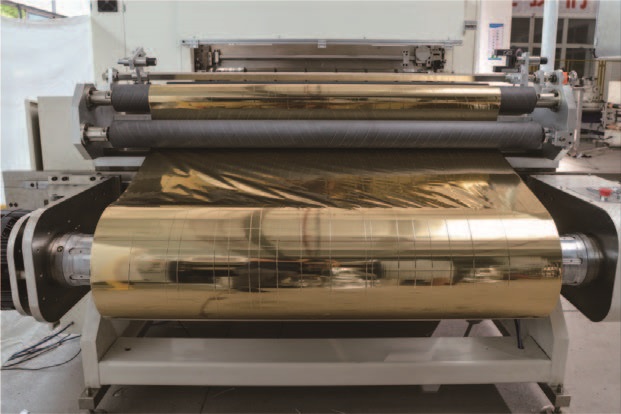
 Cold Foil Slitter
 Card Print Ribbon Rewinder
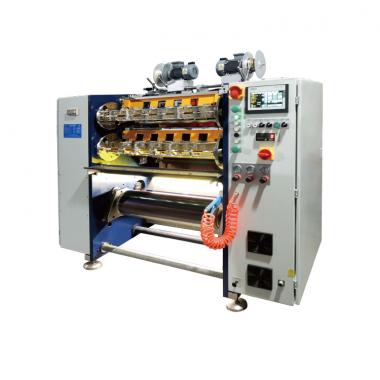 Card Print Ribbon Slitter
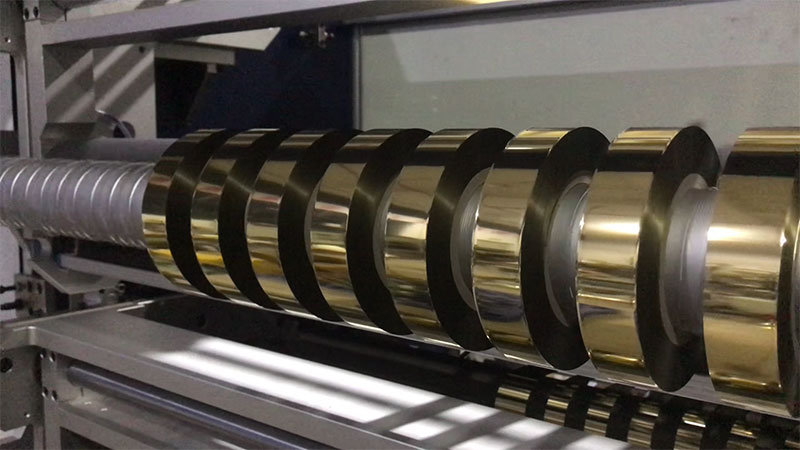 Holographic Foil Slitter
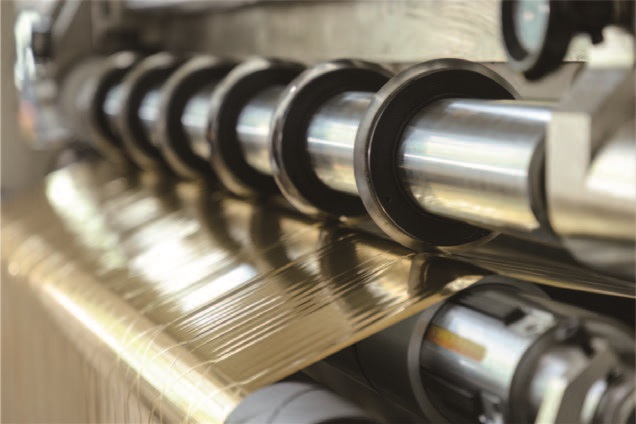 Hot Stamping Foil Slitting Machine
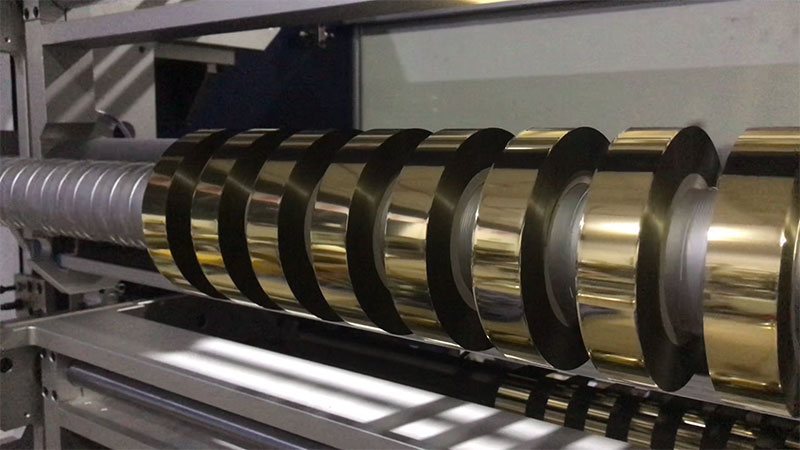 Digital Enhancement Foil Slitter
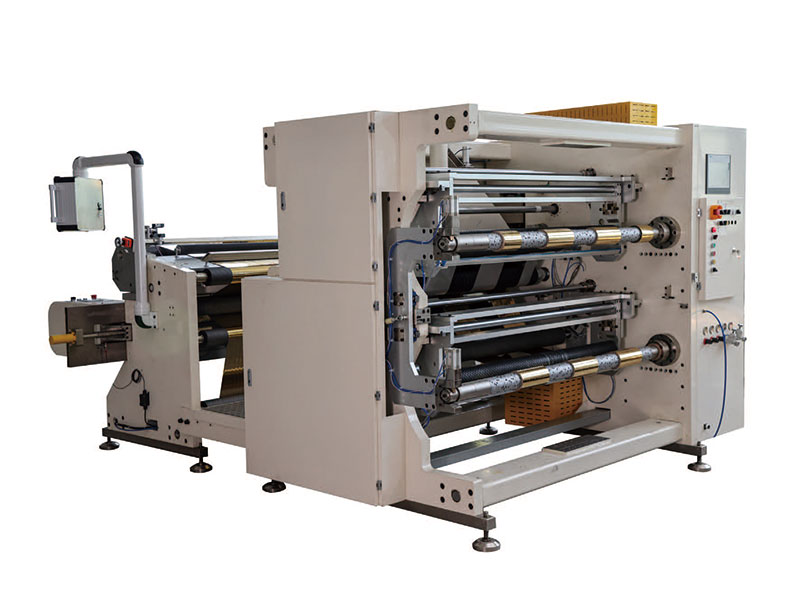 Hot Stamping Foil Slitter (RSDS7H) 1350
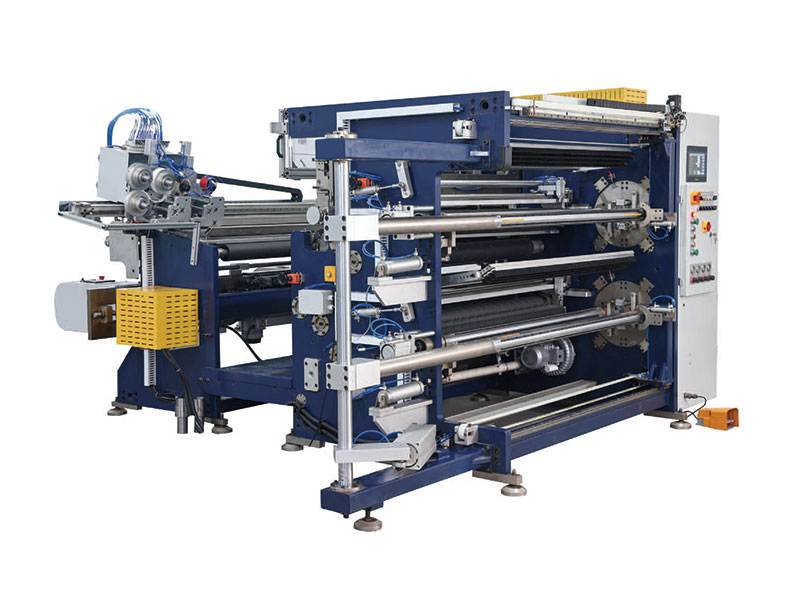 Hot Stamping Foil Slitter RSDS7H 1350 PLUS