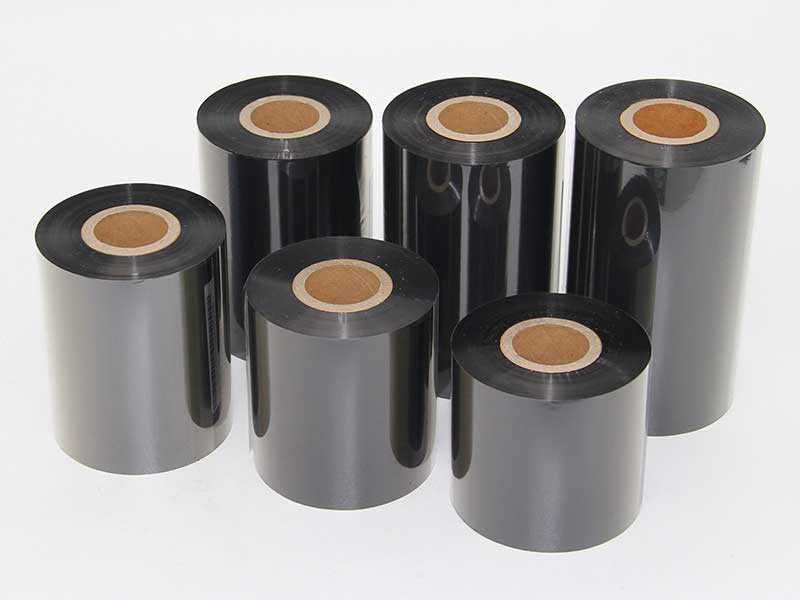
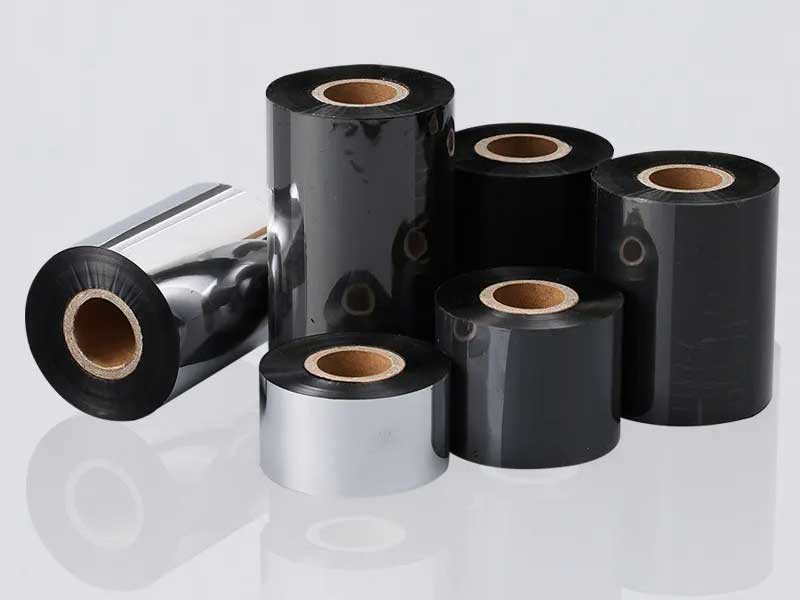
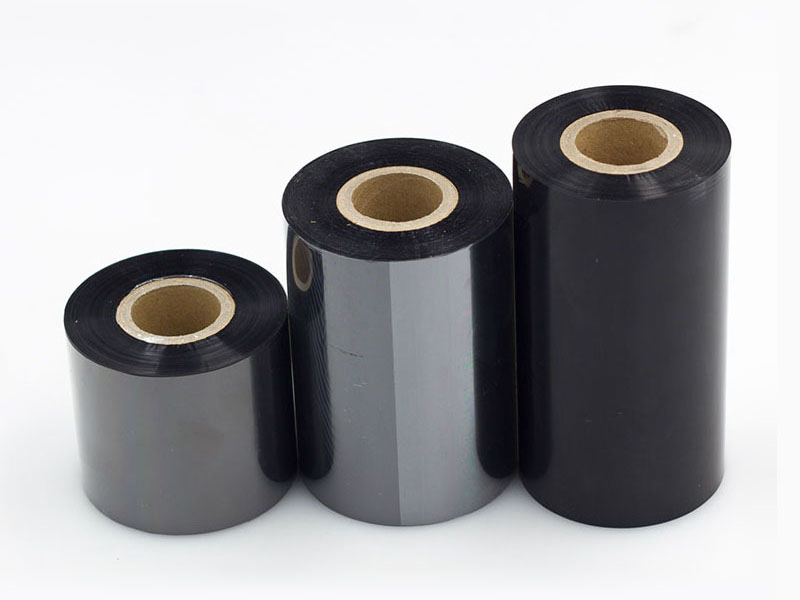
Uneven winding is one of the most persistent and costly problems in thermal transfer ribbon (TTR) slitting. It manifests as tower-shaped rolls, protruding edges, chrysanthemum cores, or split layers on the finished ribbon roll. For TTO ribbon manufacturers, this defect doesn‘t just affect appearance—it cascades into downstream disasters: inaccurate length measurement, ribbon breakage during printing, and print head damage caused by wrinkles and edge sagging.
This article breaks down the root causes of uneven winding and provides actionable solutions for each.

Why TTO Ribbon Winding Is So Demanding
TTO (Thermal Transfer Overprinter) ribbons are typically made from PET film as thin as 4.5–10μm, coated with heat-sensitive ink layers. This extreme thinness makes the material highly sensitive to tension variations, temperature, and static electricity. Unlike standard barcode ribbons, TTO ribbons must maintain perfect edge alignment and consistent tension because they are used in high-speed packaging lines where even minor wrinkles can cause print defects or equipment downtime.
When winding becomes uneven, the problem usually stems from one or more of four areas: tension control, mechanical alignment, pressure distribution, or environmental factors.
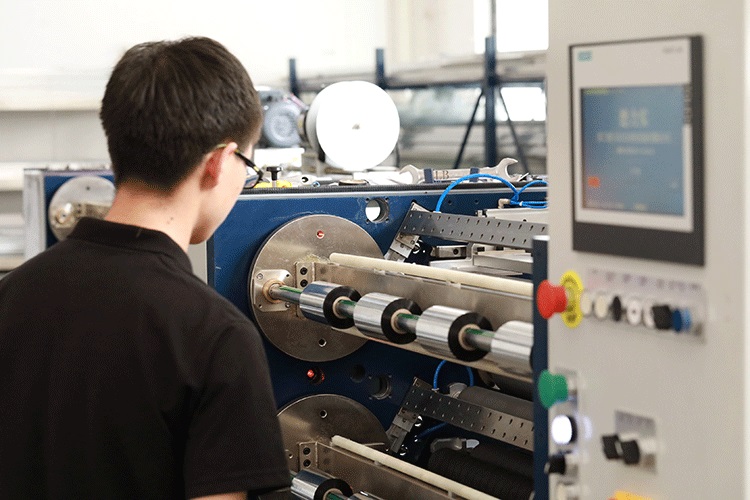
The Most Common Causes of Uneven Winding
Tension Taper Not Properly Configured
During winding, the roll diameter increases continuously. Without proper taper tension control—where tension gradually decreases as the roll grows—the outer layers compress the inner layers. This creates the classic “chrysanthemum core” wrinkle pattern and internal deformation. The standard taper coefficient for TTO ribbons typically falls between 0.3 and 0.5.
Modern servo-driven slitters use closed-loop tension control with load cells or dance rollers to maintain precise tension throughout the entire winding cycle. If your machine still relies on magnetic particle clutches with manual adjustment, inconsistent winding quality is almost inevitable.
Mechanical Parallelism Deviation
The winding shaft must be perfectly parallel to the guide rollers. Even a horizontal error of 0.2mm per meter can produce a visible bell-mouth or tower-shaped roll. Common culprits include:
• Bent winding shafts
• Worn expansion shaft keys that do not grip the paper core evenly
• Radial runout exceeding 0.05mm
• Guide rollers that are not parallel or have surface damage, adhesive buildup, or static accumulation
Uneven Pressure Roller Contact
For slitters using center-plus-surface winding, the contact or pressure roller must apply consistent pressure across the entire width of the ribbon. If the pressure differential between the two ends exceeds 0.05MPa, localized bulges or “bars” will form on the roll surface. The pressure roller’s parallelism should be verified with displacement sensors or precise mechanical adjustment.
Lateral Drift (Deviation) During Slitting
Narrow TTO ribbons (often below 10mm) have extremely weak lateral rigidity. Any disturbance—tension fluctuation, airflow, or guide roller misalignment—causes the ribbon to shift sideways. Over hundreds of winding layers, even micron-level offsets accumulate into visible end-face unevenness. Active edge position control (EPC) or centerline guiding systems are essential for narrow-width TTO slitting.
Static Electricity and Material Properties
TTO ribbons generate significant static charges during high-speed slitting, especially resin-based formulations. Static attraction between layers causes sudden slippage and uneven winding. Different substrate coatings (wax, wax-resin hybrid, resin) also exhibit varying stiffness, slip characteristics, and electrostatic behavior—factors that must be accounted for in tension and speed settings.
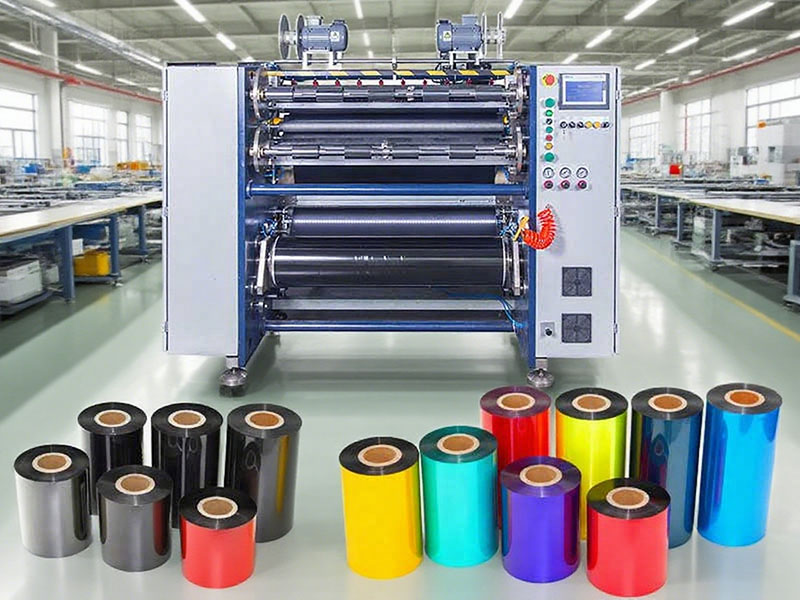
Practical Solutions: A Systematic Troubleshooting Approach
Step 1: Verify Mechanical Baseline
Before adjusting any parameters, ensure the machine is mechanically sound. Check winding shaft runout (should be ≤ 0.05mm), verify guide roller parallelism with a precision level, and clean all rollers with 95% isopropyl alcohol to remove carbon powder and adhesive residue. Inspect the pressure roller for even contact and replace worn surfaces.
Step 2: Optimize Tension Curve
Reduce unwinding tension to approximately 60–70% of what you would use for wider ribbons. Configure taper tension so that tension decreases progressively as the roll diameter grows. For TTO ribbons, a starting point of 0.3–0.5 taper coefficient is recommended, but final values depend on specific ribbon formulation and width. Use the machine’s closed-loop system to verify actual tension at the winding point, not just the setpoint.
Step 3: Engage Active Deviation Correction
For TTO ribbon widths below 15mm, passive edge guides are insufficient. Enable the slitter’s EPC system with ultrasonic or photoelectric edge sensors. Centerline correction mode is often more stable than edge correction for narrow ribbons because it is not affected by irregular burrs on the raw material edge.
Step 4: Control Static and Environmental Factors
Install pulsed AC static elimination bars at critical points before winding. Maintain consistent temperature and humidity in the slitting area—TTO ribbons are sensitive to moisture absorption and thermal expansion. Store master rolls in stable conditions before slitting.
Step 5: Establish Parameter Recipes Per Ribbon Type
Uneven winding problems often recur when switching between ribbon formulations. Create process cards for each TTO ribbon type, documenting the optimal tool clearance (typically 0.02–0.05mm), tension curve, taper coefficient, speed limit, and pressure roller settings. This reduces trial-and-error and ensures consistent quality across production runs.
When to Consider Equipment Upgrade
If your current slitter lacks servo-driven closed-loop tension control, active EPC, or programmable pressure roller systems, troubleshooting can only go so far. The industry has moved toward full-servo architectures with independent motors for unwind, traction, and rewind, coupled with real-time diameter calculation via loop counting or ultrasonic detection. These systems automatically adjust torque and pressure as roll diameter changes, eliminating the manual guesswork that causes uneven winding.
For TTO ribbon manufacturers serving the packaging and labeling markets, investing in a properly equipped slitter is not optional—it directly determines whether your finished ribbons perform reliably in your customers’ printers.
Key Takeaways
| Root Cause | Solution |
| No taper tension | Configure 0.3–0.5 taper with closed-loop servo control |
| Shaft/roller misalignment | Verify parallelism ≤ 0.2mm/m; runout ≤ 0.05mm |
| Uneven pressure roller | Balance both ends within 0.05MPa |
| Lateral drift | Activate EPC/centerline correction |
| Static buildup | Install pulsed AC static bars |
| Inconsistent recipes | Document parameter cards per ribbon type |
Uneven winding is a solvable problem, but it demands systematic attention to mechanics, tension, pressure, and material behavior. The most successful TTO ribbon producers treat slitting as a precision process—not just cutting film, but controlling every variable that influences roll quality.
 English
 Deutsch
 Français
 Español
 Português
 日本語
日本語 русский
 한국어
한국어 عربي
عربي ภาษาไทย
 Tiếng Việt
 Italiano