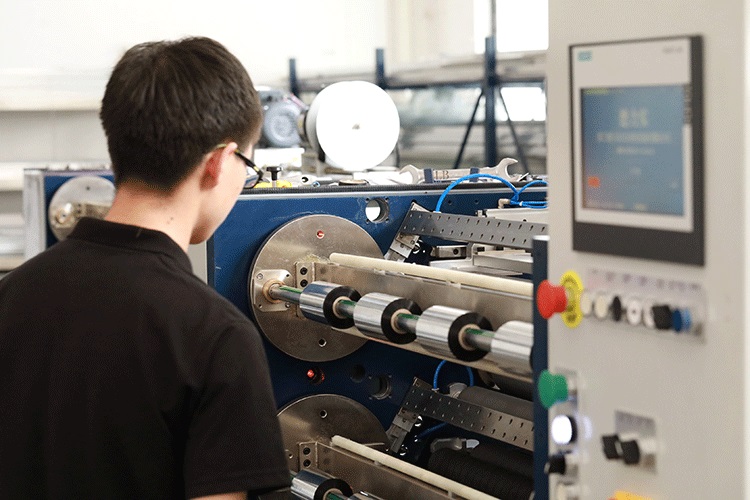
The ribbon slitting machine is a key piece of equipment in thermal transfer ribbon production to cut large rolls of the main roll into the specifications required by customers. Since the ribbon substrate is usually 4.5~10μm PET film, which is easy to stretch and wrinkle, tension control and cutting precision during slitting become two core challenges. Once a malfunction occurs, it not only affects the yield but also accelerates wear on the cartridge and print head during printing. This article will systematically review the most common types of faults in ribbon slitting machines, their causes, and corresponding troubleshooting methods.
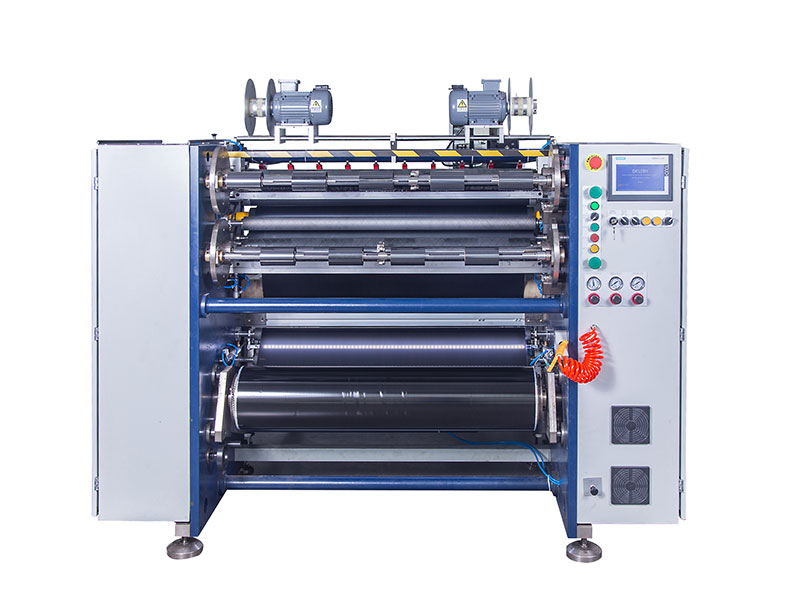
1. Uneven slitting end face: burrs, serrations, and powder shedding
This is the most direct and troublesome issue at the slitting site, manifested as jagged ribbon edges, white powder peeling off, or whitish cuts with a stringy feel.
Cause analysis:
1. Blade Factors: Blade wear or chipping are the most common causes. Blunt blades turn "shear" into "squeeze," causing edge stretching and deformation. It is recommended to lightly sharpen ordinary steel knives once per shift, and replace carbide knives every 100~150 hours of operation.
2. Improper blade clearance: imbalance in the overlap between upper and lower blades—too large causes indentations, too small causes indentation; too small causes indentation; Lateral clearance deviation also affects trimming quality. Typically, the overlap is controlled between 0.01~0.03mm, and the lateral clearance is maintained at 0.02~0.05mm, which can be calibrated using feeler gauge.
3. Tension fluctuations: Fluctuating tension causes the ribbon to drift at the edge, causing intermittent burrs. Check whether the unwinding brake pads are uneven and whether the cylinder pressure on the floating roller is stable.
4. Static Interference: Electrostatic adsorption of dust generated by high-speed slitting, contaminating the edge and worsening trimming quality. AC-type static elimination rods can be installed at the roller pass, and the equipment's grounding resistance must be less than 4Ω.
Quick Reference for Elimination:
| Inspection items | Key points of operation |
| Blade condition | Use a magnifying glass to inspect the cutting edge, replace or sharpen it promptly |
| Blade gaps | Overlap 0.01~0.03mm, side gap 0.02~0.05mm |
| Tension system | Check the sensor signal and calibrate the tension control parameters |
| Static electricity elimination | Install the static elimination rod and check the grounding resistance |
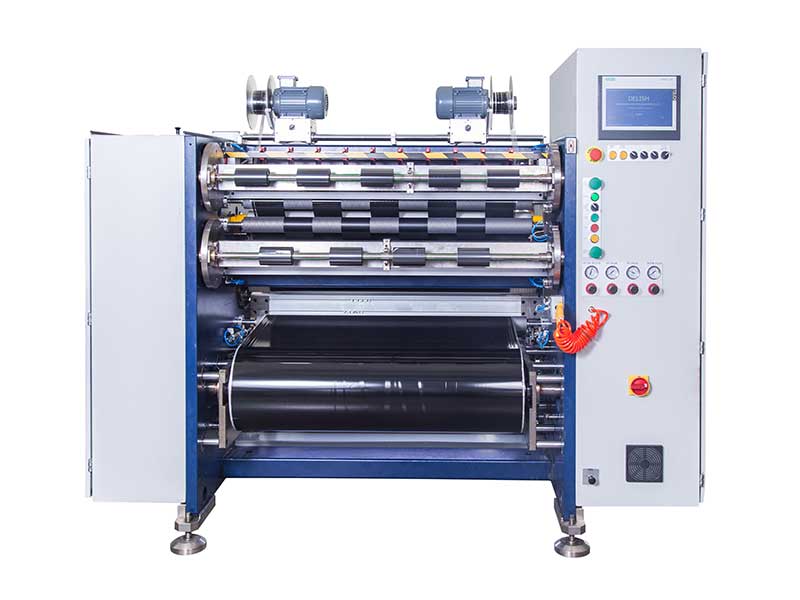
2. Uneven rolling: off-layer end faces, tower-shaped, and daisy-shaped cores
Uneven winding not only affects appearance, but also leads to inaccurate length measurement during subsequent slitting. Different forms and countermeasures vary:
1. Bell-mouth or tower-shaped staggered layers
The main causes are often unreasonable taper setting of the winding tension, or the winding shaft not being parallel to the guide roller. Troubleshooting methods:
• Adjust the tension curve: For example, for a 300mm outer diameter core, set the initial tension to 12N, drop to 8N at the end, and set the taper coefficient of tension to 0.3~0.5
• Use a level to calibrate the parallelism between the winding shaft and the guide rail, with an error not exceeding 0.2mm/m
2. Local bulging (tendon bulge)
The main cause is inconsistent thickness of the ribbons after slitting, or uneven pressure on the winding and compression rolls. Troubleshooting methods:
• Switched to center + surface composite winding method
• Use a pressure gauge to test the pressure at both ends of the pressure roller, with a difference not exceeding 0.05MPa
• For strips with excessive thickness, separate thin paper gaskets can be added for compensation
3. Winding off the side (serpentine pattern)
The main causes are usually uneven guide rollers or unilateral resistance from the slitting blade to the rewinding shaft. Troubleshooting methods:
• Clean all guide roller surfaces with alcohol
• Check whether the correction sensor is dirty and clean the probe
• Ensure that each belt divider is securely fixed, with a width 2~3mm wider than the carbon belt
4. Excessive looseness in the roll or wrinkles in the inner layer
The main causes are usually insufficient initial winding tension or deformation of the core tube. It is recommended to start at low speed (20~30m/min) pre-winding for 2~3 turns before increasing speed.
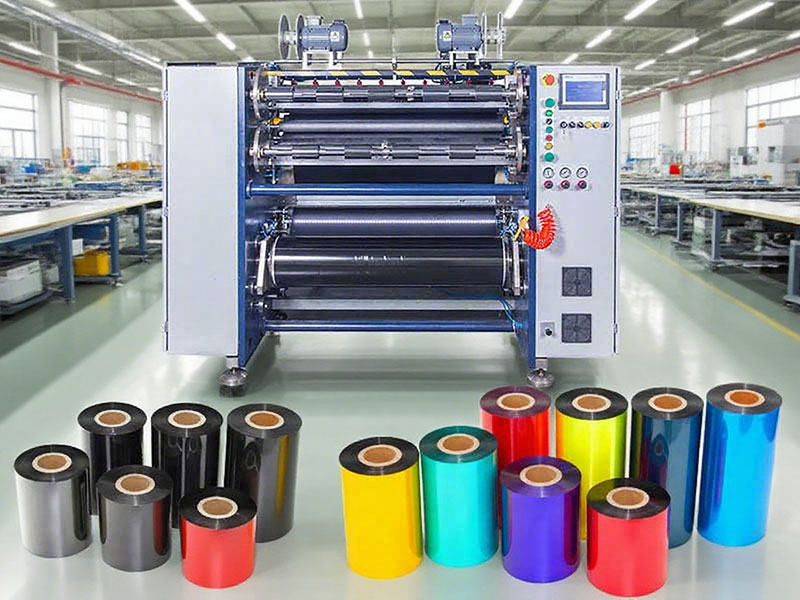
3. Ribbon Break: The main culprit behind unplanned shutdowns
Statistics show that belt breakage accounts for more than 60% of unplanned shutdowns in ribbon slitting.
Common causes and elimination:
1. Excessive tension setting: Excessive tension can directly stretch or even break the PET substrate. Reference tension range: 3~5N for widths below 25mm, 6~10N for widths of 50mm.
2. Foreign objects in the roller: Burrs, glue scale, or carbon powder clumping on the guide roller surface can scratch or rub against the ribbon. Touch all roller surfaces by hand, sand burrs with fine sandpaper, and wipe adhesive residues with alcohol.
3. Weak joints or incorrect tape threading: insufficient strength of the female coil joints, or sharp angle friction in the tape threading path. Reconnect to ensure joint strength, and re-thread the tape according to the strapping diagram.
4. Inconsistent slitting widths and abnormal noise
Width deviation: If the width deviation in the same batch exceeds the tolerance of ±0.3mm, check whether the insert installation position is loose, whether the blade shaft locking mechanism has failed, whether the spacer dimensional accuracy is insufficient, and whether the tool shaft is axial during operation (check with a micrometer; if it exceeds 0.02mm, adjust or replace the bearing).
Abnormal noise: The equipment emits periodic abnormal or sharp noises during operation, usually indicating bearing damage, transmission belt slippage, or poor coupling alignment. Stop the machine for inspection, promptly replace damaged bearings, or adjust belt tension.
5. Basic principles of fault troubleshooting
When facing complex faults, it is recommended to follow these principles for orderly troubleshooting:
Soft first, then hard: first check tension parameters, correction settings, and other process parameters, then check the precision of mechanical components.
From the surface to the inside: starting with consumable parts like blades and guide rollers, gradually moving on to the transmission system and electrical control.
Univariable adjustment: Change only one variable at a time, observe the effect before proceeding to the next step, and quickly and accurately identify the root cause.
6. Prevention is better than repair: Key points for daily maintenance
Scientific daily maintenance can significantly reduce the rate of failures:
• Daily cleaning: Use a dust-free cloth and alcohol to clean the unwinding reel, rewinding reel, guide roller, and sensor to prevent dust accumulation from affecting detection accuracy
• Blade inspection: Check blade sharpness every shift and promptly address any burr tendencies
• Tension Calibration: Regularly calibrates the tension sensor to preserve optimal parameters for ribbons of different specifications
• Environmental control: maintain appropriate temperature and humidity (recommended 20~25°C, humidity 40~60%) to avoid severe dust pollution
Troubleshooting the ribbon slitting machine is a systematic project that requires operators to understand both the equipment principles and the proficiency to use troubleshooting methods. By understanding the causes and countermeasures of the above common faults, combined with standardized daily maintenance, unplanned downtime can be greatly reduced, product yield and equipment lifespan improved.
 English
 Deutsch
 Français
 Español
 Português
 日本語
日本語 русский
 한국어
한국어 عربي
عربي ภาษาไทย
 Tiếng Việt
 Italiano

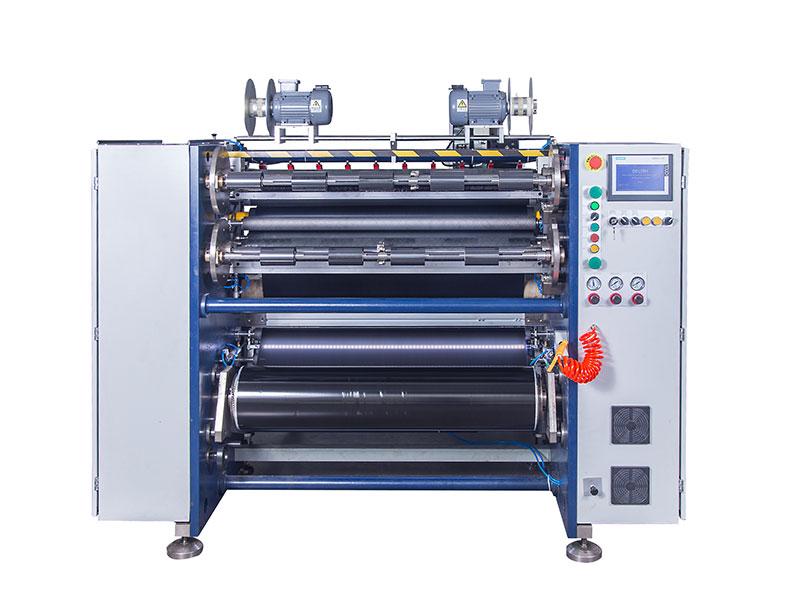 Ribbon Slitting Machine
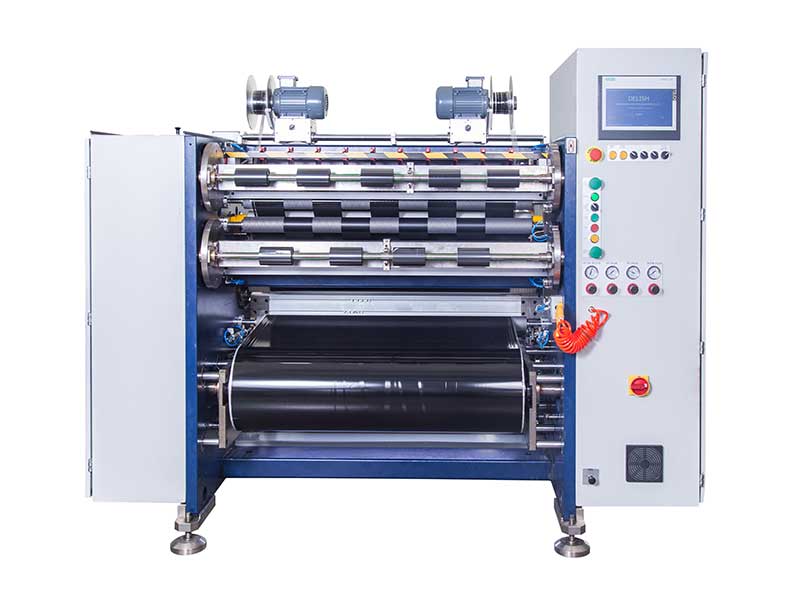 Barcode Ribbon Slitting Machine
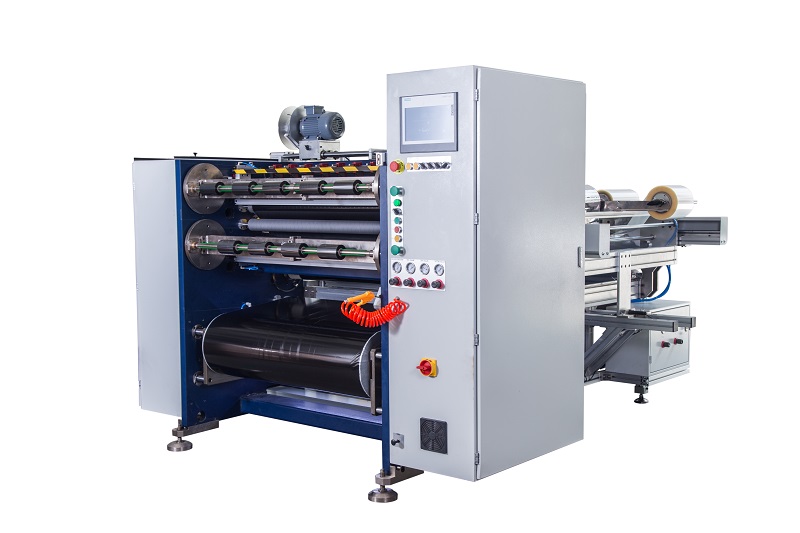 Semi Automatic Thermal Transfer Ribbon Slitter RSDS5 PLUS
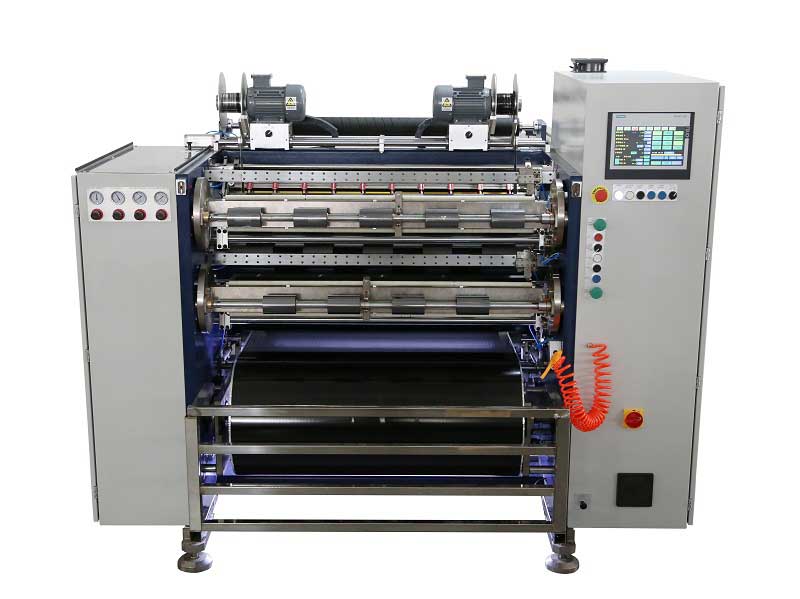 Automatic Thermal Transfer Ribbon Slitter RSDS8 H PLUS
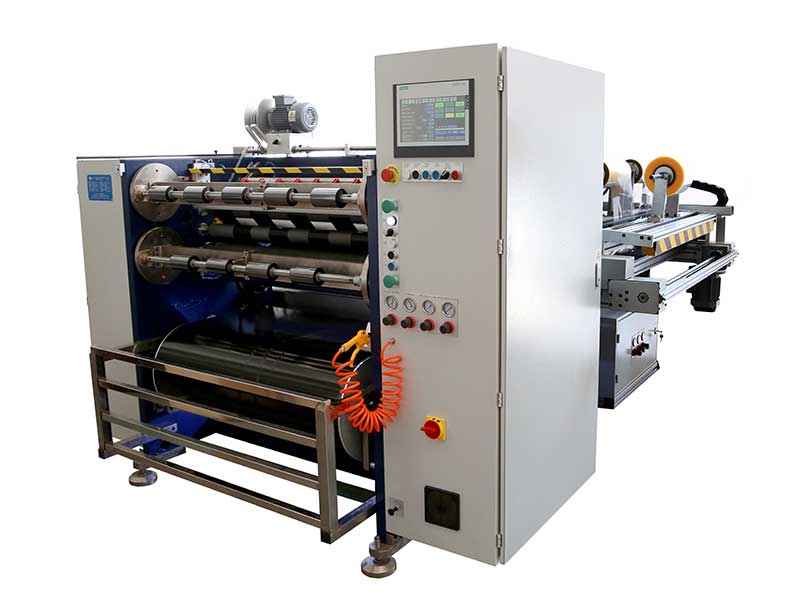 Automatic Thermal Transfer Ribbon Slitter RSDS6 PLUS
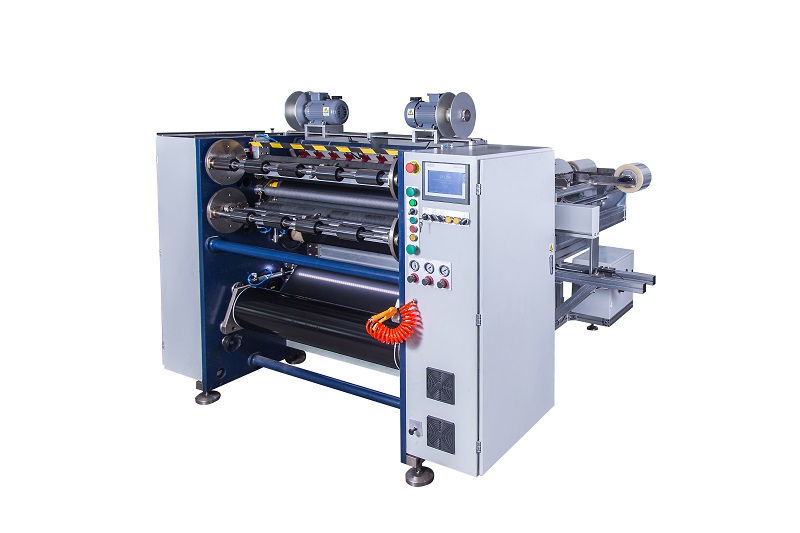 Semi Automatic Thermal Transfer Ribbon Slitter RSDS1 PLUS
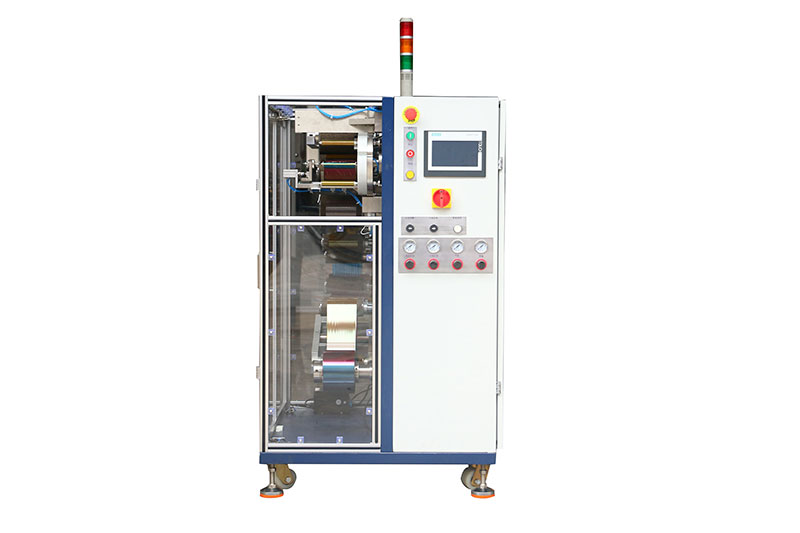 Card Print Ribbon Rewinder
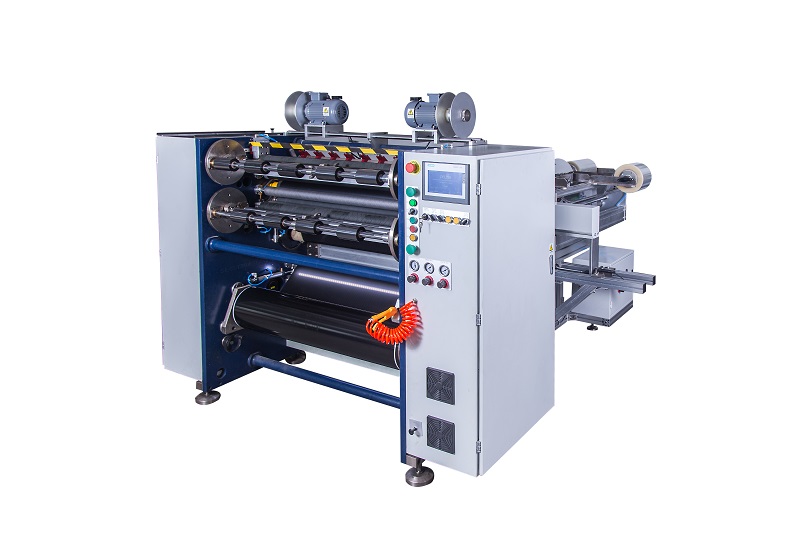 Semi Automatic Thermal Transfer Ribbon Slitter RSDS2 PLUS