In the production of heat transfer ribbons, the slitting process is a key step in converting wide-width master rolls into the specifications required by customers. The ribbon substrate is usually 4.5~10μm PET film, which is easy to stretch and wrinkle, making control during slitting much more challenging than ordinary film materials. Many companies face the dilemma of "equipment nominally high speeds but actually slow to operate," fundamentally due to failing to grasp the core parameters affecting efficiency.
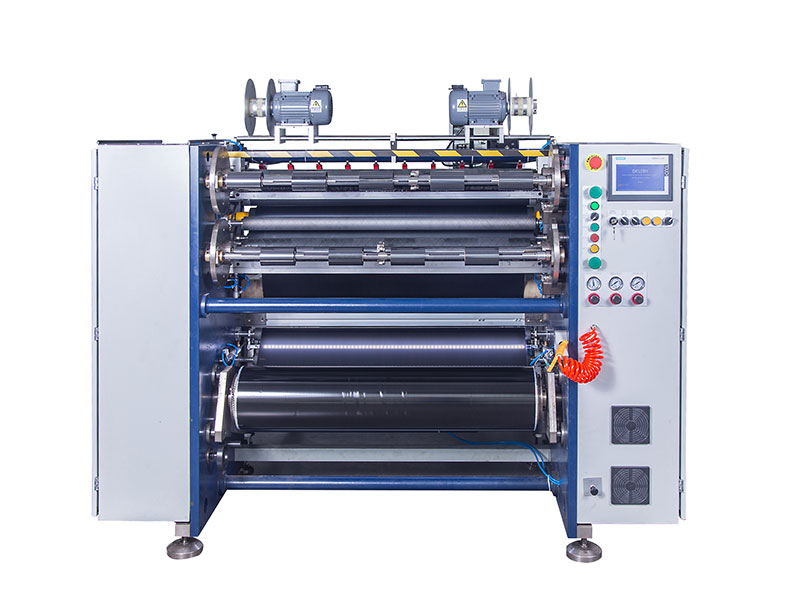
1. Slitting accuracy: The underlying logic of trading precision for speed
Slitting accuracy is the primary indicator for evaluating the performance of the ribbon slitting machine, directly determining the width consistency of the finished ribbon and subsequent printing results. Ordinary slitting machines typically have an accuracy of about ±0.5mm, while high-precision models can be controlled within ±0.1mm or even ±0.05mm.
The relationship between precision and efficiency is often overlooked: when accuracy is insufficient, equipment can only run at reduced speed to maintain basic quality. When accuracy improves from ±0.3mm to ±0.08mm, the slitting speed can increase from 80m/min to 120m/min, and the defect rate drops from 2.5% to 0.3%. With each level of precision improvement, the defect rate drops by an order of magnitude—for high-value ribbons like resin-based and hybrid-based, this means real cost savings.
Technical support for achieving high precision includes high-rigidity mechanical structures (Class C precision guide rails, ball screw axial clearance ≤0.05mm), multi-stage closed-loop tension control system (fluctuation range ≤±0.5N), and CCD vision correction system (positioning accuracy ±0.03mm, response time ≤10ms).
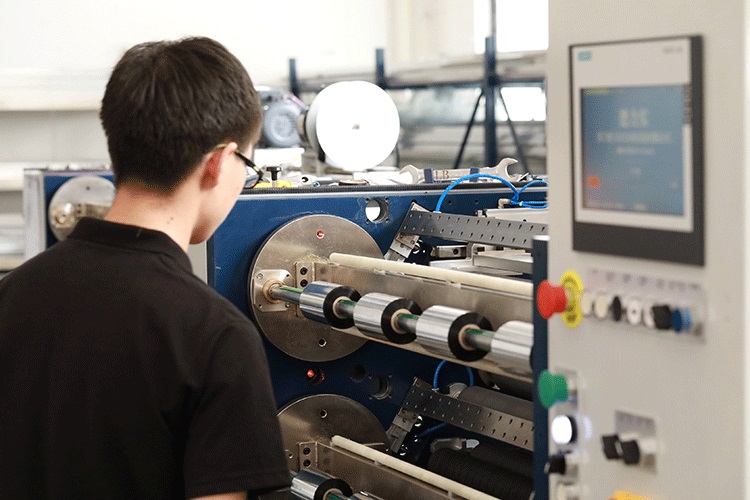
2. Tension control: the lifeblood of high-speed and stable operation
Tension control is the soul of the slitting process. The most direct manifestation of low ribbon slitting machine efficiency is "not running fast"—the equipment is designed for a maximum speed of 300m/min or even higher, but in actual operation it can only run at 100-150m/min; higher speeds cause wrinkling, misalignment, and uneven end faces.
Broken ribbon is the biggest killer of efficiency. Industry statistics show that among unplanned shutdowns of ribbon slitting machines, ribbon breakage accounts for up to 60%, often caused by uncontrolled tension—excessive tension directly stretches or even breaks the substrate. For narrow band slitting (width below 10mm), tension control is the key to success: the same tension change causes much greater stress on the narrow band than on the wide band itself, so narrow band slitting usually requires reducing the unwinding tension to 60%-70% of conventional broadband tension.
The core strategy is to upgrade open-loop control to a closed-loop tension system. Traditional magnetic particle brakes have slow control response, with tension fluctuations reaching up to ±10%; The closed-loop vector inverter, combined with floating roller tension feedback, enables real-time PID adjustment and keeps tension fluctuations within ±0.5N. At the same time, a taper tension algorithm is used during winding—automatically lowering tension as the diameter increases, preventing inner layer compression deformation. Practice has shown that upgrading the closed-loop tension system can usually increase stable operating speed by 30%-50%.
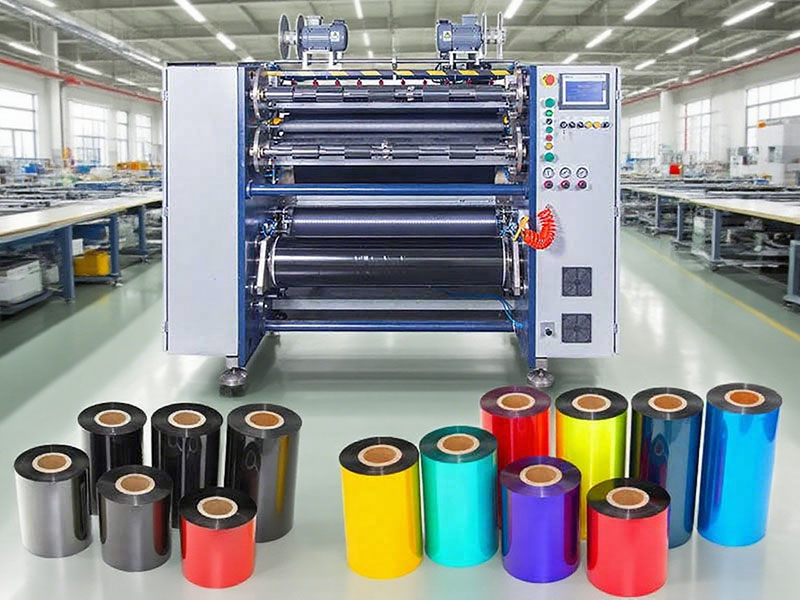
3. Winding Neatness: The "Hidden Indicator" Determining Overall Efficiency
Winding neatness is often overlooked, but it directly affects back-end packaging, automatic rewinding, and the smoothness of printer tape flow. Face deviation should generally be controlled within ±1mm, with high-end equipment reaching up to ±0.5mm.
Uneven winding usually manifests as displacement of the end layer, tower-shaped, or "daisy-core" wrinkles, caused by unreasonable tension taper settings, uneven winding shaft and guide roller, and uneven pressure on the rollers. Although these issues do not directly cause downtime, they can trigger complaints and returns from downstream customers, essentially resulting in efficiency losses.
Improvement directions include: selecting a winding method that matches the ribbon substrate thickness (center winding is suitable for thicker materials, surface winding is more friendly for thinner materials); Uses closed-loop tension control combined with an active correction device; For guide rollers prone to adhesive adhesion, replace them with anti-stick coatings or ceramic guide rollers.
Synergy of three major parameters: Relying solely on single-parameter optimization cannot achieve a 40% efficiency leap. There is a linkage among the three—stable tension is the prerequisite for accuracy; only when accuracy meets the standard can speed increase, while winding quality is the result of both tension and precision. Through systematic upgrades, tool change times can be reduced from minutes to seconds, defect rates drop by 50%, and overall equipment effectiveness (OEE) can be improved by 35%-40%.
Implementation recommendation: Start by establishing a "narrow band slitting parameter table," and simultaneously implement regular calibration of tension sensors and management of tool life ledgers for the optimal combination of curing parameters for different widths and materials. Once the foundation is solid, we will gradually advance automation upgrades such as automatic tool change and visual inspection. Usually, without replacing the main unit, improving overall efficiency by 20%-40% through the above 2-3 improvements is entirely achievable.
 English
 Deutsch
 Français
 Español
 Português
 日本語
日本語 русский
 한국어
한국어 عربي
عربي ภาษาไทย
 Tiếng Việt
 Italiano

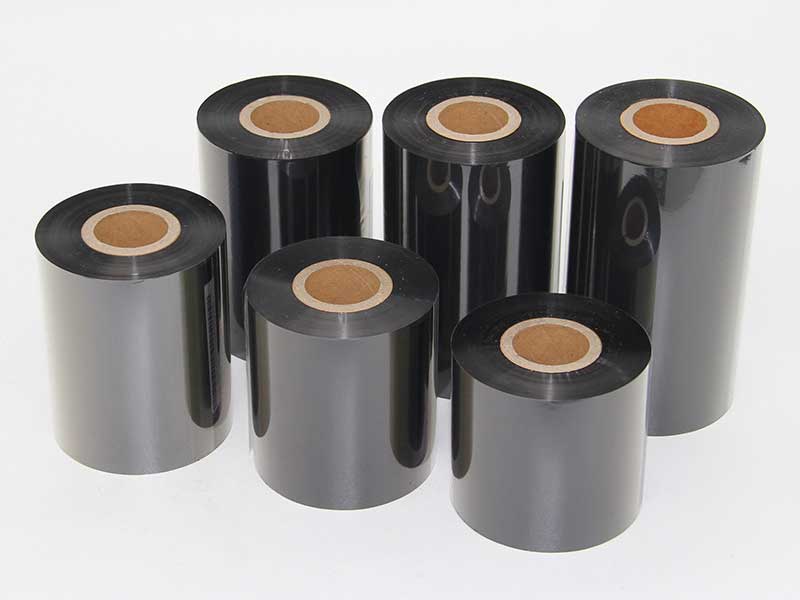
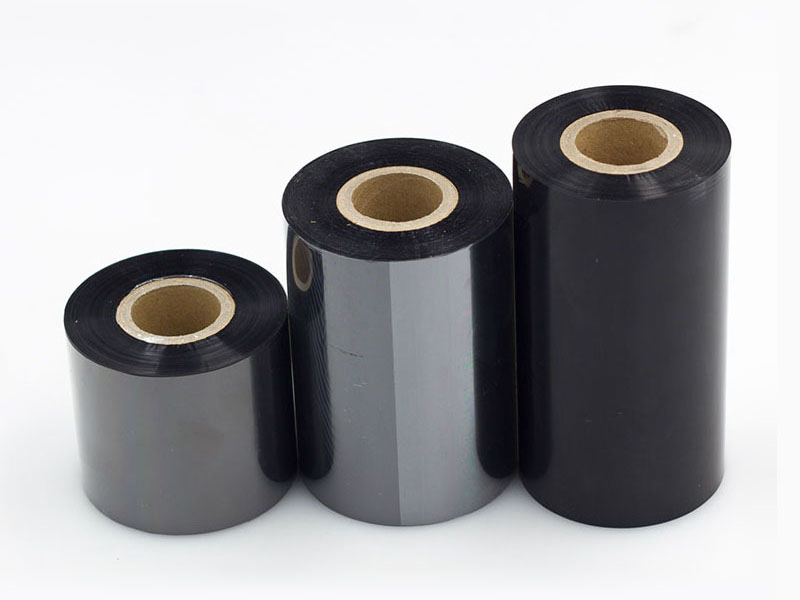
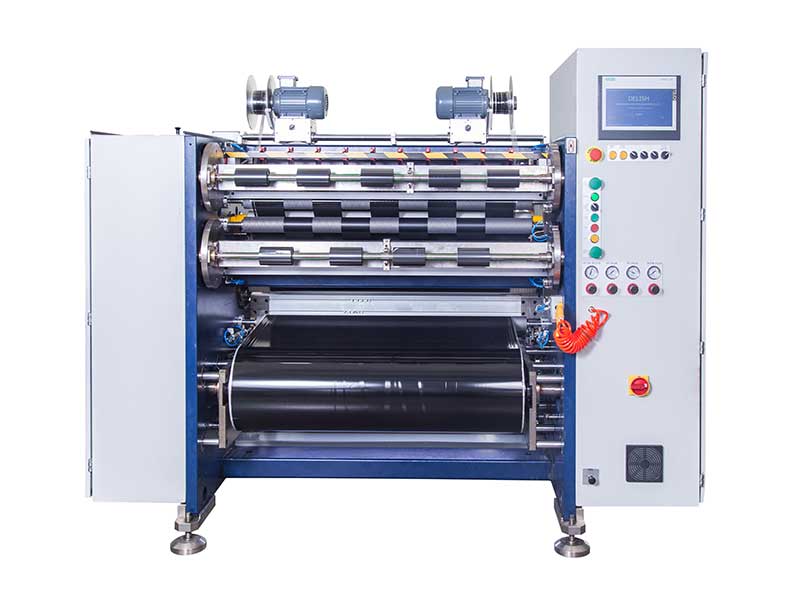 Barcode Ribbon Slitting Machine
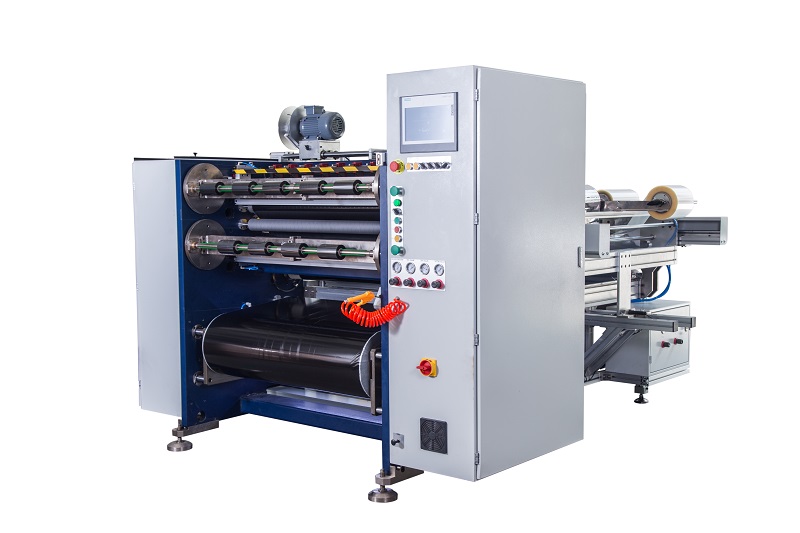 Semi Automatic Thermal Transfer Ribbon Slitter RSDS5 PLUS
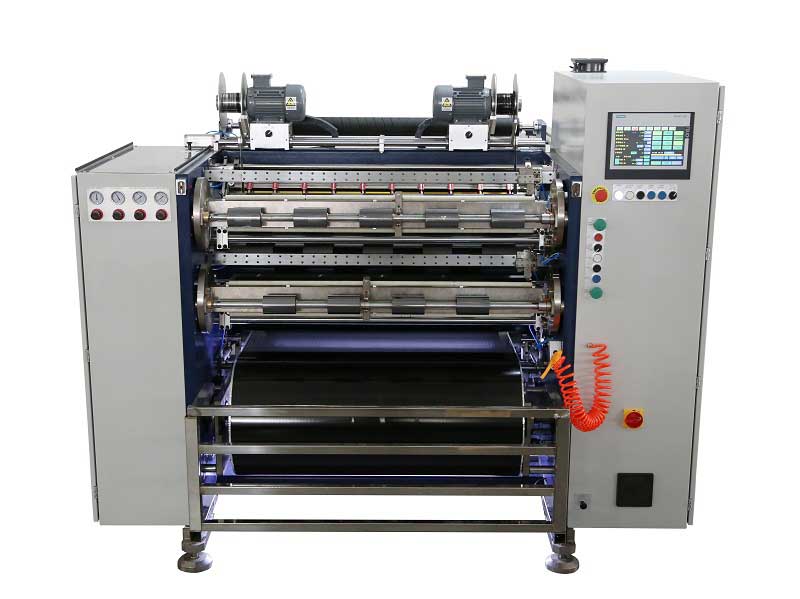 Automatic Thermal Transfer Ribbon Slitter RSDS8 H PLUS
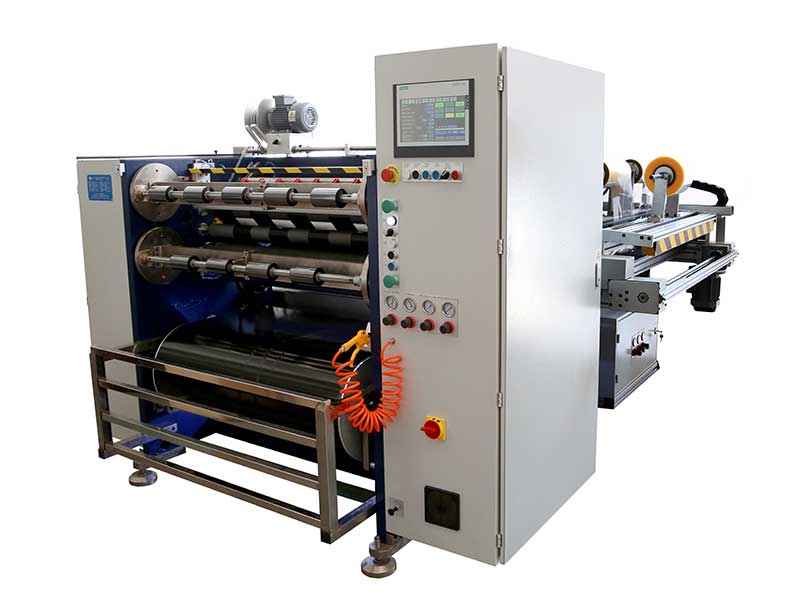 Automatic Thermal Transfer Ribbon Slitter RSDS6 PLUS
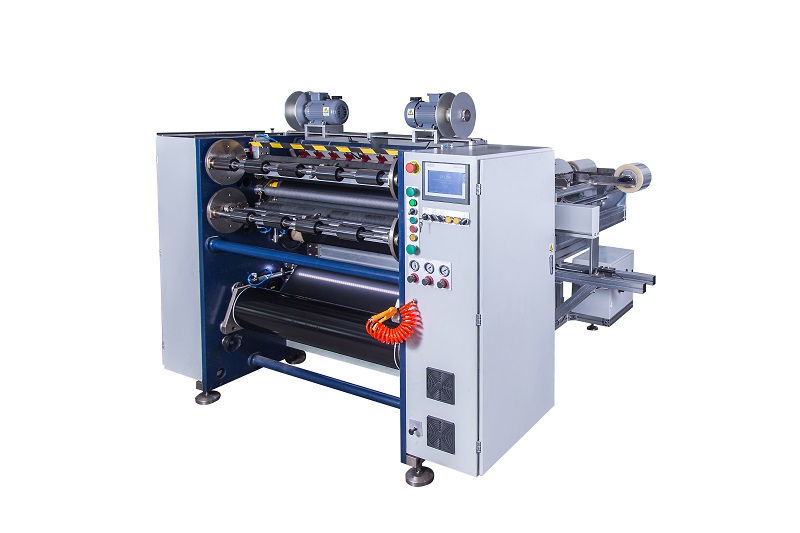 Semi Automatic Thermal Transfer Ribbon Slitter RSDS1 PLUS
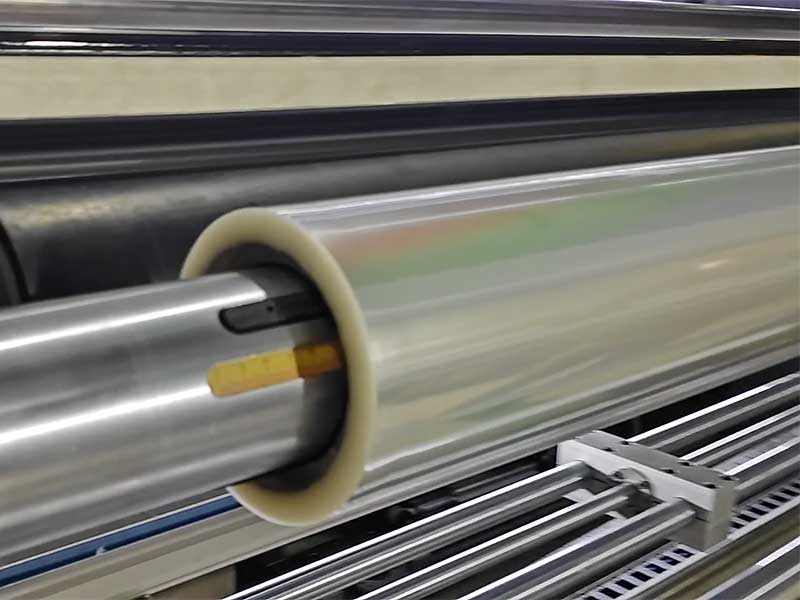 Solar Film Slitter
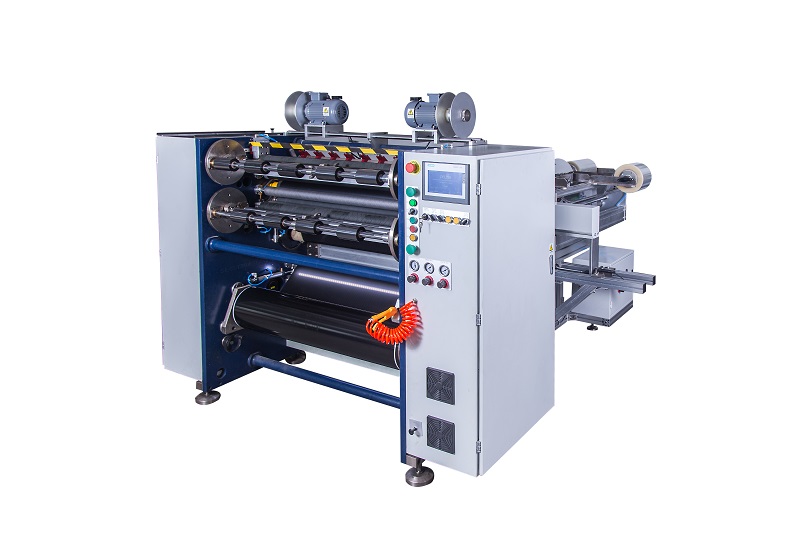 Semi Automatic Thermal Transfer Ribbon Slitter RSDS2 PLUS
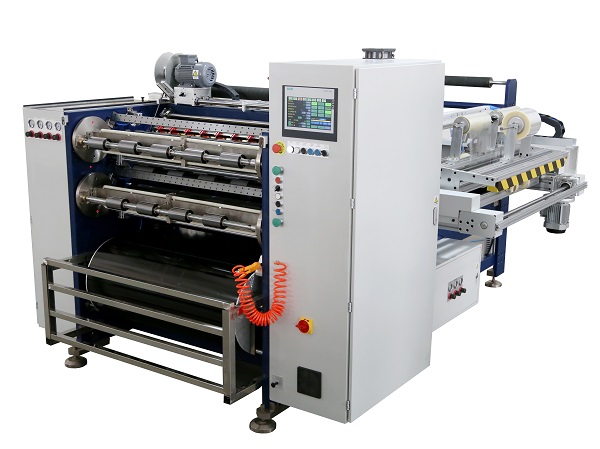 Automatic Thermal Transfer Ribbon Slitter RSDS8 PLUS