Behind labels, receipts, and clothing tags, thermal transfer ribbons determine the clarity and durability of information. The "smart tailor" ribbon slitting machine, which cuts wide master rolls into customer-specific specifications, directly affects print quality and production efficiency. However, increasing slitting speed often comes at the expense of precision, and pursuing extreme precision may drag down production capacity. How to break this "fish-and-bear's paw" dilemma and achieve synergistic improvements in precision and efficiency is the core of this article's exploration.
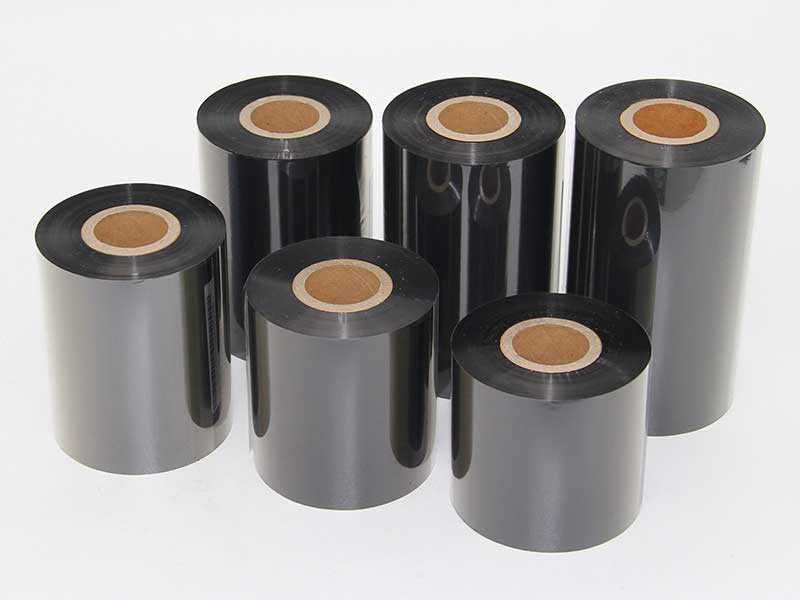
Precision: The battle at the micron level determines the quality landscape
Slitting accuracy is the cornerstone of ribbon quality, and its impact runs throughout the entire end-use process. Insufficient precision leading to edge burrs and width deviations may cause printer tape jams, broken tapes, or even scratch expensive print heads.
Achieving accuracy depends on three core technologies:
The slitting knife system is the "scalpel" that determines edge quality. High-end equipment uses special carbide or ceramic blades, ground at the nanometer level to ensure the blades are extremely sharp and wear-resistant. The key technology lies in micron-level control of blade shaft clearance—overtightening accelerates wear, while overlooseness causes burrs. For thin ribbons, the gap should be controlled between 0.02-0.05mm. Emerging laser slitting technology cuts ultra-thin ribbons without contact, completely avoiding mechanical stress.
The tension control system is considered the "nerve center" of the device. The carbon ribbon substrate (PET) is only 4.5-6.0μm thick, and tension fluctuations easily cause tensile deformation. Modern high-end slitting machines use a fully closed-loop vector tension control system, combined with multi-point high-precision sensors, to keep tension fluctuations within ±0.5N. The taper tension control algorithm used during winding automatically decreases tension as the roll diameter increases, preventing the inner layer from being crushed.
The Correction System (EPC) acts like an "eagle eye," ensuring the slitting path remains centered at all times. CCD or ultrasonic sensors scan material edges in real time, achieving detection accuracy of ±0.1mm. Once deviations are detected, the system drives the correction rollers to fine-tune within milliseconds, ensuring the winding end face is as smooth as a mirror.
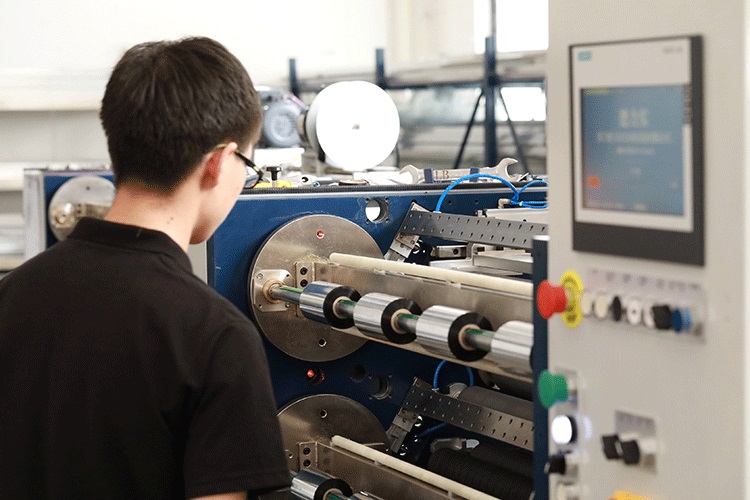
Efficiency: The race between speed and automation
On the basis of meeting accuracy standards, efficiency becomes the key to success.
Slitting speed directly determines production capacity. Modern equipment can reach several hundred meters per minute, but the speed and finished product rate exhibit an inverted U-shaped relationship. Research shows that for 5.0μm thin substrate ribbons, 250-350m/min is the "golden range" for balancing efficiency and quality (see table below).
| Slitting speed (m/min) | Average Finished Product Rate (%) | Main types of defects |
| 150 | 97.2 | The face is slightly uneven |
| 250 | 98.5 | Stable condition with the lowest defect rate |
| 350 | 97.8 | Fine rough edges begin to appear |
| 450 | 94.5 | Increased burrs and ink scraping |
| 550 | 88.0 | Frequent band breakage and coating peeling |
Data source: Controlled variable-based experiment
Automation and intelligence are key to unlocking manpower. Traditional manual production changeover takes up to 30 minutes, whereas modern equipment uses servo motors to precisely arrange blades, automatically calculating the optimal cutting path by entering order parameters, reducing change time to under 5 minutes. Fully automated loading and unloading, online inspection, and integration of an automatic packaging system significantly reduce the human-machine ratio; one person can monitor multiple devices, achieving 24-hour uninterrupted production. Integrated production line cases show that overall efficiency can be improved by 35%, and labor costs reduced by 40%.
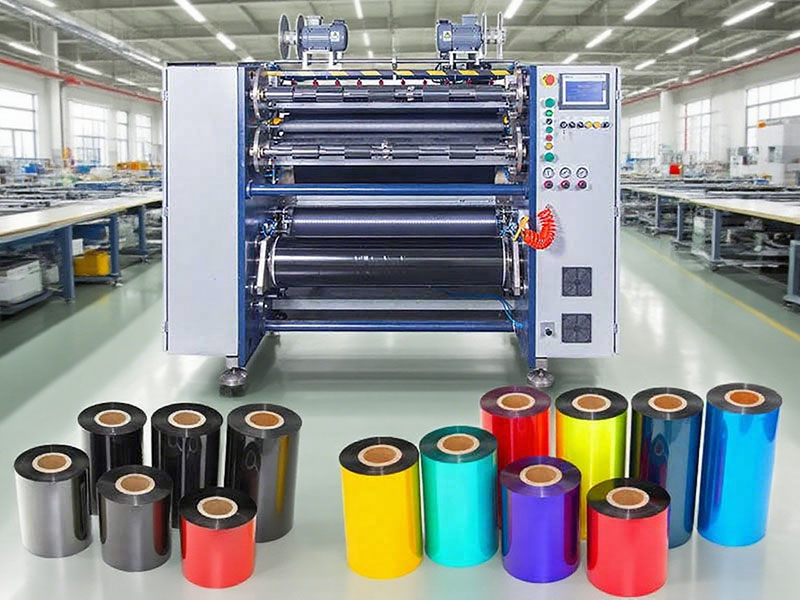
Balance point: Synergistic optimization of speed and precision
Precision and efficiency are not zero-sum games; the optimal balance can be found through technological collaboration.
Fine-tuning speed thresholds is the primary strategy. Companies should not blindly pursue the highest nominal speed of equipment, but should establish a process parameter database based on ribbon type and substrate thickness. For example, wax-based ribbons have low melting points and high-speed friction that easily melts and sticks to the blade, so the speed should be reduced appropriately; Resin-based carbon ribbons are tougher and can challenge higher speeds.
Collaborative application of key technologies can effectively broaden the "golden range." The high-efficiency static elimination system solves the burr problem caused by static exacerbation during high-speed slitting—after installation, the finished product rate at 450m/min can increase from 94.5% to 96.8%. The tool status monitoring system automatically adjusts pressure by real-time monitoring of wear, preventing accuracy degradation caused by tool passivation.
Data-driven continuous optimization makes balancing a dynamic process. After integrating the MES system, the equipment collects real-time data such as speed, tension, and yield rate, providing a basis for process optimization. In the future, AI algorithms predicting material deformation trends and virtual debugging of digital twin technology will elevate the synergy between precision and efficiency to new heights.
Conclusion
The upgrade of the thermal transfer ribbon slitting machine is essentially a delicate balance of "micron" and "minute." Achieving this balance requires not only hardcore technologies such as precision tool systems, closed-loop tension, and intelligent correction, but also refined and data-driven soft management of speed thresholds, automated processes, and process parameters. When a company finds the golden intersection of speed and precision at the "cutting edge," it gains not only a lower scrap rate and higher production capacity but also the decisive quality and delivery capability in market competition.
 English
 Deutsch
 Français
 Español
 Português
 日本語
日本語 русский
 한국어
한국어 عربي
عربي ภาษาไทย
 Tiếng Việt
 Italiano

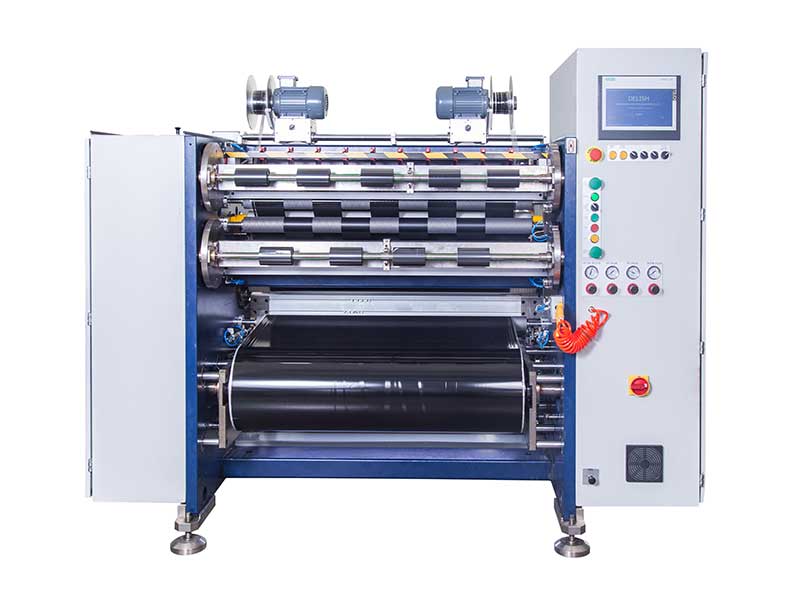 Barcode Ribbon Slitting Machine
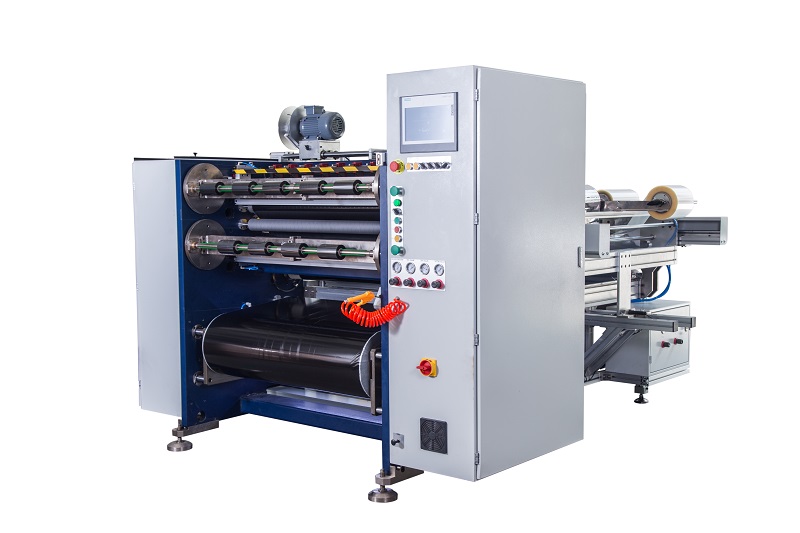 Semi Automatic Thermal Transfer Ribbon Slitter RSDS5 PLUS
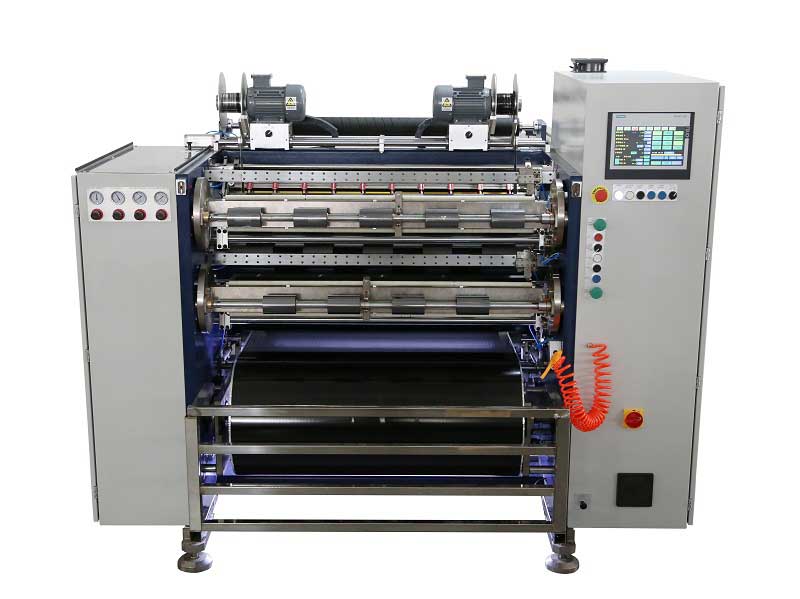 Automatic Thermal Transfer Ribbon Slitter RSDS8 H PLUS
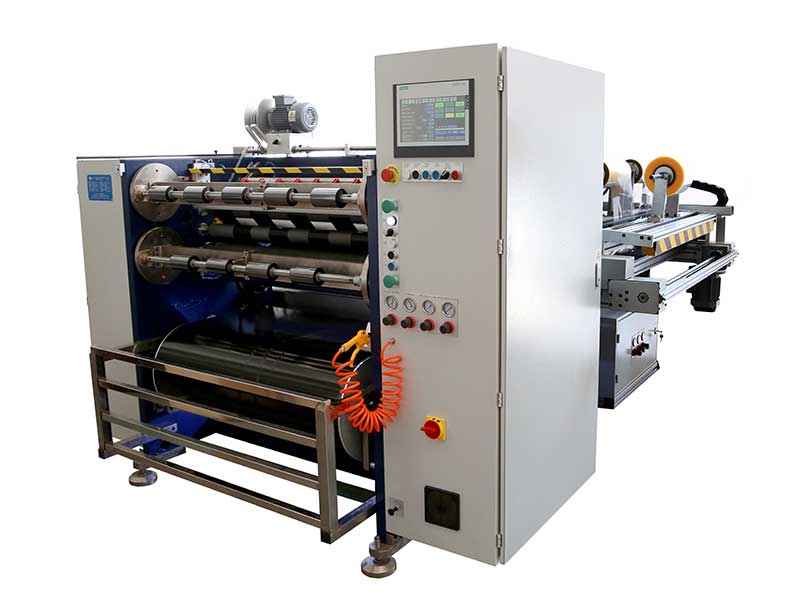 Automatic Thermal Transfer Ribbon Slitter RSDS6 PLUS
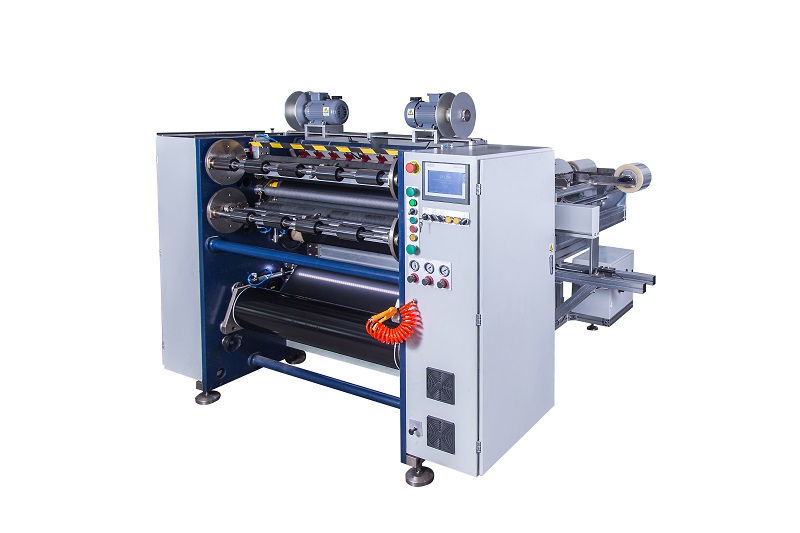 Semi Automatic Thermal Transfer Ribbon Slitter RSDS1 PLUS
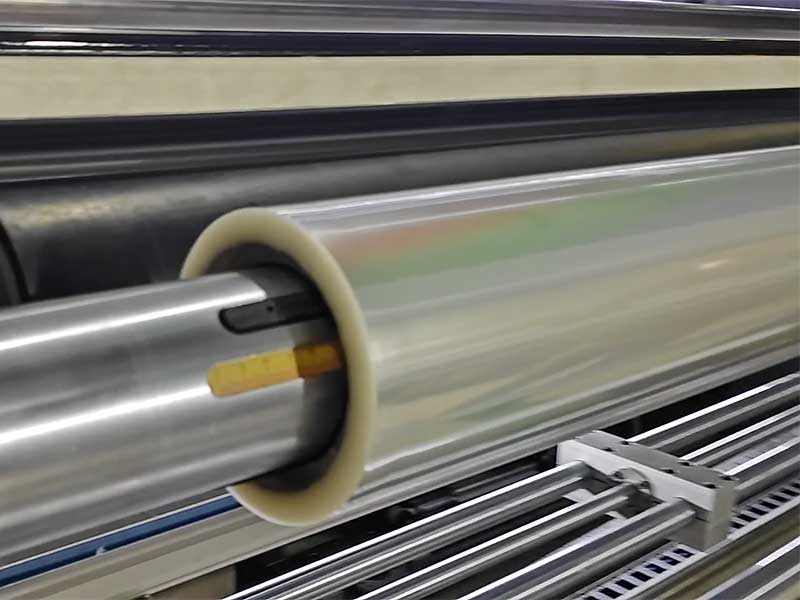 Solar Film Slitter
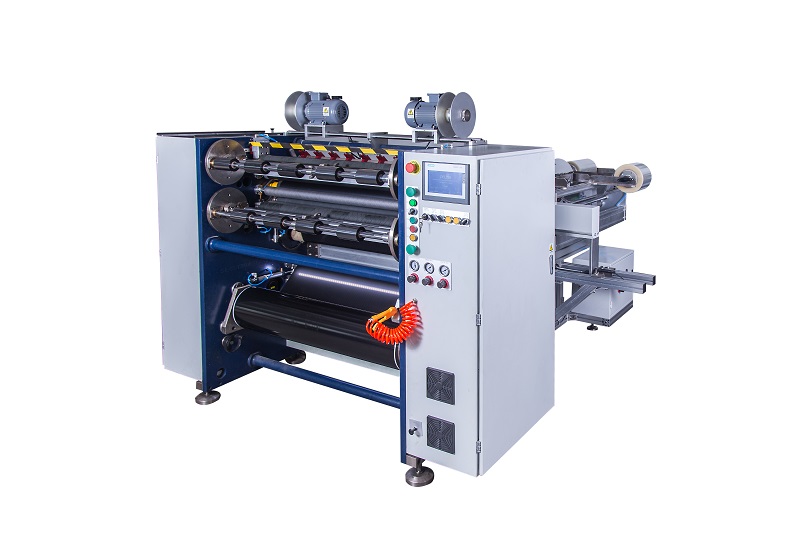 Semi Automatic Thermal Transfer Ribbon Slitter RSDS2 PLUS
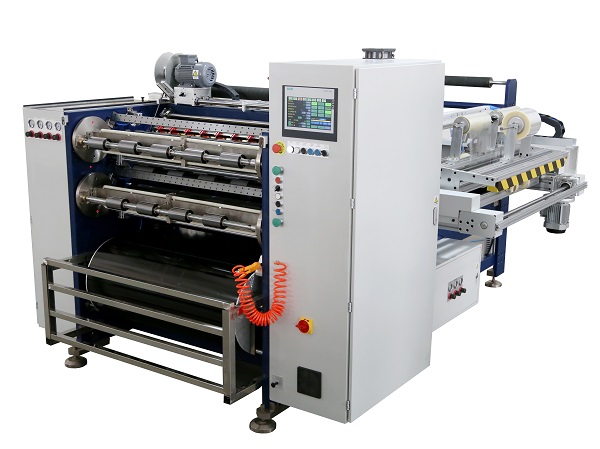 Automatic Thermal Transfer Ribbon Slitter RSDS8 PLUS