In the adhesive product processing industry, slitting and rewinding are two key links in the production process of single sided adhesive. In the past, enterprises often needed to purchase slitting machines and rewinders separately, which not only required large equipment investment and occupied a lot of space, but also often became a bottleneck in the connection efficiency between processes. Nowadays, the integrated combination of single sided adhesive slitting machine and rewinding machine is becoming a smart choice for more and more factories.
Why do you need a combination solution?
In the traditional mode, the slitted semi-finished product needs to be transferred to the rewinder for secondary processing. In this process, the number of material joints increases, the loss rate increases, and each additional handling increases the risk of scratching or deformation. The combination scheme integrates the two processes into the same system, and directly enters the rewinding link after the slitting is completed, truly realizing "one loading, finished products off the production line".
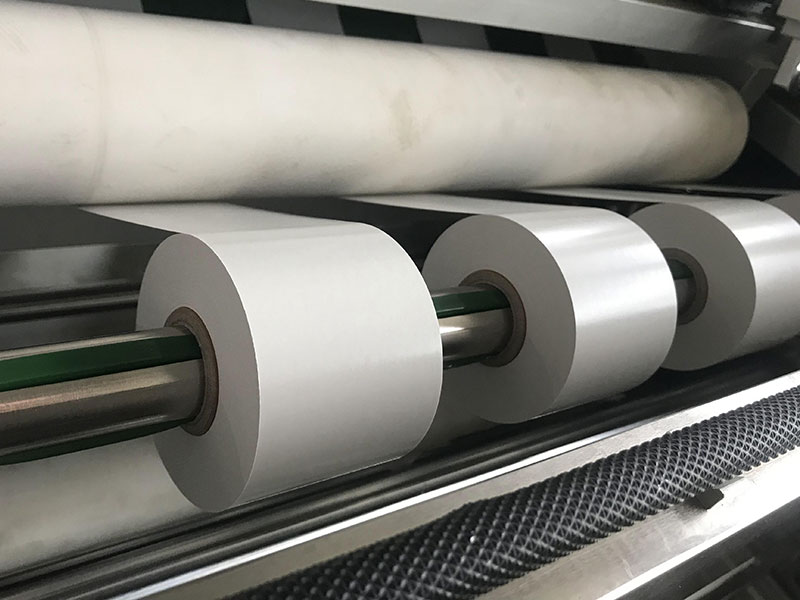
What pain points can this combination solution solve?
• Double efficiency: eliminate intermediate turnover and secondary clamping time, and increase the production capacity of a single shift by more than 30%
• Higher precision: slitting and rewinding adopt the same tension control system, and the end face neatness is significantly better than that of split equipment
• Save labor: Originally required two people to operate separately, but now one person can complete the whole process control
• Smaller footprint: The integrated design saves about 40% of the workshop space compared to two separate machines
• Reduced Losses: Each reduction in joints means one less piece of scrap and higher material utilization
Core configuration and selection points
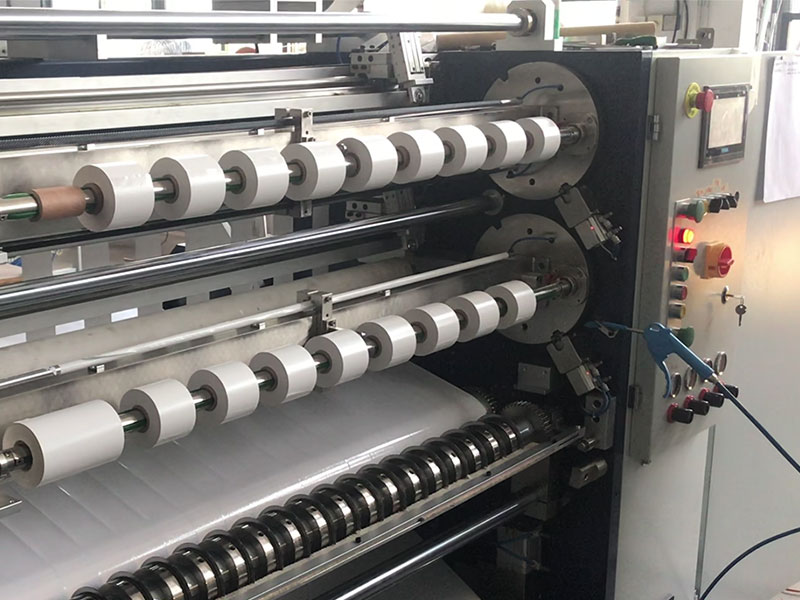
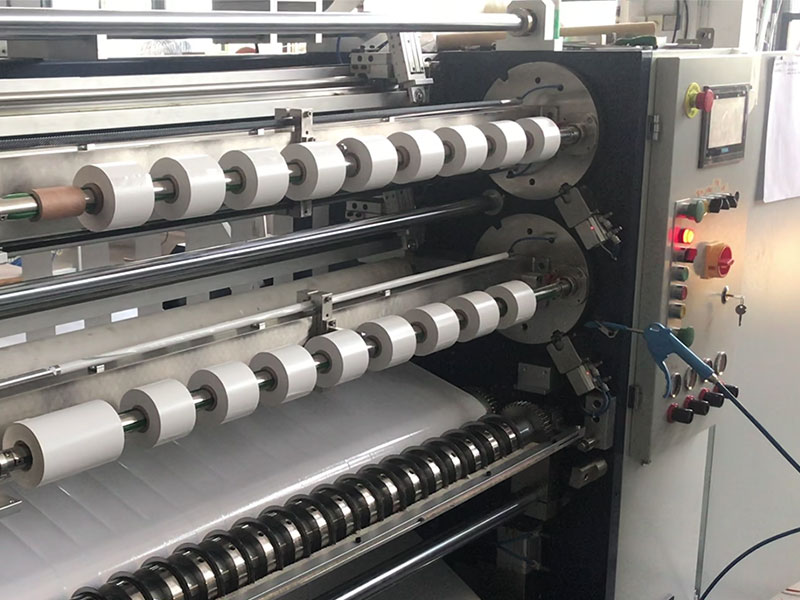
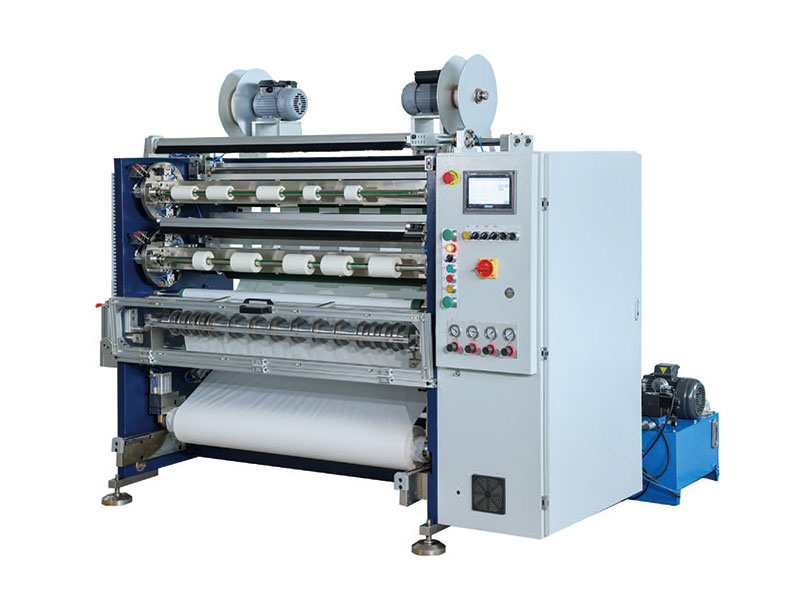
A mature single sided adhesive slitting and rewinding combination solution usually includes the following core modules:
1. Unwinding unit: Equipped with a hydraulic lifting mechanism, the maximum unwinding diameter can reach more than 1000mm, and the air expansion shaft works together with the magnetic particle brake to ensure that the unwinding tension is constant.
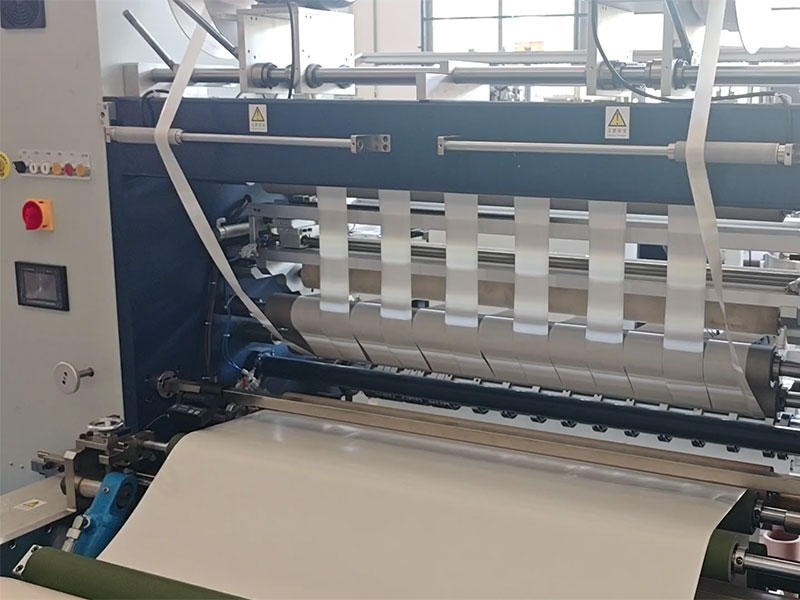
2. Slitting unit: It adopts a circular knife or straight knife slitting method, which can be freely switched according to the thickness of the tape substrate (such as BOPP, PVC, masking paper, etc.). The slitting width accuracy is usually controlled within ±0.1mm.
3. Rewinding unit: The rewinding shaft is equipped with automatic roller pressure and taper tension control, which can effectively prevent bubbles or wrinkles in the single sided adhesive during the winding process.
4. Control system: PLC with touch screen, which can store hundreds of sets of process parameters. When switching between different specifications of tape, it can be called up with one click, and there is no need to repeatedly debug.
When selecting a model, it is recommended to focus on three aspects: the maximum slitting width should match your original roll specifications; The maximum mechanical speed (usually 200-300m/min) should be balanced with the production capacity of the front and back processes. Whether the reel diameter capability covers your finished roll needs.
Practical application cases
Taking a packaging materials factory as an example, the factory originally used two old equipment to produce single sided cotton paper tape, which needed to be operated by two workers every day, with an average output of about 180 rolls per shift. After the introduction of the combined solution, one person can operate it, the class output has increased to 260 rolls, and the neatness of the finished roll end face has been improved from the original ± 1.5mm to ±0.8mm, and the customer return and exchange rate has decreased by 60%.
Maintenance and use recommendations
Although the combined equipment is good, daily maintenance cannot be ignored:
• Check the wear of the slitting blade every shift, blunt knives not only affect the quality of the end face, but also increase the resistance of the rewinding section
• Regularly clean the residual glue on the surface of the guide roller and press roller to avoid tension fluctuations caused by sticking
• Calibration of tension sensors is recommended every six months, especially if the product is changed frequently
• The addition of oil-water separators in the pneumatic system can effectively extend the life of the cylinder and control valve
Return on investment analysis
A set of medium and high configuration single sided adhesive slitting and rewinding combination equipment usually costs between 100,000 and 300,000 RMB (depending on the width and degree of automation). Based on the calculation of saving 1 labor and increasing efficiency by 30%, most users can recoup their equipment investment within 8-14 months. For processing plants with a monthly consumption of more than 50 tons of raw coils, this account is reasonable.
Epilogue
The combination of single sided adhesive slitting machine and rewinding machine is not a simple "put two machines together", but a whole chain integration from control logic, mechanical structure to process parameters. For tape processing companies that are considering upgrading their production lines, choosing a reliable combination solution means using fewer people, less space, and shorter time to make more stable products. One-stop processing may be a key step for you to reduce costs and increase efficiency.
Note: It is recommended to contact professional manufacturers for on-site evaluation of specific equipment parameters and quotations, and make a choice based on their own product characteristics.
 English
 Deutsch
 Français
 Español
 Português
 日本語
日本語 русский
 한국어
한국어 عربي
عربي ภาษาไทย
 Tiếng Việt
 Italiano
 Single Side Adhesive Slitter