From the packing tape on courier packages, to the protective film inside smartphone screens, and the heat-resistant electrical tape in automotive wiring harnesses—these single-sided rubber products found everywhere in daily life all rely on a key piece of equipment: the single-sided tape slitting machine. Its core mission is to precisely "break down wide tape master rolls" into small pieces and cut them into narrow finished rolls that meet various application specifications.
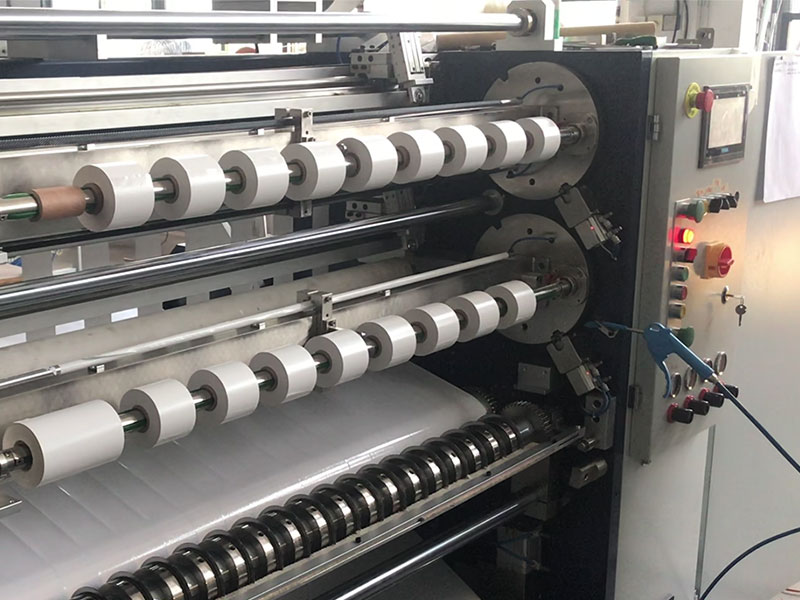
Definition: Converter for wide mother rolls to precision small rolls
The single-sided tape slitting machine is an automated device specifically designed for cutting single-sided tape, adhesive films, protective films, release paper, and other materials. From a mechanical definition, it belongs to a type of slitting machine. Its main task is to cut wide single-sided rubber materials (such as the tape roll) longitudinally along the length direction to form multiple narrow strips of material, which are then simultaneously rolled into neat small rolls.
This equipment is widely used in industries such as packaging, printing, electronics, medical, and automotive. Take the electronics industry as an example: when cutting ultra-thin conductive tape inside a phone, if the precision is insufficient and the edges develop burrs or width deviations, it may affect the fit and insulation performance of the phone's internal components—this means that single-sided tape slitting machines must combine high efficiency with high precision.
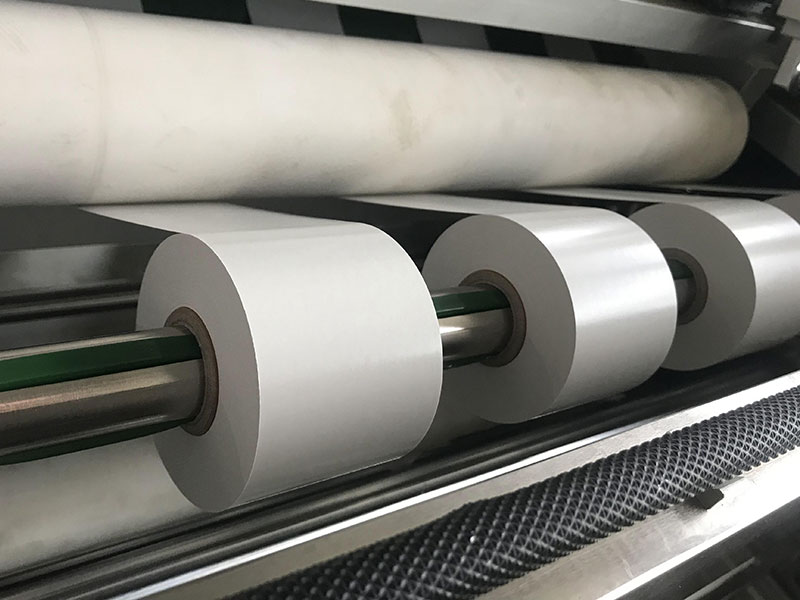
Working principle: A four-step process from "large volume" to "small volume."
The workflow of the single-sided tape slitting machine can be seen as a highly automated production line, with core tasks centered around four major steps: unwinding, film penetration and leveling, slitting, and winding.
Step 1: Unwinding (feeding). Install the wide-width tape roll weighing several hundred kilograms onto the slitting machine's unwinding spindle, and secure it securely with an air expansion shaft or clamping device. Unwinding mechanisms are usually equipped with tension control systems to ensure the material remains properly tightened during subsequent processes.
Step 2: Film penetration and smoothing. One end of the tape is pulled out and sequentially passed through multiple sets of guide rollers and leveling rollers on the equipment. The purpose of these rollers is not only to guide the material forward but, more importantly, to eliminate wrinkles caused by the smoothing roller during transportation and storage, ensuring a smooth and flawless entry into the cutting area.
Step 3: Slitting (core link). This is the core technology of the slitting machine. The flat belt is cut longitudinally into several preset narrow strips through a high-speed rotating circular or pneumatic knife system. Modern high-precision equipment uses closed-loop tension control systems, adjusting tension in real time at millisecond-level speed via sensors, ensuring that ultra-thin substrates (such as PET films < 0.01mm thick) do not break or wrinkle due to uneven tension.
Step 4: Collect the papers. After cutting, multiple narrow strips of tape are each rolled into neat finished rolls by their respective reels. Each rewinding reel is usually driven by an independent servo motor to maintain synchronized speed, preventing issues such as "loose inside, tight outside" or misalignment of the end face in the finished product. Throughout the process, ultrasonic or photoelectric correction systems continuously monitor the edge position of the tape to prevent deviation.
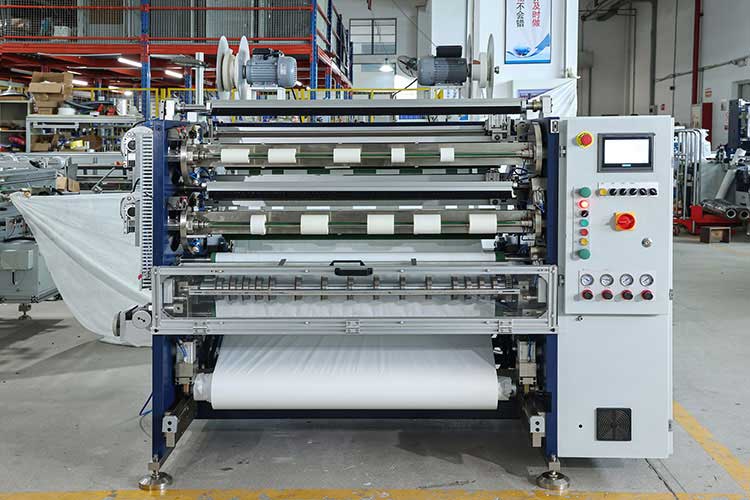
Core structure: Three major systems and key components
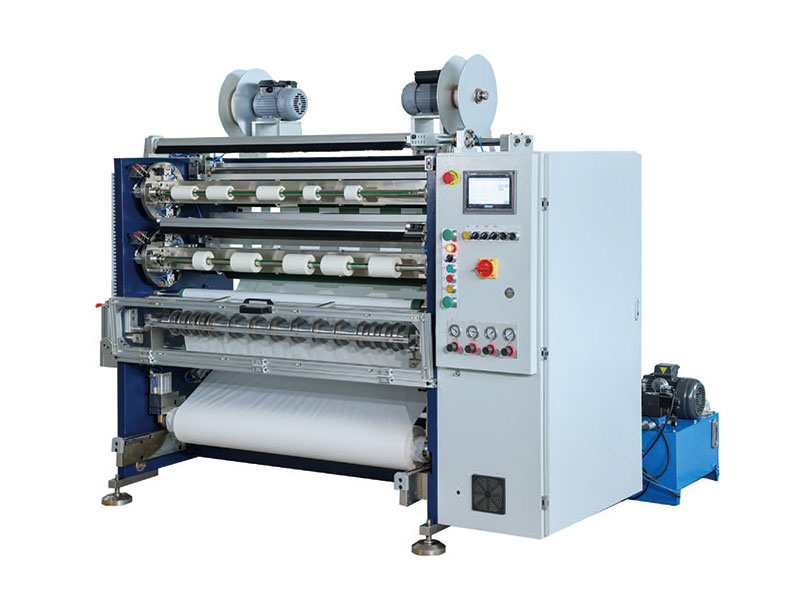
The single-sided glue slitting machine is completed through the coordination of multiple precise mechanical and electrical systems. Its main structure can be summarized as the following core parts:
1. Unwinding and tension control system
This section is responsible for supporting the main roll and controlling the tension released from the material. The unwinding shaft usually uses a gas expansion shaft, which firmly fixes the coil core through inflatable expansion. The tension control system uses sensors to monitor material tension in real time and automatically adjusts the torque or braking force of the unwinding reel, which is key to preventing the thin substrate from being snapped or loosened during slitting.
2. Slitting actuator
This is the core component that determines slitting accuracy. Mainstream equipment uses circular blades for cutting, with blade materials and angles specially optimized. For high-tasion tapes, modern equipment uses carbide tools with release coatings, and even adds high-frequency micro-vibration devices to effectively prevent glue adhesion to the blade edges and material tearing. In some patented designs, the tool holder can slide on the blade shaft and adjust the spacing via a motor to meet the needs of different product widths.
3. Winding and correction system
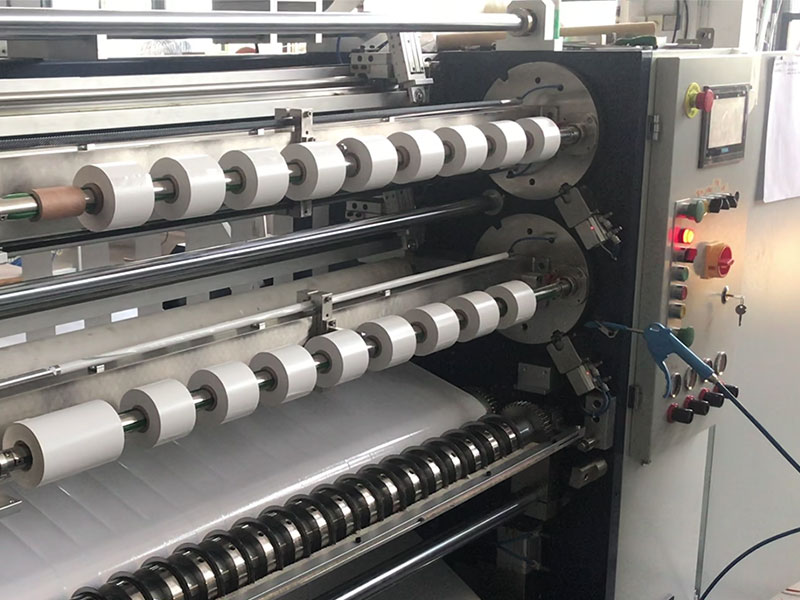
The winding section usually consists of multiple independently driven winding air shafts, ensuring that each narrow tape is evenly wound. The correction system uses photoelectric or ultrasonic sensors to detect the edge position of the tape, driving the actuator to adjust the unwinding or guide roller lateral position in real time, ensuring a consistently accurate cutting trajectory.
Additionally, the equipment's control system enables human-machine interaction via PLC touch displays, allowing operators to set key parameters such as slitting width, speed, and tension, significantly lowering the operational threshold. To address static electricity issues during high-speed operation, the equipment also installs static elimination devices (such as pulsed AC ion rods) at key stations to prevent dust adsorption or material winding rollers.
Conclusion
Although single-sided glue slitting machines rarely appear in the public eye, they are an indispensable part of the modern adhesive product industry chain. Through precise collaboration in unwinding, slitting, and rewinding, it transforms the massive industrial headstock into a standardized and stable end product. As industries such as electronics, automotive, and medical industries continue to demand higher tape precision and performance, single-sided tape slitting machines are evolving toward higher speed, higher precision, and greater intelligence, becoming key technical equipment to ensure consistent product quality.
 English
 Deutsch
 Français
 Español
 Português
 日本語
日本語 русский
 한국어
한국어 عربي
عربي ภาษาไทย
 Tiếng Việt
 Italiano
 Single Side Adhesive Slitter