In hot stamping processing, the quality of the slitting link directly determines the subsequent hot stamping effect. Problems such as burrs, jaggedness, and uneven edges not only waste materials, but also lead to failures such as "flying gold" and uneven attachment during hot stamping. So, in the face of various hot stamping foil slitting machines on the market, how to choose? Mastering the following three key parameters can effectively avoid slitting burrs.
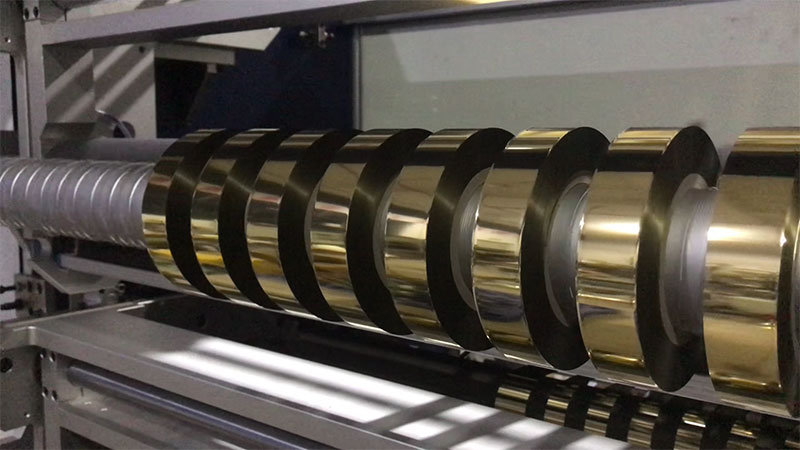
1. Slitting accuracy: the core that determines the flatness of the cut
Slitting accuracy is the primary indicator of equipment quality, usually determined by mechanical tolerances and control systems.
• Mechanical tolerance: The runout of the cutter shaft of the high-quality slitting machine is controlled within 0.01mm, and the gap between the tool holder and the tool holder is accurately matched to ensure that the upper and lower knives always maintain a constant bite volume when running at high speeds.
• Control system: The model with servo motor drive and PLC closed-loop control can monitor and adjust the tool speed and retraction tension in real time to avoid uneven force caused by speed fluctuations.
Purchase suggestion: When trying to cut on site, use a magnifying glass to observe the incision. The ideal state should be smooth cross-section, no white fluff, and straight edges. If the incision has fine serrations or burrs, it means that the accuracy of the equipment is insufficient.
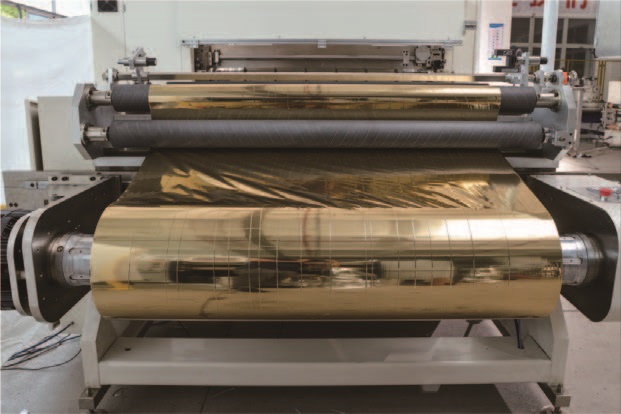
2. Tool material and angle: the direct nemesis of burrs
The tool is the "last meter" of slitting, and its material and geometric parameters are crucial.
• Material requirements: cemented carbide or imported high-speed steel should be selected, which has good wear resistance and strong edge retention. Ordinary carbon steel knives are prone to small chips after slitting for several kilometers, directly straining the foil surface.
• Edge angle: The hot stamping foil is thin (usually 12μm-30μm), and the tool angle needs to be specially designed. It is recommended to use a small cutting angle of 15°-20° for the upper knife, and for the lower cutter to match the flat or slightly curved surface to form a "shear" slitting instead of a "squeezing" slitting. Too much angle will cause squeezing burrs, and too small will cause the edge to be damaged.
Purchasing suggestion: Ask the supplier if they provide a tool material report and confirm that the blade can be resharpened multiple times. At the same time, find out whether the equipment has an automatic tool setting or fine-tuning mechanism, which is convenient for adjusting the bite amount according to the thickness of the material during production.
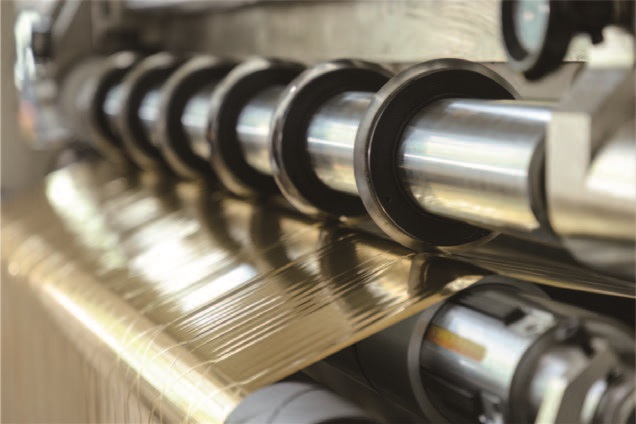
3. Retraction and unwinding tension control: prevent edge deformation
Many burrs are not sharp, but the loss of tension causes the foil to move sideways or deform tensile at the moment of slitting.
• Tension stability: The high-end slitting machine is equipped with an automatic constant tension control system, which adjusts the torque of the winding shaft in real time through floating rollers or tension sensors, ensuring constant tension throughout the entire process from full roll to small roll.
• Correction device: EPC (Edge Position Control) or LPC (Line Position Control) correction system must be configured, with an accuracy within ±0.5mm. Without a machine without deviation, the cutting position of the blade will be offset after the foil belt runs off, which will inevitably produce uneven phenomena of burr on one side and less hair on the other.
Purchasing suggestion: Let the supplier use the thinnest thickness (such as 12μm) and the narrowest width (such as 5mm) hot stamping foil for trial cutting, and observe whether the end face is neat, whether there is a bell opening or wrinkled edges after winding.
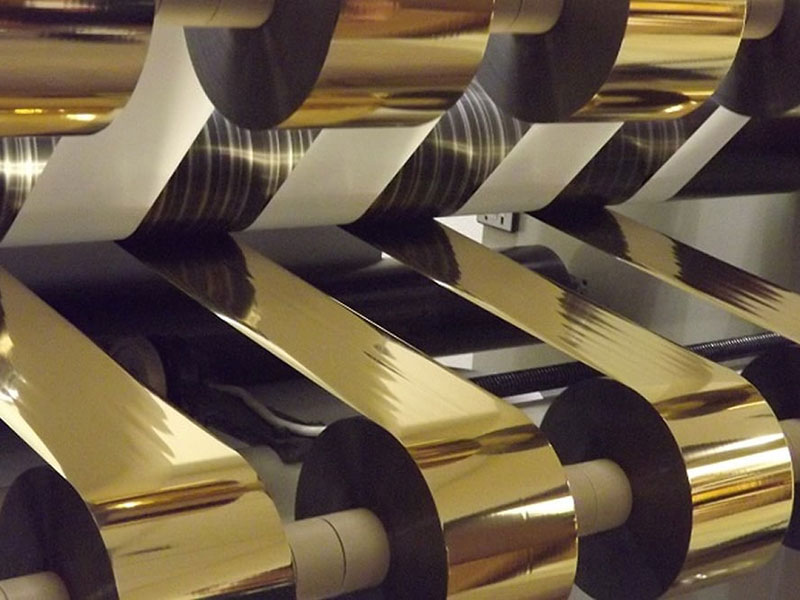
Bonus reminder: Don't neglect routine maintenance
Even if the right machine is chosen, burrs will still occur if not maintained for a long time:
• Clean foil powder and adhesive on the tool shaft every shift
• Regularly check the cutting edge for chips or wear (recommended for regrinding every 5000-8000 meters)
• Calibrate the bite volume of the upper and lower knives (usually 5%-10% of the thickness of the foil)
Summary
Choose a hot stamping foil slitting machine, focusing on the three key parameters of slitting accuracy, tool material and angle, tension and correction system, which can basically avoid more than 90% of burr problems. It is recommended to bring your commonly used hot stamping foil model to the manufacturer's site for proofing, and actually observe the slitting effect, which is more convincing than any parameter table. Although the one-time investment of good equipment is high, the saved scrap rate and debugging time can recover the cost within half a year.
 English
 Deutsch
 Français
 Español
 Português
 日本語
日本語 русский
 한국어
한국어 عربي
عربي ภาษาไทย
 Tiếng Việt
 Italiano
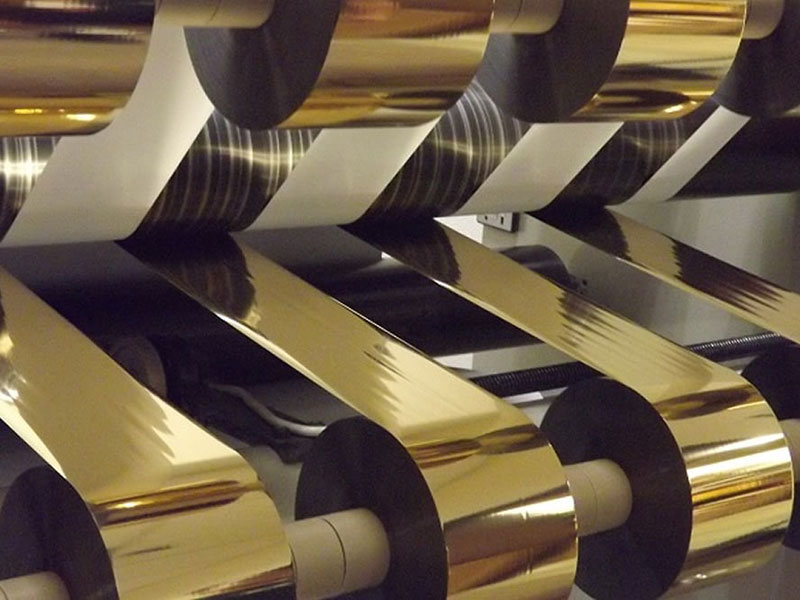 Cold Foil Slitter
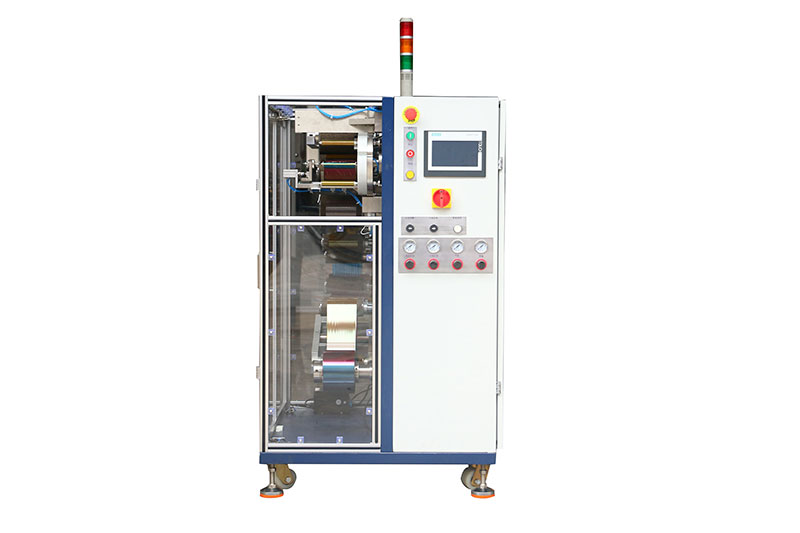 Card Print Ribbon Rewinder
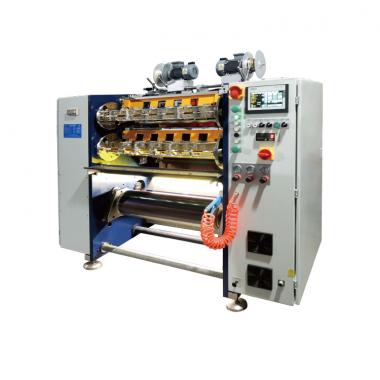 Card Print Ribbon Slitter
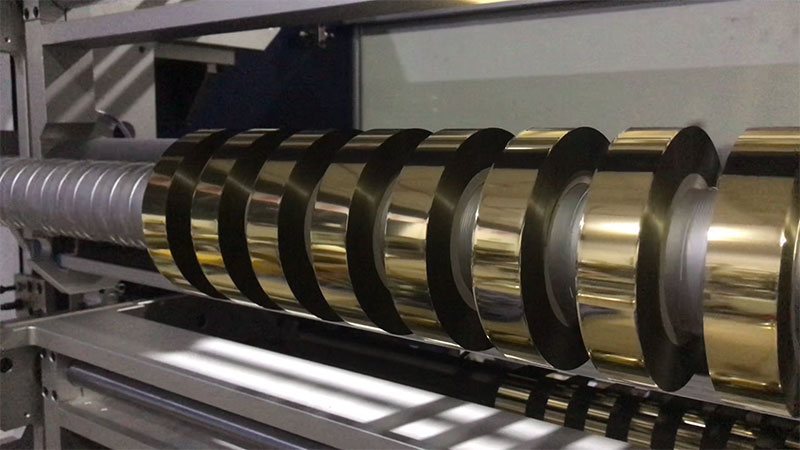 Digital Enhancement Foil Slitter
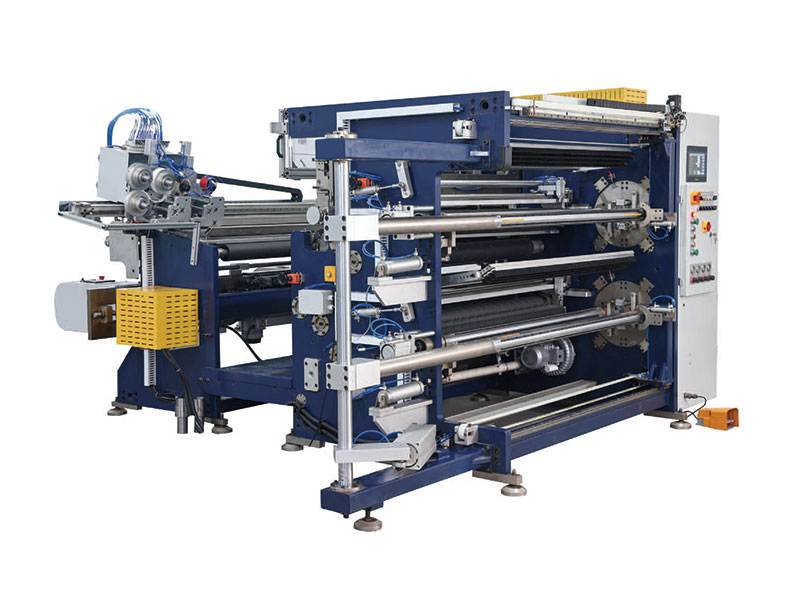 Hot Stamping Foil Slitter RSDS7H 1350 PLUS
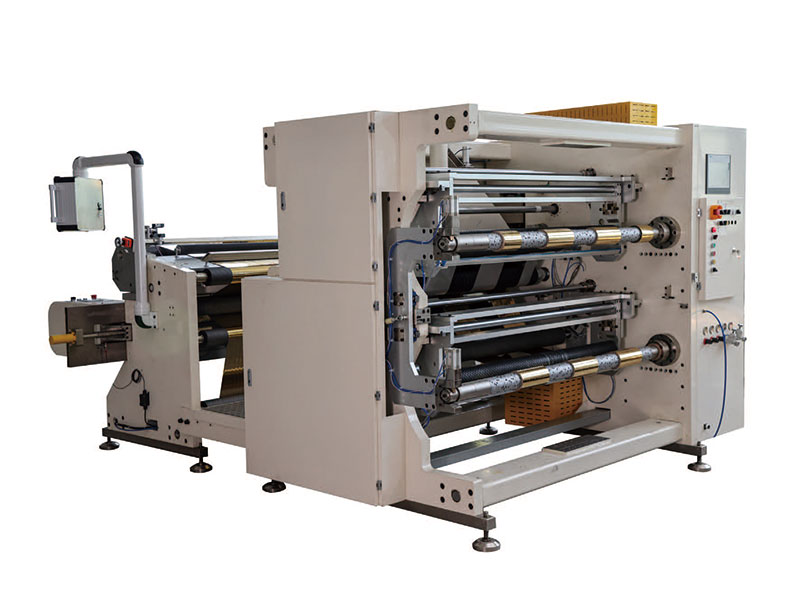 Hot Stamping Foil Slitter (RSDS7H) 1350