In a printing and packaging workshop, two slitting machines may perform similar tasks—cutting wide rolls into narrow strips—but they face completely different challenges. One machine processed ordinary plastic film costing a few yuan per kilogram, while the other cut gold foil priced by square meter with precision coatings. One wrong step and losing not just a roll of materials, but the quality of an entire batch of high value-added products.
So, what exactly is the difference between slitting machines dedicated to hot stamping foil and ordinary film slitting machines?
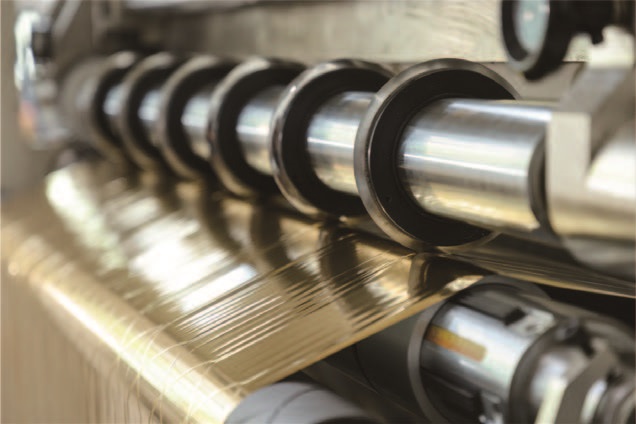
Material properties determine the equipment's DNA
The "competitors" of ordinary film slitting machines are plastic films such as BOPP, PET, and PE. These materials have good toughness and tensile strength. The main task during slitting is to ensure uniform width and neat winding.
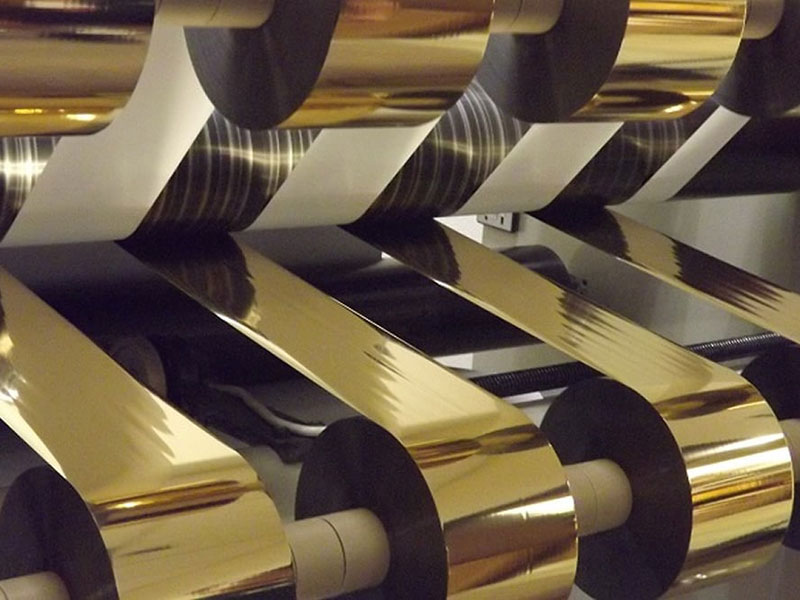
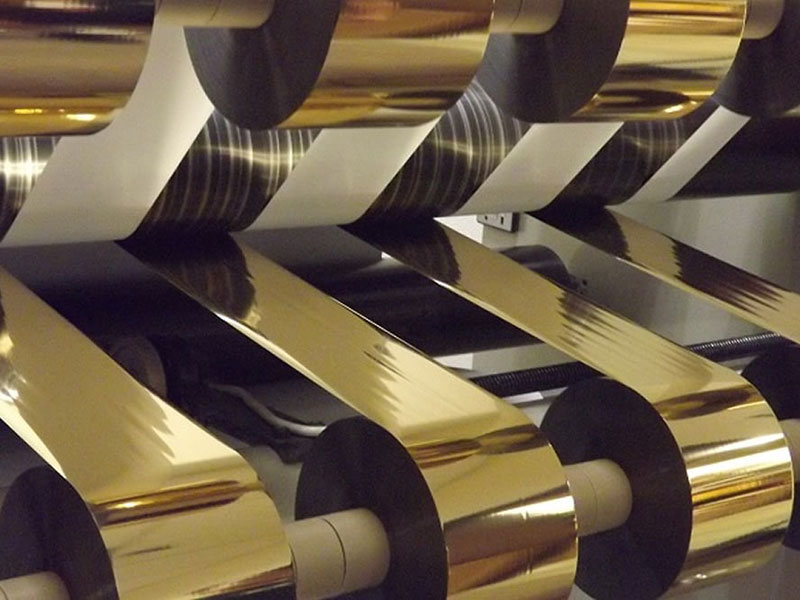
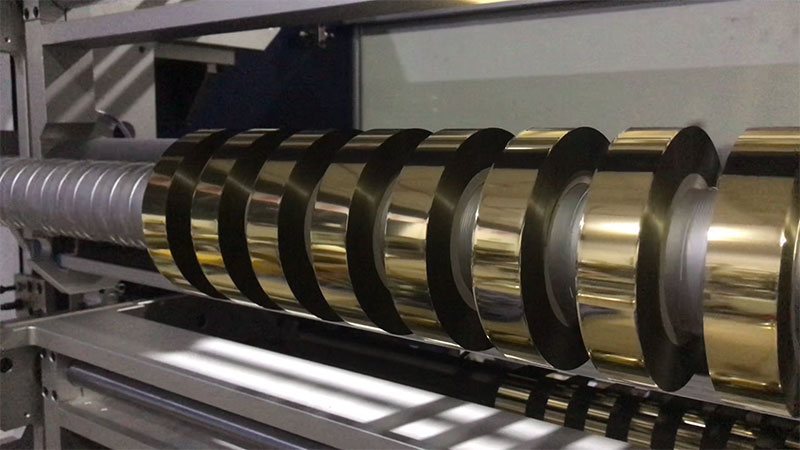
Gold foil foil is much more delicate. It is usually composed of a PET base film (about 12μm), release layer, tinting layer, aluminum coating, and glue layer. These micron-sized coatings are extremely sensitive to tension, friction, and static electricity. If tension fluctuations during slitting are slight, the foil surface may wrinkle or even crack; If the blade is not sharp, the edges will develop "burrs" and powder shedding, directly causing blurred edges or gold dust contamination in subsequent stamping patterns.
More challengingly, with the rise of eco-friendly materials, bio-based films (such as PLA) have begun to enter the hot stamping foil field. These materials are more brittle, softer, and less heat-resistant than PET, and the defect rate on traditional slitting machines can soar from 2% to 14%. Ordinary film slitting machines have never optimized tension control solutions for these "brittle materials."
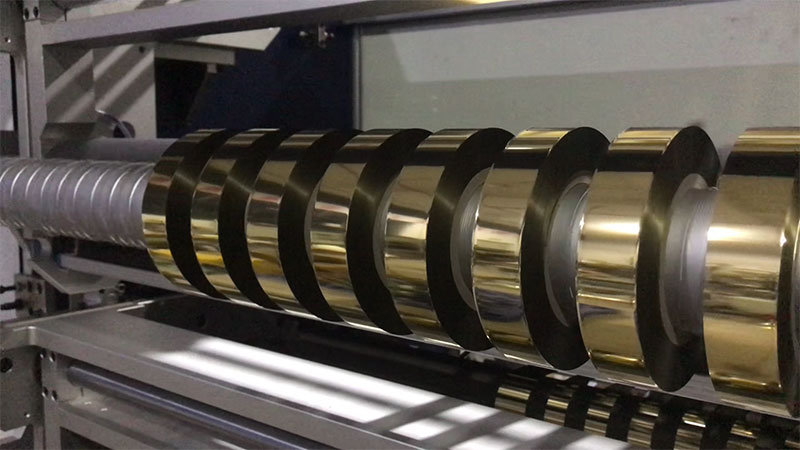
Tension Control: The "Soul" of the Hot Foil Slitting Machine
This is the core technical division between the two.
Ordinary film slitting machines have relatively coarse tension control, often using magnetic powder brakes and magnetic powder clutches to adjust tension for unwinding and rewinding, with control accuracy sufficient to meet conventional plastic film standards.
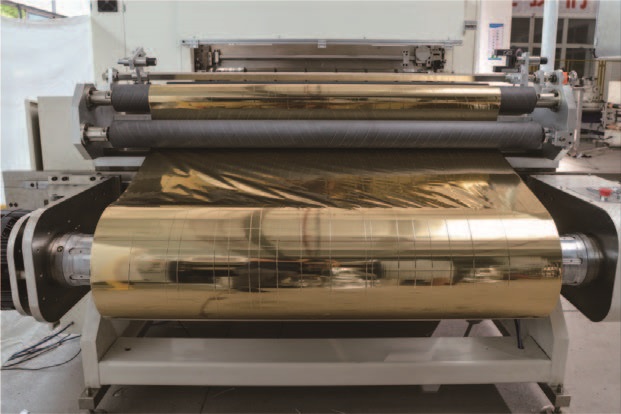
The hot stamping foil slitting machine must be equipped with a precise closed-loop servo tension control system. It uses low-inertia dance rollers and tension sensors for real-time feedback to achieve independent tension settings in segments—controlling tension for each stage of unwinding, traction, and rewinding.
Why is it so particular? This is because the elongation at break of hot stamping foil is much lower than that of ordinary film. For PET substrates, ordinary PET films can reach 50%-150% elongation at break, while hot stamping foil is much more brittle due to its surface coating. When slitting bio-based foil foil, the tension can even be reduced from 150N/m for PET to 50-80N/m. Even the slightest error can ruin the entire volume.
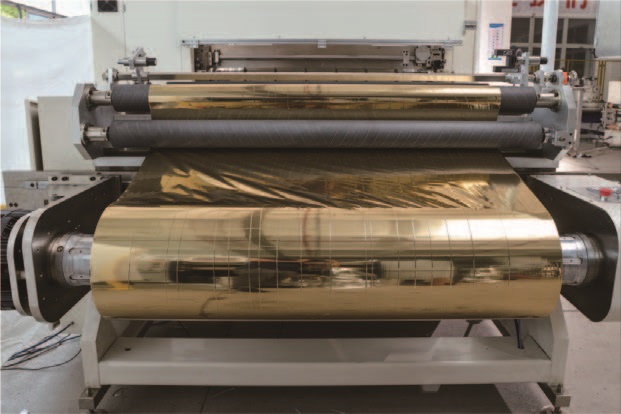
Blades and scraps: The invisible battlefield
Ordinary film slitting machines require durable blades; even if the edges are slightly burrky, they do not significantly affect subsequent bag-making and film coating processes. The slitting precision requirement for ordinary film slitting machines is usually around ±1mm.
The foil hot stamping foil slitting machine requires "zero defects" in the cutting tools. Once burrs or foil powder form during trimming, they directly contaminate the hot stamping plate and clog the fine pattern texture, resulting in bulk defects.
Therefore, hot stamping foil slitting machines have unique technical details:
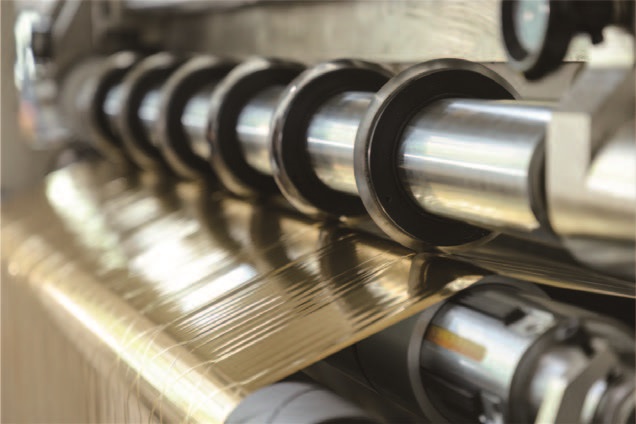
• Extremely frequent blade replacement: Many burr issues can be resolved 90% by changing the blade. Industry experience is to establish blade usage records and regularly replace them; you can't wait until you can't cut before replacement.
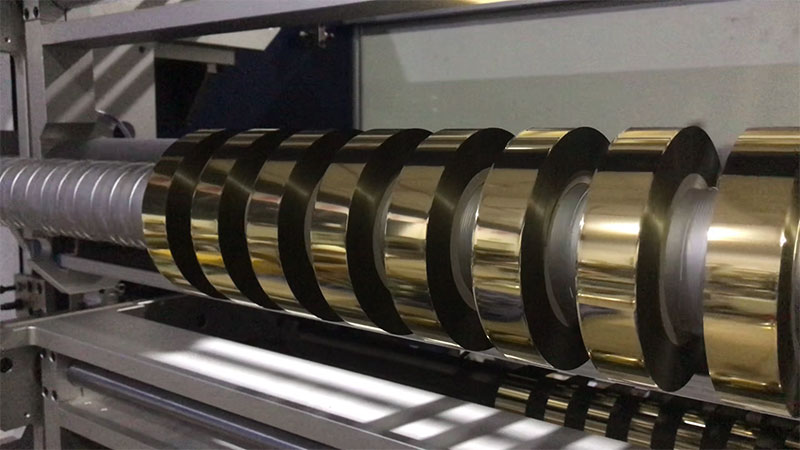
• Finer blade gap adjustment: The upper and lower blade gaps must be controlled at 0.02-0.07mm, in a "almost bump but not touch" state, far exceeding the requirements of ordinary slitting machines.
• Anti-static is essential: The static electricity generated by friction during slitting of hot stamping foil causes foil powder to adhere to the cut edges, so equipment is commonly equipped with dual elimination devices such as ion air rods and contact-type static brushes. Although ordinary film slitting machines also have static elimination devices, their configuration levels and emphasis differ greatly.
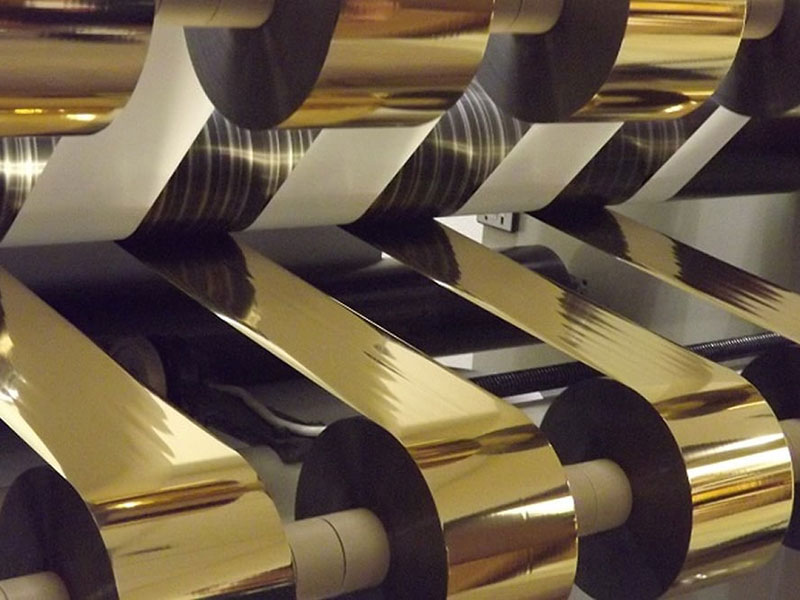
Automation and Special Features: Who Is "Smarter"
Ordinary film slitting machines are also moving toward automation, but hot stamping foil slitting machines face the small-batch, multi-specification, high-precision digital hot stamping market, making the demand for intelligence even more urgent.
Modern hot stamping foil slitting machines are equipped with CCD visual correction (accuracy up to ±0.05mm), AI self-learning recipe libraries (scanning material QR codes to automatically retrieve optimal parameters), and dual-station zero-stop roll reroll changes. Some high-end models even integrate online defect detection, scanning for scratches and bubbles on the hot stamping layer during slitting.
Ordinary film slitting machines focus more on high-speed mass production, with maximum speeds exceeding 800m/min, while hot stamping foil slitting machines are already highly efficient at 250-350m/min.
Summary
The fundamental difference between the two types of slitting machines is that ordinary film slitting machines pursue "speed and efficiency," while hot stamping foil slitting machines aim for "precision and stability."
The former deals with industrial consumables, offering a high margin for error; The latter is processed as a half-finished artwork, and any flaws are magnified downstream. This means that hot stamping foil slitting machines must use more precise tension systems, sharper blades, more complete anti-static solutions, and smarter control capabilities—these are areas where ordinary film slitting machines do not need to "compete," because their tracks are never on the same plane.
 English
 Deutsch
 Français
 Español
 Português
 日本語
日本語 русский
 한국어
한국어 عربي
عربي ภาษาไทย
 Tiếng Việt
 Italiano
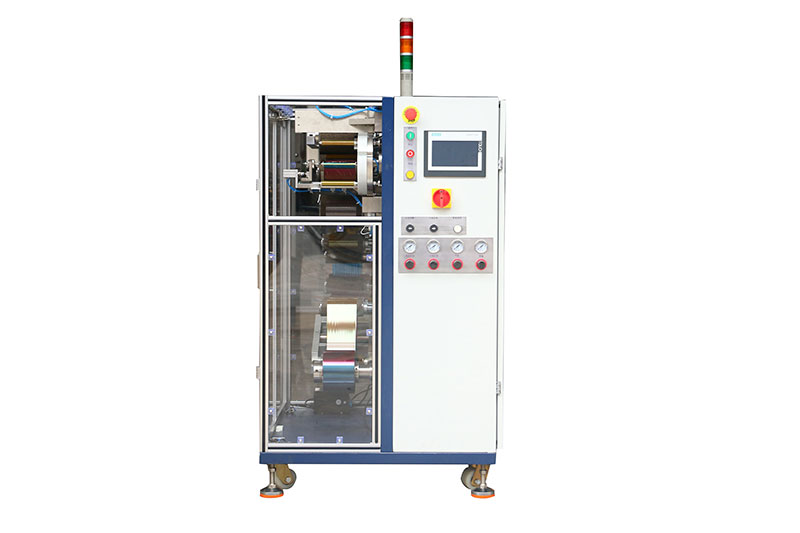
 Cold Foil Slitter
 Card Print Ribbon Rewinder
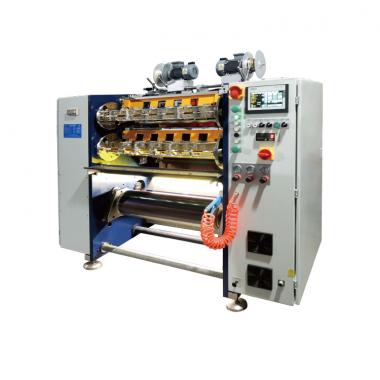 Card Print Ribbon Slitter
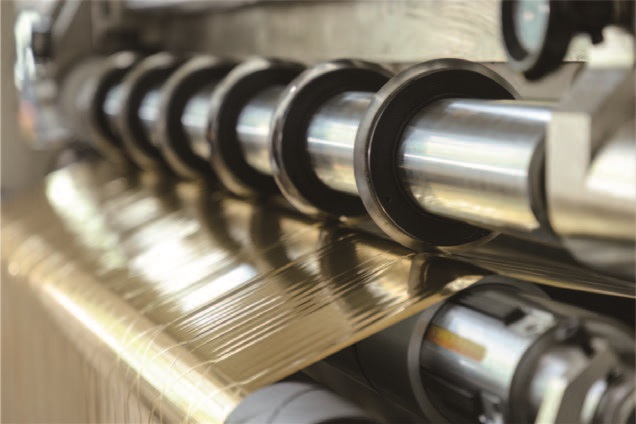 Hot Stamping Foil Slitting Machine
 Digital Enhancement Foil Slitter
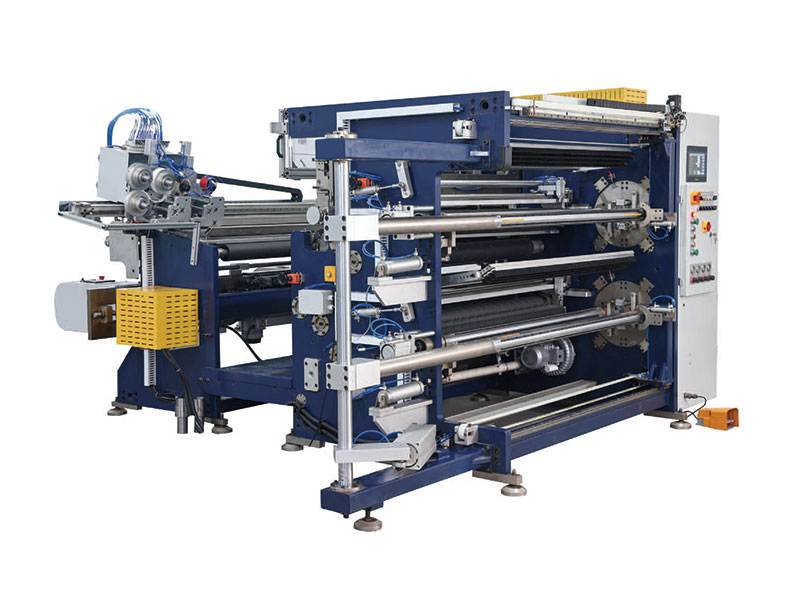 Hot Stamping Foil Slitter RSDS7H 1350 PLUS
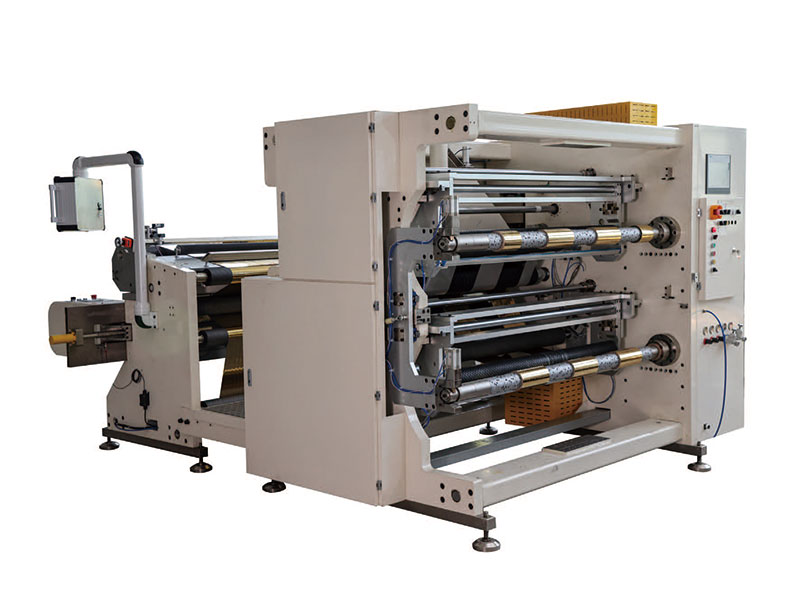 Hot Stamping Foil Slitter (RSDS7H) 1350