Choosing a hot stamping foil slitting machine is not about comparing blade brands or body weight, but about choosing a tension control system that can handle ultra-thin materials. The total thickness of hot stamping foil is usually only 12 to 30 microns, and it is composed of a PET base film, release layer, color layer, aluminum coating, and adhesive layer, each layer having different sensitivity to mechanical stress. If the tension is too high, the base film will be stretched and deformed, making subsequent stamping inaccurate; If the tension is low, the winding becomes loose and drifts off, breaking immediately when on the machine; If the tension fluctuates even slightly, the coil tightens and loosens by several rings, all of which are quality hazards. There is an industry saying: "Three-part ironing, seventy percent cutting." The tension control in the slitting stage directly determines the yield rate of subsequent hot stamping processes.
Abandon the "constant tension" mindset; controlling taper is the bottom line
The most common pitfall when choosing a model is habitually setting a fixed tension value and then ignoring it. However, during slitting, the diameter keeps changing—the diameter of the unwinding coil gets smaller and the winding diameter gets larger. Constant tension means that when rewinding, the outer layer is constantly pressed against the inner layer, eventually causing the inner ring to wrinkle and form a 'chrysanthemum core,' while the bottom of the large roll is overstretched or even broken.
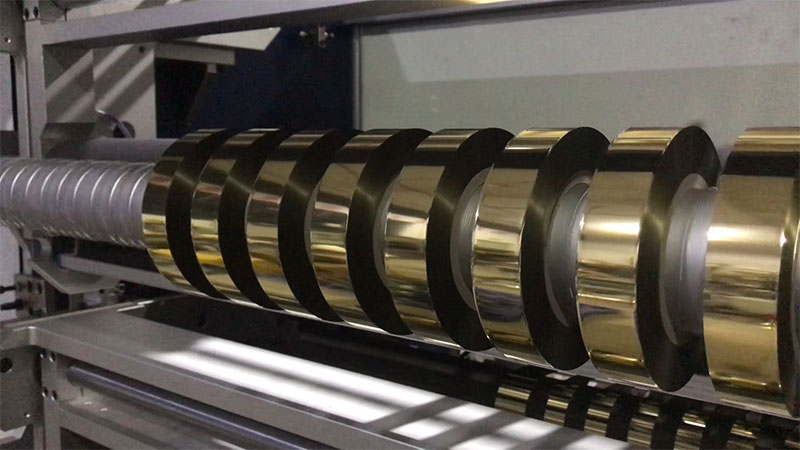
Taper tension control is a baseline function, not a bonus. Tension must decrease according to a preset curve as the roll diameter increases: at the start, lower tension is used to ensure the roll core is flat and fitting, stable interlayer pressure is maintained in the middle section, and tension is gradually reduced at the end to compensate for the weight of the outer ring. The taper coefficient is usually set between 0.5 and 0.8, with an initial tension set at 8% to 12% of the material's fracture tension, and a final tension reduced to 40% to 70% of the initial value. For thin and weak materials like hot press, the taper is recommended to be between 60% and 80%. After applying taper tension control, the defect rate for uneven end-face products can be reduced by 40% to 60%. Machines without taper functions, no matter how expensive the sensors or how good the motors, the foil foil rolls cut out are "time bombs."
The closed loop is the passing line; accuracy depends on fluctuations rather than settings
Tension control systems are divided into open-loop and closed-loop types. Open-loop control outputs according to preset values, regardless of actual tension; Closed-loop control uses sensors to detect actual tension in real time and feeds feedback to the controller for dynamic correction. For hot stamping foil slitting, closed-loop slitting must be used; this is the bottom line.
The closed-loop system consists of three core components: the tension sensor responsible for sensing, the controller calculating adjustment amounts through the PID algorithm, and the actuator handling the action. In terms of actuator selection, magnetic powder clutches are relatively low in cost but generally have average accuracy and slow response, which can easily cause internal looseness and external tightness; Servo motors offer high precision and fast response, enabling more complex control algorithms, making them a more reliable choice for special coating materials such as ultra-thin hot stamping foil or laser foil.
When selecting models, don't just look at the "tension set range"; look at the range of tension fluctuations. High-quality equipment can control fluctuations within ±3% of the set value, while high-end models can achieve accuracy of ±0.5N. This indicator determines whether your hot stamping foil roll is "tight and loose at the same time" or "uniform from core to surface."
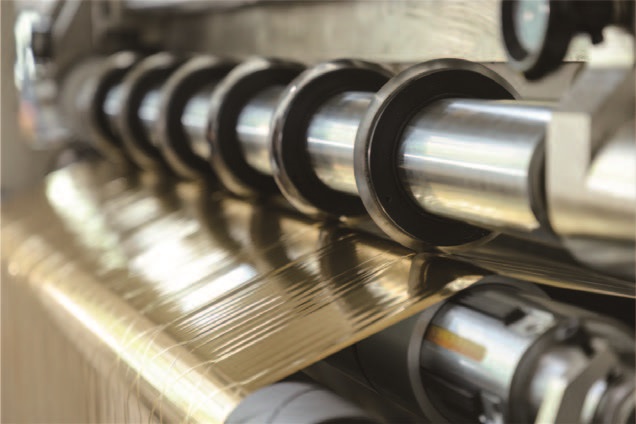
The slitting blade must be in a "zero-fluctuation zone"
Tension control is not just about unrolling and rewinding. If the material at the slitting blade shakes with fluctuations in tension, the blade will cut like a "saw," producing microscopic serrations—this is the root cause of gold-foil edges and broken foil.
Modern high-end slitting machines operate with multi-zone independent tension control: the unwinding zone, traction zone (before and after the slitting blade), and winding zone each have independent closed loops. Fluctuations are isolated outside the cutting area via floating rollers or tension sensors, ensuring that the material at the slitting blade remains in a "zero-tension fluctuation" state. When selecting a model, you can directly ask the manufacturer: Is there an independent tension isolation design before and after the slitting cutter? If not, the probability of rough edges on thin materials increases significantly.
The "dynamic compensation" at moments of acceleration and deceleration determines the foil breakage rate
The moment the slitting machine starts, accelerates, slows down, and stops is the most intense tension fluctuations. If the inertial shock caused by the speed change is not compensated, it will act directly on the foil. A 12-micron PET base film is thinner than a strand of hair; a single tension spike is enough to break it.
An excellent tension system can control actual tension fluctuations within ±3% during full-speed speed increases, depending on the servo motor's response frequency and the quality of the control algorithm. When purchasing, asking suppliers to demonstrate the tension curve during acceleration and deceleration is more meaningful than just looking at static parameters. Maintaining stable tension during steady speed operation is fundamental; the real test comes at the moment of acceleration, deceleration, and sudden stops.
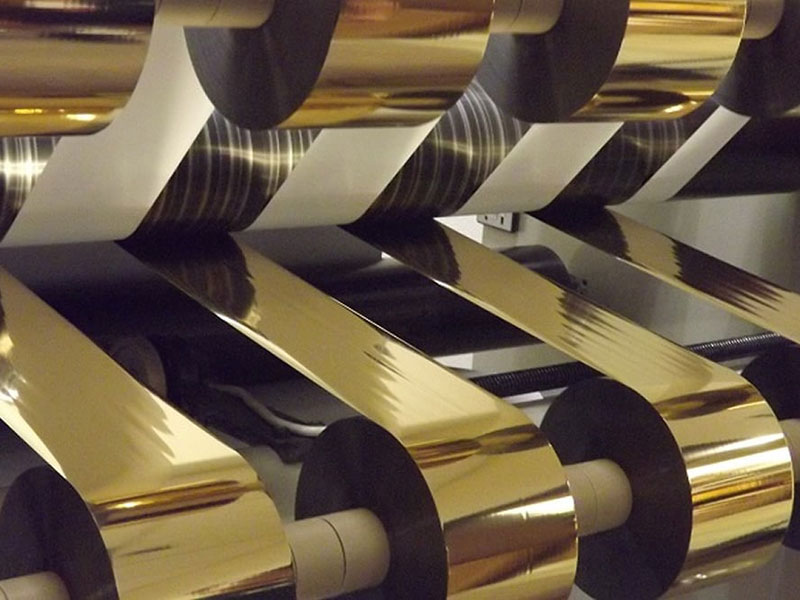
Multi-shaft winding: Slip shaft solves the problem of "one coil tightening, one coil loosening"
When the slitting machine winds multiple narrow rolls simultaneously, the slight differences in material thickness between rolls accumulate into a greater tension difference. Thickness deviations cause different winding speeds among strips; some rolls are tight, others loose, end faces are uneven, and in severe cases, excessive tension leads to scrapping.
The slip shaft is a practical solution to this problem. It uses the principle of slip ring slip to independently adjust tension at each winding station, ensuring that multiple rolls on the shaft are wound under uniform tension from the core to the outer layer. For narrow strip slitting scenarios, the slip shaft effectively prevents looseness and tightness issues caused by uneven material thickness. If narrow slitting specifications are often required, slip shafts should be considered as part of the selection criteria.
Trial Cutting Verification: No matter how beautiful the specs, it's better to cut a roll
The only reliable way to determine whether a slitting machine's tension control is too rigid is to test the machine with materials. Focus on observing the flatness of the end face of the membrane after slitting: press the film roll end face by hand; if the core is soft and the outer layer is loose, the tension is insufficient; If the film roll is stiff and the end face appears as a 'bell-mouthed,' it indicates excessive tension. If possible, use a high-magnification microscope to inspect the cut edges to see if there are any microcracks or burrs that are difficult to detect with the naked eye.
Selecting a hot stamping foil slitting machine is not a matter of stacking parameters. Precision determines how fine you can cut, tension determines how steady you can cut; only when the two work together can the subsequent stamping process truly achieve "art in the millimeter." Between the two, tension control is the more fundamental one—it determines whether the material can reach the hot stamping machine in good condition, rather than planting the risk of deformation at the slitting stage.
 English
 Deutsch
 Français
 Español
 Português
 日本語
日本語 русский
 한국어
한국어 عربي
عربي ภาษาไทย
 Tiếng Việt
 Italiano
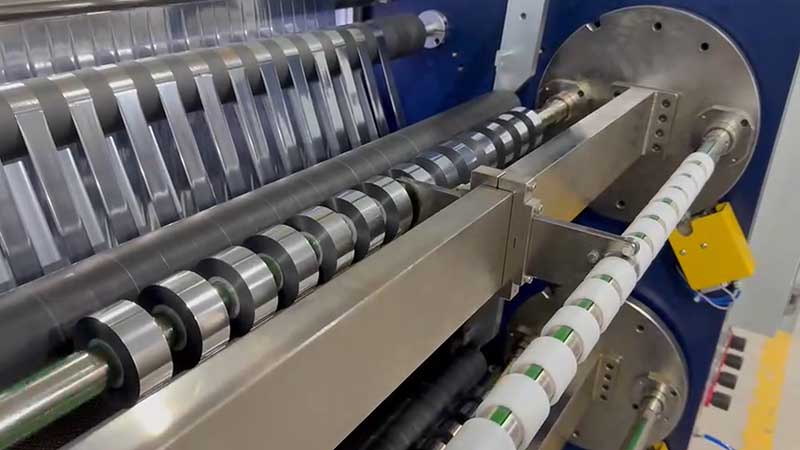
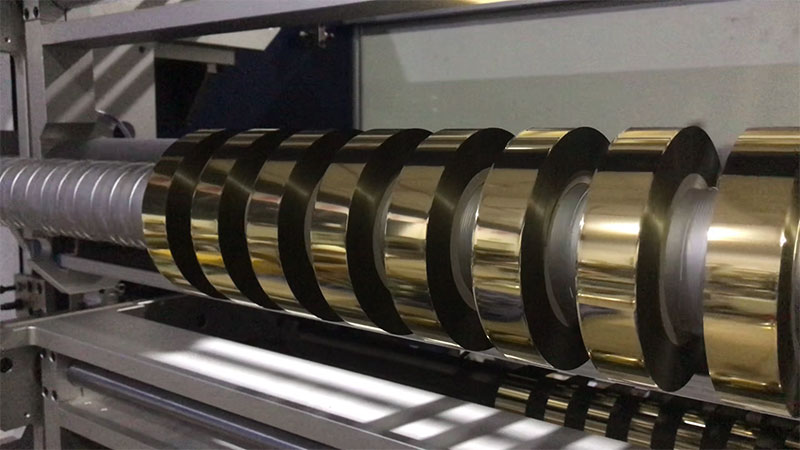
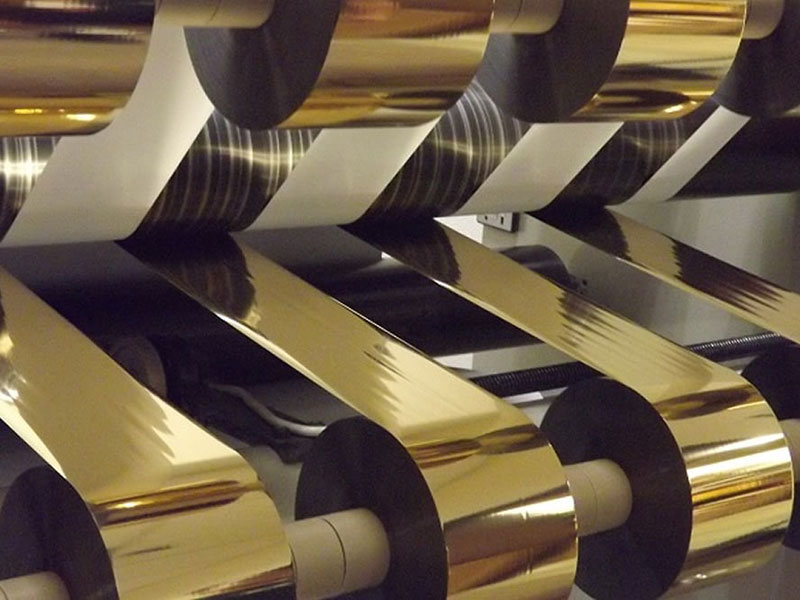 Cold Foil Slitter
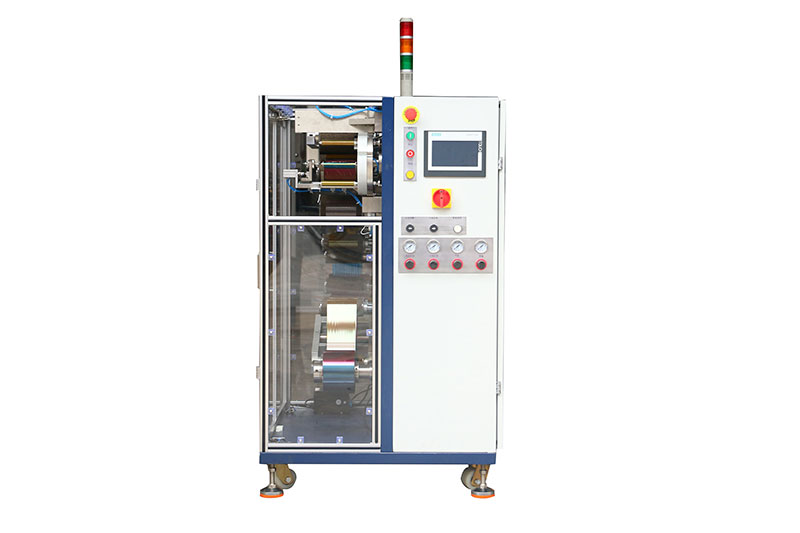 Card Print Ribbon Rewinder
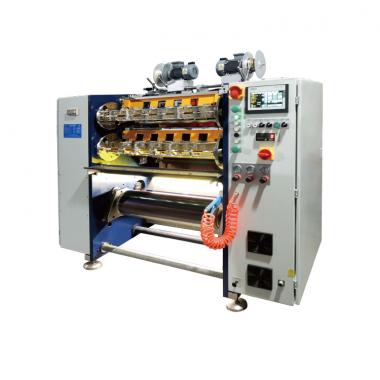 Card Print Ribbon Slitter
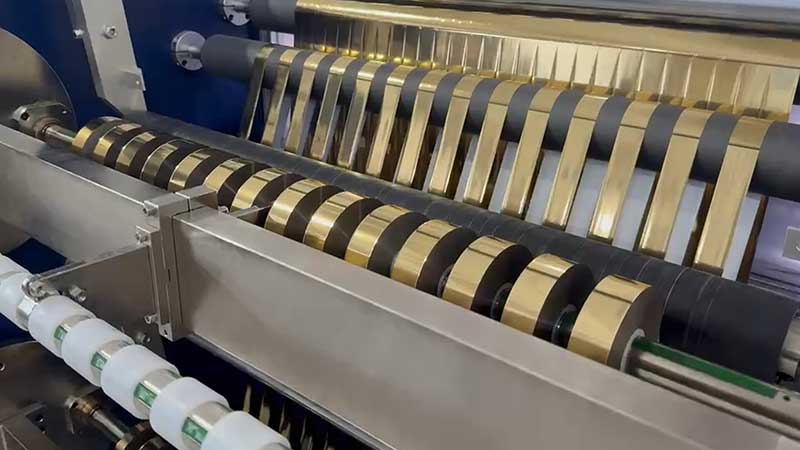
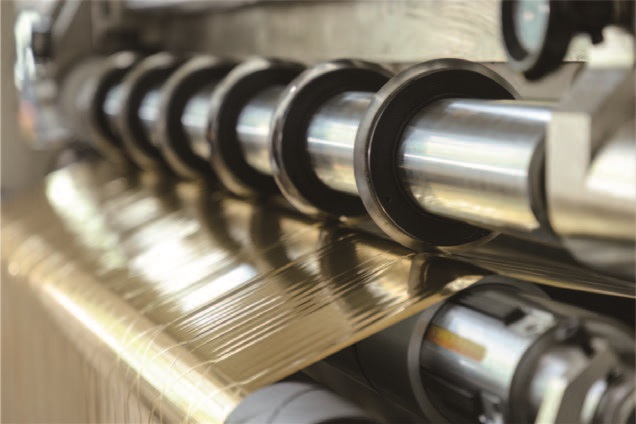 Hot Stamping Foil Slitting Machine
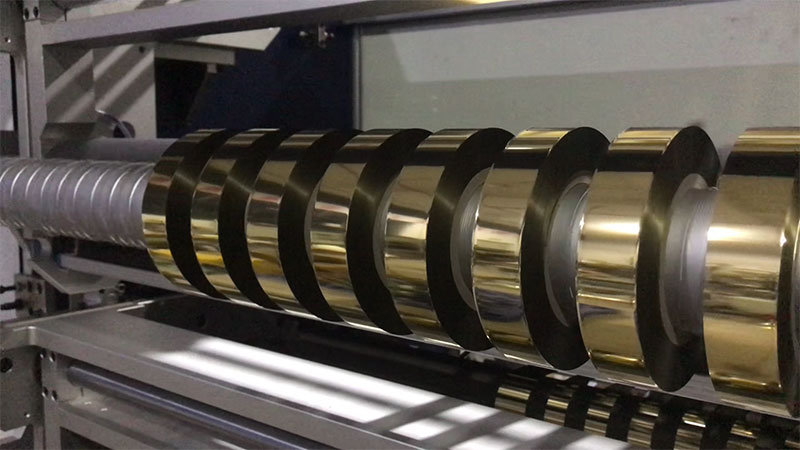 Holographic Foil Slitter
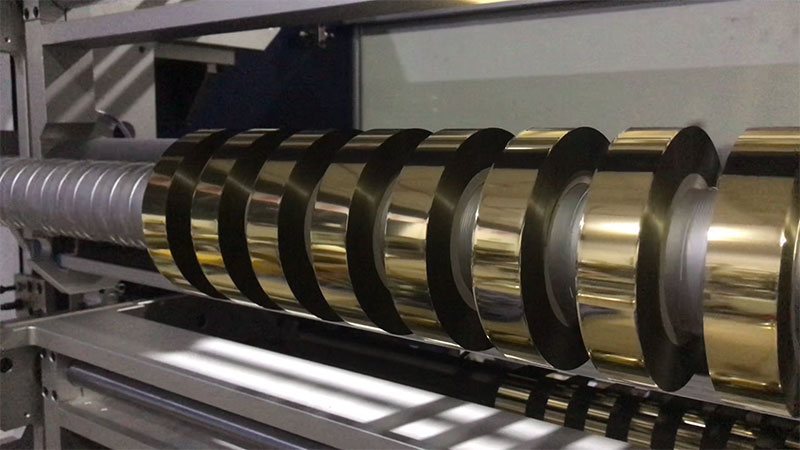 Digital Enhancement Foil Slitter
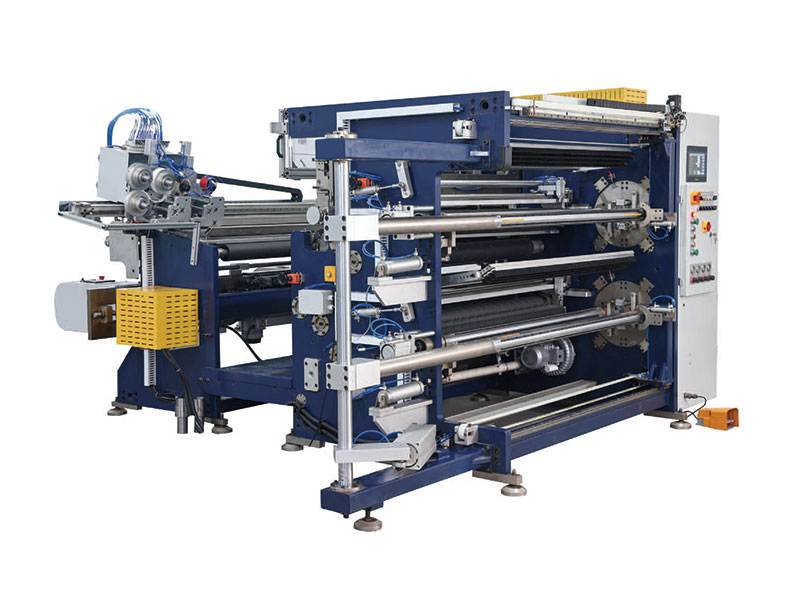 Hot Stamping Foil Slitter RSDS7H 1350 PLUS
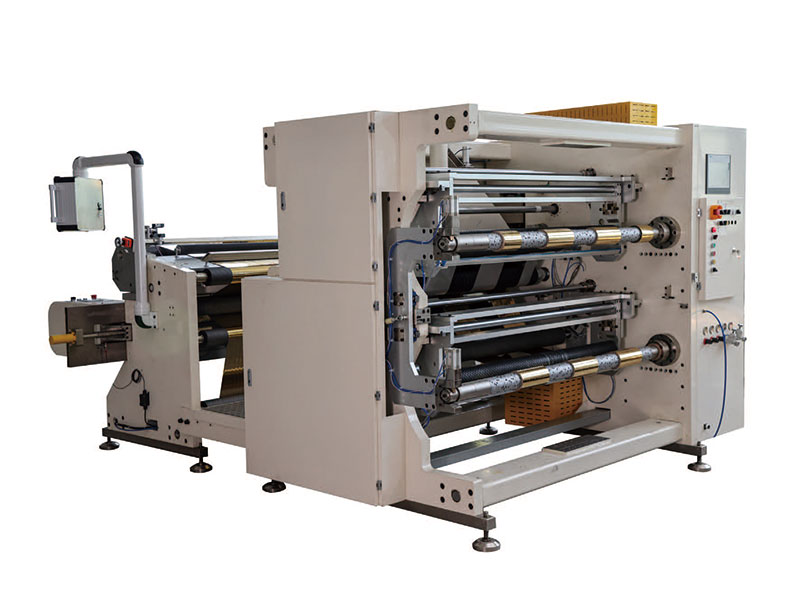 Hot Stamping Foil Slitter (RSDS7H) 1350