The slitting of the hot stamping foil is the "throat" of the hot stamping process. If the slitting quality is substandard, downstream hot stamping machines can easily stop frequently, break foil, or misalign, or have incomplete hot stamping patterns, resulting in large amounts of expensive hot stamping foil materials being wasted at high speed. The most frequently asked question during model selection is: How wide can this machine cut? How fast can it run? But what truly determines whether a slitting machine is "in sync" is not the absolute value of a single parameter, but the matching logic between width and speed.
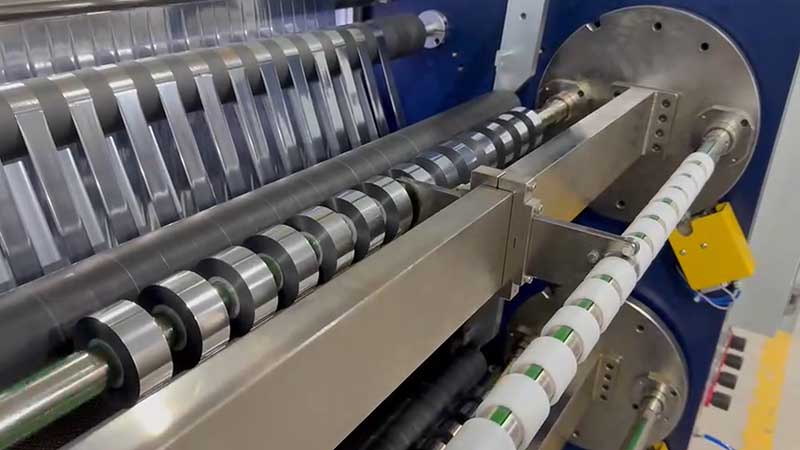
Width determines structure: wide for rigidity, narrow for precision
The width of hot stamping foils varies widely, from narrow strips of just a few millimeters for fine lines to 1600mm wide for large-format cardboard, with vastly different equipment requirements.
The core contradiction of wide slitting (usually referring to over 800mm) lies in the disturbance deformation of the tool shaft. The wider the slitting width, the more likely the tool shaft to undergo slight bending in the middle under heavy pressure, resulting in the awkward situation of "no penetration in the middle, misalignment at the edges." Therefore, for wide-format models, priority must be given to body rigidity and shaft strength, with thickened alloy steel wall panels and large-diameter blade shafts as basic configurations. For example, equipment at the 1600mm class often needs to weigh several tons to maintain stability at high speeds.
The logic for narrow slitting (under 50mm) is completely different. Narrow strips are mostly used for jump stamping in fine patterns, with extremely sensitive end face flatness and tightness when rolled. In such scenarios, manual lock tools are prone to dimensional deviations due to uneven locking force; hydraulic lock tools or high-precision slip shafts are more reliable choices. If order specifications change frequently, the value of the automatic tool layout system becomes apparent—after entering the width value, the tool holder automatically locates it, reducing order change time from hours to minutes.
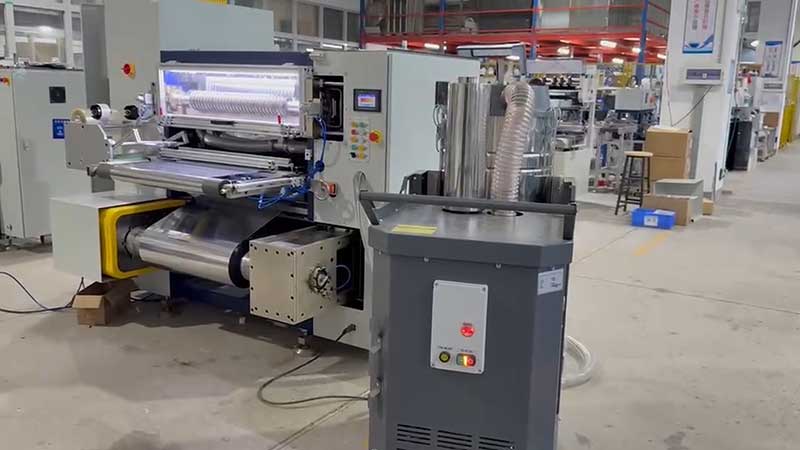
Speed is driven by fixed speed: servo control is the prerequisite for matching
Speed is not just a capacity indicator; it directly drives the configuration level of the drive system. Currently, the speed range of hot stamping foil slitting machines ranges from 20m/min to over 500m/min, with different speed ranges corresponding to completely different tension control schemes.
Low-speed economical equipment (below 100m/min) often uses magnetic powder brakes or open-loop tension control, featuring simple structures and controllable costs, suitable for small batches, narrow width, and low-speed hot stamping machines. However, once the speed exceeds 200 m/min, the response speed of open-loop control cannot keep up with the pace of rolling diameter changes. The winding radius gets smaller and the winding radius larger. If tension cannot be compensated in real time, the result is stretching and deformation of the thin foil, or loosening and wrinkling during rewinding.
High-speed slitting (above 200m/min) must rely on a fully automatic closed-loop servo tension control system. Its core principle is to establish tension by precisely measuring the difference between the speed of the unwinding and rewinding lines, and with real-time feedback from the floating roller sensor, it maintains constant tension during acceleration, deceleration, and rewinding stages. High-end models use "taper tension control" technology, which automatically decreases the winding tension as the coil diameter increases, which is key to ensuring consistent tightness inside and outside the finished coil without deformation.
For the commonly used 12μm ultra-thin PET substrate in hot stamping foils, the precision requirements for tension control are even stricter. Excessive tension causes the base film to be permanently stretched, making the registration inaccurate during hot stamping; If the tension is too low, air can get trapped between the layers of the winding, causing the aluminum layers to transfer or stick. This is also why equipment with higher slitting speeds relies more heavily on servo drives and tension algorithms.
Cross-constraints between width and speed
Separating width and speed isn't enough; their intersection is where you most easily fall into pitfalls when choosing a model.
Wide width + high speed is the ultimate test of the equipment's overall performance. Wider means greater momentum of inertia and less uniform lateral tension distribution, while high speed amplifies any tiny mechanical vibrations or tension fluctuations. A 1600mm wide-width slitting machine running only 50m/min can barely handle with open-loop control; To run above 300 m/min, without servo drive and rigid body support, slitting quality is almost impossible to guarantee.
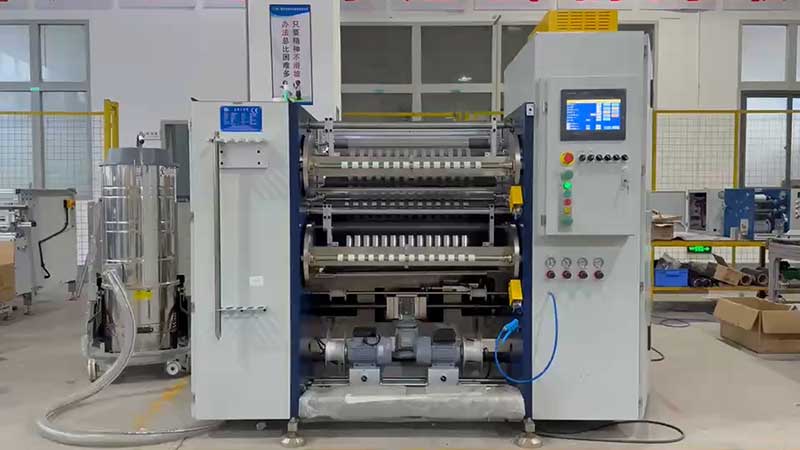
The combination of narrow width + high speed shifts the challenge to tool layout and winding. For example, with 1-inch core winding, some models are limited to 200m/min in narrow operating conditions, while 3-inch and 6-inch shafts can only release 300-500m/min capacity. This means that if you plan to produce a large number of narrow-gauge finished products with a 1-inch chip, the nominal "maximum speed" may be discounted under actual operating conditions.
The combination of wide + low speed may seem contradictory, but it holds true in specific scenarios. For example, when processing thick-walled or high-density special foils, blade friction generates high temperatures and aluminum powder; in such cases, reducing the speed actually helps ensure cut quality and dust removal effectiveness. Blindly pursuing high speed while neglecting the balance between speed and precision often results in actual production speeds falling far below the nominal value.
Practical Selection: Matching solutions are derived from requirements
Step 1: Clarify the width range of the main force. If your orders focus on narrow strips under 50mm, precision and tool layout efficiency are key, and width capability is not the main focus; If you frequently handle wide female rolls over 1000mm, rigidity and stability should be prioritized, and you should not be distracted by the high speed rating.
Step 2: Verify speed under real operating conditions. The key is how much the nominal speed of 500m/min can be maintained in real scenarios such as rewinding, acceleration and deceleration, and narrow 1-inch core winding. During machine testing, manufacturers should be required to provide width difference data for continuous slitting of over 500 meters, with particular attention to accuracy during coil changes and acceleration/deceleration stages.
Step 3: Match the tension system to the speed level. For running speeds above 200m/min, closed-loop servo tension is essential, and taper tension control is key to ensuring the finished coil does not deform. If your budget is limited and you can only choose mid- to low-speed models, accept that they are suitable for small batches and multiple specifications, and don't try to challenge high-speed conditions with open-loop systems.
Step 4: Pay attention to the "downgrade conditions" of width and speed. Ask the manufacturer: What is the maximum speed at the minimum slitting width? Can the tension system remain stable at the maximum slitting width? These boundary conditions often reflect the true capabilities of the equipment more than nominal parameters.
The essence of selecting a hot stamping foil slitting machine is to find the optimal solution for your product structure within the "impossible triangle" composed of width, precision, and speed. Wide sections focus on body rigidity and tension uniformity, narrow sections on tool layout precision and winding tightness, while speed drives the level of drive systems and control algorithms. Clarifying the cross-relationships among these three parameters is more meaningful than simply comparing the numbers on the parameter table.
 English
 Deutsch
 Français
 Español
 Português
 日本語
日本語 русский
 한국어
한국어 عربي
عربي ภาษาไทย
 Tiếng Việt
 Italiano
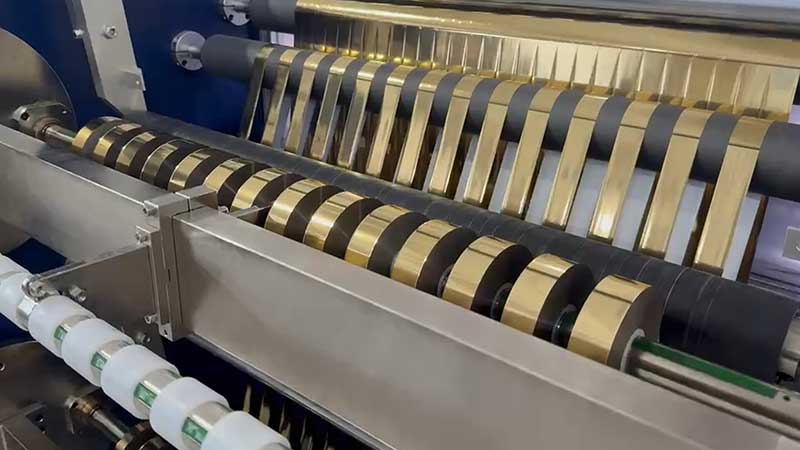
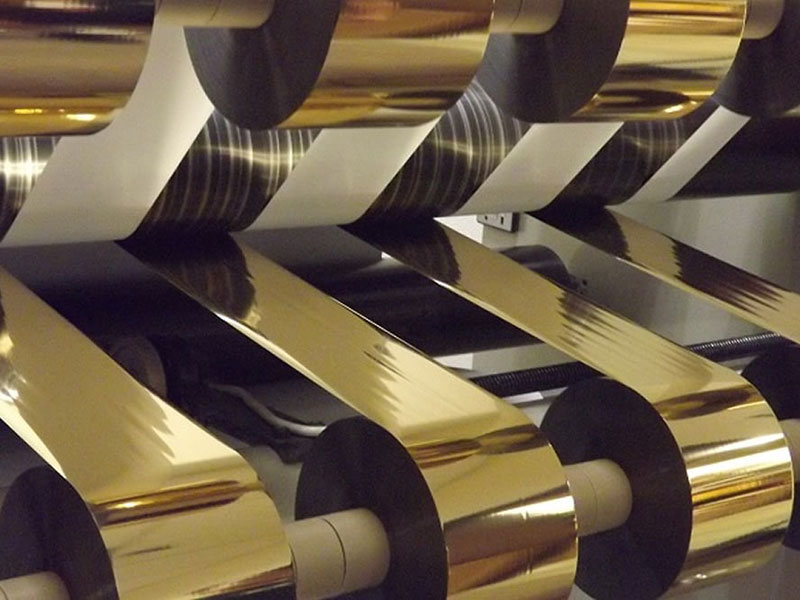 Cold Foil Slitter
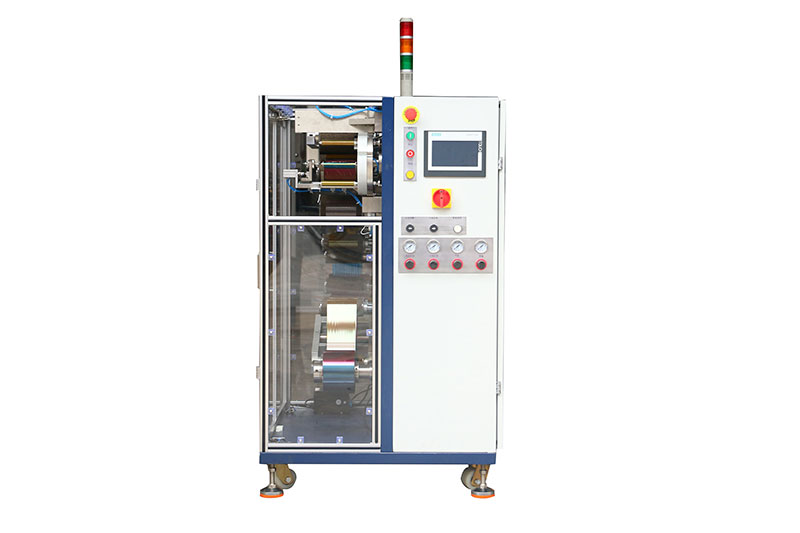 Card Print Ribbon Rewinder
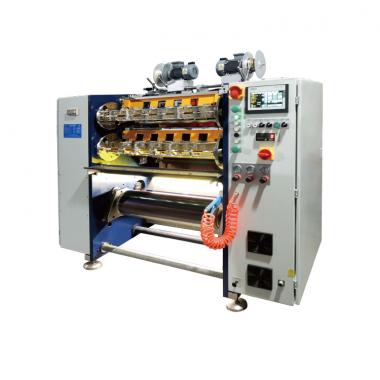 Card Print Ribbon Slitter
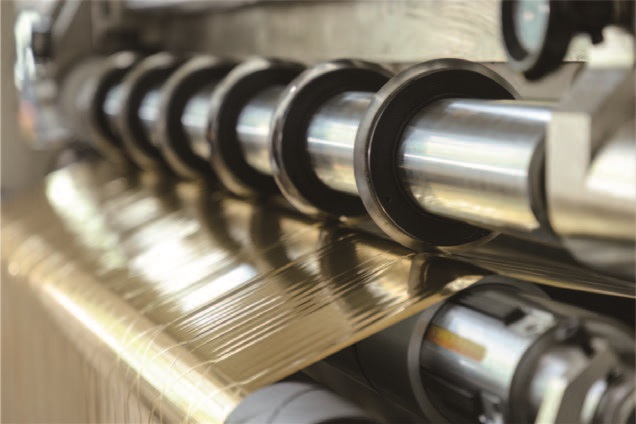 Hot Stamping Foil Slitting Machine
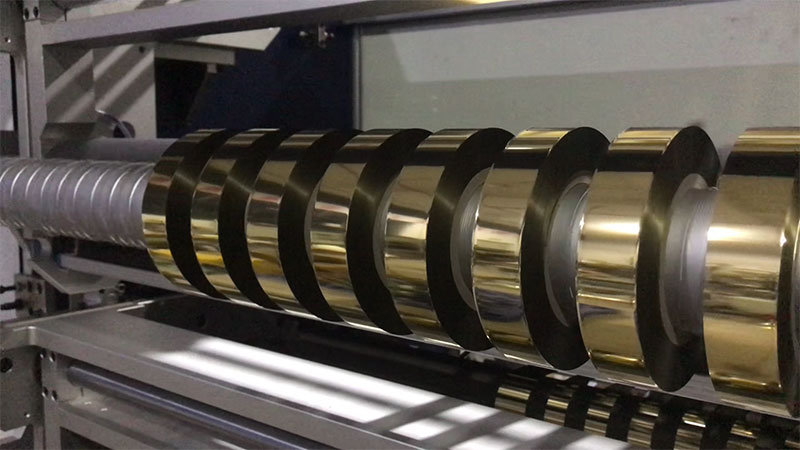 Holographic Foil Slitter
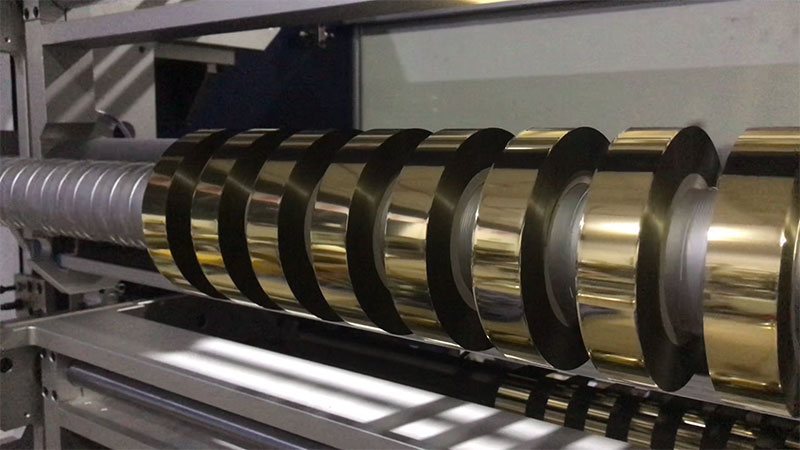 Digital Enhancement Foil Slitter
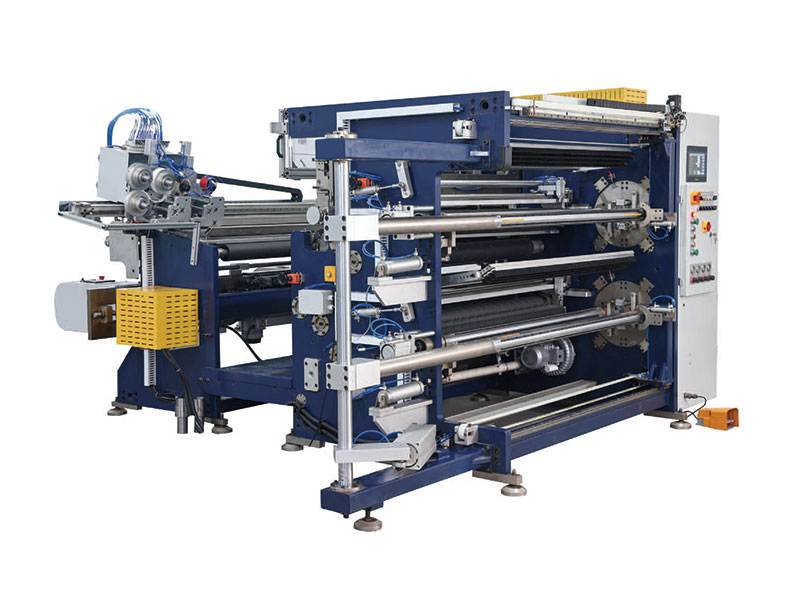 Hot Stamping Foil Slitter RSDS7H 1350 PLUS
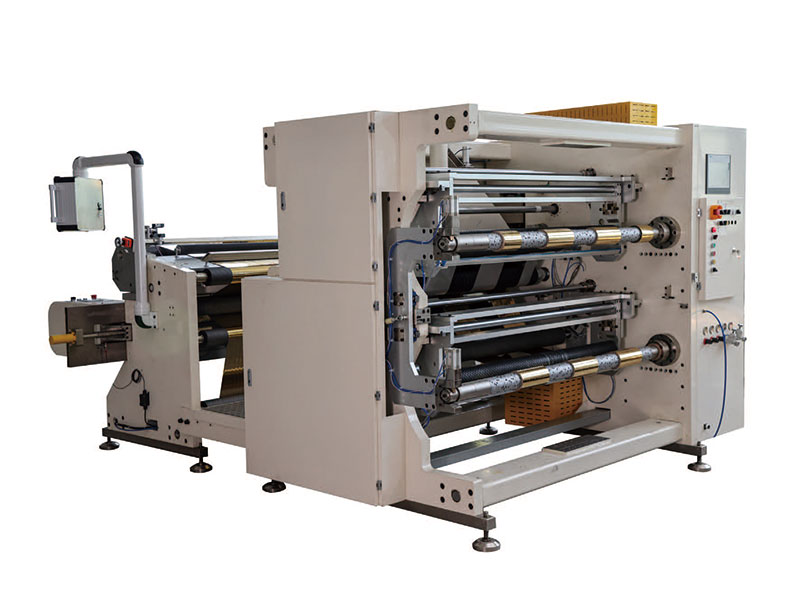 Hot Stamping Foil Slitter (RSDS7H) 1350