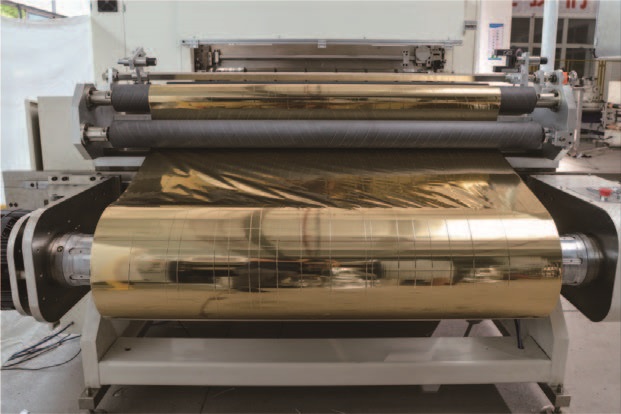
Hot stamping foil is a precision material with a surface that tolerates almost no mishandling. The slitter rewinder sits at the front line of quality control—how well it performs determines whether downstream hot stamping runs smoothly or becomes a constant battle with foil breaks, registration errors, and material waste.
Selecting the right machine requires looking beyond maximum speed and price. This guide walks through the key technical and operational factors that matter when choosing a slitter rewinder for hot stamping foil applications.
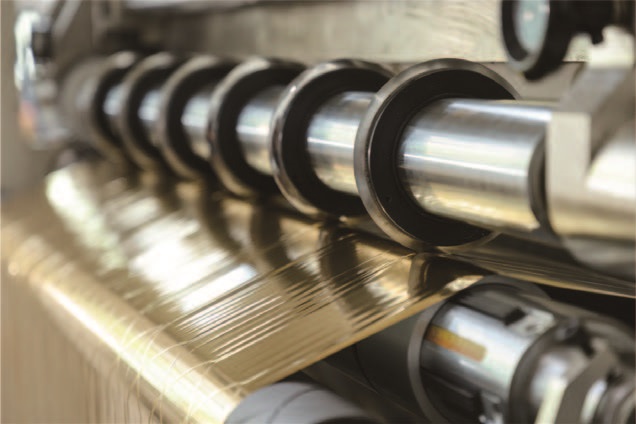
Understanding What Makes Hot Stamping Foil Different
Hot stamping foil typically consists of a PET base film (12–25μm) combined with release, color, metallization, and adhesive layers. This multi-layer structure creates specific vulnerabilities:
• The metal layer cracks easily under excessive tension
• Surface coatings scratch from friction or contaminated rollers
• Static electricity attracts dust that causes “pinholes” in finished stamping
• The thin PET substrate stretches and deforms when tension fluctuates
These characteristics mean that a generic slitter rewinder designed for paper or standard film will likely produce unacceptable results. The machine must be configured specifically for foil handling.
Core Selection Criteria
Tension Control: The Foundation of Quality
Tension control is arguably the most critical factor in hot stamping foil slitting. Foil requires tension settings 20–30% lower than standard films to prevent stretching and metal layer damage.
What to look for:
• Closed-loop servo tension control rather than open-loop systems. This enables real-time monitoring and automatic adjustment across unwinding, slitting, and rewinding stages.
• Taper tension capability: As the rewinding diameter increases, tension should automatically decrease according to a preset curve. This prevents crushed cores and “tight inside, loose outside” winding defects.
• Tension accuracy within ±0.5N or ±5%, with millisecond response times to handle thickness variations in the material.
For ultra-thin foils (12–25μm), the difference between acceptable and excellent tension control often determines whether the finished rolls perform reliably on high-speed stamping machines.
Slitting Method and Edge Quality
The cutting method directly affects edge quality, which in turn determines whether foil feeds smoothly through downstream stamping equipment.
Common slitting options for hot stamping foil:
| Method | Best For | Considerations |
| Razor blade (flat cut) | Very narrow slits, thin materials | Simple setup, but blade wear affects consistency |
| Circular knife (shear cut) | Thicker substrates, burr-free requirements | Longer blade life, better edge quality |
| Laser slitting | Ultra-clean edges, no contact | Higher cost, eliminates contamination risk |
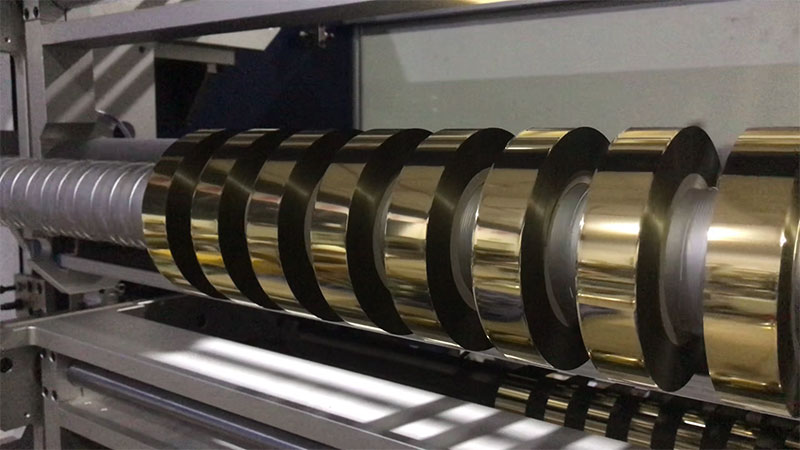
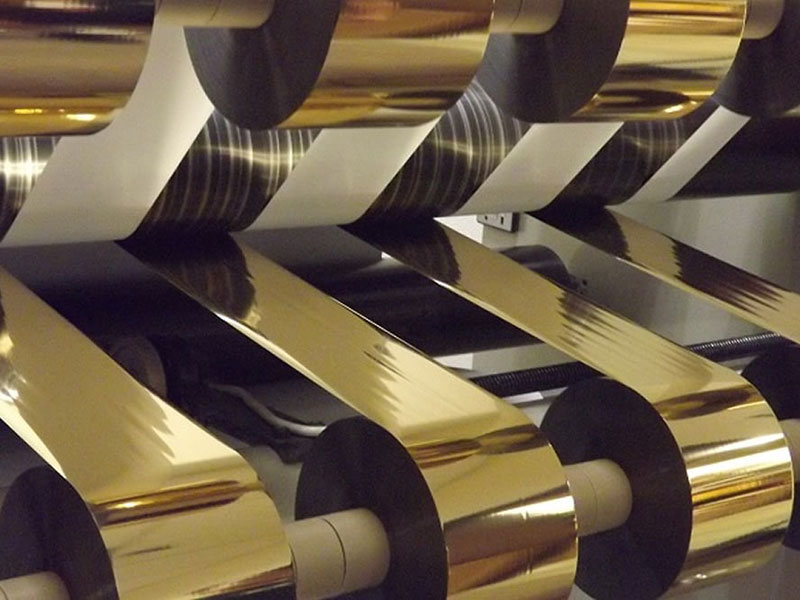
Circular knife systems are generally preferred for hot stamping foil because they produce smoother cuts and handle frequent specification changes better than razor blades. The tool shaft must be rigid enough to prevent deflection—especially important for wide-web applications above 800mm where center bending can cause incomplete cuts or edge damage.
Edge quality standards: Finished rolls should have clean, burr-free edges with end face misalignment controlled within ±0.2mm. Poor edges cause foil breaks and registration problems during stamping.
Web Guiding and Correction Systems
Hot stamping foil tends to shift during high-speed operation. Without proper web guiding, edges become uneven and winding quality suffers.
Guiding system requirements:
• Ultrasonic sensors are preferred over photoelectric types because they are not affected by foil color, transparency, or metallic reflection.
• Response speed should be fast enough to correct position in real time during high-speed slitting. Servo-driven systems offer faster response than pneumatic alternatives.
• CCD vision-assisted correction provides additional precision for demanding applications, achieving accuracy up to ±0.05mm.
For operations running multiple foil types with varying surface characteristics, ultrasonic guiding with servo correction offers the most reliable performance.
Rewinding Configuration
The rewinding section determines the final roll quality—whether rolls are firm enough for handling but not so tight that they crush the core or cause blocking.
Key considerations:
• Center-surface winding is often recommended for thin foils because the surface drum helps expel air between layers, preventing slippage and telescoping.
• Differential or slip shafts allow independent tension adjustment for each slit roll, which is essential when material caliper varies across the web width.
• Nip pressure control affects roll density. Higher pressure creates harder rolls; lower pressure produces softer rolls that may be preferred for sensitive materials.
The finished roll must unwind smoothly and maintain consistent tension in downstream operations. Telescoping, loose layers, or uneven edges will cause problems regardless of how accurately the foil was slit.
Static Elimination and Dust Removal
High-speed slitting generates significant static electricity on PET-based foils. This attracts dust particles that become embedded in the foil surface, causing visible defects in finished stamping.
Essential equipment:
• Active static elimination bars at unwinding, slitting, and rewinding points. Residual voltage should be controlled below ±300V for standard applications.
• Multi-stage dust removal combining contact methods (adhesive rollers) with non-contact methods (ionizing air bars, vacuum ports).
• Ceramic-coated or silicone guide rollers to minimize friction and prevent surface scratches.
These systems may seem like accessories, but their absence will show up as quality defects that undermine the entire investment.
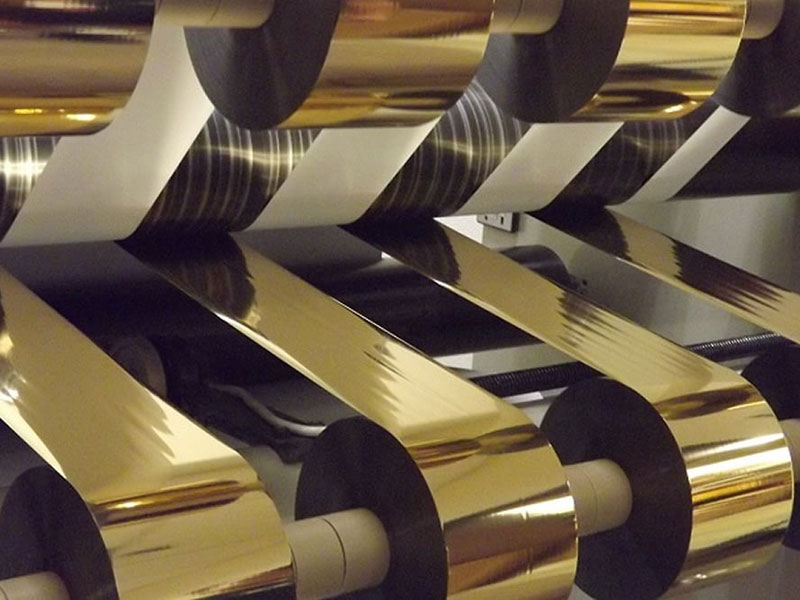
Matching Machine Specifications to Your Production
Material Parameters
Before evaluating any machine, document your actual material specifications:
• Foil thickness range: 12μm to 150μm covers most hot stamping foils
• Parent roll dimensions: Width (up to 2000mm for large jumbo rolls), diameter, and core size (typically 3“ or 6”)
• Finished roll specifications: Required slit widths (from 5mm to 1000mm), finished diameter, and core size
These parameters determine the machine‘s size class and configuration requirements. A machine designed for 1600mm parent rolls cannot efficiently process 200mm rolls, and vice versa.
Speed and Throughput
Maximum speed should be evaluated alongside actual production requirements:
• Entry-level machines: 80–150 m/min
• Standard production: 250–350 m/min
• High-output systems: 500–600 m/min
However, effective throughput depends on more than top speed. Changeover time, setup efficiency, and waste rates all affect actual output. A machine with automatic tool positioning and rapid changeover capabilities may outperform a faster machine that requires extensive manual setup between orders.
Automation Level
Automation features directly impact labor requirements and consistency:
| Feature | Benefit |
| Automatic tool positioning | Reduces changeover time from hours to minutes, eliminates manual errors |
| Auto splicing / non-stop rewinding | Enables continuous production, especially valuable for large orders |
| Recipe management | Stores parameters for different materials and specifications, ensures repeatability |
| Remote monitoring | Supports predictive maintenance and reduces unplanned downtime |
For operations with frequent order changes or multiple foil specifications, automated tool positioning offers the highest return on investment.
Supplier Evaluation Framework
Technical Capability Assessment
Beyond machine specifications, evaluate the supplier‘s ability to understand and support your application:
• Application engineering support: Can they provide technical recommendations based on your specific materials and requirements?
• Customization capability: Are they willing and able to modify standard designs for your needs?
• Documentation quality: Do they provide detailed specifications, wiring diagrams, and maintenance schedules?
Risk Management
B2B equipment purchases involve significant investment and long-term dependency on the supplier:
• Payment terms: Use secure methods with milestone-based releases—typically 30% deposit, 40% pre-shipment, 30% after inspection.
• Pre-shipment inspection: Verify calibration, noise levels, and slit width accuracy before accepting delivery.
• After-sales support: Confirm response times, spare parts availability, and technical support channels.
Total Cost of Ownership
The purchase price represents only part of the investment. Consider:
• Installation and training costs
• Ongoing maintenance and spare parts
• Consumables (blades, static elimination elements)
• Downtime costs if the machine proves unreliable
• Material waste rates during operation
A higher-priced machine that reduces waste by 2% may deliver better returns than a cheaper alternative that generates more scrap.
Common Selection Mistakes to Avoid
Overemphasizing speed: A machine that runs at 500 m/min but requires 30 minutes for each changeover may produce less than a 300 m/min machine with 5-minute changeovers.
Ignoring downstream requirements: The slitter rewinder must produce rolls that work in your specific stamping equipment. Roll diameter, core size, and winding tension must match downstream specifications.
Underspecifying tension control: Open-loop tension systems are inadequate for hot stamping foil. The cost difference for closed-loop servo control is justified by reduced waste and consistent quality.
Neglecting static and dust control: These systems are not optional for quality-critical applications. Their absence will produce defects that only appear after stamping.
Choosing based on price alone: The cheapest machine often becomes the most expensive through higher waste rates, more downtime, and shorter service life.
Conclusion
Selecting a slitter rewinder for hot stamping foil requires balancing technical capability with production requirements and budget constraints. The machine must handle the material‘s sensitivity to tension, protect the delicate surface, and produce finished rolls that perform reliably in downstream stamping operations.
Prioritize tension control, slitting quality, and web guiding as the foundation of your specification. Then evaluate automation features based on your production volume and changeover frequency. Finally, assess suppliers not just on machine price but on their ability to support your application over the equipment‘s lifetime.
The right machine will pay for itself through reduced waste, higher yields, and consistent output quality. The wrong machine will become a source of ongoing frustration and hidden costs.
 English
 Deutsch
 Français
 Español
 Português
 日本語
日本語 русский
 한국어
한국어 عربي
عربي ภาษาไทย
 Tiếng Việt
 Italiano
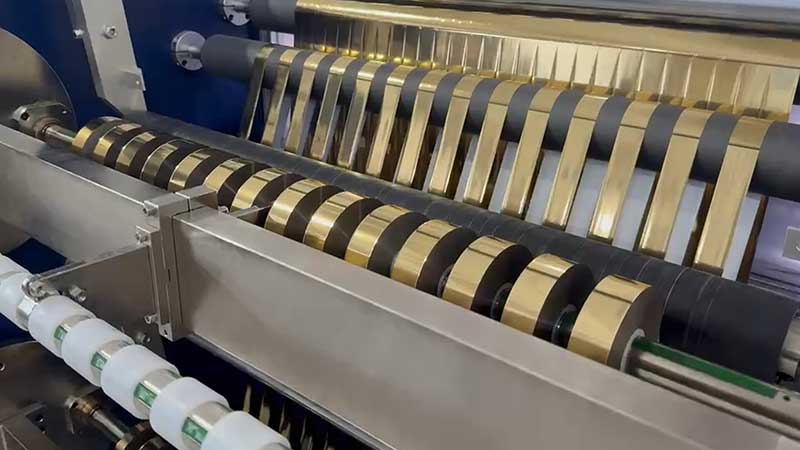
 Cold Foil Slitter
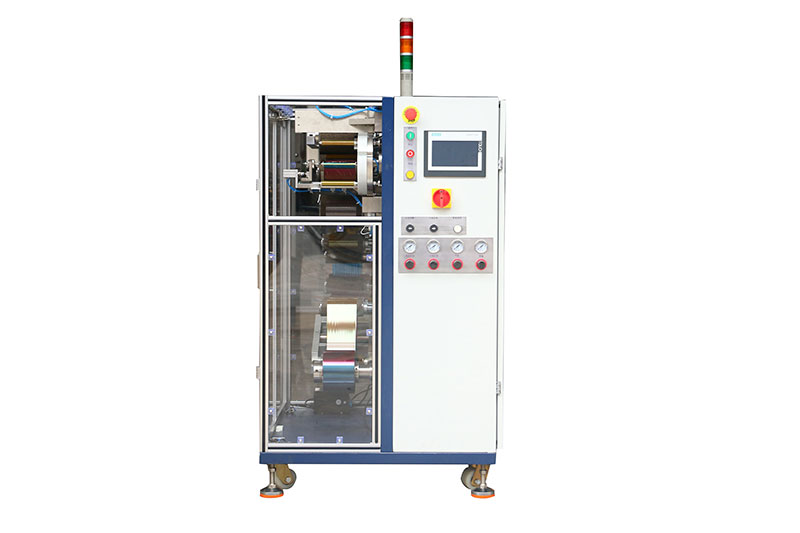 Card Print Ribbon Rewinder
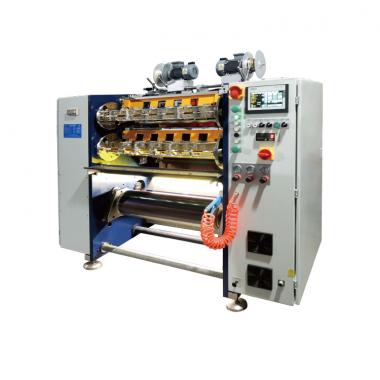 Card Print Ribbon Slitter
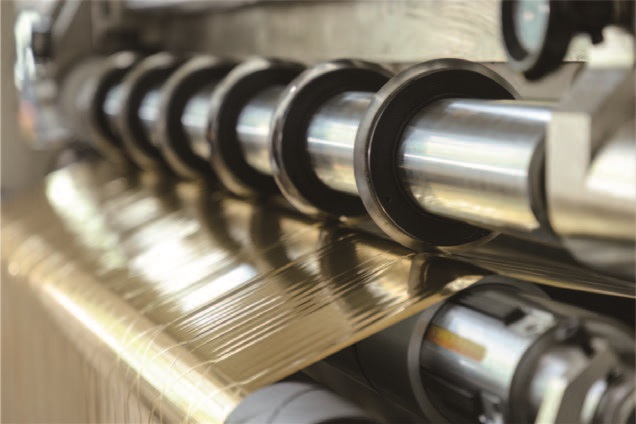 Hot Stamping Foil Slitting Machine
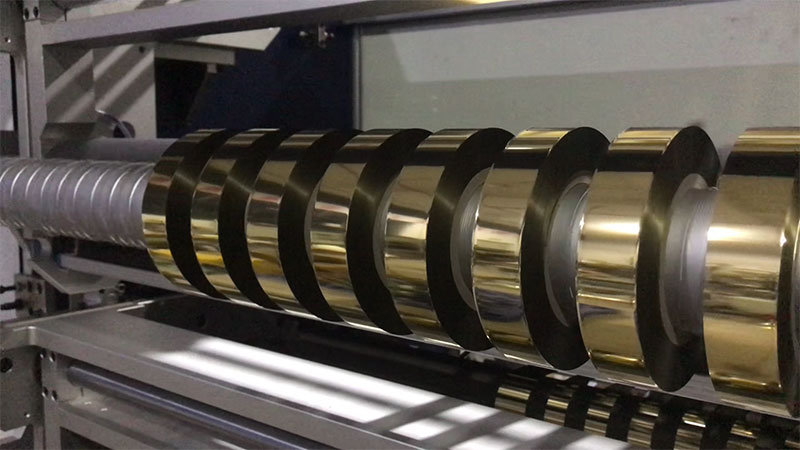 Holographic Foil Slitter
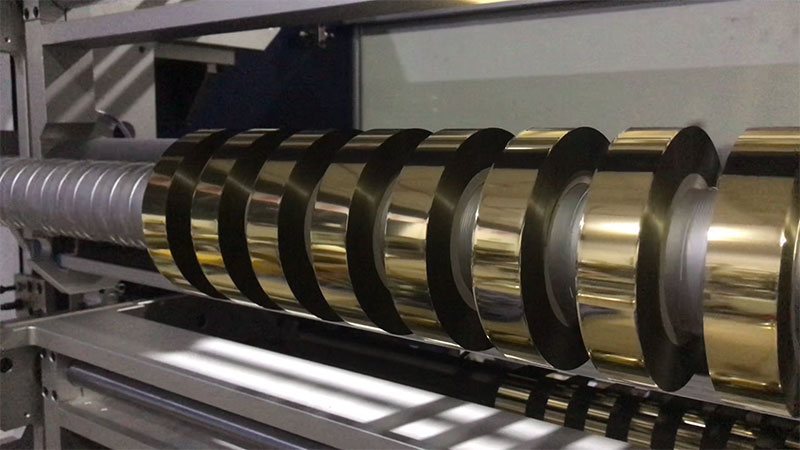 Digital Enhancement Foil Slitter
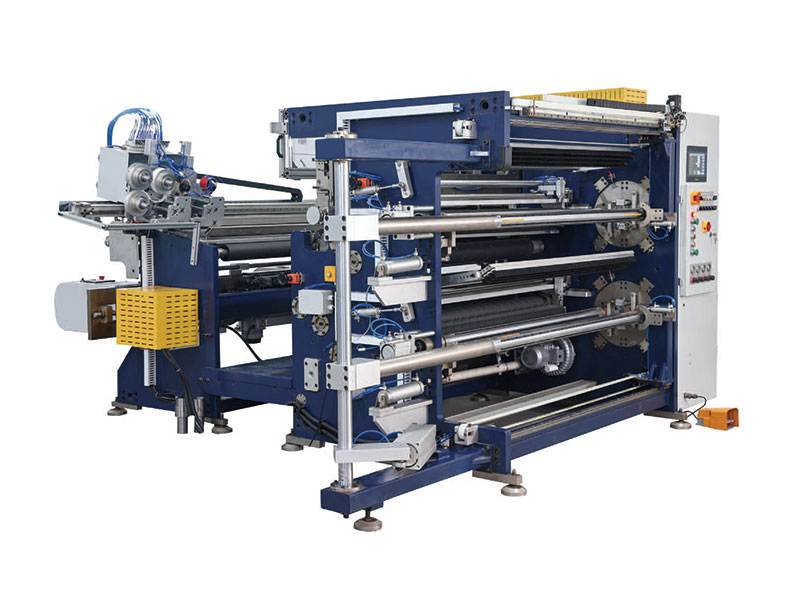 Hot Stamping Foil Slitter RSDS7H 1350 PLUS
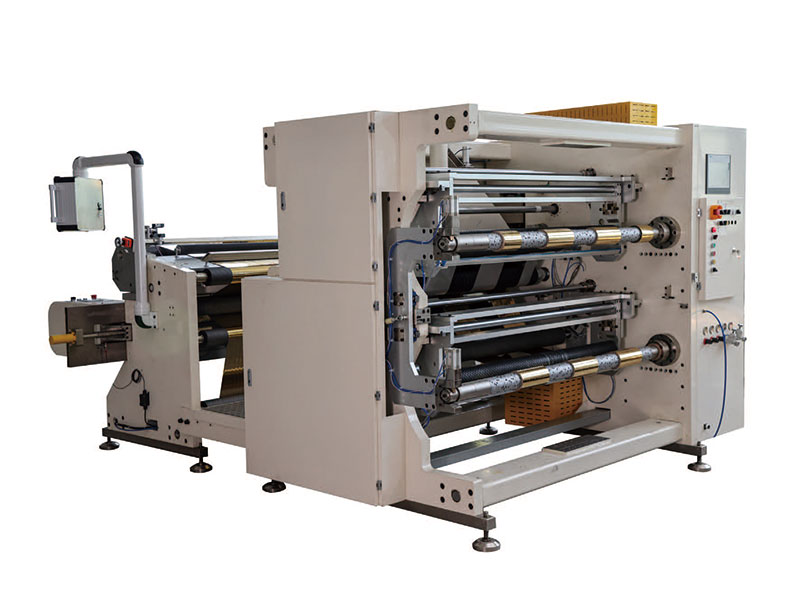 Hot Stamping Foil Slitter (RSDS7H) 1350