Hot stamping foil gives packaging and printed products that premium, eye-catching metallic finish. But behind every flawless stamped design lies a critical first step: precision slitting and rewinding.
Choosing the right slitter rewinder for hot stamping foil isn't just about speed—it's about protecting a sensitive, value-added material. If the machine doesn't match your production needs, you may face wrinkles, telescoping rolls, uneven edges, or excess waste. Here’s what to look for.
Understand What Makes Hot Stamping Foil Different
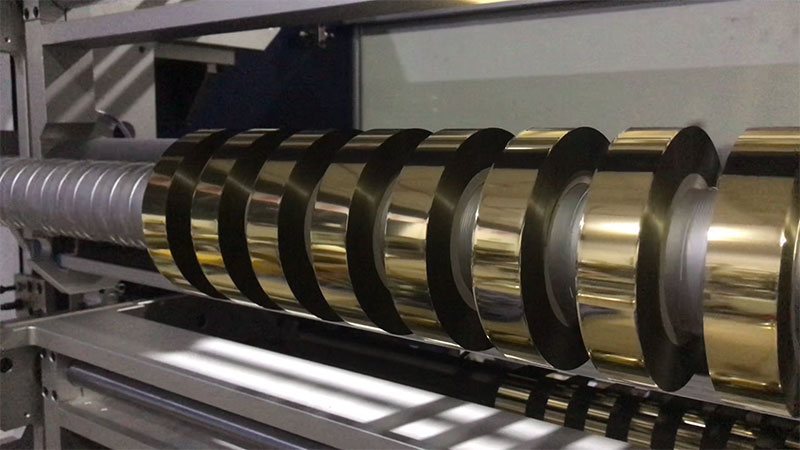
Hot stamping foil is typically a multi-layer composite: a PET base film, a release layer, an aluminum plating layer, and an adhesive. Thickness often ranges from 12 to 25 microns—extremely thin and sensitive to tension variation.
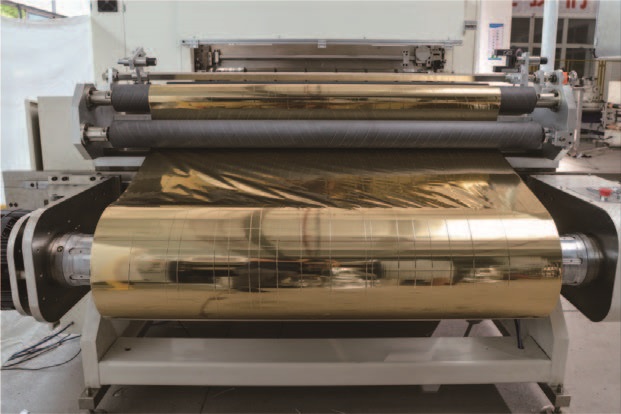
Because the finished surface and roll condition directly affect downstream stamping performance, a professional hot stamping foil slitter rewinder should be evaluated as a complete web-handling system, not just a cutting unit.
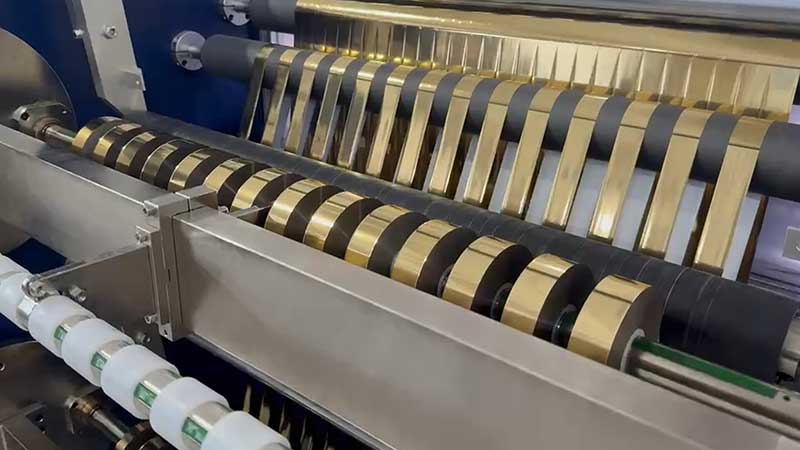
The Three Critical Selection Criteria
1. Tension Control: The Lifeline of Precision
More than 90% of slitting issues—inaccurate dimensions, uneven end faces, and telescoping—stem from poor tension management.
What to look for:
• Closed-loop servo tension control: Uses high-precision sensors to provide real-time feedback and dynamically adjust tension from unwinding to rewinding. This ensures consistent tension even during acceleration and deceleration.
• Taper tension technology: As the roll diameter increases, winding tension should gradually decrease. This prevents inner layers from being crushed by outer layers and ensures the finished roll is moderately tight for smooth unwinding on the stamping press.
• Unwind tension control: Systems using load cells with magnetic brakes or servo motors provide stable web release and smooth acceleration/deceleration.
2. Web Guiding and Edge Quality
During high-speed operation, foil rolls tend to wobble. If edges are uneven, the subsequent hot stamping process will suffer from frequent deviations and misregistration.
What to look for:
• Ultrasonic edge sensors: These are preferred over photoelectric sensors because ultrasonic detection is unaffected by foil color, metallic reflection, or transparency.
• CCD visual recognition (for high-end applications): Automatically recognizes printed edge markings to ensure perfect alignment between slit position and pattern.
• Servo-driven guiding systems: Respond faster and correct web position in real-time during high-speed slitting.
3. Slitting Quality: Clean Cuts, No Burrs
Burrs and foil powder are the enemies of hot stamping quality. They cause fuzzy edges, contaminated stamping dies, and wasted material. The root cause is often the difference between "cutting" and "tearing".
What to look for:
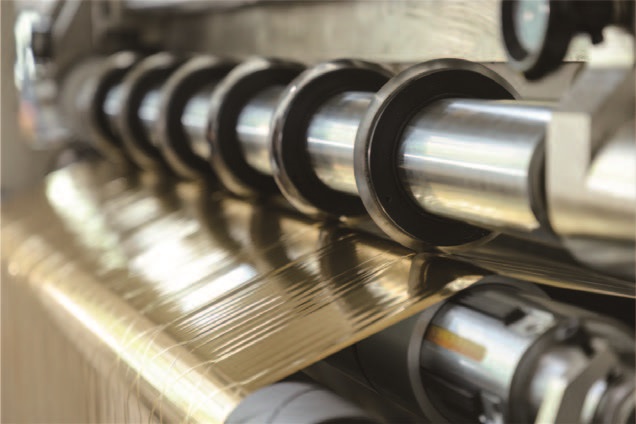
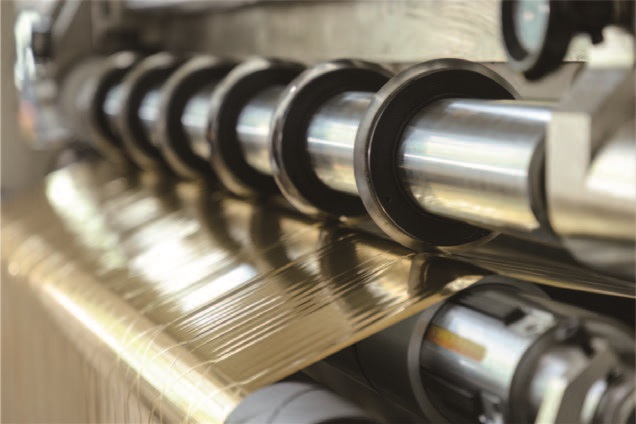
• Tool material: Diamond-coated or super-hard alloy circular blades with mirror-polished cutting edges. The angle should be tailored to the foil type (typically 20°–60°).
• Body rigidity: Integrated casting bodies offer superior rigidity and vibration resistance compared to welded steel plate frames. This keeps the tool shaft stable at high speed and maintains consistent cutting pressure.
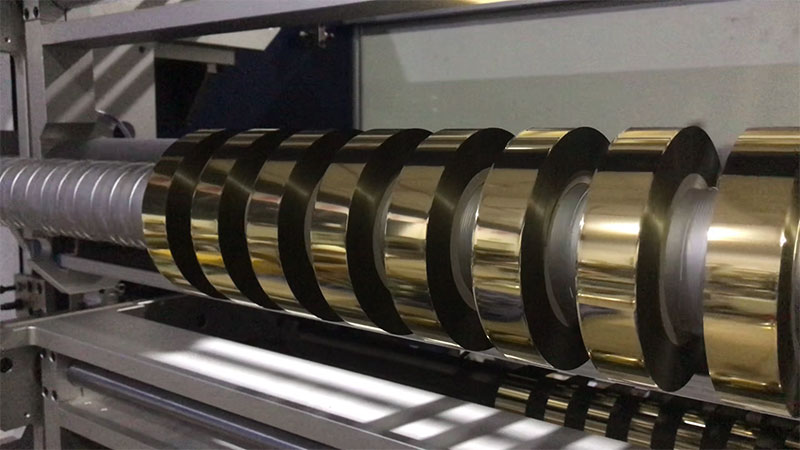
• Slitting method: For hot stamping foil, razor blade slitting (suitable for very narrow widths) or shear circular knife cutting (better for burr-free results) are commonly recommended.
• Precise blade adjustment: Check that the gap and overlap between upper and lower blades are finely adjustable—too large a gap causes cutting errors, too small accelerates wear.
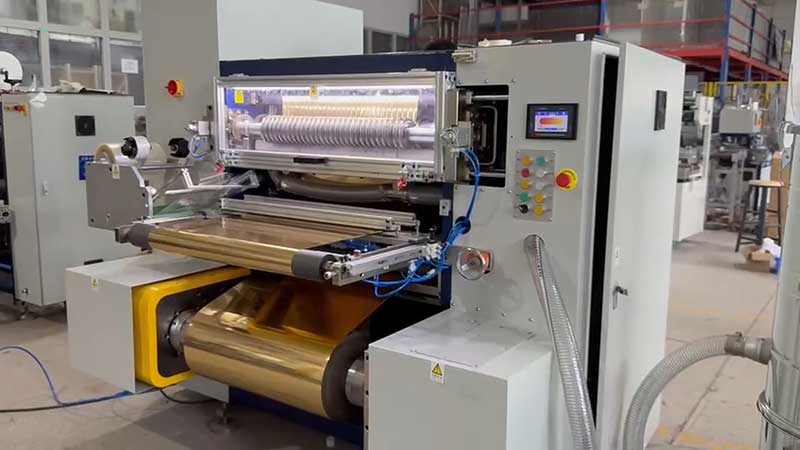
Beyond the Basics: Practical Considerations
Machine Sections to Evaluate
| Machine Section | What to Check | Why It Matters |
| Unwinding | Stable web release, controllable tension, smooth acceleration/deceleration | Reduces wrinkles, tension fluctuation, and unstable web movement |
| Web Guiding | Reliable alignment, fast response | Supports consistent slit position and cleaner edges |
| Slitting Section | Tool configuration, knife arrangement, setup efficiency | Influences edge quality, slit accuracy, and material condition |
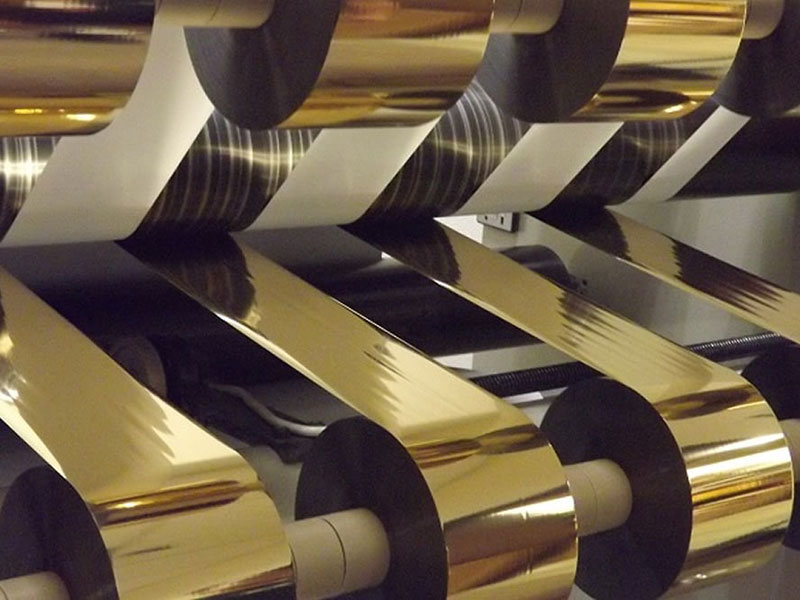
| Rewinding | Suitable shaft/core arrangement, controlled tension, stable roll build | Produces smooth, compact, and consistent finished rolls |
| Control & Operation | Clear controls, repeatable settings | Reduces operator variation and improves consistency |
| Static & Dust Control | Anti-static bars, dust removal rollers | Prevents dust attraction that can cause stamping defects |
Prepare Your Specification Sheet
Before contacting suppliers, define your requirements clearly:
• Material type and structure: Identify any surface sensitivity that may affect web handling.
• Jumbo roll dimensions: Parent roll width, diameter, core size, and condition.
• Finished roll specifications: Required slit widths, finished roll diameter, core size, and number of lanes.
• Production targets: Expected output, changeover frequency, and typical run lengths.
• Existing problems: Describe any current issues like wrinkles, telescoping, loose or hard winding, or uneven roll faces.
• Automation needs: Consider auto-unloading, hydraulic loading, automatic knife positioning, and digital setup recall to reduce operator workload and improve consistency.
The Ultimate Test: On-Site Trial Cutting
No spec sheet tells the whole story. Bring your commonly used hot stamping foil master roll for on-site trial cutting. This is the most critical step.
During the trial:
• Examine the slitting end face: Is it smooth as a mirror, free of embossing marks or burrs?
• If possible, use a high-magnification microscope to inspect cut edges for micro-cracks invisible to the naked eye.
• Test the machine's formula storage function—different widths and materials require different tension and speed parameters. Quick recall of these settings saves significant setup time.
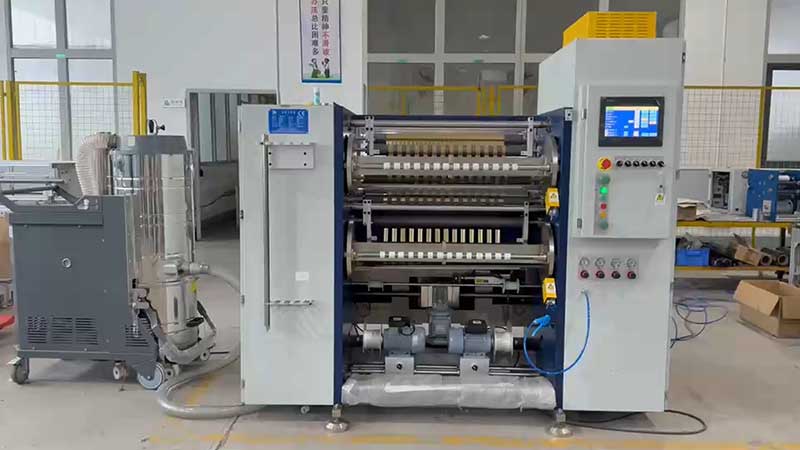
Final Thoughts
Choosing a hot stamping foil slitter rewinder is a decision that impacts your production quality, material utilization, and profitability. Maximum speed should be treated as one selection factor, not the selection factor. The right machine is the one that delivers stable tension, clean cuts, and consistent roll quality—tailored to your specific material and production workflow.
Take the time to evaluate each machine section, conduct proper trials, and partner with a supplier who understands the nuances of foil converting. Your downstream stamping process—and your bottom line—will thank you.
 English
 Deutsch
 Français
 Español
 Português
 日本語
日本語 русский
 한국어
한국어 عربي
عربي ภาษาไทย
 Tiếng Việt
 Italiano
 Cold Foil Slitter
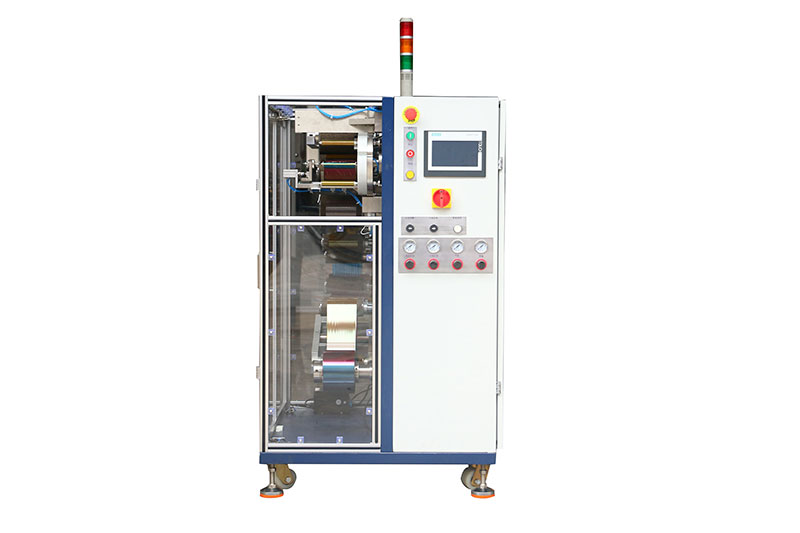 Card Print Ribbon Rewinder
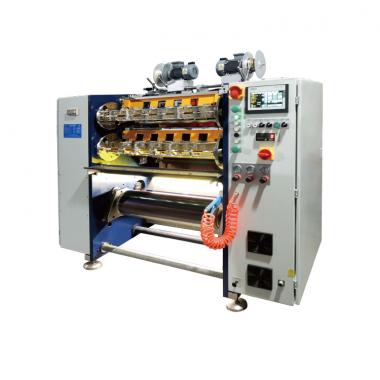 Card Print Ribbon Slitter
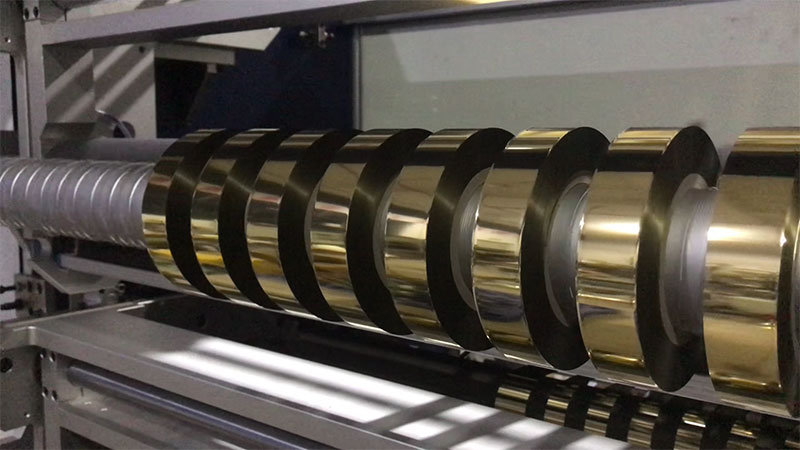
 Hot Stamping Foil Slitting Machine
 Holographic Foil Slitter
 Digital Enhancement Foil Slitter
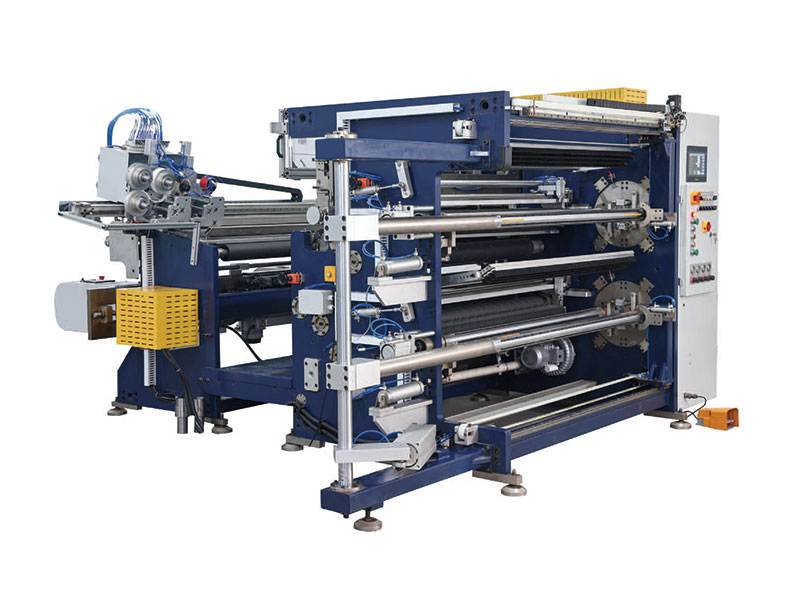 Hot Stamping Foil Slitter RSDS7H 1350 PLUS
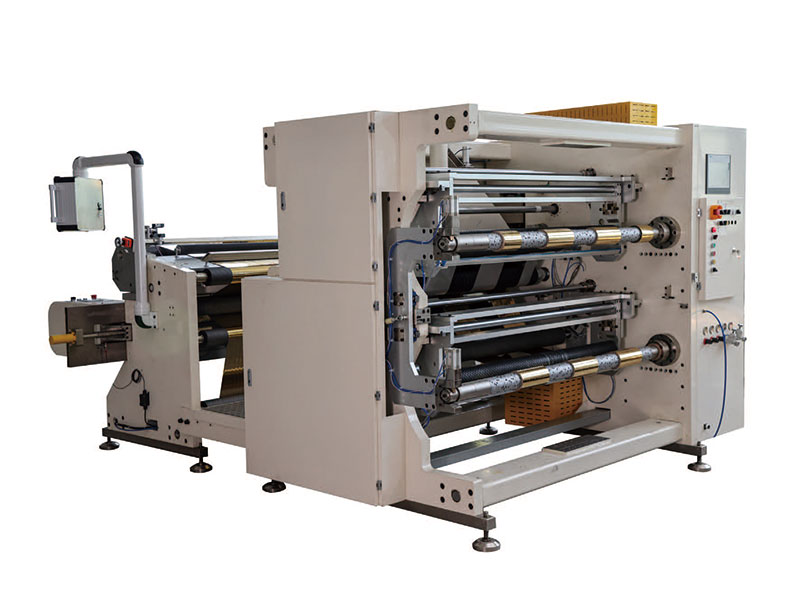 Hot Stamping Foil Slitter (RSDS7H) 1350