In the production of heat transfer ribbons, material costs often account for 60 to 70% of the total cost. The slitting process may seem simple, but it is actually the "hardest hit area" for losses—trimming scrap, machine trial cutting, joint waste, and scrapping caused by improper tension. Each of these is silently eroding profits. Material saving is not simply "cutting a little less," but a systematic engineering system that spans equipment, processes, operations, and management.
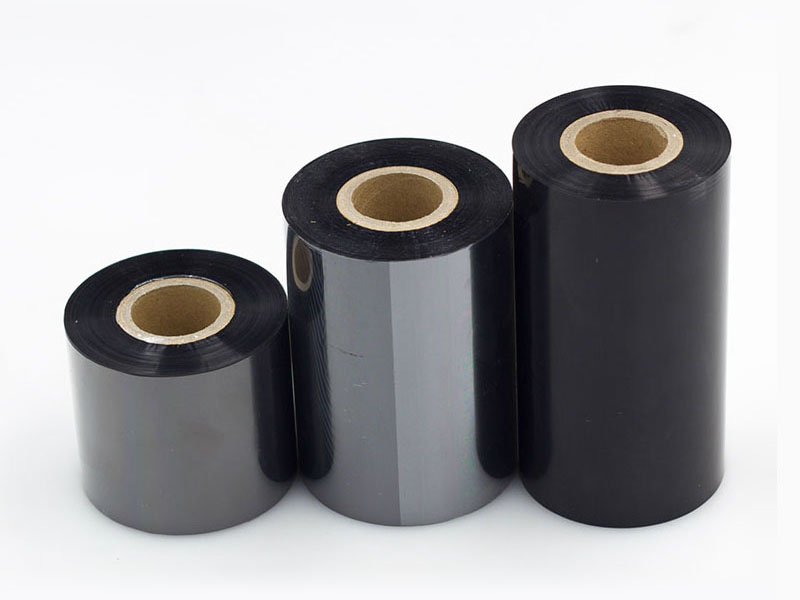
Where does the loss come from: First, find the "leak" holes
To save on ingredients, you first need to know where the ingredients are wasted. Losses during ribbon slitting mainly focus on these stages:
• Edge trimming scrap: To ensure the finished product width standard, edges must be cut off on both sides of the main roll. This is structural loss, but it can be optimized to some extent.
• Machine setup and trial cutting losses: Parameter adjustments and trial cutting verification during specification changes often consume tens or even dozens of meters of material before stable production can be achieved.
• Start-stop and joint losses: Tension fluctuations during equipment start-stop stages can easily produce defective products, and improper handling of joints inside the busbar can also cause batch scrapping.
• Slitting quality issues: burrs, misaligned layers, wrinkles, stretch deformation—these issues caused by improper craftsmanship can result in degradation at best, or even complete roll scrapping.
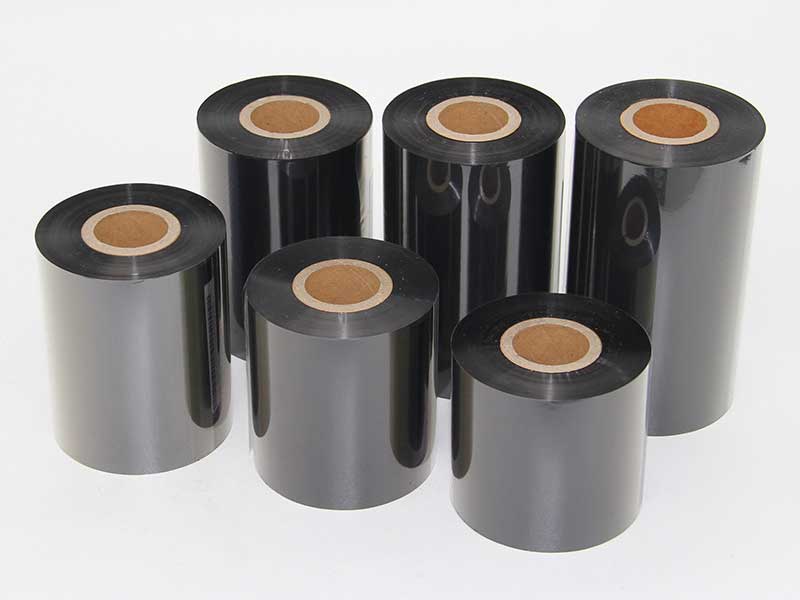
Material-saving core one: Making every millimeter of material "make the best use"
1. Toolsetting optimization: Calculate the optimal solution
The combination of slitting widths directly affects material utilization. Traditional manual tool setting relies on experience, which inevitably leads to deviations; The intelligent tool layout algorithm can automatically calculate the least wasteful slitting scheme based on order demand, and even use "nest cutting" technology to cut multiple product widths simultaneously from a single-width roll, turning leftover into marketable finished products rather than waste.
2. Precise edge trimming: cut one millimeter less, never overcut
The invalid area at the edge of the main roll is not a fixed value. Devices equipped with dynamic edge cutting functions can automatically detect the effective width and control the cutting position of the trimming blade in real time, compressing the trimming width to within 2-3mm. Additionally, using ultra-thin inserts (thickness up to 0.1mm) and staggered arrangement of tools can directly reduce material loss caused by tool gaps, with some technical solutions even claiming to reduce edge scrap by 30%-50%.
3. Transition Stage Management: "Careful Budgeting" When Changing Orders
Order exchange operations are a major waste in daily life. Every order exchange inevitably involves a transition segment waste. By precise pre-splicing (using butt joints instead of overlap joints, with splicing tape width controlled within 5mm), preset transition section lengths (determine the minimum stable transition length for the machine based on testing, such as 8 meters instead of the default 20 meters), a single change can save 12 meters of material. A further solution is to adopt a tension-free receiving system to achieve continuous roll changes without stopping the machine, completely eliminating start-stop losses.
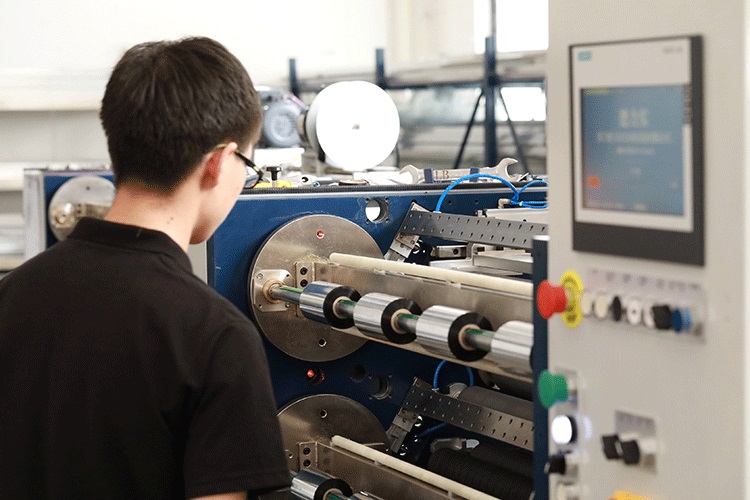
Material Saving Core 2: Squeezing Out Losses with Precision
If slitting accuracy is insufficient, all material-saving measures are empty talk. Large width tolerances, uneven end faces, and edge burrs can all result in the finished product being deemed unqualified.
1. Tension Control: The Invisible "Trader"
Unstable tension is the primary cause of ribbon stretching, deformation, wrinkles, and misalignment. The secret to saving material lies in precise segmentation control:
• The slitting process is divided into unwinding, slitting, and rewinding zones, each with optimal tension set.
• Uses a closed-loop tension control system for real-time monitoring and automatic compensation for fluctuations.
• Use a taper tension strategy during winding—the larger the diameter, the lower the tension, preventing tight inside and loose outside or "daisy core" winding, ensuring every meter of finished product is flat and usable.
2. Tool Management: Good knives produce great work
Blunt cutting can cause burrs, stringing, and even compression deformation, turning the entire roll material into scrap. The key to material savings lies in refined tool management:
• Establish a blade sharpening system with regular grinding, costing far less than replacing new blades and extending service life by 3-5 times.
• Precise installation ensures micron-level overlap between upper and lower blades and lateral clearance, preventing tearing or burrs caused by improper clearance.
3. Correction and detection: Leave no room for errors
The high-sensitivity photoelectric deviation correction system controls slitting deviation within ±0.1mm, correcting material deviation in real time. The online visual inspection system can automatically identify defective segments and accurately remove them, preventing the tragedy of "one bad apple spoiling the whole pot"—the tragic failure of the entire roll.
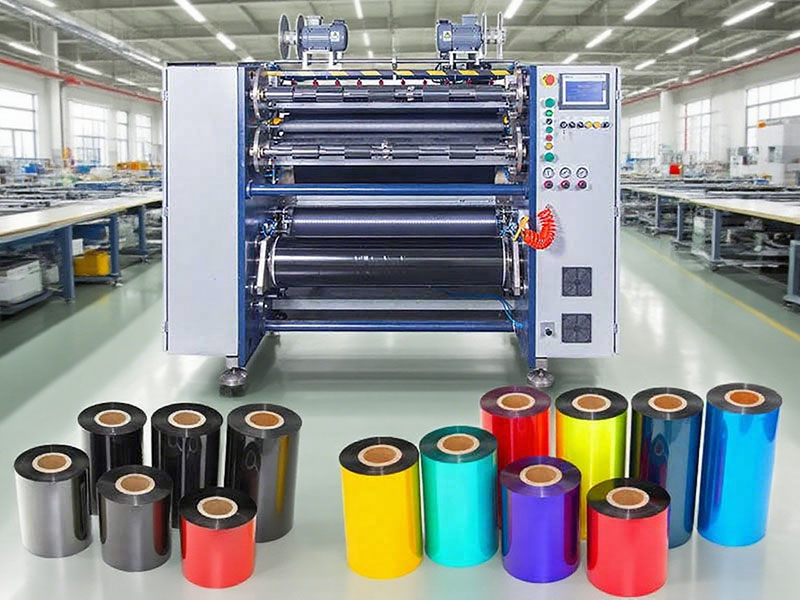
Core Three of Material Saving: Collaboration of people, machines, and methods—turning material savings into habits
No matter how good the equipment is, it still relies on human operation. Much of the waste is actually caused by "human error."
1. Standardized Operations to Eliminate "Almost"
Develop detailed Standard Operating Procedures (SOPs) covering every action: feeding, parameter setting, order change, and cleaning. Implement dual parameter review and first-piece inspection systems to ensure that the first batch of products after each model change is qualified and avoid batch trial and error.
2. Data management: use ledgers to achieve results
Establish a waste ledger for order exchange, recording the length of each transitional section, amount of scrap products, and time spent on order exchange. Through data analysis, identify the order types with the highest waste and optimize processes accordingly. Regularly organize trade-change skill competitions to solidify best practices as standards. After integrating the MES system, it is possible to accurately trace the utilization rate of each batch of master rolls and pinpoint the root causes of problems.
3. Preventive maintenance to plug the "big hole" of sudden failures
A single bearing jam or belt breakage can cause hundreds of meters of material to be instantly scrapped. Shifting from "passive repair" to "proactive prevention" involves daily cleaning, regular lubrication, and listening for location to promptly identify hidden dangers and prevent minor issues from turning into major failures. This is an invisible but highly effective "material-saving" method.
Conclusion
The material-saving of ribbon slitting machines does not rely on a single clever trick, but is the result of a four-wheel drive driven by technical equipment, process parameters, operating standards, and management systems. From optimizing the tool layout algorithm, to fine-tuning a value on the tension curve, and then to a precise splicing during order change—every detail improvement ultimately results in a leap in material utilization from 85%-90% to over 95%, which is the competitiveness directly stated on the profit statement.
 English
 Deutsch
 Français
 Español
 Português
 日本語
日本語 русский
 한국어
한국어 عربي
عربي ภาษาไทย
 Tiếng Việt
 Italiano

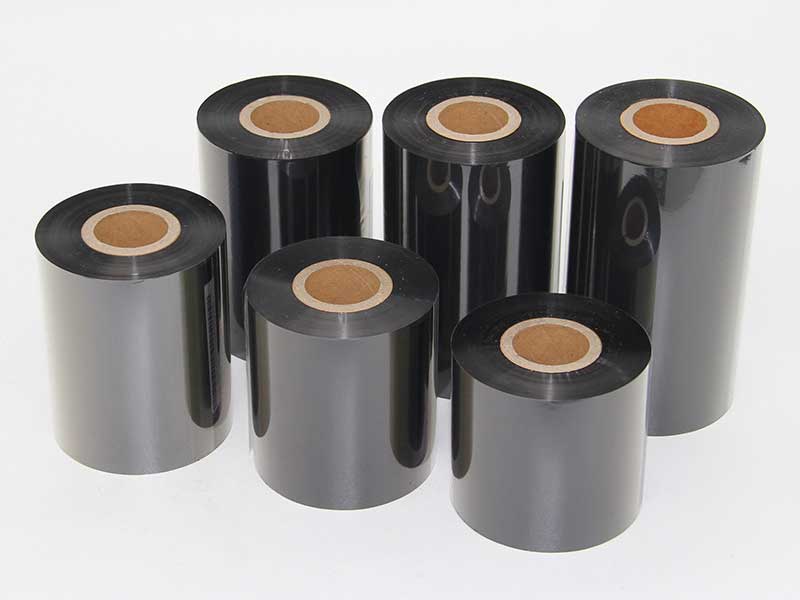
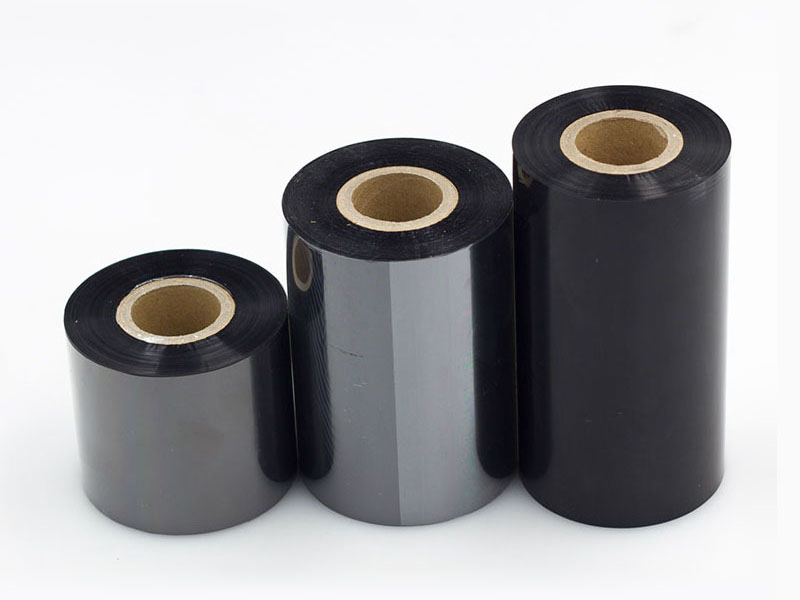
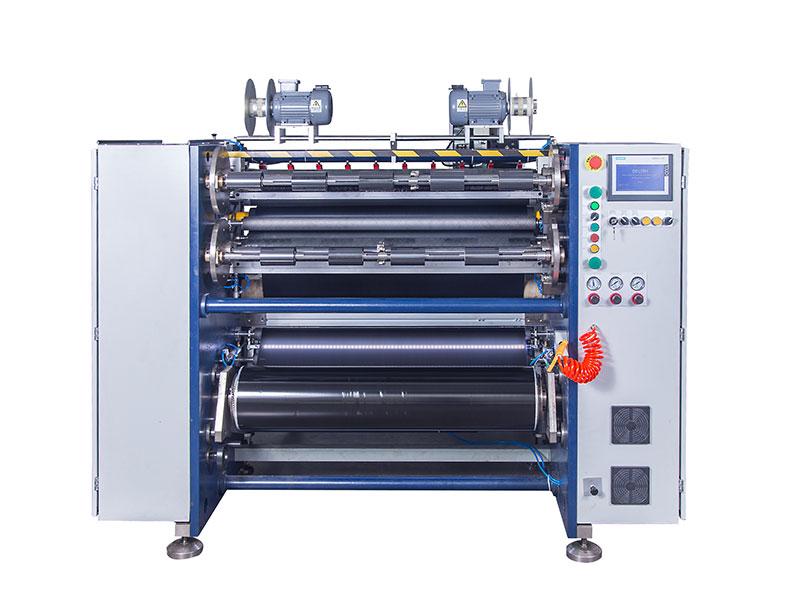 Ribbon Slitting Machine
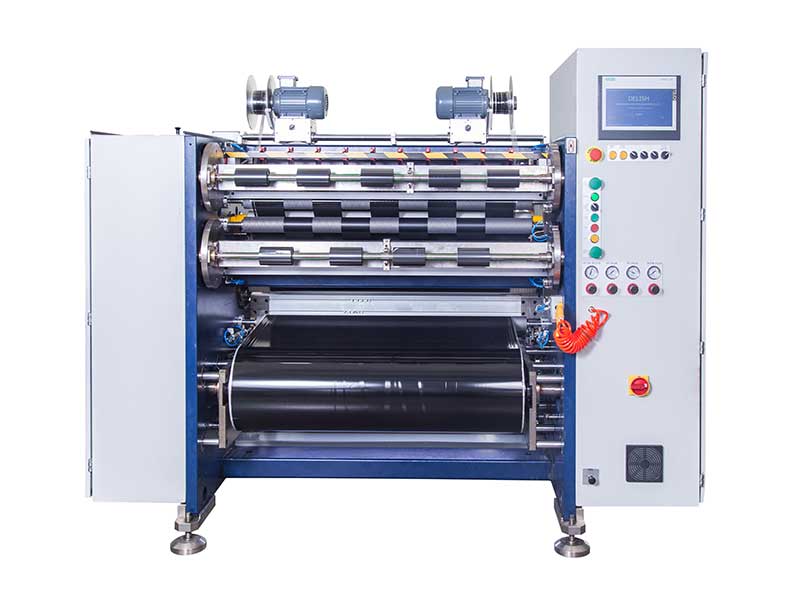 Barcode Ribbon Slitting Machine
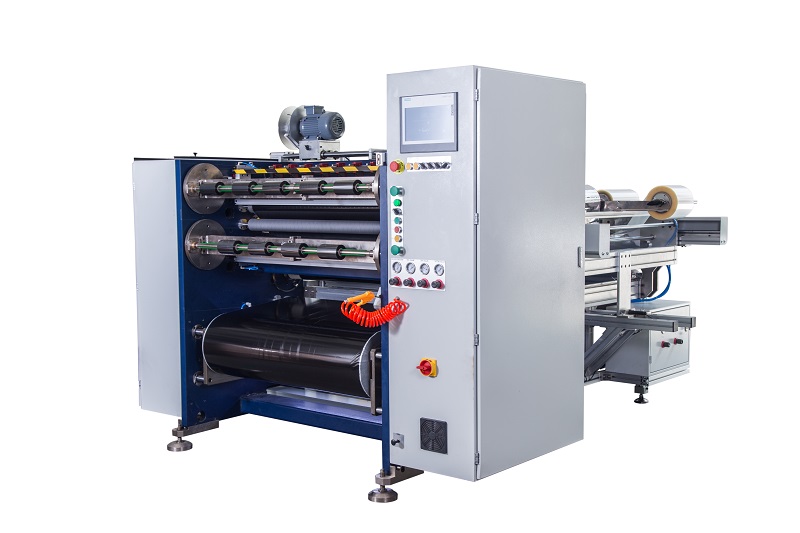 Semi Automatic Thermal Transfer Ribbon Slitter RSDS5 PLUS
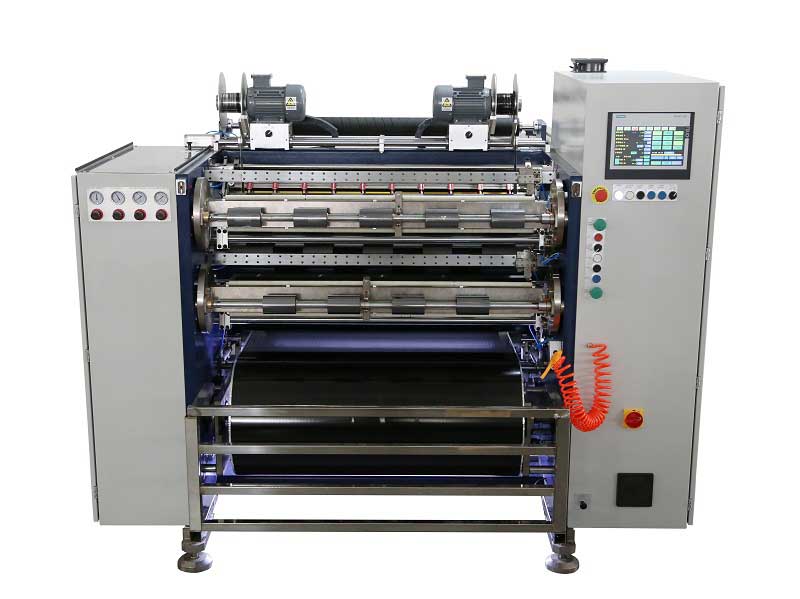 Automatic Thermal Transfer Ribbon Slitter RSDS8 H PLUS
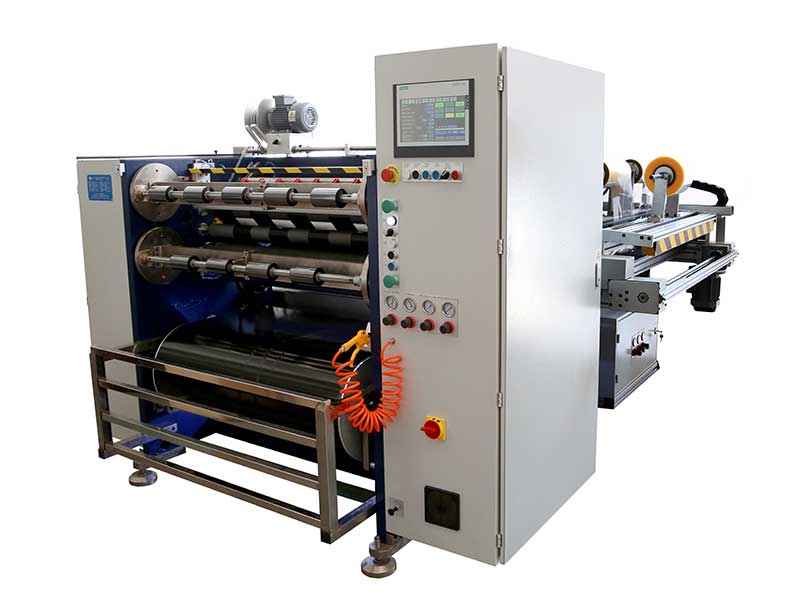 Automatic Thermal Transfer Ribbon Slitter RSDS6 PLUS
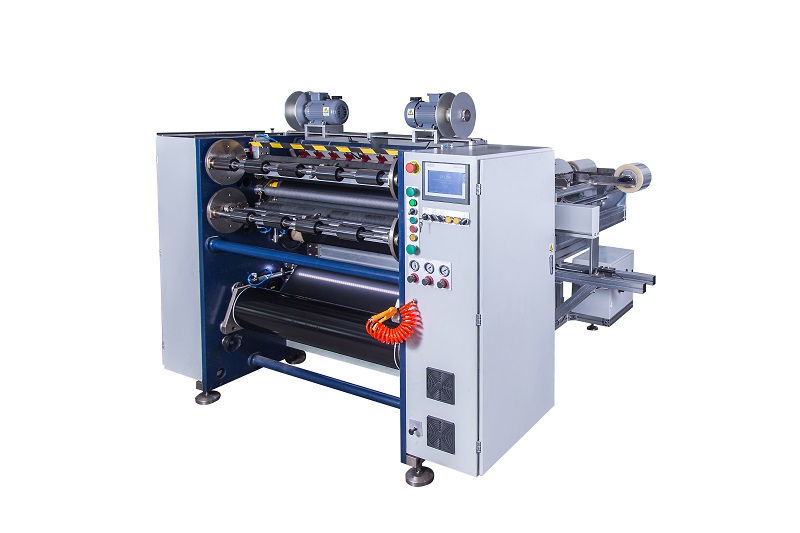 Semi Automatic Thermal Transfer Ribbon Slitter RSDS1 PLUS
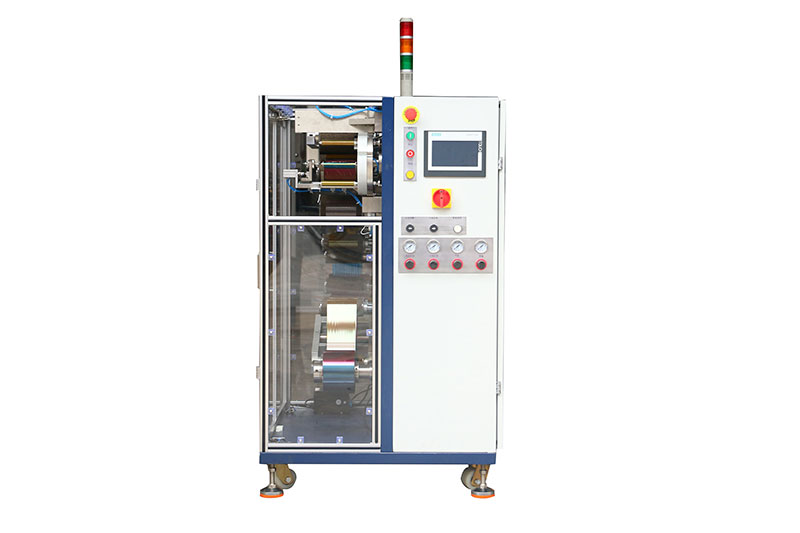 Card Print Ribbon Rewinder
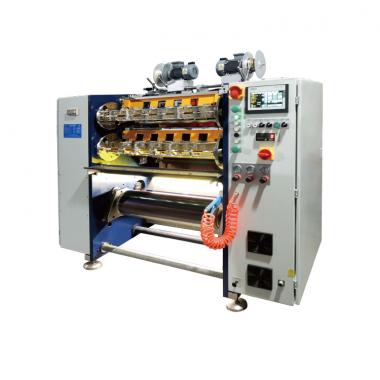 Card Print Ribbon Slitter