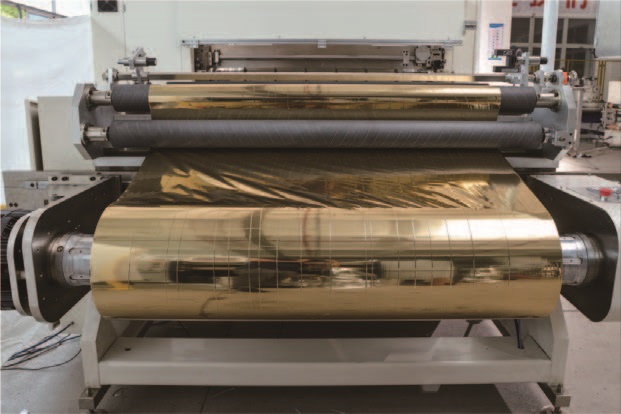
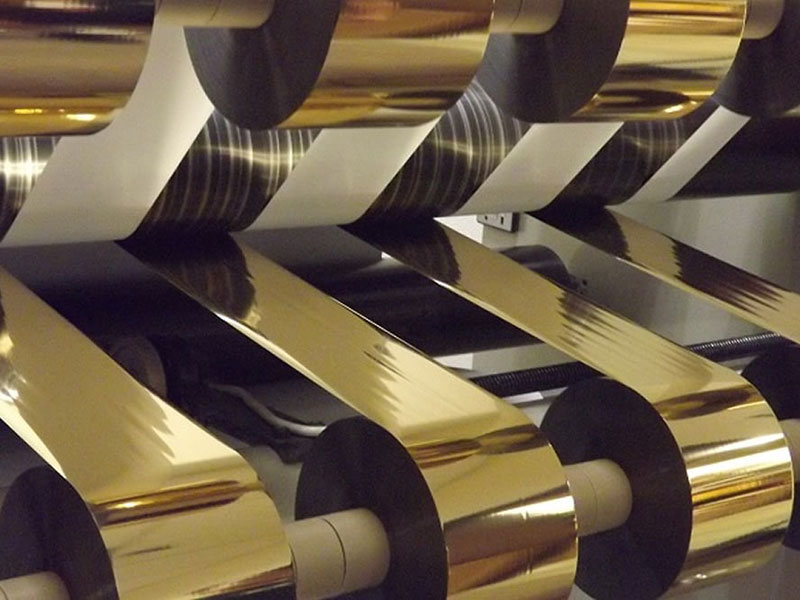
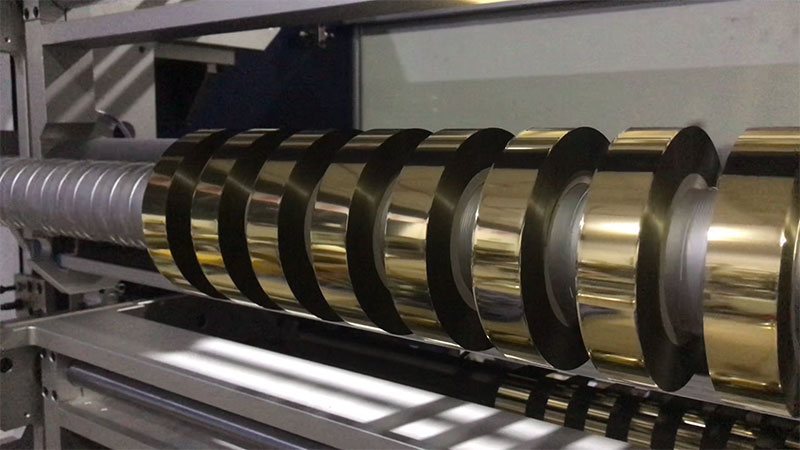
In the precision slitting processing of high-end packaging materials such as hot stamping foil, laser foil, and holographic anti-counterfeiting foil, the industry has long faced two major challenges: metal particles and pigment debris generated by slitting not only pollute the workshop environment and threaten operator health, but can also directly cause fatal defects like pinholes and pitting in hot stamping products; The static charges accumulated from slitting friction can at best cause foil sticking and uneven winding, and at worst, pose electric shock hazards or even spark discharge. Traditional slitting machines mostly use "independent operations" dust and static removal devices, which have limited effectiveness and interfere with each other. This paper proposes an integrated solution that overturns traditional thinking—deeply integrating high-pressure ion air curtain, directional negative pressure dust removal, and closed-loop static monitoring, thoroughly tackling the pain points of hot stamping foil slitting from the three dimensions of "source suppression + process collection + system feedback."
1. Limitations of Traditional Solutions: Why Does Slitting "Get Dirtier the Cleaner"?
Most users have tried installing independent ion bars and vacuum ports on slitting machines. However, the surface coating of hot stamping foil is delicate and extremely lightweight. The ionic air generated by traditional ion rods can scatter fine dust, allowing pollutants to escape over a wider area; The independent vacuum port also cannot effectively capture live dust because the airflow direction does not match the foil movement trajectory. More importantly, when the slitting knife rubs against the foil at high speed, static electricity quickly "adsorbs" surrounding dust onto the foil surface—when static accumulates above 10kV, dust adhesion can surge by more than 300%. Traditional solutions separate static electricity and dust, resulting in a vicious cycle of "removing static electricity and dispersing dust, but the suction port failing to pick up charged dust."
2. Core Principle of Integration: Ion air curtain + directional negative pressure + closed-loop power dissipation
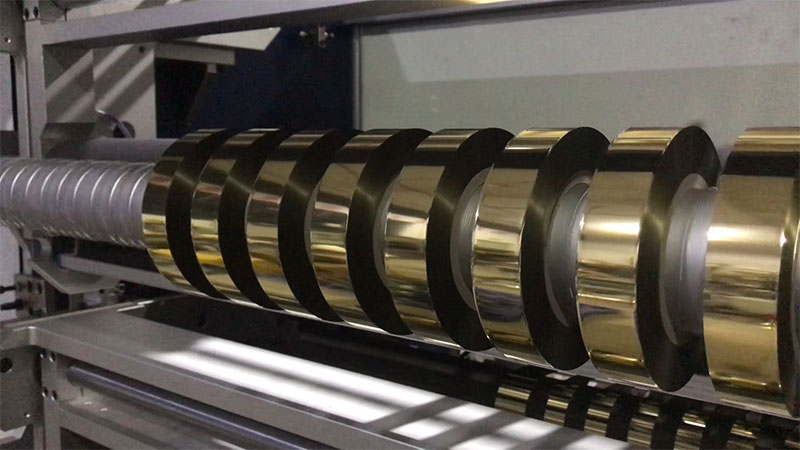
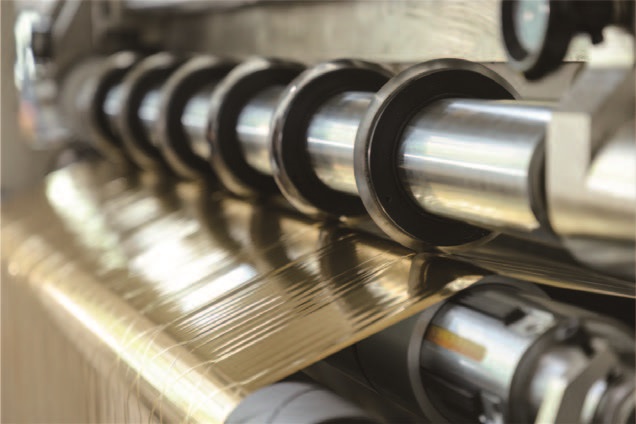
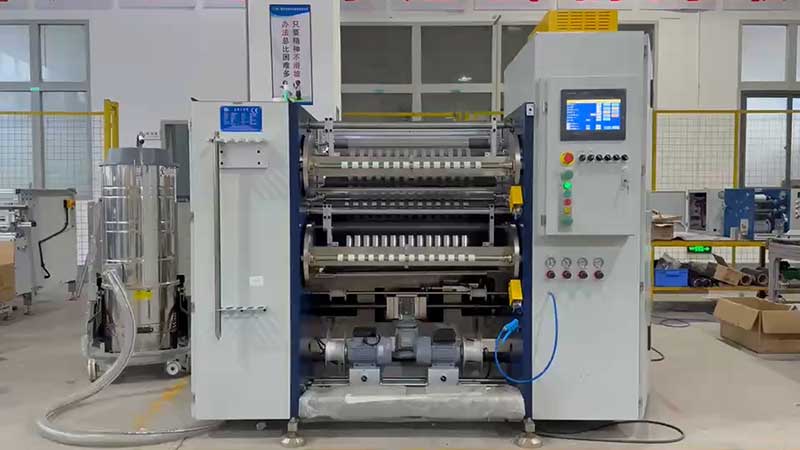
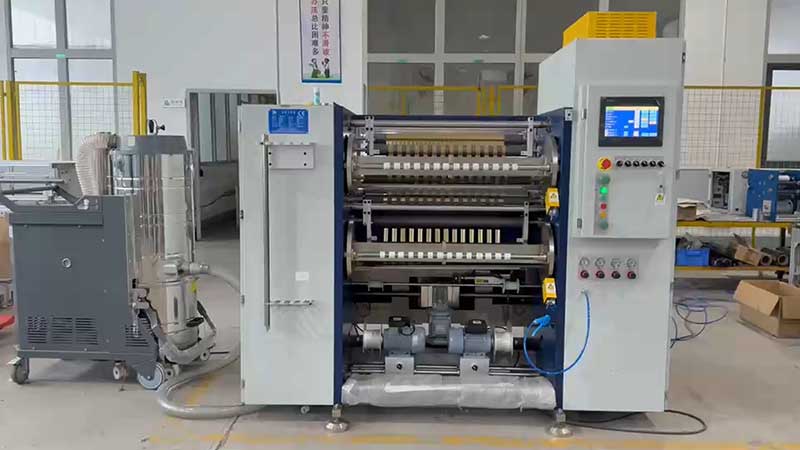
This solution breaks the traditional equipment structure, integrating dust removal and anti-static functions into compact modules on both sides of the slitting tool holder, achieving synergy among three core technologies:
1. High-pressure ion air curtain (source stripping)
A set of pulse-type high-voltage ionization electrodes are arranged before and after the slitting tool to generate controllable positive and negative ion air curtains. Ionized air blows toward the cutting area at an angle of 15°~30° with the foil movement. On one hand, it quickly neutralizes the static charges carried by the foil surface and dust (lowering the potential from kilovolts below 300V). On the other hand, it uses a laminar air curtain to "lift" dust just off the foil from the surface, preventing secondary adsorption.
2. Directional negative pressure collection hood (instant collection)
A contoured negative pressure collection hood is installed on the opposite side of the ion air curtain, with the air inlet shape perfectly matching the curved surface of the slitting blade, leaving only a 1-2mm gap. The collection hood is connected to a high-efficiency filter dust collector (filtration accuracy 0.3μm, efficiency 99.9%), generating directional airflow with a flow rate of 18-22m/s. Since the charge has been neutralized, dust is no longer constrained by electrostatic adsorption and can be easily drawn into the collection hood by airflow. Tests show that this structure can capture over 98% of slitting dust, far outperforming the 60-70% capture rate of traditional dust suction ports.
3. Closed-loop electrostatic monitoring and adaptive regulation
A non-contact electrostatic sensor is installed at the front end of the slitting machine for real-time monitoring of residual potential on the foil surface. The signal is fed back to the ion air curtain controller, which dynamically adjusts ion output intensity and curtain flow rate. For example, when an elevated potential is detected, the system automatically increases ion concentration and synchronously increases the negative pressure fan speed—this "electrostatic-dust removal linkage" mode ensures the system remains optimally matched even during high-speed slitting (above 300m/min) or when switching different substrates.
3. Disruptive Advantage: From "Passive Handling" to "Active Immunity"
Compared with traditional solutions, the integrated solution achieves three major breakthroughs:
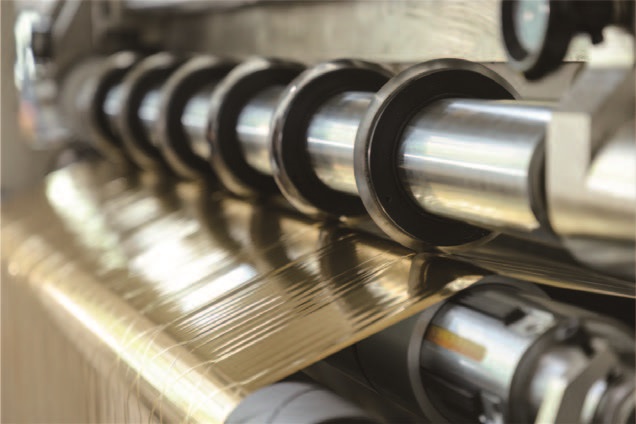
• Spatial integration with no interference: The ion air curtain is physically isolated from the negative pressure port and the airflow direction is complementary, preventing ion air from dispersing dust or disturbing the neutralization zone electric field at the dust suction port. The overall module length does not exceed 200mm and can be directly embedded into existing slitting machine tool holders.
• Efficiency doubled, quality leap: At the same slitting speed, dust residue on foil surfaces is reduced to less than one-fifth of that of traditional methods. A leading hot stamping foil company tested that after adopting an integrated solution, the defect rate caused by "pinholes" and "trachoma" in the hot stamping process dropped from 3.2% to 0.4%, without frequent downtime to clean knife rollers.
• Safe and compliant, green production: closed-loop power discharge completely eliminates the risk of spark discharge, meeting explosion-proof workshop requirements; Collected dust (often containing precious metals or pigments) can be recycled and reused, and the filtered exhaust air cleanliness meets workshop direct emission standards.
4. Key Points for Implementation and Selection Recommendations
When deploying this solution, companies need to focus on three key points:
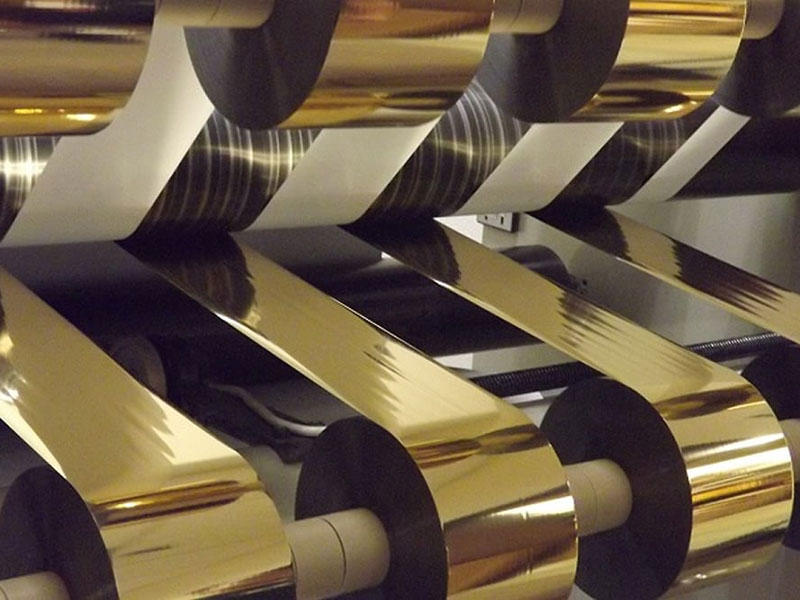
1. Tool post modification and adaptation: Different slitting machines have significant differences in blade shaft spacing and blade diameter, requiring customized profiled capture covers and ion air curtain brackets. It is recommended to use 3D scanning modeling and then print non-metallic nylon brackets, which are both lightweight and avoid short circuits.
2. Air source and filtration configuration: The ion air curtain requires clean and dry compressed air (dew point below -20°C); it is recommended to configure an oil-water separator separately; The negative pressure system should use anti-static filter cartridges and set differential pressure alarms to prevent premature clogging of high-precision filter materials.
3. Electrostatic sensor calibration: The surface reflectivity of hot stamping foil is high, so conventional electrostatic sensors may experience drift readings. Choose models with automatic zero calibration and background compensation functions, and calibrate once a month with a standard electrostatic generator.
Conclusion
Dust and static electricity in hot stamping foil slitting are not isolated defects, but rather systemic challenges of "charge-particle" coupling in high-speed friction environments. The integrated dust removal anti-static solution uses a trinity of ion air curtain, directional negative pressure, and real-time monitoring, completely overturning the traditional approach of "treating the root cause of the problem, treating the foot of the foot when the foot hurts." This is not only a technological upgrade in equipment, but also an important milestone in the field of precision coil processing toward clean, safe, and efficient production. For companies pursuing flawless foil stamping quality, this disruptive solution is shifting from an "optional technology" to a "standard process."
 English
 Deutsch
 Français
 Español
 Português
 日本語
日本語 русский
 한국어
한국어 عربي
عربي ภาษาไทย
 Tiếng Việt
 Italiano
 Cold Foil Slitter
 Card Print Ribbon Rewinder
 Card Print Ribbon Slitter
 Hot Stamping Foil Slitting Machine
 Holographic Foil Slitter
 Digital Enhancement Foil Slitter
 Hot Stamping Foil Slitter RSDS7H 1350 PLUS
 Hot Stamping Foil Slitter (RSDS7H) 1350