In the production and application of PET film, the slitting stage is one of the key processes that determines the quality of the final product. As the requirements for film thickness in consumer electronics, optical displays, and new energy continue to decrease (such as ultra-thin films with a thickness of < 6μm), improper tension control, mechanical structure limitations, or unreasonable process parameters during slitting can lead to tensile deformation and wrinkle issues, which have become recognized technical pain points in the industry. The new generation of PET film slitting machines is systematically solving these two major challenges through multiple innovative designs.
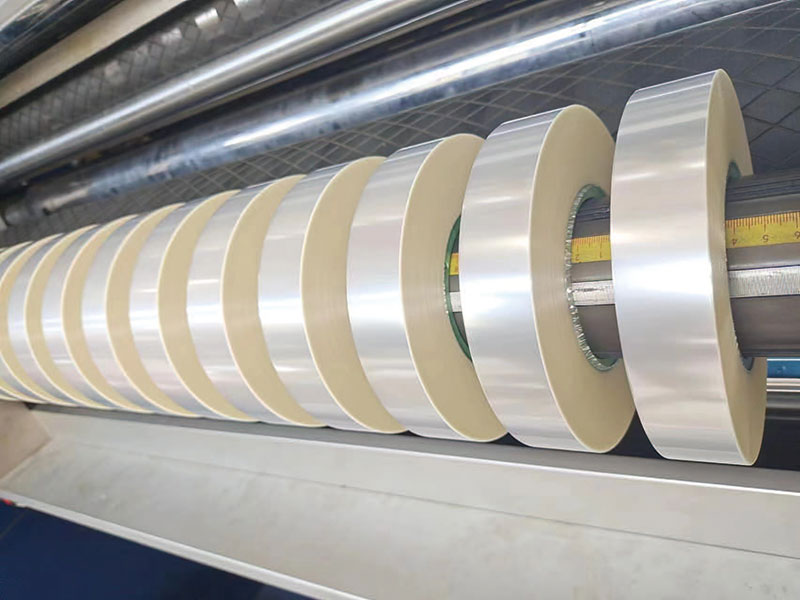
1. Root Cause: Why are thin films prone to deformation and wrinkling during slitting?
1. Causes of tensile deformation
Although PET film has high tensile strength, during high-speed slitting (usually 300-800 m/min), if the tension at the unwinding, traction, and rewinding segments is not dynamically matched and local stress exceeds the material's yield point (especially when transverse thickness is uneven), irreversible plastic elongation occurs, manifesting as wavy edges and dimensional deviations on the film surface.
2. Mechanism of Wrinkle Formation
Folds originate from compressive stress or lateral displacement between membrane layers. Common causes include: misalignment of the winding roller and film winding line speed, leading to "accumulation"; Parallelism errors in the guide rollers cause the film to deviate; Air is drawn into the winding layers, forming bubble folds; and "collapsed edge" wrinkles caused by insufficient edge support after slitting.
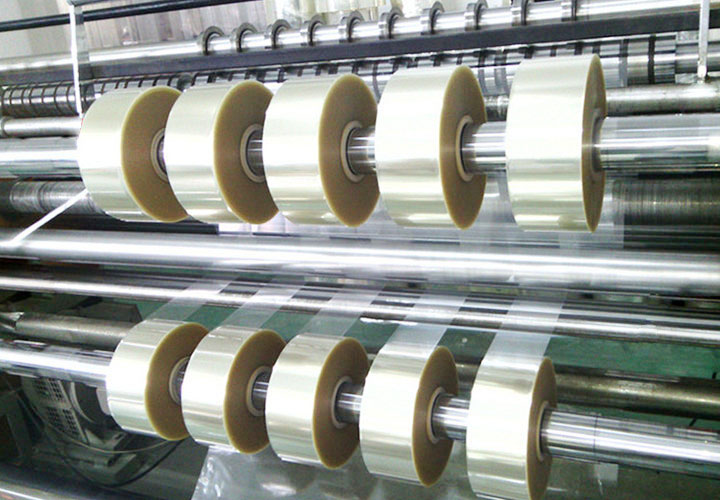
2. Core Solution: Four major technological breakthroughs in advanced slitting machines
To address these pain points, the high-end PET film slitting machine has been systematically upgraded from four aspects: tension control, roller group design, degassing mechanism, and closed-loop inspection:
1. Fully closed-loop vector tension control system
• Independent drive zones: Unwinding, traction, and rewinding are driven independently by servo motors, with high-precision tension sensors providing real-time feedback, reducing response time to under 50ms. The controller automatically calculates inertia compensation and acceleration/deceleration compensation based on the thickness and width of the film, avoiding tension spikes at the moment of start-stop.
• Automatic tapered tension attenuation: During winding, as the diameter increases, the controller gradually reduces the winding tension according to a set curve (such as linear, exponential) to prevent the outer film from compressing the inner layer and causing lateral wrinkles. Typical taper values can range from 100% at the start to 30%-50% by the final roll.
2. Layout of anti-tensile low-resistance roller sets
• Large-diameter curved stretching roller: Equipped with actively rotating curved rollers (arch height adjustable 2-8mm) along the critical path, radial tension creates lateral expansion of the film, effectively eliminating longitudinal folds and "dead bending." Its surface Teflon coating reduces the friction coefficient to below 0.1.
• Suspended air-floating guide rollers: For ultra-thin films (≤12μm), porous ceramic air-floating rollers are used. Compressed air forms a 0.05-0.1mm air film to achieve non-contact guidance, completely eliminating the micro-stretching caused by traditional rubber rollers.
• Precision leveling frame: All roller shafts are laser-centered and calibrated, with a parallelism error ≤0.05mm/m, eliminating cumulative wrinkles caused by mechanical deviation.
3. Active wrinkle removal and smoothing mechanism
• Swing Arm Edge Blowing Device: Adjustable air nozzles are installed on both sides of the diaphragm width, using 0.2-0.4MPa clean compressed air to purge laterally to expel the air layer that has been rolled in and prevent "air bag" wrinkles. Paired with static elimination rods, it reduces folding caused by adsorption.
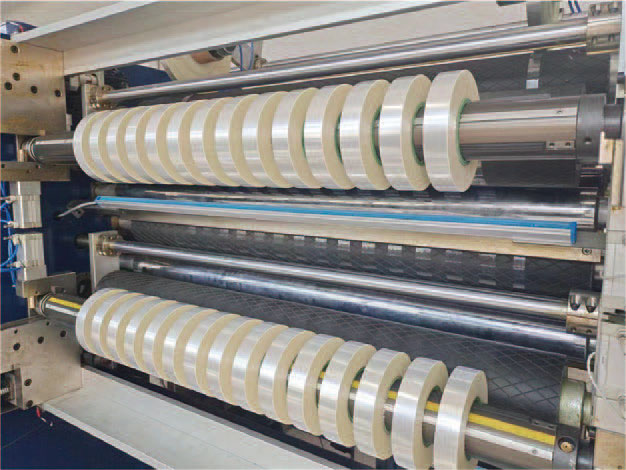
• Spiral knurling and leveling roller: Rubber rollers with bidirectional spiral patterns are placed in wrinkle-prone areas (such as behind slitting blades). When rotated, they shift transversely from the center to the edges, flattening the film surface like a "comb."
4. Intelligent closed-loop deviation correction and thickness compensation
• Ultrasonic/infrared correction system: detection accuracy ±0.5mm, response speed 10mm/s, ensuring uniform edges of narrow film rolls after slitting, eliminating end face wrinkles caused by offset.
• Real-time compensation for transverse thickness distribution: The online thickness gauge feeds data back to segmented pressure rollers (airbag zones with independently adjustable pressure), applying slightly higher pressure to the thick transverse areas of the film roll and reducing pressure in the thin area, ensuring uniform roll hardness and avoiding local deformation caused by "bar-blowing."
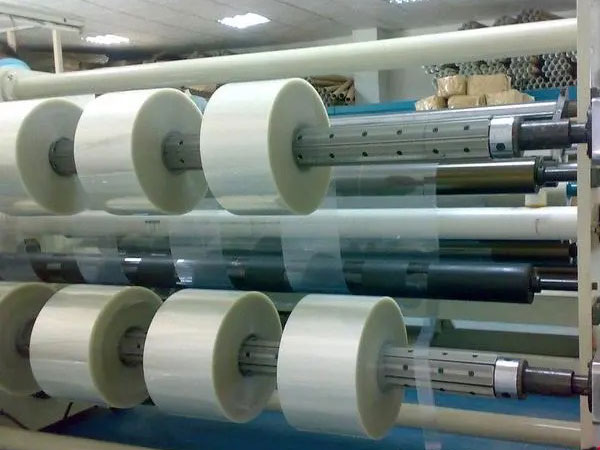
3. Collaborative optimization of process parameters
The advanced slitting machine is also equipped with an intelligent process database, recommending parameters based on PET film characteristics:
• Tension setting reference: 6μm film operating tension ≤15N/m; 12μm film≤ 25N/m; Above 25μm≤ 40N/m.
• Slitting speed matched to cutting tool: thin films use all-metal razors or hot-cutting blades (blade temperature 80-100°C) to reduce stretching caused by cutting resistance; Speed is inversely proportional to thickness—6μm film recommends ≤ 200m/min, while 50μm film can be increased to 600m/min.
• Rewinding pressure control for rollers: Closed-loop pressure adjustment is used; typically, the pressure of the roller is only 10%-20% of the winding tension and decreases as the coil diameter increases, preventing compression damage.
4. Actual Effects and Industry Cases
Slitting machines using the above technology can reduce the slitting crease rate of 12μm optical-grade PET film from 3%-5% in traditional equipment to below 0.2%, with film width tolerances controlled at ±0.5mm and no visible tensile deformation. For example, after a leading film company introduced an intelligent slitting machine equipped with an active air-floating leveling system, the yield rate of ultra-thin diffusion film (6μm) increased from 82% to 96%, and successfully slitted narrow strips with a slitting width of 2000mm (previously over 1500mm were very prone to wrinkling).
5. Future Trends: Digital Twins and AI Self-Optimization
The next-generation PET film slitting machine will integrate digital twin technology—collecting over 20 sets of parameters such as tension, speed, temperature, and humidity in real time, building a slitting process model in a virtual space, predicting wrinkle and deformation risks in advance, and automatically adjusting taper curves or smoothing roll angles. At the same time, a machine vision-based surface defect detection system (capable of identifying 0.1mm-level wrinkles) will directly control slitting parameters in a closed loop, achieving "zero-defect" slitting.
Conclusion
The solution for thin film stretching, deformation, and wrinkles by PET film slitting machines has shifted from "experience-based machine adjustment" to "precise intelligent control." Through the collaboration of three core technologies—independent tension zone drive, low-resistance non-contact guidance, and active flattening and degassing—combined with real-time optimization of material property parameters, modern slitting machines have not only overcome the slitting challenges of micron-scale films but also promoted the large-scale industrialization of high-end materials such as optical films and lithium battery separators. For manufacturing enterprises, investing in slitting systems with these functions has become a strategic choice to break through bottlenecks in thin film mass production and enhance product competitiveness.
 English
 Deutsch
 Français
 Español
 Português
 日本語
日本語 русский
 한국어
한국어 عربي
عربي ภาษาไทย
 Tiếng Việt
 Italiano
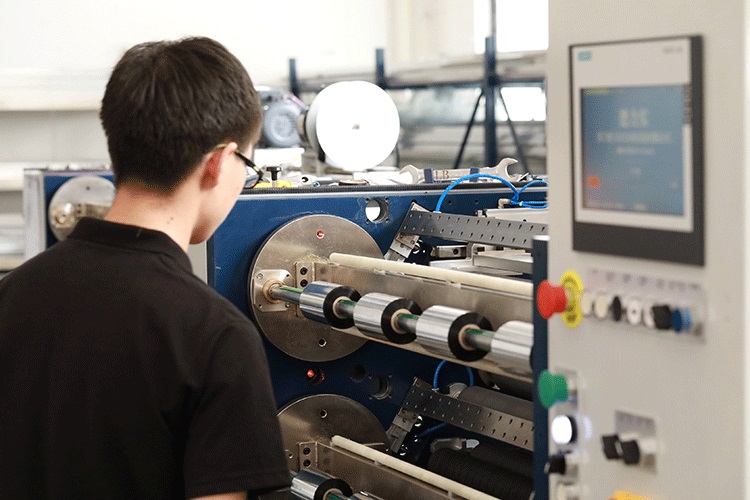
 New Energy Film MPET Slitter
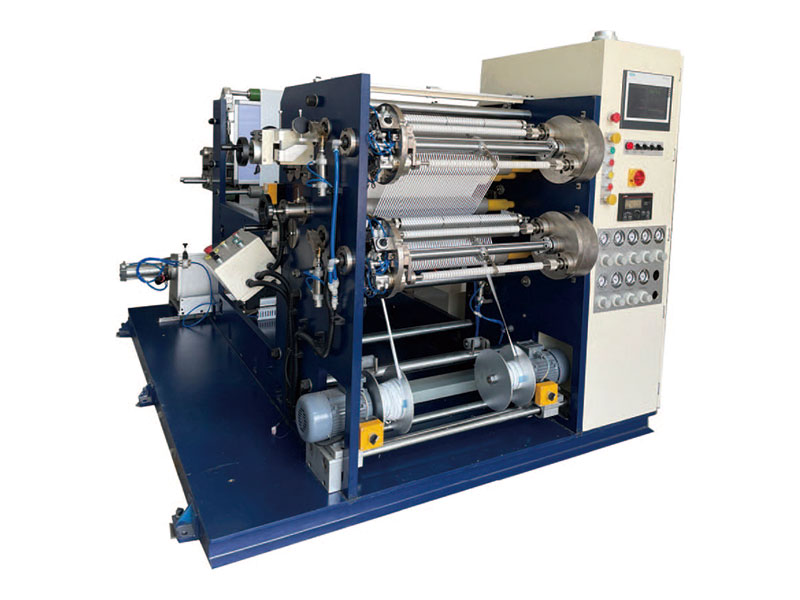 Correction Tape Slitter CTS-550-M
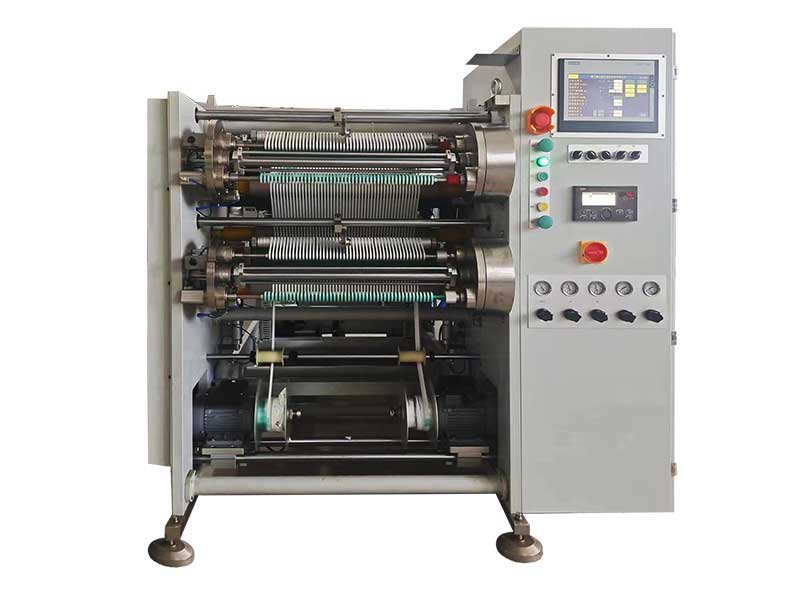 Correction Tape Slitter CTS-570-A
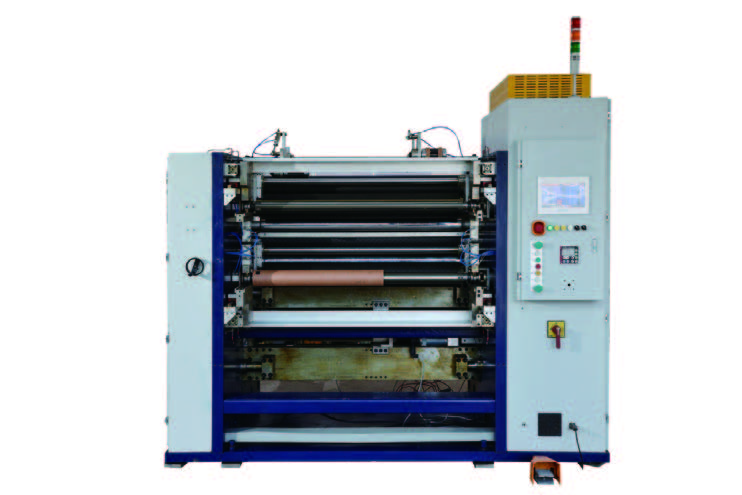
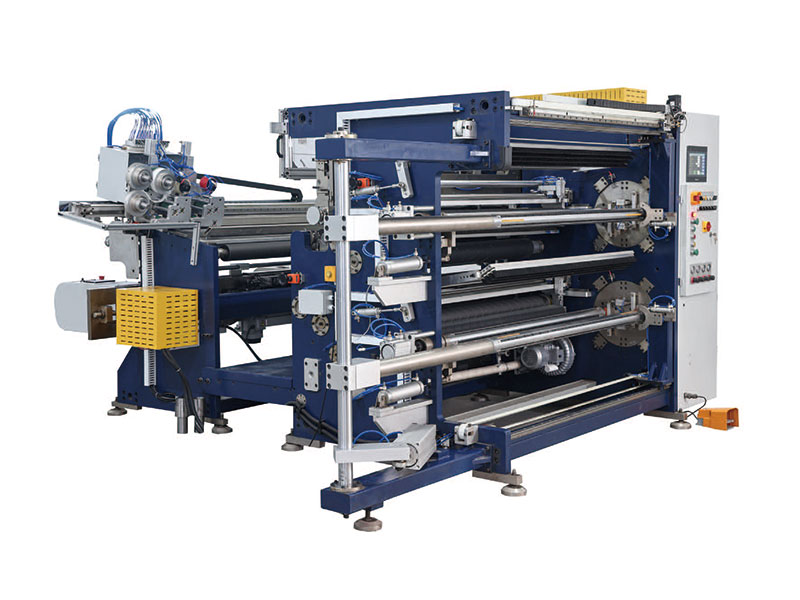 PET Film Slitter RSDS7H 1350 PLUS
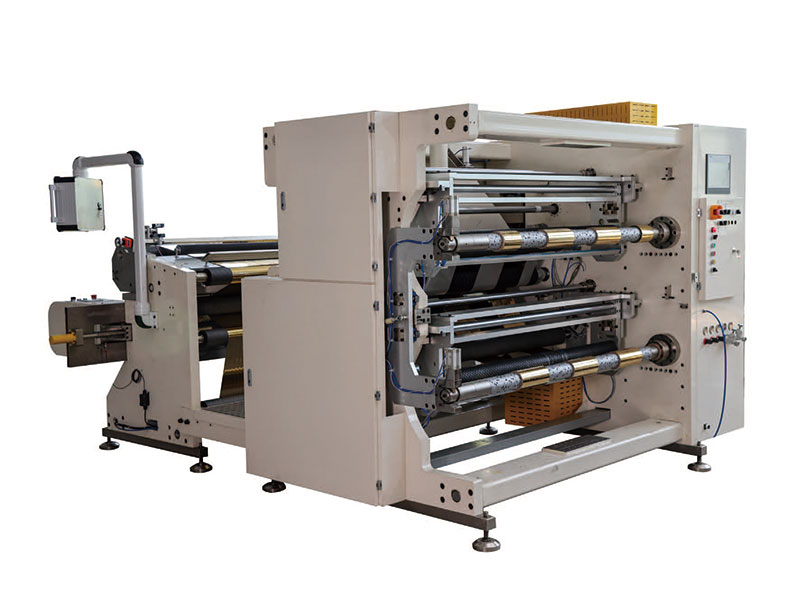 PET Film Slitter (RSDS7H) 1350