Abstract:
During film slitting, edge wrinkles are one of the main defects affecting yield and the neatness of the small roll end face. Starting from mechanical principles, this paper systematically analyzes the causes of edge wrinkles and proposes elimination methods based on "tension zone control" and "roller accuracy compensation." At the same time, it provides key process parameter setting ranges verified in actual production.
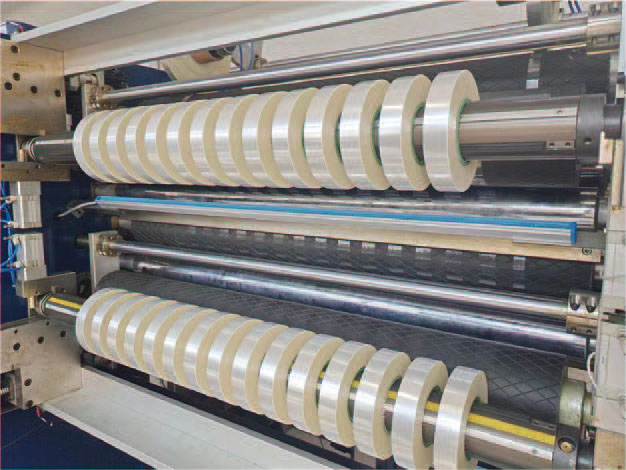
1. Mechanism of Formation of Edge Wrinkles
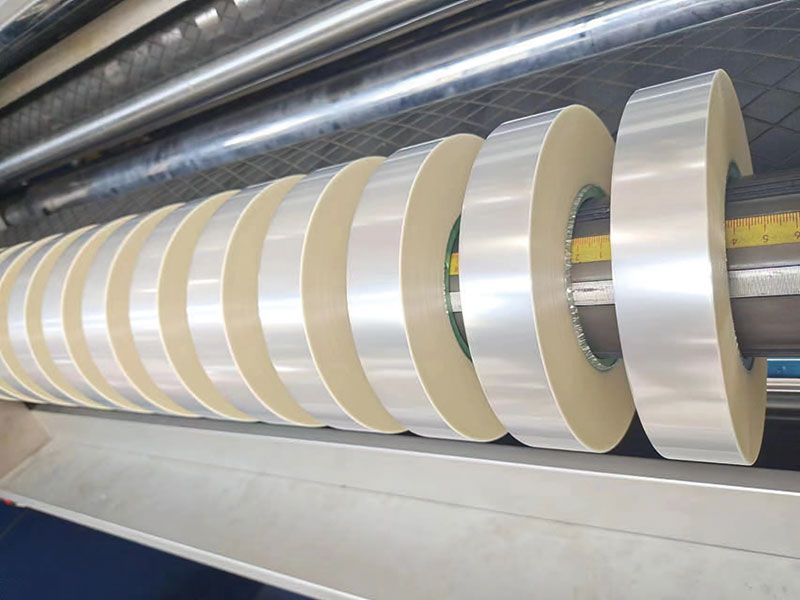
Edge folds usually appear as "star-ray" or "hard strip-like" protrusions on the film winding end face. The fundamental reason lies in uneven distribution of winding tension along the width direction of the film, specifically manifested as:
1. Uneven internal stress: The linear velocity of the film edges differs from the middle, causing the edges to be "wrinkled."
2. Air Entrance: Poor contact with the edge rollers prevents air from being expelled, resulting in air wrinkles.
3. Equipment deformation: Under pressure, the long shaft of the slitting machine bends, producing a "medium-high" or "medium-low" effect, causing edge sagging.
2. Core elimination methods
To address the above causes, a combination of "micro-tension gradient adjustment + arc roller expansion + edge roller angle correction" is recommended.
1. Tension zoning control method
Winding tension is divided into base tension and edge compensation zone:
• Operating method: Use a winding pressure roller or slip shaft with zoned suction function. Set the torque of the slip ring at the edge of the slip shaft to 70%-85% of the middle section.
• Principle: Allows edges to moderately "slip," releasing excess tensile stress.
2. Curved roller/leveling roller intervention
• Position: Installed between the final cutter holder and the winding shaft.
• Adjustment: The arch height (bending depth) of the curved roller is set to 3mm-6mm, with a speed ratio of 1:1.05 (i.e., the roller surface linear speed is slightly faster than the membrane speed).
• Function: Generates a stretching force from the center toward the edges, similar to "pulling a curtain," smoothing out the folds.
3. Angle and pressure trimming of the winding and compression rollers
• Status correction: If wavy folds appear on the edge of the film, it indicates that the contact angle of the pressure roller is too large. The pressure roller should be moved forward horizontally so that the vertical angle between the pressure roller and the rewinding core contact point decreases from 30° to 15°-20°.
• Pressure regulation: uses stepped decreasing pressure. The initial pressure is 3.5 bar; for every additional 1000 m of length, the pressure decreases by 0.2 bar until it drops to 1.8 bar to maintain it.
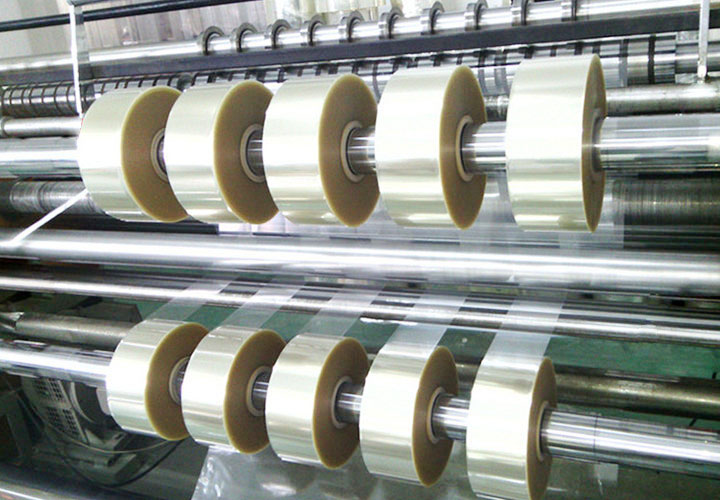
3. Key Process Parameter Setting Table
Below are recommended parameters for polyester film (PET) or OPP film with thicknesses of 12μm-50μm:
| Process nodes | Parameter items | Recommended range | Adjust the logic (if the edges are wrinkled) |
| Unwinding unit | Unwinding tension | 80N-120N (based on width 500mm) | If wrinkles are accompanied by stretch lines, reduce by 10% |
| Traction unit | Traction roller speed ratio | 1:1.02 (traction faster than unwinding) | Maintain positive slip to prevent membrane sagging |
| Slitting unit | Cutter angle | 15°-18° (Inclination) | Excessive angles can create burrs and cause wrinkles |
| Rewinding unit | Rewinding tension taper | 40%-55% (Key Parameters) | If the taper is insufficient and the edges are easy to wrinkle, it is recommended to set it to 50% |
| Rewinding unit | Contact pressure (pressure roller) | 1.8bar-3.5bar (linear decreasing) | The initial pressure should not exceed 4.0 bar |
| Auxiliary flattening | Arc roll frequency/arch height | 50Hz corresponds to an arch height of 4.5mm | The arch is too high and the center will wrinkle |
| Environmental requirements | Roller parallelism tolerance | ≤±0.05mm/1000mm | Regular calibration is required, and the deviation will wrinkle on one side |
4. Special strategies for different materials
The elastic modulus of different films is different, and the process parameters need to be adjusted in a targeted manner:
1. PE (polyethylene) film (easy to stretch):
◦ Pain points: It is very easy to produce dead folds.
◦ Strategy: Use zero-tension rewinding. Unwinding uses magnetic particle brakes instead of tension controllers. The winding roller pressure is constant at 1.2 bar and is driven only by the friction of the core.
2. Aluminum foil/copper foil (hard and brittle):
◦ Pain point: Wrinkles caused by edge warping can break the foil.
◦ Strategy: Must use double arc rollers. The first arc roller is roughly flattened (arch height 6mm), and the second is finely flattened (arch height 3mm). The retraction tension taper is set to 60%.
3. BOPP (Biaxially Oriented Polypropylene) (Rigid):
◦ Pain points: Edge trembling caused by high-frequency vibrations.
◦ Strategy: Reduce the linear speed to 200m/min-250m/min, and check that the rewinding shaft dynamic balance level must reach G6.3 or above.
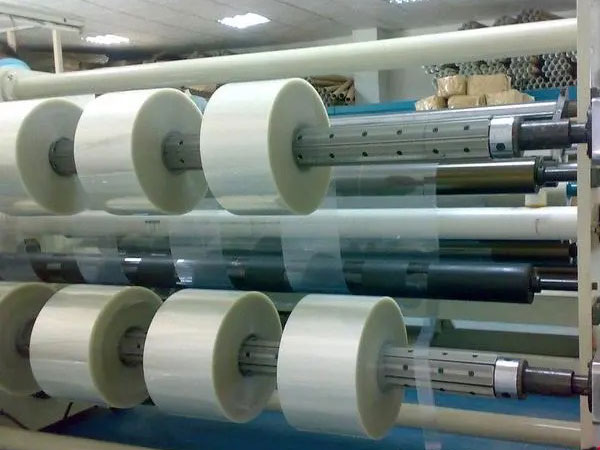
5. On-site fault troubleshooting list
If edge folds persist after adjusting according to the above parameters, check for the following mechanical problems in order:
1. Guide Roll Levelness: Use a level to check if all guide rolls are level? Unilateral tilt can cause the membrane to deviate and build up wrinkling.
2. Slip shaft air bag: The aging of the air bag inside the slip shaft will lead to the loss of pressure on the edge slip ring, please check the air pressure holding condition (the pressure drop does not exceed 0.5 bar for 30 minutes is qualified).
3. Static Elimination: Excessive edge static can cause the film to adsorb on the roller and cause drag marks. Check that the static elimination rod is facing the edge of the film, and the ion output value should be within ±5kV.
6. Conclusion
Eliminate the edge wrinkles of the film slitting machine, the core lies in "both rigidity and softness":
• "Rigidity" lies in the fact that the geometric accuracy (parallelism, dynamic balance) of the equipment must meet the standard.
• "Softness" lies in the fact that the tension control must be intelligent, using the edge slip characteristics of the taper reduction and slip shaft to simulate the feel of "loose edge tight winding" during manual winding.
It is recommended that operators first set the winding tension taper to 45% and the arc roller arch height to 4mm at each rewinding change, and then fine-tune it according to the actual trimming effect, which is the fastest way to solve the edge crease problem.
 English
 Deutsch
 Français
 Español
 Português
 日本語
日本語 русский
 한국어
한국어 عربي
عربي ภาษาไทย
 Tiếng Việt
 Italiano
 Film Slitting Machine
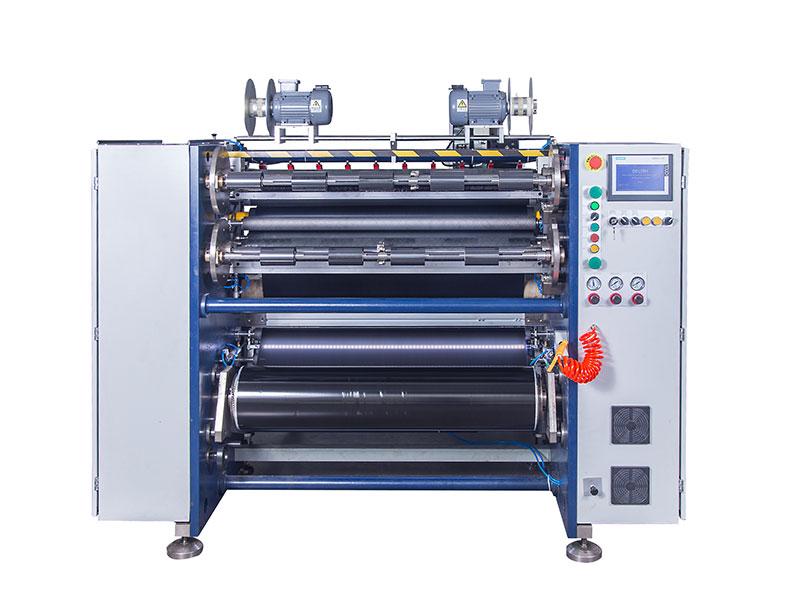 Ribbon Slitting Machine
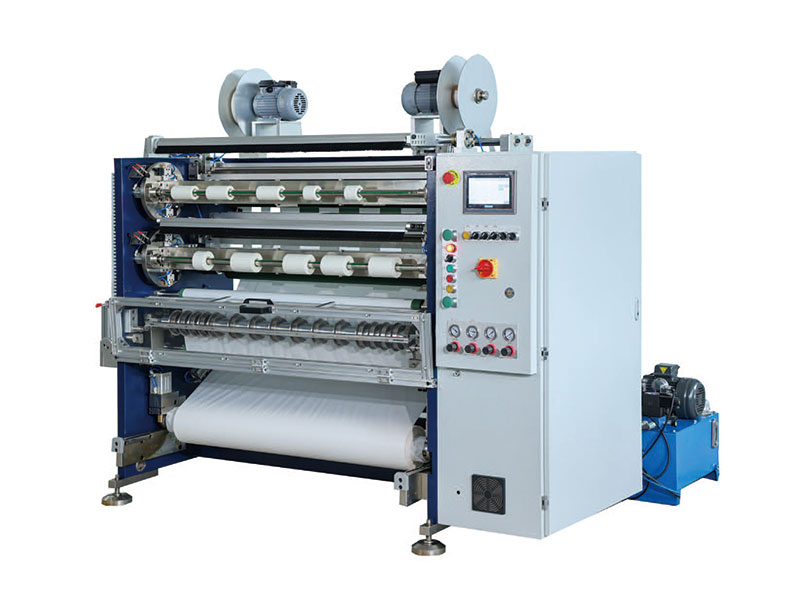 Tape Slitter
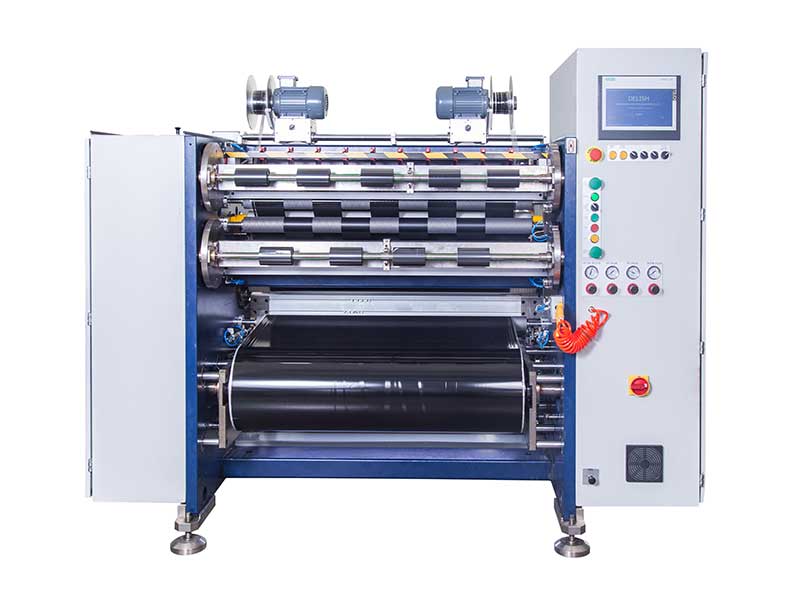 Barcode Ribbon Slitting Machine
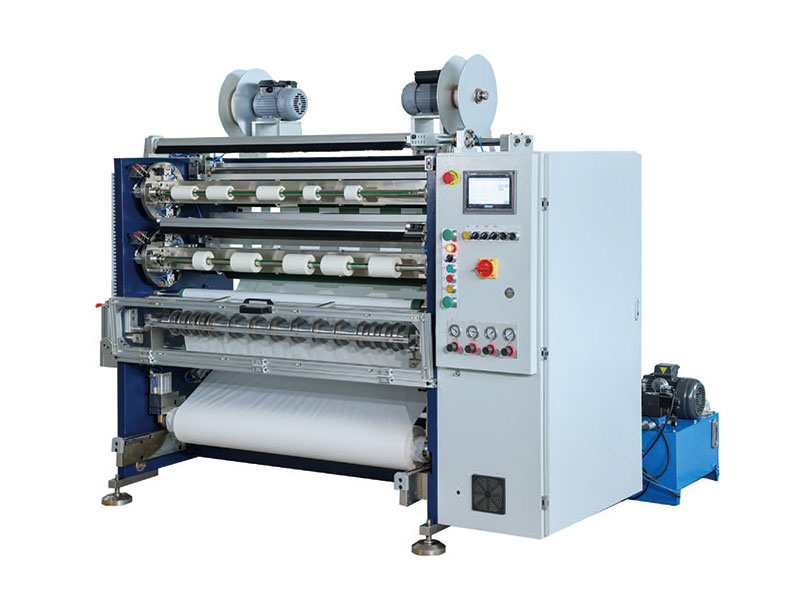 Single Side Adhesive Slitter
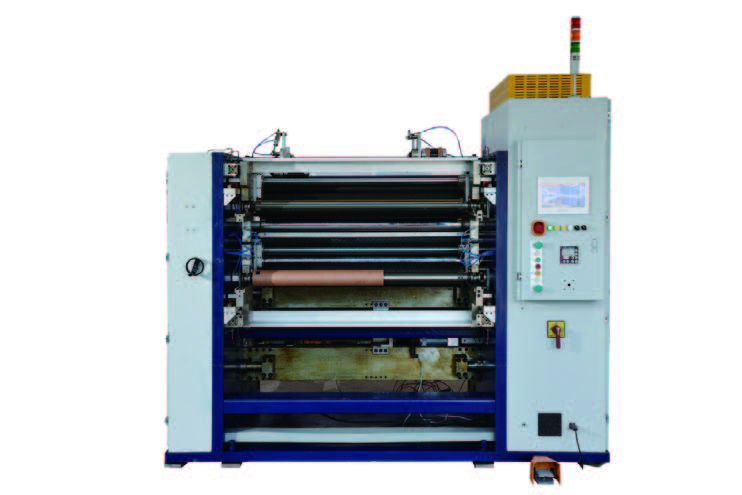 Capacity Film Slitter
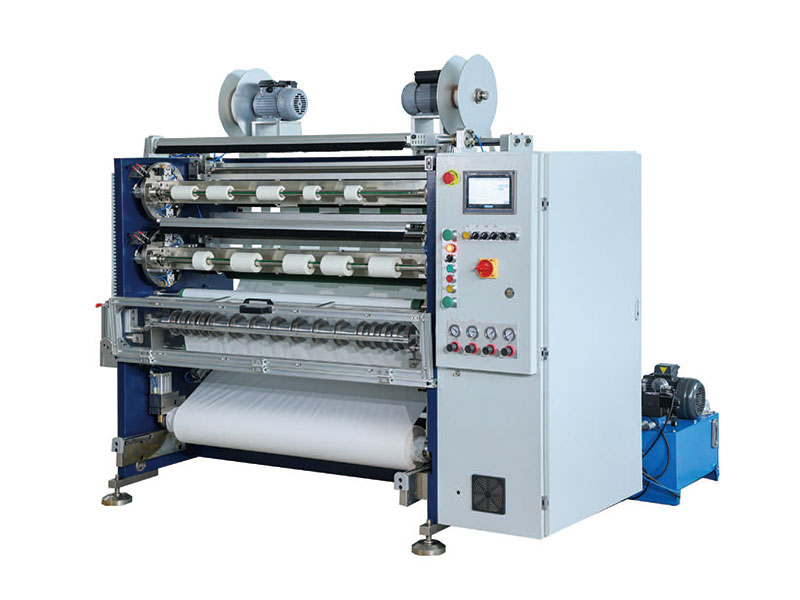 Double Side Adhesive Slitter
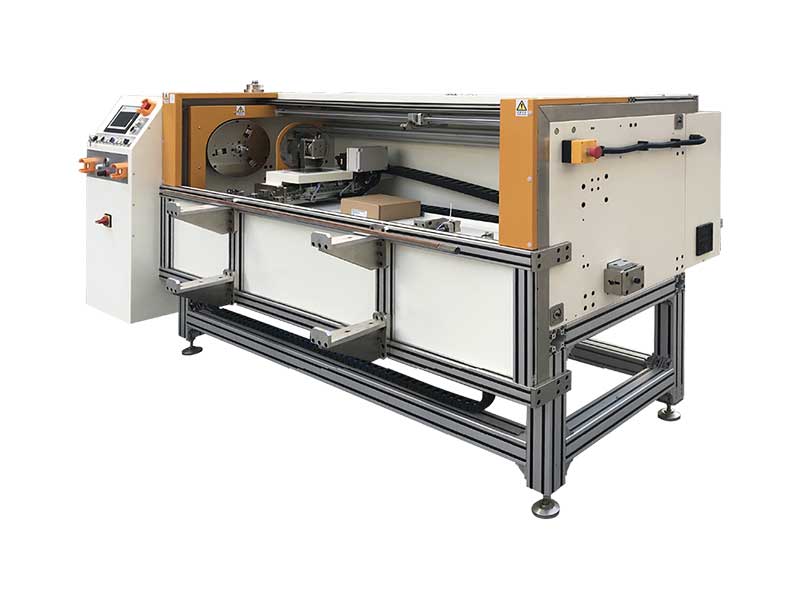 Automatic Foil Roll Cutter