In the production process of thermal transfer ribbon (TTR), a thermal transfer printing consumable, slitting is the core process that determines the quality of the final product. With the continuous improvement of customers' requirements for production efficiency, winding of large coil diameter (usually refers to the outer diameter ≥ 300mm, or even more than 500mm) has become a common demand for ribbon manufacturers. However, a prominent quality problem brought about by large coil diameters is uneven winding end faces. This seemingly small defect not only affects the appearance of the product, but may also cause the ribbon to deviate, wrinkle or even break during the subsequent printing process. How to solve this problem through the precise control of ribbon slitting machine has become the focus of industry attention.
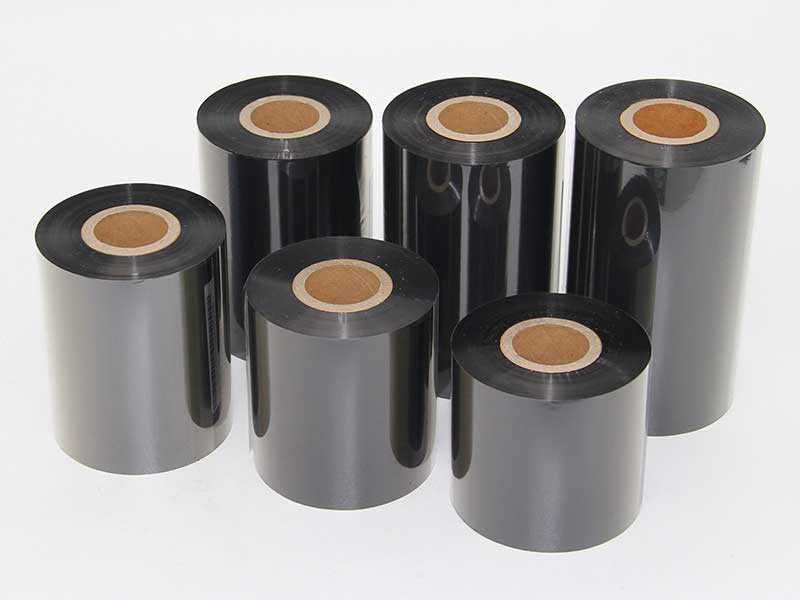
1. Manifestations and effects of problems
The so-called "uneven end face" means that the edges of both sides of a single coil of ribbon are not in the same vertical plane after slitting, showing unevenness, local convex or concave, or even "tower-shaped" or "bell-mouth" shape. When the roll diameter increases, the circumferential length accumulated at the end is extremely long, and any small tension fluctuations or guiding errors are magnified, resulting in:
• When the customer uses it, the ribbon is in uneven contact with the print head, resulting in white lines or local blurring;
• The ribbon moves axially on the recovery shaft, increasing the risk of printer cassettes;
• The protruding edges are easily crushed and deformed during packaging and transportation, which affects the success rate of the machine.
2. Analysis of the causes of uneven end-faces
The root cause of the uneven end face in large coil diameter winding is the coupling failure between stress distribution and geometric accuracy, which can be summarized as:
1. Improper tension control: After the coil diameter increases, the radial pressure generated by the same tension increases exponentially. If the tension does not decrease with the increase of the coil diameter, the inner ribbon is squeezed and expanded, resulting in edge misalignment. On the contrary, if the decreasing is too fast and the outer layer is too loose, it will also deviate.
2. Dynamic balance and radial runout of the rewinding shaft: The mass of the large reel ribbon itself can reach tens of kilograms, and if there is a micron-level eccentricity of the rewinding shaft, it will cause periodic vibration under high-speed rotation, causing the edge of the ribbon to swing back and forth.
3. Slitting knife wear and offset: After the cutting edge of the slitting knife is worn, the ribbons on both sides are subjected to uneven force, resulting in varying degrees of tensile deformation. The deformation amount is accumulated under the large coil diameter, and the difference in the length of the left and right sides of a single roll can reach millimeters, which is directly manifested as the inclination of the end face.
4. Deviation of parallelism between the roller and the winding shaft: If the axis of the roller is not parallel to the axis of the winding shaft, the offset direction of each layer is the same when the ribbon enters the winding point, and finally forms a conical end face.
5. Static accumulation: The ribbon substrate is mostly PET film, and the friction generates static electricity during winding, resulting in adsorption or repulsion between layers, destroying the neat arrangement.
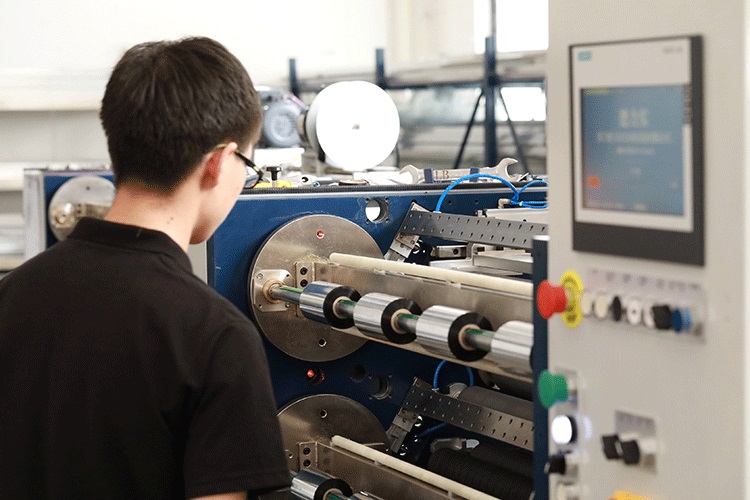
3. Key technical solutions for ribbon slitting machine
In view of the above causes, modern ribbon slitting machine integrates a variety of technical means from the three dimensions of mechanical, electrical and software to systematically solve the problem of uneven end faces of large coil diameters.
1. Taper tension closed-loop control
Traditional slitting machines use constant tension control and are not suitable for large coil diameters. High-end equipment introduces taper tension control mode:
• Automatically reduce the winding tension according to a preset taper curve (e.g., linear, logarithmic, or exponential drop) by measuring the current reel diameter in real time (either using an ultrasonic sensor or calculating the line length/turn based on the reel encoder).
• Tension sensors (such as floating rollers or force measuring rollers) are configured to form a closed-loop PID adjustment to compensate for tension fluctuations caused by friction and ambient temperature changes.
• Typical parameters: initial tension 8~12N/m, final coil tension drops to 3~5N/m, taper coefficient 30%~50%.
2. Precision Guidance Correction System (EPC/CPC)
Edge position control is the core means to solve uneven end faces:
• Ultrasonic or photoelectric guidance sensor is installed at the front end of winding to detect the edge position of the ribbon in real time, with an accuracy of up to ±0.1mm.
• The servo motor drives the unwinding frame or rewinding shaft to move laterally as a whole, and dynamically corrects the deviation. The control response time < 50ms, and the correction speed ≥ 20mm/s.
• Adopt center positioning mode for thick substrates (e.g. 6 μm or more); Edge positioning mode is used for thin substrates (4.5μm and below) to avoid malfunctions caused by edge burrs.
3. Low runout rewinding shaft and dynamic balance design
• The winding shaft is made of high-precision weldless aluminum alloy or carbon fiber composite material, with high-rigidity support bearings, and the radial runout is controlled within 0.01mm.
• Each winding shaft has been tested for G1 dynamic balance before leaving the factory (the balance level is two levels higher than that of ordinary slitting machines).
• For ultra-wide slitting (such as more than 1000mm), double-end independent drive (torque motor + servo) is used to avoid the distortion caused by unilateral transmission.
4. Adaptive pressure roller and clearance adjustment
• The surface of the roller is coated with polyurethane or conductive rubber to ensure uniform contact with the back of the ribbon and to emission static electricity.
• The contact pressure between the roller and the rewinding shaft is controlled by a pneumatic cylinder or servo electric cylinder, and the linear decrease decreases with the increase of the coil diameter to prevent the inner layer from crushing or the outer layer from slipping.
• Micron-level adjustment handwheel or automatic leveling mechanism is equipped at both ends to ensure that the parallelism error of the roller is < 0.05mm/m.
5. Static Elimination and Dust Removal System
• Install AC or pulsed DC static elimination rods in the prewinding path to actively neutralize the static electricity on the surface of the ribbon and reduce the potential to less than ±500V.
• Coordinate with non-contact dust removal rollers to remove edge debris and avoid local bulges caused by debris embedded in the end face.
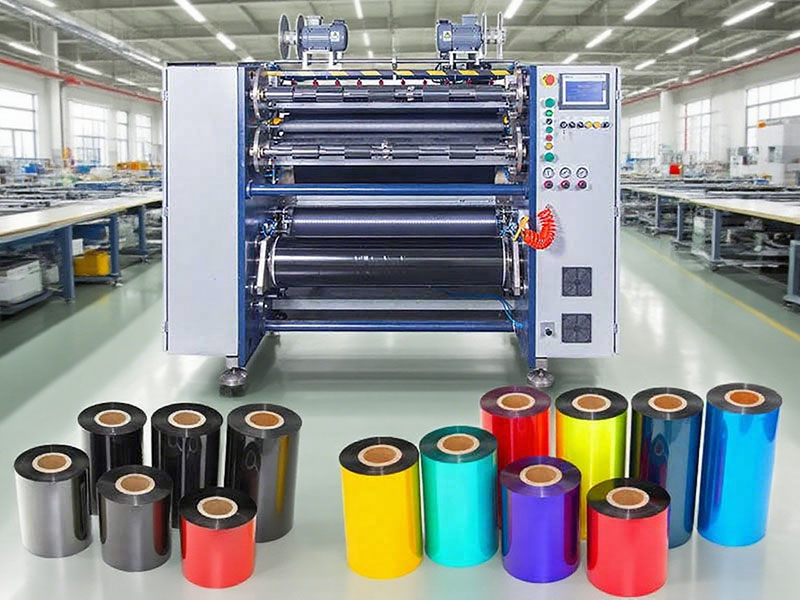
4. Practical application cases and effects
Taking a mainstream ribbon manufacturer in China as an example, when the outer diameter of the original slitting machine exceeds 350mm, the pass rate of uneven end face is only 78% (1mm is qualified based on the misalignment of the end face up and down< 1mm). After the introduction of the new generation of intelligent slitting machine, the above technology combination is used to wind up to 500mm outer diameter:
• The pass rate of uneven end faces has increased to 96.5%;
• The maximum misalignment is reduced from 2.3mm to less than 0.6mm;
• The average rewinding time per roll is increased by 40%, and the overall production efficiency is increased by 22%.
Operator feedback and the reel diameter-tension recommendation database on the HMI reduced the process adjustment time for different ribbon sizes (e.g., wax-based, mixed-based, resin-based) by 60%.
5. Future development direction
As ribbon applications evolve to high sensitivity, high temperature resistance, and ultra-thinness, slitting end face control will face more stringent requirements. The ribbon slitting machine of the future will integrate the following technologies:
• AI dynamic tension learning: automatically optimizes the taper curve based on historical data to adapt to the modulus differences of different batches of substrates;
• Digital twin real-time mirroring: virtually reproduce the rewinding stress field and warn of the risk of uneven end-faces;
• Online inspection of full-width line array cameras: instead of manual sampling inspection, millimeter-level closed-loop correction of end face contours is realized.
Epilogue
The uneven winding end face of large coil diameter is a confrontation between material mechanics, mechanical precision and control algorithms in the industrial field. The ribbon slitting machine not only solves this long-standing problem in the industry through precision correction, taper tension, low runout reel and electrostatic management, but also promotes the upgrading of ribbon manufacturing in the direction of efficiency and intelligence. For ribbon companies pursuing "zero defects", choosing a slitting machine with the above core technology is a necessary condition for participating in high-end market competition.
 English
 Deutsch
 Français
 Español
 Português
 日本語
日本語 русский
 한국어
한국어 عربي
عربي ภาษาไทย
 Tiếng Việt
 Italiano

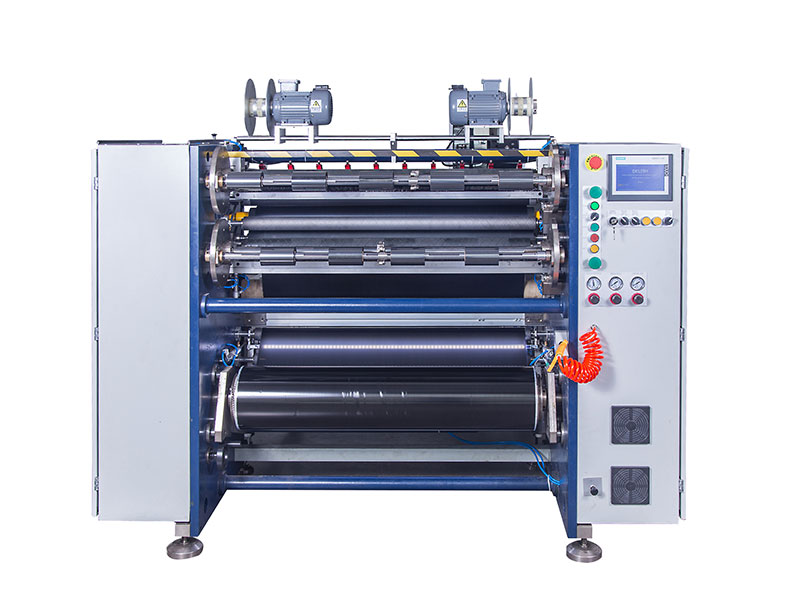
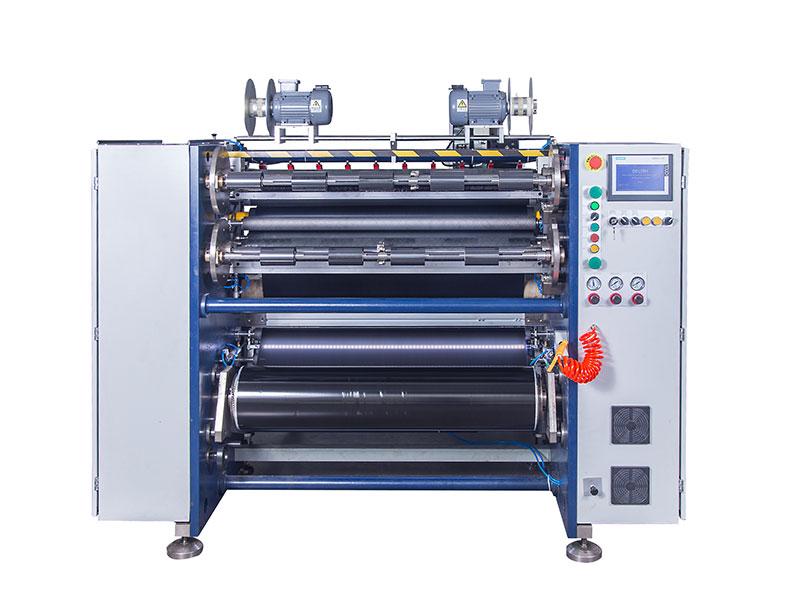 Ribbon Slitting Machine
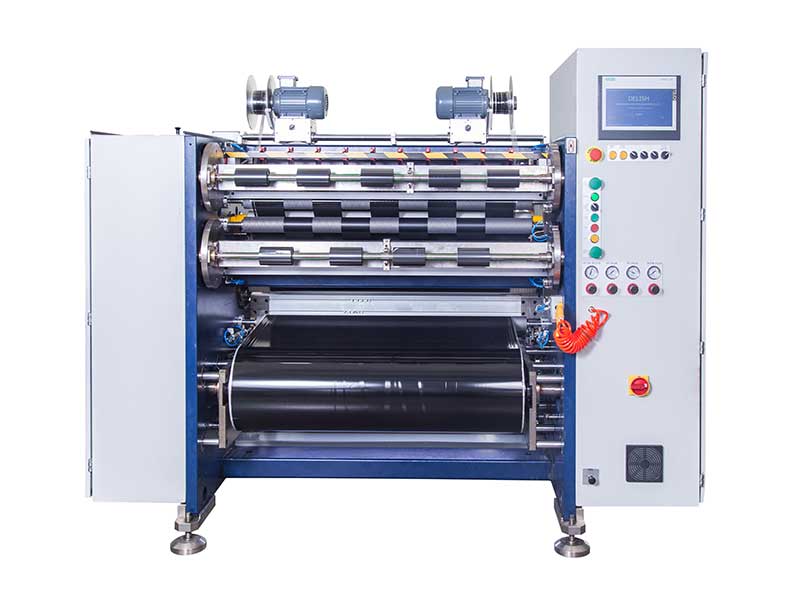 Barcode Ribbon Slitting Machine
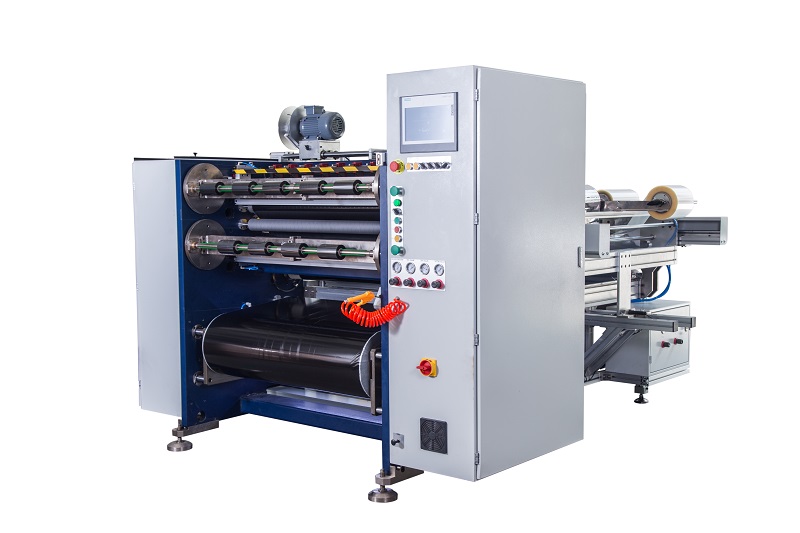 Semi Automatic Thermal Transfer Ribbon Slitter RSDS5 PLUS
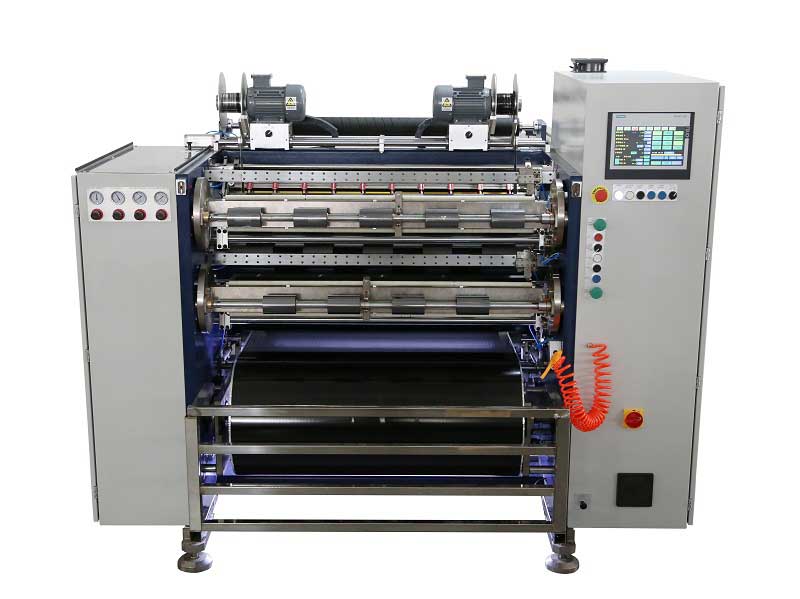 Automatic Thermal Transfer Ribbon Slitter RSDS8 H PLUS
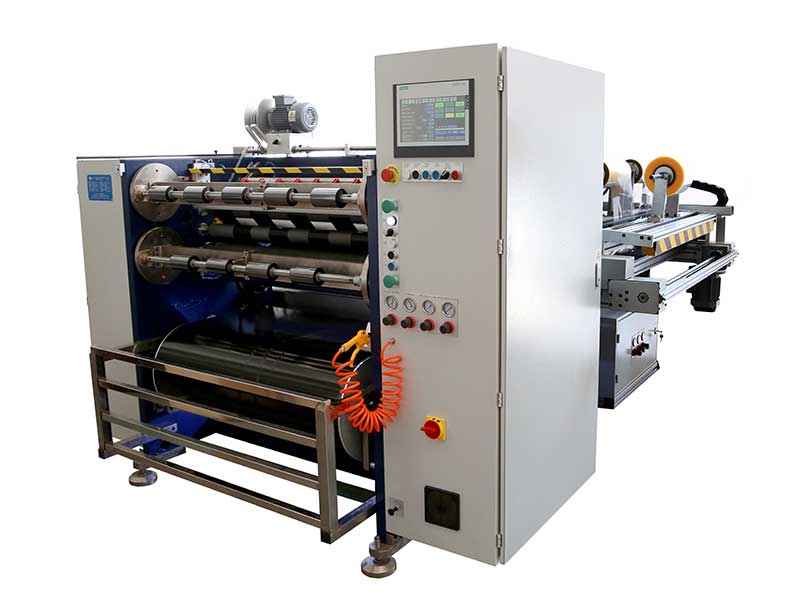 Automatic Thermal Transfer Ribbon Slitter RSDS6 PLUS
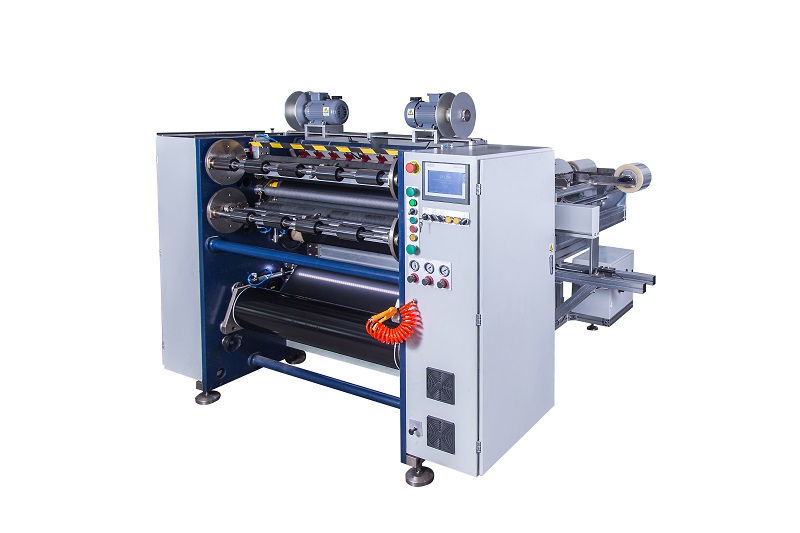 Semi Automatic Thermal Transfer Ribbon Slitter RSDS1 PLUS
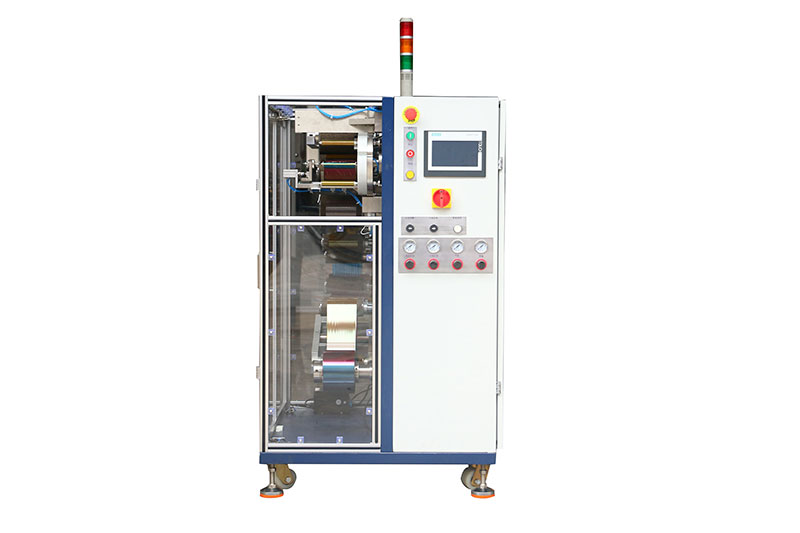 Card Print Ribbon Rewinder
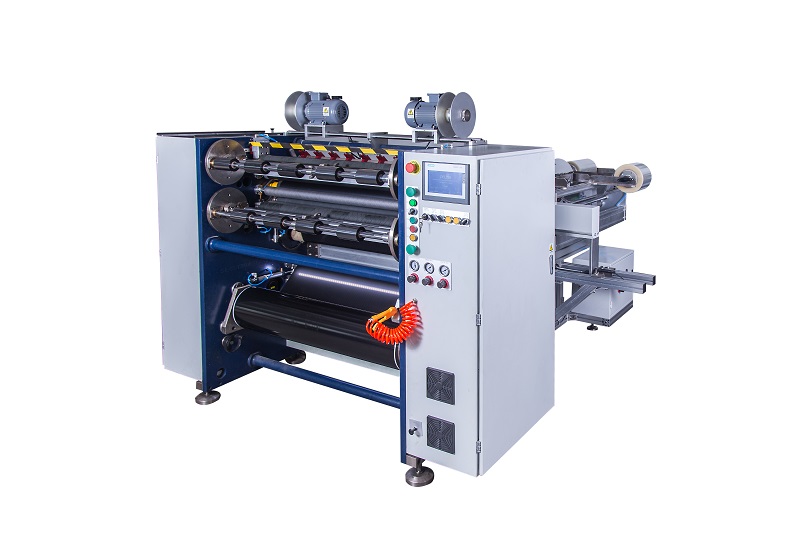 Semi Automatic Thermal Transfer Ribbon Slitter RSDS2 PLUS