Today, with the widespread use of thermal transfer printing technology, the quality of ribbon, as a core consumable, directly determines the printing effect - especially the clarity, durability and scanning pass rate of barcodes. However, in the back-end process of ribbon production, there have been two major "stubborn diseases" in the slitting process for a long time: edge burrs and dust pollution. These two pain points not only affect the appearance of ribbons, but also directly lead to serious consequences such as increased printhead wear, white spots on prints, broken wires, and even damage to expensive printheads. Today, the new generation of intelligent ribbon slitting machines is using a number of innovative technologies to accurately solve these industry problems.
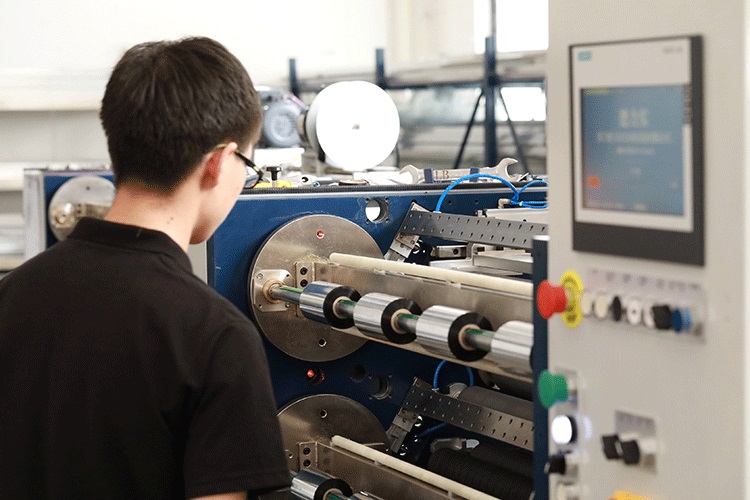
1. The pain of burrs: from "microscopic jagging" to "smooth as a mirror"
Traditional slitting machines use ordinary round knives or scissors for shearing, and if the cutting edge is not sharp enough or the gap is not properly controlled, it will form "jagged" burrs that are difficult to see to the naked eye but obvious under the microscope on the side of the ribbon coating. When the ribbon is running at high speed:
• Burrs will repeatedly rub the print head ceramic substrate like a file, causing the print head to wear and even scratch at an accelerated pace;
• Tiny particles formed by burr shedding further exacerbate the risk of scratches;
• Uneven edges cause local stress concentrations in the ribbon during rewinding, resulting in wrinkling or breakage.
Solution: High-precision razor type + laser tool setting system
The new generation of ribbon slitting machine uses razor slitting technology, and the blade is made of carbide or ceramic material, and the edge edge is sharp to the micron level. What's more, the equipment is equipped with an automatic laser tool setting system, which detects the blade gap and bite amount in real time through optical sensors, and automatically compensates for the offset caused by temperature changes or blade wear. The edge flatness of the ribbon after slitting can reach Ra≤0.2μm, completely eliminating burrs.
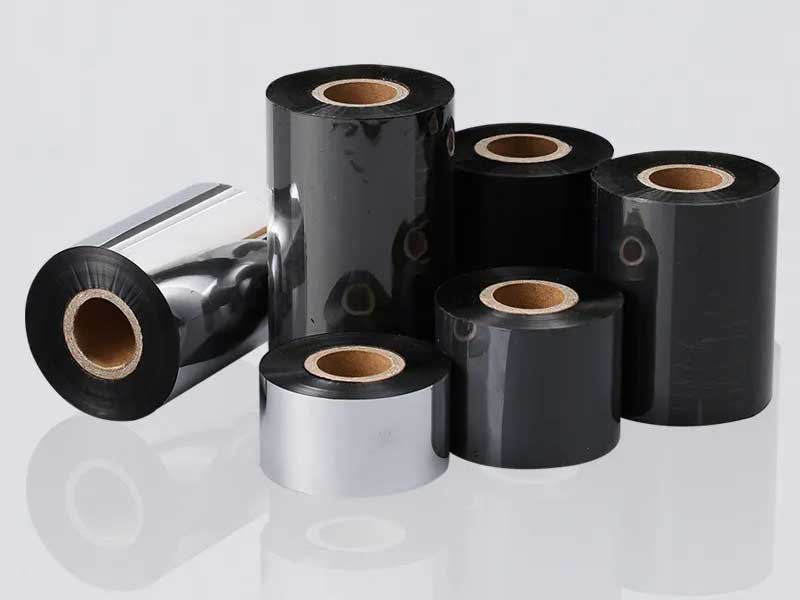
2. Sources of dust: from "flying debris in the sky" to "purifying space"
Ribbons are usually composed of a base film (such as mylar), a back coating, an ink layer (wax, resin), etc. When slitting, the blade cut produces two types of contaminants:
• Coating dust: tiny debris of wax or resin materials, which are easily electrostaticly adsorbed on the surface of the ribbon;
• Base film debris :P transparent tiny particles produced by ET film cutting.
Once this dust adheres to the surface of the ribbon, it prints:
• Covering part of the ink, resulting in "white spots" or broken needle missing lines;
• Adheres to the surface of the print head, forming high-temperature carbonization crystals, reducing thermal conductivity;
• Entering the printer, contaminating the rubber roller and sensor, causing cassette or signal misreading.
Solution: Multi-stage active dust removal and static elimination
Modern ribbon slitting machines use "dust removal" as the core design module:
1. Closed Cutting Chamber: Completely seal the slitting area to prevent dust from escaping and spreading to the winding area.
2. Negative pressure vacuum suction system: Multiple suction ports are arranged on both sides of the knife shaft and on the winding path, connected to industrial grade vacuum cleaners (HEPA filters), and the dust generated by slitting is sucked away in real time.
3. Contact dust roller: Set up a replaceable dust adhesive roller before winding to directly remove the residual electrostatic adsorption of fine dust on the surface of the ribbon.
4. Ion air rod static elimination: Ion generators are installed before and after the cutter to neutralize the static electricity generated during the separation process, making the dust less adsorbed and more easily carried away by the vacuum port.
With the above combination, the cleanliness level can reach ISO Class 6 (cleanroom standard) and the amount of dust residue is reduced by more than 95%.
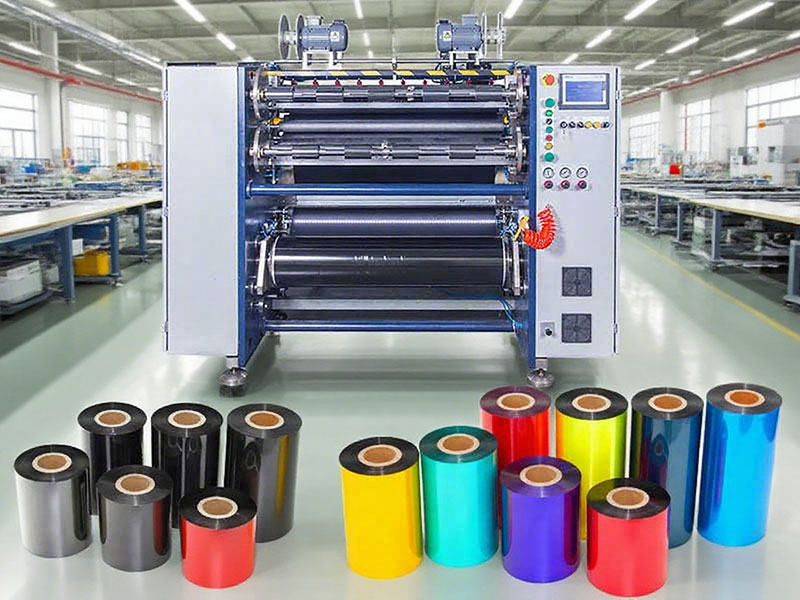
3. Intelligent system: from "post-inspection" to "real-time control"
In addition to hardware improvements, the intelligent control system allows burrs and dust problems to be "actively prevented":
• AI edge vision inspection: High-speed industrial cameras take real-time pictures of the edge of the ribbon after slitting, identify the size, density and dust accumulation of burrs through edge algorithms, and immediately alarm and adjust blade parameters once it exceeds the standard.
• Negative pressure monitoring of dust removal: real-time monitoring of the negative pressure value of each vacuum port, if the filter is clogged or the air volume drops, it will automatically prompt to clean or switch the backup pipeline.
• Blade life management: record the cumulative number of cutting meters and material type of the blade, and automatically remind you to replace it when it reaches the life threshold to avoid the increase in hair irritation caused by blade passivation.
4. Industry benefits: small details, big value
With the new generation of ribbon slitting machines, manufacturers can reap significant rewards:
• Print head life increased by more than 30%: reduce burr friction and dust wear, greatly reduce customer complaints and after-sales costs;
• Reduce the printing defect rate to less than 0.1%: avoid label rework caused by white spots and broken lines;
• Improved equipment operation efficiency: reduce the frequency of downtime and cleaning due to dust accumulation;
• Meet the audit requirements of high-end customers: The clean production environment is easier to pass ISO, BRC and other certifications.
Epilogue
In today's increasingly fierce competition for thermal transfer ribbons, burrs and dust at the slitting edge are no longer "dispensable defects", but key indicators that determine whether products can enter high-end medical, electronics, automobile manufacturing and other fields. Investing in ribbon slitting machines with precise slitting and active dust removal capabilities has changed from "optional upgrade" to "necessary standard". This is not only a device update, but also a quality revolution from "qualified products" to "high-quality products". When every slitting edge is as smooth as a mirror and each ribbon is clean and dust-free, the clarity and stability of printing are the most solid guarantee.
 English
 Deutsch
 Français
 Español
 Português
 日本語
日本語 русский
 한국어
한국어 عربي
عربي ภาษาไทย
 Tiếng Việt
 Italiano

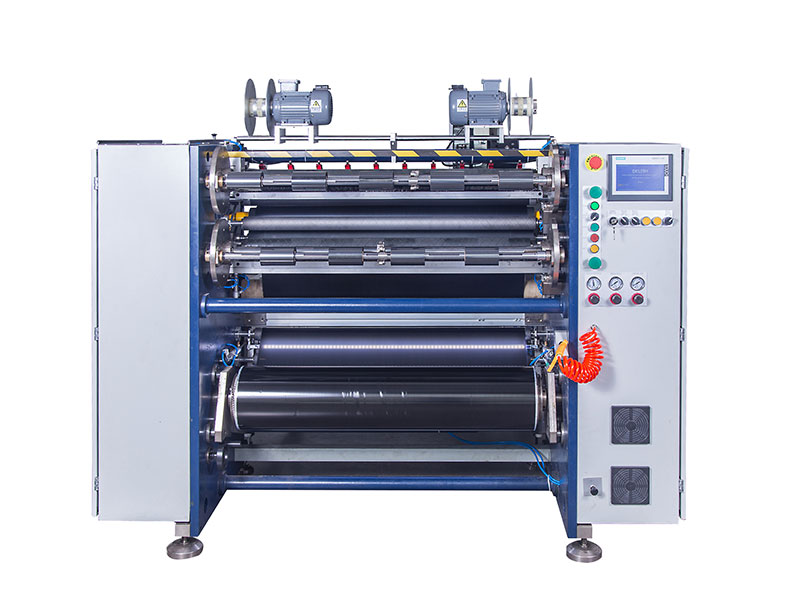
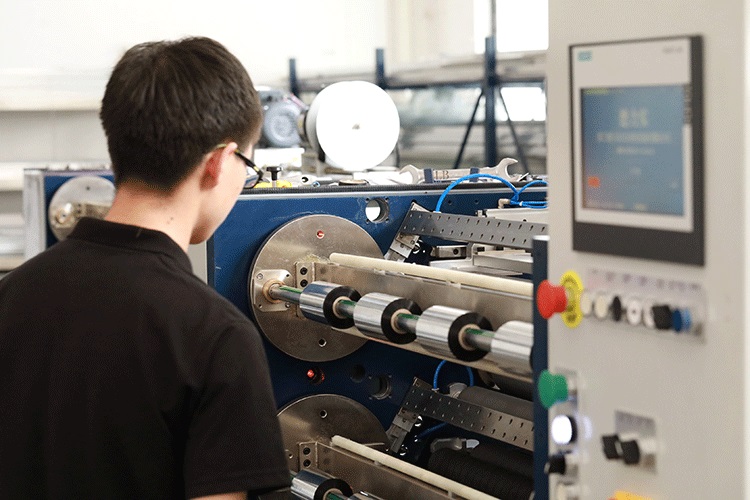
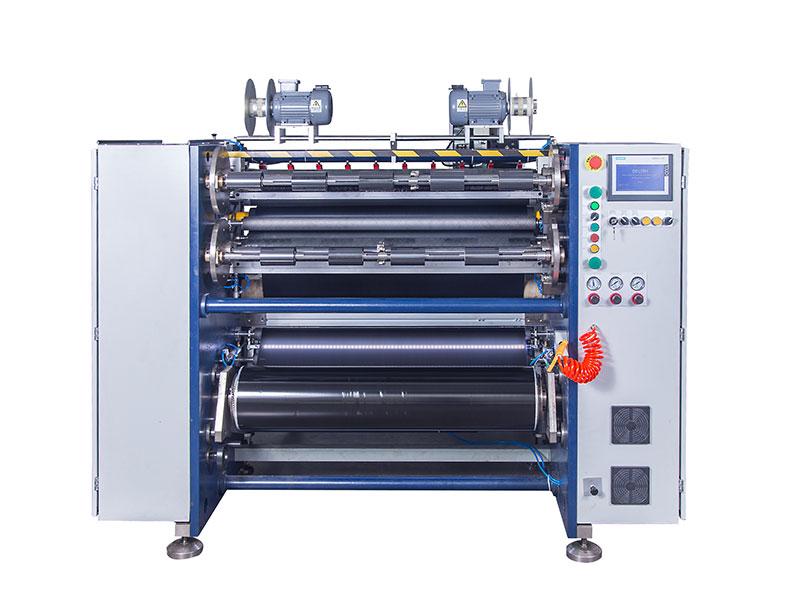 Ribbon Slitting Machine
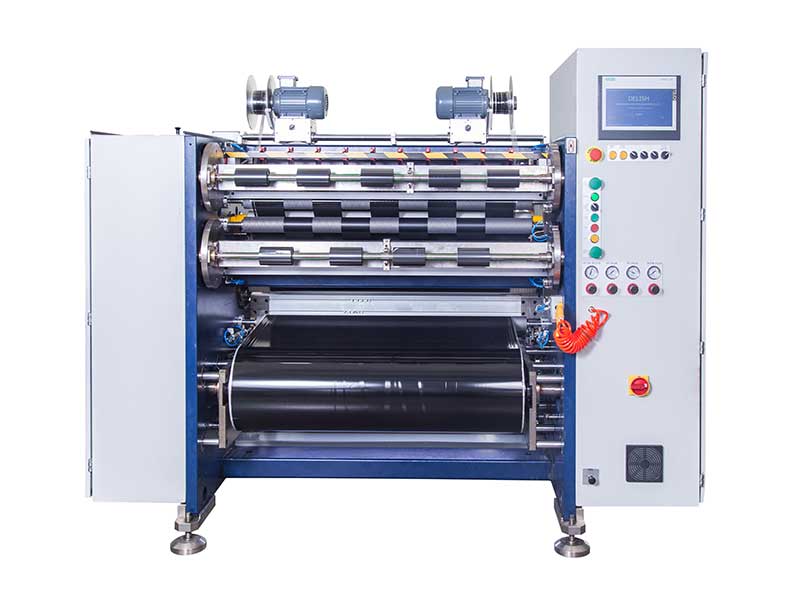 Barcode Ribbon Slitting Machine
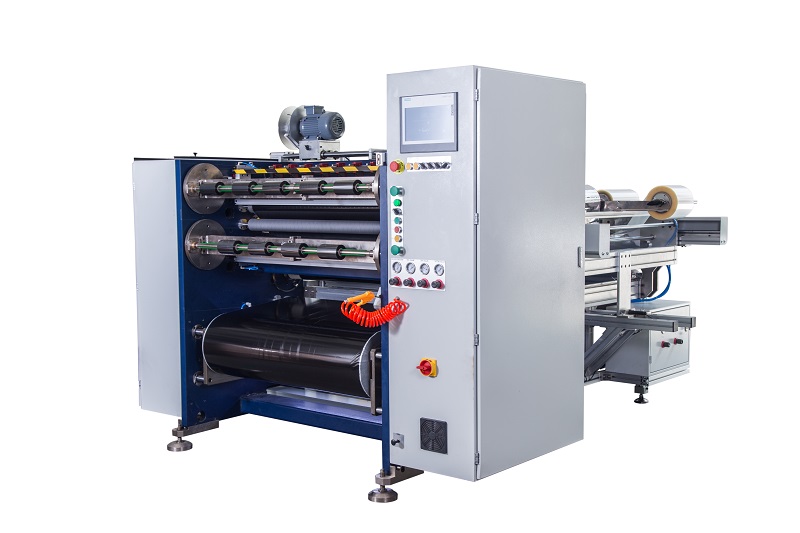 Semi Automatic Thermal Transfer Ribbon Slitter RSDS5 PLUS
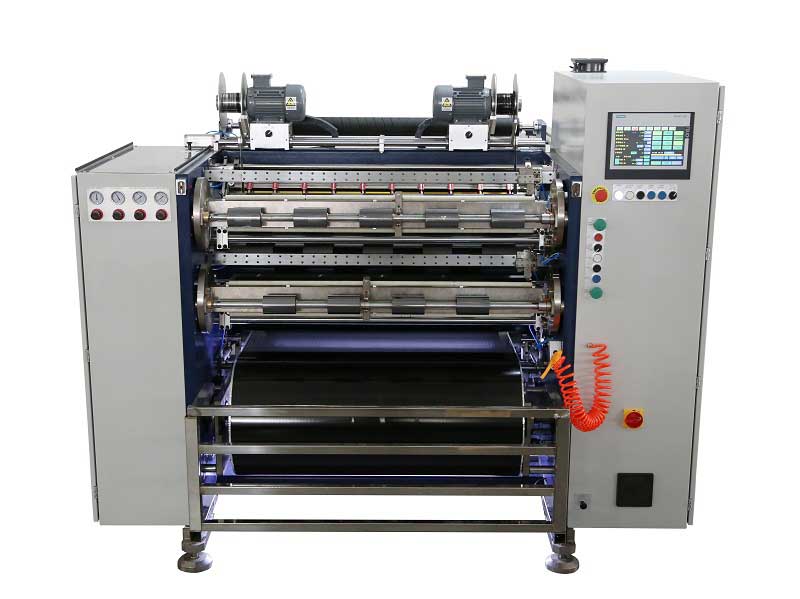 Automatic Thermal Transfer Ribbon Slitter RSDS8 H PLUS
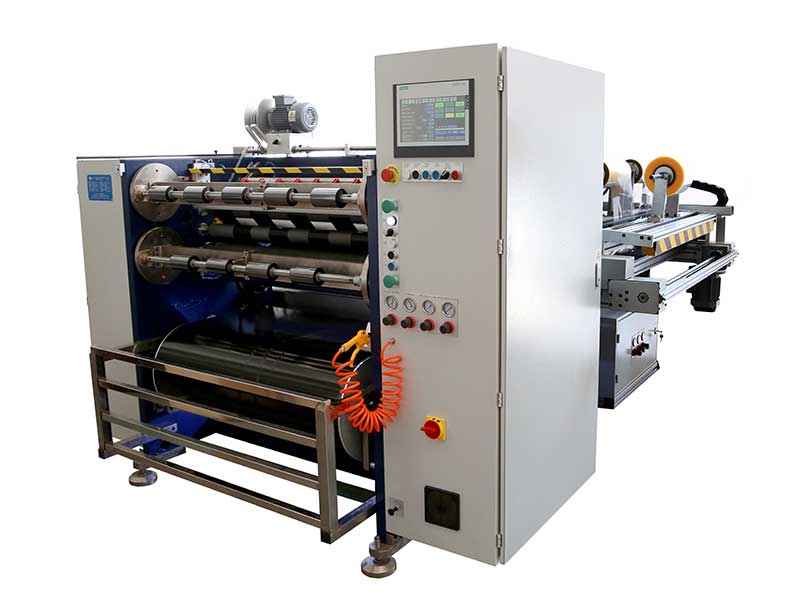 Automatic Thermal Transfer Ribbon Slitter RSDS6 PLUS
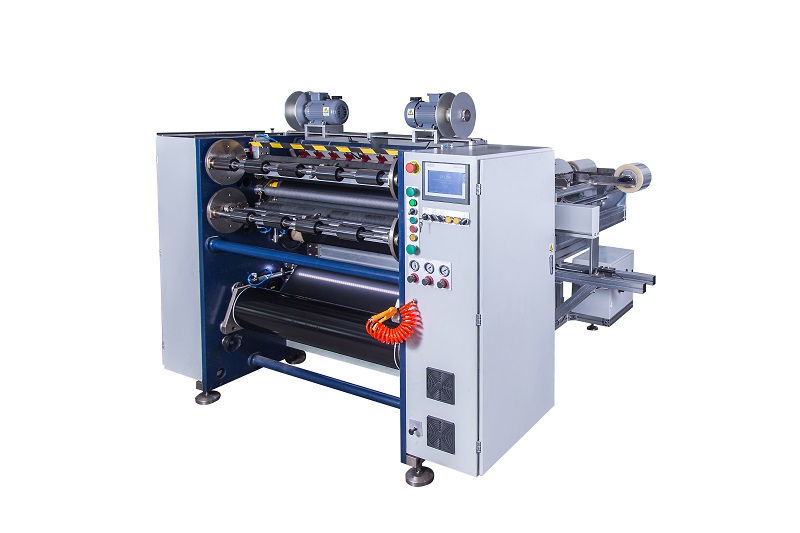 Semi Automatic Thermal Transfer Ribbon Slitter RSDS1 PLUS
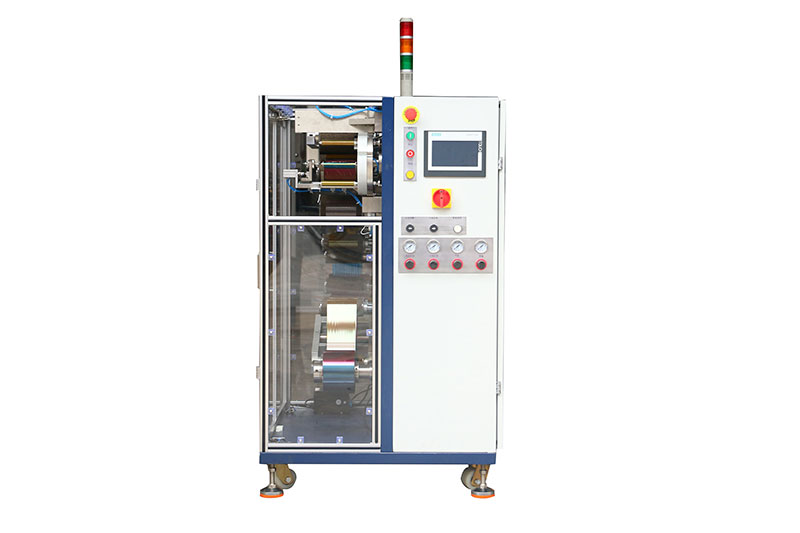 Card Print Ribbon Rewinder
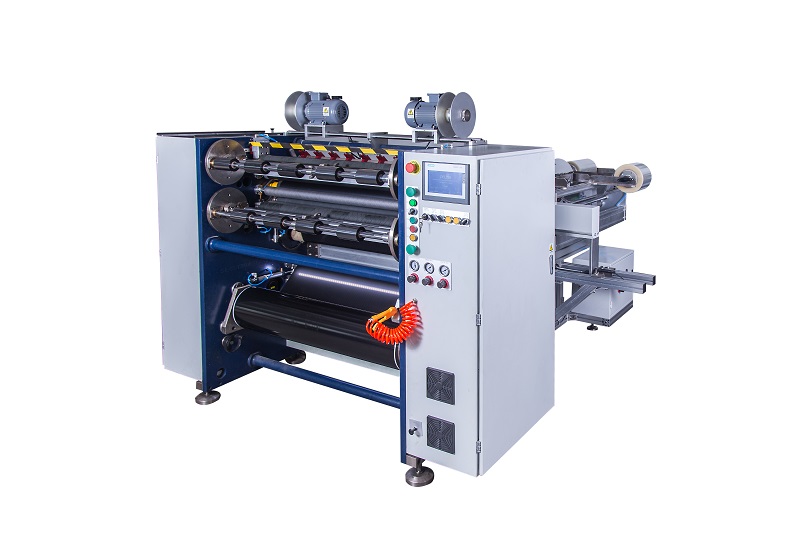 Semi Automatic Thermal Transfer Ribbon Slitter RSDS2 PLUS