In the slitting process of single-sided tape, uneven winding and uneven end face are one of the most troublesome quality problems. This not only affects the appearance of the product, but may also lead to subsequent unwinding difficulties, material scrapping, and even customer complaints. Many companies try to improve by adjusting mechanical parameters, replacing rewinding reels, or adding manual intervention, but the problem often recurs. In fact, the root cause is unstable tension control - and a reliable closed-loop tension control solution is the key to solving this stubborn disease.
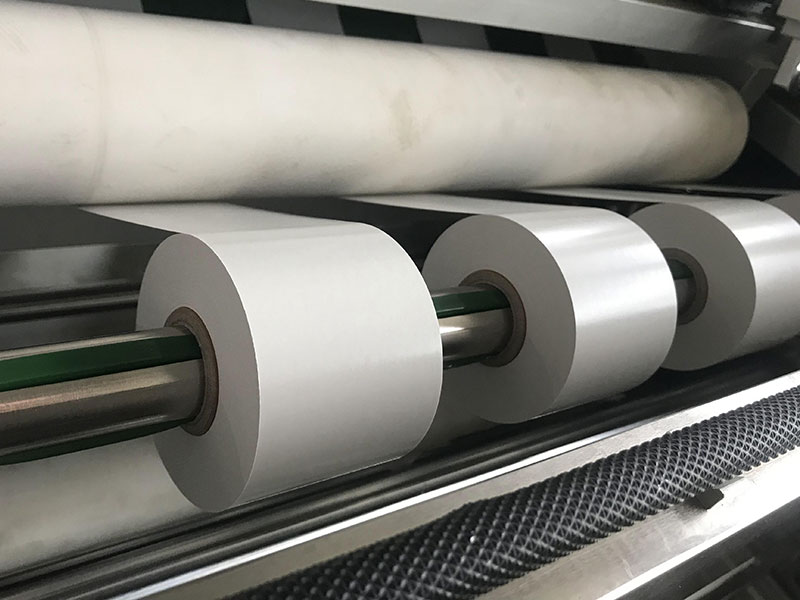
1. Why is the winding uneven and the end face uneven?
Single-sided tape has the characteristics of "large extensibility, low friction coefficient, and easy to generate static electricity", and the tension fluctuation during the slitting process will be directly reflected in the winding form:
• Too little tension → slippage and deviation between the layers of the film, loose winding, and the end face is like a "sawtooth"
• Excessive tension → The material is stretched and deformed, reeled too hard, and even "burdened" or protruding ends appear
• The tension fluctuates between large and small→ The position of each layer is staggered, and finally a "telescope" end face offset is formed
Conventional open-loop control (which only relies on the frequency converter to set the fixed torque) cannot cope with disturbances such as roll diameter changes, acceleration and deceleration, and uneven material thickness, so the winding quality is extremely unstable.
2. The core principle of closed-loop tension control
Closed-loop tension control, in simple terms: real-time measurement → compared to the target value → automatic adjustment of the actuator. A typical plan consists of three key links:
1. Tension detection: The actual tension of the film belt is continuously measured by a tension sensor (pressure type or floating roller type), and the accuracy can reach 0.5% F.S. The sensor is mounted on a guide or floating roller before winding and directly senses the force on the material.
2. Controller calculation:P LC or special tension controller compares the measured value with the set value, and outputs the control signal through the PID algorithm.
3. Perform adjustment: Adjust the torque of the winding motor (or the excitation current of the particle brake/clutch) so that the actual tension always follows the set value.
For single-sided rubber slitting machines, the most recommended scheme is the torque control mode: as the coil diameter increases, the controller automatically reduces the motor torque to keep the tension constant, and at the same time superimposes the taper tension - appropriately reduce the tension in the later stage of winding to avoid internal tightness and external loosening or core tube crushing.
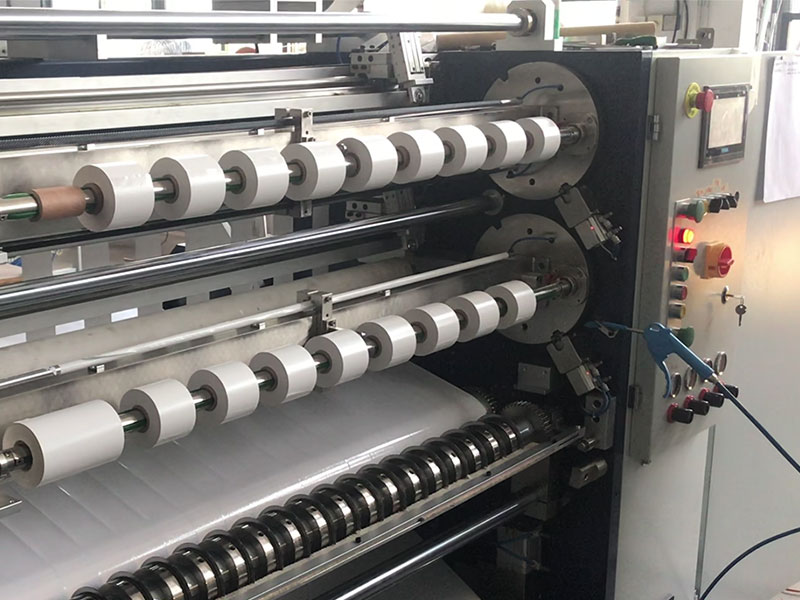
3. Plan implementation: 3 core configuration points
1. Select a high-response tension sensor
It is recommended to use a strain gauge tension sensor to be installed under the housings on both sides of the winding shaft. Note that the sensor range should be 1.2~1.5 times the maximum working tension, which will reduce the sensitivity if it is too much.
2. Adopt "speed + torque" double closed-loop structure
In practical applications, the pure torque mode is not ideal at low speed start-stop. It is recommended that the speed ring be the outer ring and the torque ring should be the inner ring: the speed is given from the upper computer, and the torque is dynamically corrected by the tension controller. This not only ensures the stability of tension during acceleration and deceleration, but also avoids the impact of start-up.
3. Add auxiliary detection and compensation
• Coil Diameter Calculation: Real-time calculation of the reel diameter through ultrasonic sensors or linear velocity ratios for taper tension curve setting.
• Pendulum buffering: Add a low-friction pendulum roller after the tension sensor to absorb small tension fluctuations and reduce frequent PID adjustments.
4. Transformation effect: from "relying on experience" to "relying on data"
A tape factory has carried out the above transformation of an old single-sided rubber slitting machine (installing two tension sensors, a closed-loop tension controller, and replacing the servo motor drive winding shaft), and the test data after the transformation are as follows:
111
More importantly, the solution allows tension curves to be set directly on the touch screen (e.g., starting force→ constant tension operation→ end taper reduction), different tape sizes can store recipes, and the order change time is reduced from 20 minutes to 3 minutes.
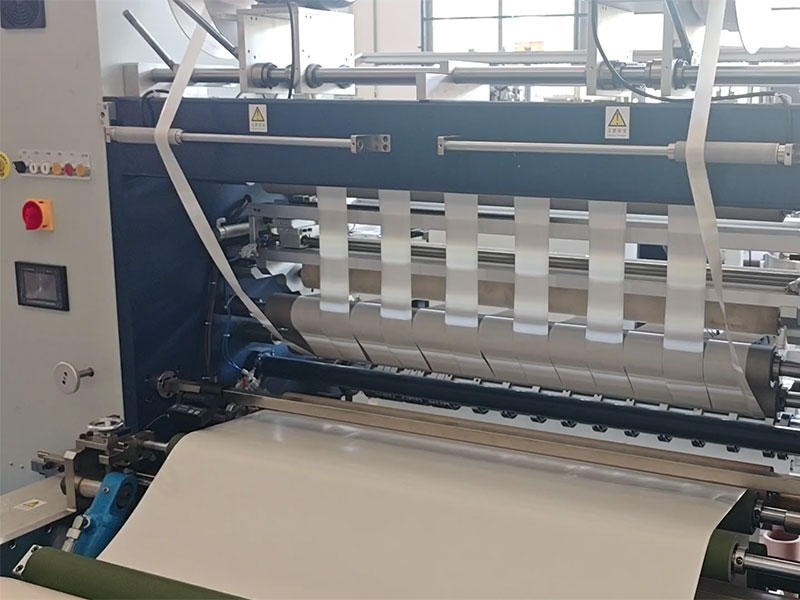
5. Implementation suggestions: Low budget can also do a good job in closed loops
If the equipment is old and the budget is limited, the magnetic powder clutch + tension controller scheme (cost about 3000-6000 yuan) is recommended, which can still achieve a basic closed loop. If you pursue high speed and high precision (≥200m/min), you should use servo motor + closed-loop drive + tension sensor, with a total cost of about 15-30,000 yuan, but the winding quality can reach the level of high-end coating machines.
Epilogue
"Uneven winding and uneven end face" is not an insurmountable obstacle for single-sided rubber slitting machines, but a legacy of the era of open-loop control. After introducing the closed-loop tension control scheme, you will find that the process that originally required the master to repeatedly "look at the feel" adjustment has become a stable automated process. Not only is the scrap rate greatly reduced, but the equipment operating speed can also be increased by 20%-30% - this is the direct embodiment of the "quality, efficiency, and cost reduction" pursued by lean production.
If your production line is struggling with winding quality issues, start testing with a tension sensor installation. The investment in a closed-loop system often pays for itself within three months by reducing material loss.
 English
 Deutsch
 Français
 Español
 Português
 日本語
日本語 русский
 한국어
한국어 عربي
عربي ภาษาไทย
 Tiếng Việt
 Italiano
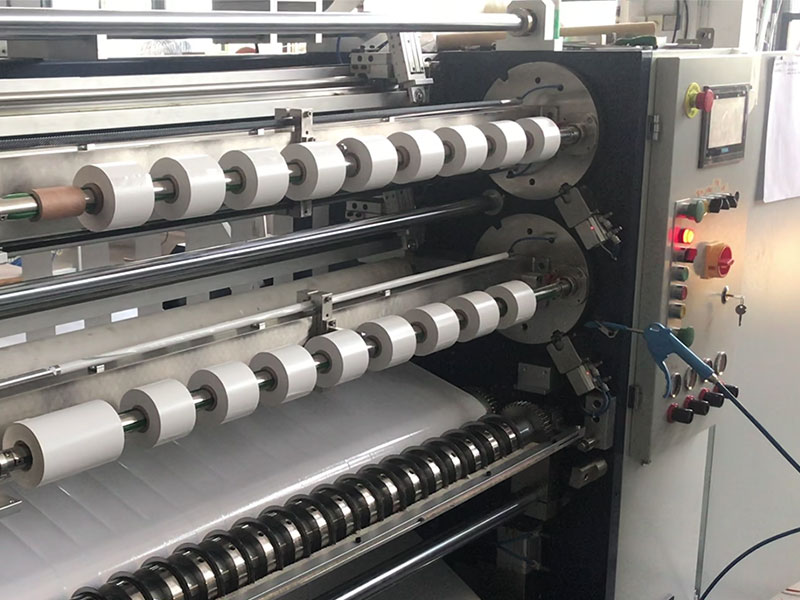
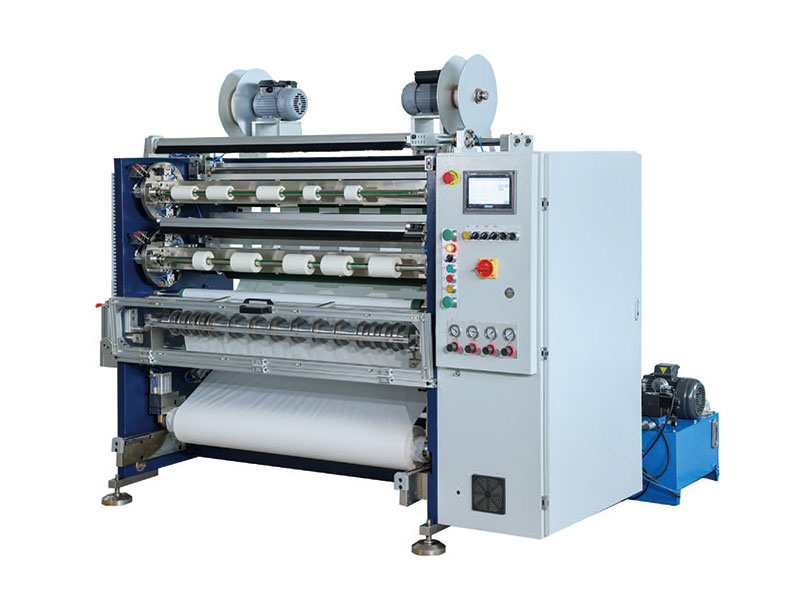 Single Side Adhesive Slitter