In the adhesive product processing industry, the slitting quality of single-sided tape directly affects the performance of the final product and customer satisfaction. Problems such as burrs, unevenness, and powder loss at the slitting edge have always been common pain points that plague production enterprises. This article will provide an in-depth analysis of the causes of these problems and systematically explain how single-sided adhesive slitting machines can solve these problems through technical optimization.
1. Analysis of the causes of burrs and unevenness
To solve a problem, we must first understand the root cause of the problem. The main causes of burrs and unevenness at the edge of single-sided adhesive slitting include:
1. Poor tool condition: Worn blades, passivated edges, or tiny chips, leading to tears during slitting rather than neat cuts
2. Improper tension control: The unwinding or unwinding tension is unstable, causing tensile deformation or jitter of the tape during the slitting process
3. Unreasonable knife pressure setting: excessive pressure causes the adhesive layer to be extruded, and too low pressure cannot completely cut off the substrate
4. Adhesive layer adhesive knife phenomenon: The adhesive of single-sided adhesive adheres to the blade during slitting, forming a build-up and pulling edges
5. Deviation of material thickness: The thickness of the tape itself is uneven, and the force is uneven during slitting
2. Core solutions
1. Optimize and optimize the tool system
Choice of round knife and flat cutter: For single-sided rubber slitting, circular knives are more suitable for high-speed continuous operation, while flat knives perform better in situations with high precision requirements. Modern slitting machines mostly use high-hardness tungsten steel or ceramic blades, which have a service life that is 3-5 times higher than that of ordinary steel knives.
Blade maintenance mechanism: The advanced slitting machine is equipped with an in-line sharpening device, which can micro-sharpen the blade without stopping, and always keep the cutting edge sharp. Usually set to automatically sharpen the tool every 8 hours, and the grinding amount is controlled at 0.01-0.02mm each time.
Anti-stick coating technology: Coating the surface of the blade with Teflon (PTFE) or diamond-like coating greatly reduces the adhesive adhesion rate, and experimental data show that it can reduce the knife sticking phenomenon by more than 80%.
2. Precision tension control system
Tension is a key control parameter for slitting quality. Modern single-sided rubber slitting machines generally adopt closed-loop tension control systems:
• Unwinding section: Equipped with ultrasonic or laser sensors to detect the change of coil diameter in real time, automatically adjust the unwinding torque through magnetic particle brake or servo motor to maintain stability within the set tension value ±0.5N
• Traction section: The floating roller mechanism is used to absorb tension fluctuations, and the floating roller position signal is fed back to the PLC for PID adjustment
• Winding section: control the tension matching of surface winding and center winding respectively, for easy-stretching single-sided adhesives, the winding tension is usually set to 70%-80% of the unwinding tension
3. Adaptive adjustment technology of knife pressure
Single-sided adhesives of different thicknesses and materials require different slitting pressures. The intelligent slitting machine is equipped with a pressure sensor and a servo pressing mechanism to realize:
• Real-time pressure monitoring: real-time feedback on knife pressure with an accuracy of 0.1N
• Automatic compensation function: When a change in material thickness is detected, the knife pressure is automatically adjusted, and the response time is less than 50ms
• Segmented pressure setting: In the three sections of the same roll of material, different pressure curves can be set according to actual needs
Practice shows that a reasonable knife pressure ratio and improper pressure can reduce burr generation by about 60%.
4. Air flotation and static elimination technology
Air float guide roller: introduce air float roller in the slitting path, use compressed air to form an air film to hold up the tape, and achieve non-contact guidance. This eliminates friction and adhesion caused by the contact between traditional guide rollers and the rubber surface, and has a significant effect on improving edge flatness.
Static Elimination: Static electricity is easy to generate during single-sided adhesive slitting, which can cause edge adsorption of dander. AC corona electrostatic eliminator rods are equipped before and after slitting, which can reduce the electrostatic voltage from tens of thousands of volts to a safe range of less than 300V.
5. Optimization of the winding roller
The unevenness of the winding link is often caused by improper force applied by the winding roller. Solutions include:
• The press roller driven by linear guide rail ensures that the parallelism error between the roller and the winding shaft is ≤ 0.05mm/m
• The roller material is silicone or polyurethane, and the hardness is controlled between 45-55 degrees Shore A to take into account the pressing effect of the tape without damaging the rubber surface
• Equipped with the pressure gradient control function of the winding press, the pressure decreases according to the preset curve as the coil diameter increases
3. Operation and maintenance suggestions
In addition to the technical configuration of the equipment itself, the operation and maintenance of the specification are equally important:
1. Slitting speed matching: low-speed slitting (50-80m/min) is beneficial to reduce burrs, while high-speed slitting (more than 150m/min) needs to be matched with a more refined control system
2. Anvil replacement cycle: For models using shear slitting, the anvil (bottom roller) should be checked or replaced every 500 hours of operation
3. Ambient temperature and humidity control: It is recommended that the workshop temperature is 20-25°C and the relative humidity is 50%-60%, and abnormal temperature and humidity will change the rheological characteristics of the adhesive
4. Regular calibration: Tension sensors should be calibrated every 3 months, and knife pressure sensors should be calibrated every 6 months
4. Case effect
After a tape manufacturer introduced the above technical upgrade plan, the 0.05mm thick single-sided PET tape was slitted and tested. The average length of the front edge burr is 0.15-0.3mm, and the edge wavy is ±0.4mm. After the improvement, the burr length is reduced to less than 0.05mm, the wave degree is controlled within ±0.1mm, and the yield is increased from 92.5% to 98.2%.
Epilogue
The burrs and unevenness of single-sided rubber slitting edges are essentially the result of the coupling of multiple factors such as tools, tension, and pressure. Modern single-sided adhesive slitting machines have been able to effectively solve this industry pain point through the comprehensive application of precision tool system, closed-loop tension control, adaptive knife pressure adjustment, air flotation and static elimination and other technologies. When purchasing or upgrading slitting equipment, enterprises should focus on the above technical configurations, rather than just focusing on the slitting speed indicators. After all, in the field of tape slitting, consistent quality is more competitive than mere speed.
 English
 Deutsch
 Français
 Español
 Português
 日本語
日本語 русский
 한국어
한국어 عربي
عربي ภาษาไทย
 Tiếng Việt
 Italiano
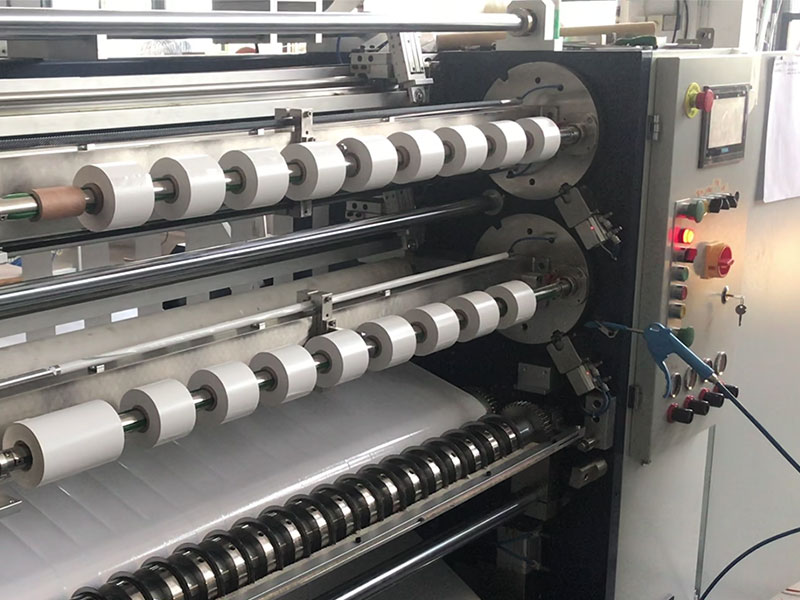
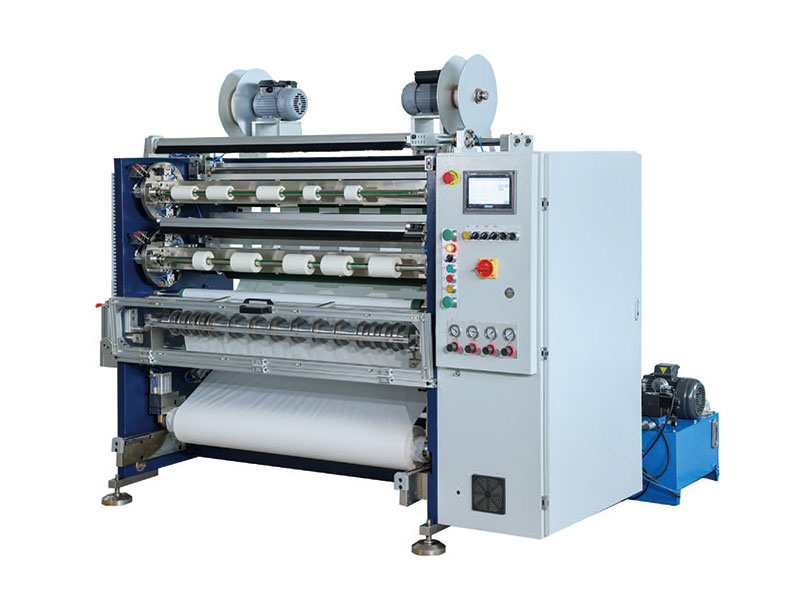 Single Side Adhesive Slitter