In today's increasingly fierce competition in the adhesive products industry, the cost of raw materials often accounts for 60%-70% of the total cost of enterprises. As a common material in packaging, electronics, automobiles and other fields, single-sided tape has always been an invisible killer of profits in its slitting process. According to statistics, in the traditional slitting process, the material loss caused by factors such as tool arrangement error, unstable tension, and inaccurate length calculation is generally between 3% and 8%, and the annual cumulative loss can reach hundreds of thousands of RMB. How to reduce losses by 30% has become a key breakthrough for enterprises to improve quality and efficiency. This article provides a set of practical precision cutting control solutions to help enterprises achieve a significant leap in material utilization through technology and management without replacing the whole machine.
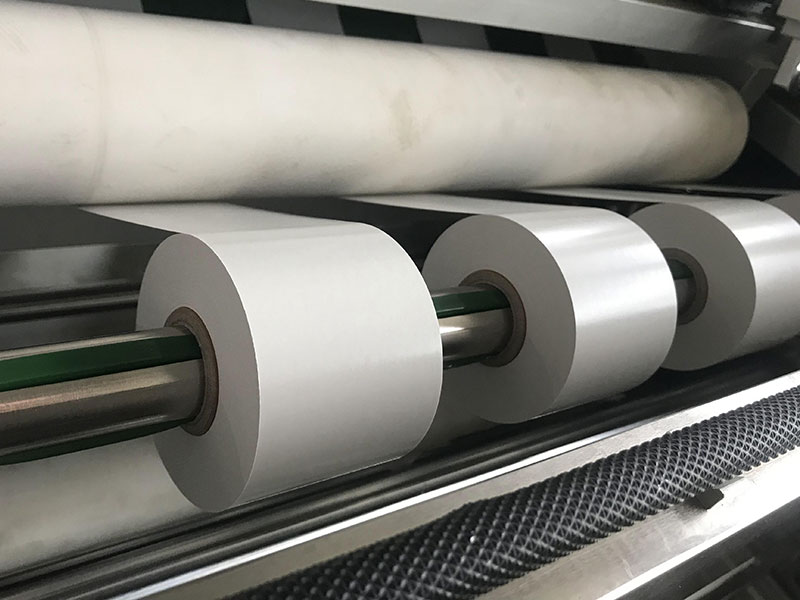
1. Where does the loss come from? ——Three major pain points in the slitting link
Before discussing solutions, it is important to clarify the root cause of the loss. The slitting loss of single-sided adhesive is mainly concentrated in the following three links:
1. The error of the cutter arrangement leads to an increase in the leftovers
Traditional manual knife rowing relies on experience, and the knife distance accuracy can only reach ±0.5mm, and repeated trial cutting is required when changing specifications, and each trial cut produces several meters of waste.
2. Tension fluctuations cause material deformation
Single-sided adhesive substrates (e.g., BOPP, PET) are extremely sensitive to tension. At the moment of start and stop or when the coil diameter changes, the tension fluctuation will cause the material to stretch and narrow or wrinkle, and the width of the cut finished product is insufficient, forcing it to be downgraded.
3. The length of the meter is not allowed to form tailings waste
Problems such as slippage and cumulative error of ordinary long meter wheels make the remaining tens of meters at the end of each roll of material directly scrapped due to inaccurate cutting.
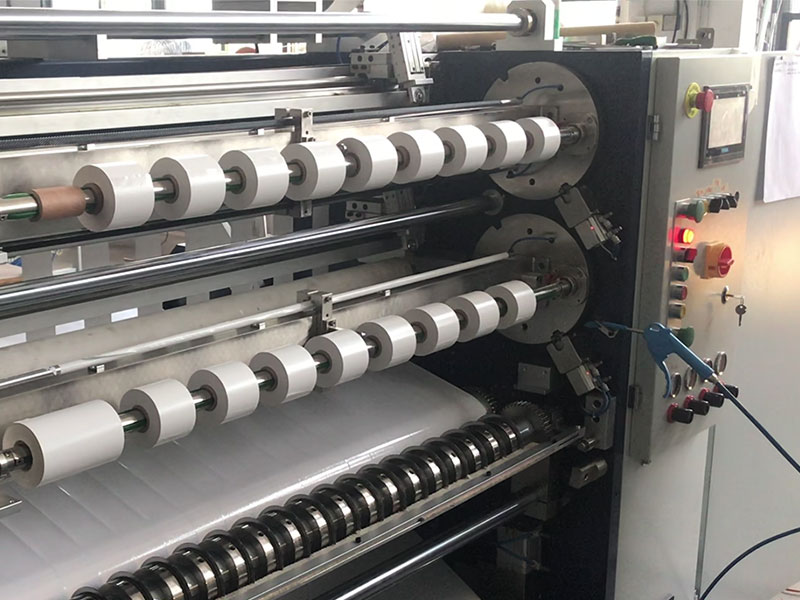
2. Precise control of the core four-step method
In response to the above pain points, we designed a closed-loop solution of "measurement-control-execution-feedback", which realizes controllable and reduced losses without changing the main structure of the slitting machine.
Step 1: Digital knife rowing – eliminate trial cut waste
Upgrade the traditional mechanical tool rowing to a servo digital tool rowing system. The system automatically calculates the optimal combination of tool spacing through the upper computer input the finished product specifications (such as 48mm, 72mm, etc.), and the tool arrangement accuracy is improved to ±0.1mm. More importantly, there is no need for trial verification – the system has a built-in virtual tool setting function that simulates the cutting effect and automatically fine-tunes.
Effect: Each time the specification is changed, the trial cut material is saved by 5-8 meters, and the multi-specification order saves more than 300 meters per month.
Step 2: Closed-loop tension control – eliminate tensile loss
Closed-loop tension control composed of floating roller + vector frequency conversion motor. The sensor monitors the actual tension of the material in real time and automatically adjusts the torque of the unwinding motor, so that the tension fluctuation is controlled within ±2% (the traditional open-loop is controlled at ±10%). For single-sided adhesives that are easy to stretch, you can also set the taper tension - the larger the roll diameter, the smaller the tension, avoiding tightness on the outside and loose on the inside.
Effect: The width deviation is reduced from 0.5mm to 0.1mm, and the qualified rate of finished products is increased by 4%, which directly reduces the scrap rate.
Step 3: High-precision fixed length + residual material prediction - squeeze out the tailings
Replace the ordinary length gauge wheel with a two-wheel redundant length measurement system (one active wheel + one passive wheel, real-time comparison to eliminate slippage error). At the same time, after entering the remaining length of the master coil on the touch screen, the system automatically calculates the optimal number of cuts: for example, the remaining 102 meters can be flexibly combined to cut multiple specifications according to existing orders, accurately matching to the meter level, so that the residual length of the tailings is compressed from an average of 8 meters to less than 2 meters.
Effect: A single roll reduces the waste of tailings by 6 meters, calculated as an annual output of 2,000 rolls, saving 12,000 meters per year.
Step 4: Tool life management – prevent edge defects
The deterioration of slitting quality is often caused by a slightly dull tool, but it is difficult to recognize with the naked eye. Equipped with a tool vibration detection module, when the vibration spectrum exceeds the threshold, the system automatically alarms to prompt tool change or sharpening to avoid continuous cutting of burrs, chips and other waste products.
Effect: Reduce continuous scrap batches caused by tool problems, and reduce losses by about 5%.
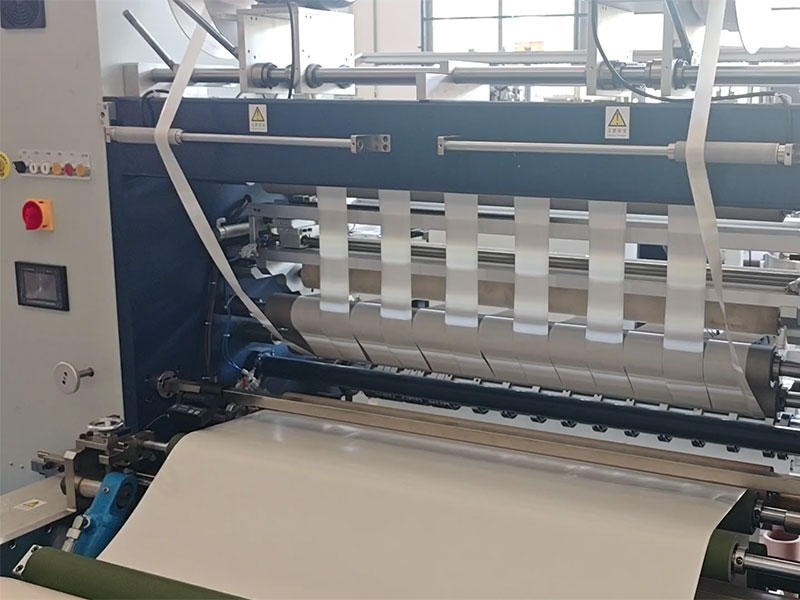
3. Landing income calculation: where does the 30% loss reduction come from?
Taking a medium-sized single-sided rubber slitting plant as an example (200 rolls of master rolls per month, 1,000 meters per roll, and the unit price of materials is 5 RMB/meter), the traditional model loses about 3.5% of the monthly loss, or 7,000 RMB. After applying the above scheme:
| Improvements | The proportion of original loss | Loss after improvement | Monthly savings |
| Try cutting the tailings | 1.2% | 0.3% | 450 RMB |
| Poor tension stretching | 1.5% | 0.4% | 550 RMB |
| Calculate the length of the tail material | 0.5% | 0.1% | 200 RMB |
| Bad tools | 0.3% | 0.1% | 100 RMB |
| Total | 3.5% | 0.9% | 1,300 RMB |
The loss rate decreased from 3.5% to 0.9%, a decrease of 74%, far exceeding the 30% target. Only one material saving is 15,600 RMB. If you consider hidden benefits such as reducing manual commissioning, reducing scrap disposal, and improving customer satisfaction, ROI (return on investment) can usually be realized within 6 months.
Fourth, implementation suggestions: step by step, steady and effective
For enterprises that plan to implement precise control and cutting, it is recommended to proceed at the following pace:
• Week 1: Install a tension closed-loop controller (about 3000-5000 RMB), which can quickly achieve results and reduce tensile loss.
• Week 2: Upgrade the length gauge system to two-wheel redundant length measurement (about 2,000 RMB) to solve the waste of tailings.
• Month 1: Introduce a digital tool rowing system (about 1-20,000 RMB, according to the number of axes) to completely eliminate trial cutting.
• Synchronization: Establish a tool vibration detection schedule (or install a simple module) and maintain it regularly.
5. Conclusion
Reducing material loss by 30% is not an unattainable technology myth, but a realistic goal achieved through precise perception, rapid response and intelligent decision-making of the slitting process. As a traditional equipment, the potential of single-sided adhesive slitting machines is far from being fully tapped. Instead of passively bearing the pressure of raw material price increases, it is better to take the initiative to benefit every millimeter and centimeter of material. A set of precise cutting control schemes is not only an upgrade of equipment, but also a key step from "extensive manufacturing" to "lean manufacturing".
While your peers are still struggling with the 3% loss rate, your shop has replaced scrap buckets with finished bins – that's where precision cutting comes in.
 English
 Deutsch
 Français
 Español
 Português
 日本語
日本語 русский
 한국어
한국어 عربي
عربي ภาษาไทย
 Tiếng Việt
 Italiano
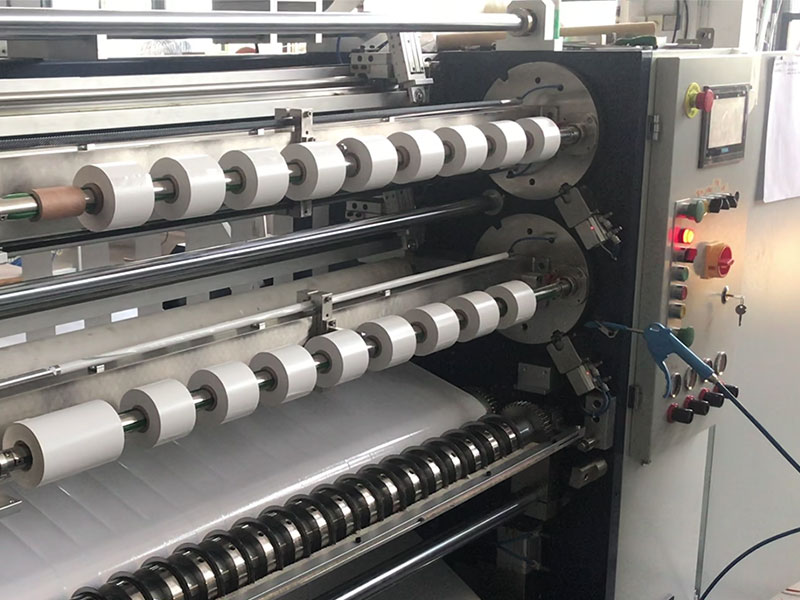
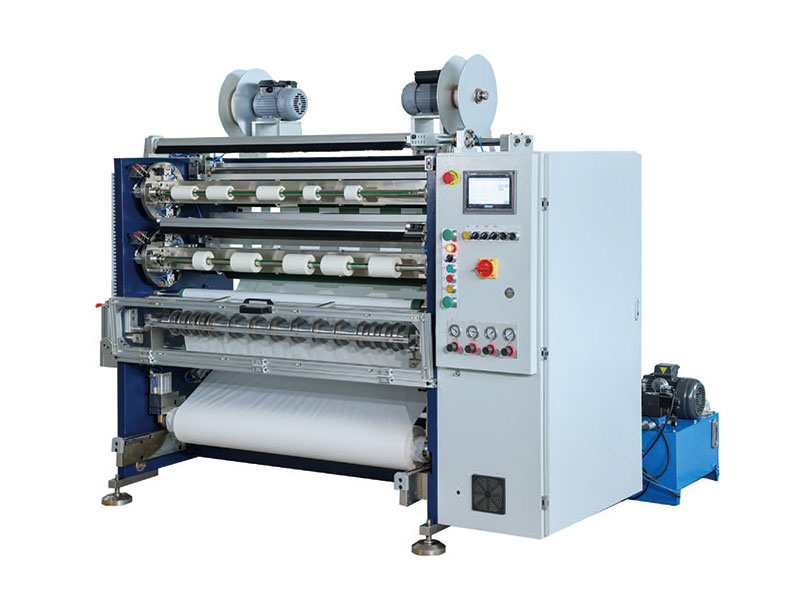 Single Side Adhesive Slitter