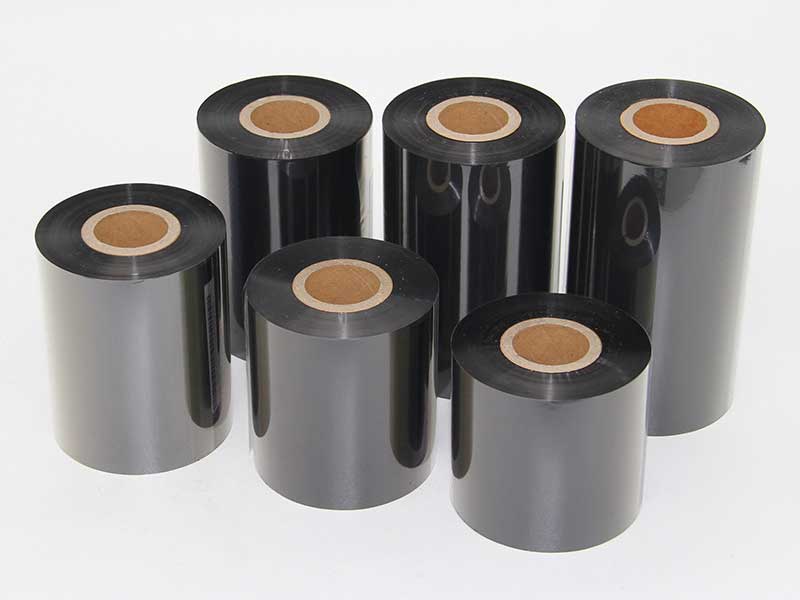
Slitting is a crucial process in the production of thermal transfer ribbons. Especially when narrow strips with narrow slitting widths are required (usually referring to widths below 10mm, or even as low as 4-6mm), the problem of "deviation" is a "big problem" that almost every operator will encounter. Once the carbon belt deviates, it will cause uneven edges and uneven rolls, and the whole roll of materials will be directly scrapped, resulting in huge waste of raw materials.
So, why does the ribbon slitting machine always go astray when slitting narrow strips? How to solve it? This article will conduct a systematic analysis from four dimensions: equipment, process, material, and operation.
1. What is "deviation"? How harmful is it?
Deviation refers to the deviation of the preset belt trajectory during the slitting and winding process, resulting in defects such as "tower shape", "swinging edge" and "serrated edge" on the end face of the finished product.
For narrow bands, the consequences of deviation are particularly serious:
• Soaring scrap rates: Narrow band widths are small, allowable offset margins are extremely low (usually only ± 0.5mm), and scrap is caused by the slightest carelessness
• Decreased production efficiency: Frequent downtime adjustments have severely affected production capacity
• Hindered next process: The deviated ribbon will appear wrinkles and cassettes when used in the printer, which will directly lead to damage to the print head
2. Why is narrowband more likely to deviate than broadband?
This is a premise that must be clarified first. The narrow band is in a state of "instability" when slitting:
1. Extremely weak lateral rigidity: the narrower the width, the worse the ability of the ribbon to resist lateral bending, and it will shift at the slightest disturbance
2. Limited guiding effect: The contact width between the narrow belt body and the guide roller is small, which cannot form an effective "automatic alignment" effect
3. Sensitive to tension fluctuations: The same tension change will generate much greater stress per unit area on the narrow band than on the broadband
Understanding this allows us to troubleshoot problems in a more targeted manner.
3. Equipment level: the "hard wound" of the slitting machine itself
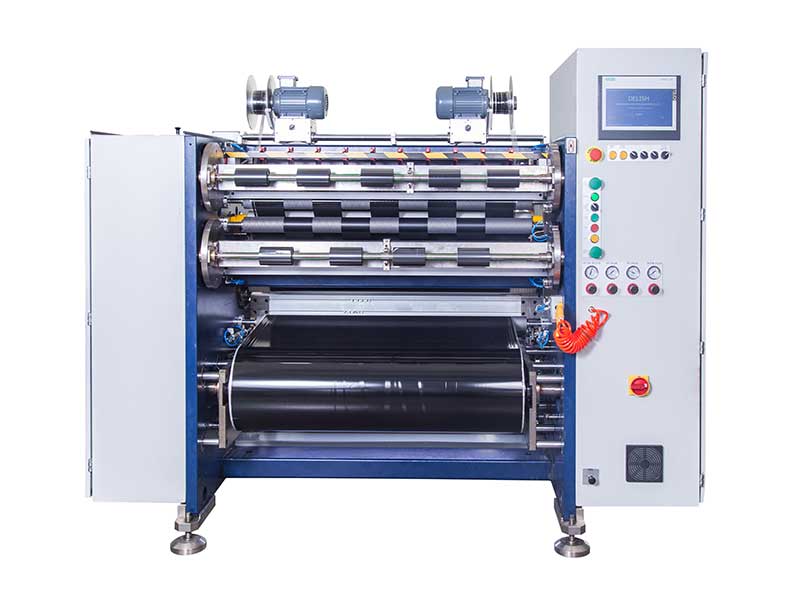
1. The tool slot does not work well with the blade
• Phenomenon: Burrs, dust, or inconsistent width at the edge of the ribbon after slitting
• Cause: The gap between the lower knife (circular knife) and the tool groove is too large or too small; the shear force is impure due to blade wear, resulting in lateral force pulling the ribbon
• Countermeasures: Use special narrow strip slitting tools to ensure that the gap between the blade and the tool groove is 0.02-0.05mm, and replace the blade regularly
2. The reel is beating or not concentric
• Phenomenon: The paper tube swings left and right when winding, and the narrow band is offset
• Causes: bent winding shaft, worn bearings, uneven expansion blocks of the inflatable shaft
• Countermeasures: Detect the radial runout of the winding shaft (it should be ≤ 0.05mm), correct or replace the shaft core
3. The parallelism of the guide roller and the surface condition are poor
• Phenomenon: Ribbon "crawling" to one side on the over roller
• Reason: The guide rollers are not parallel to each other; The surface of the guide roller has scratches, viscose or static build-up
• Countermeasures: Use a level to recalibrate all guide roller parallelisms; Clean and treat with anti-static (e.g. wrapped anti-static fleece)
4. Process level: the "balancing technique" of tension and pressure
1. Improper setting of slitting tension
The core principles of narrow band slitting are: low tension and precise control.
• Excessive tension: The ribbon is "stretched", the actual width is narrowed, and it is very easy to deviate from the tool slot
• Too little tension: the ribbon is relaxed and snakes under the disturbance of the airflow
• Recommendation: Reduce unwinding tension to 60%-70% of conventional broadband with a closed-loop tension control system (such as dance roller or tension sensor)
2. Uneven winding pressure
• Phenomenon: One side of the winding core is hard and the other side is soft, and the end face is tapered
• Cause: Inconsistent pressure on both sides of the pressure arm or contact roller
• Countermeasures: Adjust the horizontality and pressure of the winding roller to ensure that the pressure on both sides is balanced; For extremely narrow bands (<6mm), consider using a rollerless winding method
3. Slitting speed is too fast
• Under high-speed operation, the disturbance of airflow on the narrow band increases sharply. When slitting narrow bands, it is recommended to reduce the speed by 30%-50%.
5. Material level: the "innate deficiencies" of the carbon belt itself
1. Uneven thickness of the base film
• If the thickness deviation (TD) of the ribbon base film itself is large, the thickness transition area will have a sudden change in tension during slitting, resulting in a belt shift
• Countermeasures: Detect the thickness tolerance of the base film before going on the machine, and select a high-flatness base film
2. The paper tube is unqualified
• Paper tube end faces that are not vertical, too large or too small inner diameter can cause "slippage" or "eccentricity" during winding
• Countermeasures: Use high-precision paper tubes (end face verticality ≤ 0.2mm) and ensure that they match the inflatable shaft
3. Electrostatic interference
• The ribbon material is mostly PET, which is very easy to generate static electricity. Static electricity causes the ribbon to adsorb on the guide roller or tool holder, causing irregular runout
• Countermeasures: Install electrostatic elimination rods (ion air sticks) to keep the ambient humidity at 50%-60%
6. Operational level: details that are easy to overlook
1. The strapping path must be absolutely vertical
• From unwinding to rewinding, the ribbon must be perpendicular to the centerline of each guide roller, tool groove and rewinding shaft. Even a 1° deflection can be magnified at high speeds
• Tip: Manually turn the belt after threading and observe whether the ribbon is always running in the middle of the guide roller
2. The starting point of slitting should be reserved for allowance
• When slitting the narrow strip, it is recommended to wrap a few circles of wide tape or waste film on the paper tube as the "bottom paper" to form a flat winding foundation to avoid deviation due to uneven paper tubes in the first turn
3. The trim should be removed smoothly
• If the slitted edge material (waste edge) cannot be discharged smoothly, it will pull the normal ribbon and cause deviation. A separate waste edge rewinding device should be used and the pulling force should be moderate
7. Advanced solution recommendation
If the above conventional methods still don't solve the problem, consider the following upgrade options:
| Scheme | Principle | Applicable scenarios |
| Servo independently driven winding | Each winding unit independently controls the tension, eliminating spindle drive variances | High-end narrowband slitting with a width ≤ 6mm |
| Ultrasonic correction system | Real-time detection of ribbon edge position and drive the actuator to automatically correct | Occasions where the flatness of the end face is extremely high |
| Low friction air flotation guide rollers | The air film is used to reduce friction and static electricity, and achieve "contactless" guidance | Extremely thin and very narrow ribbon slitting |
8. Summary
The deviation of the ribbon slitting machine is not caused by a single reason, but the result of the combined action of equipment accuracy, process parameters, material quality, and operation methods.
The correct idea to solve the problem is:
1. First confirm the equipment status: parallelism, runout, tool group accuracy
2. Readjustment process: reduce tension and speed to balance the winding pressure
3. Finally, optimize the operation: clean the guide rollers, eliminate static electricity, and standardize the threading
In actual production, it is recommended to establish a "narrow band slitting parameter table" to cure the optimal combination of tension, pressure and speed for different widths and different materials. When encountering deviation problems, use the "single variable method" to investigate one by one, and avoid adjusting multiple parameters at the same time.
Slitting narrow strip is a "fine job", equipment is the foundation, process is the soul, and operation is the guarantee. Only by taking a three-pronged approach can we truly say goodbye to the trouble of "always deviating" and make a high-quality narrow ribbon with a mirror-like end surface and uniformity.
(This article is suitable for narrow band slitting scenarios of roll materials such as thermal transfer ribbons, barcode ribbons, fax ribbons, etc.)
 English
 Deutsch
 Français
 Español
 Português
 日本語
日本語 русский
 한국어
한국어 عربي
عربي ภาษาไทย
 Tiếng Việt
 Italiano

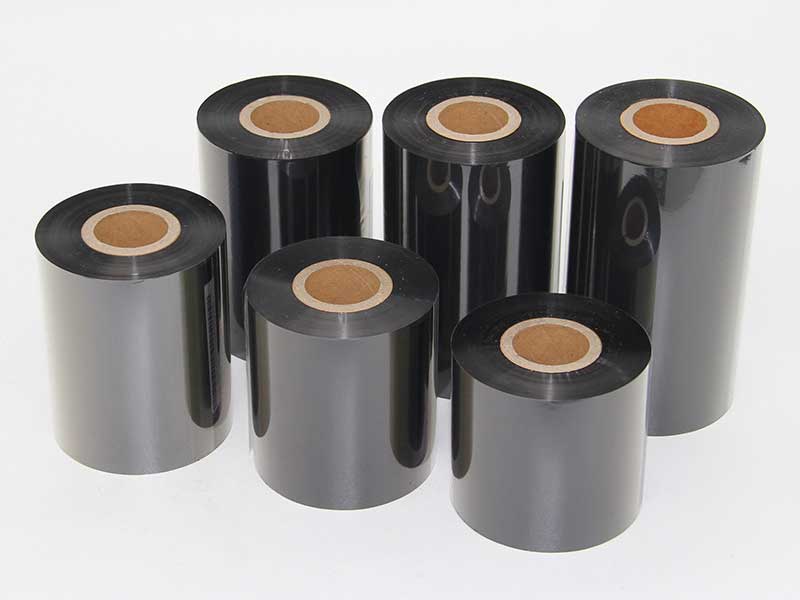
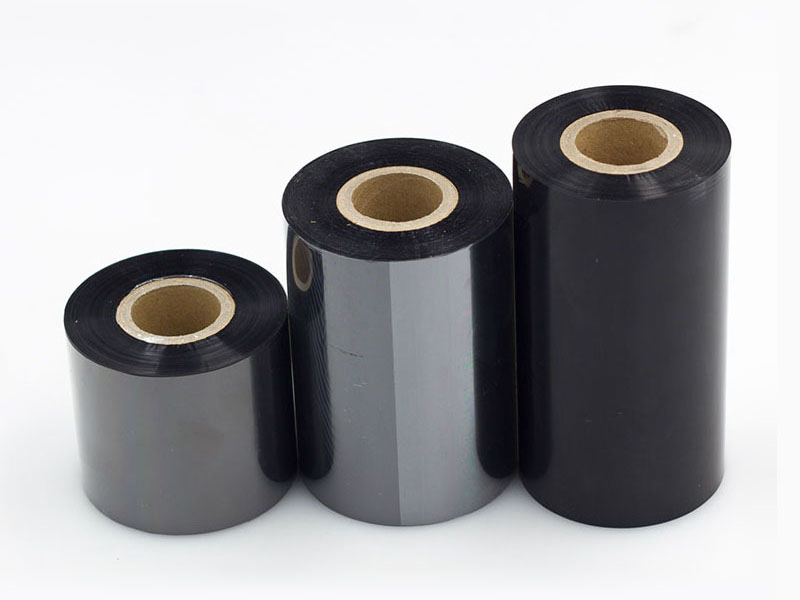
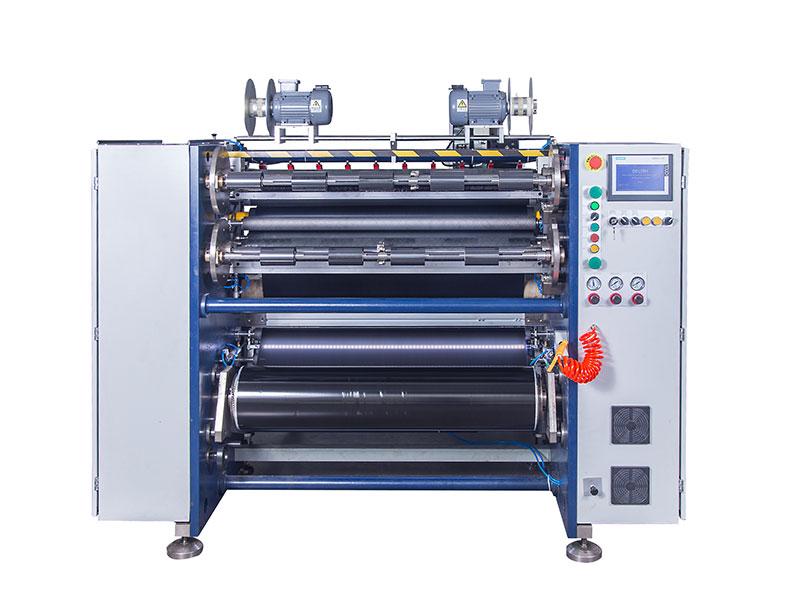 Ribbon Slitting Machine
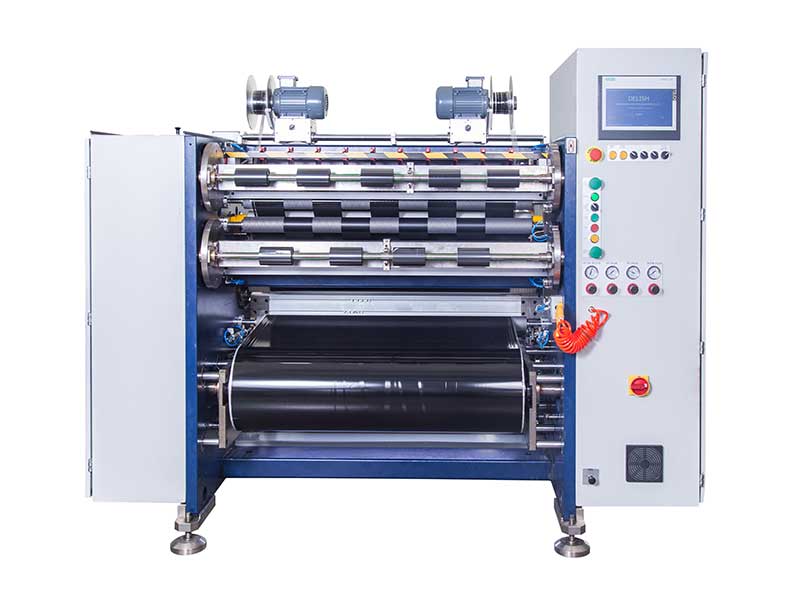 Barcode Ribbon Slitting Machine
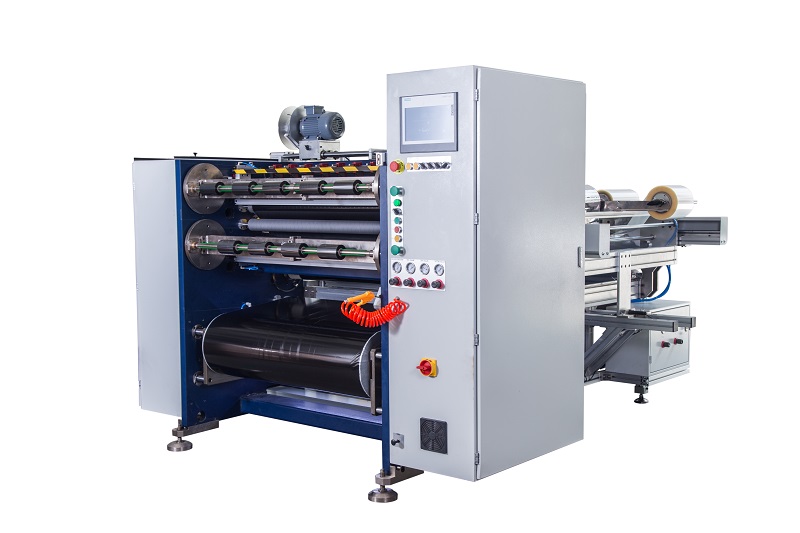 Semi Automatic Thermal Transfer Ribbon Slitter RSDS5 PLUS
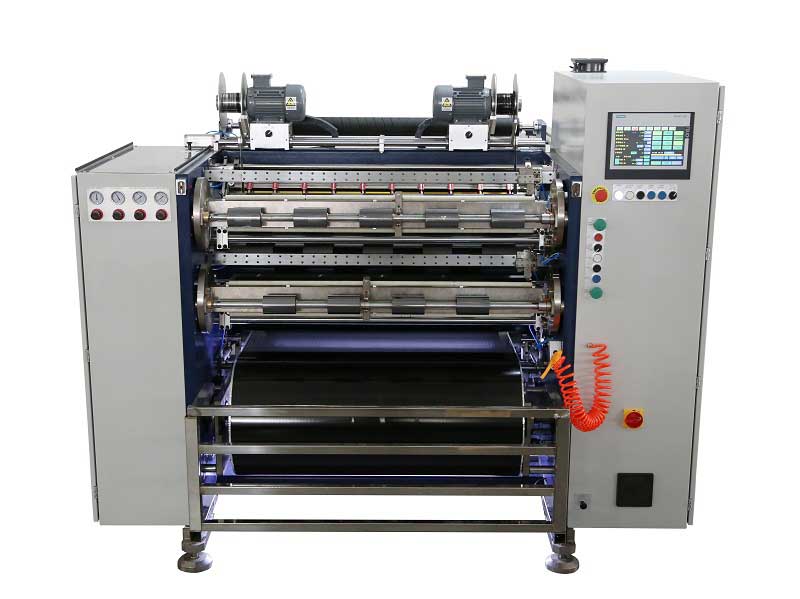 Automatic Thermal Transfer Ribbon Slitter RSDS8 H PLUS
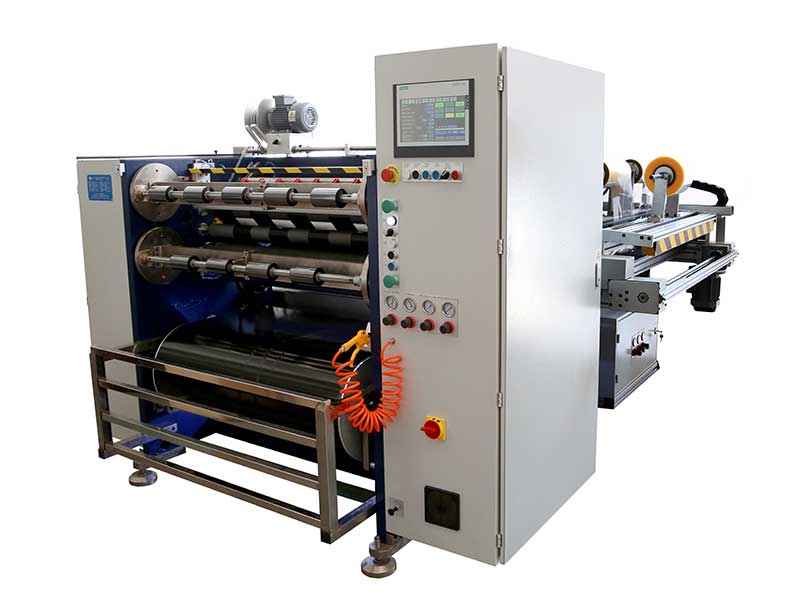 Automatic Thermal Transfer Ribbon Slitter RSDS6 PLUS
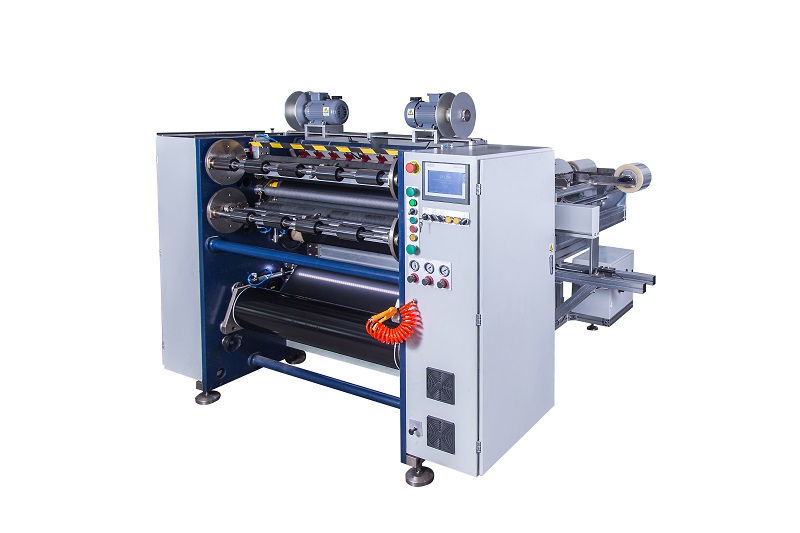 Semi Automatic Thermal Transfer Ribbon Slitter RSDS1 PLUS
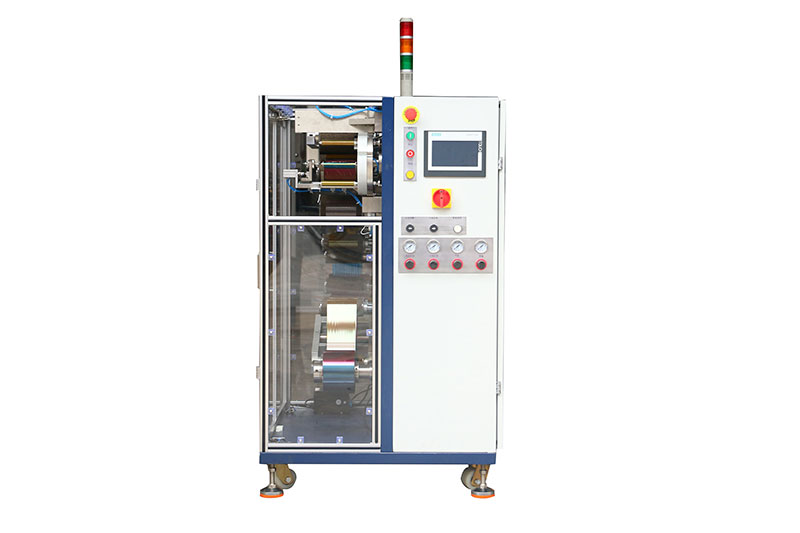 Card Print Ribbon Rewinder
 Card Print Ribbon Slitter